Ivor Wynne Stadium
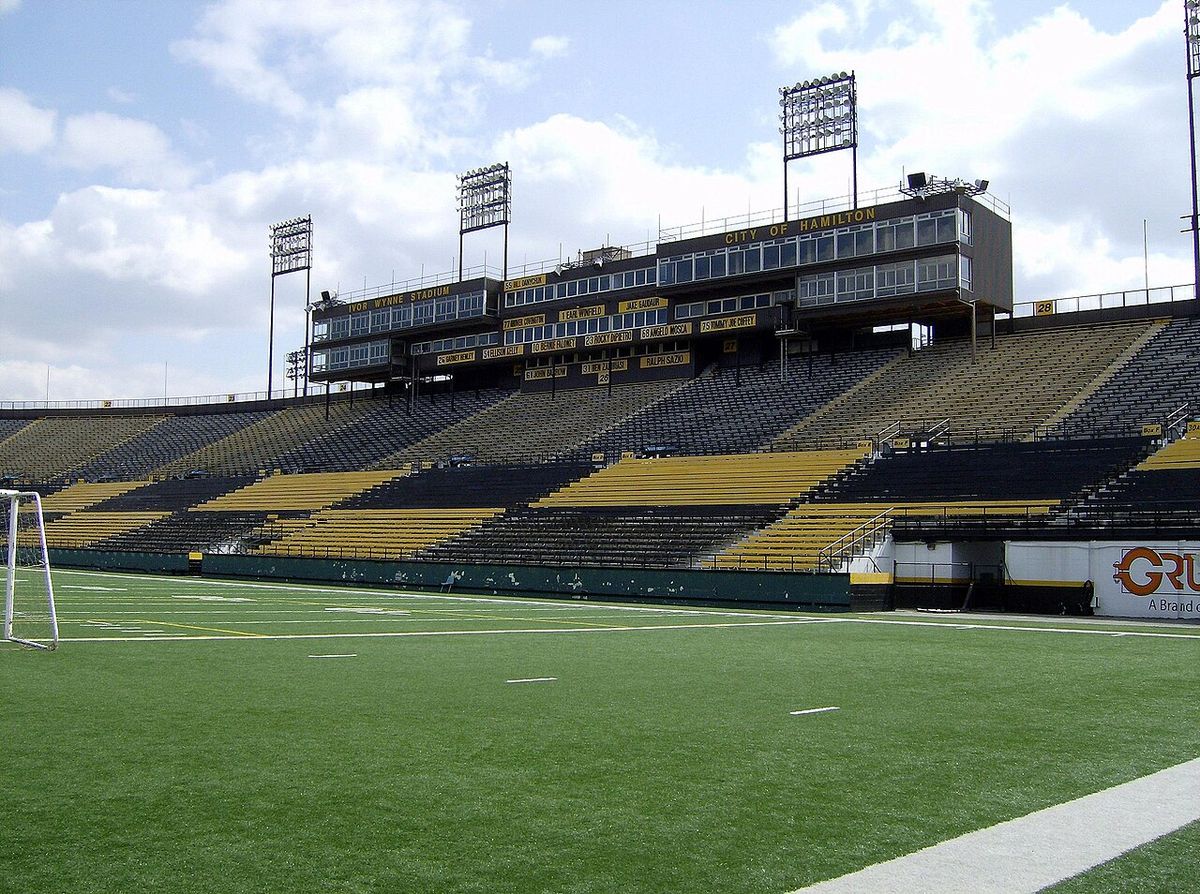
Ivor Wynne Stadium was a historic Canadian football stadium located in Hamilton, Ontario. From 1950 until its closure in 2012, it served as the long-time home of the Canadian Football League's Hamilton Tiger-Cats. Originally built as Civic Stadium for the 1930 British Empire Games, the venue was a central part of Hamilton's sporting community for over eight decades, hosting Grey Cup games, concerts, and other major events. It was demolished in late 2012 and replaced by Tim Hortons Field on the same historic site.
Origins and Construction
The city purchased the land from a local farmer in 1913, and playing fields existed on the site for years before formal construction began. The stadium, initially known simply as the civic stadium, was built specifically to host the 1930 British Empire Games, which later became the Commonwealth Games. Its primary early uses from 1928 onward were for track and field events organized by the Hamilton Olympic Club and for men's soccer, while Canadian football was primarily played at the nearby Hamilton Amateur Athletic Association Grounds. The original facility featured a cinder track, which was the venue for events like the Cap Cornelius Secondary School relays. This foundational period established the site as a multi-sport public venue long before it became synonymous with professional football. The stadium's construction for the Empire Games positioned Hamilton on the international sporting stage and created a lasting public asset from a major event.
Renovations and Evolution
The stadium underwent significant transformations throughout its lifespan, adapting to modern standards and the growing needs of its primary tenant. A major reconstruction occurred between 1970 and 1971, which included a key technological upgrade. In 1971, Ivor Wynne became the first facility in Canada to install AstroTurf, though it was not the nation's first artificial surface, as Vancouver's Empire Stadium had installed 3M's Tartan Turf the previous year. This renovation also dramatically increased seating, making Ivor Wynne the largest stadium in the CFL from 1971 to 1975 with a capacity of 34,500 seats. Subsequent modifications altered the stadium's footprint and capacity over the decades. In the 1980s, the west end zone bleachers were removed to accommodate a new scoreboard, reducing capacity to approximately 29,500. A 1990s retrofit to improve handicapped access in the north stand's lower east section further lowered the official capacity to just under 29,000. After the 2002 CFL season, the stadium was renovated again, receiving a next-generation FieldTurf playing surface with squared-off end zones. After the 2003 season, a new sponsored scoreboard known as Dofasco TigerVision was installed in the west end of the stadium, reflecting the growing commercial aspects of the professional sports experience.
Naming and Tribute
In 1971, the stadium was renamed to honour Ivor Wynne, a significant figure in Hamilton's amateur sports community. Wynne had served as the chairman of the city parks board and was the athletic director and dean of students at McMaster University at the time of his death in 1970. He was widely credited with creating McMaster's physical education course and planning its athletic complex. The renaming made Ivor Wynne Stadium one of only two CFL stadiums at the time, alongside Montreal's Percival Molson Memorial Stadium, named for individuals celebrated for their contributions to amateur sport. This dedication reflected the venue's origins and enduring connection to community and amateur athletics beyond its professional football role. The decision to name the stadium after an educator and amateur sports advocate, rather than a corporate entity or football star, was a distinctive feature that set it apart within the league for many years.
Major Events and Memorable Moments
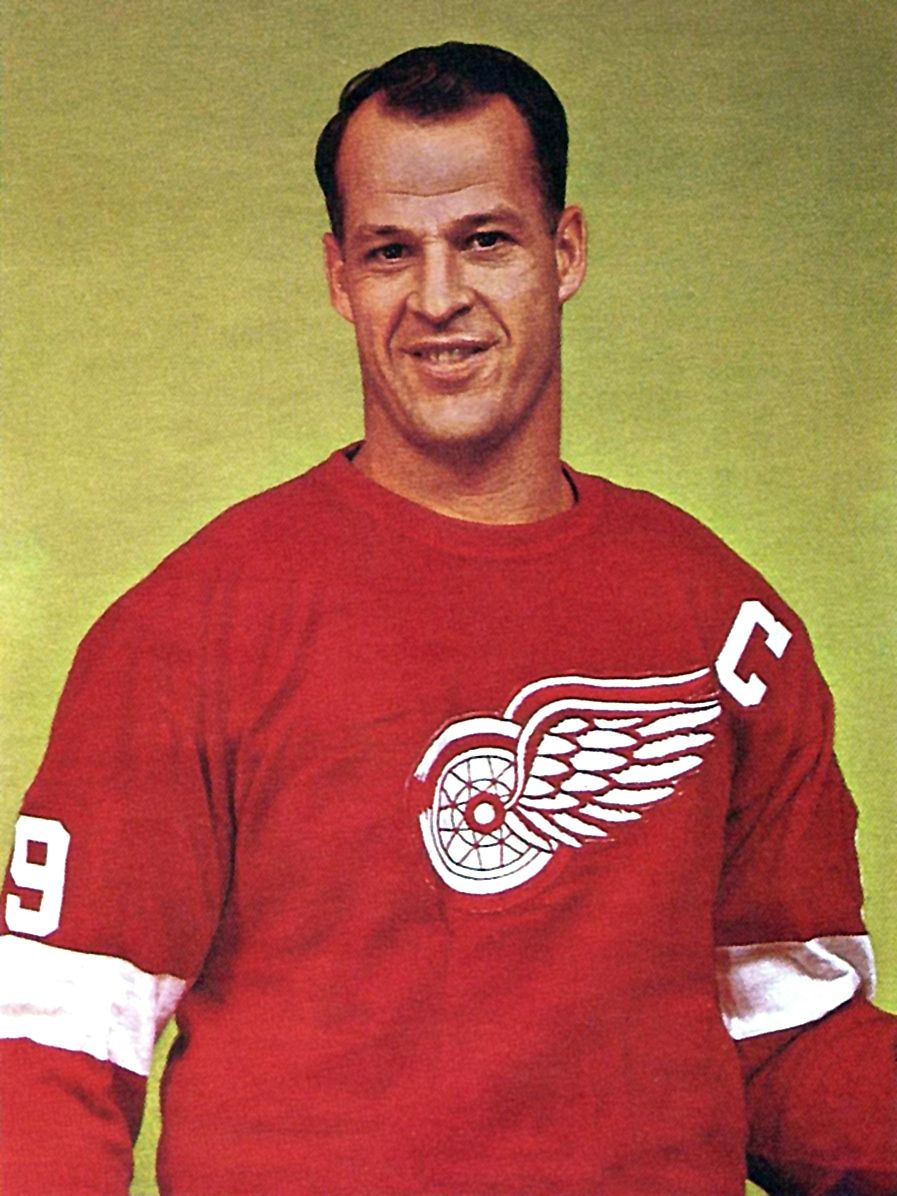
Beyond Tiger-Cats games, Ivor Wynne Stadium hosted a diverse array of events that cemented its place in Canadian sports and entertainment history. On August 8, 1961, the stadium was the site of a unique preseason exhibition game where the Hamilton Tiger-Cats defeated the AFL's Buffalo Bills 38-21 under Canadian rules, marking the only victory for a CFL team in a CFL-AFL meeting. The venue also saw notable concerts, with Pink Floyd's 1975 show being the largest, infamous for a pyrotechnics display that damaged the scoreboard. Rush performed there in 1979, and the Tragically Hip played a final concert on October 6, 2012, before the stadium's demolition. In April 2005, the stadium hosted "Our Game to Give," an outdoor charity hockey game featuring locked-out NHL players, which drew nearly 20,000 spectators and raised funds for the Canadian Red Cross Tsunami Relief Fund and Camp Trillium. Hockey legend Gordie Howe dropped the ceremonial puck for the game, which saw Team Gilmour defeat Team Staios by a score of 11-6. On January 21, 2012, Ivor Wynne made history by hosting the first outdoor regular-season game in American Hockey League history in Canada, a matchup between the Toronto Marlies and the Hamilton Bulldogs, which was the fourth in an annual series of outdoor AHL games.
Ivor Wynne Stadium hosted the Grey Cup championship game three times in its history. The first was in 1944, featuring a wartime team from the Montreal Navy. The second was in 1972, when the hometown Hamilton Tiger-Cats won before a capacity crowd. The third Grey Cup was held there in 1996, a game played in a snowstorm where temporary seating expanded capacity to 40,000.
- 1944: The Hamilton Flying Wildcats were defeated by a wartime team from the Montreal Navy.
- 1972: The hometown Tiger-Cats defeated the Saskatchewan Roughriders before a capacity crowd.
- 1996: In a game played in a steady snowstorm, the Toronto Argonauts, led by quarterback Doug Flutie, defeated the Edmonton Eskimos. Temporary east and west end zone seating expanded capacity to 40,000 for this contest, which is often cited as one of the greatest Grey Cup games.
Final Years and Demolition Decision
By its final decade, the need to replace the aging facility became a central issue for the city and the football club. In 2011, plans were first announced to renovate the stadium in 2012 for completion by 2014, with the venue also slated to be used for the upcoming 2015 Pan American Games. The initial plan approved by the Toronto 2015 Pan Am board on February 25, 2011, called for the south side stands to be demolished and rebuilt and the north side stands to be extensively renovated. This plan was soon abandoned. A new plan announced on August 31, 2011, called for a completely new $150 million stadium with a new north-south field alignment designed to minimize the effect of sun and wind on athletes. The new multi-function stadium was intended to host concerts, football, soccer, and hockey games. Demolition began on December 1, 2012, as confirmed in news reports from the time, clearing the way for new construction. The Tiger-Cats played their entire 2013 CFL season at the University of Guelph's Alumni Stadium, with proceeds from the temporary site agreement supporting the university's Gryphon Athletics fundraising campaign.
Design and Final Layout
In its final configuration, Ivor Wynne Stadium possessed a distinct and intimate character cherished by fans. The 2012 layout featured a large grandstand on one side of the field with a small section curving around the end zone, and a separate grandstand on the opposite side. This asymmetrical design contributed to its renowned atmosphere, with fans close to the action. The final official capacity was just under 29,000. The playing surface was FieldTurf, and the primary scoreboard in the west end was the sponsored Dofasco TigerVision. The stadium's location at the corner of Balsam and Beechwood Avenues, two blocks west of Gage Avenue North, made it a familiar landmark in Hamilton's east end. Its design, though outdated by modern standards for amenities and revenue generation, was celebrated for creating a loud, passionate, and authentic football environment that became a defining feature of the CFL experience. Fan reviews often highlighted the ease of access, the proximity to the field, and the energetic, party-like atmosphere on game days, including the free "Ticat Express" shuttle service provided by Hamilton city transit.
Financing and Construction of the Replacement
The project to build a new stadium involved significant public investment and a complex funding agreement between three levels of government. The total cost for the new facility was set at $145.7 million. The federal government provided the largest share, contributing $69.3 million towards the project. The City of Hamilton was responsible for $54.1 million, and the provincial government of Ontario supplied the remaining $22.3 million. This funding model was finalized after a long and sometimes contentious public debate over the stadium's location and cost. The new stadium was designed with a base capacity of 22,500 for the Pan Am Games, expandable to 40,000 for major events like the Grey Cup, and would include 700 club seats, 400 group sales suites seats, 30 VIP suites, six elevators, and updated press facilities. The design, released in October 2012, called for two tiers of seats on both sides of the field and a public plaza in the south end. Foundational site work was completed by the end of April 2013, revealing the new stadium's layout on the historic grounds.
Transition to Tim Hortons Field
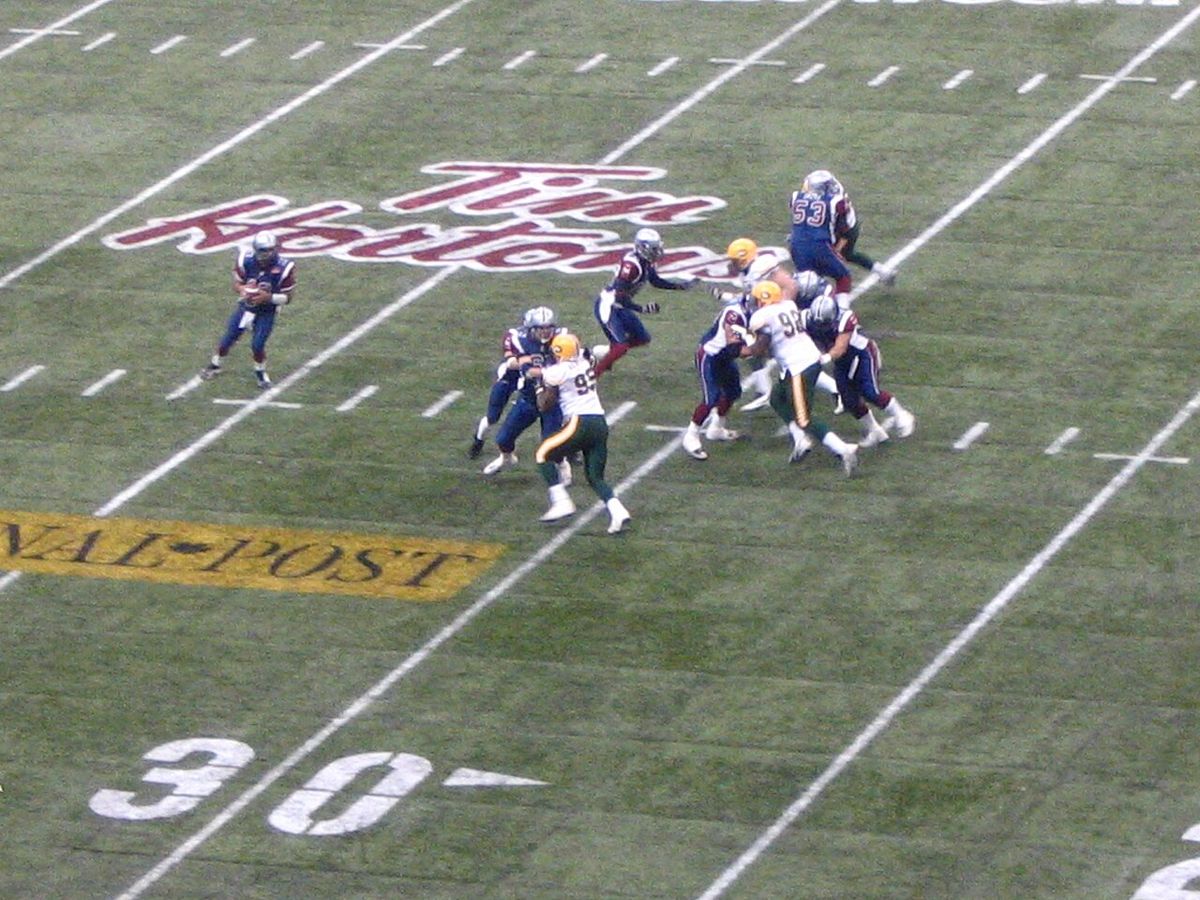
The replacement stadium, Tim Hortons Field, represents a direct evolution from the old grounds, built explicitly on the same historic site. With a fixed base capacity of approximately 24,000 for Tiger-Cats games, it was designed as a modern, multi-purpose venue to host the Tiger-Cats, Forge FC of the Canadian Premier League, and major events. The transition was not without its challenges, as construction delays forced the Tiger-Cats to play their first two regular-season home games of 2014 at McMaster University's Ron Joyce Stadium, and their 2014 pre-season game was also held there. On July 12, 2013, the team announced the stadium would be called Tim Hortons Field and released new artist renderings of the finished design. Tim Hortons Field, sometimes nicknamed "The Donut Box," has since hosted Grey Cup games in 2021 and 2023, with the 2023 championship setting a stadium attendance record of 28,808. The naming rights agreement with Tim Hortons concluded in 2024, prompting a search for a new naming partner for the venue, which is often simply referred to as Hamilton Stadium. The new facility fulfills the vision of providing a long-term, modern home for sport in Hamilton, built upon what the Pan Am Games CEO called the "sacred grounds" of its predecessor, and CFL commissioner Mark Cohon noted its intimate, smaller design would create a great environment for CFL football for future generations.
Questions about Ivor Wynne Stadium
Where was Ivor Wynne Stadium located?
Ivor Wynne Stadium was located at the corner of Balsam and Beechwood Avenues in Hamilton, Ontario, which is two blocks west of Gage Avenue North in the city's east end. The stadium sat on a 5.45-hectare parcel of land that the city had purchased from a local farmer in 1913. Its replacement, Tim Hortons Field, was built on the exact same site after Ivor Wynne was demolished in December 2012. The address for the stadium's ticket office was 393 Main Street East, Hamilton, ON L8N 1J7.
Why was the stadium named Ivor Wynne?
The stadium was renamed in 1971 to honour Ivor Wynne, a prominent figure in Hamilton's amateur sports community. Wynne was the former chairman of the city parks board and served as athletic director and dean of students at McMaster University until his death in 1970. He was considered largely responsible for creating McMaster's physical education course and planning its athletic complex. The naming recognized his contributions to sport beyond the professional field and made the stadium one of only two in the CFL at the time named for an amateur sports figure.
How many Grey Cup games were played at Ivor Wynne Stadium?
Ivor Wynne Stadium hosted the Grey Cup championship game on three occasions. The first was in 1944, when the Hamilton Flying Wildcats lost to a wartime team from the Montreal Navy. The second was in 1972, which saw the hometown Tiger-Cats defeat the Saskatchewan Roughriders. The third and final Grey Cup at Ivor Wynne was in 1996, a famous snowstorm game won by Doug Flutie and the Toronto Argonauts over the Edmonton Eskimos, with temporary seating expanding capacity to 40,000. The 1996 game is often remembered as one of the greatest in the championship's history.
What replaced Ivor Wynne Stadium?
Ivor Wynne Stadium was replaced by Tim Hortons Field, a modern multi-purpose stadium built on the same property. Construction began after Ivor Wynne's demolition in December 2012, with the new venue opening in 2014 in time for the 2015 Pan American Games, where it was known as the Hamilton Pan Am Soccer Stadium. Tim Hortons Field has a fixed base capacity of approximately 24,000 for football and is the current home of the Hamilton Tiger-Cats and Forge FC soccer club. The stadium was designed to meet the technical requirements of both the CFL and FIFA, soccer's international governing body.
Did any concerts or non-football events take place there?
Yes, Ivor Wynne Stadium hosted several notable non-football events. The largest concert was by Pink Floyd in 1975, followed by Rush in 1979 and the Tragically Hip in October 2012. In 2005, it hosted "Our Game to Give," an outdoor charity hockey game featuring locked-out NHL players during the lockout, which raised money for tsunami relief and a camp for children with cancer. The stadium also made history on January 21, 2012, by hosting the first outdoor regular-season American Hockey League game in Canada, between the Toronto Marlies and Hamilton Bulldogs, which was the fourth in an annual series of outdoor AHL games.
Where did the Tiger-Cats play when Ivor Wynne was demolished?
During the demolition of Ivor Wynne Stadium and the construction of Tim Hortons Field, the Hamilton Tiger-Cats needed a temporary home for the 2013 Canadian Football League season. The team played its home games that year at the University of Guelph's Alumni Stadium. Due to construction delays at the new stadium, the Tiger-Cats also played their first two regular-season home games of the 2014 season at Ron Joyce Stadium on the campus of McMaster University in Hamilton before moving into the completed Tim Hortons Field. Their 2014 pre-season game was also held at Ron Joyce Stadium.
Sources and further reading
- Ivor Wynne Stadium (Wikipedia)
- Ivor Wynne Stadium | Live Events in Hamilton, ON (ticketsmarter.com)
- Ivor Wynne's replacement unveiled in Hamilton (sportsnet.ca)
- Hamilton Tiger-Cats Tickets (ticketmaster.ca)
- Status of Hamilton Stadiums (cfldb.ca)
Checked by the Garbutt Disposal desk. Last updated 2026-10-24.