Saskatchewan Roughriders
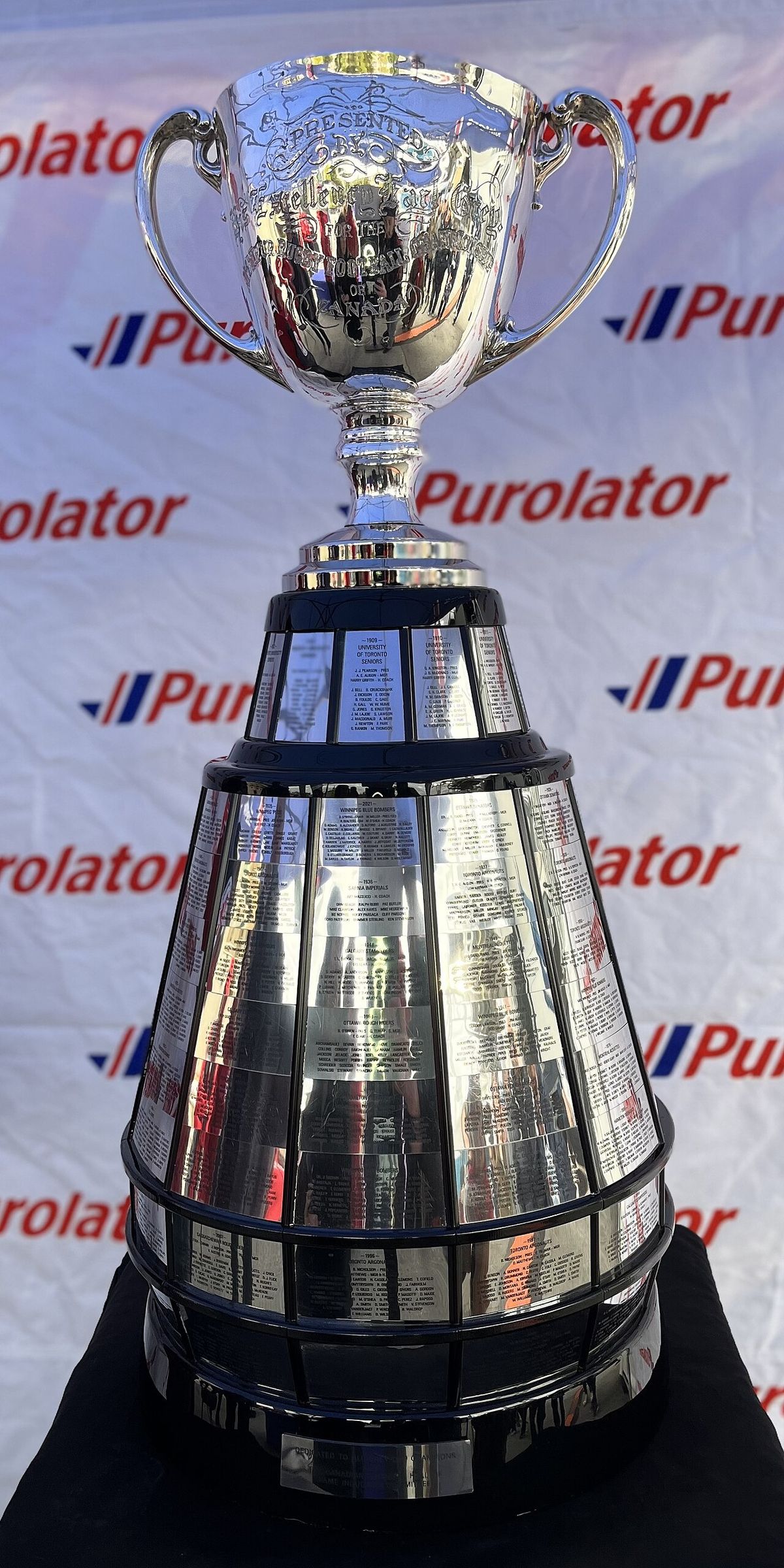
The Saskatchewan Roughriders are a professional Canadian football team based in Regina, Saskatchewan, competing in the Canadian Football League's West Division. Founded in 1910 as the Regina Rugby Club, they are the oldest professional sports team continuously based in Western Canada and the third-oldest gridiron football team in existence. The Roughriders are recognized for their passionate, province-wide fanbase known as Rider Nation and have won the Grey Cup championship five times, most recently in 2025. The community-owned club plays its home games at Mosaic Stadium at Evraz Place, having moved there from historic Taylor Field in 2017.
Early history and name origins
The team was founded on September 13, 1910, as the Regina Rugby Club, adopting old gold and purple colours for its first season. After a winless inaugural campaign, the club quickly became the dominant football force in Saskatchewan, capturing its first provincial championship in 1911. The team began an era of western football dominance from 1912 through 1920, winning six consecutive Western Canada Rugby Football Union titles and going undefeated in competitive play during that span. The club made its first Grey Cup appearance in 1923, suffering a historic 54-0 loss to Queen's University, which remains the most lopsided defeat in the championship's history. Following that loss, the club changed its name to the Regina Roughriders in 1924, retaining red and black colours. The most credible origin of the name links it to the North-West Mounted Police, who were called Roughriders for breaking wild horses, a moniker the team adopted as it occasionally played at the police barracks.
An alternative story linking the name to Theodore Roosevelt's Rough Riders cavalry is more often associated with the Ottawa club and is considered discredited. The Regina club did not adopt the name until 1924, long after the Spanish-American War, and such an association would have been unpopular in Canada following the First World War. During its early years, the team played on a rudimentary dirt field at Park Hughes that often turned to mud in heavy rain. The club's early prominence was achieved despite a somewhat nomadic existence, moving from Dominion Park to the city exhibition grounds after the First World War before settling at Park Hughes in 1921.
Provincial identity and community ownership
In 1946, following the folding of other provincial clubs in Moose Jaw and Saskatoon, the Regina Roughriders became a provincially community-owned organization and changed its name to the Saskatchewan Roughriders. This marked the first recorded instance of a major-league team in North America branding itself as a statewide or provincewide team. The club's green and white colours were adopted in 1948 after executive Jack Fyfe purchased surplus uniforms from a Chicago store, and these have remained the primary colours ever since. The Saskatchewan Roughrider Football Club Inc. is registered under the Non-Profit Corporations Act of Saskatchewan, making it one of only two CFL teams, alongside the Winnipeg Blue Bombers, with non-profit ownership.
Since 2004, the organization has offered permanent Membership Interests, or shares, to the public, with funds directed to a team Stabilization Fund. These shares come in voting (Class A) and non-voting (Class B) classes, with no individual permitted to hold more than 20 voting shares. As of March 2019, the Roughriders had issued 11,639 Class A shares and 435 Class B shares. The shares are sold in commemorative series, with Series I selling out 6,000 shares by 2008, Series II launched for the team's 100th anniversary in 2010, Series III commemorating the 1989 Grey Cup victory, and Series IV beginning sale in 2017, all at a consistent price of $250 per share. The shares cannot be resold and pay no dividends, and the total number of individual owners is not publicly disclosed.
Stadium history and Rider Nation
The Roughriders played their first games at Dominion Park before moving to Park Hughes in 1921, an address associated with the club for parts of nine decades. In 1928, Park Hughes was combined with the neighbouring Park de Young to create a larger football venue, and from 1929 to 1935 the team played most games at the larger exhibition grounds. The first permanent grandstand was built at the combined Park Hughes and Park de Young site in 1936, and the stadium was renamed Taylor Field in 1946. The team draws fans from across Saskatchewan and Canada, a passionate collective known as Rider Nation. Despite playing in the smallest market in the CFL and the second-smallest major-league market in North America, the Roughriders consistently have strong attendance and a deeply loyal fanbase. The club and city of Regina have hosted the Grey Cup four times, in 1995, 2003, 2013, and 2022, and are scheduled to host a fifth time in 2027. The 2026 season features various theme games and special events at Mosaic Stadium designed for fan experiences, and the team offers Family Packs and group ticket options to make games accessible for different audiences.
Championship eras and notable figures
The team won seven consecutive Western Canada Rugby Football Union championships from 1926 to 1932. During that run, the Roughriders appeared in five straight Grey Cup finals from 1928 to 1932. Players like Canadian Football Hall of Famer Eddie James were central to this era. The team was outscored 102 to 15 in those five Grey Cup games and did not win a championship. The franchise's modern era of success began with the hiring of general manager Ken Preston in 1958. His 20-year tenure saw the team miss the playoffs only five times and appear in five Grey Cup finals, winning one in 1966.
Football operations and recent seasons
The Roughriders are led by head coach Corey Mace, who is preparing the team for the 2026 CFL season. For the 2026 campaign, Mace's staff added Micah Johnson as defensive line coach and Jeff Stusek as an assistant special teams coach, as announced in the team's coaching and football operations staff update. The team finalized its roster for the beginning of the 2026 season after a three-week training camp and preseason evaluations, a process described as making final roster cuts. The 2026 season is the club's 68th in the CFL and its 117th year of operation overall, and the organization is actively preparing to draft team members for this season.
The organization continues to build through the draft and player development, aiming for success in the highly competitive West Division. The team's schedule for 2026 includes various theme games and special events at Mosaic Stadium designed to enhance the fan experience. During the 2026 preseason, storylines included running back Kian Schaffer-Baker closing in on 1,000 receiving yards and the team clinching a playoff berth with a comeback win, the anatomy of which was detailed in team coverage. The Plaza of Honour inductees for 2026 were noted for setting a remarkable template for celebrating contributions to the Roughriders, and the team's 2026 theme games are promoted as offering special events and celebrations.
Organizational structure and community impact
The Saskatchewan Roughriders organization includes a full administrative and football operations staff, with leadership across ticketing, marketing, partnerships, and community relations. The club established the Saskatchewan Roughrider Foundation in 2019 to raise and distribute funds, focusing on community pillars of education, health, and amateur football. The foundation aims to teach youth skills such as leadership, resilience, and responsibility, and the team also engages in numerous community initiatives and events. One such program is the Touchdown for Dreams initiative, which celebrated 15 years of operation in 2026 as noted in team observations.
The organization holds an annual general meeting where members can review reports and organizational updates, reflecting its commitment to transparency as a community-owned entity. The team's merchandise operations promote authentic jerseys and sideline apparel, with 100 percent of proceeds from purchases supporting the club directly. Premium customisation services like heat-press and stitching are also offered for jerseys, allowing fans to put their name on a jersey or represent a favourite player. The business side of the club focuses on generating revenue through tickets, partnerships, and merchandise to support football operations and community programs.
Rivalries and cultural significance
The Saskatchewan Roughriders' biggest and most historic rivalry is with the Winnipeg Blue Bombers. Games between the two are often sold out before the beginning of the season. This rivalry is a central feature of the Canadian Football League's West Division. The two clubs are also linked as the only community-owned, non-profit franchises in the league. The Roughriders and the Winnipeg Blue Bombers are both registered under non-profit ownership structures. Games against the Blue Bombers are among the most anticipated events on the Saskatchewan sports calendar each year.
The Saskatchewan Roughriders' green and white colours are widely recognized symbols across Saskatchewan. The team adopted green and white as its primary colours in 1948 after an executive purchased a set of uniforms from a surplus store in Chicago. The team draws fans from across Saskatchewan and Canada who are affectionately known as the Rider Nation. The Roughriders play in the smallest market in the Canadian Football League. The team's official website serves as a hub for news, tickets, and schedules.
Tragedy and remembrance
The franchise experienced profound tragedy on December 9, 1956, when four members of the team were killed in a plane crash. Gordon Sturtridge, Mel Becket, Ray Syrnyk, and Mario DeMarco died when Flight 810 crashed into Slesse Mountain near Chilliwack, British Columbia, while returning from the Canadian Football Council All Star Game in Vancouver. The team retired the jersey numbers of the four players shortly after the disaster, and this event remains a sombre chapter in the team's history. The players are remembered as part of the fabric of the organization, and the tragedy occurred following the 1956 season when the team had achieved a 10-6 record and won a playoff series.
The Saskatchewan Roughriders honour their past through various means. The organization marks historical milestones, such as the team's founding in 1910. The team has had 20 players inducted into the Canadian Football Hall of Fame. The Roughriders Football Club and the city of Regina have hosted the Grey Cup four times. The club's connection to a long history helps maintain its deep roots in the community and the province's collective memory.
Historical challenges and league evolution
The Roughriders' early history was marked by challenges related to league structure and travel. In 1911, the club refused to participate in the inaugural Western Canada Rugby Football Union playoffs due to a format that would have required them to play up to two road games, a format ostensibly created to minimize travel. A compromise was later reached giving the Saskatchewan champion a bye to the Western final in exchange for playing the championship game on the road, which Regina accepted. In 1936, the Roughriders became founding members of the Western Interprovincial Football Union alongside the Winnipeg Blue Bombers and Calgary Bronks, the highest level of Canadian football play in Western Canada.
That same 1936 season, the team won the WIFU championship but was barred from competing for the Grey Cup due to a dispute with the Canadian Rugby Union over the use of five import players from the United States. This was seen as a reaction to Winnipeg winning the Grey Cup the previous year with seven imports, and despite plans to travel without the ineligible players, the CRU disallowed the team from competition. The decade following this incident was less successful, and the team did not win another Western Final as the Regina Roughriders, nor finish in first place during that time. The club's entry into the newly formed Canadian Football League in 1958 marked another step in its league evolution, beginning a period of greater stability and eventual success under general manager Ken Preston.
Questions about Saskatchewan Roughriders
When were the Saskatchewan Roughriders founded?
The Saskatchewan Roughriders were founded on September 13, 1910, as the Regina Rugby Club. The organization has maintained unbroken continuity since that date, making it the oldest professional sports team continuously based in Western Canada. The team changed its name to the Regina Roughriders in 1924 and adopted its current provincial name, the Saskatchewan Roughriders, in 1946. It is the third-oldest professional gridiron football team in existence today, after the Arizona Cardinals and Toronto Argonauts.
How many Grey Cups have the Roughriders won?
The Saskatchewan Roughriders have won the Grey Cup five times in their history. Their championship victories came in the years 1966, 1989, 2007, 2013, and most recently in 2025. The team has appeared in the Grey Cup final 20 times, making them one of the CFL's most historically competitive franchises. They have also won the Western championship a record 29 times throughout their long history.
Where do the Saskatchewan Roughriders play their home games?
The Saskatchewan Roughriders play their home games at Mosaic Stadium at Evraz Place in Regina, Saskatchewan. The team moved to this stadium in 2017. The Roughriders played their home games at historic Taylor Field from 1936 to 2016. Prior to Taylor Field, the team played at Park Hughes and other locations like Dominion Park and the city exhibition grounds.
Who owns the Saskatchewan Roughriders?
The Saskatchewan Roughriders are a community-owned, non-profit organization. The club is incorporated under the Non-Profit Corporations Act of Saskatchewan and is one of two CFL teams with this structure, the other being the Winnipeg Blue Bombers. Since 2004, the team has offered Membership Shares to the public, but no individual or entity owns the team in a traditional for-profit sense. The shares provide membership interests but cannot be resold and pay no dividends.
Who is the Roughriders' biggest rival?
The Roughriders' biggest and most historic rival is the Winnipeg Blue Bombers. Games between these two West Division foes are a highlight of the CFL calendar and are frequently sold out long before the season begins. The rivalry dates back to the early days of western Canadian football and is deeply rooted in regional pride. Both teams share the distinction of being community-owned, non-profit franchises in the league.
Sources: Wikipedia and current public reporting, checked by the Garbutt Disposal desk. Last updated 2026-10-20.