Winnipeg Blue Bombers
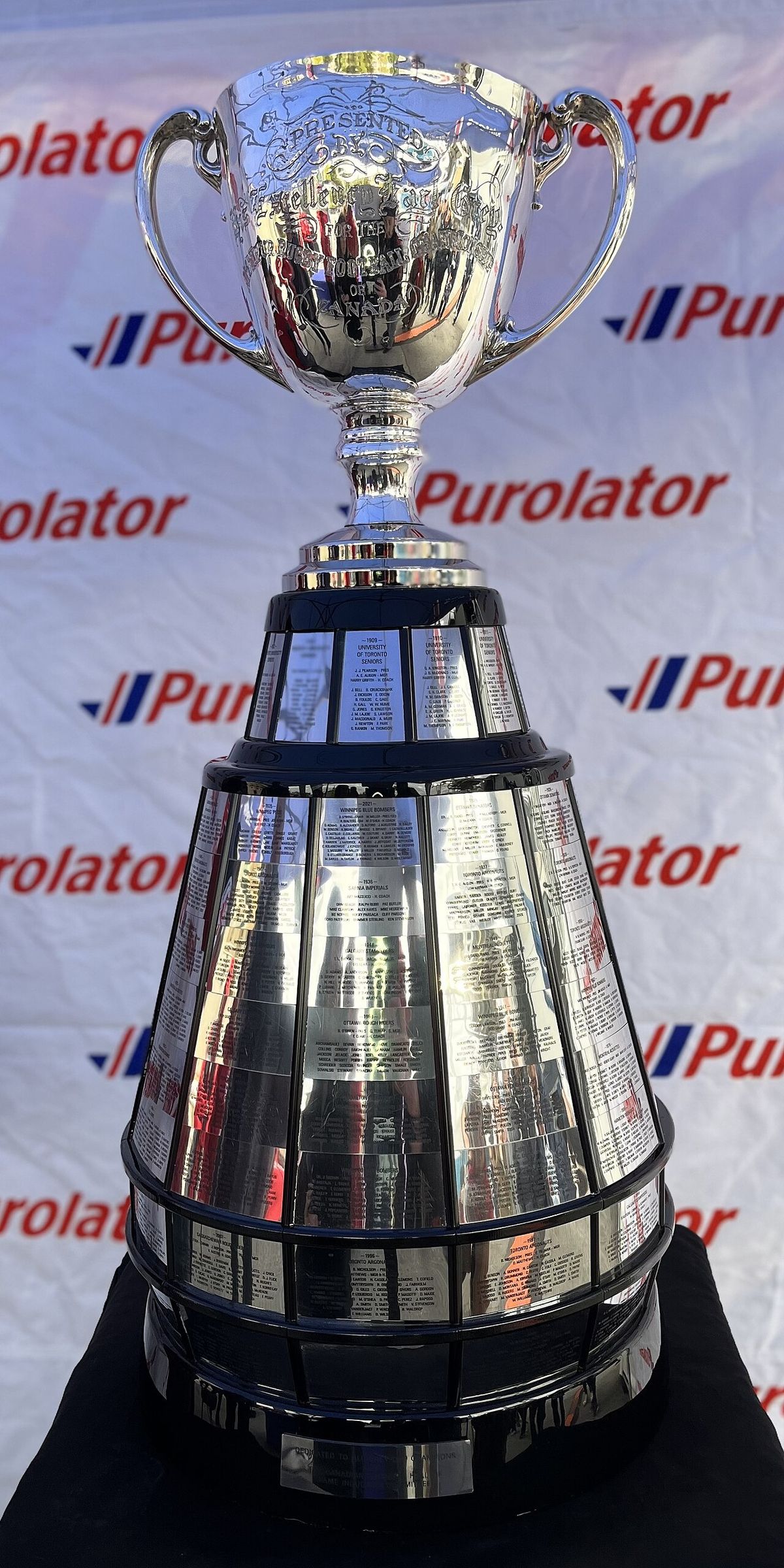
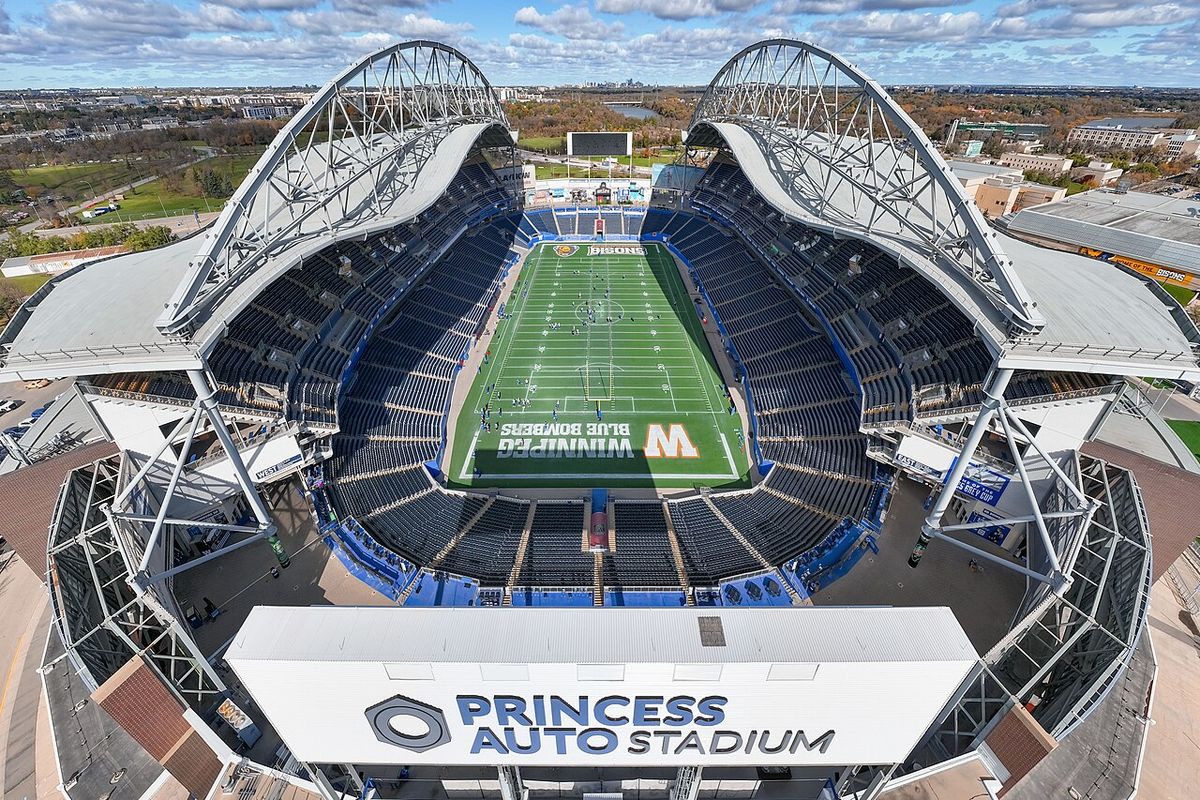
The Winnipeg Blue Bombers are a professional Canadian football team based in Winnipeg, Manitoba, and a member club of the Canadian Football League's West Division. Founded in 1930 as the Winnipeg Rugby Football Club, the organization is legally known as the Winnipeg Football Club and is one of two community-owned franchises in the CFL, operating without shareholders. The team has won the Grey Cup championship 12 times, most recently in 2021, and holds the record for the most Grey Cup appearances with 29. They play their home games at Princess Auto Stadium, carrying a legacy as the first club from Western Canada to win a national football title.
Early History and Foundation
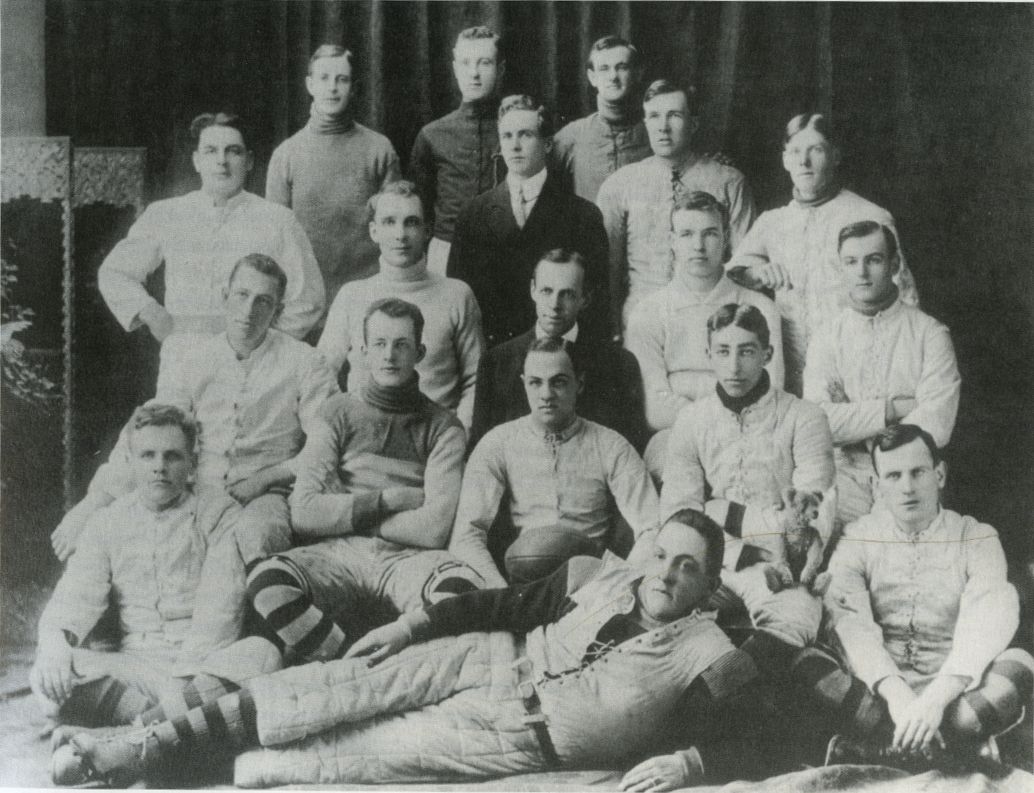
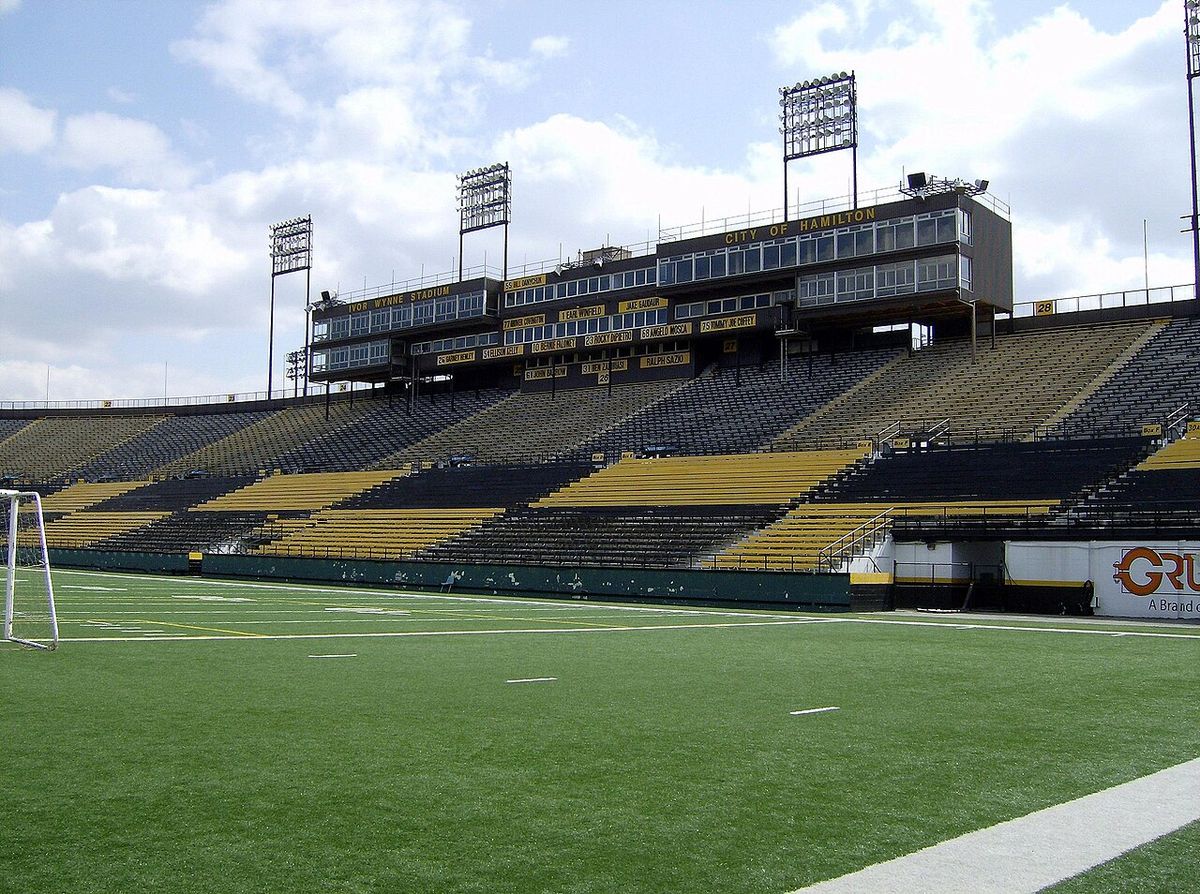
The origins of organized football in Winnipeg trace back to 1879 with the formation of the Winnipeg Rugby Football Club. The modern franchise was established on June 10, 1930, through the merger of the financially struggling Winnipeg Tammany Tigers with other local clubs, creating a new entity under the Winnipeg Rugby Football Club banner. This team, informally called the Winnipegs or Pegs, initially adopted green and white colours and played its first game on June 13, 1930, at Carruthers Park, losing 7-3 to the St. John's Rugby Football Club. In 1932, the Winnipegs merged with St. John's and changed their colours to blue and gold, absorbing the Garrison Rugby Club team the following year. The club competed in the Manitoba Rugby Football Union from 1930 to 1935, playing home games at various grounds including Carruthers Park, River Park, and Wesley Park before moving to Osborne Stadium in 1935.
First Grey Cup and the Birth of a Nickname
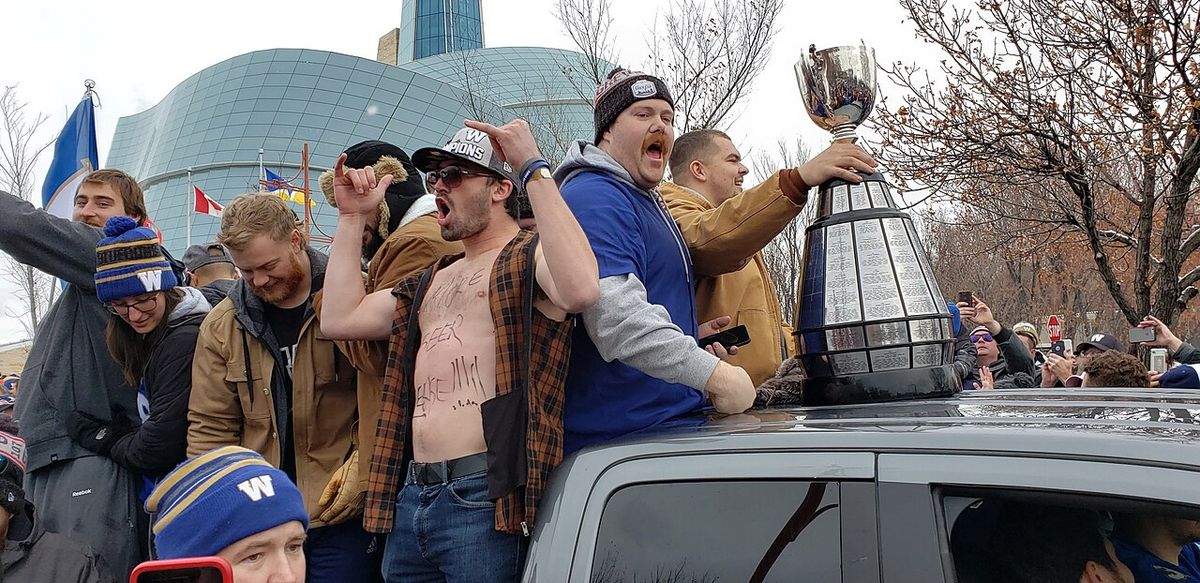
The 1935 season marked a historic breakthrough for western Canadian football. Prior to that year, western teams had appeared in ten Grey Cup games but were defeated each time, being outscored 236-29. On December 7, the Winnipegs faced the Hamilton Tigers in the 23rd Grey Cup at Hamilton Amateur Athletic Association Grounds before 6,405 fans on a rainy day. Winnipeg scored quickly after Hamilton's Jack Craig let the opening kickoff bounce, with a Winnipeg player recovering at the Hamilton 15-yard line. Bob Fritz connected with Bud Marquardt for a touchdown and later Greg Kabat caught a touchdown pass, giving Winnipeg a 12-4 halftime lead. After Hamilton closed the gap, Winnipeg's Fritz Hanson sealed the 18-12 victory with a 78-yard punt return touchdown. Following this triumph, Winnipeg Tribune sports writer Vince Leah referred to the team as the "Blue Bombers of Western football," a nickname inspired by the success of boxer Joe Louis, known as the Brown Bomber. Journalist Jim Coleman noted the connection to Louis's fame, and the name was quickly adopted officially.
Growth, the WIFU, and the Jack Jacobs Impact
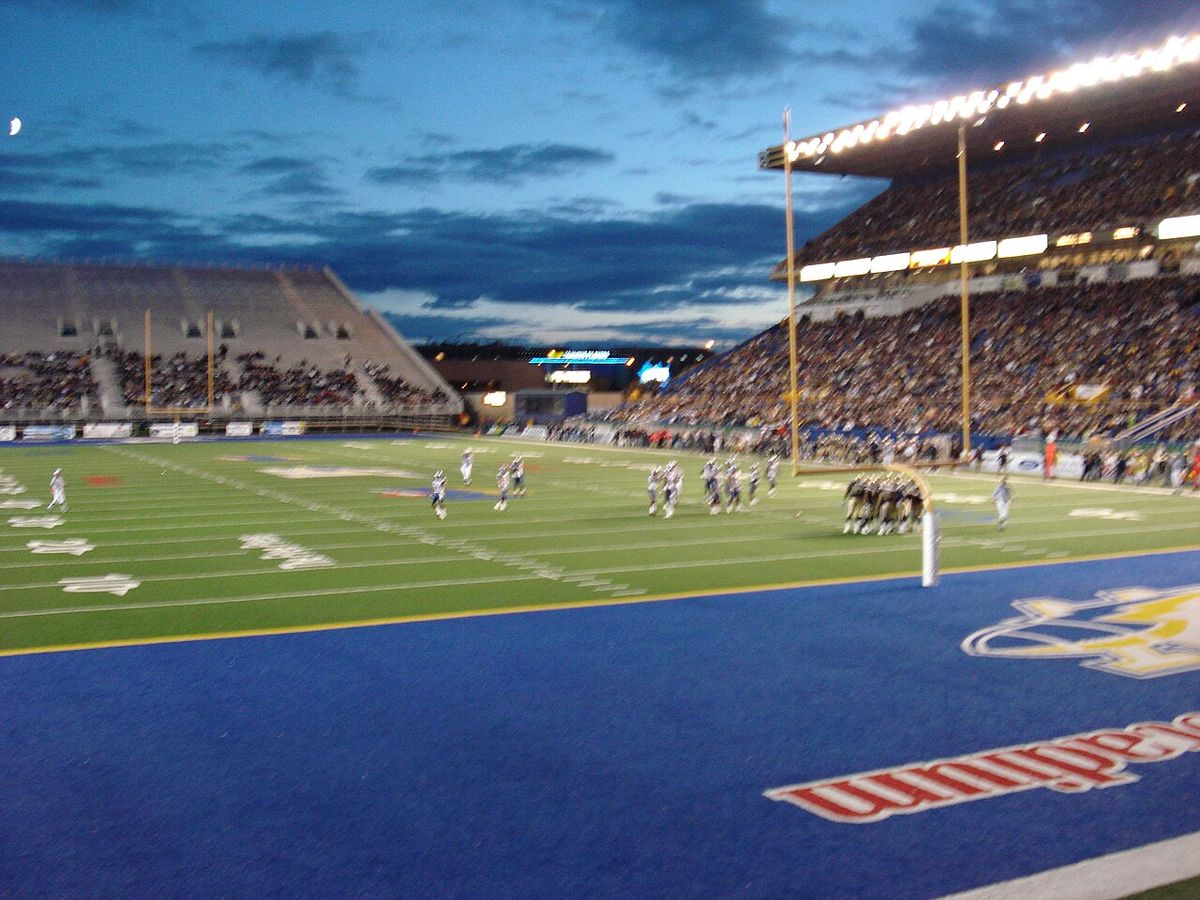
In 1935, the Blue Bombers helped form the Western Interprovincial Football Union (WIFU) with the Calgary Bronks and Regina Roughriders, establishing the top level of play in the west. Between 1936 and 1949, Winnipeg earned seven Grey Cup berths in 1937, 1938, 1939, 1941, 1942, 1943, and 1945, winning championships in 1939 over Ottawa and again in the 1941 rematch. The arrival of quarterback Jack Jacobs in 1950 brought new excitement and offensive innovation to the franchise. Jacobs, a Creek quarterback from Oklahoma known as Indian Jack, led the Bombers to two Grey Cup appearances, though they lost both. His exciting style increased ticket sales and popularity, generating revenue that convinced the club to move from Osborne Stadium to the new Winnipeg Stadium, which fans called "The House that Jack Built. Jacobs set major professional passing records, becoming the first quarterback to throw for over 3,000 yards in a season with 3,248 yards in 1951.
The Bud Grant Coaching Dynasty
Bud Grant joined the Blue Bombers as a player in 1953 after two years with the Philadelphia Eagles, part of a wave of NFL talent attracted by Canadian salaries. After a four-year career as an offensive end, he accepted the head coaching position in 1957 and led the team for the next ten years. Grant's tenure defined an era of Bombers football, welcoming stars like quarterback Ken Ploen, running back Leo Lewis, linebacker Farrell Funston, defensive back Ernie Pitts, and linemen Charlie Shepard and Ed Kotowich. The Bombers competed in six Grey Cup games under Grant, winning four championships. The 1958 and 1959 victories began the run, but the 1961 and 1962 wins were particularly dramatic. The 1961 Grey Cup was the first to go into overtime, with Winnipeg defeating Hamilton 21-14. The 1962 championship, known as the "Fog Bowl," was postponed with 9:29 left in the fourth quarter due to zero visibility and resumed the next morning, with the Bombers winning 28-27.
The team's dominance waned in the late 1960s, with four seasons of double-digit losses. A resurgence in the early 1970s featured quarterback Don Jonas, running back Mack Herron, and receivers Jim Thorpe and Bob LaRose. The Bombers finished first in the Western Conference in 1972, a feat not repeated until 2021, but lost the Western Final to Saskatchewan on a last-play field goal. Coaches Jim Spavital and Bud Riley led the team through subsequent struggles before Ray Jauch took over in 1978, building a strong team that often trailed the powerhouse Edmonton Eskimos. The 1981 season saw a historic offensive output, with receiver Eugene Goodlow becoming the first CFL player to record 100 receptions in a season, gaining 1,494 yards and 14 touchdowns. That year, the Bombers also became one of the first teams to have three 1,000-yard receivers: Goodlow, Joe Poplawski (1,271 yards), and Rick House (1,102 yards).
- 1958: Grey Cup champions in first CFL season.
- 1959: Grey Cup champions.
- 1961: Grey Cup champions in first overtime game.
- 1962: Grey Cup champions in the "Fog Bowl".
- 1972: Finished first in West for first time since 1962.
- 1981: Eugene Goodlow records 100 receptions. Three 1,000-yard receivers.
The Cal Murphy Era and Division Realignments
Cal Murphy was hired as head coach in 1983 and immediately traded quarterback Dieter Brock to Hamilton for Tom Clements, a move prompted by Brock's desire to play in the USFL. Clements led the Bombers to a Grey Cup victory over Brock's Tiger-Cats in 1984, the team's first championship in 22 years. Murphy was named CFL Coach of the Year in both 1983 and 1984. He stepped down as coach to become general manager in 1987, with assistant Mike Riley, son of former coach Bud Riley, taking over. That same year, after the Montreal Alouettes folded, the league moved the Bombers to the East Division to balance the conferences. Under Riley, the Bombers won Grey Cups in 1988 over B.C. and 1990 over Edmonton, with Riley earning Coach of the Year honours both seasons. After Riley left, Darryl Rogers and Urban Bowman coached briefly before Murphy resumed head coaching duties in 1993, remaining until 1996. Murphy's 14-year association with the club included five Grey Cup appearances and three championships. In 1995, they moved to the new North Division during the CFL's U.S. expansion, returned to the West in 1996 after that experiment ended, and moved back to the East in 1997 following the Ottawa Rough Riders' closure. The team's performance declined after Murphy's departure, culminating in a 68-7 playoff loss to Edmonton in 1996 and winning records of only 7-11 in 1995 and 9-9 in 1996.
The Milt Stegall Years and Offensive Records
Milt Stegall joined the Bombers in 1995 after three years with the Cincinnati Bengals, recording 469 receiving yards in his first six games. The late 1990s were difficult, with coach Jeff Reinebold winning only four games in 1997 and three in 1998. Highlights from that period included a 43-12 Labour Day Classic win over Saskatchewan in 1997 and a dramatic 1998 comeback win led by backup quarterback Troy Kopp. Stegall became an all-star in 1997, his first full season, and set a league record that still stands with an average gain of 26.5 yards per reception on 61 catches for 1,616 yards and 14 touchdowns. The acquisition of quarterback Khari Jones in 1999 brought the Bombers back to prominence. Jones was named the CFL's Most Outstanding Player in 2001, and Stegall received the honour in 2002. The duo, along with running back Charles Roberts, powered the Bombers to the 2001 Grey Cup, a loss to Calgary.
After Jones was traded in 2004, quarterback Kevin Glenn took over. In 2006, Glenn connected with Stegall for "The Play," a 100-yard touchdown pass as time expired to beat Edmonton 25-22, considered one of the greatest in CFL history. The 2007 season saw Stegall break the career CFL touchdown record and nearly break the receiving yards record. That season culminated in a Grey Cup loss to Saskatchewan after Glenn broke his arm in the East Final, forcing rookie Ryan Dinwiddie to start. Dinwiddie threw three interceptions to Saskatchewan's James Johnson, who was named game MVP. Stegall returned for the 2008 season, starting 159 yards shy of the receiving record, and took a $50,000 pay cut for a final Grey Cup attempt. The 2008 season ended with a division semifinal loss and the firing of coach Doug Berry. Mike Kelly was hired as coach, but Stegall retired in February 2009, ending his 14-year tenure with the club.
| Season | Key Achievement or Event |
|---|---|
| 1995 | Milt Stegall joins team, records 469 yards in 6 games. |
| 1997 | Stegall sets CFL record for avg. yards per reception (26.5). |
| 2001 | Khari Jones named Most Outstanding Player. Grey Cup appearance. |
| 2002 | Milt Stegall named Most Outstanding Player. |
| 2004 | Khari Jones traded to Calgary. Kevin Glenn becomes starter. |
| 2006 | "The Play", 100-yard TD from Glenn to Stegall wins game. |
| 2007 | Stegall breaks career TD record. Bombers lose Grey Cup. |
| 2008 | Stegall's final season. Bombers lose in division semifinals. |
| 2009 | Milt Stegall retires from the CFL in February. |
Instability and the Path to the 2021 Championship
The period following Stegall's retirement was marked by coaching and management instability. Mike Kelly was fired after one season in 2009. Paul LaPolice was hired as the 28th head coach in team history on February 5, 2010, emphasizing a team-first philosophy and fixing problems rather than making excuses. The 2010 season tested this approach, as the Bombers finished 4-14, with nine losses by four points or fewer and ten by a touchdown or less. This continued a pattern of narrow defeats and missed playoffs. The franchise's long journey back to the top required persistent rebuilding. Key front office changes included the departure of general manager Brendan Taman in January 2009, signaling the end of one era. The team's on-field fortunes eventually turned with a concerted effort to develop a competitive roster. This build culminated in the 2021 season when the Bombers finished first in the West Division for the first time since 1972. They secured the 108th Grey Cup with a 33-25 victory over the Hamilton Tiger-Cats, claiming their 12th championship and ending a long title drought that had lasted since their last win as the West representative in 1984.
Community Ownership and Cultural Significance
The Winnipeg Blue Bombers hold a unique position in North American professional sports as a community-owned team without shareholders, a model shared only with the Saskatchewan Roughriders in the CFL. This ownership structure fosters a deep connection with the city and province, where the team is a central part of the regional identity. The team's influence extends beyond the field, as seen in 1956 when fans named Labatt's Pilsener Lager "Labatt Blue" in honour of the team's colours. The Bombers' history, from the first western Grey Cup win in 1935 to the modern championship in 2021, is woven into the fabric of Manitoba, with generations of fans supporting the blue and gold. The team's endurance and success, including a record 29 Grey Cup appearances, reflect the resilience and passion of its community base. The organization's legal name, the Winnipeg Football Club, points to its foundational role in the city's sporting life since 1930.
Questions about Winnipeg Blue Bombers
Why are they called the Blue Bombers?
The nickname originated after the team's first Grey Cup win in 1935. Winnipeg Tribune sports writer Vince Leah called them the "Blue Bombers of Western football" in his column. The name was inspired by the popular nickname of heavyweight boxing champion Joe Louis, known as the "Brown Bomber. The alliterative and powerful name was quickly adopted by the team and has been used ever since.
Who are some of the greatest players in Blue Bombers history?
Franchise legends include quarterback Jack Jacobs, the first professional QB to throw for 3,000 yards in a season. Receiver Milt Stegall, the CFL's all-time touchdown leader. And coach Bud Grant, who led the team to four Grey Cups. Other greats include quarterback Ken Ploen, running back Leo Lewis, quarterback Khari Jones, and receiver Eugene Goodlow, who was the first CFL player to record 100 receptions in a season.
When were the Winnipeg Blue Bombers founded?
The Winnipeg Blue Bombers were founded on June 10, 1930, as the Winnipeg Rugby Football Club. This was the result of a merger, as the financially struggling Winnipeg Tammany Tigers disbanded and combined with other city teams. The new club, known unofficially as the Winnipegs or Pegs, played its first game on June 13, 1930, at Carruthers Park. The team adopted the Blue Bombers nickname in 1935 after a sports writer used the term following their first Grey Cup victory. The organization's legal name remains the Winnipeg Football Club.
How many Grey Cups have the Blue Bombers won?
The Winnipeg Blue Bombers have won the Grey Cup championship 12 times. Their most recent victory was in the 2021 CFL season when they defeated the Hamilton Tiger-Cats 33-25 in the 108th Grey Cup. The team holds the record for the most Grey Cup appearances of any team, with 29 trips to the championship game. Their first victory in 1935 was historic, as Winnipeg became the first club from Western Canada to win the Grey Cup, defeating the Hamilton Tigers 18-12.
Where do the Blue Bombers play their home games?
The Winnipeg Blue Bombers play their home games at Princess Auto Stadium. The team previously played at several locations including Carruthers Park, River Park, and Wesley Park before moving to Osborne Stadium in 1935. Increased revenue from popularity driven by star quarterback Jack Jacobs in the early 1950s facilitated a move to a new Winnipeg Stadium, later known as Canad Inns Stadium. This venue was colloquially called 'The House that Jack Built' due to Jacobs' influence.
Are the Winnipeg Blue Bombers privately owned?
No, the Winnipeg Blue Bombers are not privately owned. They are one of only two community-owned teams in the Canadian Football League, the other being the Saskatchewan Roughriders. The organization, legally named the Winnipeg Football Club, operates without any shareholders. This structure makes the Blue Bombers the only major professional sports franchise in North America still in existence that is community-owned and lacks a shareholder model.
Sources: Wikipedia and current public reporting, checked by the Garbutt Disposal desk. Last updated 2026-10-23.