Hamilton Tiger-Cats
The Hamilton Tiger-Cats are a professional Canadian football team based in Hamilton, Ontario, and a founding member of the Canadian Football League's East Division. The club's history traces back to the formation of the Hamilton Football Club in 1869, with the modern Tiger-Cats entity created in 1950 through the merger of the Hamilton Tigers and Hamilton Wildcats. They have won eight Grey Cup championships as the Tiger-Cats, most recently in 1999, and play their home games at Tim Hortons Field in downtown Hamilton. The team is a central institution in its steel town home and maintains one of the CFL's most historic and intense rivalries with the Toronto Argonauts.
Early history and formation (1869 to 1950)
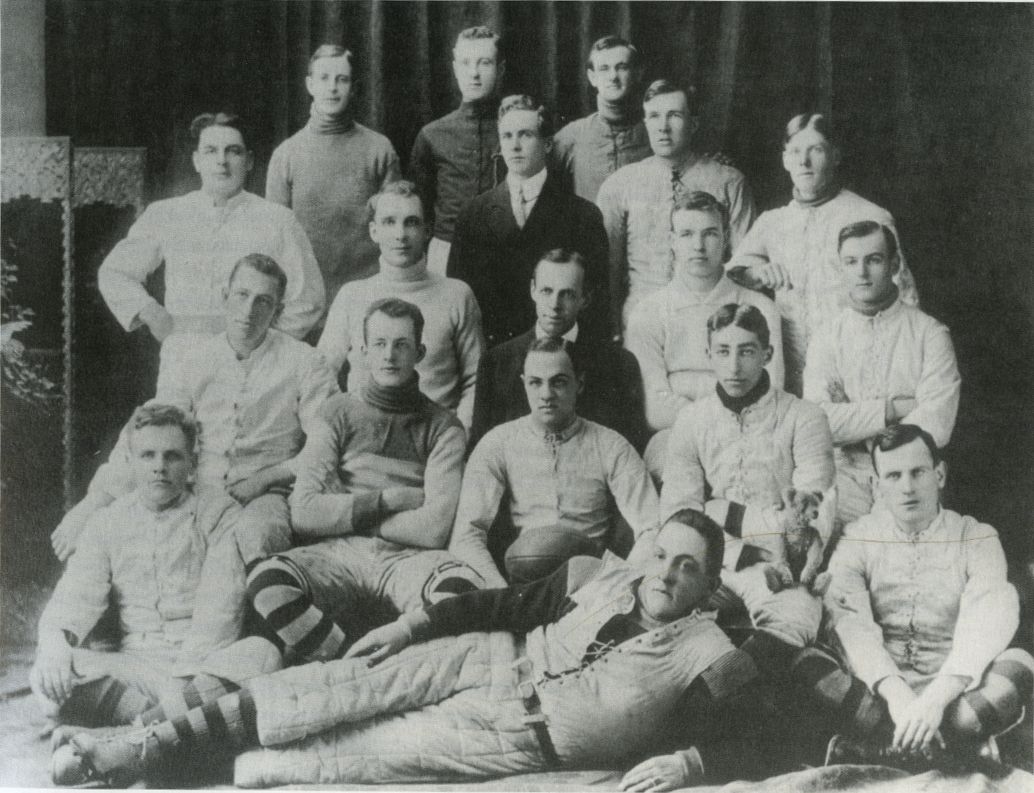
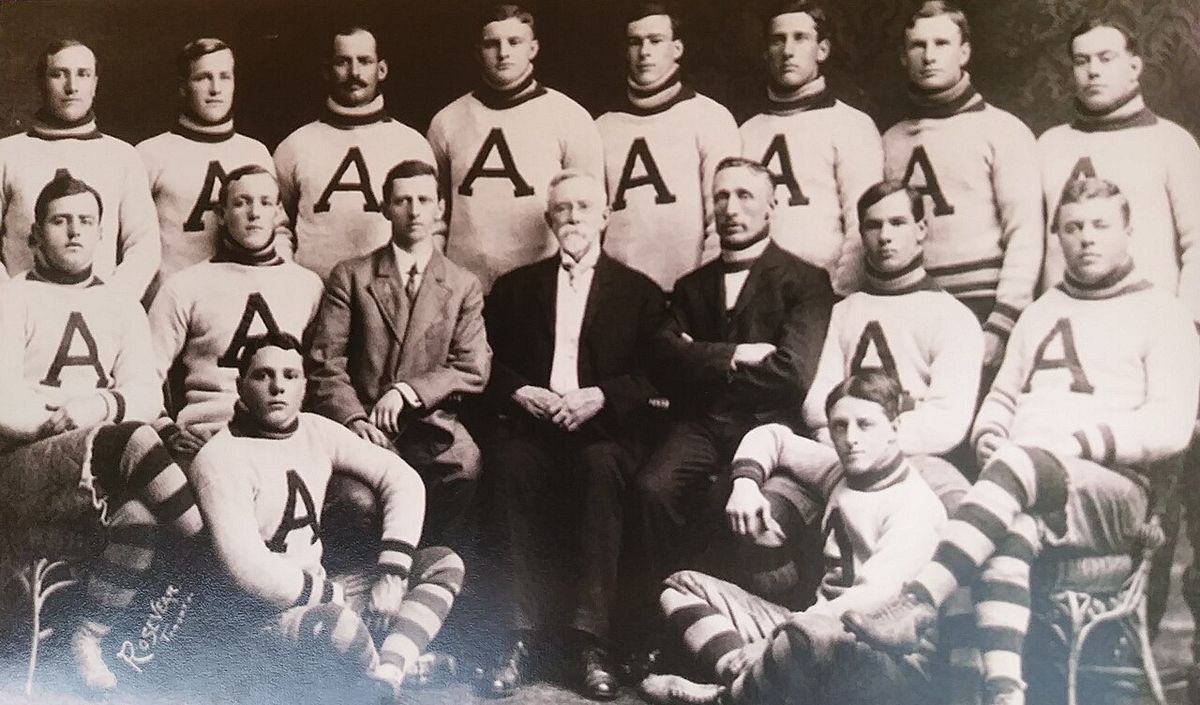
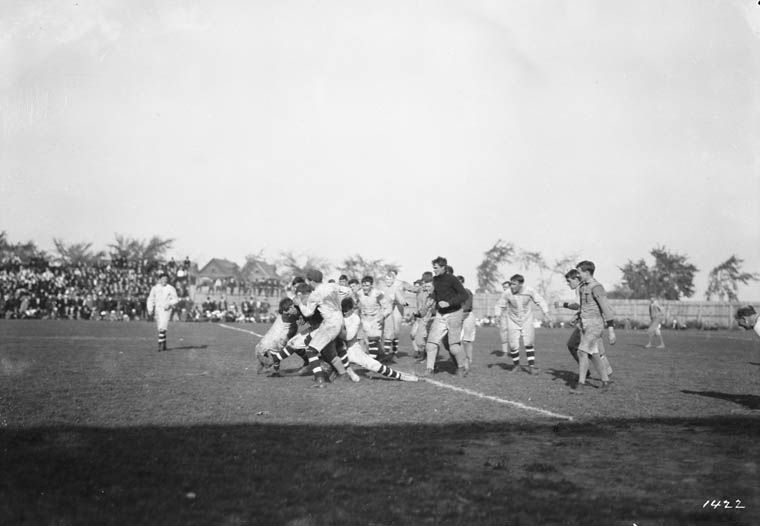
The roots of Hamilton professional football stretch back to November 3, 1869, with the formation of the Hamilton Football Club in a room above George Lee's Fruit Store. This club played its first game on December 18, 1869, against the 13th Battalion and became officially known as the Tigers in 1873, though the nickname was used informally from its inception due to the club's colours. The Hamilton Tigers began play in the Ontario Rugby Football Union in 1883 and won their first Canadian Dominion Football Championship in 1906 by beating McGill University 29-3. They joined the new Interprovincial Rugby Football Union in 1907, which later evolved into the CFL's Eastern Conference. The Tigers faced local competition from the Hamilton Alerts, who won the city's first Grey Cup in 1912. The Tigers won their first of five Grey Cups the following year in 1913, defeating the Toronto Parkdale Canoe Club by a lopsided 44-2 margin, with many Alert players joining the Tigers after their club faded. The Tigers added championships in 1915, 1928, 1929, and 1932 before suspending operations during the Second World War. This led to the formation of the Hamilton Wildcats in 1941, who were given permission to use Tigers players but not their traditional black and yellow colours. The Wildcats, stocked with Royal Canadian Air Force personnel, won the 31st Grey Cup in 1943 as the Hamilton Flying Wildcats. Post-war, both the Tigers and Wildcats operated simultaneously, creating a financially unsustainable rivalry for fans and talent. In 1950, under the guidance of local leaders Ralph Cooper and F.M. Gibson, the Tigers absorbed the weaker Wildcats to form the Hamilton Tiger-Cats, merging the teams' colours into a combination of yellow, black, red, and white, with the black and gold of the Tigers dominating the new scheme.
Steel Town dynasty and sustained success (1950 to 1972)
The newly merged Tiger-Cats immediately became a CFL powerhouse, establishing a dynasty throughout the 1950s and 1960s. From 1950 to 1972, the team finished first in the East Division thirteen times and appeared in eleven Grey Cup finals, winning six championships. Key players from this era included defensive lineman Angelo Mosca, quarterback Bernie Faloney, lineman John Barrow, quarterback Joe Zuger and both-way star Garney Henley. Under coach Jim Trimble, the team played in every national final from 1957 through 1967, except for 1960 and 1966, securing Grey Cup victories in 1957, 1963, 1965, and 1967. A notable non-CFL achievement came on August 8, 1961, when the Tiger-Cats defeated the American Football League's Buffalo Bills 38-21, a feat that remains the only time a Canadian team has beaten a current National Football League team. The era culminated with the 1972 Grey Cup win, a 13-10 victory over the Saskatchewan Roughriders at Civic Stadium, which had been renamed Ivor Wynne Stadium the previous year. The game was led by sensational rookies, quarterback Chuck Ealey and 18-year-old kicker Ian Sunter, who booted the deciding field goal. This made Hamilton the first modern-era team to win the Grey Cup on its home field, a distinction shared by only five other CFL teams.
The Tiger-Cats had great success throughout the 1950s and 1960s, appearing in ten Grey Cup finals. They finished first in the East Division thirteen times from 1950 to 1972. During that same time span, they appeared in eleven Grey Cup finals and won the championship six times. Their 1972 Grey Cup win was led by sensational rookies Chuck Ealey and Ian Sunter.
- 1957 Grey Cup: Victory under coach Jim Trimble.
- 1963 Grey Cup: Championship win.
- 1965 Grey Cup: Championship win.
- 1967 Grey Cup: Championship win.
- 1972 Grey Cup: 13-10 win over Saskatchewan at home.
This run of success established the Tiger-Cats as a dynasty in the Steel City. Players such as Angelo Mosca, Bernie Faloney, John Barrow, Joe Zuger and Garney Henley became football icons in Hamilton. Beginning in 1957 under coach Jim Trimble, the Tiger-Cats played in almost every national final through 1967. The team also became the only Canadian team to have ever defeated a current National Football League team when they beat the Buffalo Bills in 1961.
Late 20th century: peaks, valleys, and a final cup
The team's fortunes became more variable in the late 1970s and 1980s amid ownership changes and financial pressures. Toronto Maple Leafs owner Harold Ballard assumed control in 1978, claiming to lose a million dollars a year and publicly calling the players overpaid losers. Despite this, the Tiger-Cats remained competitive, reaching the playoffs every year in the 1980s. They appeared in the Grey Cup game in 1980 and won the East Division decisively in 1981 with an 11-4-1 record under head coach Frank Kush, though they lost a stunning East final to the 5-11 Ottawa Rough Riders. A stout defence led by Grover Covington, Ben Zambiasi, Howard Fields and Mitchell Price, complemented by an offence featuring quarterbacks Tom Clements and Mike Kerrigan throwing to Rocky DiPietro and Tony Champion, powered the team to three consecutive Grey Cup appearances from 1984 to 1986. After beating Toronto in the 1986 Eastern Final, Ballard retracted his criticism, and the team won the 1986 Grey Cup by beating the Edmonton Eskimos 39-15. Ballard sold the team to businessman David Braley in 1989, who in turn sold it to a community group in 1992 due to poor attendance figures. The 1990s began with the team missing the playoffs in back-to-back years for the first time under the Tiger-Cats banner. By 1994, the franchise was in grave jeopardy with fewer than 6,000 season tickets sold, prompting CFL Commissioner Larry Smith to threaten revocation unless the team doubled ticket sales and raised one million dollars in corporate sponsorship for 1995, thresholds which were met and exceeded. The on-field product struggled with quarterback instability featuring Don McPherson, Damon Allen, and Matt Dunigan, despite the excellent play of receiver Earl Winfield. A turnaround began in 1998 under coach Ron Lancaster, with the pitch-and-catch duo of Danny McManus and Darren Flutie and the pass rush of Joe Montford leading the Tiger-Cats to the 1998 Grey Cup and a championship victory in 1999, which remains their most recent title.
The 1990s were marked by financial instability and constant struggles on the field. Quarterback was a weak spot for the Tiger-Cats in the first half of the decade. Names like Don McPherson, Damon Allen, Timm Rosenbach, Matt Dunigan, Lee Saltz and Todd Dillon took turns at the pivot position. Despite the excellent play of Eastern All-Star Earl Winfield, Hamilton struggled to attract crowds.
- Don McPherson
- Damon Allen
- Timm Rosenbach
- Matt Dunigan
- Lee Saltz
- Todd Dillon
This constant change at the quarterback position contributed to the team's struggles. Fewer than 6,000 season tickets were sold in 1994, prompting a threat from the CFL commissioner. The commissioner threatened to revoke the franchise if they did not both double ticket sales for 1995 and raise one million dollars in corporate sponsorship. Both thresholds were met and exceeded, saving the team.
21st century struggles and resurgence
The early 2000s marked the lowest period in franchise history, with the team missing the playoffs in 2002 and then hitting rock bottom in 2003. That season, the Tiger-Cats finished with a CFL-record 1-17 record, with their sole victory a 27-24 overtime win in week 14. Native Hamiltonian Bob Young purchased the club in 2003, stabilizing its finances and improving attendance and corporate sponsorship, though on-field results remained poor with last-place finishes in 2005 (5-13) and 2006 (4-14). A coaching overhaul did not yield immediate improvement, but fortunes turned in 2009 when the team qualified for the playoffs for the first time in several years. The 2000s thus became the first decade since the 1890s that a Hamilton football club failed to win a national championship. A significant off-field development was the closure of historic Ivor Wynne Stadium after the 2012 season, with the team announcing in 2011 its move to a new Pan American Stadium for 2014. The entire 2013 season was played at Alumni Stadium at the University of Guelph while the new stadium was under construction. This period also saw the team return to Grey Cup contention, though without ultimate success, beginning a pattern of near misses.
The Tiger-Cats reached the Grey Cup four times in the 2010s but lost on each occasion, extending their championship drought. They lost the 101st Grey Cup in 2013 to the Saskatchewan Roughriders 45-23 in a game attended by actor Tom Hanks and Hamilton native comedian Martin Short. Tim Hortons Field opened in time for the 2014 Labour Day Classic, and the team went on an impressive run from a 1-6 start to a 9-9 finish, winning the weak East Division and advancing to the 102nd Grey Cup, where they lost 20-16 to the Calgary Stampeders. The team went undefeated at its new home stadium in that inaugural 2014 season. Further appearances in the 107th Grey Cup in 2019 and the 108th in 2021 both resulted in losses to the Winnipeg Blue Bombers, cementing a fierce new rivalry. Despite these championship losses, the team qualified for the playoffs in eight of the ten seasons in the 2010s, signalling a return to competitive prominence.
In the modern era, the Tiger-Cats have had several key Grey Cup appearances that resulted in losses. They lost the 101st Grey Cup to the Saskatchewan Roughriders in 2013. They lost the 102nd Grey Cup to the Calgary Stampeders in 2014. They also lost the 107th and 108th Grey Cups. These appearances occurred after the team qualified for the post-season in eight of the ten years of the 2010s.
- 101st Grey Cup (2013): Lost 45-23 to Saskatchewan Roughriders.
- 102nd Grey Cup (2014): Lost 20-16 to Calgary Stampeders.
- 107th Grey Cup (2019): Lost to Winnipeg Blue Bombers.
- 108th Grey Cup (2021): Lost to Winnipeg Blue Bombers.
These near-misses have defined the recent era for the franchise. Since 1990, the Tiger-Cats have missed the playoffs on eleven occasions and have won just one Grey Cup in 1999. In addition to having the longest Grey Cup drought of all CFL teams, they are the only team to have not won the Grey Cup in the 21st century. The franchise has started to return to prominence but has lost in each of its recent Grey Cup appearances.
Ownership, management, and corporate structure
Since October 2003, the club has been owned by Hamiltonian Bob Young, a University of Toronto graduate who earned his fortune in the software industry and is the owner and CEO of the self-publishing website Lulu. Under his stewardship, the team's financial footing improved with increased sponsorship, a new scoreboard at Ivor Wynne, and later a new stadium. As of 2011, the team's executive committee consisted of Young as Caretaker, Scott Mitchell as CEO, Doug Rye as Executive Vice President, Matt Afinec as President and COO, and Glenn Gibson as Vice Chairman. In January 2022, the ownership structure was reorganized under the newly announced Hamilton Sports Group, an entity that also owns Forge FC of the Canadian Premier League and holds the master licence for Tim Hortons Field. Bob Young remained chairman and the largest shareholder, with new investment from Hamilton-based steel company Stelco, represented by its chairman and CEO Alan Kestenbaum, club CEO Scott Mitchell, and local sports executive Jim Lawson. In late 2024, American steelmaker Cleveland-Cliffs acquired Stelco, including its 40 percent share of Hamilton Sports Group. Young continues to own a fraction over 40 percent of the group, with Mitchell owning just under 20 percent and Lawson a small percentage, ensuring the team remains under stable, largely local control.
Stadiums and home grounds
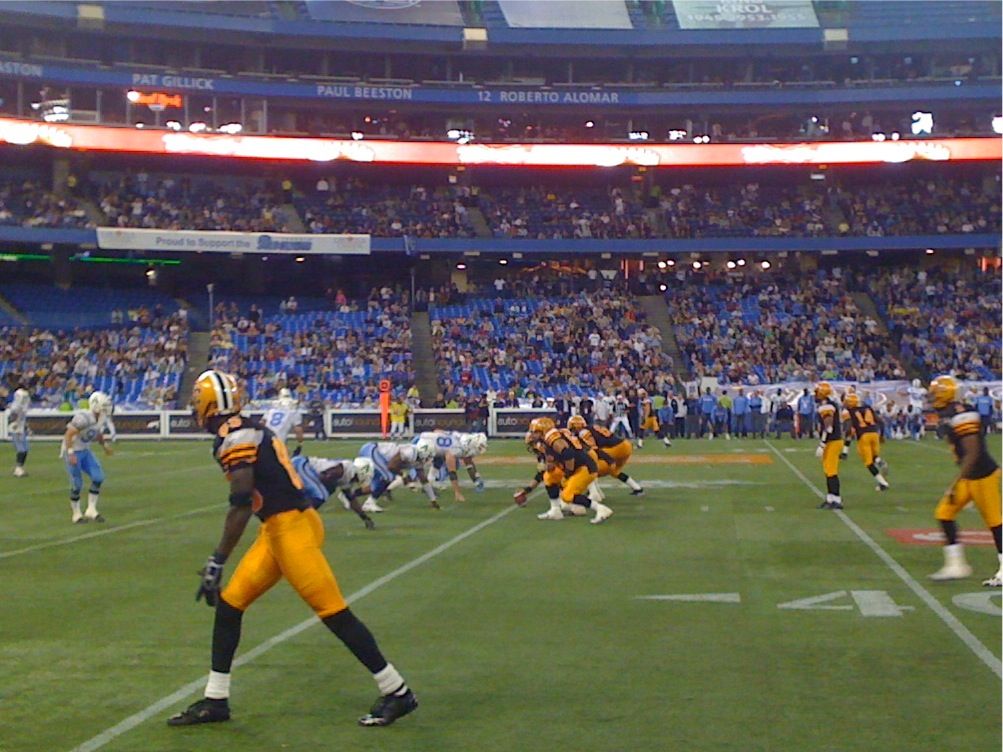
The Tiger-Cats' home field history is deeply intertwined with the city's sporting landscape. From their inception in 1950 until 2012, the team played at Civic Stadium, which was renamed Ivor Wynne Stadium in 1971 in honour of a former Hamilton athlete and city official. This venue was demolished after the 2012 season. During the construction of its replacement, the team played the entire 2013 season at Alumni Stadium at the University of Guelph. The new Tim Hortons Field opened in time for the 2014 Labour Day Classic and is built on the same downtown site as the old Ivor Wynne Stadium. The stadium's construction faced delays, forcing the team to move its first few 2014 games to Ron Joyce Stadium before the official opening.
Identity, logo evolution, and cultural significance
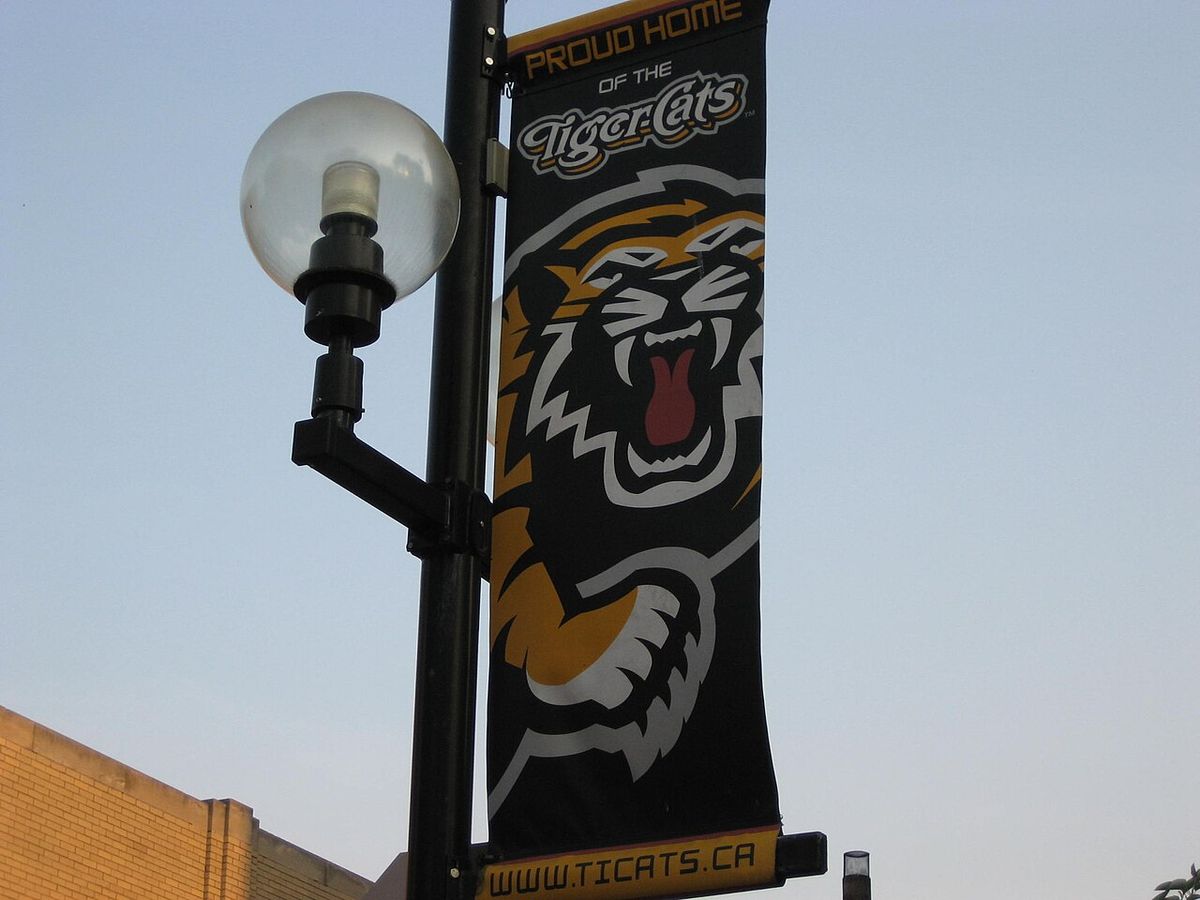
The team's leaping tiger logo was originally designed by Jake Gaudaur, a former Tiger-Cat player, team president, and later CFL commissioner. The logo's colours of black, yellow, and white are traditional, with the red tongue being the last vestige of the red-clad Hamilton Wildcats from the 1950 merger. For many years, the Princeton University Tigers used a near-identical logo in orange, though both have since been revised. In 2023, a logo redesign by Cayuga artist Kyle Joedicke was launched as part of a CFL campaign marking its commitment to truth and reconciliation. The team's identity is firmly rooted in its industrial city, with players like Angelo Mosca and Garney Henley becoming celebrated figures in the community. The franchise recognizes all Grey Cups won by Hamilton-based teams as part of its history, which would bring its total to 15 championships, a point of pride though not officially recognized by the CFL. This historical lineage means a Hamilton football club won a league championship in every decade of the 20th century.
Historic rivalries and key matchups
The Tiger-Cats' primary and oldest rivalry is with the Toronto Argonauts, dating back to their first meeting on October 18, 1873, a 1-0 loss for Hamilton at the University of Toronto. The annual Labour Day Classic against Toronto, first held in 1948, is the rivalry's biggest event, with Hamilton holding a 37-15 series lead as of 2024. Hamilton has hosted the Labour Day match almost continuously since 1996, with a rematch held the following week in Toronto. The two teams have met 17 times in the playoffs, with Toronto holding a narrow 10-8 edge as of 2024. The cities' proximity of 51 kilometres along the Queen Elizabeth Way and periods as the only two CFL teams in Ontario have intensified this rivalry. Other significant rivals include the Montreal Alouettes and Ottawa Redblacks within the East Division. A more recent rivalry has developed with the Winnipeg Blue Bombers after consecutive Grey Cup matchups in 2019 and 2021, both won by Winnipeg. The team's history of competitive parity is shown in its playoff record, having qualified for the post-season in all but three years from 1950 to 1990, a period that yielded seven Grey Cup wins.
Broadcast history and media coverage
For over 40 years, Corus Radio Hamilton served as the official radio broadcast rights holder for Tiger-Cats games in the Greater Hamilton Area. The broadcast team on AM900 CHML and sister station CJXY-FM offered coverage of all preseason and regular season games. Play-by-play was anchored by Rick Zamperin, the station's sports director who took over the role in 2007 after six seasons as a sideline reporter. Colour commentary was provided by John Salavantis, a former football coach with the Tiger-Cats, Ottawa Rough Riders, Montreal Machine, and the University of Ottawa. Matt Holmes served as the pre-game show host and sideline reporter. The post-game show, The Fifth Quarter, provided extended analysis and fan reaction, completing a comprehensive broadcast package that was a staple for the team's dedicated fanbase for decades.
Questions about Hamilton Tiger-Cats
Where do the Hamilton Tiger-Cats play their home games?
Since 2014, the Tiger-Cats have played their home games at Tim Hortons Field in downtown Hamilton. This stadium was built on the site of the team's previous long-time home, Ivor Wynne Stadium, which was used from 1950 to 2012. During the 2013 construction of Tim Hortons Field, the team played its home games at Alumni Stadium at the University of Guelph. The first few games of the 2014 season were moved to Ron Joyce Stadium due to construction delays before Tim Hortons Field opened for the Labour Day Classic.
Who owns the Hamilton Tiger-Cats?
The Tiger-Cats are owned by the Hamilton Sports Group. As of late 2024, the largest shareholder is Bob Young, the Hamiltonian software entrepreneur who bought the team in 2003 and serves as chairman. Other owners include club CEO Scott Mitchell and, following the acquisition of Stelco by Cleveland-Cliffs, that steel company holds a 40 percent stake in the ownership group. Local sports executive Jim Lawson also holds a small percentage.
How many Grey Cups have the Hamilton Tiger-Cats won?
Since 1950, the Hamilton Tiger-Cats have won the Grey Cup championship eight times, most recently in 1999. The club itself recognizes all Grey Cups won by Hamilton based teams as part of its history, which brings its total to 15 championships. This includes five wins by the Hamilton Tigers, one by the Hamilton Flying Wildcats, and one by the Hamilton Alerts. However, the Canadian Football League does not consolidate these wins under a single franchise, instead recognizing them under the individual teams that earned them. This historical lineage means Hamilton football clubs won league championships in every decade of the 20th century.
What is the Tiger-Cats' biggest rivalry?
The Tiger Cats' biggest rivalry is with the Toronto Argonauts, dating back to 1873. The first meeting occurred on October 18, 1873, at the University of Toronto where the Argonauts defeated the Hamilton Football Club. A key annual event is the Labour Day Classic, first held in 1948, with Hamilton holding a series lead. The two cities are only 51 kilometres apart along the Queen Elizabeth Way highway. There have been 17 playoff matchups between the teams, with Toronto holding a narrow edge in those postseason games.
What was the Tiger-Cats' worst season?
The Tiger Cats' worst season was in 2003, when they set a CFL record by losing 17 games with just one win. This remains the worst single season record in league history for an 18 game schedule. Their sole victory that year was a 27 to 24 overtime win in week 14, which narrowly prevented a winless season. This period represented the franchise's lowest competitive ebb, occurring before a gradual return to prominence in the following decade.
When were the Tiger-Cats founded?
The modern Hamilton Tiger Cats were founded in 1950 through the merger of the Hamilton Tigers and the cross town Hamilton Wildcats. The club's origins trace back to November 3, 1869, with the formation of the Hamilton Football Club. This original club began play in December 1869 and officially adopted the Tigers nickname in 1873, though it was informally called that from its first game. The 1950 merger was orchestrated to eliminate gate competition and create a single, financially stable team to represent the city.
Sources and further reading
- Hamilton Tiger-Cats (Wikipedia)
- Hamilton Tiger-Cats | Oskee Wee Wee (ticats.ca)
- Buy Hamilton Tiger-Cats Tickets | 2026 to 2027 Events & ... (ticketmaster.ca)
Checked by the Garbutt Disposal desk. Last updated 2026-10-22.