Toronto Argonauts
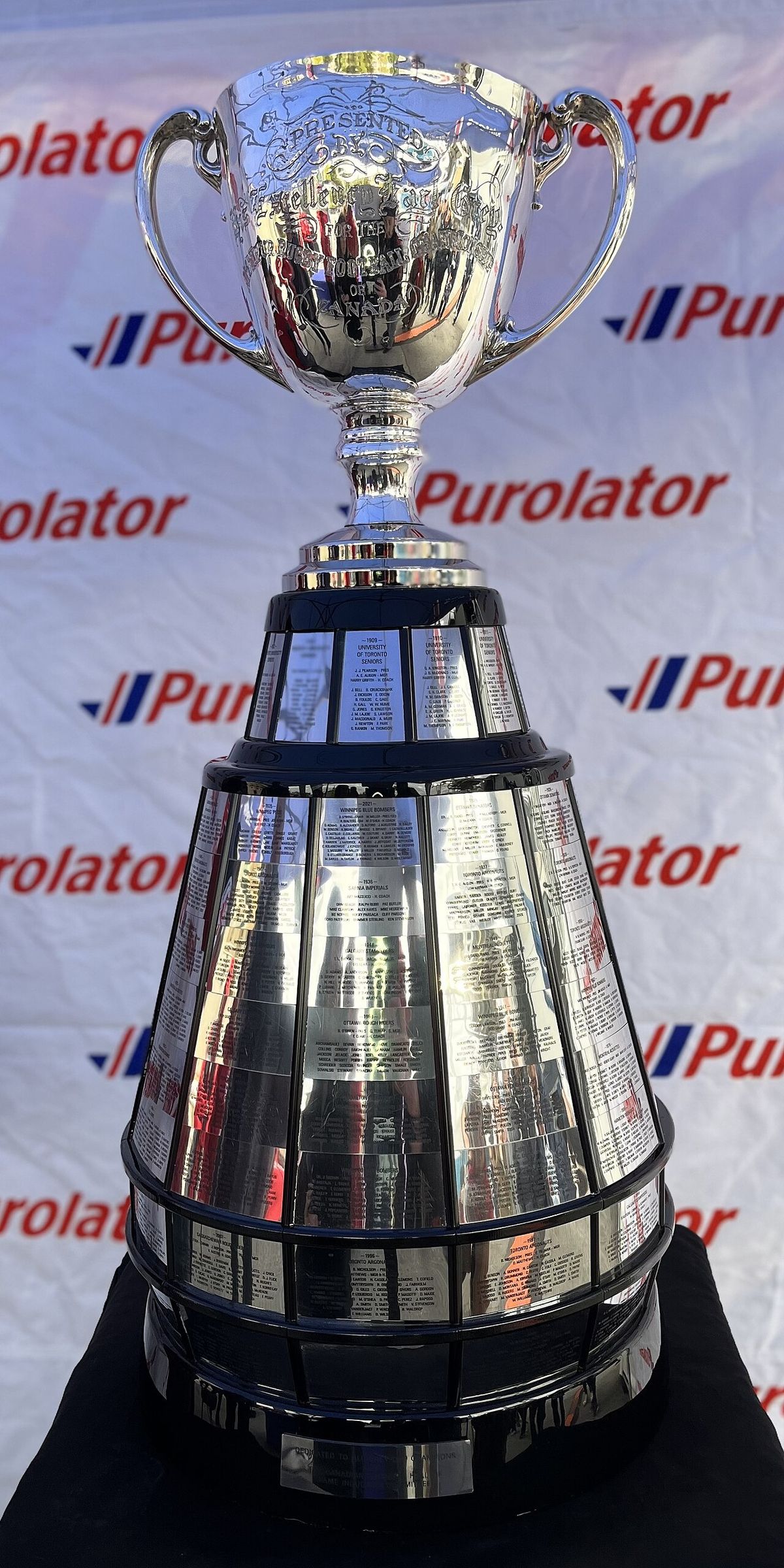
The Toronto Argonauts, officially the Toronto Argonaut Football Club and colloquially known as the Argos, are a professional Canadian football team based in Toronto. Founded in 1873, the team is the oldest professional sports team in North America still using its original name, as well as the oldest-surviving team in both the modern-day Canadian Football League (CFL) and its East Division. The Argonauts compete in the East Division of the CFL, of which they are a founding member. The team has won the Grey Cup a record 19 times, most recently defeating the Winnipeg Blue Bombers 41-24 in the 111th Grey Cup in 2024.
Name and colours
The name 'Argonauts' has been in continuous use since the team's 1873 founding, a record in North American professional sports. It is derived from Greek mythology, specifically Jason and the Argonauts who sailed on the ship Argo. The name was adopted from the Argonaut Rowing Club, an amateur rowing squad founded in Toronto in 1872 that established the football club a year later. This nautical origin is why the team is often colloquially referred to as 'the Boatmen' or less commonly 'the Scullers'. The team's colours of Cambridge light blue and Oxford dark blue were adopted from the renowned English university rowing teams, leading to the phrase 'double blue' becoming synonymous with the Argonauts. Blue has since become a traditional colour for major Toronto sports franchises, including the Maple Leafs and Blue Jays. The team's current helmet design features a Cambridge blue background with a logo that incorporates a boat and a football.
Early history and foundation (1873 to 1906)
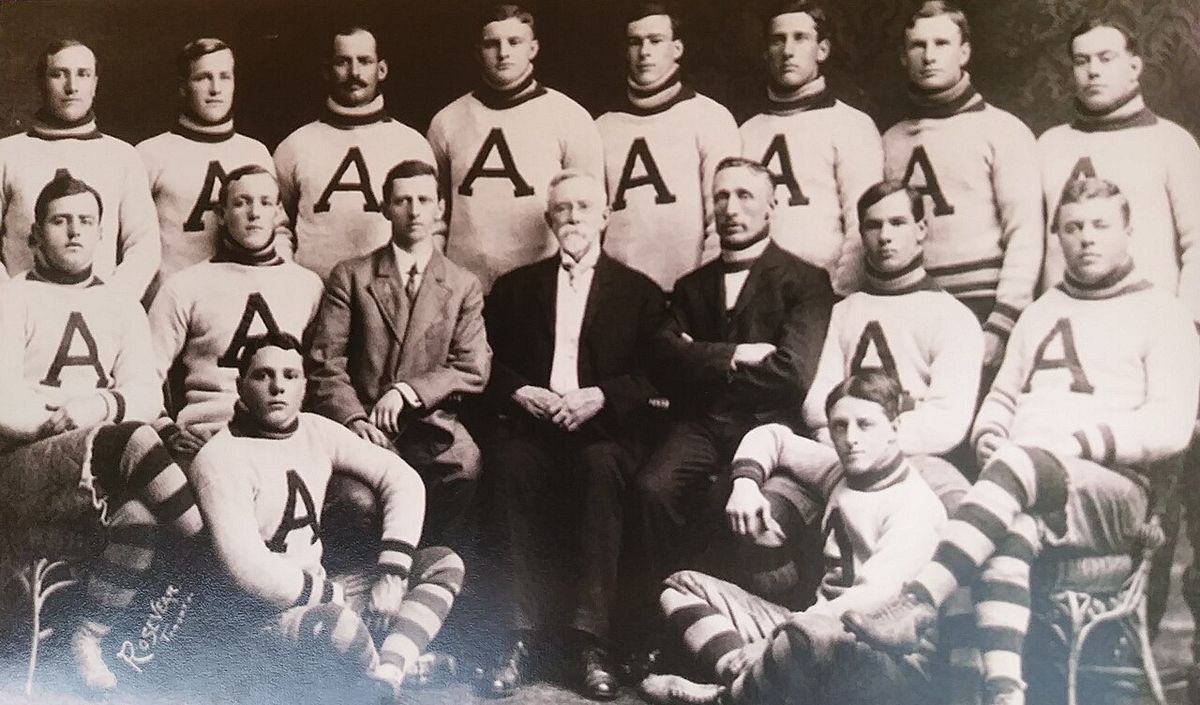
The Argonaut Football Club was formed by the Argonaut Rowing Club on October 4, 1873, as a means for rowers to stay fit in the off-season. The team played its first game on October 18, 1873, defeating a team from Hamilton, which began a long-standing rivalry. H.T. Glazebrook served as the first captain and head coach. The club's establishment was formalized by the rowing club on September 17, 1874, with a player subscription fee of one dollar. In 1883, the team, then known as the Toronto Football Club, helped found the Ontario Rugby Football Union (ORFU), the first organized rugby football league in North America. The first national championship, a precursor to the Grey Cup known as the Dominion Championship, was held in 1884, with the Montreal Football Club defeating the Toronto Football Club 30-0. The Argonauts lost the Dominion Title in 1901 to Ottawa College. Throughout this period, the game evolved with rule changes, including the adoption of the line of scrimmage and the down and yardage system. Key figures included player-coach Joe Wright Sr., and disputes over professionalism and the adoption of the Burnside rules, which reduced teams to 12 men and established the ten yards in three downs structure, led to significant league reorganization. The Argonauts merged with the Toronto Football Club in 1905, with W. A. Hewitt serving as manager until 1907 and advocating for uniform playing rules.
Establishment and dynasties (1907 to 1952)
In 1907, seeking looser rules on professional players, Toronto and Hamilton split from the ORFU to join Ottawa and Montreal in forming the Interprovincial Rugby Football Union (IRFU), known as the 'Big Four'. The Argonauts first competed for the Grey Cup in 1911, losing to the University of Toronto. They claimed their first championship in 1914, defeating the University of Toronto 14-2 behind star runner and kicker Jack O'Connor. After World War I, the team enjoyed success in the early 1920s led by Lionel Conacher, who powered them to perfect 6-0 seasons in 1921 and 1922 and a 23-0 Grey Cup victory over Edmonton in 1921. The Argonauts then entered a period of dominance from 1933 to 1952, winning eight Grey Cups. Coach Lew Hayman compiled a remarkable 45-15-2 record from 1933 to 1941, and the team won its first back-to-back championships in 1937 and 1938. The famed Stukus brothers, Annis, Bill, and Frank, were key players during these championship years. The 1940s were defined by the 'Gold Dust Twins', Joe 'King' Krol and Royal Copeland, who led the team to a threepeat from 1945 to 1947. The team broke a cultural barrier in 1948 by signing Ken Whitlock, its first black player, and began large-scale importation of American players in 1949. Frank Clair coached the team to Grey Cup wins in 1950, in the notorious Mud Bowl against Winnipeg, and again in 1952. The phrase 'Argo Bounce', referring to fortunate on-field bounces for the team, was popularized in print by Annis Stukus during this era.
The Dark Ages and resurgence (1953 to 1988)
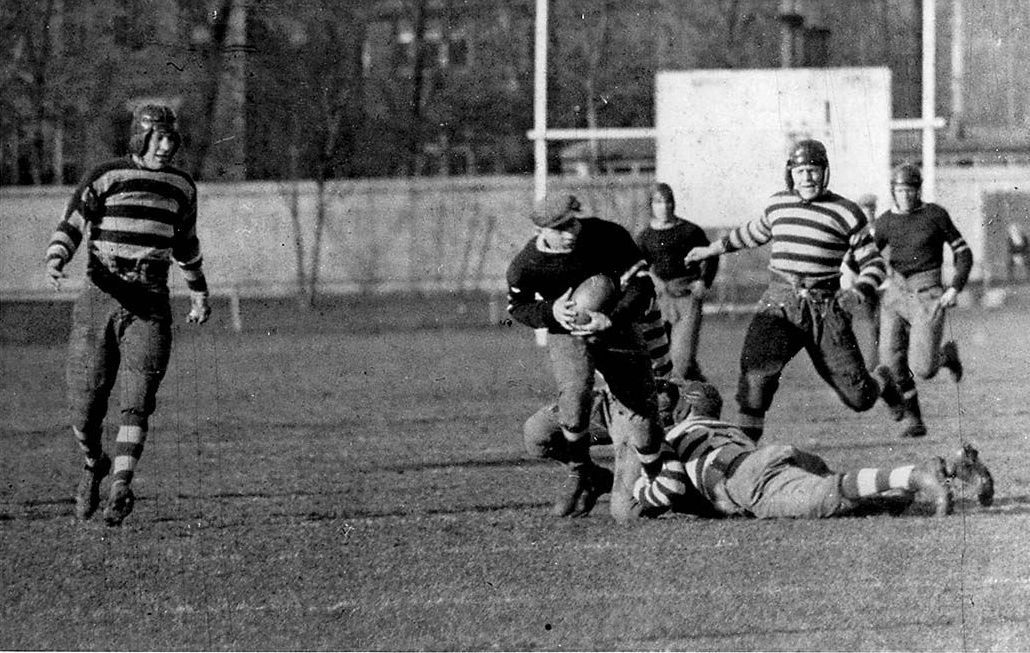
The period following the 1952 championship, often called the 'Dark Ages', saw a 31-year Grey Cup drought. A 1953 salary cap cost the team talent, and management under new owner John W. H. Bassett was marked by rapid coaching turnover and poor roster decisions. Despite the struggles, standout players emerged, including running back Dick Shatto, who holds team records for touchdowns (91) and total yards (6,958), quarterback Tobin Rote, who set a single-game passing record of 524 yards in 1960, and offensive tackle Danny Nykoluk, who played 17 seasons. The desperate mid-season signing of American imports became known as the 'Argo airlift'. A resurgence began under coach Leo Cahill in the late 1960s, highlighted by the 1971 signing of Joe Theismann. That season, the Argonauts reached the Grey Cup but lost 14-11 to Calgary after a late fumble. The 1970s were tumultuous despite high attendance, which peaked at an average of 47,356 per game in 1976. The team hit rock bottom with a 2-14 record in 1981. A dramatic turnaround came in 1982 with the hiring of head coach Bob O'Billovich and offensive coordinator Mouse Davis, who implemented the run and shoot offense. Condredge Holloway was named the CFL's Most Outstanding Player that year. The championship drought finally ended in 1983 when the Argonauts, led by receiver Terry Greer's record 2,003 receiving yards, defeated the BC Lions 18-17 in the Grey Cup. The team remained competitive through the 1980s, appearing in the 1987 Grey Cup but losing to Edmonton.
Modern era and ownership changes (1989 to 2015)
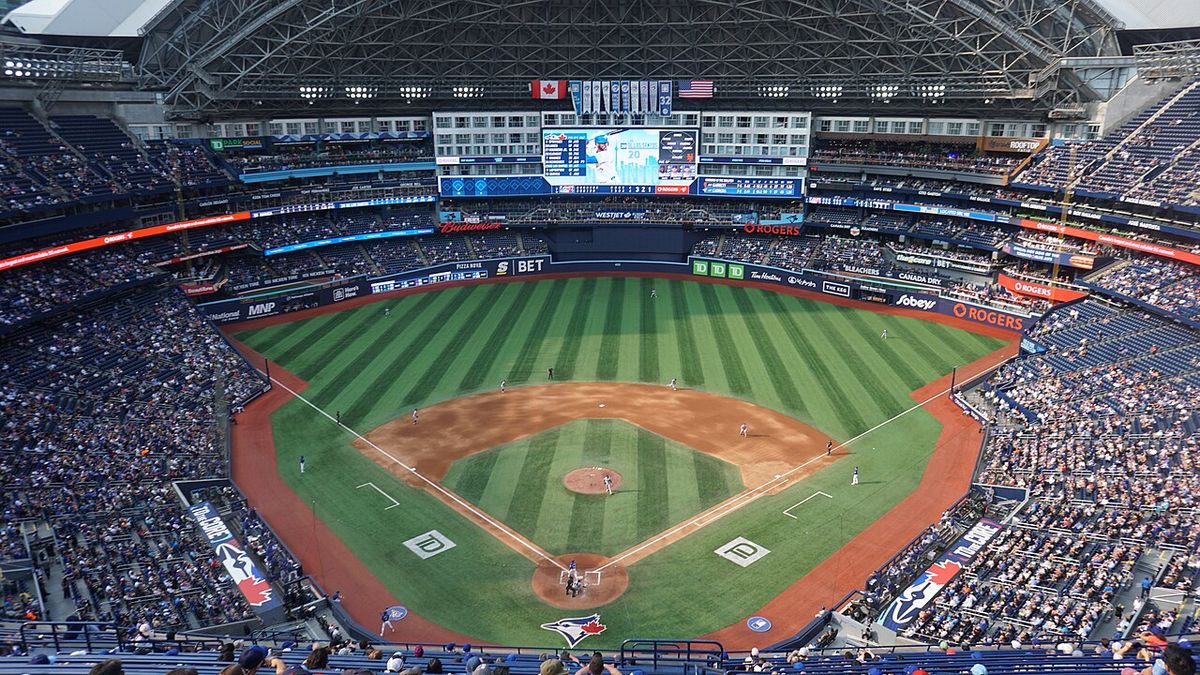
The Argonauts moved into the new SkyDome (later Rogers Centre) in 1989. The early 1990s saw the emergence of Michael 'Pinball' Clemons, who set a CFL record with 3,300 all-purpose yards in 1990. In 1991, the team was purchased by a consortium led by Bruce McNall, owner of the NHL's Los Angeles Kings, with hockey star Wayne Gretzky becoming a part-owner. This period brought Hollywood glamour to the franchise but was followed by financial instability. The team's on-field fortunes fluctuated, with periods of competitiveness interspersed with struggles. Attendance at the large Rogers Centre often proved challenging, leading to discussions about a move to a more intimate venue. The ownership structure changed several times over the next two decades. In May 2015, a significant agreement was reached for a consortium of Maple Leaf Sports & Entertainment's Larry Tanenbaum (via the Kilmer Group) and Bell Canada to acquire the team. The sale included a planned move to the MLSE-operated BMO Field for the 2016 season, a move long proposed to address poor attendance at Rogers Centre. This transition marked the beginning of a new, more stable chapter for the historic franchise under the umbrella of one of Canada's largest sports and entertainment companies.
Stadium history
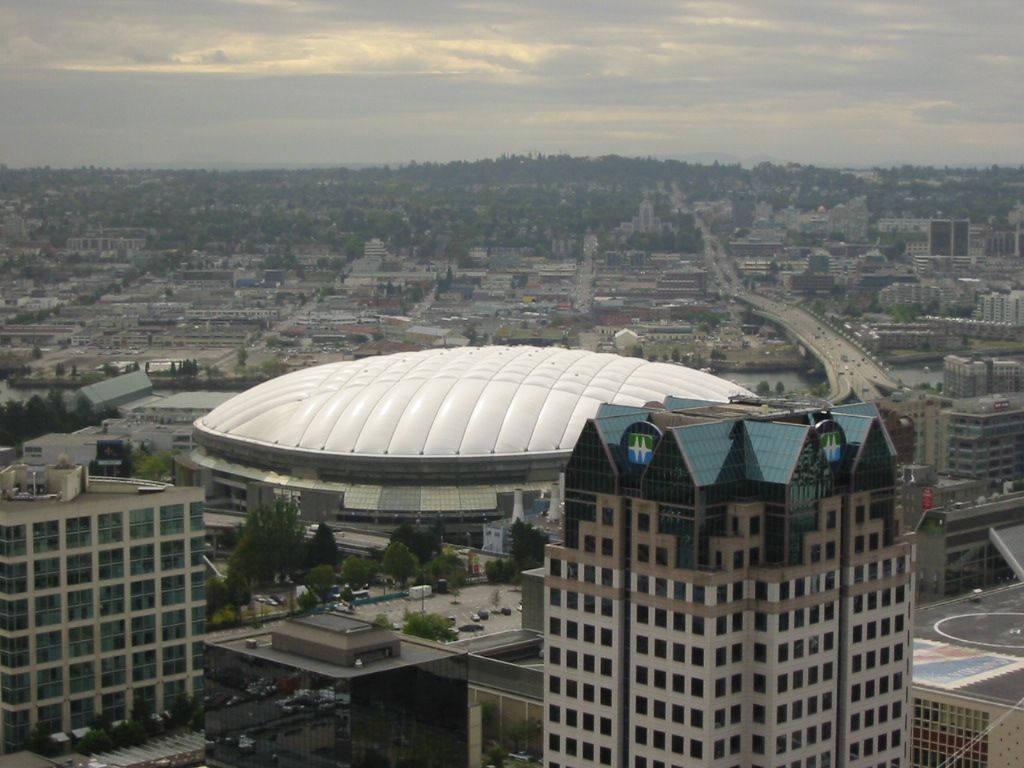
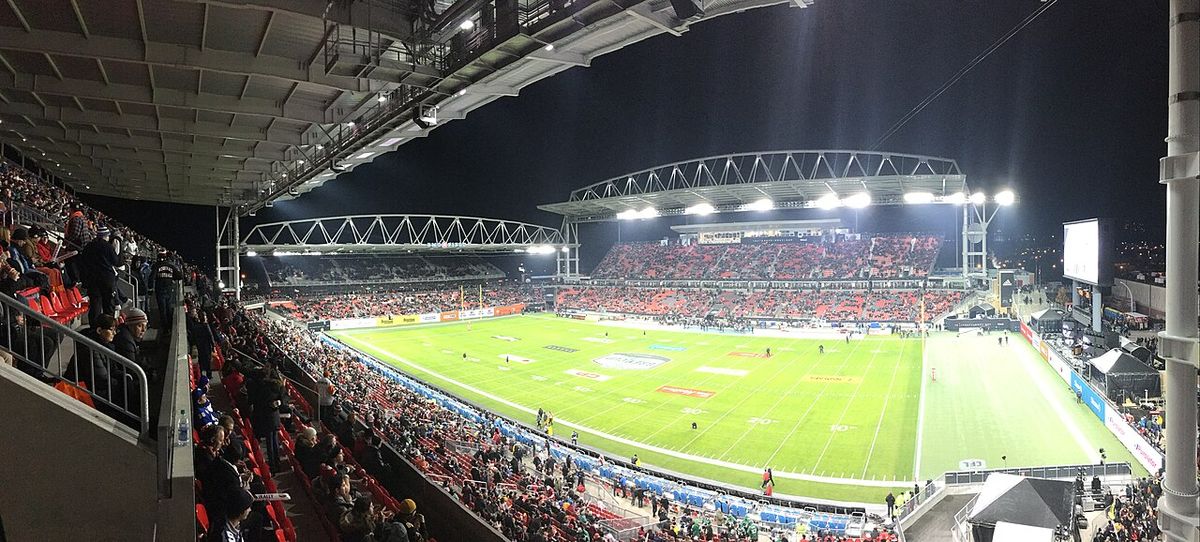
The Argonauts have called several venues home throughout their long history, reflecting the growth of both the team and the city of Toronto. The stadium was enlarged and reconfigured in 1975 and 1976 to accommodate the new Toronto Blue Jays baseball team, allowing for record football crowds in the late 1970s. In 1989, the team moved to the state-of-the-art, downtown SkyDome, a multi-purpose stadium with a retractable roof. Despite the modern amenities, the vast capacity often led to a cavernous atmosphere on game days as attendance waned. This ultimately led to the team's move to BMO Field, a soccer-specific stadium with a smaller, more intimate capacity, for the 2016 season. BMO Field is the fifth distinct stadium site to host the Argonauts and is located on the footprint of their former home, Exhibition Stadium.
Honours and records
The Toronto Argonauts' history is defined by exceptional team success and individual achievements. The team's 19 Grey Cup championships are a CFL record, and they hold the best winning percentage in the championship game at .760. Their most recent victory came in the 111th Grey Cup in 2024, where they defeated the Winnipeg Blue Bombers 41-24. The Argonauts have appeared in the Grey Cup final 25 times. The team recognizes its greatest contributors through retired numbers, a honour bestowed on only four players. The franchise has also seen numerous players set enduring league and team records.
Ownership history
The ownership of the Toronto Argonauts has evolved from its amateur roots to its current status as a corporate-owned franchise. For the first 83 years of its existence, the team was owned and operated by the Argonaut Rowing Club, reflecting its origins as an athletic club for rowers. This era ended in 1956 when the team was sold to a series of private business interests. Ownership changed hands several times in the following decades, often accompanied by financial challenges. A major stabilization occurred in 2015 when a consortium comprising Larry Tanenbaum's Kilmer Group and Bell Canada agreed to acquire the team, with a mandate to move it to BMO Field. In December 2017, Maple Leaf Sports & Entertainment (MLSE) announced it would purchase the team outright, finalizing the deal on January 19, 2018. The previous owners, Bell Canada and the Kilmer Group, maintain indirect stakes in the Argonauts as shareholders of MLSE, holding 37.5% and 25% stakes, respectively.
Recent Grey Cup appearances (2004 to 2024)
The team's performance in this modern era has included periods of dominance interspersed with rebuilding phases. These phases have often coincided with changes in coaching and ownership stability. The team's most recent championship was a victory in the 111th Grey Cup in 2024. The 2024 victory over the Winnipeg Blue Bombers extended the Argonauts' record for most Grey Cup wins. This win demonstrated the team's continued competitiveness under MLSE ownership. The Argonauts hold the best winning percentage in the Grey Cup championship game at .760. They also maintain the longest active winning streak in games in which they have appeared, which currently stands at eight consecutive victories.
Questions about Toronto Argonauts
Why are they called the Toronto Argonauts?
The name 'Argonauts' comes from Greek mythology, specifically the story of Jason and the Argonauts who sailed on the ship Argo. It was adopted from the Argonaut Rowing Club, a group of amateur rowers founded in Toronto in 1872. The rowing club established the football team in 1873 and gave it the same name. This nautical origin is why the team is often nicknamed 'the Boatmen'.
How many Grey Cups have the Toronto Argonauts won?
The Toronto Argonauts have won the Grey Cup a record 19 times. Their most recent victory was in the 111th Grey Cup in 2024 when they defeated the Winnipeg Blue Bombers. The team has appeared in the Grey Cup final 25 times. They hold the best winning percentage in the championship game at .760.
Who owns the Toronto Argonauts?
The Toronto Argonauts are owned by Maple Leaf Sports & Entertainment (MLSE), which finalized its purchase of the team on January 19, 2018. Before that, in 2015, a consortium of MLSE's Larry Tanenbaum (via the Kilmer Group) and Bell Canada had agreed to acquire the team. Bell Canada and the Kilmer Group remain indirect owners as shareholders of MLSE. The team was originally owned by the Argonaut Rowing Club from 1873 to 1956.
What is the 'Argo Bounce'?
The phrase 'Argo Bounce' refers to the Argonauts' historical propensity to receive a lucky bounce of the football. The phrase may date to the Grey Cups of the 1930s, which featured improbable bounces favouring the Argos. It was popularized in print by Annis Stukus in the 1940s. The phrase is still in use today to describe fortunate on-field happenings for the team.
Which players have their numbers retired by the Argonauts?
The Toronto Argonauts have retired the numbers of four players. These players are Joe Krol, Dick Shatto, Danny Nykoluk, and Michael 'Pinball' Clemons. Joe Krol and Dick Shatto were early greats for the team. Danny Nykoluk was a stalwart offensive lineman, and Michael Clemons has been a recent face of the franchise.
Where do the Toronto Argonauts play their home games?
The Toronto Argonauts play their home games at BMO Field in Toronto. The team moved to BMO Field for the 2016 season after playing at Rogers Centre, originally known as SkyDome, from 1989 until 2016. This move was part of an agreement when a consortium including Maple Leaf Sports & Entertainment's Larry Tanenbaum and Bell Canada acquired the team in 2015. BMO Field represents the fifth stadium site to host the Argonauts, and it is located on the footprint of their third home, Exhibition Stadium.
Sources and further reading
- Toronto Argonauts (Wikipedia)
- Toronto Argonauts: Home (argonauts.ca)
- Toronto Argonauts (thecanadianencyclopedia.ca)
Checked by the Garbutt Disposal desk. Last updated 2026-10-20.