BMO Field
BMO Field is an outdoor stadium located at Exhibition Place in Toronto, Ontario, and serves as a major venue for professional and international sport. Owned by the City of Toronto and managed by Maple Leaf Sports & Entertainment (MLSE), it is the home of Toronto FC of Major League Soccer (MLS) and the Toronto Argonauts of the Canadian Football League (CFL). The stadium, named for the Bank of Montreal, has hosted significant events including FIFA World Cup matches, the MLS Cup, and the Grey Cup. Its selection as a host venue for the 2026 FIFA World Cup, with a temporary capacity of 45,736, confirms its importance in Canadian sports infrastructure.
Construction and Original Design
The stadium is the fifth built on its exact site at Exhibition Place, following the demolition of Exhibition Stadium in 1999 which had lost its primary tenants, the Argonauts and Toronto Blue Jays, to the SkyDome in 1989. Early 2000s proposals for a new stadium in Toronto included a March 2003 Argonauts plan for a 22,000-seat venue at Exhibition Place and a July 2003 Canadian Soccer Association plan for a 30,000-seat, $82 million stadium to host a bid for the 2007 FIFA U-20 World Cup, with conditional government funding of $35 million. Maple Leaf Sports & Entertainment, seeking a soccer-specific stadium to secure an MLS expansion team, initially partnered with the Argos and CSA on a $80 million, 25,000-seat Varsity Stadium project at the University of Toronto in 2003, but MLSE backed out and the deal collapsed in 2004 when costs exceeded $100 million. A separate 2004 plan for a $70 million stadium at York University involving the Argos and CSA also failed after the Argos signed a new long-term lease at Rogers Centre. The current project coalesced in 2005 as a partnership between Maple Leaf Sports & Entertainment and the Canadian Soccer Association, with the 2007 FIFA U-20 World Cup serving as a catalyst and the site moved back to Exhibition Place on the former Exhibition Stadium and Sports Hall of Fame location.
The total construction cost was $62.9 million, with funding from the federal government ($27 million), the province of Ontario ($8 million), the City of Toronto ($9.8 million plus land valued at $10 million), and MLSE ($8 million). MLSE also secured a 20-year management agreement and initially paid $10 million for the naming rights, later reselling them to the Bank of Montreal for $27 million over the first 10 years. The stadium was designed as a soccer-specific venue with a FieldTurf surface and an initial capacity of approximately 21,566, though the original city agreement required it to be capable of conversion to football. MLSE's commitment to launch an MLS team was fulfilled with the announcement of Toronto FC as the league's 13th and first Canadian franchise in May 2006. The field dimensions were set at 115 yards long by 74 yards wide to meet FIFA standards. The stadium's visual identity featured entirely red seats with distinctive designs on the main stands: a large maple leaf on the east side, "TORONTO" and part of the Toronto FC logo on the lower west stand, and "BMO" spelled out on the south stand. Despite the contractual requirement for convertibility to Canadian football, the stadium was built too short to accommodate a full CFL field without major structural changes, a decision attributed by MLSE to budget and time limitations when the Argonauts attempted to join the project late, which would necessitate significant future renovations.
Early Modifications and Initial CFL Feasibility
BMO Field's original FieldTurf surface attracted criticism and was replaced with natural grass in 2010. MLSE paid $3.5 million for the conversion to a Kentucky Bluegrass pitch, which included a state-of-the-art drainage and heating system, and spent a further $2 million to expand the north end by 1,400 seats for that season. As part of the grass conversion agreement with the city, MLSE also spent $1.2 million adding a winter bubble to Lamport Stadium and $800,000 building a new artificial turf field to replace lost community use hours, bringing the total 2010 renovation cost to $5.5 million. In November 2009, discussions became public about the Toronto Argonauts potentially moving from Rogers Centre to BMO Field as early as 2010. A CFL feasibility study concluded the venue in its current state could only fit a 100-yard field with 15-yard end zones or a 110-yard field with 10-yard end zones, which was 20 yards shorter than the standard CFL dimensions of a 110-yard field with 20-yard end zones. Following this study, the Argonauts officially abandoned the move idea on December 16, 2009. MLSE executive Tom Anselmi indicated in 2009 that future renovations could add an upper deck to the east side and rows to the south side for approximately $15 million, adding 8,400 seats, setting the stage for the larger project that would follow.
Major Renovations and CFL Adaptation (2014 to 2016)
BMO Field underwent its most significant transformation from 2014 to 2016, a project driven by the need to accommodate the Toronto Argonauts and enhance the fan experience. The impetus came after Tim Leiweke became president of MLSE in June 2013, with the City of Toronto insisting any major renovation must lengthen the field for the Argonauts, who had to vacate the Rogers Centre by the end of the 2017 season. Preliminary plans were released to the public on March 5, 2014, and the project was unanimously approved by the Exhibition Place Board of Governors on March 7 and by Toronto City Council on April 3, 2014. The renovation was originally budgeted at $115 to 120 million and was executed in phases due to initial gaps in government funding, as federal Infrastructure Minister Denis Lebel's spokesperson stated the government would not fund a professional sports facility. MLSE proceeded with a revised plan, committing to cover cost overruns, which eventually reached $10 million by April 2015 due to deadline pressures.
The first phase, completed by May 1, 2015, at a cost of $77 million, added a new upper deck on the east side and lengthened the field for CFL use, increasing soccer capacity to 30,000. The second phase, finished by May 1, 2016, for $43 million, added a roof canopy over most permanent seating. A critical development was the May 20, 2015, announcement that MLSE partners Bell Canada and Larry Tanenbaum's Kilmer Group had acquired the Argonauts, committing $10 million to the conversion costs, matched by MLSE, to fill the funding gap. The total renovation cost reached $150 million, with the province of Ontario contributing $10 million announced at the reopening ceremony. The renovated stadium featured a new 10,000 square foot dressing room for the Argonauts and infrastructure for temporary expansion to 40,000 seats for major events. The playing surface remained natural grass, with a $1 million subsurface heating system and a $1 million artificial lighting system installed to encourage growth, and MLSE secured an exemption to use pesticides. The CFL configuration resulted in 18-yard end zones instead of the standard 20 yards due to space constraints and the need for a safety zone. Key contractual elements of the renovation included:
- MLSE's management and naming rights agreement, set to expire in 2027, was extended by 10 years.
- MLSE agreed to pay the city a fixed annual rent of $865,000, replacing a variable revenue-sharing model.
- The agreement required MLSE to secure a 20-year lease with the Toronto Argonauts for stadium use starting in 2015.
- MLSE agreed to pay the city an additional $160,000 annually until the CFL conversion phase was completed to compensate for lost projected Argos parking revenue.
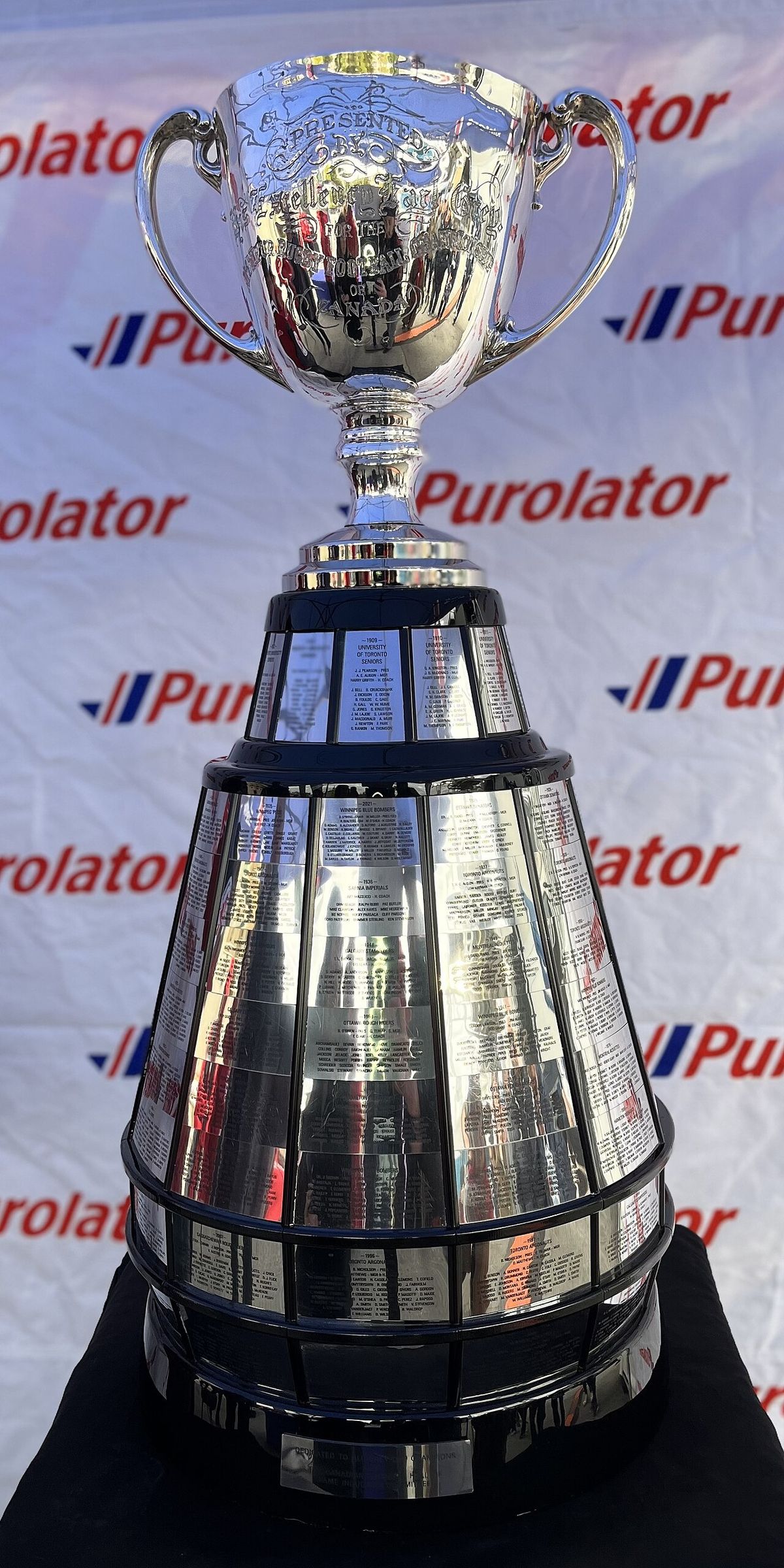
- As part of the Argonauts ownership deal, two Grey Cups were committed to being played at the renovated BMO Field.
The renovations enabled the Toronto Argonauts to move to BMO Field for the 2016 CFL season. That same year, the stadium hosted the 104th Grey Cup. In February 2016, it was announced that the Bank of Montreal had extended its naming rights sponsorship agreement for the stadium for an additional ten years. The renovations were part of a series of major upgrades completed from 2014 to 2016. These upgrades included lengthening the field for Canadian football and adding an upper deck and a roof.
Tenants and Major Event History
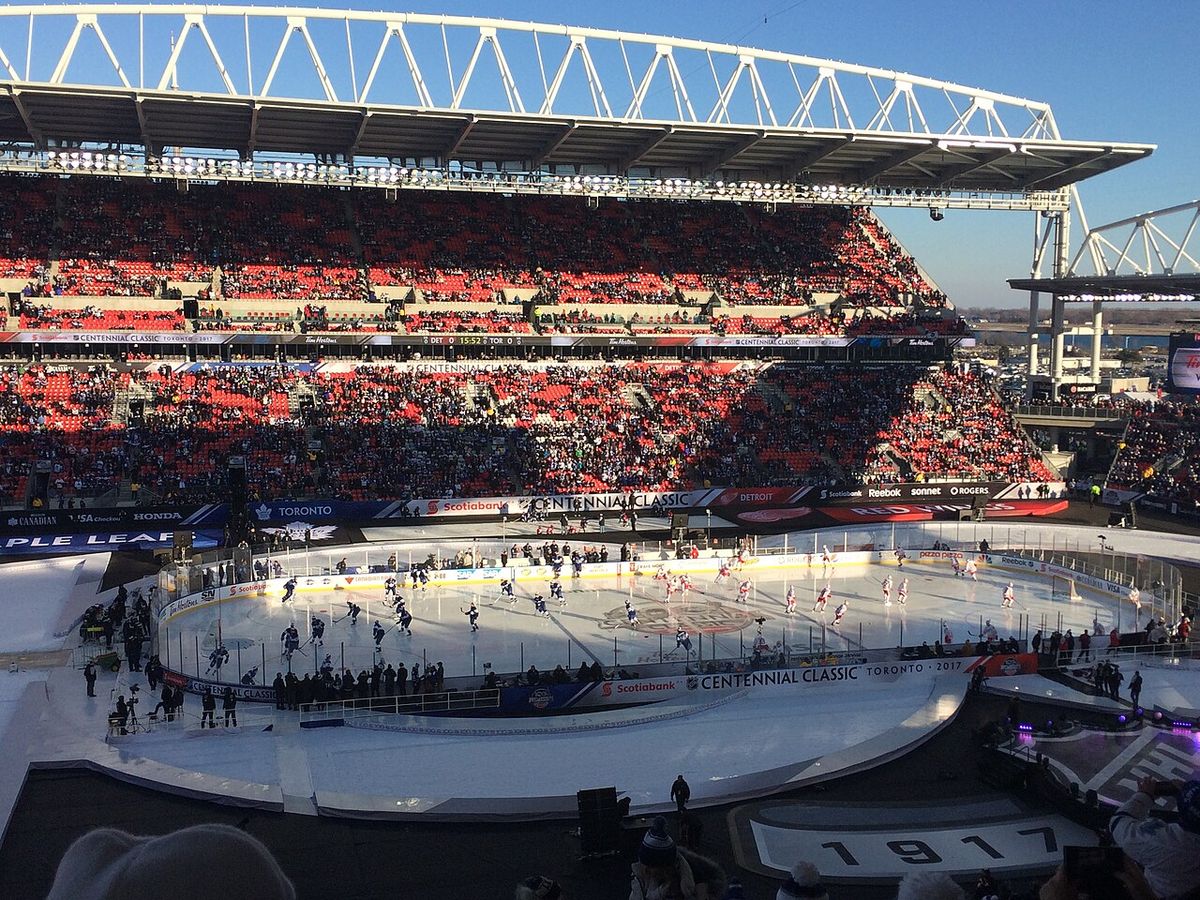
BMO Field's primary tenants are Toronto FC of Major League Soccer and the Toronto Argonauts of the Canadian Football League. Toronto FC played its first match at the stadium on April 28, 2007, with a grand opening celebration following on May 12, 2007. The club has enjoyed significant success at home, hosting the MLS Cup in 2016 and 2017 when it had the better regular-season record, and previously hosting the MLS Cup in 2010 when it was a neutral-site game. The Argonauts began their tenure at the renovated stadium in 2016 and won the Grey Cup at home that same season. The stadium has also hosted Toronto FC II, the MLS club's reserve team, which moved some home games to BMO Field and Lamport Stadium for the 2018 season before moving to a smaller training ground in 2019 after dropping to USL League One.
The stadium has been a hub for international soccer competitions since its inception. It was built for and hosted matches during the 2007 FIFA U-20 World Cup. It later hosted games for the 2014 FIFA U-20 Women's World Cup, during which it was temporarily renamed the National Soccer Stadium. Its most prestigious assignment came as one of two Canadian venues selected for the 2026 FIFA World Cup. Beyond soccer, BMO Field has hosted rugby union matches for Canada's national team and rugby sevens during the 2015 Pan American Games, for which it was temporarily expanded to 40,000 seats. It has also been the site for the MLS All-Star Game in 2008 and other special events like international friendlies, including an August 2009 match against Real Madrid that required a temporary grass surface. The stadium had its first alcohol suspension in July 2009 due to an incident involving alcohol consumption by a minor that had occurred in May 2008.
2026 FIFA World Cup Upgrades and Recent Developments
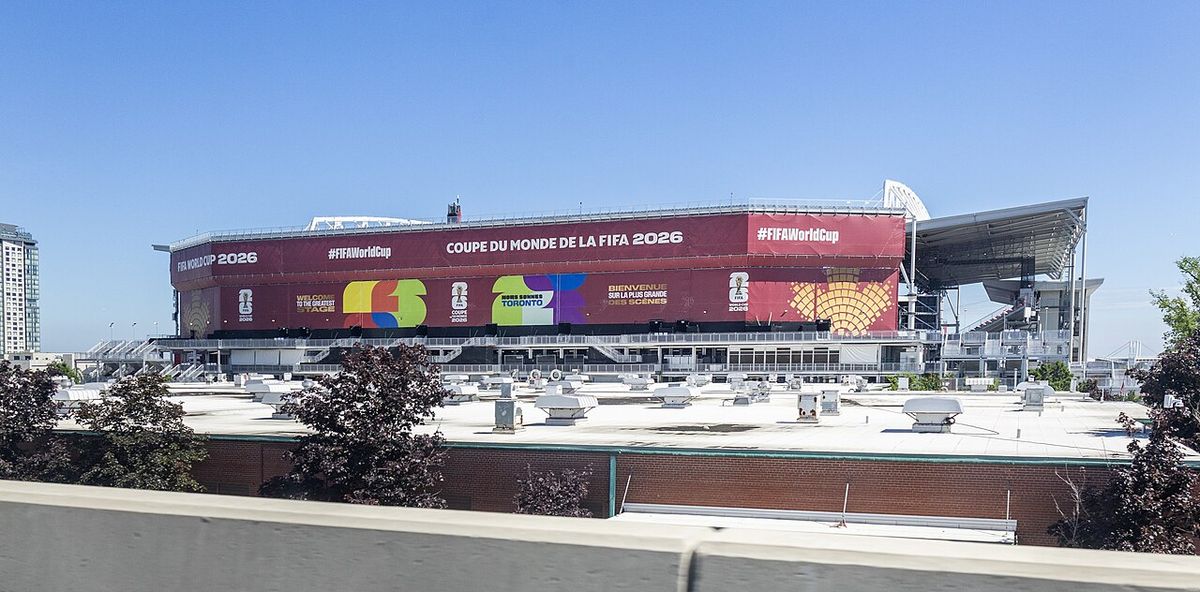
Preparations for the 2026 FIFA World Cup triggered a final major round of upgrades to BMO Field. The City of Toronto and MLSE partnered on a $157.9 million renovation project to meet FIFA standards and temporarily expand capacity. The city contributed $132.9 million, while MLSE invested $25 million, a change from initial plans where the city agreed to invest $37 million for capacity expansion to 45,000. The work was completed in two phases between the 2024-25 and 2025-26 seasons. Key improvements included the installation of new LED videoboards and a sound system, construction of a new rooftop patio and lounge, and upgrades to team dugouts and facilities. The most visible change was the temporary expansion of seating capacity to 45,736 for the tournament. Following FIFA's naming conventions for host stadiums, BMO Field was temporarily renamed Toronto Stadium for the duration of the World Cup, similar to its temporary renaming for the 2014 U-20 Women's World Cup. In April 2019, prior to these World Cup upgrades, MLSE converted the field to a hybrid grass surface, a reinforced system where artificial fibres are embedded in the turf, after earlier considering but rejecting a Desso GrassMaster system due to repair concerns.
Stadium Features, Configuration, and Management
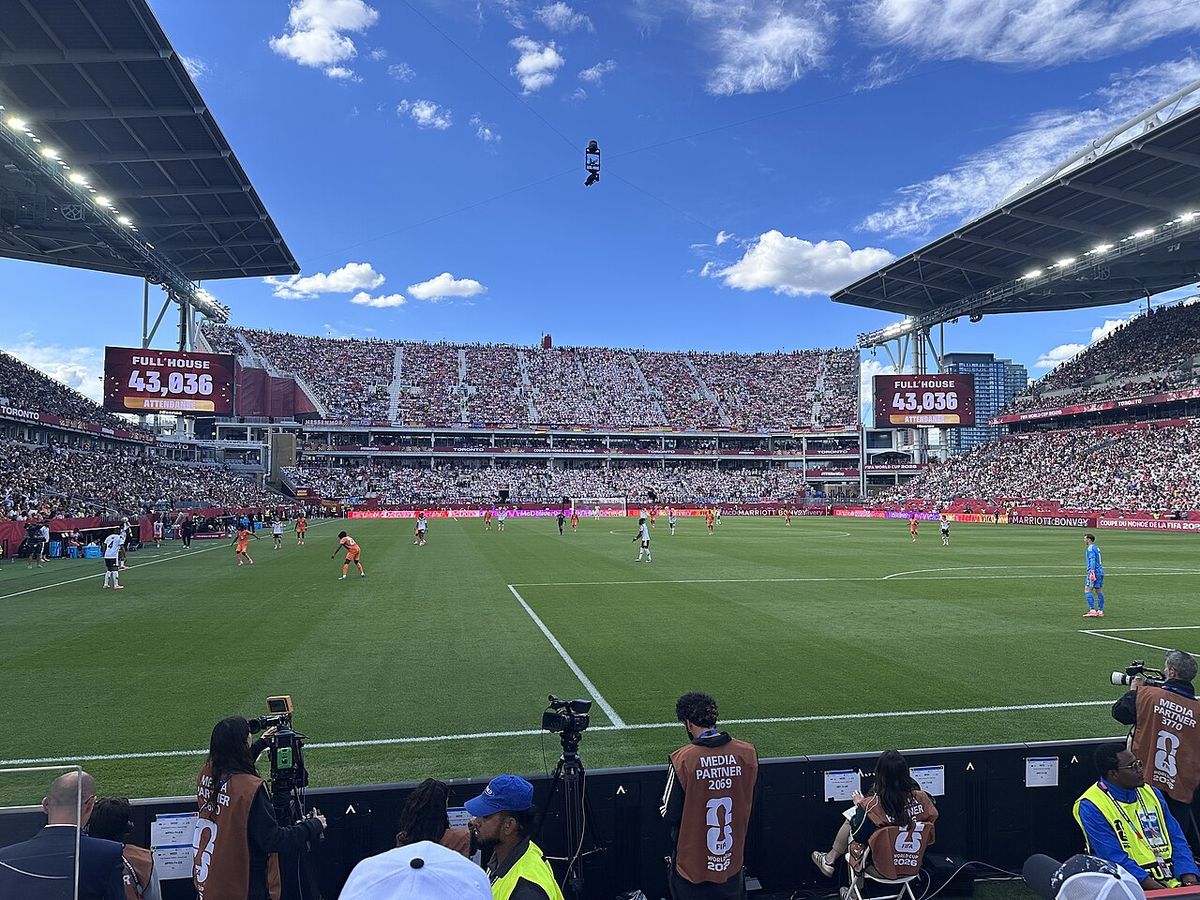
BMO Field is characterized by its distinctive red seating and flexible design to accommodate different sports and events. The primary playing surface is a hybrid grass system, installed in 2019, which combines natural grass with synthetic fibres for durability. For configuration changes between soccer and Canadian football, the stadium uses removable paint for field markings and has two sets of football goalposts to avoid relining the grass for every game. Portions of the end zones are artificial turf. The stadium's capacity is variable: it seats 30,000 for soccer matches and 26,500 for Canadian football in its standard configuration, with the CFL layout using 18-yard end zones. For major events like the Grey Cup, Pan Am Games, or the World Cup, temporary seating can be added via retractable end zone seating in the south and a retractable terrace in the north, with the maximum capacity reaching 45,736 for the 2026 tournament.
The architectural design includes a roof canopy covering most of the permanent seating areas, added during the 2014-16 renovations, which provides shelter for fans. The east stand features a large maple leaf pattern in the seats, while the west stand lower bowl spells out "TORONTO" and incorporates part of the Toronto FC logo. The stadium is equipped with a subsurface heating system and artificial grow lights to maintain the grass pitch. As the manager, MLSE is responsible for all stadium operations, profits, and losses, under a long-term agreement with the City of Toronto that was extended through the renovation processes. The financial model guarantees the city $25.4 million in rent over the term of the lease, and with projected $6 million in parking revenues, the city expected $31 million in revenue, which was $19 million more than under the former variable revenue-sharing agreement.
Financial Structure and Funding History
The financial model for BMO Field involves a partnership between public ownership and private management, with funding for construction and renovations coming from multiple sources across different projects. The City of Toronto owns the stadium and the land at Exhibition Place. Maple Leaf Sports & Entertainment holds the long-term management rights and is responsible for all operational costs, capital improvements beyond the initial build, and any financial losses or profits. The original 20-year management agreement, set to expire in 2027, was extended by 10 years as part of the 2014 renovation deal. MLSE pays the city a fixed annual rent, which was set at $865,000 following the major renovations, replacing a previous revenue-sharing model that averaged $397,000 annually over the five years prior. The naming rights, initially secured by MLSE for $10 million, were sold to the Bank of Montreal (BMO) in a deal worth $27 million over the first ten years and were renewed for another ten years in 2016, providing a significant revenue stream.
| Project | Total Cost (CAD) | Key Funding Sources | Notable Details |
|---|---|---|---|
| Original Construction (2007) | $62.9 million ($72.8M incl. land) | Federal Gov't ($27M), Ontario ($8M), Toronto ($9.8M + $10M land), MLSE ($8M) | MLSE responsible for cost overruns. Gained management rights. |
| 2014-16 Major Renovation | $150 million | MLSE ($90M+), Argonauts owners ($10M), Ontario ($10M), MLSE matching ($10M) | City provided no direct cash. MLSE sought but did not get full $20M in extra gov't grants. |
| 2024-26 World Cup Upgrades | $157.9 million | City of Toronto ($132.9M), MLSE ($25M) | Upgrades included new videoboards, sound system, rooftop patio. |
The complex financing of the 2014-16 renovations involved MLSE initially seeking $10 million each from the municipal, provincial, and federal governments to top up their $90 million contribution. The federal government refused direct funding for a professional sports facility, though MLSE argued the money was for hosting major events like the Grey Cup. The provincial funding was delayed by an election, leading to the phased construction approach. The $20 million funding gap was ultimately filled by the $10 million commitment from the new Argonauts ownership group and a matching $10 million from MLSE. MLSE argued the renovated stadium would generate $8 million in annual economic benefits for the province and $18 million in taxes on the construction project itself.
Questions about BMO Field
Which teams call BMO Field home?
BMO Field is the home stadium for two major professional teams: Toronto FC of Major League Soccer (MLS) and the Toronto Argonauts of the Canadian Football League (CFL). Toronto FC has played there since the stadium opened in 2007, while the Argonauts moved in for the 2016 season following major renovations to accommodate a Canadian football field. The stadium is also occasionally used by Toronto FC II, the MLS club's reserve team, and hosts Canada's national rugby union team for select matches. The stadium is owned by the City of Toronto but managed by Maple Leaf Sports & Entertainment, which owns both tenant clubs.
Why was BMO Field renovated between 2014 and 2016?
The primary driver for the $150 million renovation was to adapt the stadium for the Toronto Argonauts, who needed a new home as their lease at the Rogers Centre was ending after the 2017 season. The original 2007 stadium was built too short for a full CFL field, capable of only a 110-yard field with 10-yard end zones versus the standard 110-yard field with 20-yard end zones. The City of Toronto made lengthening the field for the CFL a condition for approving any major renovation. The project also aimed to enhance the fan experience by adding an upper deck and a roof, and to allow the stadium to host larger events like the Grey Cup, which it did in 2016, and to be suitable for a potential 2026 FIFA World Cup bid.
What changes were made for the 2026 FIFA World Cup?
For the 2026 FIFA World Cup, BMO Field underwent a $157.9 million upgrade funded primarily by the City of Toronto ($132.9 million) with MLSE contributing $25 million. The work, completed in two phases between 2024 and 2026, included adding a new rooftop patio and lounge, upgrading team dugouts, and installing new LED videoboards and a sound system. The most significant change was the temporary expansion of seating capacity to 45,736 for the tournament. During the World Cup, the stadium will operate under the temporary name "Toronto Stadium" in accordance with FIFA event naming policies, similar to when it was renamed National Soccer Stadium for the 2014 FIFA U-20 Women's World Cup.
Who owns and operates BMO Field?
BMO Field is owned by the City of Toronto, which also owns the land at Exhibition Place. The stadium is operated under a long-term management agreement by Maple Leaf Sports & Entertainment (MLSE), the same company that owns the Toronto Maple Leafs, Toronto Raptors, Toronto FC, and a stake in the Toronto Argonauts. MLSE is responsible for day-to-day operations, maintenance, and booking events, and it pays a fixed annual rent of $865,000 to the city under the agreement renewed during the 2014-16 renovations. MLSE also holds the stadium naming rights, which it sold to the Bank of Montreal.
How did the stadium get its name and who paid for it?
The stadium is named through a corporate sponsorship agreement with the Bank of Montreal, which uses the branding "BMO". When the stadium was built, Maple Leaf Sports & Entertainment paid $10 million for the naming rights as part of its 20-year management agreement with the city. MLSE later sold those rights to the Bank of Montreal in a deal worth $27 million over the first ten years. The sponsorship was renewed for an additional ten years in February 2016, ensuring the BMO Field name remains. The original $62.9 million construction was funded by government grants and MLSE, with the federal government providing $27 million, Ontario $8 million, Toronto $9.8 million plus land, and MLSE $8 million.
What other major events has BMO Field hosted?
Beyond regular season games for its tenants, BMO Field has hosted numerous high-profile events. In soccer, it was built for the 2007 FIFA U-20 World Cup and later hosted the 2014 FIFA U-20 Women's World Cup and the 2008 MLS All-Star Game. It has staged the MLS Cup finals in 2010 (as a neutral site), 2016, and 2017 (with Toronto FC hosting). The stadium hosted rugby sevens during the 2015 Pan American Games, for which it was temporarily expanded to 40,000 seats, and the 104th Grey Cup in 2016 after the Argonauts moved in. It has also hosted international friendlies, like a 2009 match against Real Madrid, and Canada national rugby union matches. Its selection for the 2026 FIFA World Cup is its most prestigious international assignment.
Sources and further reading
- BMO Field (Wikipedia)
- History | BMO Field (bmofield.com)
- BMO Field / Toronto FC (soccerstadiumdigest.com)
Checked by the Garbutt Disposal desk. Last updated 2026-10-23.