USL League One
USL League One (USL1) is a professional men's soccer league in the United States, sanctioned as a Division III competition by the United States Soccer Federation. The league, operated by the United Soccer League, began play in 2019 and serves as a crucial development and professional pathway within the North American soccer landscape. For Canadian fans and observers, the league's history includes the participation of Toronto FC II as a founding member and continues to feature clubs in markets with significant cross-border interest. As of the 2026 season, the league comprises 17 teams playing a 32-game regular season followed by playoffs, with all clubs also competing in the USL Cup knockout tournament.
Founding and Early Years
The United Soccer League announced the creation of a new third-division competition on April 2, 2017, targeting a launch in 2019. The league, initially named USL Division III, was designed with relaxed requirements compared to the second-division USL Championship and aimed to place teams in cities with populations between 150,000 and one million, often in markets without existing professional soccer. South Georgia Tormenta FC was unveiled as the first founding member on January 25, 2018, setting the stage for further announcements. The league filed for official Division III sanctioning with the United States Soccer Federation on August 14, 2018, with ten founding teams listed in its application, and received approval ahead of its inaugural season.
The first match in league history was played on March 29, 2019, with Tormenta FC defeating Greenville Triumph SC by a score of 1-0. The inaugural 2019 season featured the ten founding members, which included FC Tucson, Greenville Triumph SC, Forward Madison FC, Toronto FC II, Chattanooga Red Wolves SC, and the Richmond Kickers, alongside North Texas SC, the reserve team of FC Dallas. The season concluded with the departure of one club, as Lansing Ignite FC folded operations. This initial period established the league's operational framework and competitive structure, though it faced the immediate challenge of club stability.
League Structure and Operation
USL League One operates under a franchise model where the league grants individual clubs the rights to field a team in the competition. The league shares its Division III status with MLS Next Pro, another league launched in 2022. For the 2026 season, the league schedule calls for each of the 17 teams to play 32 regular-season matches, culminating in a playoff tournament to determine the league champion. Beyond the league title, all member clubs also participate in the USL Cup, a separate knockout competition that adds a minimum of four games to a team's calendar before the knockout rounds begin.
The league maintains specific standards for its players, including a minimum monthly salary of $2,200. Unlike the USL Championship, League One does not offer flex contracts, which are hybrid agreements that can include amateur and professional terms. The competition's team distribution for the 2026 season sees eight clubs based in the southern United States, with three each in the midwest, northeast, and western regions. This geographic spread is a result of strategic expansion targeting underserved markets, a principle established at the league's founding.
Team Evolution and MLS Reserve Departure
The league's team composition experienced significant change following its first few seasons. For the 2020 season, Union Omaha joined as an expansion side, while the New England Revolution II and Inter Miami CF's reserve team, Fort Lauderdale CF, also entered, bringing the total to 12 teams. A major shift occurred in June 2021 when Major League Soccer announced the creation of its own reserve league, MLS Next Pro. This led to the departure of all MLS-affiliated reserve teams from League One after the 2021 season, including North Texas SC, Toronto FC II, New England Revolution II, and Fort Lauderdale CF. Orlando City B, which had played in League One in 2020, also joined MLS Next Pro in 2022.
This exodus created space for a new wave of independent clubs. The 2022 season welcomed Central Valley Fuego FC, Charlotte Independence, and Northern Colorado Hailstorm FC. Following that season, founding member FC Tucson announced a self-relegation back to the amateur USL League Two. The league continued to add new independent franchises, with Lexington SC joining in 2023 as the first Kentucky-based club and One Knoxville SC turning professional after a successful USL League Two campaign. Spokane Velocity, announced in October 2022, began play in 2024, continuing the trend of adding teams in new markets.
Recent Expansion and Contraction
A second major wave of expansion commenced in 2025, with five new clubs entering the league: Portland Hearts of Pine, Texoma FC, AV Alta FC, FC Naples, and Westchester SC. This period also saw movement between leagues, as 2023 expansion side Lexington SC moved up to the USL Championship for the 2025 season. In November 2024, the league terminated its franchise agreement with Northern Colorado Hailstorm FC and mutually parted ways with Central Valley Fuego FC. The 2026 season featured another five new teams, bringing the total to 17 active clubs.
The league granted new franchises to Corpus Christi FC and Athletic Club Boise in October 2024, while established USL League Two clubs Sarasota Paradise and Fort Wayne FC transitioned to full professional status. The most notable addition was the revival of the New York Cosmos brand, with the club playing at Hinchliffe Stadium in Paterson, New Jersey. The season also saw adjustments, as founding member South Georgia Tormenta FC went on hiatus and did not compete, and Texoma FC dropped to League Two after one season with plans to return. In September 2026, Athletic Club Boise announced it would move to the USL Championship for 2027 alongside a planned stadium expansion.
- 2025 expansion clubs: Portland Hearts of Pine, Texoma FC, AV Alta FC, FC Naples, Westchester SC.
- 2026 expansion clubs: Corpus Christi FC, Athletic Club Boise, Sarasota Paradise, Fort Wayne FC, New York Cosmos.
- Clubs departing after 2026: Athletic Club Boise (to USL Championship).
- Club on hiatus for 2026: South Georgia Tormenta FC.
Current and Founding Members
Of the ten charter members from the 2019 inaugural season, four continue to compete in USL League One as of the 2026 season. These longstanding clubs are the Chattanooga Red Wolves SC, Forward Madison FC, Greenville Triumph SC, and the Richmond Kickers. The Richmond Kickers and the Charlotte Independence bring experience from the higher-level USL Championship, having competed there before joining League One. Several current members have progressed through the USL's own pyramid, with Corpus Christi FC, Fort Wayne FC, One Knoxville SC, and Sarasota Paradise all having moved up from the pre-professional USL League Two.
The remainder of the league's membership consists of expansion clubs that began play directly in USL League One. Union Omaha joined the league for the 2020 season. Northern Colorado Hailstorm FC began play in 2022. Spokane Velocity began play in 2024. Five expansion clubs began play in 2025. Five more clubs joined for the 2026 season. Four more clubs are planned to begin play in 2027 and 2028.
Future Planned Expansion
The league has announced several clubs slated to begin play in the coming years, indicating a continued growth trajectory. Fort Lauderdale United FC, which operates a team in the women's USL Super League, plans to add a men's League One team in 2027, after initially targeting a 2026 start. Two other clubs, Port St. Lucie SC and Sporting Cascades FC, are also scheduled to commence play in 2027. Looking ahead, Rodeo SC, launched by the ownership group behind Texoma FC, is scheduled for a 2028 debut after first aiming for 2027. This planned expansion follows the pattern of targeting specific geographic markets and often involves ownership groups with experience in other soccer ventures.
The addition of these clubs will further shape the league's national footprint and competitive balance. The timeline for new entries remains subject to change, as evidenced by the adjusted start years for Fort Lauderdale United FC and Rodeo SC. The public commitments signal the league's and its investors' confidence in the League One model as a viable professional soccer platform. These future teams represent the next phase in the league's evolution from its ten-team founding in 2019.
Notable Clubs and Histories
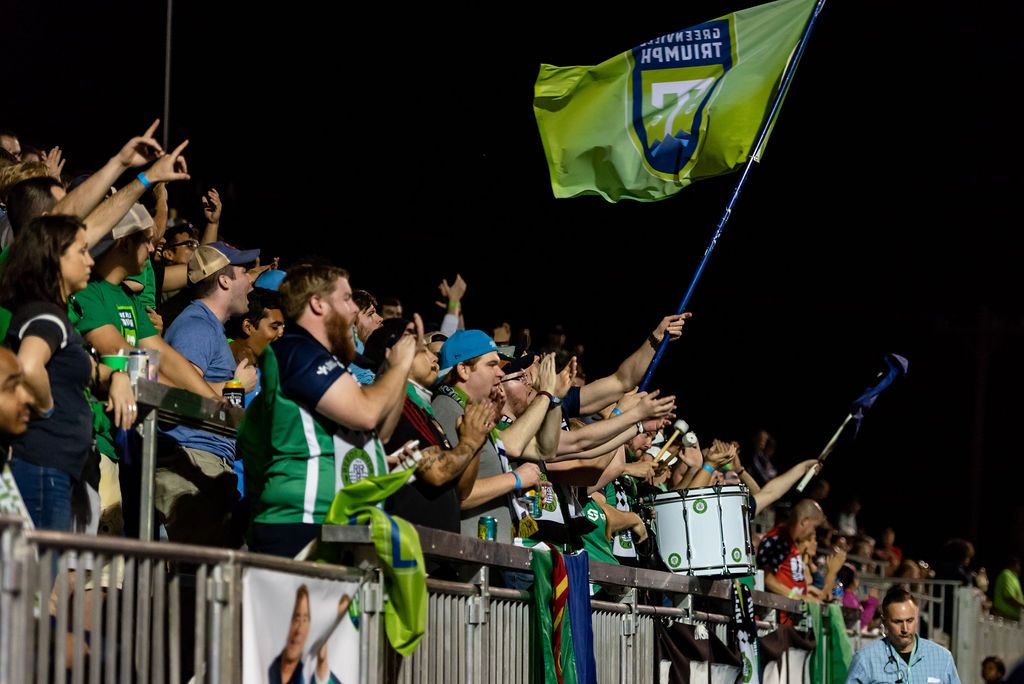
Several clubs in USL League One carry notable histories or brands that resonate beyond the league. Greenville Triumph SC has been a consistent competitive force since the league's inception, playing in the first-ever match and maintaining a strong presence. Forward Madison FC has garnered significant attention for its distinctive branding and strong community engagement. The departure of clubs like Toronto FC II marked the end of an early phase of MLS reserve team participation. Toronto FC II was a founding member and left after the 2021 season. One Knoxville SC turned professional and began play in 2023. Spokane Velocity began play in 2024. The league's membership includes historic clubs like the Richmond Kickers and revived brands like the New York Cosmos. The New York Cosmos revived the name of the original Cosmos from the North American Soccer League.
Questions about USL League One
What is USL League One?
USL League One is a professional men's Division III soccer league in the United States, operated by the United Soccer League. It launched in 2019 with ten founding teams and as of the 2026 season features 17 clubs. The league operates alongside MLS Next Pro at the same divisional level and serves as a professional platform for both independent clubs and those moving up from the pre-professional USL League Two. All teams play a 32-game regular season, followed by playoffs, and also compete in the separate USL Cup knockout tournament.
Has a Canadian team ever played in USL League One?
Yes, Toronto FC II was a founding member of USL League One. The team competed in the league's inaugural 2019 season. Toronto FC II continued to play in the league through the 2021 season. The team then joined MLS Next Pro after the 2021 League One season. No Canadian based team currently competes in USL League One as of the 2026 season.
How does USL League One relate to the USL Championship and USL League Two?
USL League One is part of a pyramid of leagues operated by the United Soccer League. It sits at Division III, below the Division II USL Championship and above the pre-professional, amateur Division IV league known as USL League Two. Clubs can move between these leagues, as seen when Lexington SC moved from League One to the USL Championship for 2025, and when several clubs like Fort Wayne FC have turned professional by moving up from League Two to League One. The leagues are separate competitions but share a common organizational structure.
What happened to the MLS reserve teams that were in USL League One?
All MLS reserve teams left USL League One after the 2021 season. They joined the new MLS Next Pro league which began play in 2022. This included North Texas SC, Toronto FC II, New England Revolution II, and Fort Lauderdale CF. This departure marked a strategic shift for League One toward independent clubs.
Which teams from the first season are still in the league?
Four charter members from the 2019 inaugural season continue to compete. These original clubs are Chattanooga Red Wolves SC, Forward Madison FC, Greenville Triumph SC, and the Richmond Kickers. Other founding members like South Georgia Tormenta FC are on hiatus. FC Tucson self relegated to USL League Two after the 2022 season. Lansing Ignite FC folded after the 2019 season.
Are there any new teams joining USL League One soon?
Yes, the league has announced several future expansion clubs. Fort Lauderdale United FC, Port St. Lucie SC, and Sporting Cascades FC are all slated to begin play in the 2027 season. Rodeo SC, started by the ownership group of Texoma FC, is scheduled to join the league in 2028. These plans indicate the league's ongoing growth, though start dates have been subject to adjustment from initial targets.
Sources and further reading
- USL League One (Wikipedia)
- USL Expansion, USL Expansion (uslexpansion.com)
Checked by the Garbutt Disposal desk. Last updated 2026-10-20.