Women's National Basketball Association
The Women's National Basketball Association (WNBA) is a professional women's basketball league in North America, founded in 1996 as the women's counterpart to the National Basketball Association (NBA). The league began play in 1997 and currently comprises 15 teams, with one franchise located in Canada, and is scheduled to expand to 18 teams by 2030. For Canadian sports fans, the league's presence includes the Toronto-based franchise and features numerous players who have represented Canada in international competition, such as Kia Nurse and Natalie Achonwa. The WNBA season runs from May to September, followed by a playoff tournament culminating in the WNBA Finals, and the league has become a fundamental part of professional women's sport on the continent.
Founding and early years (1996 to 2000)
The WNBA was officially approved by the NBA Board of Governors on April 24, 1996, and announced at a press conference featuring players Rebecca Lobo, Lisa Leslie, and Sheryl Swoopes. The league was created as a direct counterpart to the NBA and began its inaugural season on June 21, 1997, capitalizing on the momentum from the USA women's national team's gold medal at the 1996 Summer Olympics. The first game saw the New York Liberty defeat the Los Angeles Sparks 67-57 before a crowd of 14,284 at the Great Western Forum in Inglewood, California, televised nationally on NBC. The league launched with eight teams split into Eastern and Western Conferences and secured television deals with NBC, ESPN, and Lifetime. The initial marketing campaign, "We Got Next," centred on the star power of Lobo, Leslie, and Swoopes, though the Houston Comets, led by Cynthia Cooper, emerged as the league's first dynasty.
The Comets, featuring Cooper, Swoopes, and Tina Thompson under coach Van Chancellor, won the first four WNBA championships from 1997 to 2000. The team posted a remarkable 98-24 record over those four seasons and became the first women's professional team invited to the White House Rose Garden on May 23, 2000. The league expanded rapidly during this period, adding the Detroit Shock and Washington Mystics in 1998, the Orlando Miracle and Minnesota Lynx in 1999, and four more teams for the 2000 season. This growth to 16 teams was aided by the 1999 bankruptcy of its rival, the American Basketball League (ABL), which allowed star players like Nikki McCray and Dawn Staley to join the WNBA. The 1999 season also began with the first collective bargaining agreement in women's professional sports history.
Ownership transition and competitive shifts (2001 to 2009)
Following the Comets' dynasty, the Los Angeles Sparks, led by Lisa Leslie, won back-to-back championships in 2001 and 2002. A significant structural change occurred at the end of 2002 when the NBA sold the WNBA teams, ending collective NBA ownership. This led to the relocation of the Utah Starzz to San Antonio and the Orlando Miracle to Connecticut, while the Miami Sol and Portland Fire folded after failing to find new owners. The league also saw its first labour dispute in 2003, when the Women's National Basketball Players Association threatened a strike, delaying the preseason and draft. On the court, the Detroit Shock, under coach and general manager Bill Laimbeer, executed a dramatic worst-to-first turnaround, winning the 2003 championship before a league-record crowd of 22,076.
The Seattle Storm, built through consecutive first-overall draft picks Lauren Jackson (2001) and Sue Bird (2002), won their first title in 2004 with Anne Donovan becoming the first female coach to win a championship. The league celebrated its tenth anniversary in 2006, releasing an All-Decade Team, and the Shock won their third title that year. Leadership changes saw Val Ackerman resign as president in 2005, succeeded by Donna Orender. The Phoenix Mercury, under coach Paul Westhead, revolutionized play with an up-tempo style, winning championships in 2007 and 2009. This era also saw contraction, with the Charlotte Sting folding in 2007 and the Houston Comets ceasing operations in 2008 after the league failed to find new owners. An expansion team, the Atlanta Dream, began play in 2008.
- 2001 to 2002: Los Angeles Sparks win consecutive championships.
- End of 2002: NBA sells WNBA teams, leading to relocations and contractions.
- 2003: Detroit Shock win first title under Bill Laimbeer.
- 2004: Seattle Storm win first championship. Anne Donovan first female coach to win.
- 2006: WNBA celebrates tenth season. Detroit Shock win third title.
- 2007: Phoenix Mercury win first title playing up-tempo "Paul Ball."
- 2008: Atlanta Dream join as expansion franchise.
- 2009: Phoenix Mercury win second championship.
Era of dynasties and league stability (2010 to 2019)
The league contracted to 12 teams in 2010 after the Sacramento Monarchs folded and the Detroit Shock relocated to Tulsa, a number that remained stable for fifteen seasons. The Seattle Storm, led by Bird and Jackson, dominated the 2010 season, finishing 28-6 and sweeping the Atlanta Dream in the Finals. Leadership changed again as Donna Orender resigned in 2010 and was succeeded by Laurel J. Richie in 2011. They made six Finals appearances in seven years, though they fell to the Indiana Fever in the 2012 Finals, giving Tamika Catchings her first title.
The 2013 draft class of Brittney Griner, Elena Delle Donne, and Skylar Diggins, dubbed "The Three To See," brought renewed attention and helped boost TV ratings by 28%. The Phoenix Mercury, featuring Griner and Diana Taurasi, won the 2014 championship after a 29-5 regular season. The Tulsa Shock moved to Dallas in 2015 and were renamed the Dallas Wings, and Lisa Borders succeeded Laurel Richie as league president in 2016. A significant competitive change came in 2016 when the league abolished conference-based playoff seeding, allowing the top eight teams by record to advance regardless of conference. The latter half of the decade saw the Los Angeles Sparks win in 2016 and the Washington Mystics, led by Delle Donne, capture their first title in 2019.
| Season | Champion | Runner-up | Finals MVP |
|---|---|---|---|
| 2010 | Seattle Storm | Atlanta Dream | Lauren Jackson |
| 2011 | Minnesota Lynx | Atlanta Dream | Seimone Augustus |
| 2012 | Indiana Fever | Minnesota Lynx | Tamika Catchings |
| 2013 | Minnesota Lynx | Atlanta Dream | Maya Moore |
| 2014 | Phoenix Mercury | Chicago Sky | Diana Taurasi |
| 2015 | Minnesota Lynx | Indiana Fever | Sylvia Fowles |
| 2016 | Los Angeles Sparks | Minnesota Lynx | Candace Parker |
| 2019 | Washington Mystics | Connecticut Sun | Elena Delle Donne |
League structure and competition
The top eight teams in the league standings, regardless of conference, qualify for the playoffs, a format adopted in 2016. The postseason consists of best-of-three series in the first two rounds and a best-of-five WNBA Finals, usually concluding in November. The league also hosts an annual All-Star Game in late July, which often features skills competitions and a celebrity game. The WNBA draft is held each spring, where teams select eligible collegiate and international players, with the order determined by the previous season's records. The league operates under a salary cap system with a collective bargaining agreement that governs player contracts, free agency, and revenue sharing. Teams are required to carry a minimum of 11 players on their rosters. The WNBA is an active member of USA Basketball, the sport's national governing body recognized by FIBA. This relationship is crucial for player availability during international competitions like the FIBA Women's Basketball World Cup and the Olympic Games.
Notable teams and rivalries
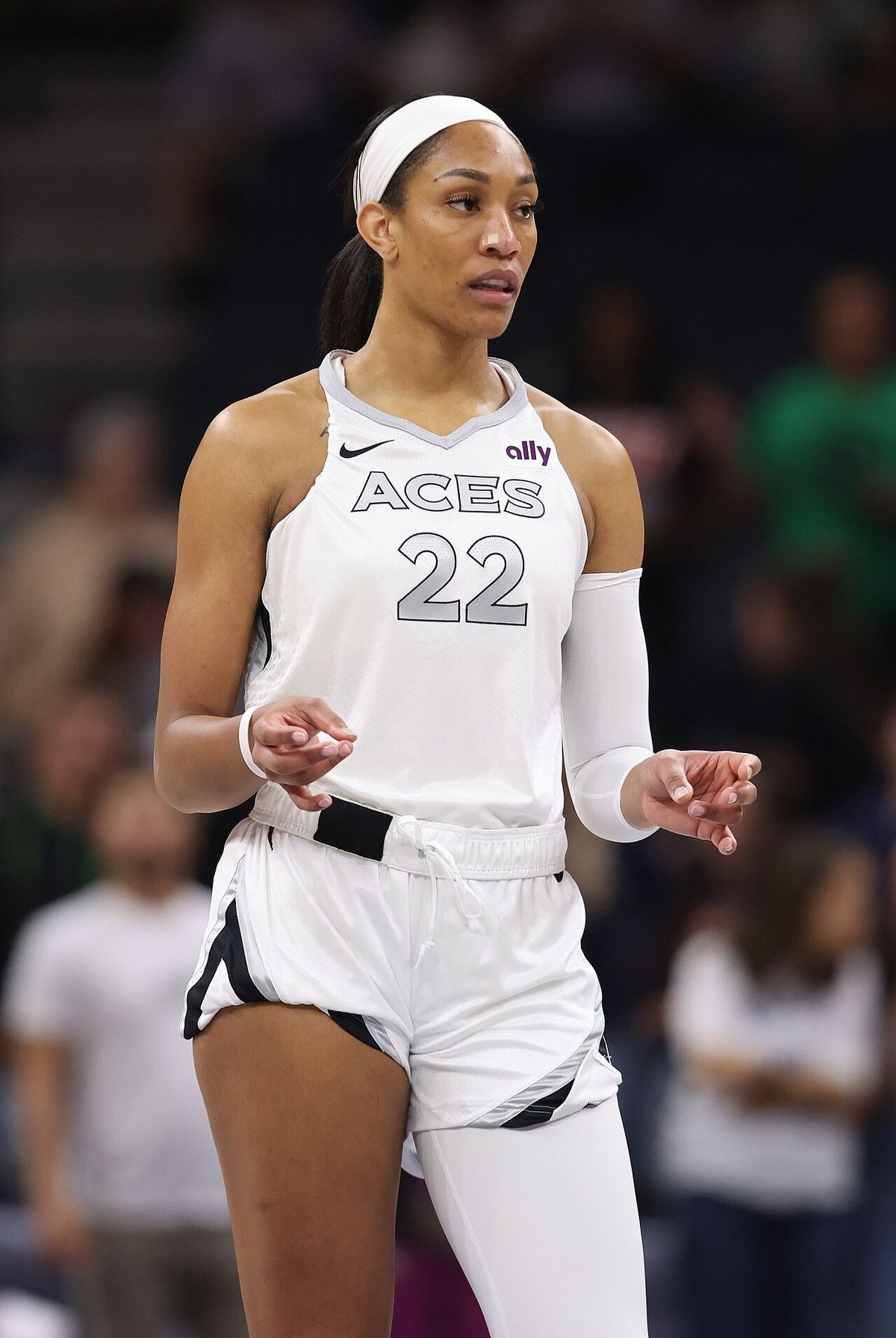
Several franchises have defined eras of the WNBA through sustained success and prominent players. The Houston Comets, led by Cynthia Cooper, Sheryl Swoopes, and Tina Thompson, won the league's first four championships from 1997 to 2000, establishing the first dynasty. The Los Angeles Sparks, powered by Lisa Leslie, captured back-to-back titles in 2001 and 2002. The Detroit Shock, under coach Bill Laimbeer, won three championships in six years (2003, 2006, 2008) with a physical, defensive identity. The Phoenix Mercury, with Diana Taurasi and Brittney Griner, have three titles (2007, 2009, 2014) and are known for a fast-paced offensive style. Key rivalries have included the Minnesota Lynx versus the Los Angeles Sparks in the mid-2010s and the ongoing competitive battles between the Aces and the New York Liberty, featuring stars like A'ja Wilson, Breanna Stewart, and Sabrina Ionescu.
- Houston Comets: First dynasty, won first four championships (1997 to 2000).
- Phoenix Mercury: Three titles (2007, 2009, 2014), known for high-scoring offence.
- Los Angeles Sparks: Back-to-back champions in 2001 and 2002.
- Detroit Shock: Three titles (2003, 2006, 2008) under Bill Laimbeer.
Media coverage and business
The WNBA's media rights landscape has evolved significantly from its initial deals with NBC, ESPN, and Lifetime. Current broadcast partners include ESPN, ABC, CBS, the Ion television network, Amazon Prime Video, and NBA TV, providing a mix of linear television and streaming coverage. National television ratings have seen growth, particularly during the playoffs and for drafts featuring high-profile rookies. The league has also invested in its digital presence through league pass streaming services and active engagement on social media platforms to connect with a global fanbase.
Under the leadership of Commissioner Cathy Engelbert, the league has pursued a strategy of growth through expansion and improved financial terms. The league has added partners across various sectors, including Nike, Google, and CarMax. Expansion fees for new franchises have risen substantially, reflecting the league's increased value. The addition of a team in Toronto and the planned growth to 18 teams by 2030 are central to this strategy, aiming to tap into new markets and solidify the WNBA as a major professional sports league.
Questions about Women's National Basketball Association
When does the WNBA season start and how long is it?
The WNBA regular season typically begins in May and runs through September. Each team plays a 44-game schedule. The playoffs follow the regular season, starting in late September and culminating with the WNBA Finals, which are usually played in November. The league also hosts an All-Star Game in late July and the Commissioner's Cup final is contested during the mid-season period.
Who are some of the most famous players in WNBA history?
The league's history features numerous prominent players. Early stars included Houston Comets' Cynthia Cooper, Sheryl Swoopes, and Tina Thompson, who formed the league's first dynasty. Lisa Leslie of the Los Angeles Sparks was a dominant centre and two-time champion. In the 2000s and 2010s, Sue Bird and Lauren Jackson led the Seattle Storm, while Diana Taurasi of the Phoenix Mercury became the league's all-time leading scorer. Minnesota Lynx stars Maya Moore and Sylvia Fowles were central to their team's success. Current stars include A'ja Wilson of the Las Vegas Aces, Breanna Stewart of the New York Liberty, and Canadian player Kia Nurse.
How can I watch WNBA games in Canada?
WNBA games are available in Canada through various broadcast and streaming services. Many nationally televised U.S. games on networks like ESPN, ABC, and CBS are accessible through Canadian cable and satellite providers that carry those channels. The league's streaming service, WNBA League Pass, is also available in Canada, offering live and on-demand access to most games. Select games are streamed on Amazon Prime Video. The Toronto franchise's local broadcast rights are expected to provide further viewing options for Canadian fans.
What is the WNBA Commissioner's Cup?
During the first part of the regular season, teams play designated "Cup games" against their conference rivals. The team with the best record in Cup games from each conference advances to the Commissioner's Cup Final, which is a standalone championship game. The winning team earns a special trophy and a significant prize money pool for the players. The games count toward the regular season standings, but the final is an additional contest.
How many WNBA teams are there and are there any in Canada?
The Women's National Basketball Association is composed of 15 teams, with 14 located in the United States and one in Canada. The league is scheduled to expand to 18 teams by the year 2030. Its headquarters are in New York City. The WNBA was founded on April 24, 1996, as the women's counterpart to the NBA, and league play began in 1997. The regular season runs from May to September, with each team playing 44 games.
Which WNBA team has won the most championships?
The Houston Comets won the most consecutive championships, capturing every title from the league's inception in 1997 through 2000. This four year dynasty was led by the "Big Three" of Cynthia Cooper, Sheryl Swoopes, and Tina Thompson under head coach Van Chancellor. The Comets were the first women's professional team invited to the White House Rose Garden in 2000. Their record in those first four seasons was 98 24, with a 16 3 playoff record. After Cynthia Cooper retired following the 2000 season, the Comets' championship run ended.
Sources and further reading
- Women's National Basketball Association (Wikipedia)
- WNBA News, Women's National Basketball Association ... (nytimes.com)
Checked by the Garbutt Disposal desk. Last updated 2026-10-18.