Super League
The Super League is the top-tier professional rugby league competition in the United Kingdom and the highest level of the British rugby league system. Founded in 1996, it replaced the historic Rugby Football League Championship First Division and shifted the sport from a winter to a summer schedule. The competition is significant to Canadian sports fans primarily through the brief but notable participation of the Toronto Wolfpack, which marked the first and only time a Canadian club competed at this elite level of rugby league. The league currently consists of fourteen teams, predominantly from Northern England along with the Catalans Dragons from southern France, and its season culminates in the Super League Grand Final to crown the champion.
Background and establishment
The concept of a Super League was first suggested in the 1970s as a response to declining attendances and popularity in British rugby league. By the early 1990s, the sport was struggling with poor facilities and was dominated by a single full-time professional club, Wigan. In 1992, Rugby Football League Chief Executive Maurice Lindsay revived the idea, envisioning a league that would break the sport's northern English stereotype and operate from modern facilities under new minimum standards. The project gained crucial momentum during the mid-1990s Australian Super League war, when media mogul Rupert Murdoch's BSkyB, seeking broadcasting supremacy, approached the RFL. A lucrative financial offer led to an agreement for a 14-team European Super League to launch in 1996, switching the sport to a summer season and mandating full-time professionalism for all clubs.
As part of the European vision, the inclusion of French teams was central. Toulouse Olympique were initially invited, though they ultimately did not take part in the first season. The French government's stipulation for a Paris-based team led to the creation of Paris Saint-Germain Rugby League, which adopted the name and colours of the famous football club. The original plans also involved controversial mergers between several historic English clubs, such as a proposed merger of Hull FC and Hull Kingston Rovers into 'Humberside'. These merger proposals proved deeply unpopular with fans and communities, and widespread opposition, including anti-merger campaigns and parliamentary debate, led to their abandonment by Good Friday 1995.
Qualification for the inaugural Super League was based on the 1994-95 First Division standings, with the top ten teams earning a place. This process created immediate controversy when Keighley, winners of the Second Division, were denied promotion in favour of fast-tracking the fourth-placed London Broncos to ensure greater national coverage for the new league. Keighley and Widnes, who were also denied a place, launched a legal challenge against the decision. The 1995-96 season served as a shortened final winter campaign, coinciding with the sport's centenary and concluding in January 1996 before the launch of the new summer era.
Early seasons and structural evolution
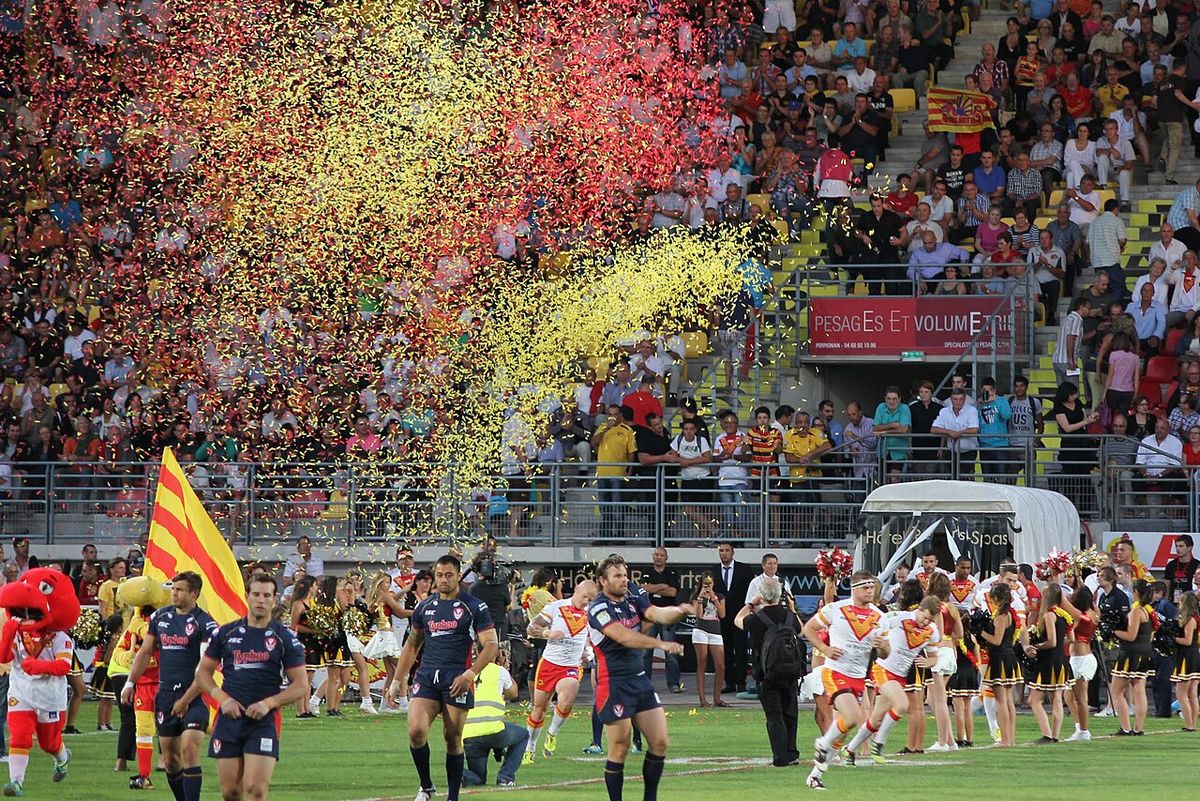
Super League I commenced on 29 March 1996 with twelve founding clubs. The launch introduced several innovations, including squad numbers, a video referee for televised matches, and an American-inspired model featuring team nicknames and the designation of seasons with Roman numerals. The first ever match saw Paris Saint-Germain defeat Sheffield Eagles 30-24 at the Charlety Stadium in Paris. The inaugural title was won by St Helens, who broke Wigan's long-standing dominance, while Workington Town were relegated. The 1997 season was won by the Bradford Bulls, with London Broncos vindicating their fast-tracked entry by finishing second. Paris Saint-Germain, after two consecutive 11th-place finishes, were dissolved following a scandal involving player visas.
The league structure underwent significant change in 1998 with the introduction of a playoff Grand Final to determine the champion, reviving a concept not used since 1973. The first Grand Final was held at Old Trafford, where Wigan Warriors defeated Leeds Rhinos 12-8 before a sellout crowd of 40,000. That season also saw a temporary halt to relegation as the league planned an expansion to 14 teams for 1999. This expansion introduced Wakefield Trinity and the new club Gateshead Thunder, though it lasted only a single season. Gateshead faced severe financial difficulties and merged with Hull Sharks to form Hull FC, while Sheffield Eagles merged with Huddersfield Giants, forcing the league to revert to 12 teams.
Relegation returned in 2001, with one team dropping down each season. The playoff format was expanded to include six teams in 2002, and the League Leaders Shield was introduced in 2003 to honour the team finishing first in the regular season. A major development occurred in 2006 with the admission of the Catalans Dragons, awarded a franchise as part of a renewed effort to include French representation. The Perpignan-based club was granted a three-year exemption from relegation, and their entry necessitated the relegation of two clubs, Leigh Centurions and Widnes Vikings, at the end of the 2005 season.
Licensing era and expansion
In May 2005, the RFL announced a move away from automatic promotion and relegation to a licensing system starting in 2009, aimed at improving club stability, facilities, and commercial performance. Clubs were assessed on stadium facilities, finance, commercial marketing, and playing strength, including junior development. Successful applicants received a three-year licence graded A, B, or C, with the league expanding to 14 teams. In July 2008, the RFL confirmed the 12 existing Super League clubs would retain their places, joined by Salford City Reds and the Celtic Crusaders from Wales. The inclusion of the Celtic Crusaders marked the first Welsh team in Super League and the only licensed club without prior top-flight experience. The first licensing period (2009 to 2011) saw the playoffs expand to eight teams and was dominated on the field by Leeds Rhinos and St Helens, with Leeds winning three titles and St Helens appearing in every Grand Final between 2006 and 2011.
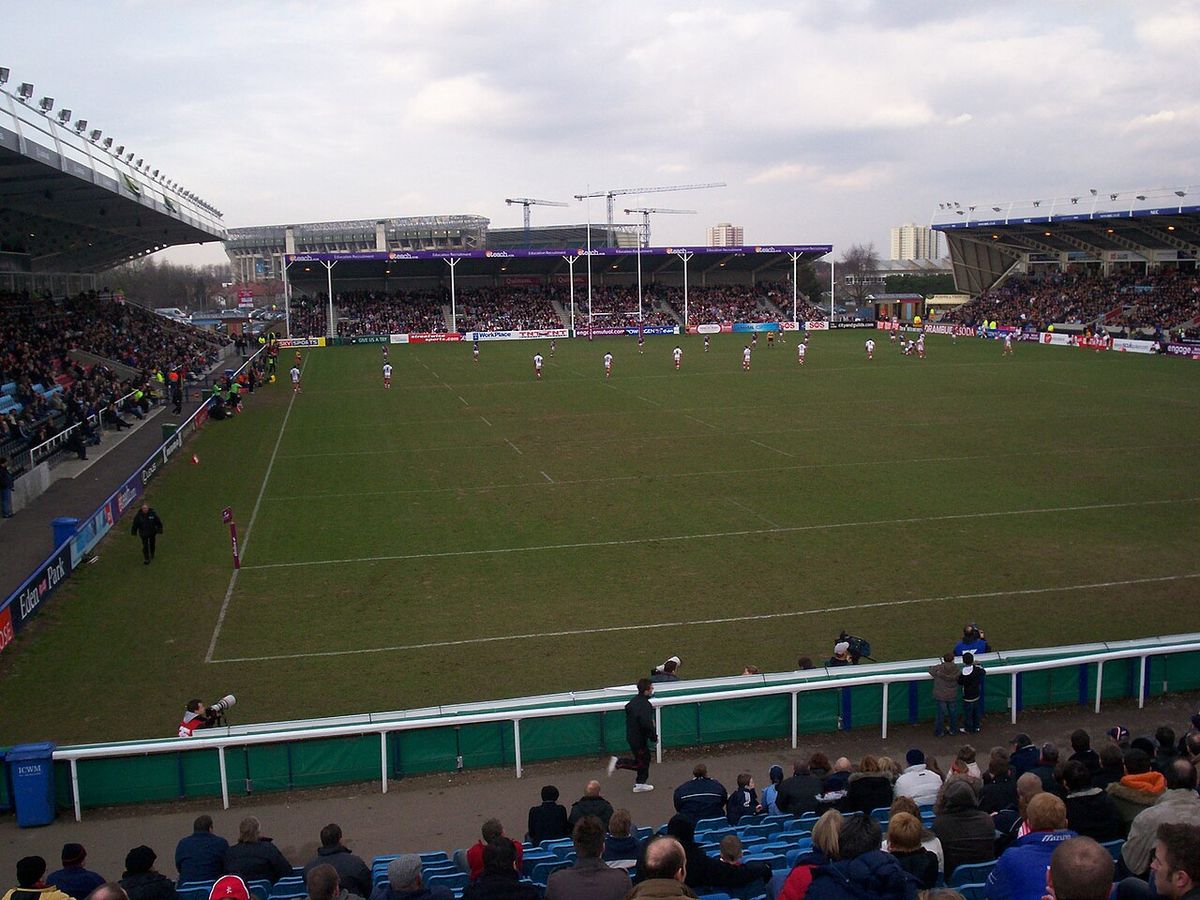
For the second licensing period (2012 to 2014), only Widnes Vikings from the Championship met the criteria and were awarded a licence alongside the thirteen existing Super League clubs, after the Celtic Crusaders withdrew and Halifax were refused. The licensing system began to attract criticism, with some arguing it protected underperforming clubs with outdated facilities, like Wakefield Trinity and Castleford Tigers, over ambitious Championship sides. This discontent, particularly among lower-league clubs who felt on-field success was not rewarded, eventually led to the system's demise. The following clubs were awarded licences for the 2009 season, marking the start of the licensing era:
- All 12 existing Super League teams from 2008
- Salford City Reds (promoted from National League 1)
- Celtic Crusaders (promoted from National League 1)
The Super 8s era
Responding to criticism of licensing, Super League clubs agreed at a 2013 meeting to reduce the top flight to 12 teams from 2015 and reintroduce promotion and relegation. This led to the creation of a radical new structure known as the Super 8s. From 2015 to 2018, after a 22-round regular season, the 24 clubs in Super League and the Championship would split into three groups of eight based on league position. The top eight Super League clubs entered the Super 8s phase, playing each other once to determine the top four for the semi-finals and Grand Final. The bottom four Super League clubs and the top four Championship clubs entered The Qualifiers, competing for four Super League spots the following year. To prepare for this, two clubs were relegated in 2014: the London Broncos and the four-time champion Bradford Bulls.
The marquee player rule was introduced in 2016, allowing clubs to sign one player whose salary sat outside the salary cap. The first Super 8s season in 2015 was won by the Leeds Rhinos, and all four Super League clubs survived The Qualifiers. In 2016, Hull Kingston Rovers were relegated after losing the 'Million Pound Game' to Salford Red Devils, with Leigh Centurions promoted. The 2017 season saw Castleford Tigers finish as league leaders for the first time in their history, though they lost the Grand Final to Leeds. By 2018, the Super 8s model was being questioned, as attendances often dropped after the split and fan interest seemed more focused on the relegation battles in The Qualifiers than the championship playoffs.
Governance split, pandemic, and return to tradition
In September 2018, Super League clubs called an EGM and voted to split from the Rugby Football League, seeking greater control over television deals and commercial revenue. They also voted to abolish the Super 8s, reverting to a traditional league structure with one promotion and one relegation place. The league appointed former Everton CEO Robert Elstone as its first independent Chief Executive. Elstone oversaw new branding and implemented on-field rules like a shot clock to reduce time-wasting and golden point extra time to eliminate draws. The 2019 season proceeded under this new governance, but the 2020 campaign was suspended due to the COVID-19 pandemic, which caused severe financial strain across the sport. The pandemic led to the withdrawal of the Toronto Wolfpack, the first and only Canadian club to compete in Super League, from the 2020 season and subsequently from the competition entirely.
In December 2020, Leigh Centurions were unanimously voted to take the Toronto Wolfpack's place for the 2021 Super League season. The financial pressures from this situation prompted calls for Super League and the Rugby Football League to re-amalgamate. Robert Elstone resigned as the Super League CEO in February 2021. He cited a failure to secure outside investment and the impacts of the COVID-19 pandemic as reasons for his departure. Huddersfield Giants chairman Ken Davy took over as the interim chief executive.
Format and competition
The Super League operates a summer season, typically running from February to September. Each of the 14 teams plays 27 regular-season matches: 13 home games, 13 away games, and one special fixture known as Magic Weekend, where all clubs play at a single venue over two days. The team finishing first in the regular season is awarded the League Leaders Shield. Following the regular season, the top six teams enter a playoff series. This culminates in the Super League Grand Final, held at Old Trafford in Manchester, where the league champions are crowned. The champion then earns the right to face the winner of Australia's National Rugby League in the annual World Club Challenge. The competition maintains a system of promotion and relegation with the second-tier Championship, operating on a one-up, one-down basis, with funding structured to mitigate the financial shock of relegation.
Clubs and champions
Since its inception in 1996, twenty-five different clubs have competed in the Super League. The vast majority have been from England, with three from France, one from Wales, and one from Canada. The six clubs to have won the Super League title are St Helens, Leeds Rhinos, Wigan Warriors, Bradford Bulls, Hull Kingston Rovers, and Wakefield Trinity. St Helens are the most successful club with ten championships, followed by Leeds with eight and Wigan with seven. The Catalans Dragons remain the only non-English club to have won the title, achieving the feat in recent years. The competition's heartland remains in Northern England, though the consistent presence of the Catalans Dragons provides a notable international dimension. The following table lists the clubs that have won the Super League title since 1996.
| Club | Titles | Championship Years |
|---|---|---|
| Bradford Bulls | 4 | 1997, 2001, 2003, 2005 |
| Hull Kingston Rovers | 1 | 2005 |
| Wakefield Trinity | 1 | 1998 |
The league has seen several clubs come and go since its inception in 1996. This includes founding members like Paris Saint-Germain, which folded after the 1997 season. It also includes the Welsh club Celtic Crusaders, which entered Super League in 2009 but later withdrew its licence application due to financial difficulties. The most significant expansion attempt from a Canadian perspective was the inclusion of the Toronto Wolfpack. The Wolfpack began in the lower leagues in 2017 and earned promotion to Super League for the 2020 season. They later withdrew from the competition due to financial pressures that were exacerbated by the COVID-19 pandemic.
Key innovations and rule changes
Throughout its history, Super League has introduced several significant innovations aimed at modernising the sport and improving the spectacle for fans. From its inaugural season in 1996, the league adopted American-style elements such as team nicknames and the use of Roman numerals to designate seasons. It also implemented squad numbers and introduced a video referee for all televised matches to aid officiating. A salary cap was established to promote competitive balance and prevent clubs from overspending. The league has continued to evolve its rules, with later changes including the marquee player rule in 2016 and the introduction of a shot clock and golden point extra time in 2019.
Major structural changes have also been a consistent feature of the competition's development. The following list outlines some of the most important format and governance shifts in Super League history:
- 1998: Introduction of the Grand Final playoff at Old Trafford.
- 2003: Introduction of the League Leaders Shield.
- 2009: Start of the three-year licensing system, replacing promotion/relegation.
- 2015: Introduction of the Super 8s and Qualifiers structure.
- 2018: Super League splits governance from the RFL and abolishes the Super 8s.
- 2019: Return to a one-up, one-down promotion/relegation system.
International dimension and Canadian involvement
Super League was conceived with a European vision, which initially led to the inclusion of French clubs Paris Saint-Germain and later the Catalans Dragons. This international aspect expanded briefly to include the Celtic Crusaders from Wales in 2009. The most ambitious international venture was the admission of the Toronto Wolfpack, a Canadian club that entered the British rugby league system in 2017. The Wolfpack's rapid rise through the lower leagues captured global attention and they earned promotion to Super League for the 2020 season. However, the COVID-19 pandemic created insurmountable travel and financial challenges, forcing the club to withdraw from the 2020 season and relinquish its Super League status, ending a unique chapter in the competition's history.
The involvement of clubs from outside England has been a defining, though sometimes challenging, feature of Super League. The following list details the non-English clubs that have competed in the competition since 1996:
- Paris Saint-Germain (France), Founding member in 1996, dissolved after 1997 season.
- Catalans Dragons (France), Joined in 2006, won their first title in 2021.
- Celtic Crusaders (Wales), Joined in 2009, withdrew after 2011 season.
- Toronto Wolfpack (Canada), Earned promotion for 2020 season, withdrew before playing.
Questions about Super League
What is the Super League?
The Super League is the top-level professional rugby league competition in the United Kingdom. It was founded in 1996 as a summer sport replacement for the historic winter-based Rugby Football League Championship. It currently consists of fourteen teams. These are primarily from Northern England along with one club from southern France. The season runs from February to September. It concludes with a playoff series and a Grand Final at Old Trafford to determine the champion. The champion then faces the Australian NRL champion in the World Club Challenge.
Has a Canadian team ever played in the Super League?
Yes, the Toronto Wolfpack became the first and only Canadian team to compete in the Super League. After entering the British rugby league system in 2017 and earning promotion, the Wolfpack were set to play in the 2020 Super League season. However, due to severe financial difficulties caused by the COVID-19 pandemic, the club withdrew from the 2020 season and subsequently from the competition entirely. Their place for the 2021 season was taken by the Leigh Centurions.
How does promotion and relegation work in Super League?
Since 2019, Super League has operated a traditional one-up, one-down promotion and relegation system with the second-tier Championship. This replaced the previous Super 8s and Qualifiers structure that was used from 2015 to 2018. The bottom-placed team in Super League at the end of the regular season is relegated to the Championship. The Championship Grand Final winner is promoted. This promotion is provided they meet the league's minimum standards criteria.
What was the licensing system in Super League?
The licensing system was used from 2009 to 2014, replacing automatic promotion and relegation. Clubs applied for a three-year licence to compete in Super League based on criteria including stadium facilities, financial health, commercial performance, and playing strength, including youth development. The system aimed to create more stable and professionally run clubs. It was controversial, as it sometimes allowed clubs with poorer on-field records or facilities to retain their place over ambitious Championship clubs, leading to its eventual abandonment.
What is the World Club Challenge?
The World Club Challenge is an annual match between the champions of the Super League and the champions of the Australian National Rugby League. It is typically held at the start of the year following the respective league seasons. The fixture represents the pinnacle of club rugby league, determining the best club team in the world. Super League clubs have had mixed success in this contest against their typically full-time professional Australian counterparts.
Who are the most successful clubs in Super League history?
St Helens are the most successful club in Super League history with ten championship titles. Leeds Rhinos follow with eight titles, and Wigan Warriors have seven. The Bradford Bulls have won four titles, while Hull Kingston Rovers and Wakefield Trinity have each won one. The Catalans Dragons are the only club from outside England to have won the Super League, adding an international flavour to the list of champions in recent seasons.
Sources and further reading
- Super League (Wikipedia)
- The Super League (thesuperleague.com)
- Soccer's richest teams to start a European Super League of ... (globalnews.ca)
Checked by the Garbutt Disposal desk. Last updated 2026-10-18.