Montreal Canadiens
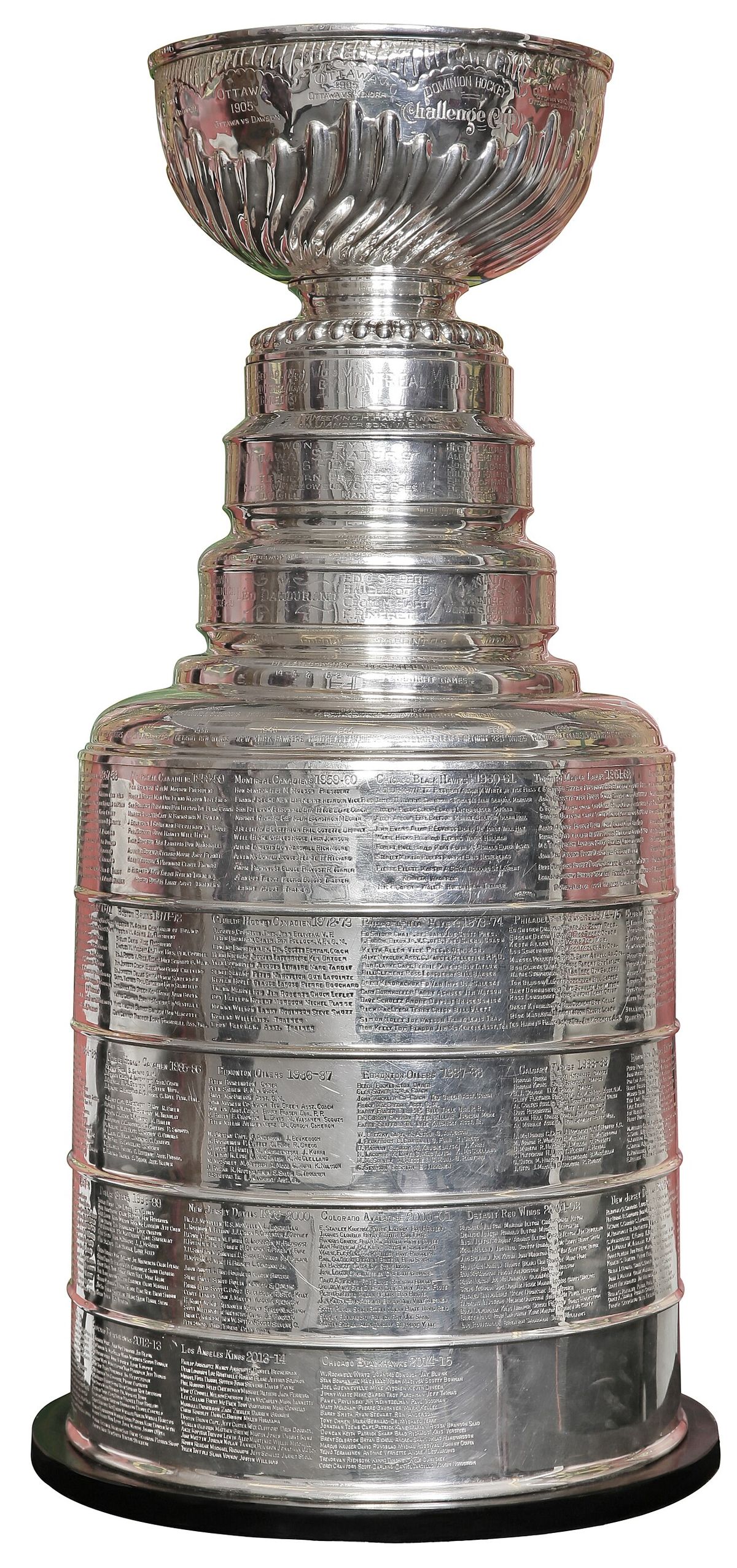
The Montreal Canadiens are a professional ice hockey team based in Montreal, Quebec, competing in the National Hockey League (NHL). Founded in 1909, the Canadiens are the oldest continuously operating professional hockey team in the world and a charter member of the NHL's 'Original Six'. The franchise has won the Stanley Cup 24 times, more than any other team in league history, though its last championship came in 1993. The team is a central cultural institution in Quebec and across Canada, operating bilingually and maintaining fierce rivalries with teams like the Toronto Maple Leafs and Boston Bruins.
Early History and Founding
The Montreal Canadiens were founded on December 4, 1909, by J. Ambrose O'Brien as a charter member of the National Hockey Association (NHA), the forerunner to the NHL. The team was established to represent Montreal's francophone community, with the intention of featuring francophone players and ownership. The team's inaugural 1909-10 season ended with a last-place finish. Ownership was transferred to George Kennedy after the first year, leading to improved results. The Canadiens won their first Stanley Cup championship in the 1915-16 season. In 1917, the Canadiens were a founding member of the National Hockey League, along with three other NHA clubs. The team won its first NHL Stanley Cup in the 1923-24 season, led by star player Howie Morenz. The club moved to its long-time home, the Montreal Forum, for the 1926-27 season.
The team enjoyed success in the early 1930s, winning consecutive Stanley Cups in 1930 and 1931. The economic pressures of the Great Depression, however, led to significant financial struggles for both the Canadiens and their cross-town rivals, the Montreal Maroons. Losses mounted to the point where selling the team to interests in Cleveland, Ohio, was considered. Local investors ultimately kept the team in Montreal. After the Maroons suspended operations following the 1937-38 season, several of their players joined the Canadiens roster.
Dynastic Eras and Championship Success
The Canadiens rose to prominence again in the 1940s behind the famed 'Punch Line' of Maurice 'Rocket' Richard, Toe Blake, and Elmer Lach. This era set the stage for the franchise's most dominant periods. From 1953 to 1960, the Canadiens captured six Stanley Cups, including a record-setting five consecutive championships from 1956 to 1960. This dynasty featured a new generation of stars including Jean Béliveau, Dickie Moore, Doug Harvey, Bernie 'Boom Boom' Geoffrion, Jacques Plante, and Henri Richard.
The team's success continued with another remarkable run from 1965 to 1979, during which they won ten Stanley Cups in 15 seasons. This included a second dynasty of four straight championships from 1976 to 1979. The 1976-77 Canadiens set several enduring team records, including fewest losses (8) in an 80-game season and the longest home unbeaten streak (34 games). That team also posted a record 132 points, a mark that stood for nearly 50 years. Stars of this era included Guy Lafleur, Ken Dryden, Steve Shutt, Bob Gainey, Larry Robinson, and Serge Savard, coached by Scotty Bowman.
The Canadiens won Stanley Cups in 1986, led by rookie star goaltender Patrick Roy, and in 1993, continuing their streak of winning at least one championship in every decade from the 1910s to the 1990s. This streak came to an end in the 2000s. The 1993 championship marked the last time a Canadian team won the Stanley Cup. In March 1996, the team moved from the Montreal Forum, its home during 70 seasons and 22 Stanley Cups, to the Molson Centre, which is now called the Bell Centre.
Modern Era and Rebuild
Following the departure of Patrick Roy in 1995, the Canadiens entered a prolonged period of limited playoff success, failing to advance past the second round until 2010. By the late 1990s, a struggling team and the low value of the Canadian dollar raised fears of potential relocation. In 2001, Molson Brewery sold the team and arena to American businessman George N. Gillett Jr. Under president Pierre Boivin, the franchise returned to financial health. The Molson family, led by Geoff Molson, repurchased the team in 2009 for $575 million.
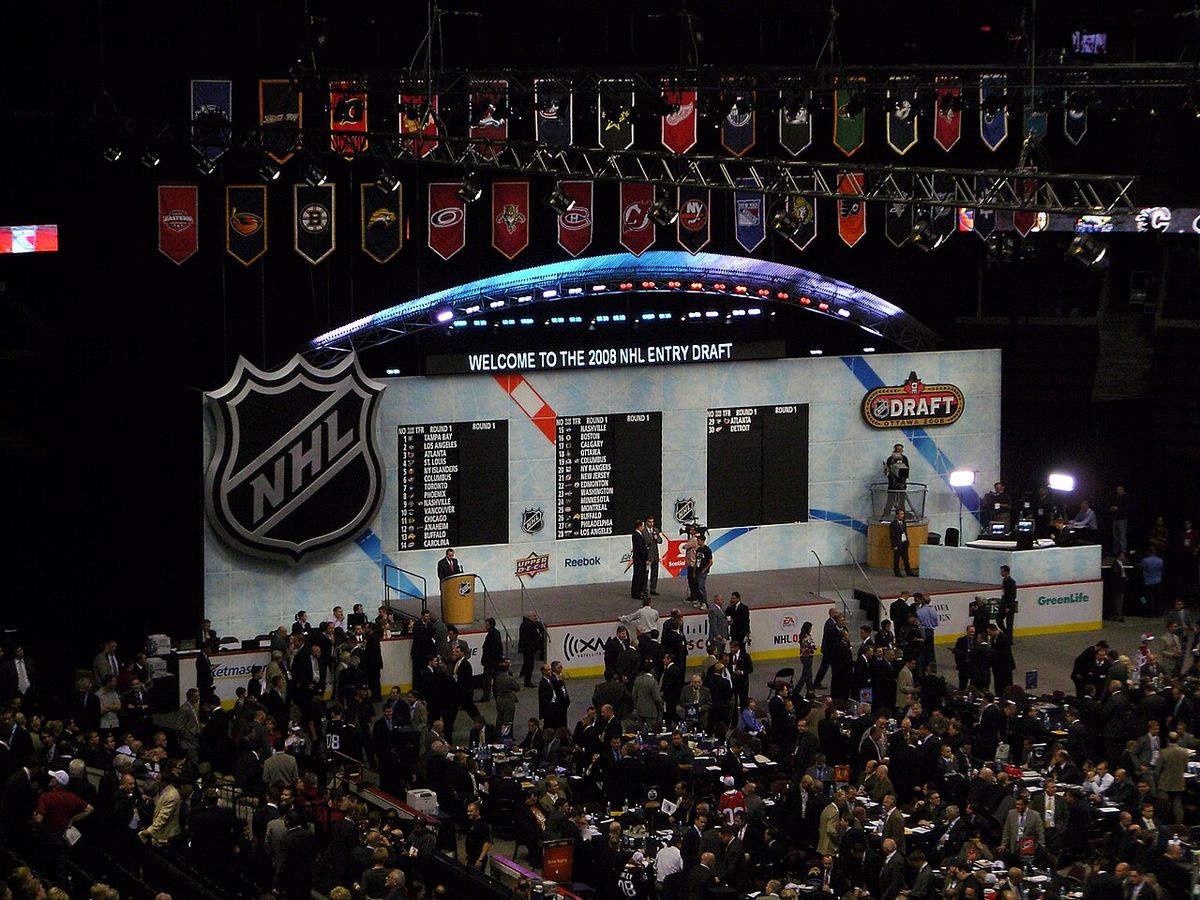
During the 2008-09 season, the Canadiens celebrated their 100th anniversary with various events, including hosting both the 2009 NHL All-Star Game and the 2009 NHL entry draft. For the 2020-21 season, the league moved the Canadiens to the North Division due to the COVID-19 pandemic. The Canadiens advanced through the 2021 Stanley Cup playoffs, beating the Toronto Maple Leafs and sweeping the Winnipeg Jets. After defeating the Vegas Golden Knights, they reached their first Stanley Cup Final in 28 years. Montreal eventually lost the Stanley Cup Final to the Tampa Bay Lightning.
The following 2021-22 season was one of the worst in franchise history, as the Canadiens finished last in the overall league standings for the first time since 1940. The team set modern records for most regulation losses (49) and fewest points (55). Owner Geoff Molson subsequently authorized a full-scale, multi-year roster rebuild, a first in the modern era for the franchise. The team continued its rebuild, finishing near the bottom of the league in the 2022-23 and 2023-24 seasons. As of October 2026, under coach Martin St. Louis and captain Nick Suzuki, the team holds a 3-3-1 record to start the 2026-27 season.
Team Identity and Cultural Significance
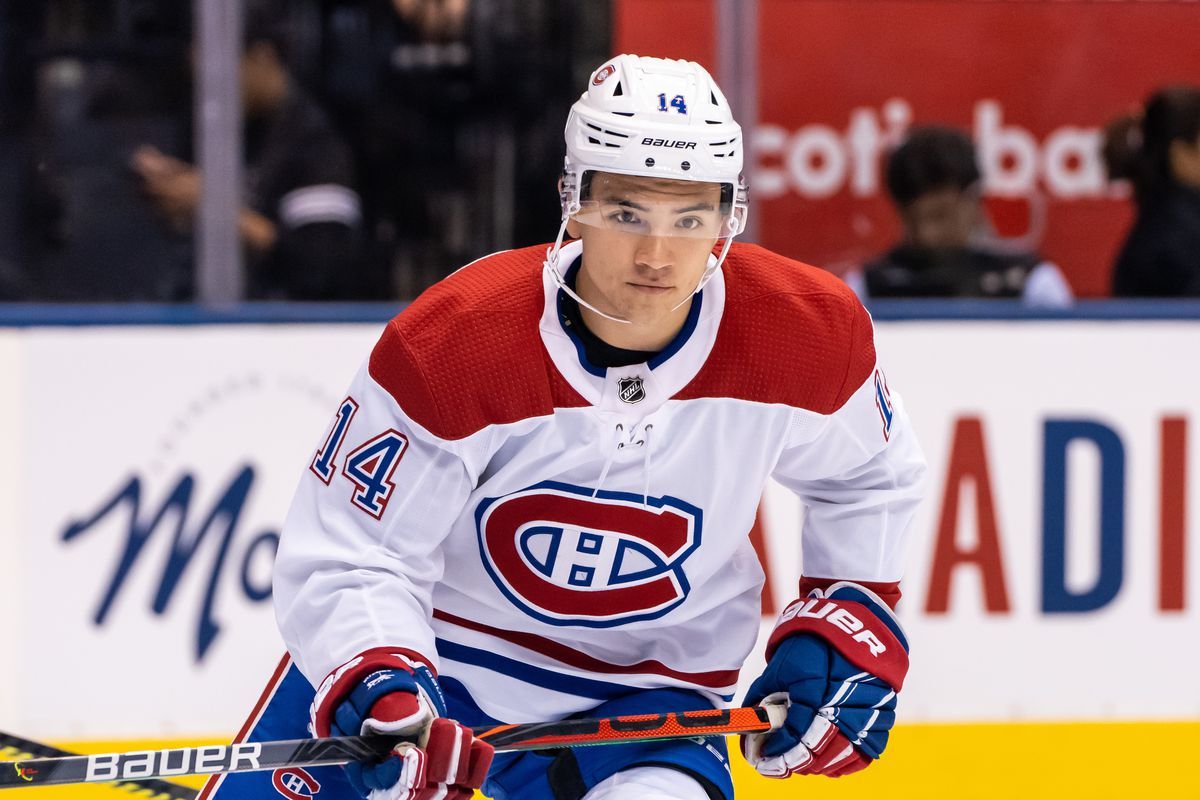
The Montreal Canadiens operate bilingually, with all public communications, broadcasts, and arena announcements delivered in both English and French. At home games, the national anthem is sung partially in French and partially in English. The team's crest, featuring a stylized 'C' encircling an 'H', is one of the oldest and most recognizable in professional sports. The 'H' stands for 'Hockey' in the team's official French name, 'Club de Hockey Canadien', not 'Habitants', though that nickname is long-established. The team's colours are red, blue, and white, and the classic red home sweater design, largely unchanged since 1925, is famously known in Quebec as 'La Sainte-Flanelle' (the holy flannel).
The sweater is a potent cultural symbol, immortalized in Roch Carrier's short story 'The Hockey Sweater', a passage from which appeared on the Canadian five-dollar bill. The team's motto, 'To you from failing hands we throw the torch. Be yours to hold it high', is taken from the poem 'In Flanders Fields' by John McCrae and is displayed in the team's dressing room. The torch motif is a recurring ceremonial element, and during the 2026 playoffs, the team instituted a tradition where a different Canadiens alumnus would carry a torch into the Bell Centre before each home game to symbolically 'ignite' the arena. The team's mascot is Youppi!, originally the mascot for the Montreal Expos baseball team, who joined the Canadiens in 2005 and became the first mascot to switch between major professional sports leagues.
Key Rivalries
The Canadiens maintain historic and intense rivalries with other Original Six franchises. Their oldest rivalry is with the Toronto Maple Leafs, dating to 1917. The teams have met 16 times in the playoffs, including five Stanley Cup Finals. The rivalry is often framed within the context of Canada's English-French linguistic and cultural divide, especially as the two were the only Canadian teams in the league from 1938 to 1970. The rivalry with the Boston Bruins is the most frequent in NHL history, with the teams having faced each other more times in both regular season and playoffs than any other pairing. They have contested 34 playoff series, seven of which were in the Stanley Cup Final.
The Canadiens had an intraprovincial rivalry with the Quebec Nordiques during their existence from 1979 to 1995. This rivalry was nicknamed the 'Battle of Quebec'. The Nordiques franchise relocated in 1995, which ended the rivalry. The matchup represented a clash between the province's two major cities.
Broadcasting and Media
Canadiens games are broadcast locally in both French and English. The French-language radio flagship is CHMP 98.5 FM, with play-by-play by Martin McGuire and colour commentary by Dany Dubé. Regional French-language television rights are held by Réseau des sports (RDS) under a long-term agreement. Nationally, French-language playoff and select regular season games are televised by TVA Sports. English-language regional broadcast rights are held by Bell Media. The English radio flagship is TSN Radio 690 (CKGM). Regional television broadcasts in English air on TSN2, with Bryan Mudryk on play-by-play. All other games, including national playoff broadcasts, are televised by Sportsnet or CBC. This comprehensive bilingual coverage ensures the team reaches its widespread fanbase across Quebec and the rest of Canada.
The Franchise in the 2020s
As of the 2026-27 season, the Montreal Canadiens are in the midst of a patient rebuild under the hockey operations leadership of general manager Kent Hughes and head coach Martin St. Louis. The team is captained by centre Nick Suzuki. The roster features a mix of young prospects and established players, with an average age of 25.69 years. The team's performance in the 2025-26 season was considered a step forward, resulting in a third-place finish in the Atlantic Division and a playoff appearance that ended in the Eastern Conference Final.
The pressure to return to contention remains high in Montreal. The 2026-27 schedule features 84 games, and the team continues to play its home games at the Bell Centre, where single-game tickets and season ticket packages are marketed actively. The organization remains deeply connected to its community through the Montreal Canadiens Children's Foundation and its alumni association. The team's cultural footprint in Montreal is significant, existing alongside other major sports franchises and international events like the Formula 1 Grand Prix du Canada, which is held annually at the city's Circuit Gilles-Villeneuve.
Questions about Montreal Canadiens
Why are the Montreal Canadiens called the Habs?
The nickname 'Habs' is short for 'Habitants'. In Quebec history, habitants were francophone settlers. As a nickname for the hockey team, 'Habitants' is attested in French in 1914. According to About.com, the first man to refer to the team as 'the Habs' was Tex Rickard in 1924. The 'H' in the logo stands for 'Hockey' in the team's official French name, 'Club de Hockey Canadien', not 'Habitants'.
When did the Canadiens last win the Stanley Cup?
The Montreal Canadiens last won the Stanley Cup in the 1992-93 season. This championship is notable as it marks the last time any Canadian-based NHL team has won the Cup. The team made a run to the Stanley Cup Final in 2021 but lost to the Tampa Bay Lightning. Their 1993 victory extended their streak of winning at least one championship in every decade from the 1910s through the 1990s.
What is the meaning behind the Canadiens' logo?
The classic logo features a stylized 'C' encircling an 'H'. The 'C' stands for 'Canadien', and the 'H' stands for 'Hockey', from the team's official French name 'Club de Hockey Canadien'. The design evolved from earlier logos that featured just a 'C' or a 'C' with an 'A' for 'Athlétique'. The current form of the logo was established in the 1952-53 season and is one of the most recognizable symbols in professional sports.
How many Stanley Cups have the Canadiens won?
The Canadiens have won the Stanley Cup 24 times, more times than any other franchise. They have earned 23 victories since the founding of the NHL, and 22 since 1927. The team won six Stanley Cups from 1953 to 1960, including a record five straight from 1956 to 1960. They added ten more championships in 15 seasons from 1965 to 1979, with another dynastic run of four-straight Cups from 1976 to 1979.
Where do the Canadiens play their home games?
The Montreal Canadiens have played their home games at the Bell Centre since 1996. The arena was originally known as the Molson Centre when it opened. Prior to that, the team played for 70 seasons at the legendary Montreal Forum, which was the site of 22 of their Stanley Cup championships. The Bell Centre is located in downtown Montreal and is one of the busiest arenas in the world.
Sources: Wikipedia and current public reporting, checked by the Garbutt Disposal desk. Last updated 2026-10-18.