Quebec Nordiques
The Quebec Nordiques were a professional ice hockey team based in Quebec City. The Nordiques played in the World Hockey Association from 1972 to 1979 and the National Hockey League from 1979 to 1995. They were the only major professional sports team based in Quebec City in the modern era. The franchise was relocated to Denver in May 1995 and renamed the Colorado Avalanche.
Formation and WHA Era
The Quebec Nordiques were established as one of the original franchises of the World Hockey Association for the 1972-73 season. The team was originally awarded to a group in San Francisco before being purchased by a consortium of Quebec City businessmen who owned the Quebec Remparts junior team. On March 29, 1972, the name 'Les Nordiques' was announced, chosen because Quebec City was one of the northernmost cities in professional North American sports. The team's distinctive colour scheme of powder blue and red was designed by Roger Gingras. The Nordiques' first head coach was Montreal Canadiens legend Maurice 'Rocket' Richard, but he resigned after just two games, deciding coaching was not his strength.
The franchise's first star was defenceman J. C. Tremblay, who led the WHA in assists in its inaugural season and was a league all-star for his first four years in Quebec. Key forwards Serge Bernier and Rejean Houle joined the following season. The Nordiques made their first playoff appearance in the 1974-75 season, powered by high-scoring winger Marc Tardif, who was acquired in a trade in December 1975. That playoff run saw them defeat the Phoenix Roadrunners and Minnesota Fighting Saints before being swept in the Avco World Trophy finals by the Gordie Howe-led Houston Aeros. The 1975-76 season was historically offensive, as Quebec became the only team in major professional hockey history to have five players surpass 100 points: Tardif, Réal Cloutier, Chris Bordeleau, Bernier, and Houle.
Despite injuries, the Nordiques captured their only championship in the 1976-77 season, winning the Avco World Trophy. They defeated the New England Whalers and Indianapolis Racers in five games each before besting the Winnipeg Jets in a seven-game final series, with Serge Bernier setting a playoff record with 36 points in 17 games. The team represented Canada at the 1977 Izvestia Trophy tournament in Moscow, finishing last with an 0-3-1 record. The WHA began to falter by 1978, and team president Marcel Aubut explored entry into the NHL. The Nordiques were unable to repeat as champions, falling to the New England Whalers in the 1978 playoffs. The 1978-79 season was the WHA's last and also marked the retirement of J. C. Tremblay, whose number 3 jersey was retired by the team.
Entry into the National Hockey League
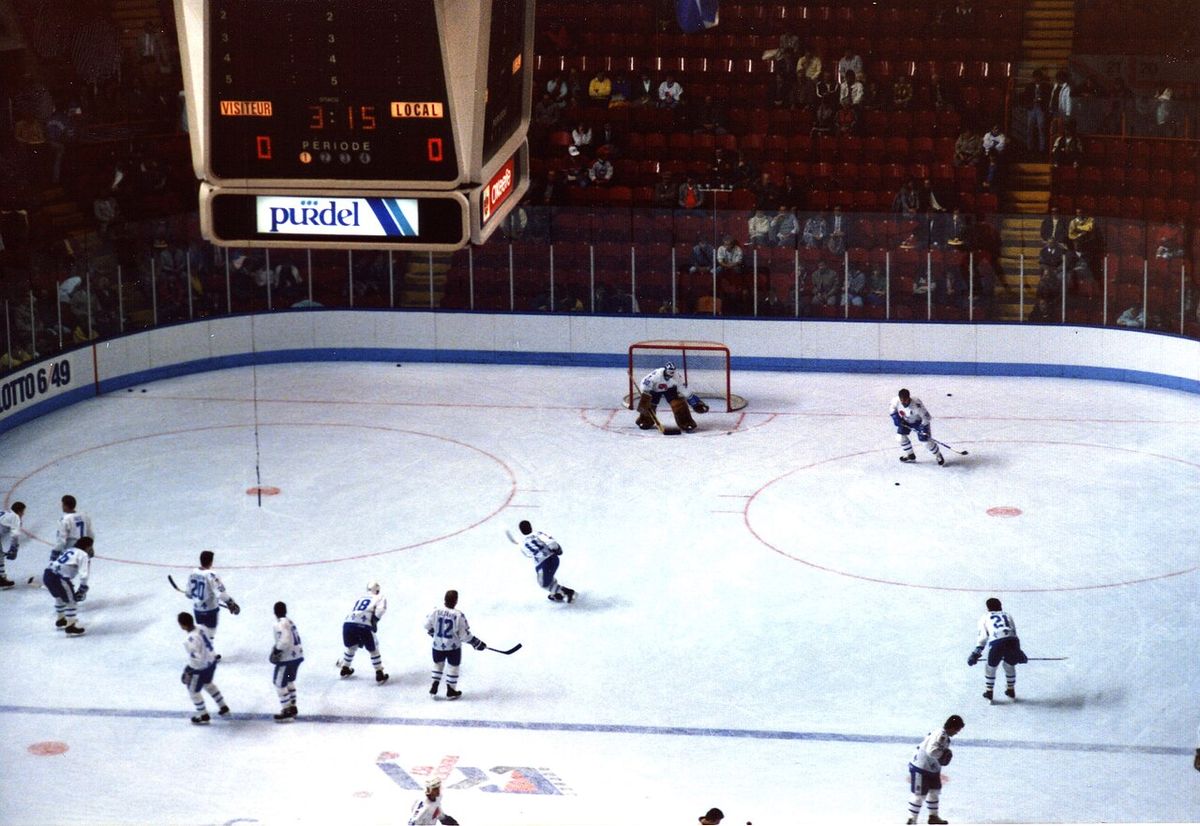
The Nordiques were one of four WHA teams admitted to the NHL in 1979, joining the Hartford Whalers, Edmonton Oilers, and Winnipeg Jets. They were placed in the Adams Division of the Prince of Wales Conference. The cost of entry was steep, as the team was forced to relinquish all but three players in a dispersal draft. Consequently, the 1979-80 season was difficult, with the Nordiques finishing with the second-worst record in the league. A bright spot was the play of rookie left winger Michel Goulet, and an early highlight came when Réal Cloutier scored a hat trick in his first NHL game. In a significant coup, the Nordiques signed defecting Czechoslovak national team stars Peter and Anton Šťastný in August 1980, with their brother Marian joining in the summer of 1981.
They lost a best-of-five preliminary round series in five games to the Philadelphia Flyers. With Goulet and Šťastný as central figures, the Nordiques made the playoffs for seven consecutive seasons. The playoff structure of the 1980s, however, often pitted them against the powerful Montreal Canadiens or Boston Bruins early on. In the 1982 playoffs, despite a modest 82-point regular season, Quebec defeated both Montreal and Boston in winner-take-all games on the road before being swept by the defending champion New York Islanders in the conference finals.
The rivalry with the Canadiens reached a fever pitch during the 1984 playoffs, culminating in the infamous Good Friday Massacre in Game 6 at the Montreal Forum. The game is best remembered for a massive brawl at the end of the second period and another as teams warmed up for the third. After ejections to Peter Šťastný and Dale Hunter, the Canadiens scored five unanswered goals in the third period to eliminate the Nordiques. The following season, 1984-85, the two teams battled for the Adams Division title, with Montreal finishing three points ahead. The Nordiques nonetheless earned home-ice advantage for the first time in the NHL and exacted revenge by ousting the Canadiens in a seven-game division final, clinched by a Peter Šťastný overtime goal in Game 7 at the Forum. They then took the league-best Philadelphia Flyers to six games in the conference finals, marking the franchise's deepest NHL playoff run in Quebec.
Decline and the Draft Lottery Era
The Nordiques won their first and only NHL division title in the 1985-86 season but suffered a stunning first-round sweep at the hands of the Hartford Whalers. The 1988-89 season was particularly poor, with a league-worst record of 27-46-7. In an attempt to revive fortunes, former coach Michel Bergeron returned for the 1989-90 season, and legendary winger Guy Lafleur joined the team to finish his career in his home province. The moves did not help, as the Nordiques posted an abysmal 12-61-7 record.
Despite their struggles, the Nordiques' poor performance yielded high draft picks. In the 1989 NHL entry draft they drafted Swedish prospect Mats Sundin first overall. In the following draft Quebec chose first again, this time taking Owen Nolan. In the 1991 draft, the Nordiques once again had the first overall pick and they picked junior star Eric Lindros.
- 1989: Mats Sundin (1st overall), the first European player ever selected first overall in an NHL entry draft.
- 1990: Owen Nolan (1st overall).
- 1991: Eric Lindros (1st overall).
In March 1990, the Nordiques traded longtime stars Michel Goulet to the Chicago Blackhawks and Peter Šťastný to the New Jersey Devils. The team continued to struggle, failing to reach 70 points for five straight seasons, though young centre Joe Sakic emerged as a stellar talent. The selection of Eric Lindros in 1991 created an immediate crisis, as the junior star publicly refused to play for Quebec, citing market size and a reluctance to speak French. Lindros held out for over a year, creating a major distraction for the struggling franchise.
The Lindros Trade and Resurgence
On June 30, 1992, an arbitrator awarded Eric Lindros's rights to the Philadelphia Flyers, concluding a disputed trade. The Nordiques finalized a blockbuster deal, sending Lindros to Philadelphia in exchange for forwards Peter Forsberg and Mike Ricci, goaltender Ron Hextall, defencemen Steve Duchesne and Kerry Huffman, future considerations that became enforcer Chris Simon, two first-round draft picks, and $15 million US. One of the draft picks was used to select goaltender Jocelyn Thibault. This trade fundamentally transformed the franchise, supplying a core of talent that propelled the team from league doormat to contender almost overnight.
The 1992-93 season witnessed the biggest single-season turnaround in NHL history. Bolstered by the new acquisitions and the continued excellence of Joe Sakic, Mats Sundin, and Owen Nolan, the Nordiques leaped from 52 points to 104 points. They secured the fourth-best record in the league and made the playoffs for the first time in six years. Sakic and Sundin both scored over 100 points, and coach Pierre Page was a Jack Adams Award finalist. However, they lost in the first round to the eventual Stanley Cup champion Montreal Canadiens in six games, after winning the first two. The following 1993-94 season was a setback, as injuries contributed to the team missing the playoffs. In a controversial off-season move, Mats Sundin was traded to the Toronto Maple Leafs for captain Wendel Clark.
For the lockout-shortened 1994-95 season, Marc Crawford was hired as head coach and Peter Forsberg joined the team, winning the Calder Memorial Trophy as rookie of the year. The Nordiques finished with the best record in the Eastern Conference. Their final playoff series in Quebec City ended in a first-round defeat to the defending champion New York Rangers in six games. The on-ice success of this three-year period, which included the franchise's first 100-point NHL season, was overshadowed by growing financial instability.
Financial Challenges and Relocation
Despite renewed competitive success and fan support from 1992 to 1995, the Nordiques faced severe and ultimately insurmountable financial pressures. Quebec City was by far the smallest market in the NHL and the second-smallest major-league city in North America, behind only Green Bay, Wisconsin. All Canadian teams struggled with rising player salaries and a weakening Canadian dollar, but the Nordiques' situation was exacerbated by unique local factors. The city's virtually monolingual francophone character meant a near-total lack of English-language media, with only one private anglophone TV station and a weekly newspaper. This limited marketability and made some non-French-speaking players wary of joining the team.
Team president Marcel Aubut, while not having lost money on the franchise, feared unsustainable future losses without government assistance. He sought a bailout from the provincial government of Premier Jacques Parizeau, but the request was refused. Few in Quebec were willing to subsidize a hockey club paying multimillion-dollar salaries. With no local solution in sight, Aubut accepted an offer from COMSAT Entertainment Group, owner of the NBA's Denver Nuggets. The relocated franchise immediately found success, maintaining the momentum built in Quebec. They also won their division title in each of their first eight seasons in Denver, for a total of nine consecutive division championships. The last active NHL player to have played for the Nordiques was defenceman Adam Foote, who retired after the 2010-11 season.
Season-by-Season NHL Record
The Quebec Nordiques' tenure in the National Hockey League spanned from 1979 to 1995. They made the playoffs seven years in a row in the early to mid 1980s. The Nordiques had a dramatic resurgence in the early 1990s, posting a franchise record 104 points in the 1992-93 season. Their final season in Quebec was the 1994-95 season.
| Season | W-L-T | Points | Finish | Playoff Result |
|---|---|---|---|---|
| 1988-89 | 27-46-7 | 61 | 5th, Adams | Did not qualify |
| 1991-92 | 20-48-12 | 52 | 5th, Adams | Did not qualify |
| 1992-93 | 47-27-10 | 104 | 2nd, Adams | Lost in Division Semi-finals |
Team Identity and Culture
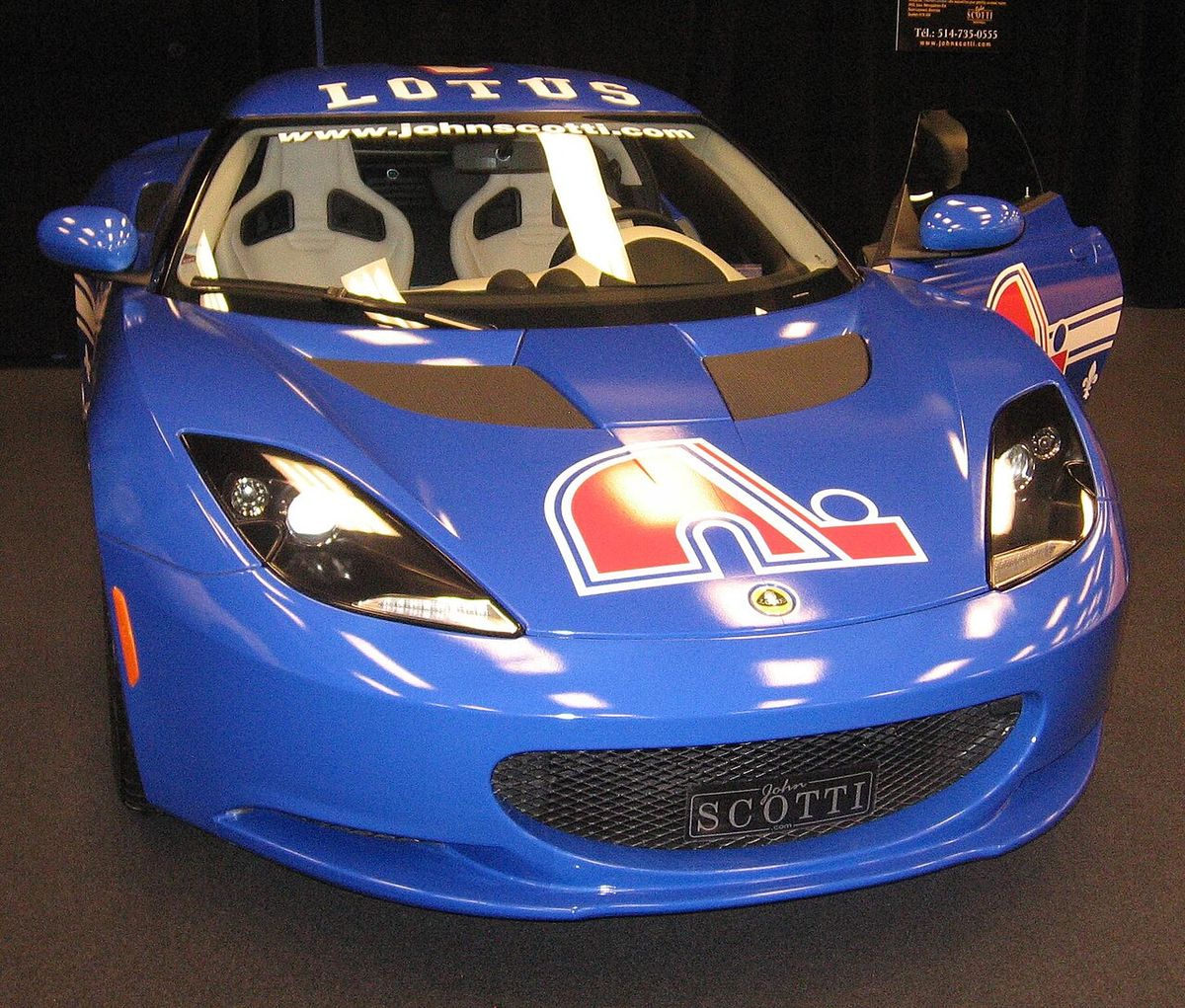
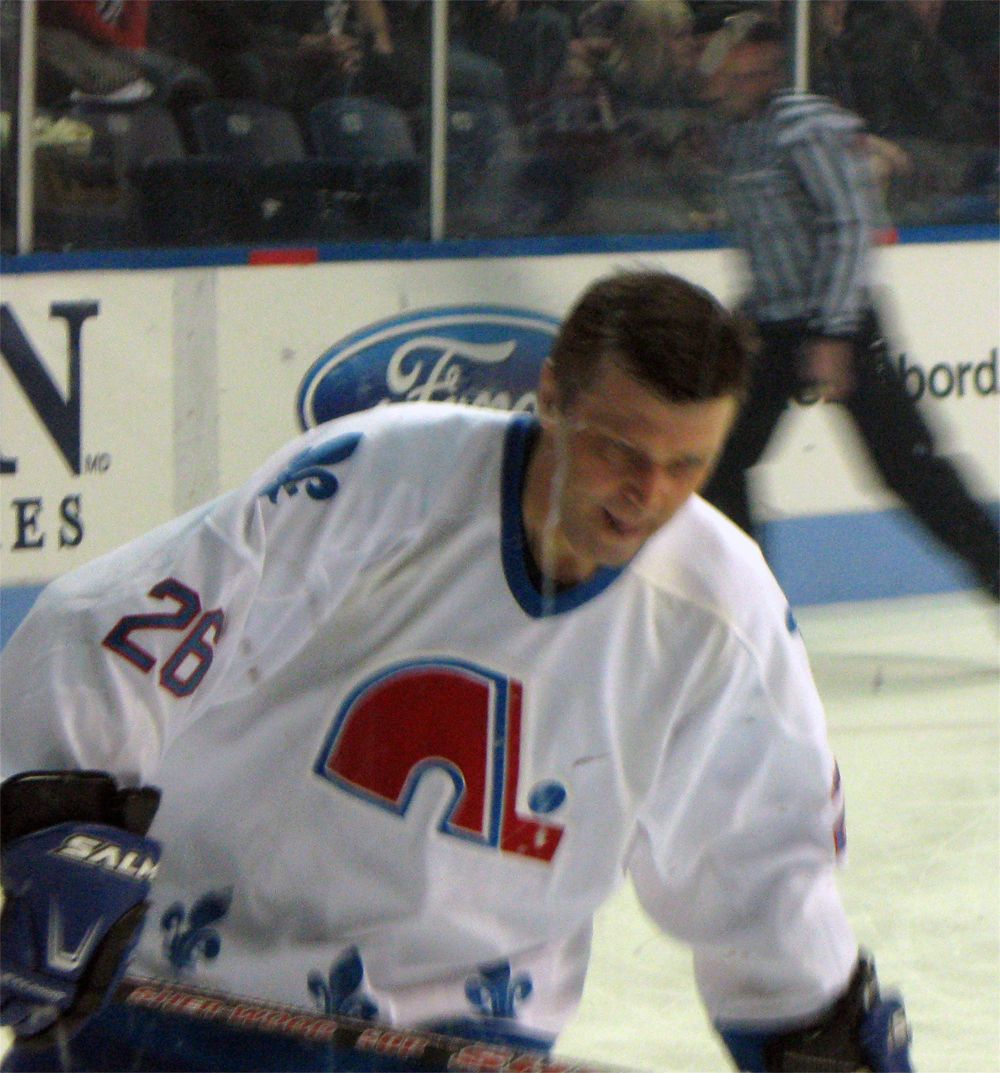
The Quebec Nordiques cultivated a strong and distinct identity centred on their status as Quebec's 'other' NHL team. The name 'Nordiques', meaning 'Northerners' or 'Northmen', reflected the city's northern geography. The powder blue and red colour scheme and fleur-de-lis-inspired logo were instantly recognizable. The team's home, the Colisée de Québec, was known for its passionate, predominantly francophone fan base. This cultural connection was highlighted in January 1979 when Premier René Lévesque described the Nordiques as 'the only truly French team' and pledged provincial support for its NHL entry. The rivalry with the Montreal Canadiens transcended sport, often viewed as a symbolic clash between the provincial capital and the metropolitan centre, intensifying during memorable playoff series like the 1984 Good Friday Massacre.
The team's mascot, Badaboum, a fuzzy blue creature, debuted at the 1987 Rendez-vous '87 event, an altered All-Star Game that featured the Soviet national team. Created specifically for the event, Badaboum's bizarre dance routines proved so popular with fans that the Nordiques made him a permanent fixture at home games. The franchise also pioneered in European scouting and integration, most notably with the signing of the Šťastný brothers from Czechoslovakia and the drafting of Mats Sundin, the first European first overall pick. These elements combined to create a unique franchise culture that, despite the team's departure, remains a potent part of Quebec City's sporting heritage and a subject of enduring nostalgia and discussion about a potential NHL return. The last active player from the Nordiques era in any professional league was Martin Rucinsky, who retired after the 2014-15 season while playing in the Czech Extraliga.
Questions about Quebec Nordiques
Why did the Quebec Nordiques move to Colorado?
The Nordiques relocated primarily due to severe financial challenges. Quebec City was the NHL's smallest market, and the team struggled with rising player salaries and a weak Canadian dollar. The city's predominantly francophone character also limited English-language media exposure and marketability. Team president Marcel Aubut sought a financial bailout from the Quebec government, but Premier Jacques Parizeau refused. With no local solution, Aubut accepted an offer from COMSAT Entertainment Group to move the franchise to Denver in May 1995, where it became the Colorado Avalanche.
What was the Nordiques' rivalry with the Montreal Canadiens like?
The Nordiques-Canadiens rivalry was one of the most intense in NHL history, fuelled by geographic proximity, cultural differences, and frequent playoff meetings. It peaked during the 1980s, most notably in the 1984 playoffs with the 'Good Friday Massacre,' a game infamous for two massive brawls. The Canadiens won that series, but the Nordiques exacted revenge the following year by defeating Montreal in a seven-game division final. The rivalry transcended sport, often seen as a battle between Quebec City and Montreal, and between the province's two major NHL franchises. Their playoff series were consistently high-stakes, emotional events that drew intense interest from hockey fans across Canada.
Who were the most famous players to play for the Quebec Nordiques?
The Nordiques featured numerous Hall of Fame and star players across their history. In the WHA era, key figures included J. C. Tremblay, Serge Bernier, and Marc Tardif. Their NHL years were defined by the legendary centre Peter Šťastný, a Calder Trophy winner, and prolific scorer Michel Goulet. The late 1980s and early 1990s saw the emergence of future stars Joe Sakic and Mats Sundin. The team also drafted Eric Lindros (though he never played for them) and acquired Peter Forsberg via the Lindros trade. Other notable players include the Šťastný brothers (Anton and Marian), Owen Nolan, and, briefly, Montreal Canadiens legend Guy Lafleur.
Could the NHL return to Quebec City?
The possibility of an NHL return to Quebec City has been a persistent topic of discussion since the Nordiques' departure. The construction of the state-of-the-art Videotron Centre in 2015 was a major step, providing a modern arena that meets NHL standards. The city and province have expressed strong interest in securing a franchise, either through expansion or relocation of an existing team. However, as of now, no concrete plans have been finalized by the NHL. The league's expansion to Seattle in 2021 and its focus on stabilizing existing franchises have been priorities, but Quebec City remains a frequently mentioned potential market for future league growth.
What was the Eric Lindros trade?
The Nordiques traded Eric Lindros to the Philadelphia Flyers on June 30, 1992. In return, Quebec received forwards Peter Forsberg and Mike Ricci, goaltender Ron Hextall, defensemen Steve Duchesne and Kerry Huffman, plus future considerations. Those future considerations were finalized as enforcer Chris Simon, two first round draft picks, and 15 million US dollars. This blockbuster deal was required after Lindros refused to play for Quebec following his selection first overall in the 1991 draft. The trade transformed the Nordiques from league doormats into a contender almost overnight, with Forsberg winning the Calder Trophy in his first season. One of the acquired draft picks was used to select goaltender Jocelyn Thibault, who was later involved in another major trade.
Did the Quebec Nordiques ever win the Stanley Cup?
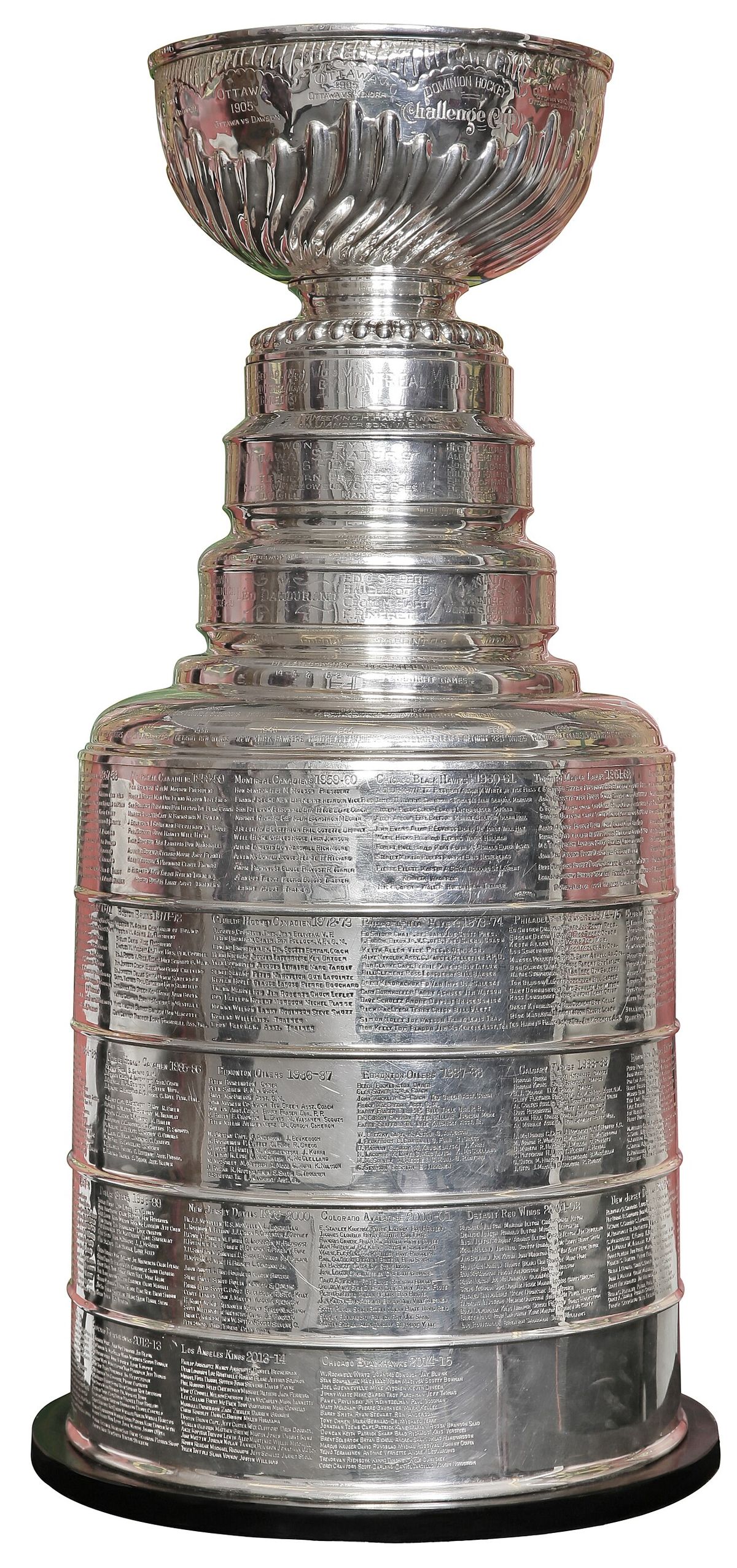
No, the Quebec Nordiques never won the Stanley Cup during their time in the National Hockey League from 1979 to 1995. Their best NHL playoff performance was in the 1984-85 season when they reached the conference finals, losing to the Philadelphia Flyers in six games. The franchise's sole championship was the Avco World Trophy, which they captured in 1977 as a member of the World Hockey Association. After the team was relocated to Denver in May 1995 and renamed the Colorado Avalanche, the franchise won the Stanley Cup in its first season there. The Avalanche added further championships in 2001 and 2022, but these victories occurred after the team had left Quebec City.
Sources and further reading
- Quebec Nordiques (Wikipedia)
- A Brief History of the Quebec Nordiques (nhl.com)
- Quebec Nordiques in the World Hockey Association (memoireenpartage.ca)
Checked by the Garbutt Disposal desk. Last updated 2026-10-21.