Gordie Howe
Gordie Howe (March 31, 1928 to June 10, 2016) was a Canadian professional ice hockey player widely considered one of the greatest and most complete players in the sport's history. Known as "Mr. Hockey," he played 26 seasons in the National Hockey League (NHL), primarily with the Detroit Red Wings, and six more in the World Hockey Association (WHA). Howe set numerous scoring and longevity records, including most career NHL goals, assists, and points at his retirement, marks later surpassed by Wayne Gretzky. His legendary career, which spanned five decades in the NHL and included playing alongside his sons, cemented his status as a national figure and a defining presence in Canadian sports.
Early Life and Beginnings
Gordon Howe was born in a farmhouse in Floral, Saskatchewan, the son of Katherine and Albert Howe, and was one of nine siblings. His family moved to Saskatoon when he was just nine days old, where his father worked as a labourer during the Great Depression. Howe grew up with mild dyslexia but was physically advanced from an early age, working construction with his father in the summers. By his mid-teens, he was already six feet tall, and doctors, concerned about a potential calcium deficiency, encouraged him to strengthen his spine with exercises like chin-ups. He began playing organized hockey at age eight but left school during the Depression to work before pursuing hockey full time at age 16.
Howe's early hockey career was spent with the King George Athletic Club in Saskatoon, with whom he won a provincial bantam championship in 1942. His first professional opportunity came at age 15 in 1943 when the New York Rangers invited him to their training camp in Winnipeg. The Rangers wanted him to sign a contract and attend a hockey-focused high school in Wilcox, Saskatchewan, but Howe declined, preferring to return home to play with his friends. His big break came in 1944 when Detroit Red Wings scout Fred Pinkney noticed him and invited him to their camp in Windsor, Ontario.
Professional Start and Junior Hockey
The Detroit Red Wings signed the 16-year-old Howe to a contract and assigned him to their junior affiliate, the Galt Red Wings. Due to transfer restrictions from Western Canada, he was declared ineligible for the 1944-45 Ontario Hockey Association season. Howe played only one official regular season game for Galt, recording a goal and two assists in a match later stricken from the records when the opposing team folded. He spent the season working in a metal factory and participating in team practices and exhibition games. The following season, 1945-46, Howe was promoted to the Omaha Knights of the United States Hockey League, a minor professional circuit. As a 17-year-old, he scored 48 points in 51 games, demonstrating his scoring potential and attracting the attention of NHL management.
NHL Career with the Detroit Red Wings
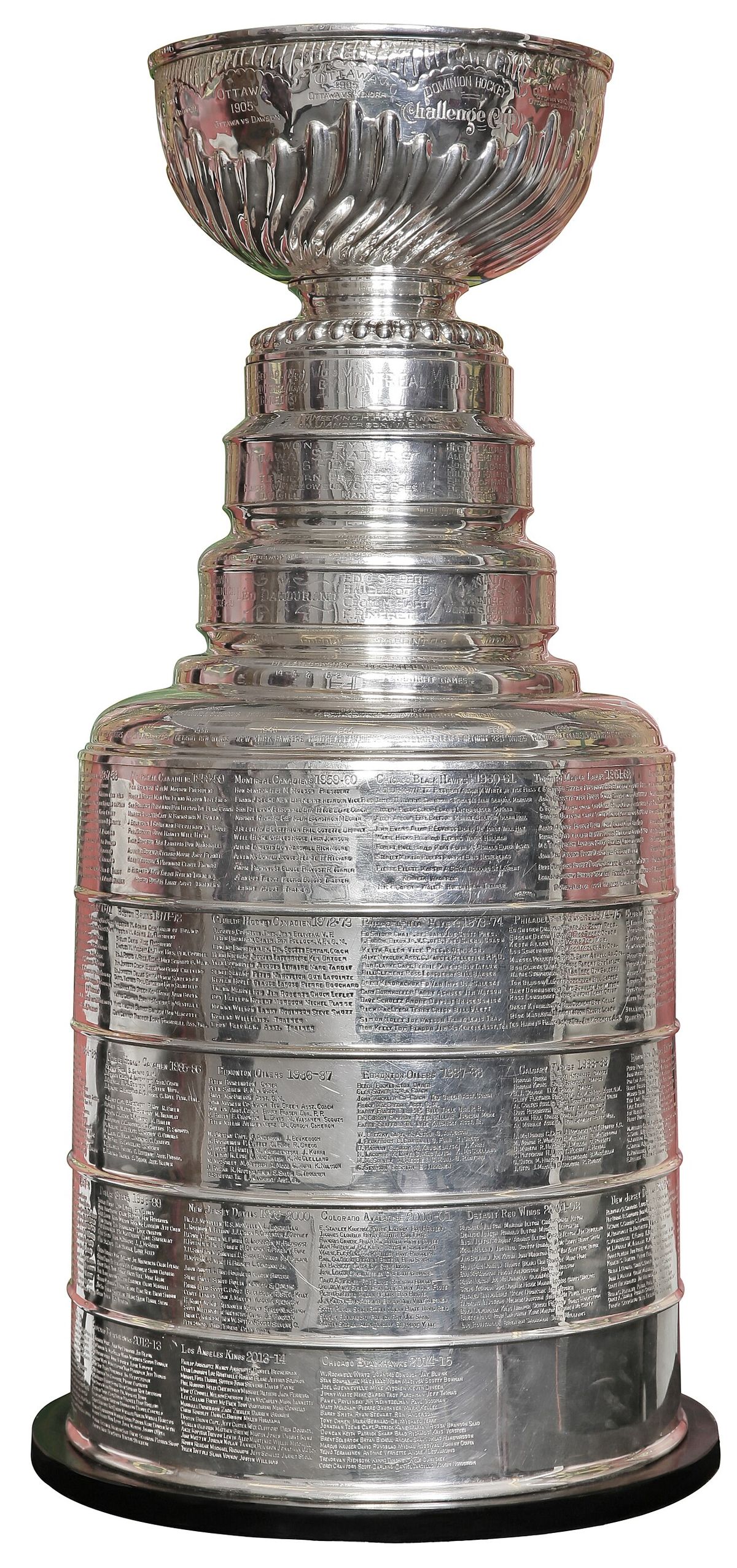
Gordie Howe made his NHL debut for the Detroit Red Wings on October 16, 1946, scoring a goal as an 18-year-old rookie wearing number 17. He permanently switched to the number 9 the following season, a move he accepted when told it came with a better sleeping berth on road trips. Howe quickly established himself as a dominant force, combining elite scoring with physical toughness and a willingness to fight, a style that later inspired the term "Gordie Howe hat trick" for a goal, an assist, and a fight in one game. He led the Red Wings to four Stanley Cup championships in 1950, 1952, 1954, and 1955 and to first place in regular season standings for seven consecutive years from 1949 to 1955, a feat never equalled.
Howe's scoring prowess was unmatched for over two decades. He won the Art Ross Trophy as the NHL's points leader six times, including four consecutive titles from 1951 to 1954. In the 1952-53 season, he became the first player to score 90 points in a season, finishing with 95. He led the NHL in goals four times and finished in the top five in league scoring for 20 consecutive seasons, a streak no other player has matched. Howe also won the Hart Memorial Trophy as the league's most valuable player six times, a record at the time. He formed the famed "Production Line" with linemates Sid Abel and Ted Lindsay, and in 1949-50, the trio finished first, second, and third in NHL scoring.
A severe head injury in the 1950 playoffs, requiring emergency brain surgery, threatened his career, but he returned the next season to lead the league in goals, assists, and points. Howe set numerous longevity records, becoming the first player to reach 1,000 career points in 1960 and the first to play in 1,000 NHL games. He passed Maurice Richard to become the NHL's all-time goal leader in 1963. Remarkably, at age 40 in the 1968-69 season, Howe recorded 103 points, becoming one of the first three players to have a 100-point season and the only one to do so in his forties. After 25 seasons with Detroit, chronic wrist pain led to his first retirement in 1971.
Comeback and World Hockey Association
At age 46, he led the Aeros to consecutive Avco World Trophy championships in 1974 and 1975 and was named the WHA's most valuable player in 1974, the trophy later being renamed in his honour. He stated that winning with his sons rivalled the meaning of his Stanley Cup victories. In 1977, he and his sons moved to the New England Whalers. Howe's WHA tenure added remarkable chapters to his legacy. On December 7, 1977, he became the first player to score 1,000 professional goals across the NHL and WHA. He also became the first grandfather to play professional hockey during the 1978 playoffs. His physical style remained intact, as evidenced by an incident where he cross-checked an opponent who had injured his son Marty, an act his son Mark described as "prairie justice." Howe played for Team Canada in the 1974 Summit Series against the Soviet Union at age 46 and, in the WHA's final season, played on a line with a young Wayne Gretzky and his son Mark during the 1979 All-Star series against Dynamo Moscow.
Final NHL Season and Retirement
When the Whalers were absorbed into the NHL for the 1979-80 season, Howe, then 51, decided to play one final campaign. By appearing in the Hartford Whalers' opening game on October 11, 1979, he became the oldest person ever to play in an NHL game. Weeks after his 52nd birthday, he retired from professional hockey for the final time in 1980. This final season meant he had played in the NHL in five different decades, from the 1940s through the 1980s. He later made a one-shift appearance for the Detroit Vipers of the International Hockey League in 1997, extending his professional career to a sixth decade.
Playing Style and Physical Attributes
Gordie Howe redefined the ideal power forward by excelling at both ends of the ice. Standing just over six feet tall and weighing slightly over 200 pounds, he was one of the heaviest and strongest players of his era. He was ambidextrous, a rare skill that allowed him to shoot effectively left- or right-handed with the straight sticks of the time. His great physical strength made him nearly impossible to displace from the puck, a quality Jean Beliveau likened to wrestling with a telephone pole. While famed for his scoring, Howe was equally known for his toughness and willingness to engage physically to protect himself and his teammates, cementing his reputation as the most complete player of his generation.
Honours, Records, and Legacy
Howe's trophy case and record book entries are extensive. He was a 23-time NHL All-Star and was named to the NHL First or Second All-Star Team 20 times. At his retirement, he held NHL career records for goals (801), assists (1,049), points (1,850), and games played (1,767), marks that stood until Wayne Gretzky and others surpassed them. He won six Hart Trophies as NHL MVP and six Art Ross Trophies as scoring champion. Howe was inducted into the Hockey Hall of Fame in 1972, though his induction was delayed by his WHA comeback. The Detroit Red Wings retired his number 9 in 1972, and he was appointed an Officer of the Order of Canada in 1971. In 2017, he was named one of the "100 Greatest NHL Players."
His legacy extends beyond statistics. The term "Gordie Howe hat trick" entered the hockey lexicon, though he only officially recorded two in his career. He was the inaugural recipient of the NHL Lifetime Achievement Award in 2008. Howe's decision to join the WHA lent the league immediate credibility and was central to its brief success, helping force the NHL to expand its recruitment and eventually merge with its rival. His extraordinary longevity, family story of playing with his sons, and enduring popularity made "Mr. Hockey" a beloved figure across Canada and the hockey world.
Questions about Gordie Howe
How many Stanley Cups did Gordie Howe win?
Gordie Howe won the Stanley Cup four times, all with the Detroit Red Wings. His championship victories came in the 1950, 1952, 1954, and 1955 seasons. During this period, he was a central figure on the team, leading them to first place in the regular season standings for seven consecutive years, a record that still stands in NHL history. He also won six Hart Trophies as the NHL's most valuable player during his career. His contributions were vital to the Red Wings' success throughout the 1950s.
What is a Gordie Howe hat trick?
A Gordie Howe hat trick is achieved when a player records a goal, an assist, and a fight in the same game. The term was coined in reference to Howe's well rounded and physically imposing style of play, which included scoring, playmaking, and fighting. Interestingly, despite the term being named for him, Howe only officially recorded two such games in his entire NHL career, on October 10, 1953, and March 21, 1954. His great physical strength and toughness redefined the ideal qualities of a forward, making him known for superior play on both offense and defense.
How old was Gordie Howe when he played his last NHL game?
Gordie Howe was 52 years old when he played his final NHL game for the Hartford Whalers in the 1979-80 season. He had turned 52 in March of 1980 and retired weeks later. By playing in the season opener on October 11, 1979, he set the record as the oldest person ever to play in an NHL game. He appeared in all 80 games of that season, scoring 15 goals. This final NHL season came after he had already made history by playing professional hockey at age 50 in the World Hockey Association.
Did Gordie Howe ever play on a team with his sons?
Yes, Gordie Howe famously played alongside his sons Mark and Marty. They later played together for the New England Whalers, which joined the NHL as the Hartford Whalers. Howe stated that winning the 1974 WHA championship, the Avco World Trophy, with his sons playing alongside him likely meant more to him than his Stanley Cup wins. He even became the first grandfather to play professional hockey during the 1978 WHA playoffs.
What NHL records did Gordie Howe hold when he retired?
When Gordie Howe retired from the NHL in 1971, he held the league's all time records for goals with 801, assists with 1,049, and total points with 1,850. He also held the record for most games played at 1,767 and most seasons played, a mark he now shares with Chris Chelios. These monumental records stood for years until players like Wayne Gretzky eventually surpassed them. His 801 goals, 1,049 assists, and 1,850 total points were all NHL records that stood until they were broken by Wayne Gretzky.
Why is Gordie Howe called Mr. Hockey?
Gordie Howe earned the nickname Mr Hockey due to his extraordinary longevity, all around excellence, and deep association with the sport. His career spanned five decades in the NHL from the 1940s through the 1980s and six decades in professional hockey including a 1997 IHL game. He is often considered the most complete player ever to play the game and one of the greatest of all time. The nickname reflects his embodiment of the game of hockey, making him a legendary and beloved figure who was named one of the 100 Greatest NHL Players in 2017.
Sources: Wikipedia and current public reporting, checked by the Garbutt Disposal desk. Last updated 2026-10-20.