Detroit Red Wings
The Detroit Red Wings are a professional ice hockey team based in Detroit, Michigan, and a member of the National Hockey League's Atlantic Division in the Eastern Conference. Founded in 1926, the franchise is one of the storied "Original Six" NHL teams, alongside the Boston Bruins, Chicago Blackhawks, Montreal Canadiens, New York Rangers, and Toronto Maple Leafs. The Red Wings hold a significant place in hockey history for Canadian fans due to their intense, long-standing rivalries with Canadian clubs and their legacy of employing many legendary Canadian players. With 11 Stanley Cup championships, they are the most successful American-based franchise in NHL history and have been a central figure in the league's narrative for nearly a century.
Franchise Origins and Early Success
The franchise was established on May 15, 1926, when the NHL awarded a team to the Townsend-Seyburn group of Detroit. The new club purchased the player contracts of the defunct Western Hockey League's Victoria Cougars, the 1925 Stanley Cup champions, and initially played as the Detroit Cougars. For their inaugural 1926-27 season, with no suitable arena in Detroit, the Cougars played their home games at the Border Cities Arena in Windsor, Ontario. The team moved into the newly built Detroit Olympia for the 1927-28 season, which remained their home for over five decades. Jack Adams began his 36-year tenure as coach and later general manager that same season, becoming the franchise's foundational architect. The Cougars made their first playoff appearance in 1929 but were quickly eliminated by the Toronto Maple Leafs in a two-game series where they were outscored 7-2.
In 1930, the team was renamed the Detroit Falcons but continued to struggle on the ice, though they did make the playoffs again in 1932. A major change occurred on October 5, 1932, when grain merchant James E. Norris purchased the franchise after two previous unsuccessful bids to buy an NHL team. Norris renamed the team the Red Wings, adopting a red version of the winged-wheel logo from the Montreal Amateur Athletic Association, a club he had been a member of whose emblem came from its cycling roots. Norris retained Jack Adams as coach on a one-year probation for the 1932-33 season. Adams passed this probation by leading the Red Wings to their first-ever playoff series victory over the Montreal Maroons, though they lost in the semifinals to the New York Rangers.
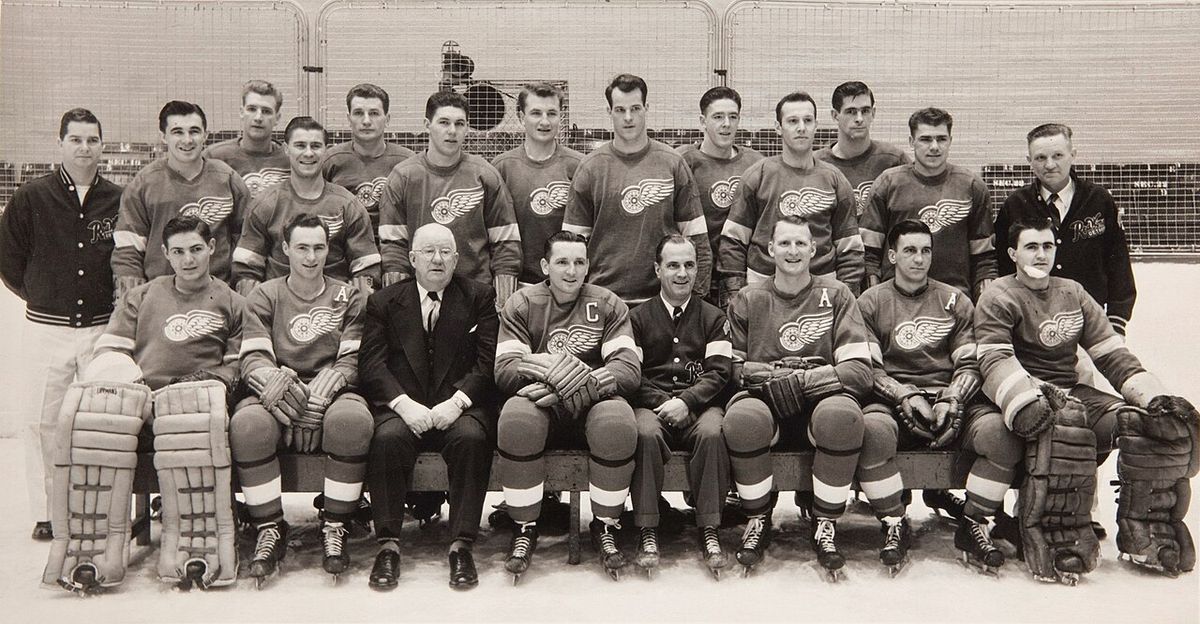
The team's ascent culminated in its first Stanley Cup championship in 1936, defeating the Toronto Maple Leafs in a four-game series. Detroit repeated as champions in 1937, winning a full five-game series over the New York Rangers. In 1938, the Red Wings and Montreal Canadiens became the first NHL teams to play in Europe, with the Wings posting a record of 3 wins, 5 losses, and 1 tie during exhibitions in Paris and London. The Wings made three consecutive Stanley Cup Final appearances from 1941 to 1943, winning their third championship in 1943 by sweeping the Boston Bruins, with Mud Bruneteau and Syd Howe scoring 23 and 20 goals respectively that season.
The Gordie Howe Dynasty
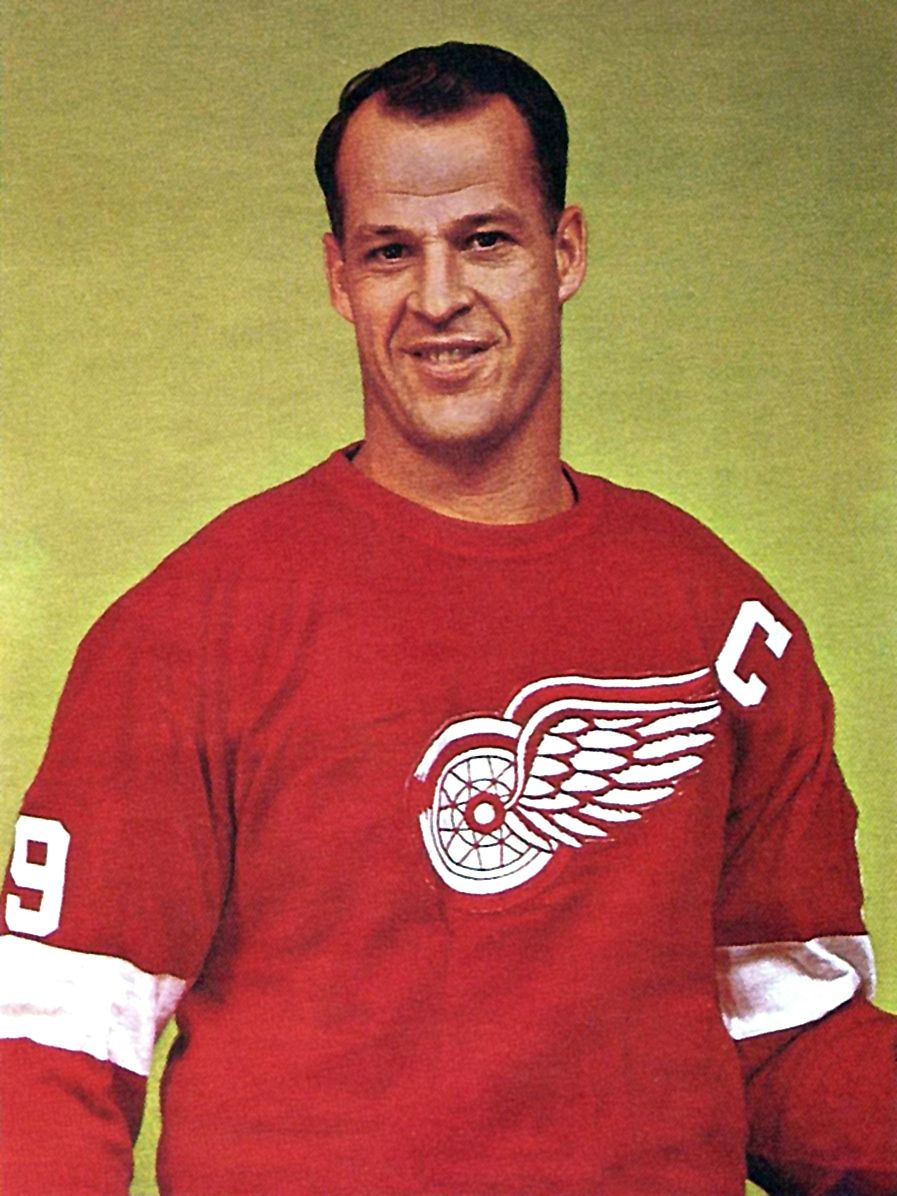
The arrival of right winger Gordie Howe from Floral, Saskatchewan, in 1946 marked the beginning of a golden era, though he scored only seven goals and 15 assists in his first season. Paired with centre Sid Abel and left winger Ted Lindsay, Howe formed the famed "Production Line," one of the most dominant forward units in NHL history. The Red Wings captured the Stanley Cup in 1950, defeating the New York Rangers in a seven-game final that ended with Pete Babando's double-overtime winner, after which Ted Lindsay skated a victory lap with the Cup at the Olympia. After a playoff upset by Montreal in the 1951 semifinals, Detroit won its fifth Stanley Cup in 1952, sweeping both the Toronto Maple Leafs and the Montreal Canadiens while outscoring them by a combined 24 to 5 goals, with second-year goaltender Terry Sawchuk providing stellar netminding.
Detroit engaged in a fierce rivalry with the Montreal Canadiens through the mid-1950s, winning back-to-back Stanley Cups in 1954 and 1955, with both finals going the full seven games. The 1954 championship was clinched on an odd goal by checking forward Tony Leswick, whose shot from centre ice was deflected into the Montreal net by Canadiens defenseman Doug Harvey. The repeat series in 1955 saw all seven games won by the home team, with Detroit taking the decisive game at the Olympia while Montreal played without its suspended star Maurice Richard. The 1954-55 season ended a record run of seven consecutive regular season titles for the Red Wings. Internal family strife led to Bruce Norris taking over the presidency from his sister Marguerite in 1955, after she had become the first woman to head an NHL franchise in 1952 following their father James's death.
The team's core began to disperse, notably with Ted Lindsay's trade to Chicago in 1957 after he scored 30 goals, led the league with 55 assists, and helped form the NHL Players' Association alongside Montreal's Doug Harvey. After missing the playoffs in 1959 for the first time in 21 years, the Wings rebuilt and reached the Stanley Cup Final four times between 1961 and 1966 but failed to win another championship. During this period, the team acquired star left-winger Frank Mahovlich from Toronto in 1967, and he scored a career-high 49 goals playing on a line with Gordie Howe and Alex Delvecchio in the 1968-69 season. Howe's tenure with the Red Wings, which included four Stanley Cups, six Hart Trophies, and six Art Ross Trophies, ended with his retirement in 1971, the same year Mahovlich was traded to Montreal.
Struggle and Rebirth
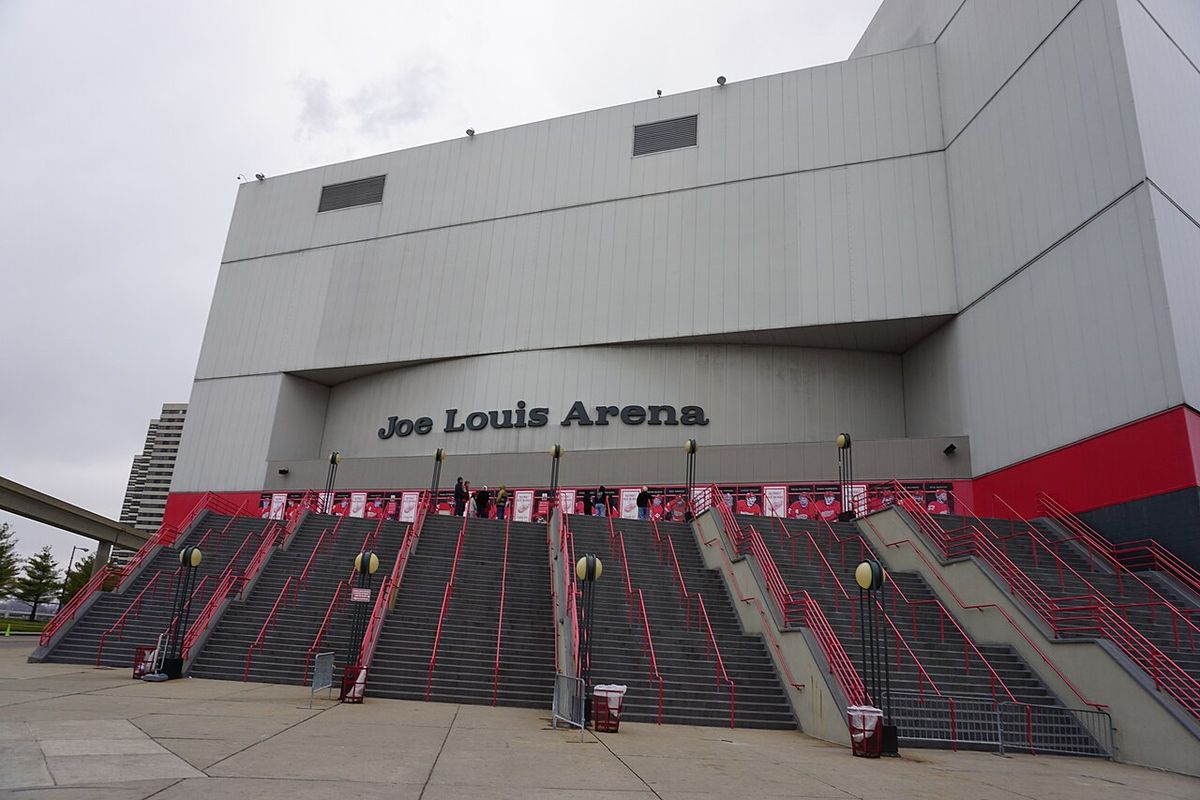
The period from the late 1960s through the early 1980s is often called the "Dead Wings" era, characterized by prolonged on-ice struggles and organizational instability. The team missed the playoffs for 15 of 17 seasons between 1967 and 1983, including a stretch where they qualified only twice from 1967 to 1983. A low point came with the hiring of college coach Ned Harkness in 1970, who was promoted to general manager mid-season. His rigid rules on hair, smoking, and drinking clashed with veterans and led to a period fans called "Darkness with Harkness" before he resigned in 1974. The franchise moved from the Olympia to Joe Louis Arena on December 27, 1979, during the 1979-80 season. A turning point arrived in 1982 when Mike Ilitch, founder of Little Caesars Pizza, purchased the team from the Norris family, ending 50 years of family ownership.
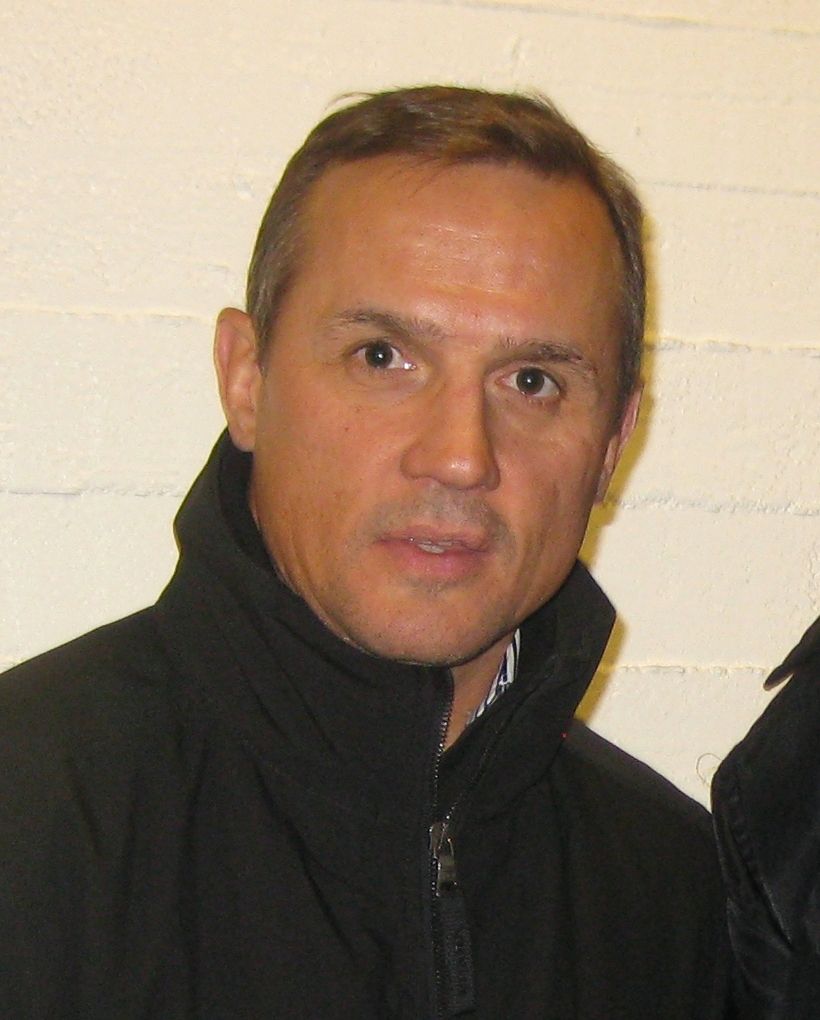
The franchise's revival began with the 1983 NHL Entry Draft, where the Red Wings selected centre Steve Yzerman from the Peterborough Petes with the fourth overall pick. Yzerman led the team in scoring as a rookie and was named captain in 1986 following the departure of Danny Gare. Under coach Jacques Demers, the Wings ended a six-year playoff drought in 1987 and made a surprising run to the Clarence Campbell Conference finals, losing to the Edmonton Oilers in five games. The team won its first division title in 23 years in 1988, though no other team in the Norris Division finished above .500 that season. Yzerman's individual brilliance was evident with 65- and 62-goal seasons in 1989 and 1990, but playoff success remained elusive, including a first-round upset by Chicago in 1989 and the team missing the playoffs entirely in 1990.
The arrival of new talent signalled a strategic shift. The team drafted Soviet centre Sergei Fedorov in 1989 and Swedish defenseman Nicklas Lidström in 1989, who would become award-winning stars. The 1993 acquisition of top defenseman Paul Coffey and the hiring of former Montreal coach Scotty Bowman as head coach that same year set the stage for a new era. Other key draft picks from this period included Vladimir Konstantinov, Vyacheslav Kozlov, Darren McCarty, and goaltender Chris Osgood, forming a new core for the 1990s that would include the defensive unit known as the "Russian Five."
The Modern Dynasty: Championships and a Record Streak
The hiring of coach Scotty Bowman in 1993 catalyzed the Red Wings' transformation into a modern powerhouse. In his second season, the lockout-shortened 1994-95 campaign, Bowman guided Detroit to its first Stanley Cup Final in 29 years, only to be swept by the New Jersey Devils. The following season, the team set a then-NHL record with 62 regular-season wins but fell in the conference finals to the eventual champion Colorado Avalanche after defeating the St. Louis Blues in a seven-game series. The Red Wings won the 1997 Stanley Cup, sweeping the Philadelphia Flyers to end a 42-year championship drought, with goaltender Mike Vernon winning the Conn Smythe Trophy.
Tragedy struck six days after the 1997 championship when defenseman Vladimir Konstantinov, a key member of the "Russian Five" unit, suffered a career-ending brain injury in a limousine accident. Dedicating the 1997-98 season to him, the Red Wings repeated as champions, sweeping the Washington Capitals, and Konstantinov was brought onto the ice in his wheelchair to touch the Stanley Cup. The team then entered an era of veteran acquisitions, adding three-time Norris winner Chris Chelios from Chicago in March 1999, along with Ulf Samuelsson, Wendel Clark, and Bill Ranford at the trade deadline, though they lost in the second round to Colorado that year. In 2000, the Red Wings finished second in the Central Division but again lost to the Avalanche in the Western Conference semifinals.
After a playoff upset by Los Angeles in 2001, the team aggressively retooled in the 2001 off-season by acquiring goaltender Dominik Hašek, the defending Vezina Trophy winner, and forwards Luc Robitaille and Brett Hull. Strengthened by these additions and the emergence of Russian prospect Pavel Datsyuk, the Red Wings posted the league's best record in 2001-02 and defeated Colorado in a seven-game conference final after beating Vancouver and St. Louis. They then captured the Stanley Cup in five games over the Carolina Hurricanes, with Nicklas Lidström winning the Conn Smythe Trophy. After Bowman and Hašek retired, the team promoted Dave Lewis to coach and signed goalie Curtis Joseph, but were swept in the 2003 first round by Anaheim. The Red Wings' consistency was a defining feature, as they made the playoffs for 25 consecutive seasons from 1991 to 2016, a streak that is the third-longest in NHL history and included a fourth Cup in 2008.
- 1997: Swept Philadelphia Flyers for first Cup since 1955, Mike Vernon wins Conn Smythe.
- 1998: Swept Washington Capitals for second straight title, dedicated to Vladimir Konstantinov.
- 2002: Defeated Carolina Hurricanes in five games, Nicklas Lidström wins Conn Smythe.
- 2008: Defeated Pittsburgh Penguins in six games for 11th franchise championship.
Recent History and Rebuild
The conclusion of the 25-year playoff streak in 2016 initiated a rebuilding phase for the franchise. The team moved from Joe Louis Arena to the new Little Caesars Arena for the 2017-18 NHL season. The rebuild has focused on accumulating high draft picks and developing young talent. The organization has also invested in its front office and scouting departments under Yzerman's leadership, aiming to replicate the draft-and-develop model that built its previous dynasties. While wins have been scarce, the fanbase in Detroit has remained largely patient, understanding the long-term vision required to return the Original Six franchise to contention in a competitive Atlantic Division featuring several elite teams.
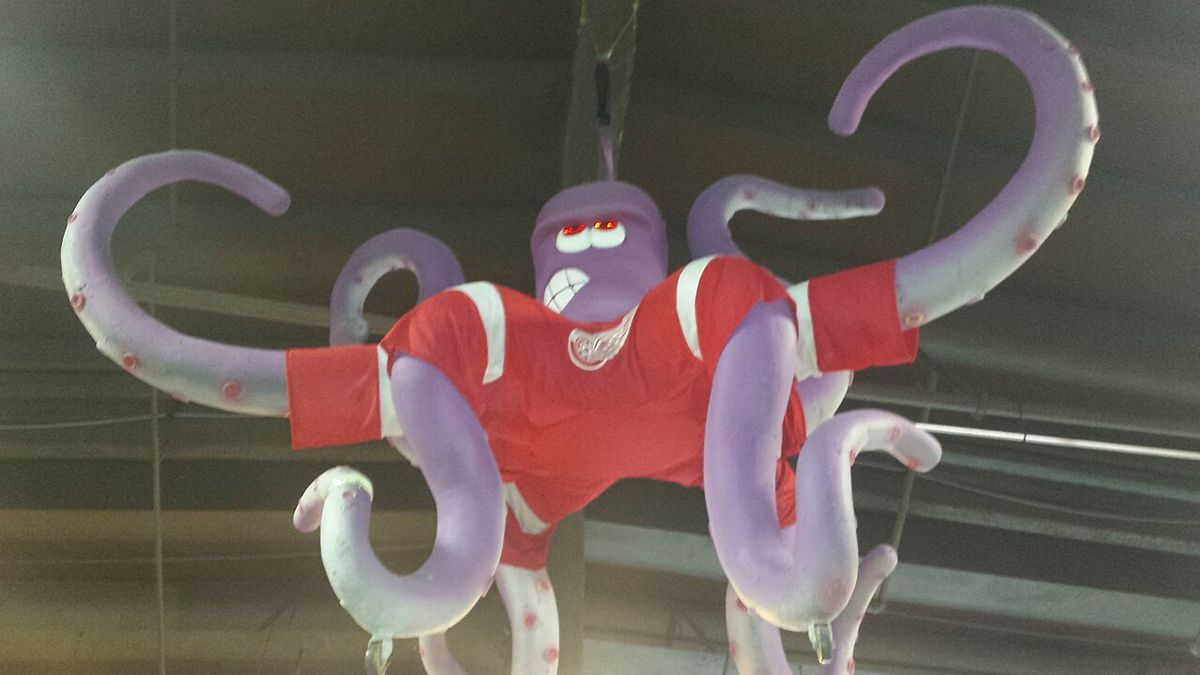
Team Identity and Cultural Impact
The Red Wings' identity is deeply intertwined with the city of Detroit and the sport's history. The winged-wheel logo, introduced in 1932, directly references Detroit's identity as the Motor City and was inspired by the Montreal Amateur Athletic Association's cycling club emblem. The team's nickname, "Hockeytown," was popularized during the successful 1990s and registered as a trademark by the franchise in 1996, legally protecting the term that reflects the area's passionate support. The franchise has maintained strong connections to Canada through player personnel, intense rivalries, and its geographical proximity. Many of its greatest players, from Gordie Howe and Steve Yzerman to current captain Dylan Larkin, have been Canadian. For decades, the team's broadcasts have been widely followed in the Canadian border regions of Ontario, particularly when the team played its first season in Windsor. The Red Wings' legacy of excellence, resilience through difficult eras like the "Dead Wings" period, and central role in the Original Six narrative ensure its status as one of the NHL's most historically significant franchises.
Questions about Detroit Red Wings
How many Stanley Cups have the Detroit Red Wings won?
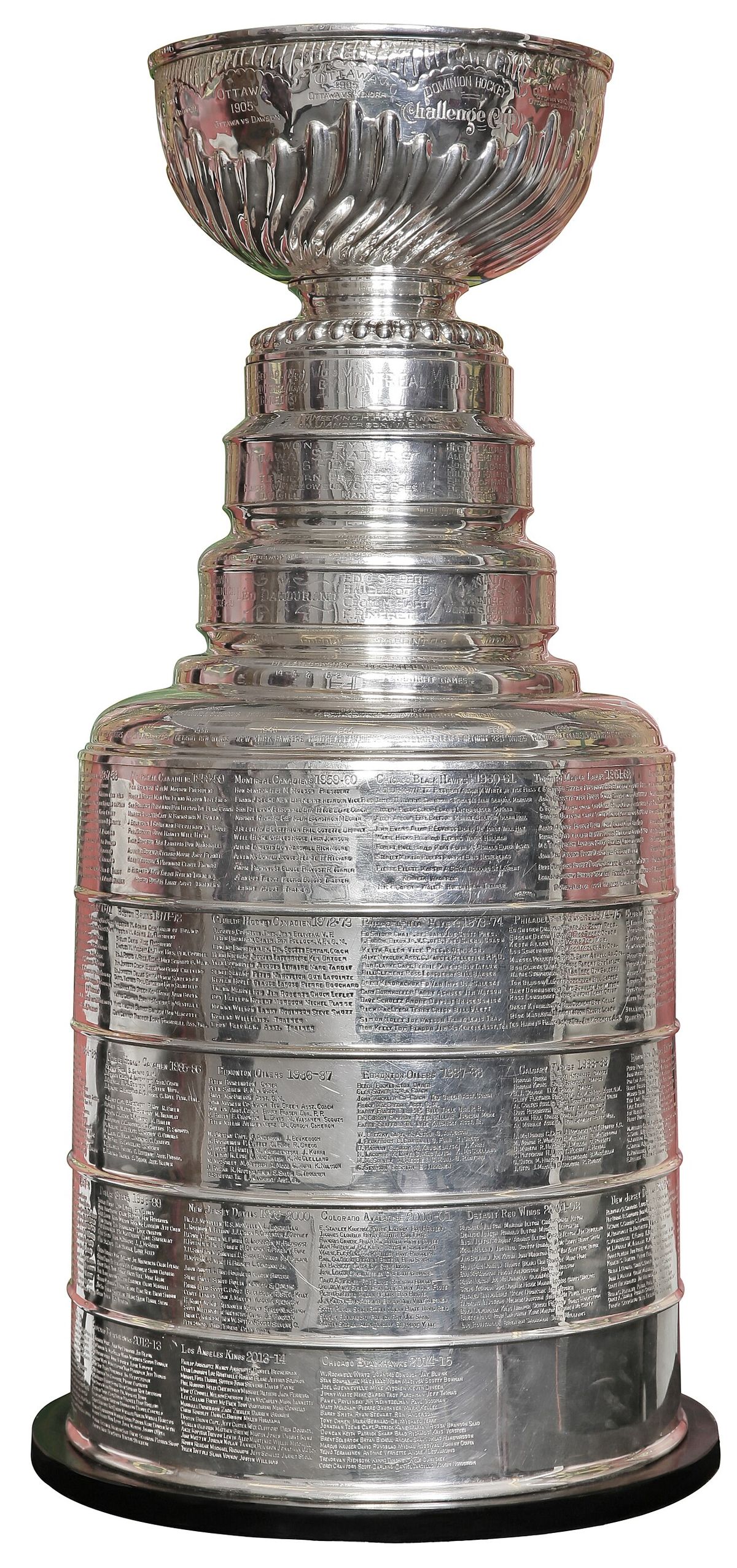
The Detroit Red Wings have won the Stanley Cup 11 times. Their championships came in the years 1936, 1937, 1943, 1950, 1952, 1954, 1955, 1997, 1998, 2002, and 2008. This total is the most of any NHL franchise based in the United States and ranks third overall behind the Montreal Canadiens (24) and Toronto Maple Leafs (13). The team's most recent championship was in 2008, when they defeated the Pittsburgh Penguins in a six-game series. The 1997 victory ended a 42-year drought, which was the longest in the league at that time.
What is the 'Hockeytown' nickname?
"Hockeytown" is a nickname for the Detroit area that celebrates its deep passion for the Red Wings and the sport of ice hockey. The term was popularized during the team's successful run in the 1990s and was officially registered as a trademark by the Red Wings organization in 1996. It is used in marketing, on team merchandise, and within the arena to embody the support of the fanbase. The nickname reflects Detroit's status as a historic hockey market with a rich tradition that predates the NHL's expansion into many Sun Belt cities and has been maintained even during recent rebuilding seasons.
When did the Red Wings move to Little Caesars Arena?
The Detroit Red Wings moved to Little Caesars Arena beginning with the 2017-18 NHL season. The arena, located in downtown Detroit, replaced Joe Louis Arena, which had been the team's home since December 1979. Little Caesars Arena is a modern, multi-purpose facility that also houses the Detroit Pistons of the NBA. The move marked a new chapter for the franchise, coinciding with a period of roster rebuilding under the management of Steve Yzerman. The team had played at the Detroit Olympia from 1927 until 1979 before moving to Joe Louis Arena.
How long was the Red Wings' playoff streak?
The Detroit Red Wings made the Stanley Cup playoffs for 25 consecutive seasons, from the 1990-91 season through the 2015-16 season (not including the locked-out 2004-05 campaign). This streak became the longest active streak of postseason appearances in all of North American professional sports in 2006 and finished tied for the third-longest in NHL history. The streak encompassed the entirety of the team's modern dynasty, including four Stanley Cup championships in 1997, 1998, 2002, and 2008. It ended in 2016, and the team has not qualified for the postseason since, a drought that is the longest active one in the NHL.
Why are the Red Wings called an 'Original Six' team?
The Detroit Red Wings are called an Original Six team because the franchise is one of the six teams that comprised the National Hockey League from 1942 until the 1967 expansion. The other Original Six teams are the Boston Bruins, Chicago Blackhawks, Montreal Canadiens, New York Rangers, and Toronto Maple Leafs. Founded in 1926, the Detroit franchise was initially known as the Cougars, then the Falcons, before becoming the Red Wings in 1932. This designation as an Original Six team highlights the franchise's foundational role in the league's history and its long standing rivalries with the other five clubs.
Who is the greatest player in Red Wings history?
Gordie Howe is widely regarded as the greatest player in Detroit Red Wings history. He joined the team in 1946 and became a central figure for decades, forming the legendary Production Line with Sid Abel and Ted Lindsay. Howe's career with Detroit spanned 25 seasons until 1971, during which the team won multiple Stanley Cups. His remarkable scoring ability and physical play made him an icon. Other monumental players include Steve Yzerman, who was drafted in 1983 and captained the team to three Stanley Cups in the modern era, and Nicklas Lidström, a dominant defenseman who won multiple Norris Trophies and was a base of the team's success in the 1990s and 2000s.
Sources and further reading
- Detroit Red Wings (Wikipedia)
- Official Detroit Red Wings Website (nhl.com)
- Detroit Red Wings Historical Statistics and All-Time ... (hockey-reference.com)
Checked by the Garbutt Disposal desk. Last updated 2026-10-18.