Joe Louis Arena
Joe Louis Arena was a multi-purpose indoor arena located in downtown Detroit, Michigan. Completed in 1979 at a cost of US$57 million, it served as the home of the National Hockey League's Detroit Red Wings for 38 seasons until 2017. The arena was named for heavyweight boxing champion Joe Louis, a Detroit native, and was a central landmark on the city's riverfront. It hosted numerous major sporting events, concerts, and political conventions, becoming a venue known for its intense atmosphere and deep connection to the city's blue-collar identity before its closure and subsequent demolition.
Construction and Early History
The need for a new arena emerged in the late 1970s as the Red Wings' longtime home, Olympia Stadium, had aged and its neighbourhood had deteriorated following the 1967 Detroit riot. In 1977, team owner Bruce Norris announced a plan to move the franchise to a proposed arena in suburban Pontiac. The city of Detroit countered with a riverfront arena proposal, offering lower rent and granting the team operational control of the new venue along with nearby Cobo Arena and parking lots. This proposal convinced the Red Wings to remain in the city proper. Construction proceeded, and the arena was completed in 1979 at a cost of US$57 million. The first public event held at Joe Louis Arena was a college basketball game between the University of Michigan and the University of Detroit on December 12, 1979, which Michigan won 85-72 before a crowd of 12,319. The Detroit Red Wings played their inaugural game at the arena on December 27, 1979, losing 3-2 to the St. Louis Blues. The team secured its first victory there three days later, defeating the New York Islanders 4-2.
The arena quickly became a hub for major events. It hosted the 32nd NHL All-Star Game on February 5, 1980, setting a then-league record with a crowd of 21,002. That same year, it was the site of the Republican National Convention which nominated Ronald Reagan as the presidential candidate. The venue also held the 1987 NHL Entry Draft, marking the first time the draft was held in the United States. A formal dedication ceremony for the arena, named in honour of boxing legend and Detroit native Joe Louis, was originally planned for June 12, 1981, but was postponed amid complications involving a boxing broadcast and uncertainty over his widow's whereabouts. The ceremony finally took place on October 8, 1983, with the unveiling of a memorial pillar by Walter A. Burrow.
Design, Features, and Upgrades
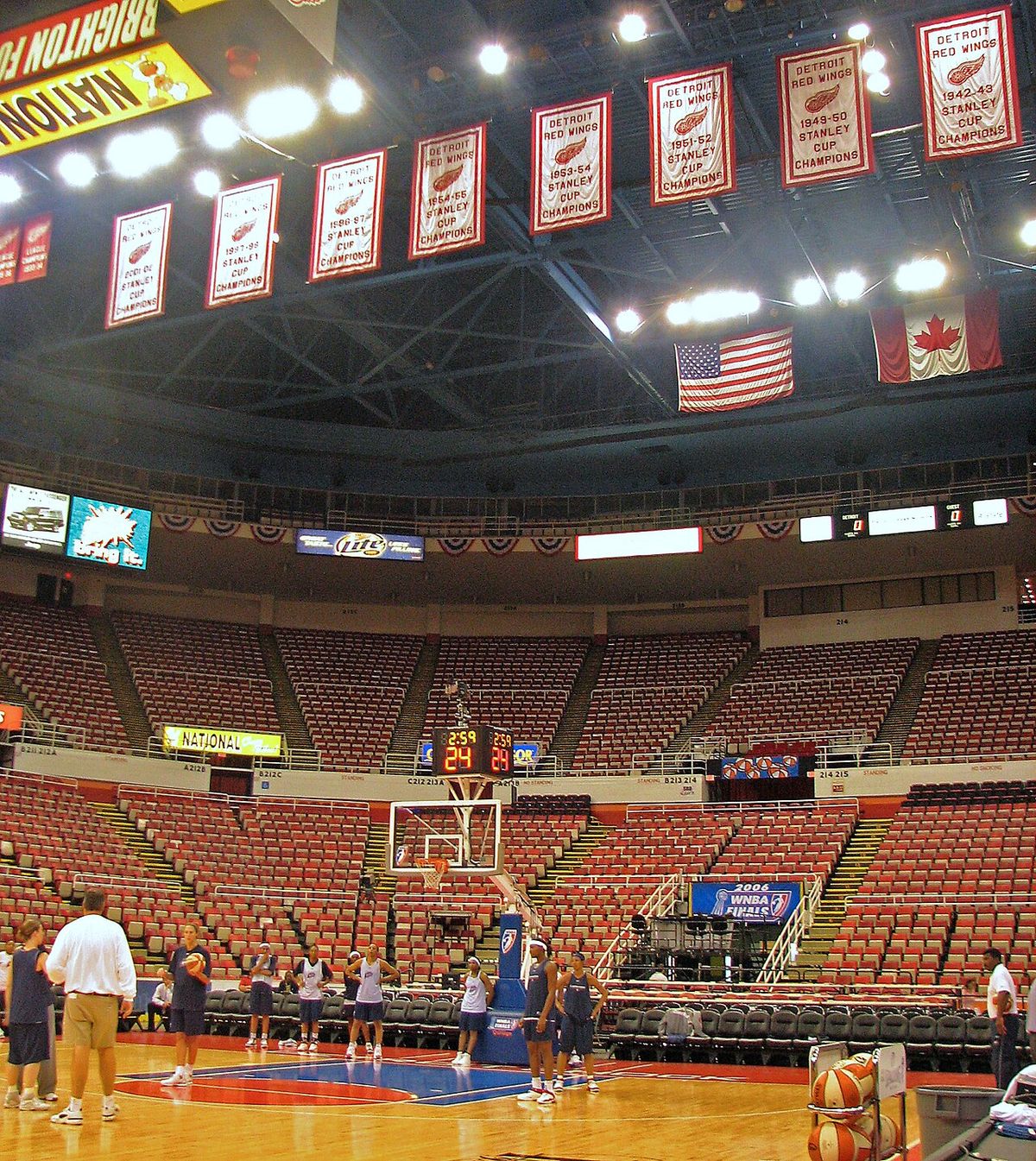
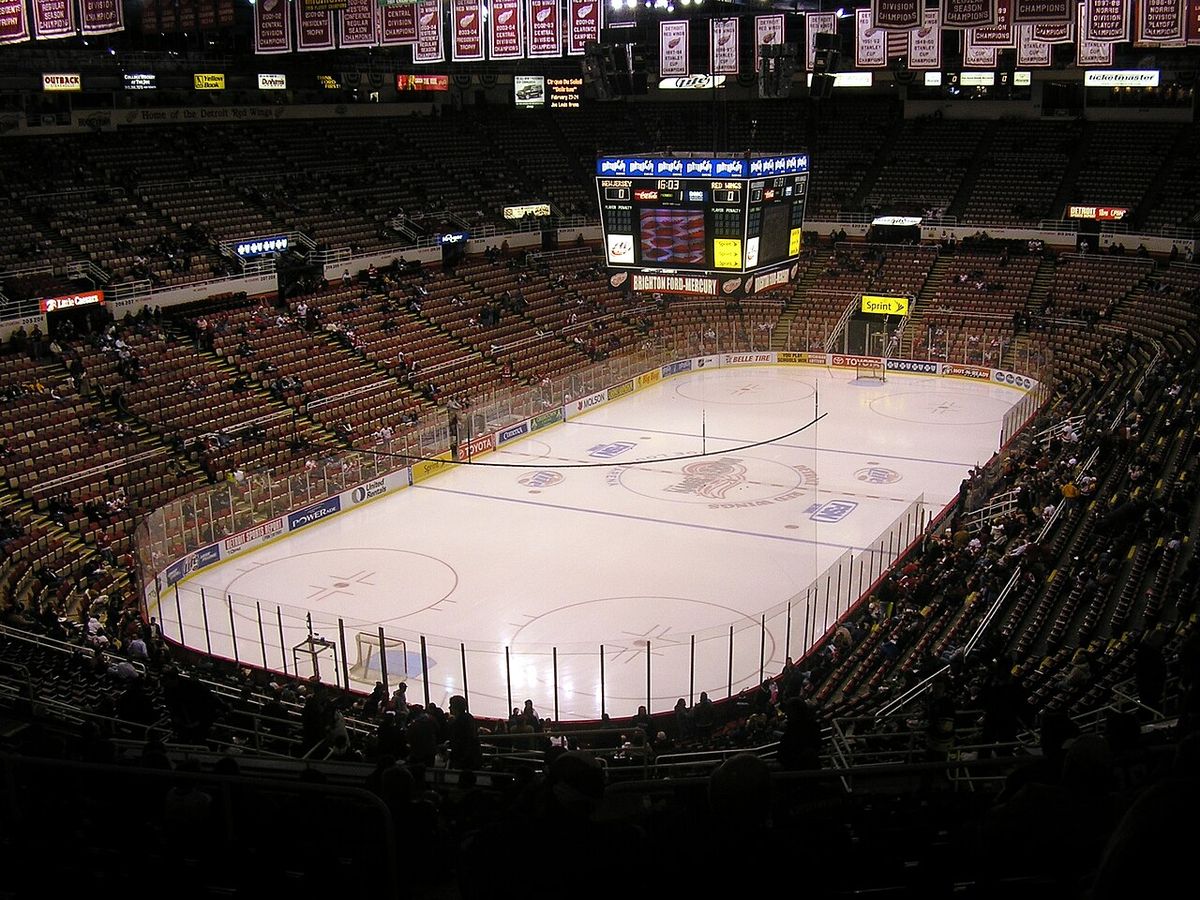
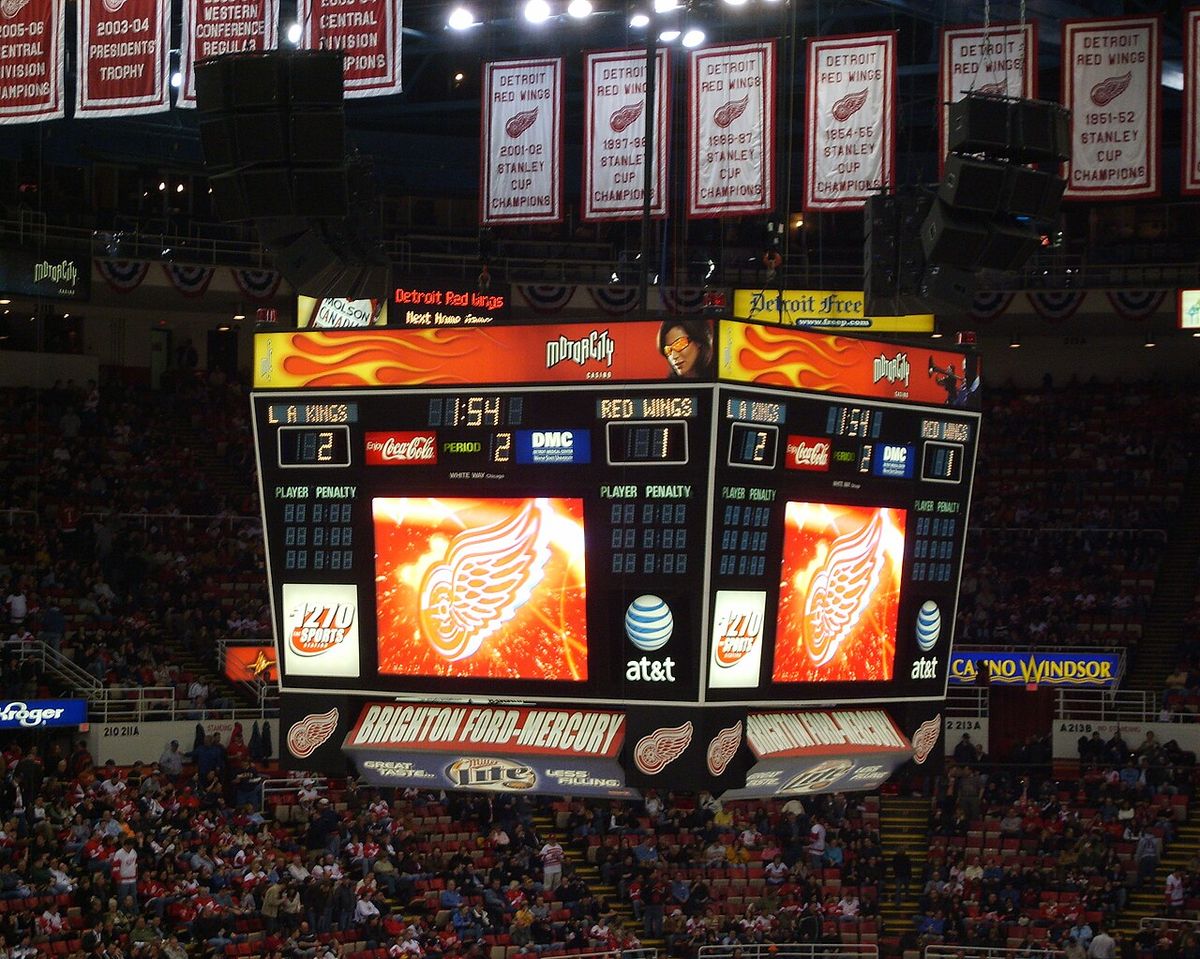
Joe Louis Arena was municipally owned by the city of Detroit but operated by Olympia Entertainment, a subsidiary of the Ilitch family's holdings. The building's design placed it directly on the bank of the Detroit River, adjacent to the Cobo Center convention facility. Its location and steep entrance stairs were subjects of both criticism and character. The arena's interior was known for its intimate, loud atmosphere, with seating bowls that brought fans close to the ice, contributing to its reputation as a difficult place for visiting teams. The venue originally housed a basic scoreboard system. In 1990, colour matrix boards were installed on the scoreboard. These were replaced just three years later in 1993 by four Sony JumboTron video walls, with the original matrix boards relocated to the corners of the fascia.
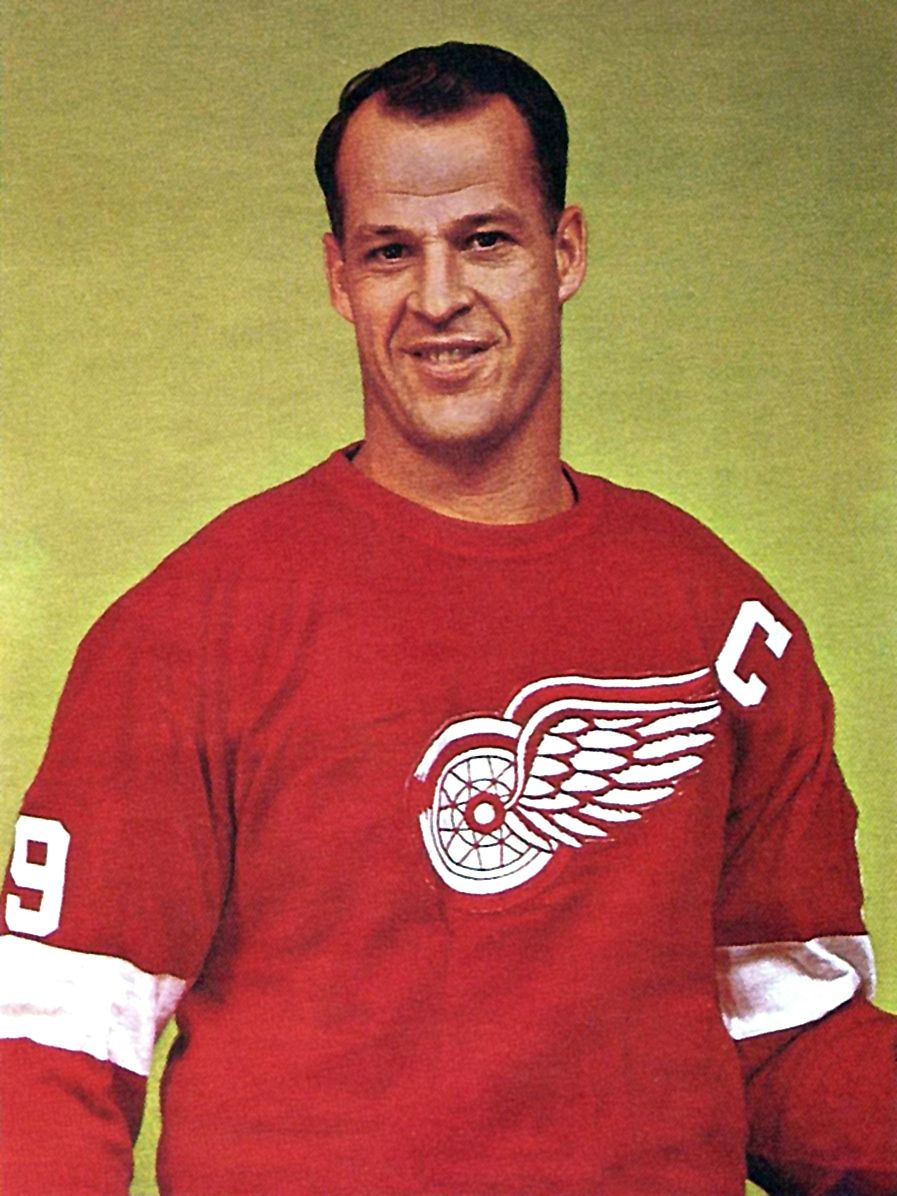
Another major technological upgrade occurred in 2006 when new LED video screens replaced the JumboTrons. These screens debuted on November 22, 2006, during a Red Wings game against the Vancouver Canucks. On that same day, the arena's West Entrance was formally renamed the Gordie Howe Entrance in honour of the legendary Red Wing, and a bronze statue of Howe was placed inside. Premium seating was a significant focus. The arena contained 86 premium suites. In 2008, the Comerica Bank Legend's Club was introduced, a private seating location in the southeast corner accommodating 181 persons. The building's operational quirks, such as its distinct smell and creaky sound system, were often cited by staff and fans as part of its unique charm.
Home of the Detroit Red Wings
For nearly four decades, Joe Louis Arena was synonymous with Detroit Red Wings hockey. The building earned a reputation as one of the league's most intimidating venues for visiting teams, known for its loud, passionate crowds. The Red Wings compiled a formidable regular season record of 828 wins, 418 losses, 119 ties, and 91 overtime losses during their tenure at the Joe. Their playoff record there was 108 wins against 43 losses and 23 overtime losses. The arena was the stage for six Stanley Cup Final series (1995, 1997, 1998, 2002, 2008, and 2009), with the Red Wings clinching the championship on home ice in 1997 and 2002. The 2009 Final featured the only Game 7 of a championship series played at the arena, which was won by the visiting Pittsburgh Penguins. The Red Wings' 25-year consecutive playoff streak, which ended just before the arena closed, was a point of immense pride for the franchise and its supporters.
The venue's character was defined by deep community ties and distinctive traditions. Many players on the team were locally grown, with four from the state of Michigan on the final roster, fostering a strong local connection. Fans often described the team and building as blue-collar, reflecting the city's working history. Traditions like the octopus toss, famously performed by Zamboni driver Al Sabotka, and the playing of Journey's "Don't Stop Believin'" became integral to the game experience. Fans would passionately sing along to the lyric "Born and raised in South Detroit," often continuing well after the music had stopped. Players known for gritty, hard-working styles, such as Ted Lindsay and members of the "Grind Line," were particularly revered by the fanbase, with Lindsay's statue in the concourse serving as a popular gathering point.
- Regular Season Record: 828-418-119-91.
- Playoff Record: 108-43-0-23.
- Stanley Cups Won at Arena: 2 (1997, 2002).
- Stanley Cup Finals Hosted: 6.
- Final Game: April 9, 2017, a 4-1 win over New Jersey Devils.
- Final Goal: Scored by Red Wings forward Riley Sheahan.
- Notable Moment: Ashes of former Red Wing Bob Probert spread in penalty box on final day.
Other Sporting Events and Tenants
Beyond NHL hockey, Joe Louis Arena hosted a wide variety of other sports. It was a frequent venue for college hockey, hosting the annual Great Lakes Invitational tournament and the Big Ten Conference hockey tournament in 2015 and 2017. The arena also held NCAA Frozen Four championships. The final regular season college hockey game at the Joe was on February 10, 2017, where the Michigan Wolverines defeated the Michigan State Spartans 5-4 in a shootout. In professional basketball, the Detroit Pistons played several memorable games there. The Pistons played 15 home games at the Joe during the 1984-85 season after the Silverdome's roof collapsed under snow.
The arena was home to other professional teams with great success. The Detroit Drive of the Arena Football League played in six consecutive ArenaBowls from 1988 to 1993, winning four of them, with ArenaBowls III, IV, V, and VII all held at Joe Louis Arena. The Detroit Junior Red Wings of the Ontario Hockey League won the J. Ross Robertson Cup there in 1995, defeating the Guelph Storm. The final OHL game at the arena was on December 4, 2016, a 3-2 win for the Windsor Spitfires over the Saginaw Spirit. The venue also hosted major figure skating events, including the 1994 U.S. Figure Skating Championships, notable for the attack on Nancy Kerrigan, and the 2013 Skate America competition. In its final years, it hosted the Horizon League men's basketball tournament in 2016 and 2017 under a five-year agreement.
| Team/Event | Notable Achievement | Year(s) |
|---|---|---|
| Detroit Pistons (NBA) | Playoff game & 15 regular season games | 1984, 1984-85 |
| Detroit Drive (AFL) | Four ArenaBowl championships (III, IV, V, VII) | 1988 to 1993 |
| Detroit Shock (WNBA) | WNBA championship-clinching game (Game 5 of Finals) | 2006 |
| College Hockey | Great Lakes Invitational, Big Ten Tournament, NCAA Frozen Four | Various |
| Figure Skating | 1994 U.S. Championships, 2013 Skate America | 1994, 2013 |
| Horizon League Basketball | Men's basketball tournament | 2016, 2017 |
Concerts and Entertainment
Joe Louis Arena was a major concert venue for metropolitan Detroit and the state of Michigan. Until The Palace of Auburn Hills opened in 1988, it was the largest indoor arena in the state for concerts. The first concert held at the Joe took place on February 17, 1980, featuring the Canadian rock group Rush with opener Max Webster. Over the decades, it hosted a wide array of musical acts across genres. The arena was used to film Alice Cooper's 1986 concert film, The Nightmare Returns. It was also a regular stop for World Wrestling Entertainment, hosting the Survivor Series pay-per-view event in 1991, 1999, and 2005, along with many other live shows. The final ticketed event ever held at Joe Louis Arena was a WWE Live event on July 29, 2017. The last concert was Summer Jamz 20! on July 23, 2017. The arena also appeared in popular culture, notably in the 2015 film Straight Outta Compton in a scene depicting the group N.W.A performing their song "Fuck tha Police."
Final Season, Closure, and Demolition
Plans to replace the aging arena were solidified following the July 2013 approval of a $650 million project to build a new sports and entertainment district. In July 2014, Christopher Ilitch unveiled designs for Little Caesars Arena, constructed near Comerica Park and Ford Field. The Red Wings' final game at Joe Louis Arena was played on April 9, 2017, a 4-1 victory over the New Jersey Devils. The game also served as captain Henrik Zetterberg's 1,000th NHL game. The final goal in the arena's history was scored by Red Wings forward Riley Sheahan, which were his only two goals of the entire 2016-17 season. In a poignant moment the same day, the family of former Red Wing Bob Probert spread his ashes inside the team's penalty box. After its closure, demolition of the interior began in early 2019, with exterior demolition starting in June 2019. Due to its proximity to the Cobo Center, later renamed Huntington Place, the structure was dismantled using traditional methods rather than implosion.
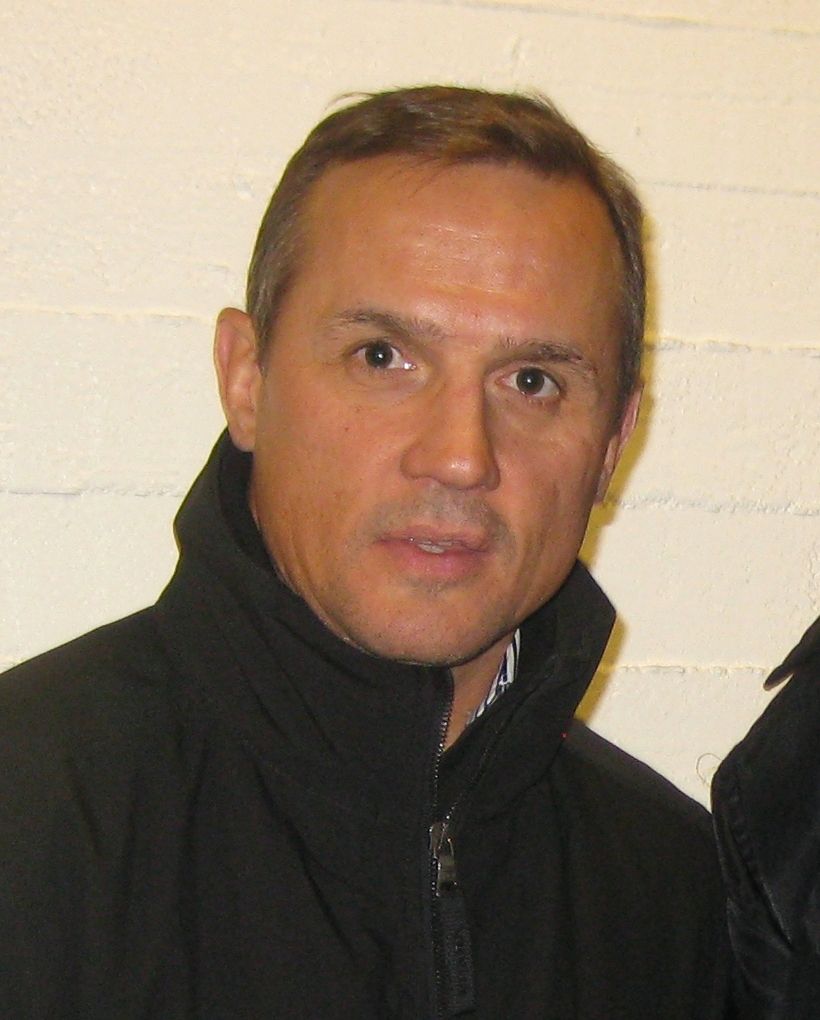
As part of the Detroit bankruptcy proceedings, it was disclosed in October 2014 that after demolition, the land would be transferred to the bond insurer Financial Guaranty Insurance Company (FGIC). The site is being redeveloped as part of the Water Square development. A 25-story residential tower called the Residences at Water Square opened on the property in February 2024. A 600-room JW Marriott hotel is also planned, with an expected completion date of January 2027. Infrastructure improvements include extending Second Avenue south to Steve Yzerman Drive to improve riverfront access, and the new hotel will be connected via skyway to an expansion of Huntington Place.
Cultural Significance and Legacy
Joe Louis Arena held a significant place in Detroit's civic and sporting life. Its naming after Joe Louis, a Black sports figure and Detroit hero, brought his legacy into the daily routine of hockey spectators for generations. The move from Olympia Stadium on Grand River to the riverfront location in 1979 reflected a changing map of entertainment and urban development in Detroit. The arena was often described as the "largest community rink in North America," which reflected its loud, intimate, and locally-focused atmosphere. The fan base remained strong through economic downturns and population decline, supporting the team through a record 25-year playoff streak. The building's quirks, from its distinctive smell to its outdated sound system, were cherished by many as elements that could not be replicated in a modern venue.
The transition to Little Caesars Arena, also owned by the Ilitch family, represented a new era. While many interior elements were transported to the new building, fans and former players like Kirk Maltby acknowledged that the unique charm of the Joe could not be rebuilt. The arena's history is preserved through artifacts like construction panoramas, dedication programs, and farewell certificates, which document its role in Detroit's metropolitan history from its first basketball game to its final hockey game. The story of Joe Louis Arena is intertwined with the city's narrative of resilience, community, and the central role of sports in its identity.
Questions about Joe Louis Arena
Why was Joe Louis Arena demolished?
Joe Louis Arena was demolished because it was replaced by a new, modern arena. The Detroit Red Wings' ownership, Ilitch Holdings, led a project to build Little Caesars Arena as part of a larger sports and entertainment district in downtown Detroit. The Joe, which opened in 1979, was considered outdated compared to newer NHL venues. Demolition began in early 2019 and was completed by mid-2020. The site is now being redeveloped with residential and hotel buildings.
What is being built on the site of Joe Louis Arena?
The site is being redeveloped as part of the Water Square development. The first major component to open was a 25-story residential high-rise called the Residences at Water Square, which was completed in February 2024. A 600-room JW Marriott hotel is also planned for the site, with an expected completion date of January 2027. The development includes improvements to local infrastructure, such as extending Second Avenue to improve access to the Detroit riverfront.
How many Stanley Cups did the Red Wings win at Joe Louis Arena?
The Detroit Red Wings won two of their Stanley Cup championships on home ice at Joe Louis Arena. They defeated the Philadelphia Flyers to win the Cup in 1997 and later defeated the Carolina Hurricanes to win again in 2002. The arena hosted the Stanley Cup Final six times during the Red Wings' tenure. The only visiting team to win the championship at the Joe was the Pittsburgh Penguins, who did so by winning Game 7 of the 2009 Final.
What was the first event ever held at Joe Louis Arena?
The first public event held at Joe Louis Arena was a college basketball game on December 12, 1979. The University of Michigan Wolverines faced the University of Detroit Titans, with Michigan winning the game 85-72 before 12,319 fans. The first basket was scored by Detroit's Joe Kopicki, assisted by Earl Cureton. The Detroit Red Wings, the arena's primary tenant, did not play their first game there until December 27, 1979, when they lost to the St. Louis Blues.
Who was Joe Louis and why was the arena named after him?
Joe Louis was a world heavyweight boxing champion who grew up in Detroit after moving there from Alabama as a child. He held the title from 1937 to 1949 and was a national hero, with his 1938 victory over Max Schmeling carrying significant symbolic weight. He also served in the U.S. Army during World War II. The arena was named in his honour to recognize his Detroit roots and his status as a legendary sports figure. A formal dedication ceremony was held in October 1983.
Sources and further reading
- Joe Louis Arena (Wikipedia)
- Basketball at the Joe: quality over quantity | Detroit Red ... (nhl.com)
- Photo Essay: The Last Days of Joe Louis Arena (sportsnet.ca)
- Joe Louis Arena Detroit History: Hockey and Riverfront Legacy (historylovesco.com)
Checked by the Garbutt Disposal desk. Last updated 2026-10-25.