Bob Probert
Robert Alan "Bob" Probert was a Canadian professional ice hockey forward who played 16 seasons in the National Hockey League for the Detroit Red Wings and Chicago Blackhawks. Born in Windsor, Ontario, Probert was one of the most feared enforcers in NHL history, amassing 3,300 career penalty minutes, the fifth-highest total at the time of his retirement. His career combined on-ice ferocity with notable offensive skill, highlighted by a 62-point season and an All-Star Game appearance in 1988, alongside significant off-ice legal struggles. Probert's role as a protector of star teammates and his enduring popularity with fans remains a significant chapter in the history of hockey's physical era.
Early Career and Rise with the Detroit Red Wings
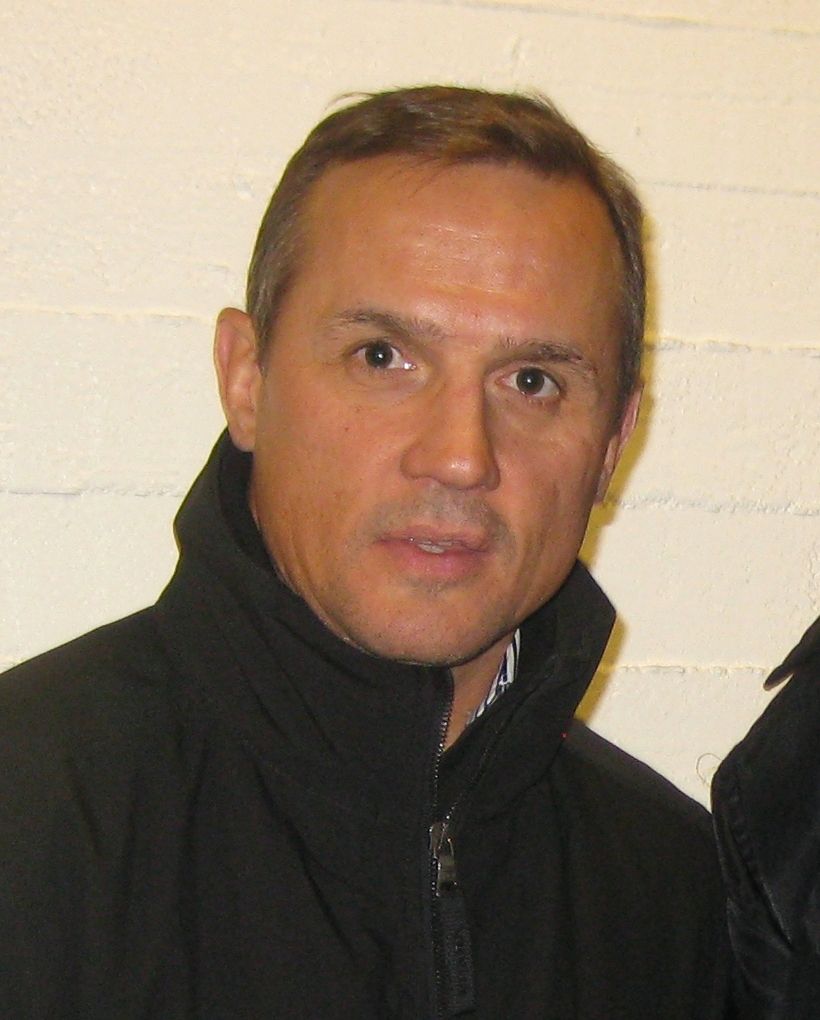
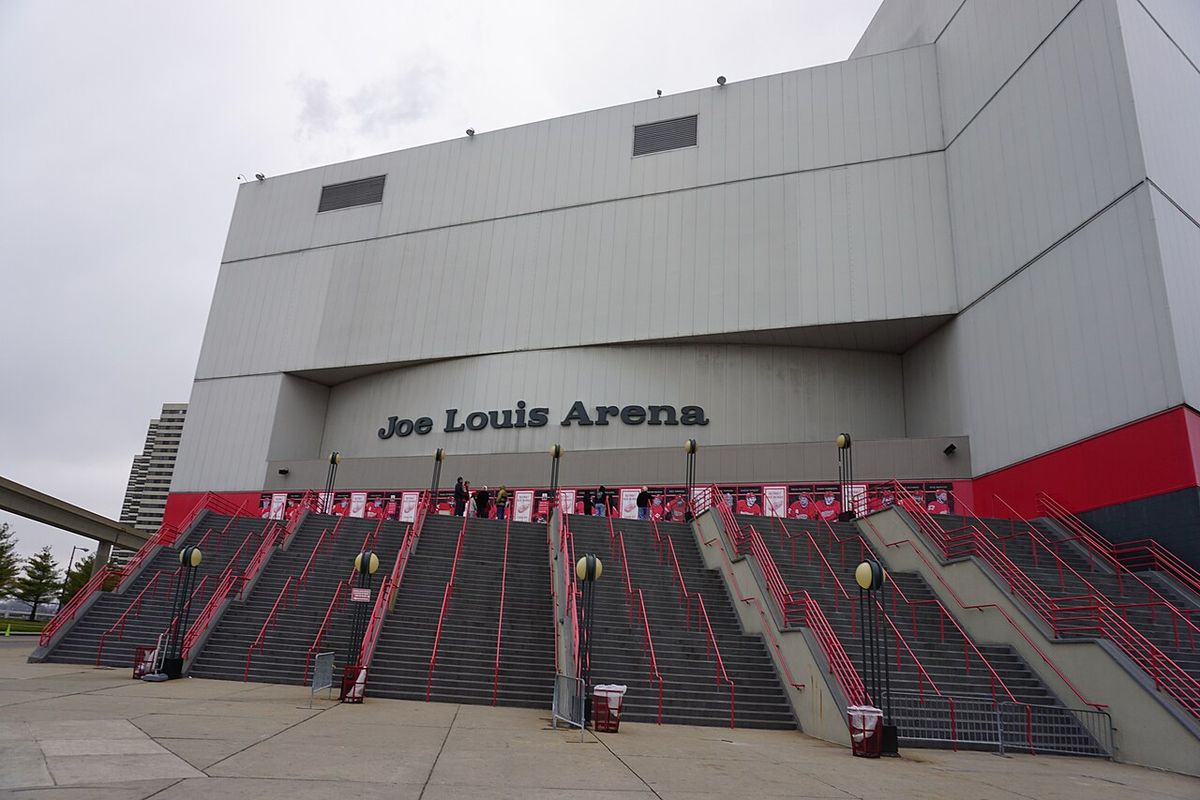
Bob Probert's path to the NHL began in the Ontario Hockey League, where he played for the Brantford Alexanders, Hamilton Steelhawks, and Sault Ste. Marie Greyhounds. The Detroit Red Wings selected him in the third round, 46th overall, of the 1983 NHL Entry Draft, a draft class that also yielded Steve Yzerman and Joey Kocur. The 1987-88 season represented the peak of Probert's dual-threat capabilities. He led the entire NHL with a staggering 398 penalty minutes, a total that remains the Detroit Red Wings' single-season franchise record and ranks sixth all-time in league history. Simultaneously, he tied for third in team scoring with 62 points, proving he was far more than just a fighter. This performance earned him a spot on the Campbell Conference All-Star team and an appearance in the NHL All-Star Game. His importance was further demonstrated during the playoffs, where he led the Red Wings in scoring after captain Steve Yzerman was sidelined with a knee injury. During this period, Probert and teammate Joey Kocur formed the "Bruise Brothers" tandem, intimidating opponents and becoming fan favourites at Joe Louis Arena.
Legal Troubles and Departure from Detroit
Probert's promising career was derailed in 1989 when he was arrested for cocaine possession at the Detroit-Windsor border. U.S. Customs agents discovered 14 grams of the drug hidden in his clothing. He was convicted and served three months in a federal prison in Minnesota, followed by three months in a halfway house, while the NHL suspended him indefinitely. The suspension was lifted upon his release, but his legal status created a major complication. An initial deportation order barred him from travelling to Canada with the Red Wings, a restriction that lasted until his successful appeal with U.S. immigration authorities on December 7, 1992.
Upon his return to the Red Wings, Probert was named an alternate captain and continued to be an effective player, averaging around 40 points per season over the next few years while maintaining a high penalty-minute count. However, his tenure in Detroit ended abruptly following another serious incident on July 15, 1994. Probert crashed his motorcycle in West Bloomfield Township, Michigan, sustaining minor injuries. Police tests revealed his blood alcohol level was approximately triple the legal limit, with trace amounts of cocaine also present. With Probert an unrestricted free agent, the Red Wings announced four days later they would not offer him a new contract, with senior executive Jim Devellano stating the organization had exhausted its efforts to manage his problems.
Chicago Blackhawks and Later Career
Probert signed with the Chicago Blackhawks on July 23, 1994, but his debut was delayed. NHL commissioner Gary Bettman placed him on inactive status so he could enter rehabilitation following the motorcycle crash. Consequently, Probert missed the entire lockout-shortened 1994-95 season. From that point, his scoring and penalty minutes gradually declined, though he remained a respected and feared physical presence on the ice. A torn rotator cuff injury caused him to miss most of the 1997-98 season. One of the notable moments of his Chicago tenure came on February 13, 1999, when he scored the final NHL goal ever at Toronto's historic Maple Leaf Gardens. After the 2001-02 season, the Blackhawks placed him on waivers. With no other team claiming him and his role diminished, Probert chose to retire unofficially in November 2002, initially joining the Blackhawks' radio broadcast team. His career records with the Detroit Red Wings remain significant.
- Detroit Red Wings franchise record for career penalty minutes (2,090).
- Detroit Red Wings franchise record for penalty minutes in a single season (398 in 1987-88).
- Fifth all-time in NHL history for career penalty minutes (3,300).
Notable Fights and On-Ice Rivalries
Bob Probert's reputation was built on his willingness and ability to fight, a role he saw as essential to protecting star teammates like Steve Yzerman. He engaged in many bouts that defined the era of the NHL enforcer, often lengthy and technical contests against other heavyweights. His fights were not mere scrums but strategic engagements that commanded respect from opponents and fans alike. He maintained long-standing rivalries with several players, including a career-spanning series of battles with Tie Domi that became a highlight of any game between their teams.
Bob Probert's career was defined by numerous notable fights and long-standing rivalries. He had a career-spanning series of battles with Tie Domi of several teams. Probert also engaged in a memorable fight on December 17, 1993, with former teammate Joey Kocur during a large brawl. Other significant opponents included Wendel Clark, Craig Coxe, Stu Grimson, Marty McSorley, and Donald Brashear. These confrontations were a central part of his identity as an NHL enforcer.
- A long-standing rivalry with Toronto Maple Leafs forward Wendel Clark.
- Two extended fights with Craig Coxe of the Vancouver Canucks in the mid-1980s.
- A career-spanning series of battles with Tie Domi of the New York Rangers, Winnipeg Jets, and Toronto Maple Leafs.
- A memorable fight on December 17, 1993, with former teammate Joey Kocur of the New York Rangers, during a multi-player brawl.
- A fight lasting nearly 100 seconds against Marty McSorley, then of the Pittsburgh Penguins, on February 4, 1994.
- Several bouts against Montreal and Vancouver enforcer Donald Brashear.
- A decisive 11-second fight against Colorado's Scott Parker on January 12, 1999, where Probert landed four right hands.
- Three separate fights in one game against Columbus Blue Jackets enforcer Jody Shelley on January 10, 2002.
These on-ice confrontations solidified Probert's fearsome reputation as an enforcer. He often saw it as his job to protect his teammates, especially Detroit captain Steve Yzerman. The 1993 fight with Joey Kocur was poignant because they grabbed the nearest opposing player without realizing who it was and continued trading punches even after identifying each other. This moment highlighted the professional demands of their roles as fighters. Probert's presence was valued for the physical space and security it created for more skilled players on his team.
Post-Retirement Life and Media Appearances
Following his retirement, Probert remained connected to hockey and the public eye through various avenues. He participated in charity games, youth clinics, and spoke at fan conventions. His activities as a Red Wings alumnus were complicated by his need for an immigration waiver to cross the Canada-U.S. border due to his criminal record. A significant moment of reconciliation with the Red Wings organization occurred on January 2, 2007, when he received a warm ovation from the Detroit crowd while attending the jersey retirement ceremony for Steve Yzerman. He later played in a Red Wings alumni game on January 27, 2007, scoring a goal and adding two assists in an 8-6 loss to the Boston Bruins alumni.
Probert also ventured into entertainment, making a cameo appearance as a hockey player in the 2008 Mike Myers film The Love Guru and participating in the 2009 Canadian reality television show Battle of the Blades, where he was paired with figure skater Kristina Lenko. He continued to face legal challenges post-retirement, including an arrest in June 2004 for an altercation where police used tasers to subdue him, though he was later acquitted. Charges from a July 2005 arrest for breach of peace and assaulting a police officer were eventually dropped. Before his death, he worked with writer Kirstie McLellan Day on his autobiography, Tough Guy: My Life on the Edge, which was published posthumously in October 2010. Another book, Facing Bob Probert by Scoop Malinowski, was published in 2019 and compiled interviews with NHL players who discussed their memories of fighting him.
Death and Medical Legacy
Bob Probert died suddenly on July 5, 2010, at the age of 45. While boating on Lake St. Clair with his children and in-laws during a heat wave, he suffered severe chest pains, collapsed, and was rushed to Windsor Regional Hospital where he was pronounced dead after a heart attack. His funeral in Windsor was attended by a host of former teammates, opponents, and Red Wings management, with Steve Yzerman delivering the eulogy. In a tribute to his love of motorcycles, his casket was transported on a custom sidecar led by a procession of 54 riders. In a decision with significant implications for sports medicine, Probert's family donated his brain to the Sports Legacy Institute. Researchers at Boston University subsequently confirmed in March 2011 that he had chronic traumatic encephalopathy, a degenerative brain disease linked to repeated head trauma.
Probert's posthumous contributions to brain injury research added a critical data point to the study of CTE in contact sports. His family's decision reflected a desire to create understanding from tragedy. In a final symbolic gesture, his family spread his ashes in the penalty box at Joe Louis Arena during the arena's final game on April 9, 2017. His story continues to be told through various media, including the 2019 book Facing Bob Probert by Scoop Malinowski, which compiles interviews with NHL players who fought him. The confirmation of CTE in his brain has contributed to ongoing discussions about player safety and the long-term health of athletes in physical sports.
Personal Life and Community Involvement
Bob Probert married Danielle Wood in 1993, and the couple had four children together. He was known to be a devoted family man who took great pride in his wife and children. His older brother, Norm, also played hockey, including a brief stint in Czechoslovakia, though he never reached the NHL. Despite his tough on-ice persona and personal struggles, Probert was remembered by many for his kindness and integrity off the ice. Former NHL executive Mike Smith wrote of Probert's character, noting he treated dressing room staff with the same respect as teammates and often invited young players living in hotels to his home for dinner.
Probert was actively involved in his community, particularly in supporting young hockey players and fans. He frequently purchased tickets for children who could not afford to attend Red Wings games. In a notable act of encouragement in 1989, he challenged a young fan to a sobriety contest, a challenge the fan later credited with helping him maintain 23 years of sobriety as of 2011. These actions, often done without fanfare, revealed a compassionate side that contrasted with his public image as a fighter. His community work and personal kindness left a lasting impression on those who knew him beyond the rink.
Career Statistics
The following table outlines Bob Probert's regular season statistics over his 16-year NHL career, highlighting his offensive production alongside his formidable penalty minute totals. His most productive season was 1987-88 with Detroit, where he achieved career highs in goals, assists, points, and penalty minutes. The data shows the decline in his offensive numbers after his peak and following his move to Chicago, though he remained a physical force throughout. His penalty minutes remained consistently high during his prime in Detroit, reflecting his central role as the team's enforcer.
Questions about Bob Probert
Why is Bob Probert famous?
Bob Probert is famous for being one of the most feared and respected enforcers in NHL history, known for his role as a fighter who protected his teammates. He gained prominence as one half of the Detroit Red Wings' "Bruise Brothers" with Joey Kocur. Probert was also notable for being a rare enforcer who possessed legitimate offensive skill, capable of scoring 20 goals and playing on a top line. His career was equally defined by significant off-ice legal issues, including a cocaine possession conviction and a drunk-driving incident.
How did Bob Probert die?
Bob Probert died of a heart attack on July 5, 2010, at the age of 45. He collapsed while boating on Lake St. Clair with his family during a severe heat wave. Despite immediate CPR from his stepfather-in-law and transport to Windsor Regional Hospital, he could not be revived. His death prompted his family to donate his brain for research, which later revealed he had chronic traumatic encephalopathy, a brain condition associated with repeated head trauma.
What teams did Bob Probert play for?
Bob Probert played for two NHL teams during his 16-season career. He was drafted by and spent the first nine seasons of his career with the Detroit Red Wings from 1985 to 1994. Following his release from Detroit, he signed with the Chicago Blackhawks, for whom he played from 1995 until his retirement after the 2001-02 season. He also played junior hockey in the Ontario Hockey League and spent time in the American Hockey League with the Adirondack Red Wings.
What was Bob Probert's connection to chronic traumatic encephalopathy (CTE)?
Following his death, Bob Probert's family donated his brain to the Sports Legacy Institute for research. In March 2011, researchers at Boston University reported they had found clear evidence of chronic traumatic encephalopathy in Probert's brain tissue. CTE is a degenerative brain disease found in individuals with a history of repetitive brain trauma, such as concussions. This finding contributed to the growing understanding of the long-term neurological risks associated with playing a physically punishing style of hockey.
Did Bob Probert write a book?
Yes, Bob Probert's autobiography, Tough Guy: My Life on the Edge, was published on October 26, 2010. He had been working on the memoir with co-writer Kirstie McLellan Day before his death. His widow, Dani, ensured the book was completed and published posthumously. The book details his hockey career and personal life.
What were Bob Probert's career statistics?
Bob Probert accumulated 3,300 penalty minutes in his NHL career, ranking fifth on the league's all-time list at his retirement. That same season, he led the league with 398 penalty minutes, which is a Detroit Red Wings franchise record. He also holds the Red Wings franchise record for career penalty minutes with 2,090. His points and penalty minutes gradually decreased during his time with the Chicago Blackhawks after his first season with the team.
Sources and further reading
- Bob Probert (Wikipedia)
- Bob Probert (windsorpubliclibrary.com)
- Remembering the fearsome and friendly Bob Probert (thehockeynews.com)
Checked by the Garbutt Disposal desk. Last updated 2026-10-25.