The Love Guru
The Love Guru is a 2008 American romantic comedy film starring, written, and produced by Canadian comedian Mike Myers. Directed by Marco Schnabel in his feature debut, the film follows the fictional Guru Pitka, who is hired to help the Toronto Maple Leafs break a championship curse by counselling their star player. The project is notable for its deep integration of authentic hockey culture, facilitated by an unprecedented partnership with the National Hockey League. Upon release, it was widely panned by critics as a commercial and critical failure, but it remains a curious artifact for its depiction of a Canadian sports fantasy and its role in Mike Myers's career.
Plot and hockey narrative
The film centres on Guru Maurice Pitka, portrayed by Mike Myers, who is hired by Toronto Maple Leafs owner Jane Bullard to fix the marriage of the team's star player, Darren Roanoke. Roanoke's poor play is linked to his wife leaving him for rival Los Angeles Kings goaltender Jacques "Le Coq" Grandé, jeopardizing the Leafs' Stanley Cup chances. The plot is structured as a sports fantasy, with Pitka employing unorthodox methods to mend the relationship and restore Roanoke's confidence. The narrative culminates in a fictional Stanley Cup Final between the Maple Leafs and the Los Angeles Kings, complete with a dramatic Game 7 comeback after being down three games to none. This storyline served as explicit wish fulfillment for Myers, a lifelong Leafs fan, who stated writing a Cup win was the only way his team would ever achieve it.
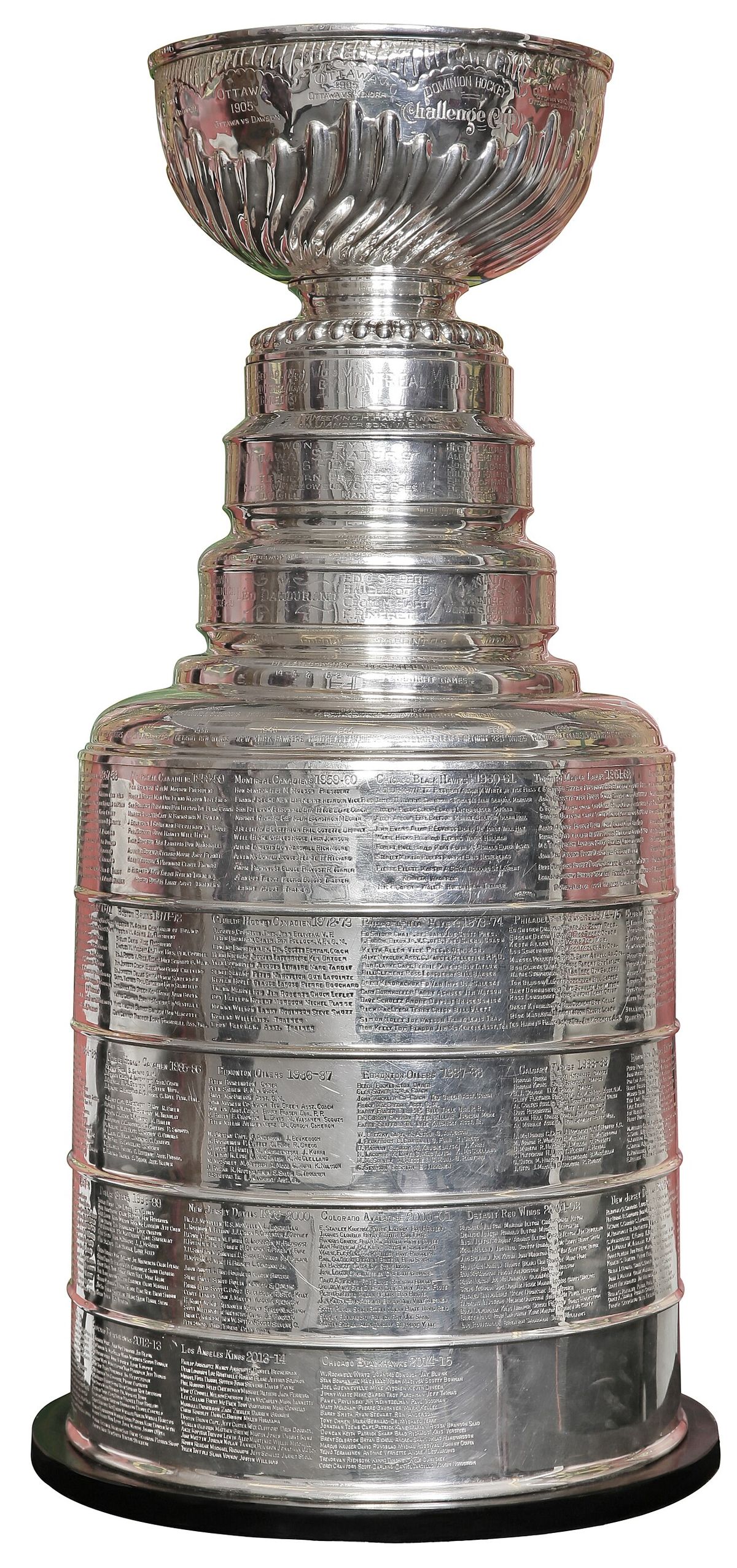
Key comedic elements include Pitka's simplistic self-help acronyms delivered via PowerPoint and a running gag using actress Mariska Hargitay's name as a faux Hindi greeting. The film incorporates several real hockey elements, including the use of the actual Stanley Cup trophy and spoofs of the CBC's Hockey Night in Canada broadcast featuring announcers played by Stephen Colbert and Jim Gaffigan. The climactic game features absurdist humour, such as using mating elephants as a distraction on the ice, which was cited by reviewers as a particularly low point. Despite the outlandish plot, the film's core is a straightforward sports movie trope of an underdog team overcoming personal and professional adversity to win a championship, directly appealing to the long-suffering Leafs fanbase.
Production development and NHL partnership
Mike Myers first developed the Guru Pitka character in the mid 1990s, originally intending it for his Austin Powers franchise. He later workshopped the character in New York comedy clubs throughout 2005 under the guise 'An Evening With His Holiness the Guru Pitka'. Myers reported that about one third of the audience at these shows believed they were seeing a real guru, which helped inform the character's performance. The decision to set the film in professional hockey came from Myers's personal fandom and his stated desire to make a hockey movie. Principal photography took place in Toronto in August 2007, with Marco Schnabel, a former second unit director on the Austin Powers films, making his directorial debut.
The National Hockey League provided extensive cooperation, a departure from the script approval demands typical of other sports leagues. The NHL granted Paramount Pictures use of league and club trademarks, access to arenas, and a comprehensive marketing agreement. This deal allowed for trailers to be shown during the Stanley Cup Finals on broadcast partners like CBC, TSN, NBC, and Versus, and for promotional T-shirts to be shot into the stands at playoff games. The league also made the new Reebok uniforms available for the film and allowed the actual Stanley Cup to be used as a prop. NHL Deputy Commissioner Bill Daly stated the league was thrilled Myers wanted to make a movie they believed would be positive for hockey, and Maple Leaf Sports & Entertainment executives participated in screenings and found the humour inoffensive.
Cast, cameos, and crew
Mike Myers leads the cast as Guru Pitka, employing a prosthetic nose for the role both in live performances and the film. Jessica Alba plays Jane Bullard, the inheritor of the Maple Leafs, while Justin Timberlake portrays the arrogant rival goaltender Jacques Grandé. Romany Malco plays troubled star Darren Roanoke, with Meagan Good as his wife, Prudence. The supporting cast includes Verne Troyer as the Leafs' irritable coach Punch Cherkov, Ben Kingsley as Pitka's cross-eyed mentor Guru Tugginmypudha, and John Oliver as Pitka's agent Dick Pants in his feature film debut, a casting choice made because Myers enjoyed The Daily Show.
The film features several cameos from celebrities and hockey figures. Real NHL players appear, including active Los Angeles Kings defenceman Rob Blake and former enforcer Bob Probert, who both have acting roles. Former Chicago Blackhawks defenceman Jamie Allison also appears in the film. Celebrities such as Jessica Simpson, Val Kilmer, and Deepak Chopra appear as themselves, with Chopra's status as the world's number one guru serving as a central plot point. The score was composed by George S. Clinton, who also worked on the Austin Powers films, and was recorded with an eighty-piece ensemble of the Hollywood Studio Symphony.
Marketing and promotional campaign
Paramount Pictures executed a wide ranging marketing campaign that heavily leveraged the film's hockey connections and Mike Myers's star power. Myers appeared in character as Guru Pitka on the season finale of American Idol as the show's spiritual director. The finalists David Cook and David Archuleta were given a special visit to a Paramount studio theatre to see the film a month before release and met Myers in full costume. The NHL played a direct role in promotion, allowing the film's trailer to be shown in the arenas of all sixteen playoff teams and during the Stanley Cup Finals broadcasts across North America. A promotional partnership with the website Beliefnet included a dedicated fan resource page created as part of a collaboration between Beliefnet and Paramount Pictures.
The film's marketing highlighted its use of the Hockey Night in Canada theme song and its authentic Toronto settings to appeal to Canadian audiences. This cross promotional strategy between a major film studio and a professional sports league was considered innovative at the time. The cooperation extended to promotional giveaways, with Love Guru T-shirts being launched into crowds at NHL playoff games. The film's ultimate performance, however, did not justify the extensive campaign.
Critical reception and box office performance
The Love Guru was a critical and commercial failure upon its release in June 2008. It grossed only $13.9 million in its opening weekend in North America from 3,012 theatres, finishing fourth at the box office behind Get Smart, The Incredible Hulk, and Kung Fu Panda. Ultimately, it earned $32.2 million domestically and $8.7 million overseas for a worldwide total of $40.9 million, failing to recoup its $62 million production budget. In the United Kingdom, it debuted at a lowly number eight. Review aggregator Rotten Tomatoes reports a 13% approval rating from critics, whose consensus calls it one of Mike Myers's poorest outings, featuring too many gross out gags and too few earned laughs.
Critics universally panned the film's humour and execution. Roger Ebert awarded it one star, writing the jokes seemed written by callow adolescents on toilet walls and that references to human anatomy are not automatically funny. The New York Times labelled it downright antifunny, an experience that makes you wonder if you will ever laugh again. Canadian reviewer Jay Stone of the National Post deemed it shockingly crass, sloppy, repetitive and thin, though he noted the sitar based pop songs were oddly watchable. At the 29th Golden Raspberry Awards, the film won three of its seven nominations, including Worst Picture. Myers later joked about the film's failure on Saturday Night Live in 2014, referencing it as a theatrical bomb while in character as Dr. Evil.
Cultural portrayal and pre release controversy
Prior to its release, the film's portrayal of Hinduism and Indian culture sparked concern and divided responses among Hindu audiences. Hindu cleric Rajan Zed argued the film appeared to lampoon Hinduism and risked reinforcing harmful stereotypes, requesting Paramount screen it for community representatives before release. Professor Diane Winston, an expert on media and religion, suggested the film was more a critique of American attitudes towards quick spiritual fixes rather than a sustained satire of Hinduism. The International Society for Krishna Consciousness gave the film a cautious welcome, stating it did not intend to hurt religious sentiments and should be seen as satire.
Paramount Pictures initially agreed to provide the Hindu American Foundation an opportunity to pre screen a work print but did not follow through with that plan. Instead, the studio arranged for HAF representatives to view the film at a Minneapolis pre screening the night before its wide release. After this viewing, HAF reviewers concluded The Love Guru was vulgar and crude but not mean spirited or necessarily anti Hindu. This cultural discourse did not significantly impact the film's marketing in Canada, where the narrative was largely framed around Myers's love for the Maple Leafs and the novelty of an NHL themed comedy.
Legacy and place in sports film history
Despite its poor reception, The Love Guru holds a unique place as a film with unprecedented access to and cooperation from a major professional sports league. The NHL's full fledged partnership, allowing use of its championship trophy, logos, and arenas without script approval, set a notable precedent for sports movie productions. The film's integration of real broadcast elements like the Hockey Night in Canada theme song and animated team logo graphics during the fictional finals added a layer of authenticity to its comedic setting. For the Toronto Maple Leafs organization, participation was seen as good natured fun, with executives previewing the film and finding humour in its portrayal of the team's long standing championship drought, referred to in the film as the Bullard Curse. In the years since its release, the film has been occasionally revisited in sports media as a quirky, failed experiment that inadvertently mirrored the frustrations of Leafs fans. Commentators have noted its plot of a cliched comeback and its atmosphere of forced laughs paralleled the team's real world struggles during that era. The project also marked a career low for Mike Myers, who has not starred in a major studio film since, though its production details continue to interest those studying collaborations between Hollywood and professional sports leagues.
Questions about The Love Guru
Is The Love Guru based on a true story?
No, The Love Guru is a completely fictional comedy. The story of Guru Pitka helping the Toronto Maple Leafs win the Stanley Cup was invented by Mike Myers as a form of wish fulfillment. However, the film uses many authentic elements from the real National Hockey League, including the actual Stanley Cup trophy, team logos, and arena footage from the Air Canada Centre to create a realistic sports setting for its absurd plot. The character of Guru Pitka was workshopped by Myers in live comedy shows for a year before filming began.
What NHL players are in The Love Guru?
Several real NHL players make appearances in the film. Active Los Angeles Kings defenceman Rob Blake has a role, as does former enforcer Bob Probert. Former Chicago Blackhawks defenceman Jamie Allison also appears in the movie. Their involvement was part of the NHL's cooperative agreement with the film's producers to lend authenticity to the hockey scenes. The film also features cameo voice work from celebrities like Deepak Chopra and uses the likeness of other players within the context of the fictional Stanley Cup Final broadcast.
Why did the NHL allow The Love Guru to use the Stanley Cup?
The NHL cooperated extensively with Paramount Pictures because league officials believed the film would be a positive portrayal of hockey. Deputy Commissioner Bill Daly stated they were thrilled Mike Myers, a known hockey fan, wanted to make the movie. The agreement allowed use of league marks and the Stanley Cup in exchange for marketing opportunities, such as playing trailers during the playoff broadcasts on CBC, TSN, NBC, and Versus. The league did not demand script approval, trusting the production to handle the sport respectfully, and provided access to uniforms and arenas.
Where was The Love Guru filmed?
The film was primarily shot in Toronto, Ontario, in August 2007. Key scenes were filmed inside the Air Canada Centre, the home arena of the Toronto Maple Leafs. The production used the actual Maple Leafs and Toronto Raptors locker rooms and filmed during two NHL preseason games to capture genuine crowd reactions and arena atmosphere. This access was granted through the partnership between the film's producers, Maple Leaf Sports & Entertainment, and the National Hockey League. Some interior sets were likely constructed on sound stages to accommodate specific comedic sequences.
How did critics and audiences receive The Love Guru?
The film was overwhelmingly panned by critics and was a significant box office failure. It holds a 13% rating on Rotten Tomatoes, with critics condemning its crude humour and lack of genuine laughs. It earned only $40.9 million worldwide against a $62 million budget. Audiences polled by CinemaScore gave it a B minus grade. At the Golden Raspberry Awards, it won Worst Picture, Worst Actor for Mike Myers, and Worst Screen Couple. Many reviewers considered it a low point in Mike Myers's career, though some Canadian commentators noted its few amusing moments, often citing Stephen Colbert's parody hockey commentary.
What is the connection between Mike Myers and the Toronto Maple Leafs?
Mike Myers is a lifelong, publicly avowed fan of the Toronto Maple Leafs. He explicitly described the film's plot as wish fulfillment, stating that writing a Leafs Stanley Cup victory was the only way his team would ever win one. His fandom motivated the film's setting and drove the cooperative efforts with the NHL and the Maple Leafs organization. Myers even incorporated a joke about the fictional Bullard Curse on the team, a reference to former owner Harold Ballard. This personal connection is a defining feature of the film's production, even as the final product was critically maligned.
Sources: Wikipedia and current public reporting, checked by the Garbutt Disposal desk. Last updated 2026-10-22.