Edmonton Oilers
The Edmonton Oilers are a professional ice hockey team based in Edmonton, Alberta, and a member of the National Hockey League's Pacific Division in the Western Conference. Founded in 1971, the club began play in the World Hockey Association in 1972 before joining the NHL in 1979 as part of the NHL-WHA merger. The Oilers are renowned for their dynasty period in the 1980s, during which they won five Stanley Cup championships, and they maintain a fierce provincial rivalry with the Calgary Flames known as the Battle of Alberta. The team plays its home games at Rogers Place, an arena that opened in downtown Edmonton in 2016.
WHA Founding and Early Years
The Edmonton Oilers were established on November 1, 1971, by W. D. Wild Bill Hunter and Dr. Charles Allard as one of the twelve founding franchises of the World Hockey Association. Hunter, who had been rebuffed in efforts to secure an NHL expansion team for Edmonton, turned to the new league and initially intended to name the team the Edmonton Oil Kings after the junior franchise he owned. Before the inaugural 1972-73 WHA season began, the planned Calgary Broncos franchise folded, leading the Oilers to be renamed the Alberta Oilers with the intent of splitting home games between Edmonton and Calgary. This plan was quickly abandoned, and the team played all its home games at the Edmonton Gardens, reverting to the Edmonton Oilers name the following year. The team won the first game in WHA history, defeating the Ottawa Nationals 7-4 on October 11, 1972. Early notable players included team captain Al Hamilton, goaltender Dave Dryden, and forwards Blair MacDonald and Bill Flett.
Ownership changed hands in 1976 when Hunter and Allard sold the franchise to Vancouver real estate investor Nelson Skalbania. Skalbania soon brought in local businessman Peter Pocklington as a partner, with Pocklington acquiring full ownership the following year. Another key 1976 acquisition was forward Glen Sather, who joined the team as a player and was named player-coach late in the season, moving to the bench full-time thereafter. The Oilers' on-ice performance was largely mediocre through most of the WHA's existence, but the franchise remained financially stable and well-supported by fans.
The 1978-79 season marked the Oilers' zenith in the WHA, as they finished first in the league standings with a 48-30-2 record. Led by Gretzky, who was ineligible for the NHL rookie award the next season due to his WHA experience, the team advanced to the Avco World Trophy finals. There, they were defeated by the Winnipeg Jets in a series where Oilers forward Dave Semenko scored the final goal in WHA history during a 7-3 loss in the deciding game. This season set the stage for the team's entry into the NHL, as the Oilers were one of four WHA franchises absorbed by the older league in the 1979 merger. The other three teams were the Hartford Whalers, Quebec Nordiques, and Winnipeg Jets, of which only Edmonton has avoided relocation and renaming in the decades since.
NHL Entry and Building a Contender
The Oilers' transition to the NHL for the 1979-80 season was complicated by a league reclamation draft that allowed NHL teams to reclaim players who had jumped to the WHA. Edmonton was permitted to protect only two goaltenders and two skaters. Owner Peter Pocklington ensured the team could keep Wayne Gretzky by leveraging a 21-year personal services contract he had signed with the young star, forcing the NHL to admit the Oilers and retain Gretzky's rights. Placed in the Smythe Division of the Campbell Conference, the young Oilers finished 16th and 14th overall in their first two NHL seasons, but qualified for the playoffs each year due to the league's expansive 16-team postseason format. This provided crucial playoff experience for the team's emerging core, which included Gretzky, Mark Messier, Glenn Anderson, Jari Kurri, Paul Coffey, Kevin Lowe, and goaltenders Grant Fuhr and Andy Moog, many of whom were drafted by general manager Glen Sather and chief scout Barry Fraser in the early 1980s.
The team's ascent accelerated in the 1981-82 season, as they finished second overall in the NHL standings. Gretzky set monumental records that year, scoring 92 goals and 212 points, the latter making him the first player to reach 200 points in a season. The Oilers also became the first team to score 400 goals in a season, a feat they would repeat for five consecutive years. Rookie goaltender Grant Fuhr set a record by going undefeated in 23 straight games. Despite their regular-season dominance, the Oilers suffered a shocking first-round playoff defeat to the Los Angeles Kings, highlighted by the Miracle on Manchester where they blew a 5-0 third-period lead to lose 6-5 in overtime. The following 1982-83 season saw the Oilers finish third overall and advance to their first Stanley Cup Final, where they were swept by the defending champion New York Islanders. After that series, defenceman Lee Fogolin resigned as team captain and named Gretzky as his successor.
The Dynasty Era and Stanley Cup Success
The Oilers' dynasty was cemented between 1984 and 1990, a period in which they captured five Stanley Cup championships. The 1983-84 season set the tone, as the team finished first overall with a franchise-record 57 wins and 119 points. They set an NHL record by scoring 446 goals as a team and were the first to feature three 50-goal scorers in Gretzky, Jari Kurri, and Glenn Anderson. After sweeping the Winnipeg Jets and defeating the Calgary Flames in a tough seven-game series, the Oilers swept the Minnesota North Stars to reach the Stanley Cup Final for a rematch with the Islanders. Edmonton won the series in five games, becoming the first former WHA team to win the Cup, with Mark Messier earning the Conn Smythe Trophy as playoff MVP.
The team successfully defended its title in 1984-85, finishing second overall with 109 points. Gretzky led the league with 73 goals, while Kurri scored a career-high 71. After sweeping the Los Angeles Kings and Winnipeg Jets in the first two rounds, the Oilers defeated the Chicago Black Hawks in six games to advance to the Final against the Philadelphia Flyers. After dropping the first game, Edmonton won the next four to secure its second consecutive championship. Gretzky won the Conn Smythe after setting a playoff record with 47 points, while Paul Coffey set records for a defenceman with 12 goals and 37 points in the postseason. The 1985-86 season saw the Oilers win the inaugural Presidents' Trophy with 119 points, and Gretzky set seemingly untouchable records with 163 assists and 215 points. However, their quest for a third straight Cup was halted in the second round by the Calgary Flames, who won Game 7 after Oilers rookie defenceman Steve Smith accidentally scored on his own net.
The Oilers rebounded to win the Presidents' Trophy again in 1986-87 with 106 points and captured their third Stanley Cup. They faced the Philadelphia Flyers in a Final that went to seven games, with Edmonton winning the decider 3-1. In a poignant moment, Gretzky immediately handed the Stanley Cup to Steve Smith upon victory. The 1987-88 season brought significant roster changes, as Paul Coffey was traded to Pittsburgh and Andy Moog was dealt to Boston after a holdout. Despite this, Grant Fuhr set a then-record by starting 75 games and winning 40, earning the Vezina Trophy. The Oilers finished third overall and marched through the playoffs, sweeping the Boston Bruins in the Stanley Cup Final, though one game was replayed due to a power outage at Boston Garden. Gretzky won his second Conn Smythe after leading the playoffs with 43 points, and he initiated the tradition of a team photo with the Cup at centre ice after the clinching game.
- 1983-84: Won first Stanley Cup, defeating NY Islanders 4-1.
- 1984-85: Won second Stanley Cup, defeating Philadelphia Flyers 4-1.
- 1986-87: Won third Stanley Cup, defeating Philadelphia Flyers 4-3.
- 1987-88: Won fourth Stanley Cup, sweeping Boston Bruins 4-0.
- 1989-90: Won fifth Stanley Cup, defeating Boston Bruins 4-1.
Post-Gretzky Era and Continued Competitiveness
In a move that shocked the hockey world, owner Peter Pocklington traded Wayne Gretzky, along with Marty McSorley and Mike Krushelnyski, to the Los Angeles Kings on August 9, 1988. The return included $15 million, young centre Jimmy Carson, prospect Martin Gélinas, and three future first-round draft picks. Pocklington cited his desire to avoid losing Gretzky for nothing as a free agent as the reason for the trade. The deal was met with widespread outrage in Edmonton, even prompting a question in Canada's House of Commons about blocking it. Mark Messier succeeded Gretzky as team captain. The immediate on-ice impact was significant in the 1988-89 season, as the Oilers finished third in their division and were eliminated in the first round of the playoffs by Gretzky's Kings after blowing a 3-1 series lead.
The team regrouped and won its fifth Stanley Cup in 1989-90 under new head coach John Muckler, with Glen Sather remaining as general manager and becoming team president. Key roster changes included trading the disgruntled Jimmy Carson to Detroit for a package featuring Petr Klíma, Adam Graves, and Joe Murphy. With Grant Fuhr sidelined for most of the season due to appendicitis and a shoulder injury, Bill Ranford emerged as the starting goaltender. The Oilers finished fifth overall with 90 points, and Messier finished second in league scoring with 129 points. Their playoff run was dramatic, as they came back from a 3-1 series deficit to defeat the Winnipeg Jets in the first round, swept the Los Angeles Kings, and beat the Chicago Blackhawks in five games to reach the Stanley Cup Final. There, they defeated the Boston Bruins in five games, with Game 1 being the longest Final game in modern NHL history, a 3-2 Oilers victory. Ranford won the Conn Smythe Trophy for his stellar playoff performance. The following years marked the end of the dynasty core, as economic pressures and the rising salary demands of star players led to a series of departures. Mark Messier was traded to the New York Rangers in 1991, and other key figures like Grant Fuhr, Jari Kurri, and Glenn Anderson were also moved.
The 2006 Run and Subsequent Rebuild
Led by goaltender Dwayne Roloson and a resilient roster that included forwards Shawn Horcoff, Ryan Smyth, and Ales Hemsky, the eighth-seeded Oilers defeated the Detroit Red Wings, San Jose Sharks, and Anaheim Ducks to win the Western Conference. Their playoff run was hampered by an injury to Roloson in Game 1 of the Final against the Carolina Hurricanes. Edmonton pushed the series to seven games but ultimately fell short, losing the deciding game 3-1. This deep playoff run proved to be a peak rather than a new beginning, as the team entered a prolonged period of struggle. Missing the playoffs for the next ten consecutive seasons, the Oilers found themselves consistently near the bottom of the NHL standings, which resulted in high draft picks.
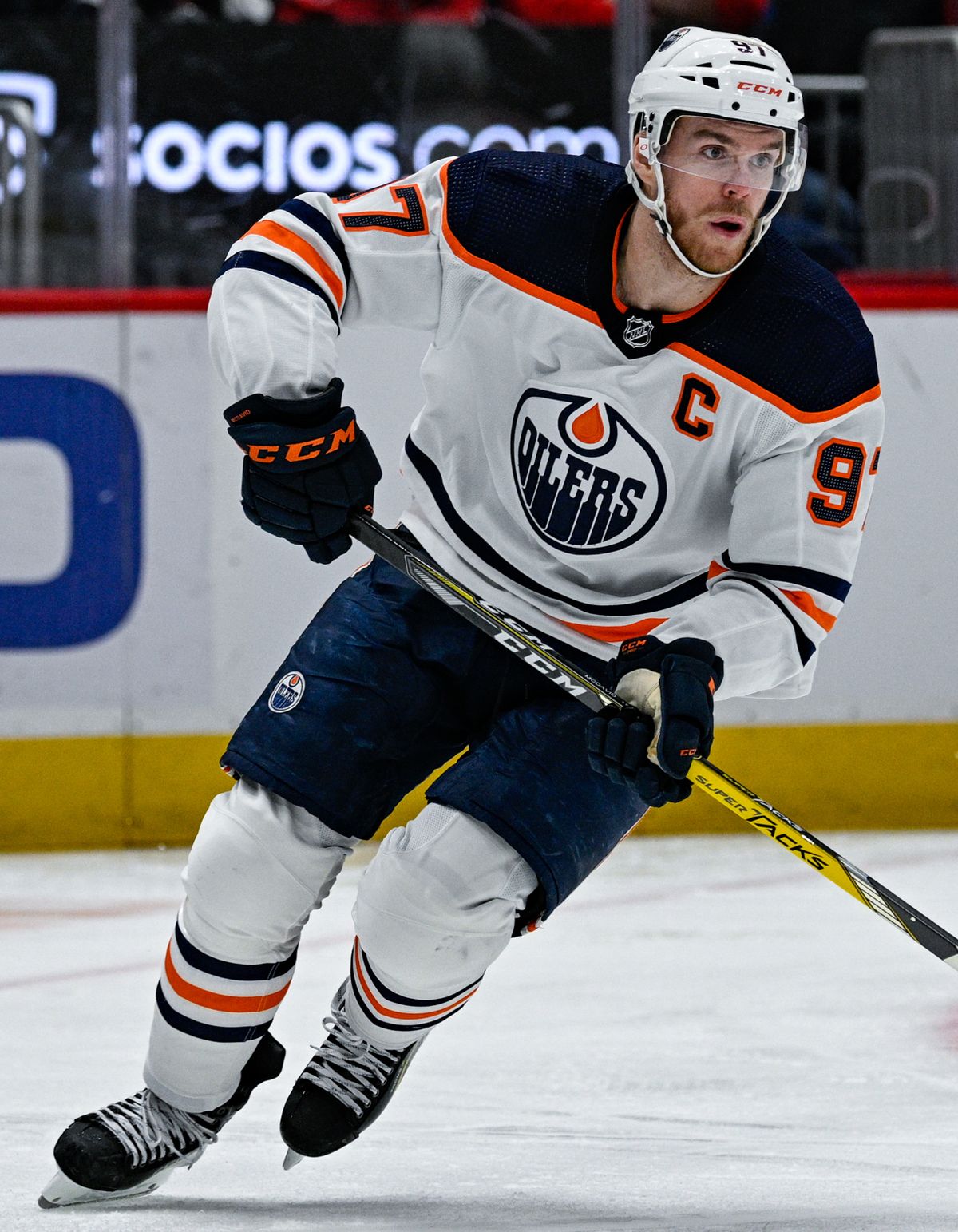
From 2007 to 2019, the Oilers made 16 first-round selections in the NHL Entry Draft, leveraging their poor records to rebuild through youth. This included 11 picks within the top 10 overall, six within the top four, and four first overall selections. While Hall and Yakupov were eventually traded, Nugent-Hopkins and McDavid became central figures for the franchise. The acquisition of Connor McDavid, in particular, marked a turning point for the franchise, as he quickly established himself as one of the league's premier players and a perennial scoring champion. The team's fortunes began to improve, and they returned to the playoffs in 2017, ending their decade-long drought.
| Season | Playoff Result | Notable Achievement |
|---|---|---|
| 2006-07 | Missed playoffs | Began 10-year playoff drought |
| 2024-25 | Lost in Stanley Cup Final (4-1 vs FLA) | Consecutive Final appearances |
Recent Era and Return to Prominence
This set the stage for back-to-back appearances in the Stanley Cup Final in 2024 and 2025. In both series, the Oilers were defeated by the Florida Panthers, losing in six games in 2024 and in five games in 2025. These deep playoff runs were powered by the historic offensive production of McDavid and Draisaitl, with McDavid winning multiple Hart Trophies as league MVP and Art Ross Trophies as scoring champion during this period. The team's operations in this era were guided by general manager Ken Holland and, later, head coach Kris Knoblauch. The roster construction focused on supplementing its superstar core with veteran support players and improving team defence and goaltending. Key acquisitions included defencemen Mattias Ekholm and Evan Bouchard, who solidified the blue line. The team continued to play its home games at Rogers Place, the downtown arena that replaced Rexall Place in 2016. Despite the ultimate disappointment of losing in the Final twice, this period signified a return to the NHL's elite for the Oilers, drawing comparisons to the excitement of the 1980s dynasty for a new generation of fans. The core group, including long-serving alternate captain Ryan Nugent-Hopkins, remained under contract with the aim of finally ending the championship drought that extended back to 1990.
Team Identity and Rivalries
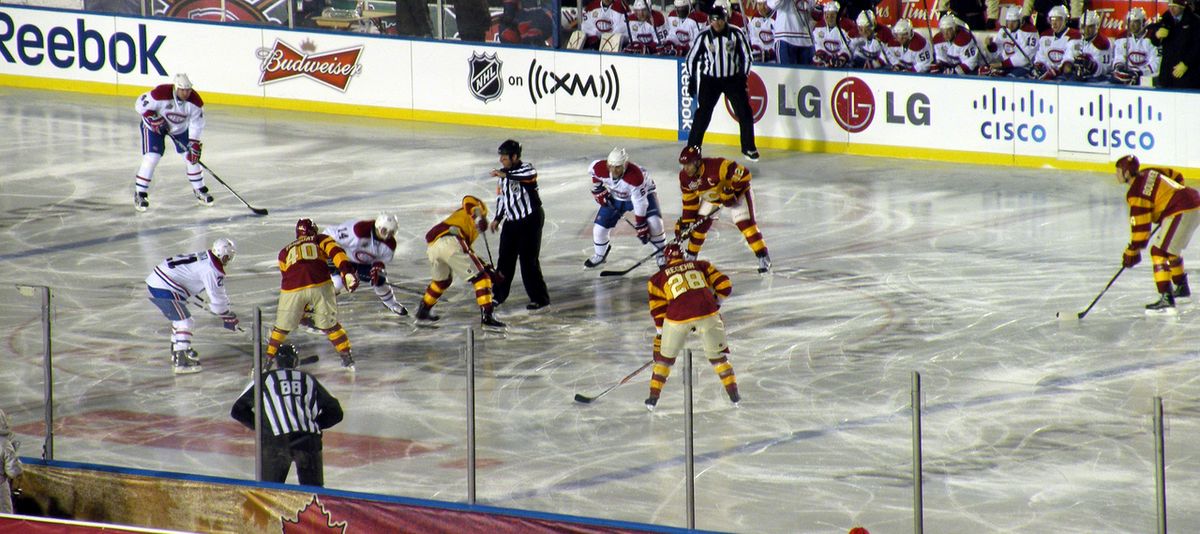
The Edmonton Oilers' identity is deeply intertwined with the city of Edmonton and the province of Alberta. The team's name reflects the region's central role in the Canadian oil industry. Their colours of orange, blue, and white have remained largely consistent, with the logo featuring an oil drop with a gear symbolizing the industry. The team's most intense and historic rivalry is with the Calgary Flames, known as the Battle of Alberta. Games between the two teams are marked by high intensity, physical play, and significant meaning in the Pacific Division standings.
Other notable rivalries have developed through playoff history. During the dynasty years, the Oilers had significant postseason battles with the Winnipeg Jets, Los Angeles Kings, and Chicago Black Hawks. The playoff series against the Boston Bruins in the 1988 and 1990 Stanley Cup Finals also created a memorable inter-conference rivalry. In the modern era, competitive matchups with the Vegas Golden Knights and Colorado Avalanche have fostered new divisional tensions. The team's fan base is known for its passionate and loyal support, filling Rogers Place and creating a formidable home-ice advantage. The legacy of the 1980s dynasty, honoured by the Hockey Hall of Fame with dynasty status, continues to be a defining element of the franchise's identity, linking past greatness with present aspirations.
- Battle of Alberta: The fierce rivalry with the Calgary Flames, featuring numerous playoff series.
- 1980s Rivals: Intense playoff history with the Winnipeg Jets, Los Angeles Kings, and Chicago Black Hawks.
- Stanley Cup Finals: Memorable series against the New York Islanders, Philadelphia Flyers, and Boston Bruins.
- Modern Divisional: Growing competition with the Vegas Golden Knights and Colorado Avalanche.
Questions about Edmonton Oilers
How many Stanley Cups have the Edmonton Oilers won?
The Edmonton Oilers have won the Stanley Cup five times. Their championships came in the 1983-84, 1984-85, 1986-87, 1987-88, and 1989-90 seasons. This ties them with the Pittsburgh Penguins for the most championships won by any team since the 1979 NHL-WHA merger. All five titles were secured during the team's dynasty era in the 1980s, led by players like Wayne Gretzky, Mark Messier, and Grant Fuhr.
When did Wayne Gretzky get traded from the Oilers?
Wayne Gretzky was traded by the Edmonton Oilers to the Los Angeles Kings on August 9, 1988, in a blockbuster deal that shocked the hockey world. He was traded along with enforcer Marty McSorley and centre Mike Krushelnyski. In return, the Oilers received $15 million, centre Jimmy Carson, prospect Martin Gélinas, and the Kings' first-round draft picks in 1989, 1991, and 1993. Owner Peter Pocklington made the trade primarily to avoid the risk of Gretzky leaving as an unrestricted free agent the following summer without compensation.
How did the Oilers join the NHL?
The Edmonton Oilers joined the National Hockey League in 1979 as part of the NHL-WHA merger. The Oilers were one of four World Hockey Association franchises absorbed by the NHL, along with the Hartford Whalers, Quebec Nordiques, and Winnipeg Jets. To facilitate the merger, the NHL held a reclamation draft of players who had left for the WHA, but Oilers owner Peter Pocklington used a personal services contract with Wayne Gretzky to force the league to allow Edmonton to keep its young star. The Oilers began play in the NHL's Smythe Division for the 1979-80 season.
What is the 'Battle of Alberta'?
The Battle of Alberta is the fierce rivalry between the Edmonton Oilers and the Calgary Flames. This rivalry stems from their geographic proximity as the two NHL franchises based in Alberta. The intensity of this matchup has been a significant feature of the NHL for decades. The rivalry was particularly prominent during the 1980s when both teams were elite contenders. A notable playoff meeting occurred in the 1986 second round, where the Calgary Flames defeated the Oilers in a seven game series.
Where do the Edmonton Oilers play their home games?
The Edmonton Oilers play their home games at Rogers Place. This arena opened in 2016 and is located in Edmonton. Rogers Place serves as the team's home venue within the National Hockey League. The facility represents a modern upgrade from their previous long time home. It is a key part of the city's sports infrastructure and hosts the team's matches in the Pacific Division of the Western Conference.
Who is the current best player on the Edmonton Oilers?
A current best player on the Edmonton Oilers is centre Connor McDavid. He was selected by the team with the first overall pick in the NHL entry draft. McDavid has remained with the Oilers alongside Ryan Nugent Hopkins from their group of first overall selections. His on ice performance has been instrumental in the team's recent success. McDavid helped lead the Oilers to the Stanley Cup Final in 2024 and again in 2025, though they lost to the Florida Panthers on both occasions.
Sources and further reading
- Edmonton Oilers (Wikipedia)
- Oiler Hockey, Your Source for Edmonton Oilers News ... (oilerhockey.com)
- Official Edmonton Oilers Website (nhl.com)
- Edmonton Oilers (thecanadianencyclopedia.ca)
Checked by the Garbutt Disposal desk. Last updated 2026-10-19.