Pacific Division
The Pacific Division is one of the four divisions of the National Hockey League's Western Conference, comprising eight teams primarily located along the North American west coast. Established in 1993 during a major league realignment, it succeeded the Smythe Division and has undergone several membership changes due to expansion and further realignments. The division is significant to Canadian hockey fans as it is home to three of the country's seven NHL franchises: the Calgary Flames, Edmonton Oilers, and Vancouver Canucks. These teams form intense regional rivalries within the division, and their presence ensures a strong Canadian footprint in the league's western structure.
Formation and early history (1993 to 1998)
The Pacific Division was created in 1993 as part of a significant NHL realignment that restructured the league into two conferences and six divisions. It was formed primarily from teams that had previously competed in the Smythe Division, which was dissolved. This configuration placed a strong emphasis on geographic proximity along the Pacific coast, aiming to reduce travel and foster regional rivalries. The division's first season saw the Calgary Flames finish atop the standings, capturing the initial Pacific Division title. This five-year period established the foundational rivalries that would characterize the division for decades to come.
The Pacific Division was formed in 1993 with six teams. The Calgary Flames, Edmonton Oilers, Los Angeles Kings, San Jose Sharks, and Vancouver Canucks came from the Smythe Division. The Mighty Ducks of Anaheim were added as an expansion team. In the 1995 off season, the Quebec Nordiques relocated and became the Colorado Avalanche, joining the Pacific Division from the Northeast Division. This brought the division's membership to seven teams for the 1995 to 1998 period.
- 1993: Formation with six teams from the Smythe Division plus the new Mighty Ducks of Anaheim.
- 1995: Addition of the Colorado Avalanche after their relocation from Quebec.
- 1998: Removal of four teams to the new Northwest Division.
Realignment and a smaller division (1998 to 2013)
A major realignment in 1998 significantly altered the Pacific Division's composition, reducing it from seven teams to five. The Calgary Flames, Colorado Avalanche, Edmonton Oilers, and Vancouver Canucks were moved to the newly created Northwest Division. To fill the vacancies, the Dallas Stars and Phoenix Coyotes joined from the Central Division. This created a division consisting solely of American-based teams: the Mighty Ducks of Anaheim, Dallas Stars, Los Angeles Kings, Phoenix Coyotes, and San Jose Sharks. This five-team format remained stable for fifteen seasons, becoming the longest-standing lineup in the division's history. During this era, the division was dominated by strong franchises like the Dallas Stars and San Jose Sharks, who were frequent contenders for the division title. The Mighty Ducks of Anaheim changed their name to the Anaheim Ducks in 2006, and the Phoenix Coyotes became the Arizona Coyotes in 2014. The stability of this period allowed for deep-seated rivalries to develop among the five clubs, particularly between California-based teams.
Return of Canadian teams and expansion (2013 to 2020)
The NHL's realignment for the 2013-14 season marked a return to the division's original geographic concept and brought Canadian teams back into the fold. The Northwest Division was dissolved, and the Calgary Flames, Edmonton Oilers, and Vancouver Canucks rejoined the Pacific Division. The Dallas Stars were moved to the Central Division, resulting in a seven-team Pacific Division that once again blended Canadian and American franchises. This setup restored classic rivalries like the Battle of Alberta between the Flames and Oilers. The Golden Knights made an immediate impact, winning the division title in their inaugural season and reaching the Stanley Cup Final.
A major realignment in 1998 saw the Calgary Flames, Colorado Avalanche, Edmonton Oilers, and Vancouver Canucks leave for the Northwest Division. The Dallas Stars and Phoenix Coyotes joined from the Central Division. In 2006, the Mighty Ducks of Anaheim changed their name to the Anaheim Ducks. The division expanded to eight teams in 2017 with the addition of the Vegas Golden Knights. For the 2020 season, the entire division was temporarily dissolved due to pandemic related border closures.
- 2013: Calgary Flames, Edmonton Oilers, and Vancouver Canucks return from the Northwest Division.
- 2014: Phoenix Coyotes officially change their name to the Arizona Coyotes.
- 2017: Vegas Golden Knights join as an expansion team, bringing the division to eight clubs.
- 2020: Temporary dissolution due to pandemic-related border closures.
Temporary dissolution and current alignment
The COVID-19 pandemic caused a unique interruption for the 2020-21 NHL season, leading to a temporary dissolution of the standard divisional structure. Due to border closures between Canada and the United States, the league realigned into four temporary divisions for that season only. All five American-based Pacific Division teams were placed into the West Division, while the three Canadian teams were grouped into the all-Canadian North Division. The league returned to its normal alignment for the 2021-22 season, coinciding with the addition of the Seattle Kraken as the NHL's 32nd franchise. The Kraken joined the Pacific Division, and to maintain balance, the Arizona Coyotes were moved to the Central Division. The current Pacific Division, established in 2021, consists of eight teams: the Anaheim Ducks, Calgary Flames, Edmonton Oilers, Los Angeles Kings, San Jose Sharks, Seattle Kraken, Vancouver Canucks, and Vegas Golden Knights. This alignment is designed for long-term stability and geographic coherence, grouping teams from California, the Pacific Northwest, Alberta, and Nevada.
Division champions and performance
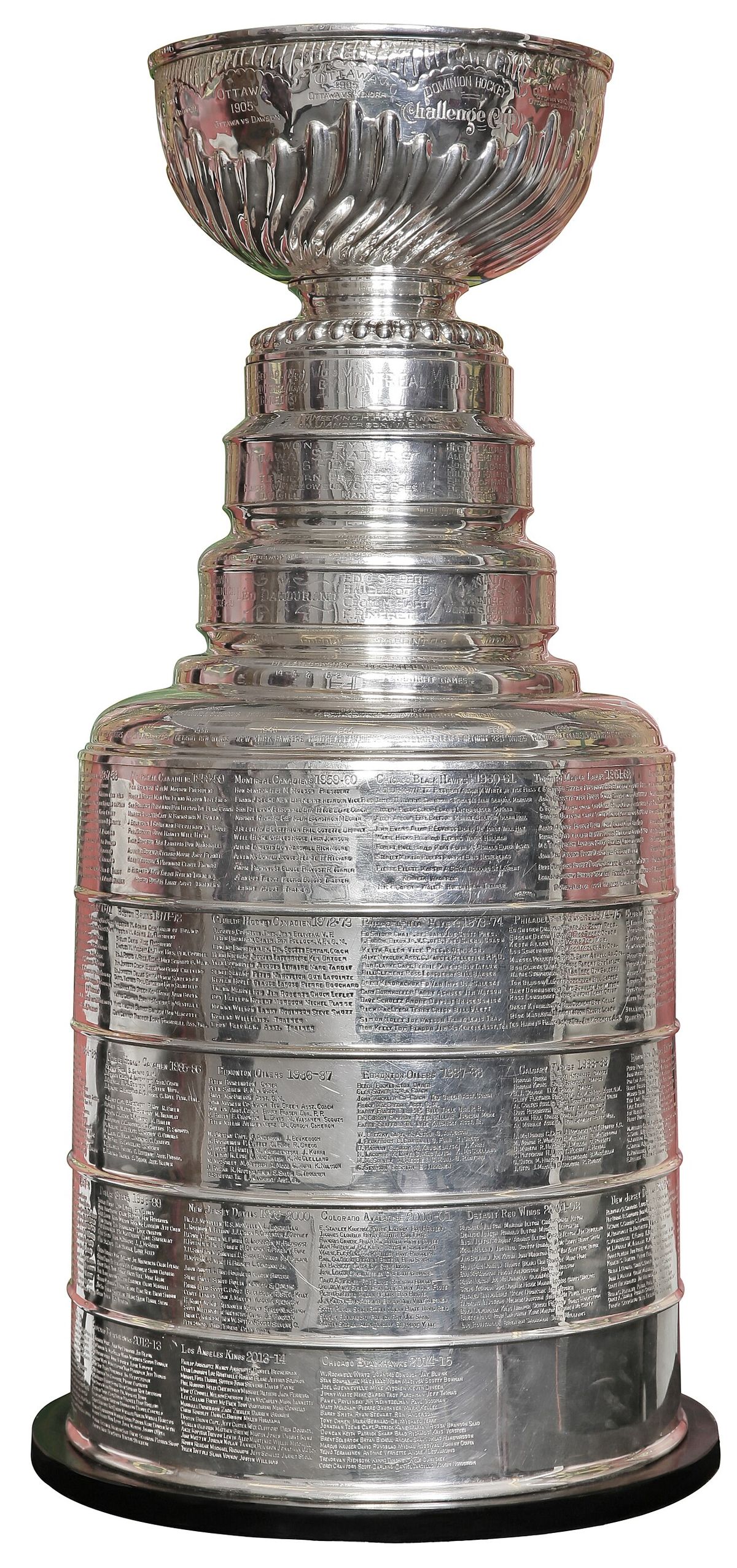
The competition for the Pacific Division title has been fiercely contested since its inception, with several franchises establishing periods of dominance. The Anaheim Ducks hold the record for the most division titles, having won seven times across different eras of the division's history. The San Jose Sharks have also been a consistent force, capturing six division championships. During the era from 1998 to 2013 when the division contained only five teams, the Sharks and Dallas Stars were particularly successful. Since the return of the Canadian teams, the battle for the top spot has intensified, with the Vegas Golden Knights, Calgary Flames, and Vancouver Canucks all claiming titles. The division has proven to be a strong producer of Stanley Cup champions, with teams from the Pacific winning the NHL's ultimate prize on multiple occasions. Success in the regular season within this division often serves as a strong indicator of a team's potential for a deep playoff run.
The Pacific Division has crowned a champion every season since its inception in 1993, except for the 2020 season. The 1994 season was shortened to 48 games due to a lockout. The 2012 season was also shortened to 48 games because of a lockout. The 2019 season was cut short due to the COVID pandemic, and standings were determined by points percentage. Various teams have won the division title over the years, reflecting changes in team strength and membership.
Notable characteristics and rivalries
The Pacific Division possesses several unique characteristics within the NHL's structure. It is the only division that has never contained an Original Six franchise, a distinction that sets it apart as a collection of modern-era teams. The division is defined by its geographic concentration along the Pacific coast, which minimizes travel distances for intra-divisional games compared to other divisions with more widespread teams. This proximity has helped cultivate some of the league's most intense and enduring rivalries. The Battle of Alberta between the Calgary Flames and Edmonton Oilers is one of hockey's most famous feuds, rooted in provincial pride and a history of playoff confrontations. The Freeway Face-Off between the Anaheim Ducks and Los Angeles Kings represents a fierce Southern California rivalry. Other significant rivalries include the matchups between the Vancouver Canucks and their divisional foes from Alberta, as well as the developing contests involving the newer franchises in Vegas and Seattle. These rivalries are a major driver of fan engagement and television viewership across Canada and the United States.
The Pacific Division features several significant rivalries, many with roots in the former Smythe Division. The Battle of Alberta between the Calgary Flames and Edmonton Oilers is a historic and intense rivalry. Games between the Vancouver Canucks and other Canadian teams draw major interest. Matchups between California based teams like the Anaheim Ducks, Los Angeles Kings, and San Jose Sharks are also prominent. These rivalries are a key part of the division's competitive identity.
- Battle of Alberta (Calgary Flames vs. Edmonton Oilers).
- Freeway Face-Off (Anaheim Ducks vs. Los Angeles Kings).
- The rivalry between the Vancouver Canucks and the Alberta teams.
- The developing Pacific Northwest rivalry between Vancouver and Seattle.
Future outlook
The Pacific Division's current eight-team alignment is expected to remain stable for the foreseeable future, as the NHL has no immediate plans for further expansion or realignment. The addition of the Seattle Kraken has solidified the division's presence in the Pacific Northwest and created a natural rivalry with the Vancouver Canucks. Analysts project the division to remain highly competitive, with a mix of established contenders and rebuilding franchises. The Vegas Golden Knights have quickly become a perennial powerhouse, while traditional Canadian clubs like the Oilers and Canucks are building around superstar talent. The performance of these teams is closely watched by Canadian fans, as the success of the Flames, Oilers, and Canucks directly impacts the playoff landscape and the nation's representation in the quest for the Stanley Cup. The division's structure ensures that these Canadian teams will face each other frequently, maintaining the regional rivalries that are central to the sport's culture in Western Canada. The division continues to be a key battleground in the NHL, with its teams regularly contending for championships.
Questions about Pacific Division
Which Canadian NHL teams are in the Pacific Division?
Three Canadian NHL teams are in the Pacific Division. They are the Calgary Flames, the Edmonton Oilers, and the Vancouver Canucks. These teams played in the division from 1993 to 1998 and returned in 2013. All three teams were temporarily placed in the North Division for the 2020 season.
Why were the Pacific Division teams split up for the 2020-21 NHL season?
For the 2020-21 season, the NHL temporarily realigned its divisions due to COVID-19 pandemic restrictions and the closure of the Canada-United States border. To minimize cross-border travel, the league created temporary divisions based on nationality. The five American-based Pacific Division teams were placed into the West Division, while the three Canadian teams were grouped into the all-Canadian North Division. This arrangement was for one season only, and the standard Pacific Division alignment returned in 2021-22.
How many teams are in the NHL Pacific Division?
The Pacific Division currently consists of eight teams. This number was established for the 2021-22 season when the Seattle Kraken joined as an expansion team. The division's membership has fluctuated over the years, ranging from five to eight teams. The current lineup includes the Anaheim Ducks, Calgary Flames, Edmonton Oilers, Los Angeles Kings, San Jose Sharks, Seattle Kraken, Vancouver Canucks, and Vegas Golden Knights.
What is the Battle of Alberta?
The Battle of Alberta is a major rivalry between two Pacific Division teams. It is between the Calgary Flames and the Edmonton Oilers. Both teams are based in the Canadian province of Alberta. This rivalry has been a part of the NHL for many decades.
Which team has won the most Pacific Division titles?
The Anaheim Ducks hold the record for the most Pacific Division titles, having won the division seven times. Their successes span different eras, including wins as the Mighty Ducks of Anaheim and after their name change in 2006. The San Jose Sharks rank second with six division titles. The division has seen various champions throughout its history since its formation in 1993.
When was the Pacific Division created?
The Pacific Division was created in 1993 as part of a major NHL realignment that restructured the Western Conference. It was formed as a successor to the Smythe Division, absorbing most of its teams. Of these, the Mighty Ducks were an expansion addition, while the other five came directly from the Smythe Division. This realignment aimed to create a more geographically logical grouping of teams.
Sources and further reading
- Pacific Division (Wikipedia)
- Several teams in contention for Pacific Division that is light ... (sports.yahoo.com)
Checked by the Garbutt Disposal desk. Last updated 2026-10-28.