Mount Royal
Mount Royal (French: Mont Royal) is a prominent mountain located in the heart of the Island of Montreal, Quebec. The city itself derives its name from this landmark, which has served as a defining geographic and cultural feature for centuries. The mountain consists of three peaks: Colline de la Croix (233 m), Colline d'Outremont (211 m), and Westmount Summit (201 m). It is the centrepiece of Mount Royal Park, a major greenspace designed by famed landscape architect Frederick Law Olmsted, and is a cherished site for recreation, cultural gatherings, and historical reflection for Montrealers and visitors alike.
Geology and Physical Geography
Mount Royal is the deep extension of a vastly eroded ancient volcanic complex, estimated to have been active approximately 125 million years ago. It was formed as the North American Plate moved westward over the New England hotspot, with magma intruding into sedimentary rock in a process known as intrusion, producing at least eight igneous stocks. The primary rock type is a gabbro composed of pyroxene, olivine, and variable amounts of plagioclase, and during the main stage of intrusion, the gabbros and surrounding rocks were intruded by a series of volcanic dikes and sills. The mountain is part of the Monteregian Hills chain, which takes its Latin name, Mons Regius, from Mount Royal, and the hill spans roughly 4 kilometres east to west and 2.5 kilometres north to south, rising distinctly from the surrounding Montreal plains. The mineral montroyalite, discovered in Montreal, is named after the mountain where its definition sample was found, and the surrounding softer sedimentary rock eroded away, leaving behind the resistant igneous rock that forms the hill we see today.
History and Development to 1900
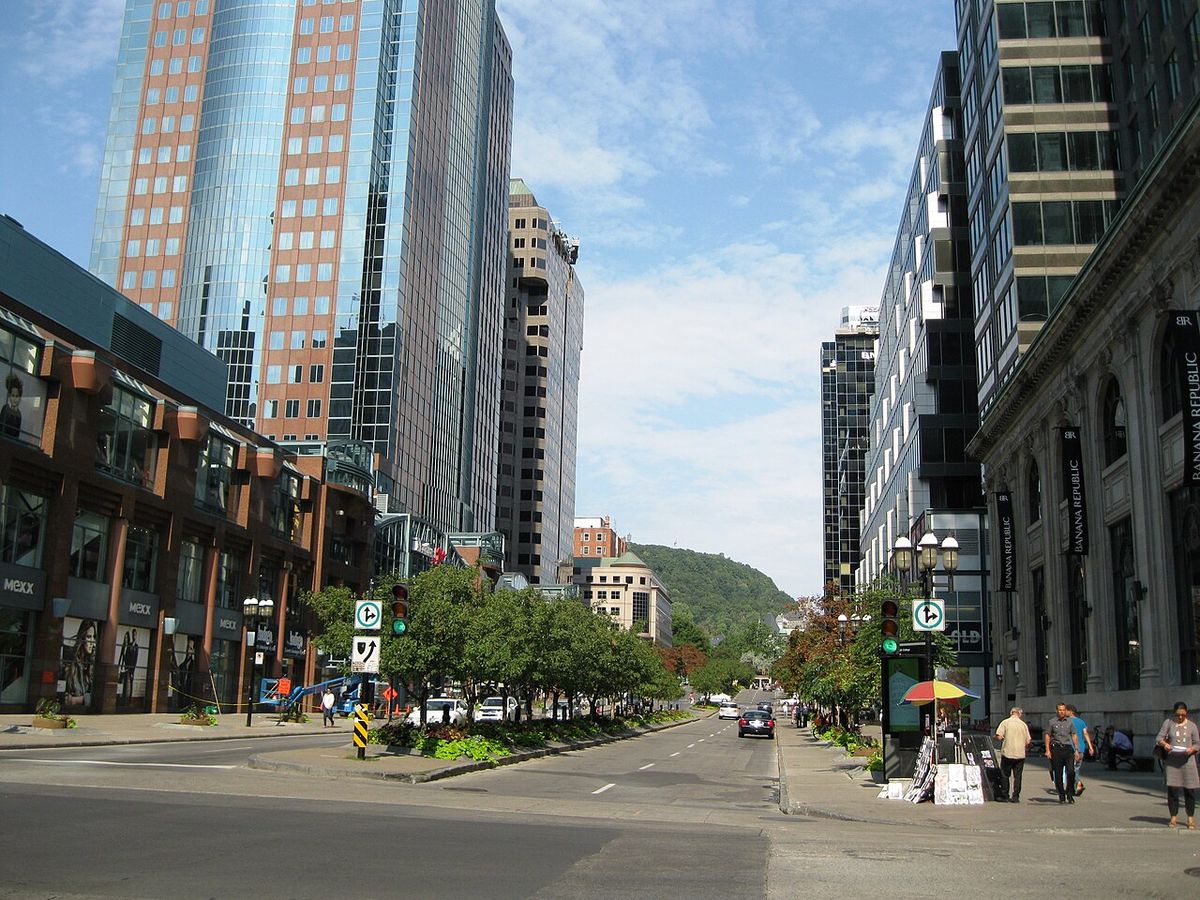
The area has been a significant gathering point for First Nations peoples, including the Mohawk, with the village of Hochelaga located on the mountain as a major trading centre and destination. A fire signal on one of Mount Royal's three peaks, Tiohtià:ke Otsira’kéhne, guided canoes to a nearby beach long before European contact. French explorer Jacques Cartier, guided by Hochelaga residents, became the first European to scale the hill in 1535, naming it in honour of his patron, King Francis I of France, and writing in his journal about the town adjoining a mountain which he named Mount Royal. The name Montreal is derived from the mountain's name, with one theory suggesting it comes from the Middle French 'Mont Réal' and another citing a 1556 Venetian map using the Italian 'Monte Real.' In 1643, city founder Paul de Chomedey, Sieur de Maisonneuve, placed a cross on the summit after praying to the Virgin Mary for a disastrous flood to recede, fulfilling a vow made during that emergency.
Public desire for a park on the mountain existed by at least 1857, with the city committing to land purchases in 1868, and Mount Royal Park was inaugurated on May 24, 1876. The park was originally designed by Frederick Law Olmsted, who planned to use vegetation to emphasize the mountainous topography, with dense shade trees at the base giving way to sparser growth higher up to create an illusion of greater height. However, Montreal suffered a depression in the mid-1870s and many of Olmsted's plans were abandoned, including his specific vegetation choices, and the main carriage way was built hastily without regard to the original design. From 1885 to 1920, the Mount Royal Funicular Railway transported sightseers to the peak, and after it ceased service, Montreal's No. 11 streetcar brought visitors until 1959, providing crucial access for public enjoyment of the park.
Twentieth-Century Changes and Events
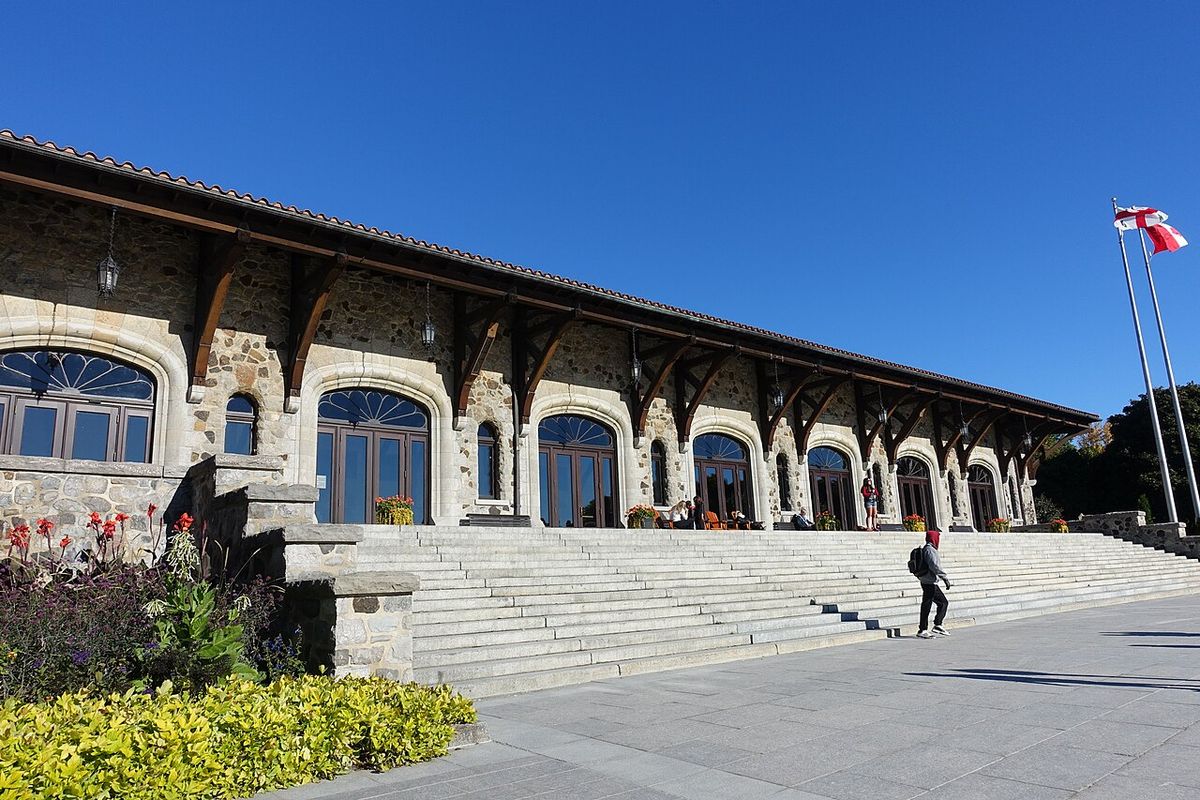
The Mount Royal Tunnel was dug under the hill by the Canadian Northern Railway between 1914 and 1918 and is now used by the Réseau express métropolitain commuter rail line. In 1924, the modern 31.4-metre Mount Royal Cross was installed by the Société Saint-Jean-Baptiste, replacing earlier markers, and the Kondiaronk Belvedere chalet had been built in 1906, named for the Petun chief whose influence led to the Great Peace of Montreal in 1701. By the 1950s, a wooded area in the park's northeast became known as the Jungle, used by marginalized groups and as a meeting spot for gay men facing homophobia elsewhere in the city, and a 1954 sociological study of gay Montrealers publicized use of the area, leading to increased surveillance and public opposition. Public opposition to a wooded area called the Jungle increased due to a wave of morality campaigns in 1954 following a series of crimes against children in the city. The local English-language press condemned the Jungle as a space for sexual activity, alcohol, and crime near a children's playground. Politicians decided to cut down the forest there and redesign the area, initiating the Morality Cuts of the 1950s. The lost forest earned Mount Royal the nicknames Bald Mountain and Mount Baldy, and it also caused soil erosion and the introduction of more non-native species. The area was briefly considered as a candidate for the site of Expo 67 before the exposition grounds were ultimately built on adjoining islands in the Saint Lawrence River. The hilly roads of the park have been used for cycle racing since the 1970s, hosting the 1974 UCI Road Cycling World Championships and the individual road race cycling event at the 1976 Summer Olympics. After the Ice Storm of 1998, 5,000 damaged trees were cut from Mount Royal. In 2018, the park planned to cut 4,000 ash trees due to emerald ash borer infestation.
- Mount Royal Tunnel construction (1914 to 1918)
- Installation of the illuminated cross (1924)
- Morality Cuts deforestation (1950s)
- Hosted 1974 UCI Road World Championships
- Hosted 1976 Olympic road race cycling event
- Ice Storm damage and removal of 5,000 trees (1998)
- Annual Grand Prix Cycliste de Montréal begins (2010)
- Planned removal of 4,000 ash trees due to infestation (2018)
Mount Royal Park and Key Features
Mount Royal Park is one of Montreal's largest greenspaces, offering a wide array of recreational and cultural attractions across its varied landscape. Key features within the park include the Kondiaronk Belvedere, a semicircular plaza with a Mount Royal Chalet built in 1906 that overlooks Downtown Montreal, and Beaver Lake, a small artificial lake used for skating in winter when visitors bring their own equipment. The park also contains a snow tube and toboggan run on a former alpine ski slope that once had a T-bar and a 100-foot drop, 7 groomed cross-country ski and snowshoe trails totalling 18 km with onsite rentals, a sculpture garden, and the Smith House interpretive centre. At the base of the hill along Park Avenue stand the George-Étienne Cartier Monument, the focal point for the Tam-Tams drumming gatherings, and a gazebo bandstand named for author Mordecai Richler, while facing the park is Jeanne-Mance Park with its playground, wading pool, tennis courts, and sports fields.
The lush forest, damaged by the 1950s Morality Cuts and the 1998 Ice Storm, has largely recovered and is renowned for its autumn foliage and extensive trail network where biking is restricted to main gravel roads. In June 2017, during the city's 375th anniversary, the greenspace surrounding the Outremont peak was formally named Parc Tiohtià:ke Otsira'kéhne, a 35-hectare area whose Mohawk name means 'the place of the big fire,' reflecting its historical use as a signal fire site. The park, along with adjacent cemeteries and institutions, was combined into the Mount Royal Natural and Historical District by the Quebec government to legally protect the area's rich cultural and natural heritage, and a plaque near the cross marks a 1992 time capsule containing messages and drawings from 12,000 children to be opened in 2142. Winter traditions are deep-rooted, with the now-defunct Montreal Snow Shoe Club, founded in 1840 and whose members wore blue tuques from around 1870, holding weekly torchlit outings, a tradition revived as the Tuques Bleues celebration by the preservation group Les amis de la montagne.
Cultural and Recreational Activities
Mount Royal is a dynamic hub for community activities year-round, with the most famous summer event being the Tam-Tams, a weekly drumming gathering that began in the late 1970s following a workshop on African drumming at a jazz bar on Ontario Street. Each Sunday afternoon, dozens of participants play hand drums like djembes on the east slope near the Cartier monument, attracting a diverse crowd for music, dance, and informal socializing, and nearby, many engage in battles with foam-padded weapons. The event is not officially organized by the city, though municipal authorities now manage commercial activity by restricting it to registered members in designated areas and assigning police and first aid technicians to ensure safety, an arrangement that was initially controversial but has not led to major conflict. The mountain's topography has made it a consistent venue for elite cycling events, hosting the 1974 UCI Road World Championships, the individual road race for the 1976 Summer Olympics, the Coupe du Monde Cycliste Féminine de Montréal from 1998 to 2009, and the annual Grand Prix Cycliste de Montréal since 2010.
In the 1920s, one of the best ski jumps in Canada was the one on Mount Royal, near Côte-des-Neiges. Mechanical lift devices were first installed in Mount Royal Park in 1945, and in the 1940s, there were two and a half miles of ski slopes available. A ski shop was first installed in the park in 1938. Mount Royal Park currently hosts a snow tube and toboggan run on one of the former alpine ski slopes, as well as groomed cross-country ski and snowshoe trails. Across Park Avenue is Jeanne-Mance Park, a popular recreational area which features a playground, a wading pool, tennis courts, various sports fields, and in winter, a skating rink. Founded in 1840, the now-defunct Montreal Snow Shoe Club, with members drawn from some of Montreal's prominent businessmen, would meet each week during the winter at nightfall on Sherbrooke Street near McGill College Avenue to snowshoe through Mount Royal Park, lit by torchlight. Recently, the tradition has been revived as the Tuques Bleues celebration by Les amis de la montagne, a charitable organization that works to protect and preserve the park.

Landmarks, Infrastructure, and Environmental Management
The slopes of Mount Royal are dotted with significant institutional and residential landmarks that define Montreal's cityscape. These include Saint Joseph's Oratory, Canada's largest church. McGill University and its Molson Stadium, home to the CFL's Montreal Alouettes. The Montreal General Hospital. The McTavish reservoir. Université de Montréal. And the École Polytechnique de Montréal. Affluent residential neighbourhoods such as Upper Westmount and Upper Outremont are also located on the hillsides, along with the Îlot-Trafalgar-Gleneagles historic block, and in 2024, Elie-Wiesel Park was inaugurated in the Snowdon district, featuring a playground, walking trails, and unique water features. The mountain is crowned by the illuminated Mount Royal Cross, a 31.4-metre structure owned by the city since its 1924 installation, converted to fibre-optic light in 1992 and to LEDs in 2009, with its colour now programmable to any hue, including the purple used upon the death of a pope.
The park is home to the CBC's Mount Royal transmitter facility, which comprises two large buildings, one used primarily by the CBC for its two Montreal stations, CBMT-DT and CBFT-DT. There is also a short, about 100-metre-tall candelabra tower, from which nearly all of Montreal's television and FM radio stations broadcast. The shortness was dictated by the maximum allowable height of 1100 feet above sea level set by the federal Department of Transport because of the proximity to the flight path to Trudeau Airport nearby. This led to the candelabra design to combine all the desired antennas in the limited space. In recent years, significant concerns have been raised about radio-frequency radiation exposure, as at several points near the tower, radiation was found to be significantly higher than that permitted for the general public. Two roads cross the territory of Mount Royal, which are the Camillien Houde Way, named Remembrance Road on part of its route, and Côte-des-Neiges Road. A roadway named for longtime but controversial former mayor Camillien Houde now bisects the hill, although Houde had been opposed to the idea of putting a road through the park.
The ecological health of Mount Royal has faced several significant challenges over the decades, requiring active management and preservation efforts. The Morality Cuts of the 1950s, which cleared the Jungle forest, caused severe soil erosion and allowed non-native plant species to proliferate, while a major reforestation effort was required after the Ice Storm of 1998, which damaged thousands of trees, with 5,000 being removed. More recently, the park planned to cut 4,000 ash trees in 2018 due to infestation by the invasive emerald ash borer, and the forest is home to a variety of fauna including gray squirrels, raccoons, foxes, marmots, striped skunks, and numerous bird and bee species. The park's flora comprises a rich mix of native trees, shrubs, and herbaceous plants, though maintaining this biodiversity requires ongoing work by groups like Les amis de la montagne, a charitable organization that works to protect and preserve the park for future generations.
Broadcasting and Signal History
The broadcast tower on Mount Royal represents a critical piece of Montreal's communications infrastructure, with a complex history shaped by engineering constraints and public space use. The facility comprises two large buildings, one used primarily by the CBC for its two Montreal television stations and another used by private television stations, alongside the distinctive candelabra tower. The engineering challenge was to combine all the desired antennas in the limited space between the top of the hill and the 1100-foot maximum altitude dictated by aviation authorities, which directly led to the tower's sprawling, multi-pronged design. Because of the tower's proximity to public areas of the park, significant concerns have been raised about radio-frequency radiation exposure, with measurements at several points formerly accessible to park users showing levels significantly higher than those permitted for the general public.
| Year | Development or Event |
|---|---|
| 1924 | Mount Royal Cross installed and illuminated |
| 1945 | First mechanical ski lifts installed in park |
| 1950s | Morality Cuts deforestation occurs |
| 1974 | Hosts UCI Road World Championships |
| 1976 | Hosts Olympic road race cycling event |
| 1992 | Cross converted to fibre-optic light. Time capsule placed |
| 1998 | Ice Storm damages forest. 5,000 trees cut |
| 2009 | Cross lighting converted to LED technology |
| 2010 | Grand Prix Cycliste de Montréal begins annual races |
| 2017 | Parc Tiohtià:ke Otsira'kéhne formally named |
| 2018 | Plan to cut 4,000 ash trees due to infestation |
Questions about Mount Royal
How did Mount Royal get its name?
Mount Royal was named by French explorer Jacques Cartier in 1535. He scaled the hill guided by residents of the First Nations village of Hochelaga and named it in honour of his patron, King Francis I of France. The name Montreal is derived from the mountain's name, with the island and later the city adopting the title. Cartier's journal entry from 1535 explicitly refers to 'le mont Royal,' and a Venetian map from 1556 used the Italian 'Monte Real,' which also influenced the naming.
What is there to do in Mount Royal Park?
Mount Royal Park offers diverse activities across all seasons. Visitors can hike or bike on its extensive trail network, enjoy panoramic views from the Kondiaronk Belvedere, or relax by Beaver Lake. In winter, the park features 18 kilometres of groomed cross-country ski and snowshoe trails, a snow tube and toboggan run on a former ski slope, and skating on Beaver Lake if you bring your own skates. The park is also famous for the weekly Tam-Tams drumming gatherings on Sunday afternoons near the George-Étienne Cartier Monument.
What is the Mount Royal Cross?
The Mount Royal Cross is a 31.4-metre-high illuminated structure on the summit, installed in 1924 by the Société Saint-Jean-Baptiste and now owned by the city. It commemorates a wooden cross placed there in 1643 by city founder Paul de Chomedey de Maisonneuve after he prayed for a flood to stop. The cross was converted to fibre-optic lighting in 1992 during Montreal's 350th anniversary and to LED technology in 2009. While typically lit in white, its colour can now be changed to any hue, including purple to mark the death of a pope.
Has Mount Royal hosted any major sporting events?
Yes, Mount Royal has been a significant venue for international cycling competitions for decades. It hosted the 1974 UCI Road World Championships and the individual road race event for the 1976 Summer Olympics in Montreal. Subsequently, it was the site of the annual Coupe du Monde Cycliste Féminine de Montréal from 1998 to 2009 and has hosted the Grand Prix Cycliste de Montréal, a UCI World Tour event, every year since 2010. The park also had a major ski jump in the 1920s and alpine skiing from the 1940s.
What were the 'Morality Cuts' on Mount Royal?
The 'Morality Cuts' refer to the deforestation of a wooded area in the park's northeastern section, known as the Jungle, in the 1950s. The Jungle was a known meeting spot for gay men at a time of widespread homophobia. Following a 1954 sociological study that publicized the area's use and a wave of morality campaigns linked to crimes against children, public opposition grew and politicians ordered the forest cut down. This led to soil erosion, loss of native species, and earned the mountain the temporary nicknames 'Bald Mountain' and 'Mount Baldy.'
What is the broadcast tower on Mount Royal used for?
The broadcast tower on Mount Royal is a candelabra-style transmission facility used by nearly all of Montreal's television and FM radio stations. It includes infrastructure for CBC stations CBMT-DT and CBFT-DT, as well as private broadcasters, housed in two large buildings on site. The tower's height was restricted to 1100 feet above sea level by transport authorities due to its proximity to the flight path for Montréal-Trudeau International Airport, necessitating its compact, multi-antenna design. Radiation levels near the tower have raised public health concerns in recent years.
Sources and further reading
- Mount Royal (Wikipedia)
- Town of Mount Royal Sports and Community Centre (memento.heritagemontreal.org)
- Quartier Sportif & Communautaire | Town of Mount Royal (ville.mont-royal.qc.ca)
Checked by the Garbutt Disposal desk. Last updated 2026-10-18.