Pacific Crest Trail
The Pacific Crest Trail (PCT) is a 2,653-mile (4,270 km) long-distance hiking and equestrian trail in the western United States, officially designated as the Pacific Crest National Scenic Trail. It stretches from the Mexico-United States border in California to the Canada-US border in Washington, with an unofficial continuation into Manning Park, British Columbia. The trail traverses the scenic high crests of the Sierra Nevada and Cascade mountain ranges, passing through 25 national forests and 7 national parks. For Canadian outdoor enthusiasts, the PCT represents a major international hiking destination and the northern terminus in British Columbia serves as a significant endpoint for thousands of thru-hikers annually, connecting the wilderness of the Pacific Northwest across the international border.
Route and Geography
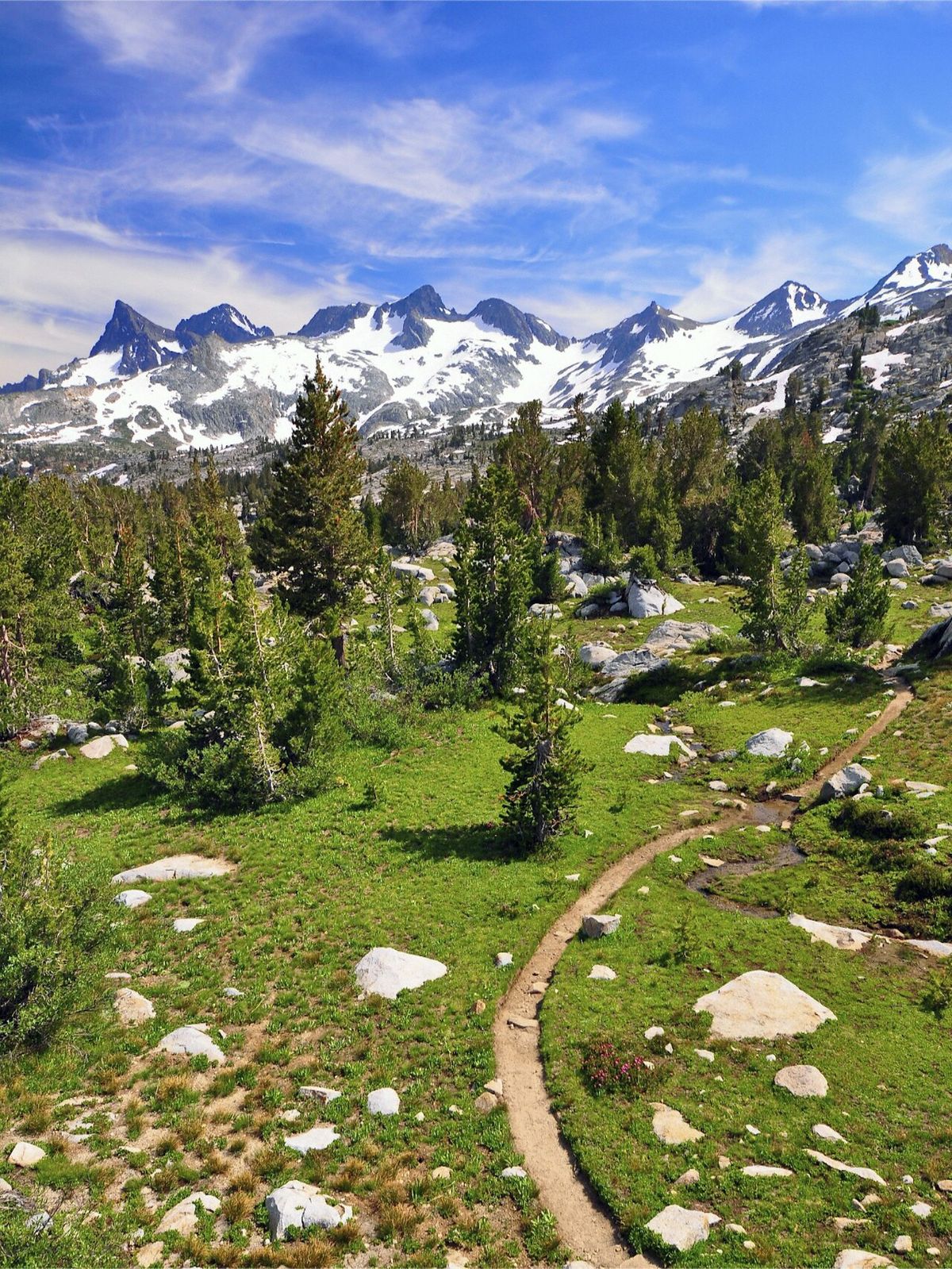
The Pacific Crest Trail closely follows the highest portions of the Cascade and Sierra Nevada mountain ranges, which lie 100 to 150 miles east of the U.S. Pacific coast. Its southern terminus is just south of Campo, California, at the Mexico-United States border, while its northern endpoint is on the Canada-US border, from which it continues unofficially along the Windy Joe Trail into Manning Park in British Columbia. The trail's midpoint is near Chester, California, where the Sierra and Cascade ranges meet. The route is predominantly through national forest land and protected wilderness, deliberately avoiding civilization to cover pristine mountainous terrain with few road crossings. In California, the PCT passes through numerous ranges including the Laguna, Santa Rosa, San Jacinto, San Bernardino, San Gabriel, Liebre, Tehachapi, Sierra Nevada, and Klamath ranges before entering the Cascade Range, which it follows through Oregon and Washington.
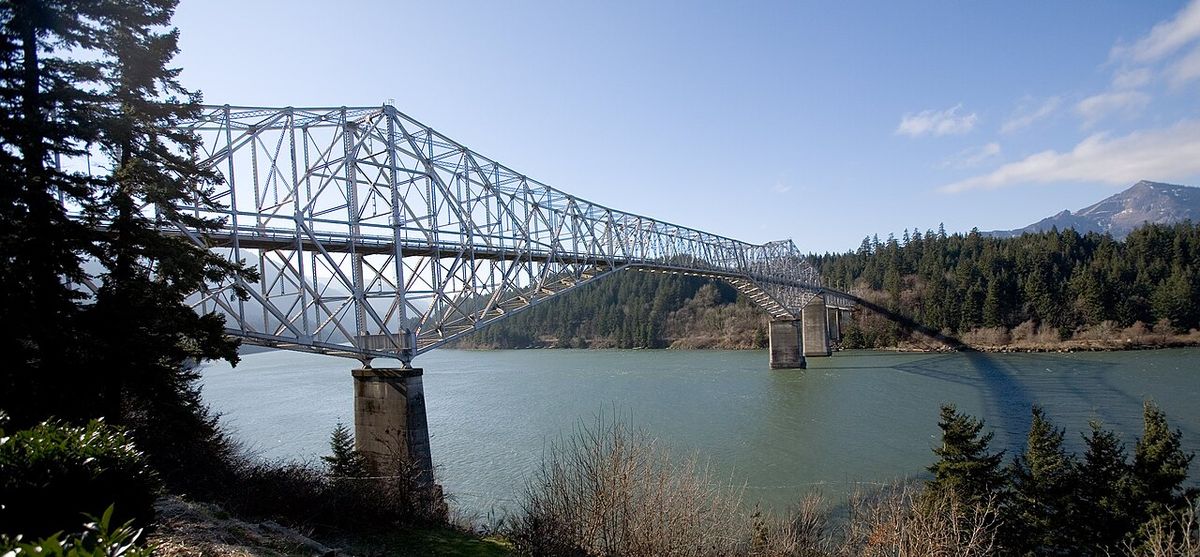
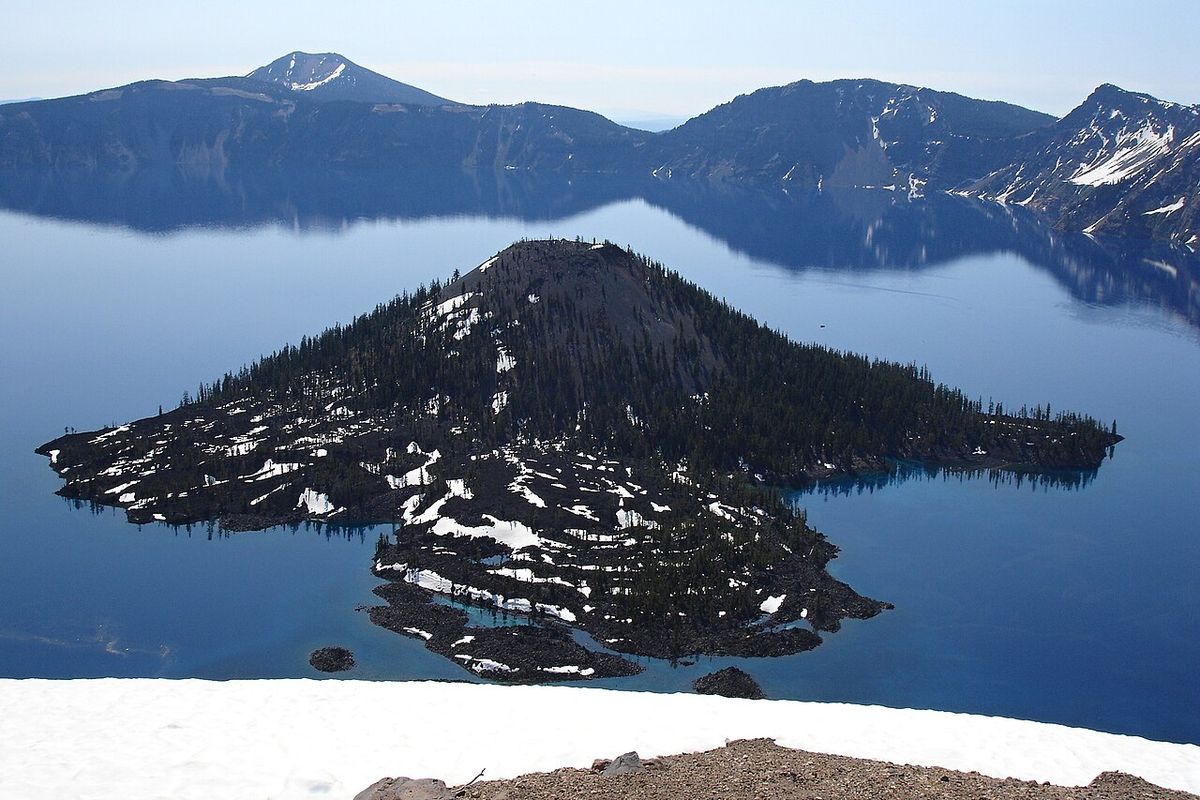
The trail's elevation varies dramatically, from roughly 110 feet above sea level near the Bridge of the Gods on the Oregon-Washington border to 13,153 feet at Forester Pass in the Sierra Nevada. The total cumulative elevation gain for a thru-hiker is approximately 489,000 feet. The PCT passes through seven national parks: Kings Canyon, Sequoia, Yosemite, Lassen Volcanic, Crater Lake, Mount Rainier, and North Cascades. This route, combined with the Appalachian Trail and the Continental Divide Trail, forms the Triple Crown of Hiking in the United States, and the PCT is also a segment of the 6,875-mile Great Western Loop. The trail's design emphasizes a remote experience, with the route carefully plotted to remain on scenic ridgelines and away from major population centres.
History and Development
The concept for a border-to-border trail along the Pacific crest was first proposed in 1926 by Catherine T. Montgomery, an outdoorswoman from Bellingham, Washington, who suggested the idea to the Mountaineers club. Her contributions, uncovered in recent years, have earned her the moniker "Mother of the Pacific Crest Trail." The idea was advanced by mountaineer Joseph Hazard and gained early support from the U.S. Forest Service, which had already begun trail planning in the region. Fred W. Cleator of the Forest Service had led the design of Oregon's Skyline Trail starting in 1920 and planned an extension through Washington. In 1932, Clinton Churchill Clarke, chairman of the Mountain League of Los Angeles, organized the Pacific Crest Trail System Conference, uniting outdoor groups to advocate for the trail, which is why he is known as the "Father of the Pacific Crest Trail." The conference's first executive committee included photographer Ansel Adams and represented groups like the Boy Scouts, YMCA, and Sierra Club.
Clarke's vision was to link existing trails like the John Muir Trail, the Tahoe-Yosemite Trail, the Skyline Trail in Oregon, and the Cascade Crest Trail in Washington. From 1935 to 1938, YMCA groups led by Warren Rogers explored and documented a 2,000-mile potential route, which closely mirrors the modern PCT. Forty groups of teenagers logged journeys between Mexico and Canada during this planning phase. Clarke remained president of the conference for 25 years, with Rogers eventually becoming its executive secretary. The trail received official status under the National Trails System Act signed by President Lyndon B. Johnson in 1968. Construction was a cooperative effort between the federal government and volunteers organized by the Pacific Crest Trail Association, with the trail officially declared finished in 1993. Land conservation efforts continue, such as the Trust for Public Land's purchase of over 3,000 acres along the PCT in Washington to improve recreational access and land management.
Thru-Hiking the Trail
Thru-hiking the Pacific Crest Trail refers to completing the entire trail in a single continuous trip, a commitment that typically takes between four and six months and requires extensive planning. The Pacific Crest Trail Association estimates most hikers spend six to eight months preparing for their journey, and the average completion rate is around 14 percent. The traditional and most popular direction is northbound, starting at the Mexico border in the spring to avoid deep snow in the Sierra Nevada and finish in British Columbia before autumn storms. Some hikers opt for a southbound route or a "flip-flop," where they start at one end, skip a section due to weather, and hike the remainder in the opposite direction, though it is not currently possible to legally cross the international border on the trail itself. Since January 31, 2025, the Canada PCT entry permit has been discontinued by the Canadian Border Services Agency, meaning hikers can no longer legally cross the border on the trail to complete the official northern section in Manning Park.
Key logistical challenges for thru-hikers include determining resupply points in towns or post offices and creating a daily mileage schedule to complete the trail before seasonal weather makes sections impassable. Most hikers aim to cover about 20 miles per day. Hikers resupply by shipping packages to U.S. Post Offices, buying from stores along the trail, or using a combination of both methods. To increase their chances of success, many focus on reducing pack weight, leading to classifications like Traditional, Lightweight, and Ultralight hiking. Hikers must also secure necessary permits. The primary one is the PCT Long-distance Permit, which covers multiple jurisdictions for those hiking more than 500 contiguous miles. Up to 8,000 such permits are issued annually, with northbound permits from south of Sonora Pass limited to 50 per day in March, April, and May. A California Fire Permit is also required for using a stove or lantern along much of the trail, as campfires are restricted in many areas due to high fire risk.
Notable Hikers and Records
The history of the Pacific Crest Trail is marked by numerous notable hikers and record-setting achievements. Before the trail was official, Martin Papendick completed a hike along the Pacific crest from British Columbia to Mexico in 1952, reporting his feat in a periodical titled "Pacific Crest Trails." Eric Ryback, an 18-year-old student, is credited by the Pacific Crest Trail Association as the official first thru-hiker, completing the journey on October 16, 1970, and receiving a congratulatory telegram from the Chief of the U.S. Forest Service. Ryback carried an 80-pound pack and had only five resupply packages on his trip. His claim was later disputed by guidebook publisher Wilderness Press, which alleged he used motor transport, leading to a withdrawn lawsuit. The first woman to complete the PCT was Mary Carstens, who finished later in 1972 accompanied by Jeff Smukler. Teddi Boston was one of the first women to hike the trail alone, completing her journey in 1976 at age 49.
Record-setting hikes have pushed physical limits on the trail. The supported fastest known time, where a hiker is aided by a crew, has been fiercely contested. In 2014, Joseph McConaughy set a record of 53 days, 6 hours, 37 minutes with a team of three supporters. Karel Sabbe of Belgium broke it in 2016 with 52 days, 8 hours, 25 minutes, averaging over 50 miles per day with support from his friend Joren Biebuyck. Timothy Olson reclaimed it in 2021 with a time of 51 days, 16 hours, 55 minutes, crewed by family and friends. Sabbe took the record back in 2023, finishing in 46 days, 12 hours, 56 minutes, more than five days faster than Olson's time. In the self-supported category, where hikers carry their own gear without a dedicated crew, records have also progressed rapidly.
- In 2013, Heather "Anish" Anderson set a record of 60 days, 17 hours, 12 minutes, which she documented in her book Thirst.
- Josh Perry improved it to 55 days, 16 hours, 54 minutes on August 7, 2022.
- Nick Fowler set a new record of 52 days, 9 hours, 18 minutes in 2023, despite sheltering for 41 hours during Hurricane Hilary.
- In 2026, Fowler bested his own record, completing the trail in 45 days, 17 hours, 47 minutes, averaging 57 miles per day and using 15 pairs of shoes.
Other notable achievements include Scott Williamson's first continuous round-trip "yo-yo" in November 2004, covering 5,300 miles in 197 days with an 8.5-pound base pack weight, and his second round-trip in 2006. Olive McGloin became the first woman to complete a round-trip in 2014. Young hikers have also made their mark: Christian Thomas "Buddy Backpacker" Geiger is the youngest at age 6, Sierra Burror is the youngest girl at age 9 in 2012, and Reed Gjonnes thru-hiked at age 11 in 2011 before completing the Triple Crown. The trail has also been featured in popular culture through Cheryl Strayed's 2012 memoir Wild, which details her 1995 hike and was adapted into a film in 2014. The first reported deaths on the PCT occurred in November 1995 when thru-hikers Jane and Flicka Rodman were killed by a motorist during a road detour in Southern California.
Equestrian Use and Other Activities
While primarily known for hiking, the Pacific Crest Trail is also open to equestrian travel. The first verifiable equestrian Thru-Ride was completed by Don and June Mulford in 1959, who traversed the then poorly-marked 2,400-mile route from Mexico to Canada with four horses. Their journey began on April 19, 1959, east of Tijuana, and concluded at the Washington-Canada border. The Mulfords garnered significant media attention, appearing on network television shows like Art Linkletter's 'House Party' and a syndicated program called High Road to Danger. They also produced a 90-minute movie of their ride, which they showed across 12 western states for a decade. The Murray family, consisting of Barry, Bernice, Barry Jr., and Bernadette, completed the trek on horseback on October 7, 1970. Beyond hiking and horseback riding, a bicycle touring route has been developed to parallel the PCT on a network of paved and unpaved roads, offering an alternative way to experience the corridor.
Trail Management, Permits and Future Projects
The Pacific Crest Trail is managed through a partnership between federal agencies, primarily the U.S. Forest Service, and the non-profit Pacific Crest Trail Association, which coordinates thousands of volunteers for maintenance and construction. The primary permit for thru-hikers is the PCT Long-distance Permit, which consolidates permissions for the numerous land management areas along the route. This permit is required for anyone hiking more than 500 contiguous miles, with up to 8,000 issued each year. A separate California Fire Permit is mandatory for using a camping stove or lantern, as open campfires are prohibited in many sections due to wildfire risk. For section hikers covering less than 500 miles, various local permits are required. Notably, the Canada PCT entry permit, which allowed hikers to end their hike about 8 miles into Canada, was discontinued by the Canadian Border Services Agency as of January 31, 2025.
Ongoing projects aim to improve the trail experience and address safety concerns. One long-term project is the realignment of 37 miles of trail in Southern California from the Mojave Desert floor to the Tehachapi Mountains through Tejon Ranch, though an Optimal Location Review process is still determining the final path. In the Pacific Northwest, plans are in progress to add a dedicated pedestrian and equestrian lane to the Bridge of the Gods across the Columbia River between Oregon and Washington, eliminating the current danger of hikers walking in vehicle traffic lanes. The completion date for this bridge project is not yet known. Portland's 40-Mile Loop proposal includes connecting the Springwater Corridor spur trail to the PCT via the proposed Cazadero Trail, further integrating the trail with regional recreational networks.
Questions about Pacific Crest Trail
Where does the Pacific Crest Trail start and end?
The Pacific Crest Trail's southern terminus is next to the Mexico-United States border, just south of Campo, California. Its northern terminus is on the Canada-US border. The trail continues unofficially from the border to the Windy Joe Trail within Manning Park in British Columbia. It passes through the states of California, Oregon, and Washington.
What permits do I need to hike the Pacific Crest Trail?
Thru-hikers need a PCT Long-distance Permit, which covers the multiple land jurisdictions along the trail for those hiking more than 500 contiguous miles. Up to 8,000 are issued each year, with quotas for popular northbound starts. A California Fire Permit is also required for using a stove or lantern. Local permits are needed for section hikers covering less than 500 miles. The permit for entering Canada via the trail was discontinued in January 2025.
Who was the first person to thru-hike the Pacific Crest Trail?
Eric Ryback, an 18-year-old student, completed the first PCT thru-hike on October 16, 1970. He is credited and has been honored by the Pacific Crest Trail Association as the official first thru-hiker of the entire trail. Ryback's claim is disputed, with allegations he used motor transport in places. Martin Papendick hiked a similar route in 1952 before the trail was official.
Can you hike the Pacific Crest Trail on horseback?
Yes, the Pacific Crest Trail is open to equestrian use. The first verifiable equestrian Thru-Ride was completed by Don and June Mulford in 1959, who travelled from Mexico to Canada with four horses. The Murray family also completed the trek on horseback in 1970. Equestrians must follow the same permitting requirements and trail regulations as hikers.
How long does it take to hike the entire Pacific Crest Trail?
Thru hiking the entire Pacific Crest Trail typically takes between four and six months. This long commitment requires thorough preparation and dedication, with most hikers covering about 20 miles per day. The Pacific Crest Trail Association estimates that it takes most hikers an additional six to eight months to plan, train, and get ready for their trips. The average completion rate for this challenging endeavour is estimated to be around 14 percent. Hikers must create an approximate schedule to ensure they complete enough miles each day to reach the opposite end before weather conditions make sections impassable.
What is the fastest known time for hiking the Pacific Crest Trail?
The fastest known times for the Pacific Crest Trail are categorized as supported and self supported. In the supported category, where hikers receive crew assistance, Karel Sabbe set the record on August 26, 2023, with a time of 46 days, 12 hours and 56 minutes. In the self supported category, where hikers carry all their own supplies, Nick Fowler set the record in 2026 by completing the trail in 45 days, 17 hours and 47 minutes, covering an average of 57 miles per day. Previous notable records include Timothy Olson's 2021 supported time of 51 days and Heather Anderson's 2013 self supported time of 60 days.
Sources: Wikipedia and current public reporting, checked by the Garbutt Disposal desk. Last updated 2026-10-18.