Lamport Stadium
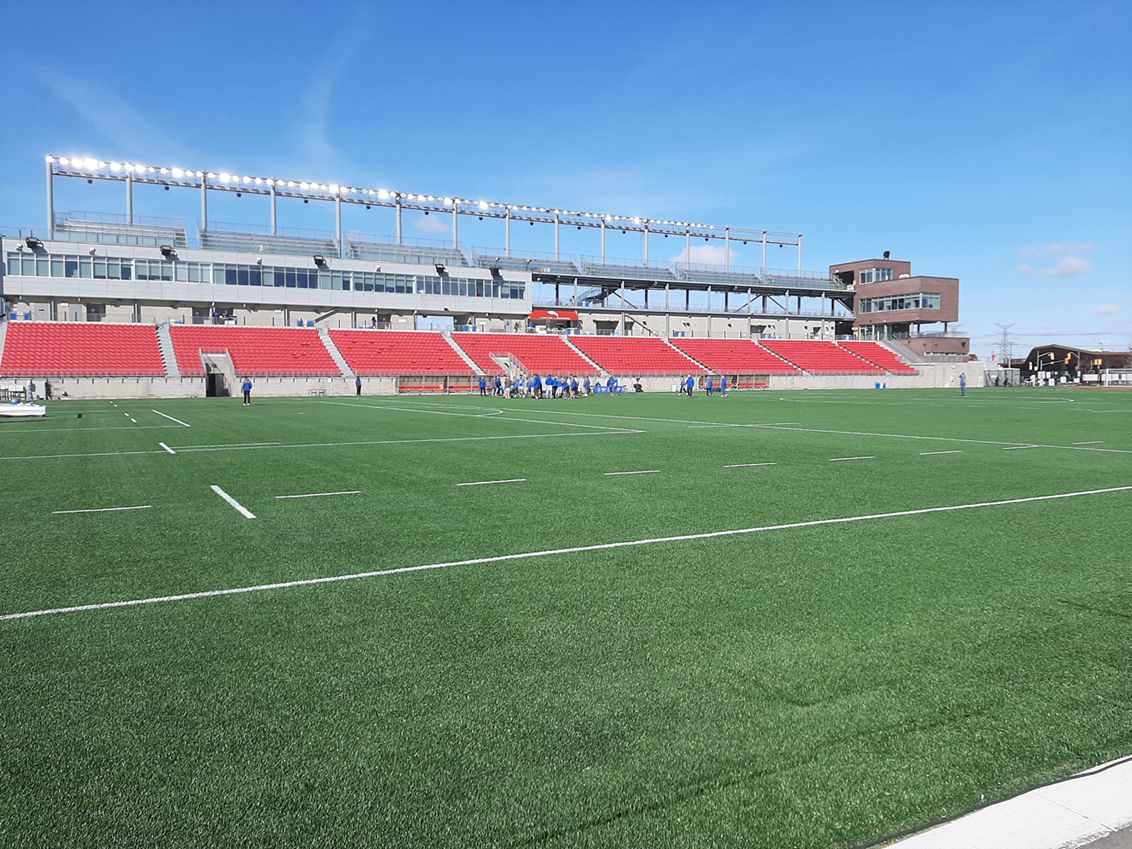
Allan A. Lamport Stadium is a multi-purpose sports facility located on King Street West in Toronto's Liberty Village neighbourhood. Opened in 1976, the stadium is a significant community hub, serving as the official practice facility for the Canadian Football League's Toronto Argonauts and a part-time home for the Canada national rugby league team. With a seating capacity of 9,600, its artificial turf field is dually marked for soccer and field hockey, accommodating a wide range of amateur and professional sports. Named for long-time Toronto politician and sports advocate Allan Lamport, the stadium has been a fixture in the city's athletic landscape for nearly five decades.
History and construction
Lamport Stadium was constructed on the site of the former Andrew Mercer Reformatory for Women, with work beginning in the winter of 1974. The build was completed on July 1, 1975, though its official public opening was delayed until September 19, 1976, missing an initial target date of April that same year. The facility was named in honour of Allan Lamport, a prominent Toronto politician known for his association with the city's sporting activities. In a significant upgrade during the winter of 2009 to 2010, Maple Leaf Sports & Entertainment invested CA$1.2 million to install a winter bubble dome over the field. This project was part of a deal with the city related to the conversion of BMO Field to natural grass, and MLSE took over management of the stadium operations during the winter season when the dome is in use for community soccer programs. In 2024, Toronto City Council sought proposals for a new long-term operator to manage the stadium, but none of the submitted bids were accepted, leaving its operational future under the purview of the city's parks department for the time being.
Facilities and features
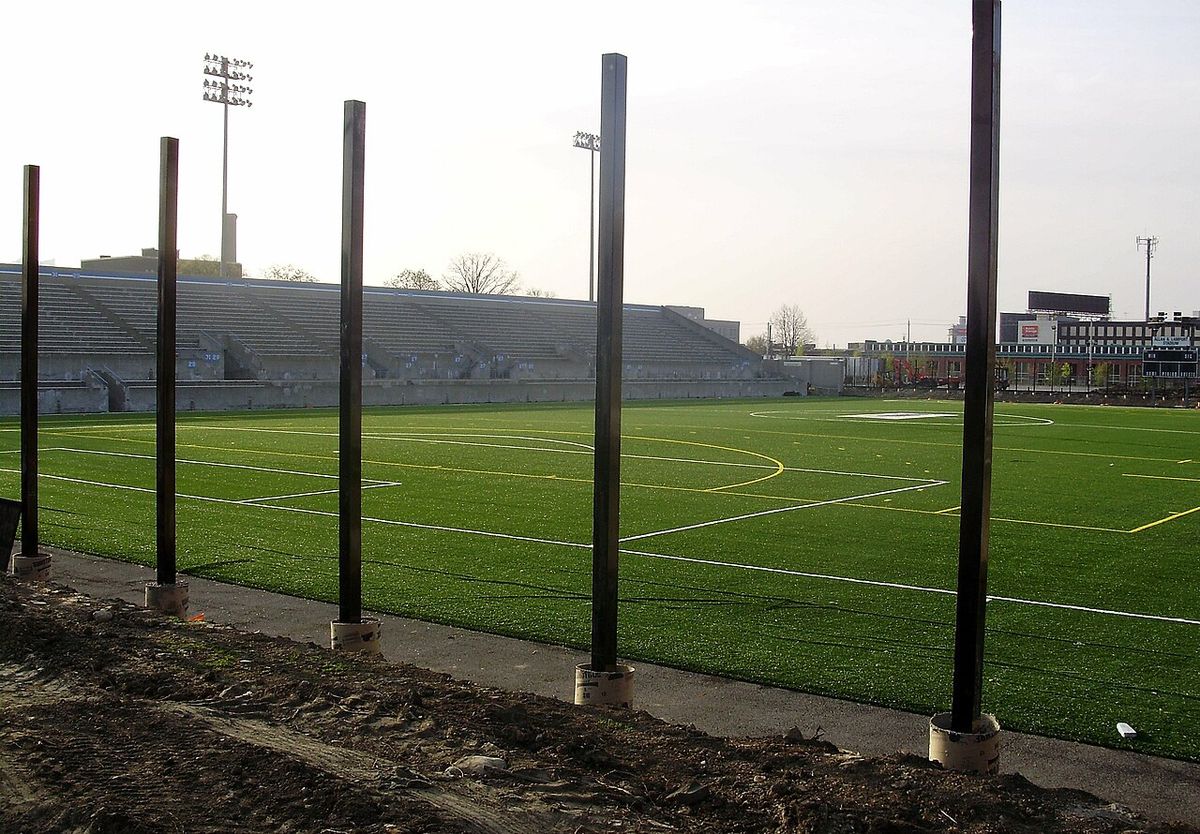
The stadium's primary feature is its large artificial turf playing surface, which has been in place since the venue opened in 1976. The indoor field, when covered by the winter bubble, measures 68 metres by 105 metres, dimensions that accommodate a full eleven-a-side soccer match. The playing surface is marked for multiple sports, primarily soccer and field hockey, and also includes markings for rugby league, reflecting its truly multi-purpose design. Community sports organizations frequently promote the venue as having some of the largest indoor playing fields in the Greater Toronto Area, with dimensions also commonly listed as approximately 197 feet long by 92 feet wide. The stadium's 9,600 seats provide a compact, intimate setting for spectators, and its location in the rapidly developing Liberty Village area makes it a central but less grandiose alternative to larger Toronto venues like Rogers Centre or BMO Field. The facility is actively marketed for adult sports leagues, with organizations like JAM Toronto offering co-ed, men's and women's soccer programs that run from 1996 through to the 2026 season, and specific events like the 2026 Summer Lamport Sundays Soccer Women's league are already scheduled.
Sports usage and tenants
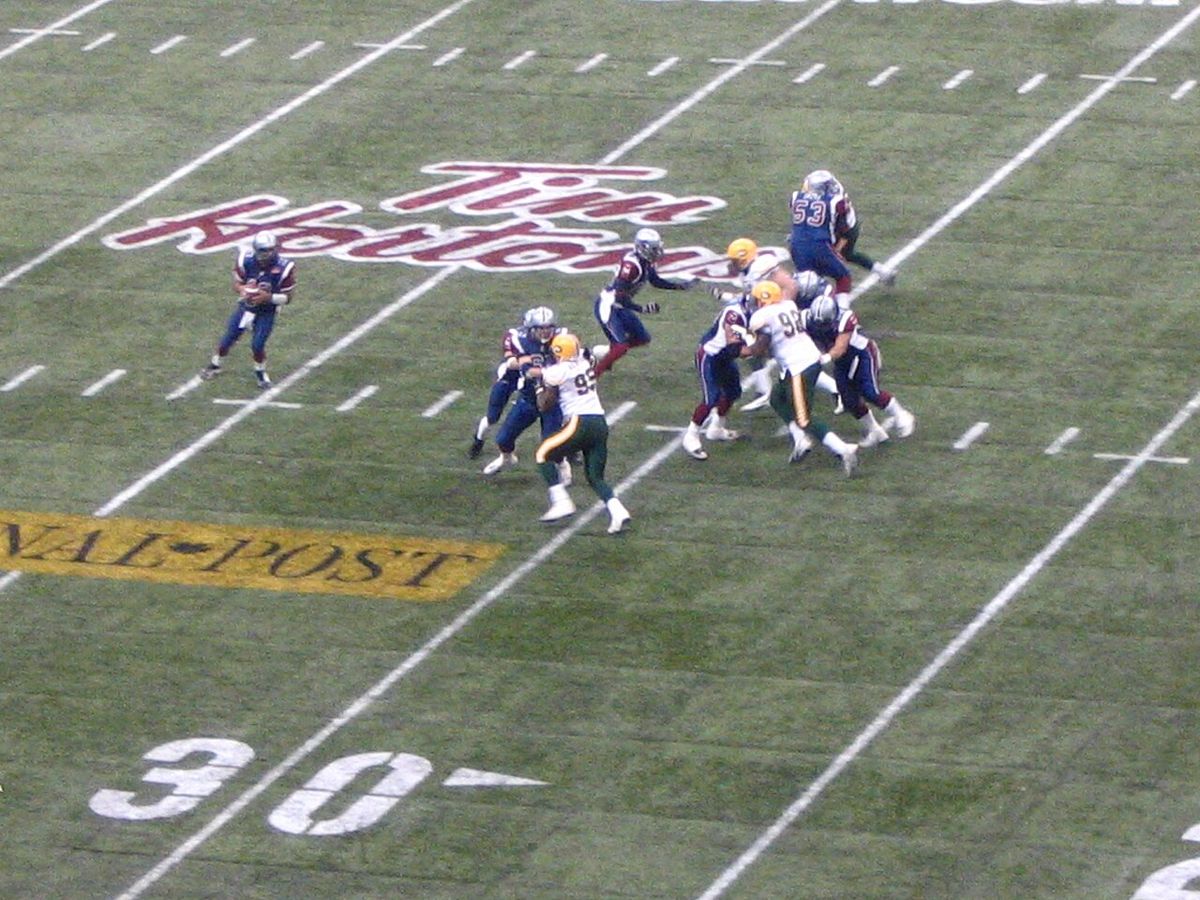
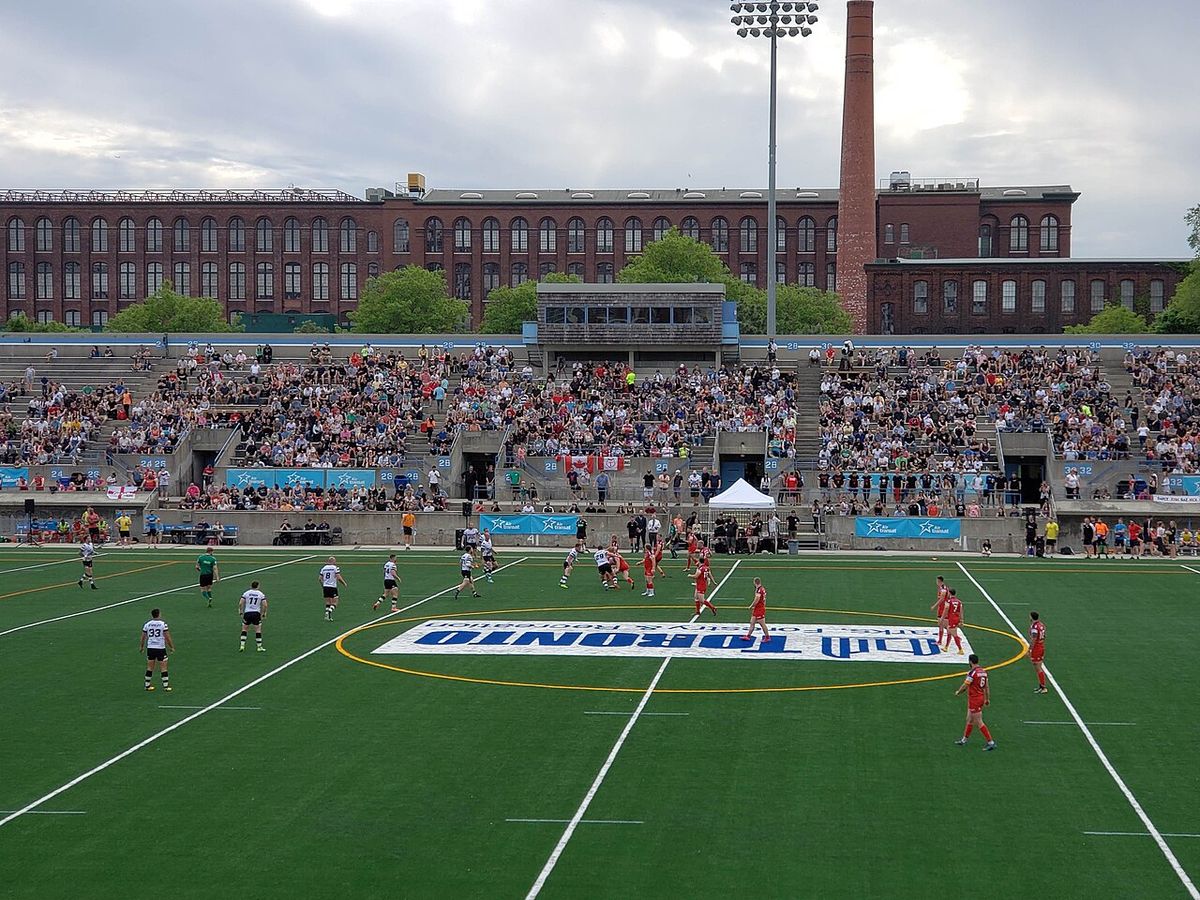
Lamport Stadium has hosted a diverse array of sports teams and events since its inception, cementing its role as a versatile community asset. Its primary function is as the practice facility for the Toronto Argonauts of the Canadian Football League, a role they formally adopted in 2018. The stadium also serves as a part-time home for the Canada national rugby league team, known as the Wolverines, who began playing there in 2012. The venue has a rich soccer history, having been used by clubs from the National Soccer League, the Canadian Soccer League, and League1 Ontario, including SC Toronto, the Serbian White Eagles, and Internacional de Toronto. University and high school teams, such as the Ryerson Rams and the University of Toronto Schools team, have also used the stadium for games and practices. Toronto FC's Academy side and Toronto FC II have both played Canadian Soccer League and USL matches at the venue, though Toronto FC II moved its home games to the BMO Training Ground after dropping to USL League One in 2019. The stadium's adaptability is further demonstrated by its use for ultimate Frisbee, with the Toronto Rush playing half of their 2024 home schedule there while Varsity Stadium was renovated.
Notable professional and semi-professional teams that have called Lamport Stadium home include the Toronto Argonauts of the Canadian Football League, who use it as their practice facility. The Canada national rugby league team, the Wolverines, also uses the stadium as a part-time home. The professional rugby league club the Toronto Wolfpack played at the stadium between 2017 and 2023. Various soccer teams, including Toronto FC II, the Serbian White Eagles, and SC Toronto, have also played home games at the venue.
- Toronto Wolfpack: A professional rugby league club that played at the stadium from 2017 until 2023, bringing significant attention to the sport in Canada.
- Toronto Nationals: A lacrosse team that played its entire 2010 season at Lamport before relocating to Hamilton for subsequent seasons.
- Toronto Rush: An ultimate Frisbee team that played the first half of its 2024 home schedule at Lamport while its regular home, Varsity Stadium, was undergoing renovations.
- Toronto Arrows: A Major League Rugby union team that split home games between Lamport and Alumni Field at York University in their 2019 inaugural season, though planned 2020 games were cancelled due to the pandemic before the team moved to York Lions Stadium in 2022.
- Toronto FC II: The reserve team of Toronto FC played home games at Lamport in 2018 before moving to a different facility.
In November 2025, as part of the rebranding of Inter Toronto FC, the club ownership is looking at upgrading Lamport Stadium through investments and renovations. The goal is to make the stadium its new home sometime in the future. This indicates the stadium's ongoing relevance for professional soccer. The stadium has a history of serving as a home for various soccer clubs, including teams from the National Soccer League and the Canadian Soccer League.
Notable events and tournaments
Beyond regular season play, Lamport Stadium has been the site of several significant sporting events and tournaments that have drawn international and local attention. In 1980, it was one of the host venues for the Toronto International Soccer Cup, a friendly tournament that featured prestigious European clubs like Benfica from Portugal and Partizan Belgrade from Yugoslavia. The stadium gained considerable prominence in rugby league circles when it hosted the 2013 Colonial Cup opener between the Canadian Wolverines and the United States national team, drawing a crowd of 7,168 spectators to witness a Canadian comeback victory. On May 18, 2019, Lamport was the site for the inaugural Americas 9s rugby league tournament, further establishing the venue as a node for the sport in the region. The stadium also plays a recurring role in Toronto's cultural calendar by hosting a major Caribana event each summer, specifically the crowning ceremony for the festival's King and Queen, which attracts large crowds distinct from the sporting audience. These events highlight the stadium's dual identity as both a competitive sports ground and a community festival site.
Community programming and operations
Lamport Stadium functions as a vital community sports centre year-round, with its winter dome enabling extensive adult and youth soccer leagues to operate during the colder months. Organizations like JAM Toronto actively promote co-ed, men's, and women's soccer leagues at the facility, with registrations open for seasons running into 2026, including specific divisions like the 'Summer Lamport Sundays Soccer Women's' league starting in August 2026. The facility management encourages participation from full teams, small groups, and individual free agents, building teams to ensure league viability. The operational model for these community leagues often uses a round-robin format for smaller divisions, with standings based on win-loss records, and scheduling options exist to split divisions if there are not enough games for a full round-robin. The stadium's management and future have been topics of discussion, especially following the city's unsuccessful 2024 search for a new operator, which means community programming continues under existing arrangements. The area surrounding the stadium also became a focal point for social issues when a homeless encampment was established there, which was cleared by police and city staff on July 21, 2021, an operation that resulted in arrests and generated significant media coverage due to images of police actions circulated on social media and news outlets.
Future outlook and the 2026 FIFA World Cup
The stadium's future is indirectly influenced by Toronto's hosting duties for the 2026 FIFA World Cup, where BMO Field will be the primary venue, renamed Toronto Stadium for the tournament. While Lamport itself is not a World Cup venue, the city's broader sports infrastructure plans and the influx of attention have shifted some team tenancies and highlighted the need for quality facilities. For instance, AFC Toronto announced that for the 2026 NSL season, it will split its home games between BMO Field and York Lions Stadium, not Lamport. This indicates that while Lamport remains a crucial practice and community venue, larger events and some professional matches are gravitating towards newer or larger facilities with more modern amenities. Nevertheless, the expressed interest from Inter Toronto FC in renovating the stadium suggests it may yet see significant private investment to secure its long-term future as a professional soccer venue. The stadium's enduring value lies in its adaptability, community access, and the ongoing demand for affordable, multi-sport field time in downtown Toronto, ensuring it will remain a busy hub regardless of the operator. Its proximity to BMO Field and the World Cup activity could also increase its utility as a training site or fan festival location during the 2026 event.
Tenancy and usage patterns
The usage of Lamport Stadium by various teams over the years reveals patterns of tenancy. The stadium has served as a practice facility for the Toronto Argonauts and a part-time home for the Canada national rugby league team. It has also been a home venue for professional clubs like the Toronto Wolfpack and various soccer teams, including Toronto FC II. These tenancies illustrate the stadium's role as a practice site, a launchpad, and an occasional full-time home for teams.
| Team | Sport | Years of Tenancy | Primary Use |
|---|---|---|---|
| Toronto Argonauts | Canadian Football | 2018 to present | Practice Facility |
| Canada Wolverines | Rugby League | 2012 to present | Part-time Home Matches |
| Toronto Wolfpack | Rugby League | 2017 to 2023 | Full-time Home Matches |
| Toronto Nationals | Lacrosse | 2010 | Full Season Home |
| Toronto Arrows | Rugby Union | 2019 (split schedule) | Select Home Matches |
| Toronto FC II | Soccer | 2018 | Home Matches |
| Toronto Rush | Ultimate Frisbee | 2024 (half schedule) | Temporary Home Matches |
| Various CSL/NSL Clubs | Soccer | 1976 to present (intermittent) | Home Matches |
This pattern demonstrates the stadium's flexibility, hosting everything from a single season of professional lacrosse to multi-year tenancies for rugby league and long-term arrangements for football practice. The concentration of rugby league usage from 2012 to 2023 is particularly notable, establishing Lamport as the sport's primary Canadian venue during that period. The ongoing use by community and university soccer leagues, while not listed in the professional table, forms the consistent, year-round backbone of the stadium's operations and financial sustainability. The stadium's management actively courts these leagues, with phone lines and registration systems in place to handle inquiries and team placements for the coming seasons.
Questions about Lamport Stadium
Where is Lamport Stadium located?
Lamport Stadium is located on King Street West in the Liberty Village neighbourhood of Toronto, Ontario. It was built on the site of the former Andrew Mercer Reformatory for Women. The stadium is situated in a rapidly developing area west of downtown Toronto, making it accessible but distinct from larger sporting venues like BMO Field or the Rogers Centre. Its address is a central part of the city's west-end sports corridor near Exhibition Place.
Which professional teams use Lamport Stadium?
The primary professional tenant is the Canadian Football League's Toronto Argonauts, who use the stadium as their official practice facility. The Canada national rugby league team, the Wolverines, also uses it as a part-time home venue. Historically, it has hosted the professional rugby league club Toronto Wolfpack from 2017 to 2023, the Toronto Arrows of Major League Rugby, and various professional and semi-professional soccer clubs including teams from the Canadian Soccer League and League1 Ontario. The stadium has also hosted lacrosse and ultimate Frisbee teams for full or partial seasons, demonstrating its wide-ranging utility.
What is the seating capacity of Lamport Stadium?
Lamport Stadium has a seating capacity of 9,600 spectators. This capacity provides an intimate setting for sporting events and community gatherings. The stadium's design and size make it suitable for minor league professional matches, university sports, and large community tournaments. It is often described as a functional venue without the glamour of Toronto's larger stadiums, focusing on utility and access for athletes and local fans who prioritize the game experience over luxury amenities.
Does Lamport Stadium have an indoor field?
Yes, Lamport Stadium features a winter bubble dome that covers the entire artificial turf field during the colder months. This dome, installed in the winter of 2009 to 2010 at a cost of CA$1.2 million by Maple Leaf Sports & Entertainment, allows for year-round use. The indoor field measures 68 metres by 105 metres, which is large enough to host full eleven-a-side soccer matches for community leagues and training programs. MLSE manages the facility operations during the winter season when the dome is inflated, overseeing the community soccer programs held inside.
What major non-sporting event is held at Lamport Stadium?
A major non-sporting event held at Lamport Stadium is the crowning ceremony for the King and Queen of Caribana. This event is part of the major Caribana festival held each summer. The ceremony is a cultural celebration that draws crowds to the venue. It demonstrates the stadium's use as a community gathering space beyond sports.
What happened with the homeless encampment at Lamport Stadium?
In 2021, an encampment of homeless individuals was established in the area around Lamport Stadium. On July 21, 2021, Toronto police and city staff conducted an operation to clear the encampment. The clearance resulted in the arrest of some homeless individuals and protesters who were there in solidarity. The operation received widespread media attention after images and reports of police actions were circulated on social media and covered by various news outlets, bringing temporary notoriety to the stadium's surroundings during a period of social tension in the city over housing and public space.
Sources and further reading
- Lamport Stadium (Wikipedia)
- JAM Toronto, Lamport Stadium Field 1 (toronto.jamsports.com)
Checked by the Garbutt Disposal desk. Last updated 2026-10-25.