2015 Pan American Games
The 2015 Pan American Games, officially the XVII Pan American Games and commonly known as the Toronto 2015 Pan-Am Games, were a major international multi-sport event held from July 10 to 26, 2015, in Toronto, Ontario, Canada. These were the third Pan American Games hosted by Canada and the first in Ontario, organized by the Toronto Organizing Committee for the 2015 Pan and Parapan American Games (TO2015). The Games set records as the largest multi-sport event ever hosted in Canada by athlete count and featured the highest percentage of female competitors for any such event at the time. The event served as a significant qualifier for the upcoming 2016 Summer Olympics in Rio de Janeiro and left a lasting infrastructure and financial legacy for the region.
Bidding and host city selection
The Canadian Olympic Committee expressed interest in bidding for the Games in November 2007 and, after government consultations, selected the Toronto region as its candidate in April 2008 without a domestic vote. Toronto's bid followed previous unsuccessful attempts to host the Summer Olympics in 1996 and 2008. The city's official bid book was submitted to the Pan American Sports Organization on May 27, 2009. PASO conducted an evaluation visit to Toronto led by Julio Maglione on August 30 and 31, 2009, with Maglione stating the city had all conditions necessary to host. The host city election occurred on November 6, 2009, at a PASO Session in Guadalajara, Mexico, where Toronto won with 33 votes, defeating Lima, Peru (11 votes) and Bogotá, Colombia (7 votes). The Pan American Sports Organization flag was formally passed to Toronto officials during the closing ceremony of the 2011 Pan American Games in Guadalajara.
Venues and infrastructure
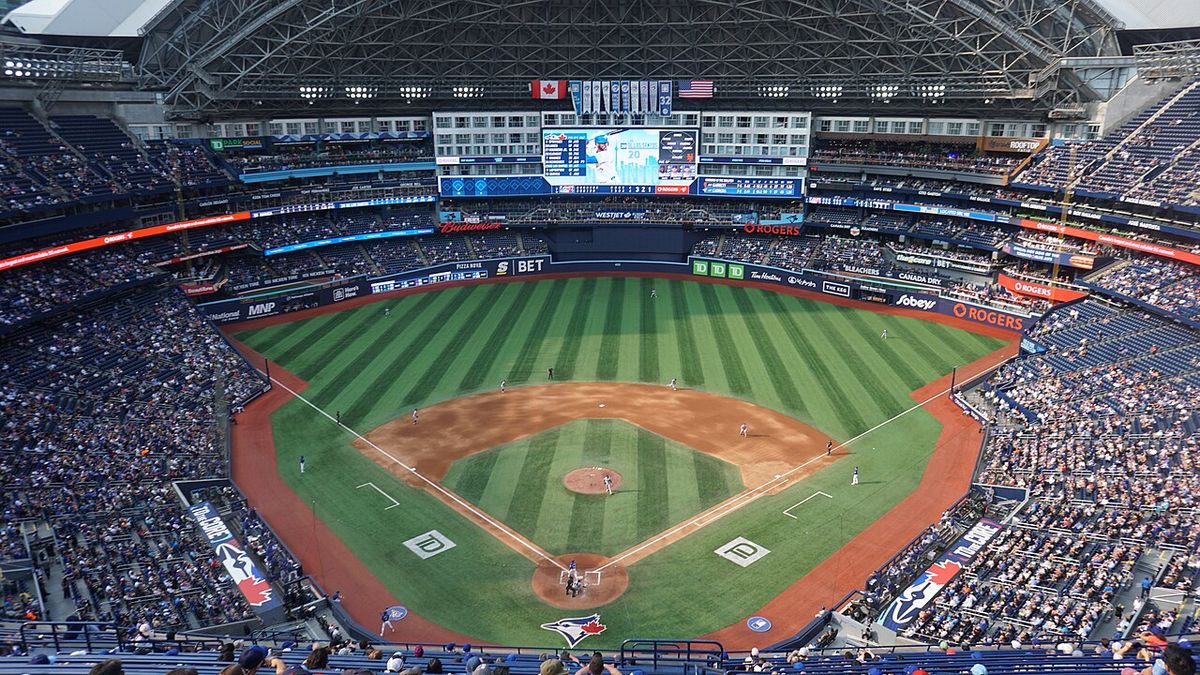
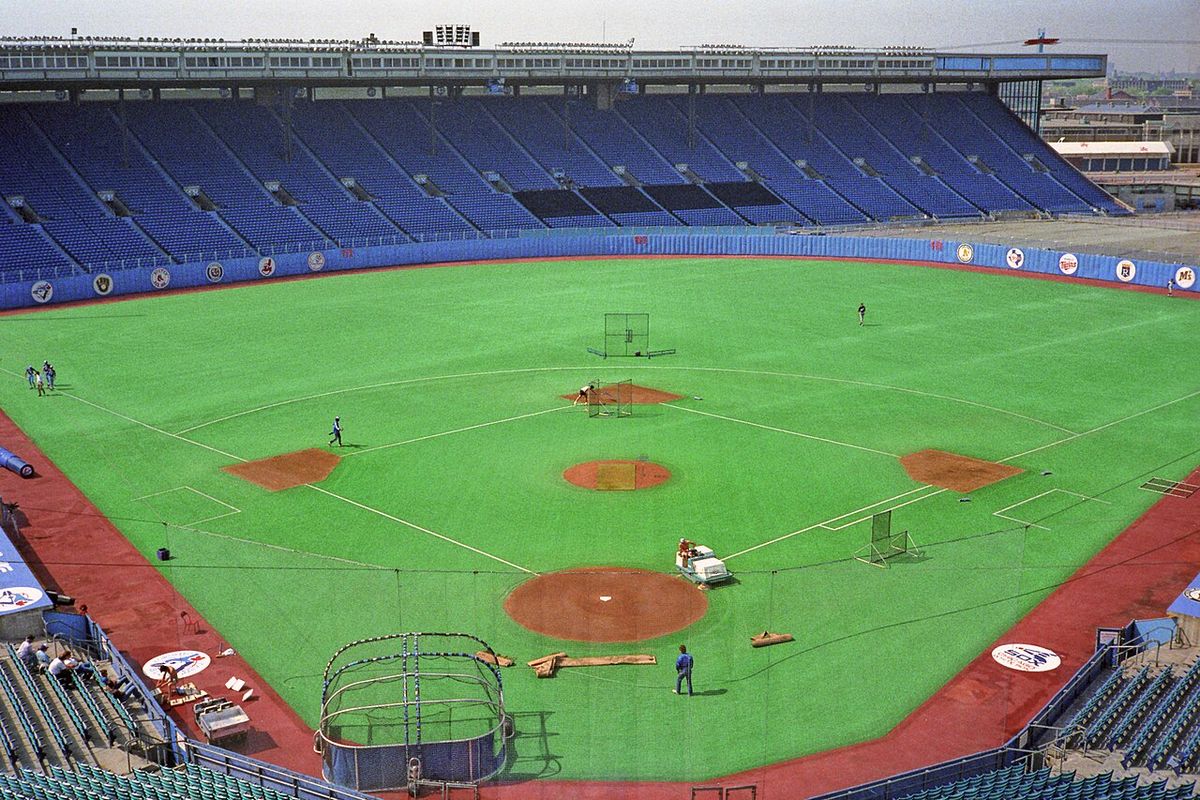
The Games utilized a total of 30 competition venues across 14 municipalities in Ontario's Golden Horseshoe region, blending new construction, renovations, and temporary facilities. Ten venues were newly built, while fifteen were renovated for the event. A key strategy involved clustering venues to improve efficiency, a model inspired by the 2012 London Olympics. The opening and closing ceremonies were held at Rogers Centre, temporarily renamed the Pan Am Dome. Major competition venues in Toronto included the Toronto Pan Am Sports Centre, BMO Field (Exhibition Stadium), and the Enercare Centre. Significant venues outside Toronto included Tim Hortons Field in Hamilton, the Hershey Centre in Mississauga, the Markham Pan Am Centre, and the Royal Canadian Henley Rowing Course in St. Catharines. The Games acted as a catalyst for regional transportation projects, most notably the launch of the Union Pearson Express airport rail link on June 6, 2015, and the opening of the West Harbour GO Station in Hamilton. A major trails initiative, the Pan Am/Parapan Am Trails, invested over CA$3.5 million to connect over 2,000 kilometres of pathways across Ontario.
Financing and final costs
The original budget for the Games involved significant contributions from multiple levels of government for both capital and operating expenses. The Toronto 2015 Organizing Committee and governments planned to spend approximately CA$672 million on venue upgrades and construction, with an additional CA$760 million for operations. The federal government committed CA$500 million, the City of Toronto CA$86 million, and other host municipalities CA$205 million, with the Government of Ontario covering all remaining costs. Other major expenditures included CA$709 million for the Athletes' Village, CA$239 million for security, and CA$90 million for transportation. An additional CA$74 million was provided in 2014 for an expanded torch relay and broadcast coverage, bringing the total projected cost to a record CA$2.57 billion. A 2016 report from Ontario's auditor-general suggested a CA$342 million overrun. However, the organizing committee's final report in 2019 concluded the Games came in CA$38 million under budget and established a legacy fund of over CA$60 million to maintain the new facilities for twenty years.
Athletes' Village and volunteers
The Athletes' Village was constructed in Toronto's West Don Lands at a cost of CA$735 million and could accommodate up to 7,200 athletes and officials. The LEED Gold-certified complex was converted after the Games into a mixed-use community featuring 746 market condominiums, 41 town homes, 250 affordable rental apartments, 257 student dormitory units for George Brown College, and retail and office space, including a YMCA recreation centre. Five satellite villages, consisting of hotels and university residences, were also used to house athletes competing at distant venues. Volunteer recruitment was a massive undertaking, with over 63,000 applications received for an estimated 23,000 required roles. A total of 16,146 volunteers ultimately participated in the Pan Am and Parapan Am Games. Auditions for ceremonial performer roles were held at Ryerson University, later renamed Toronto Metropolitan University in 2022, to fill roughly 600 spots for tasks like carrying placards at medal presentations, with hopefuls seeing it as a once-in-a-lifetime opportunity.
The torch relay and medals
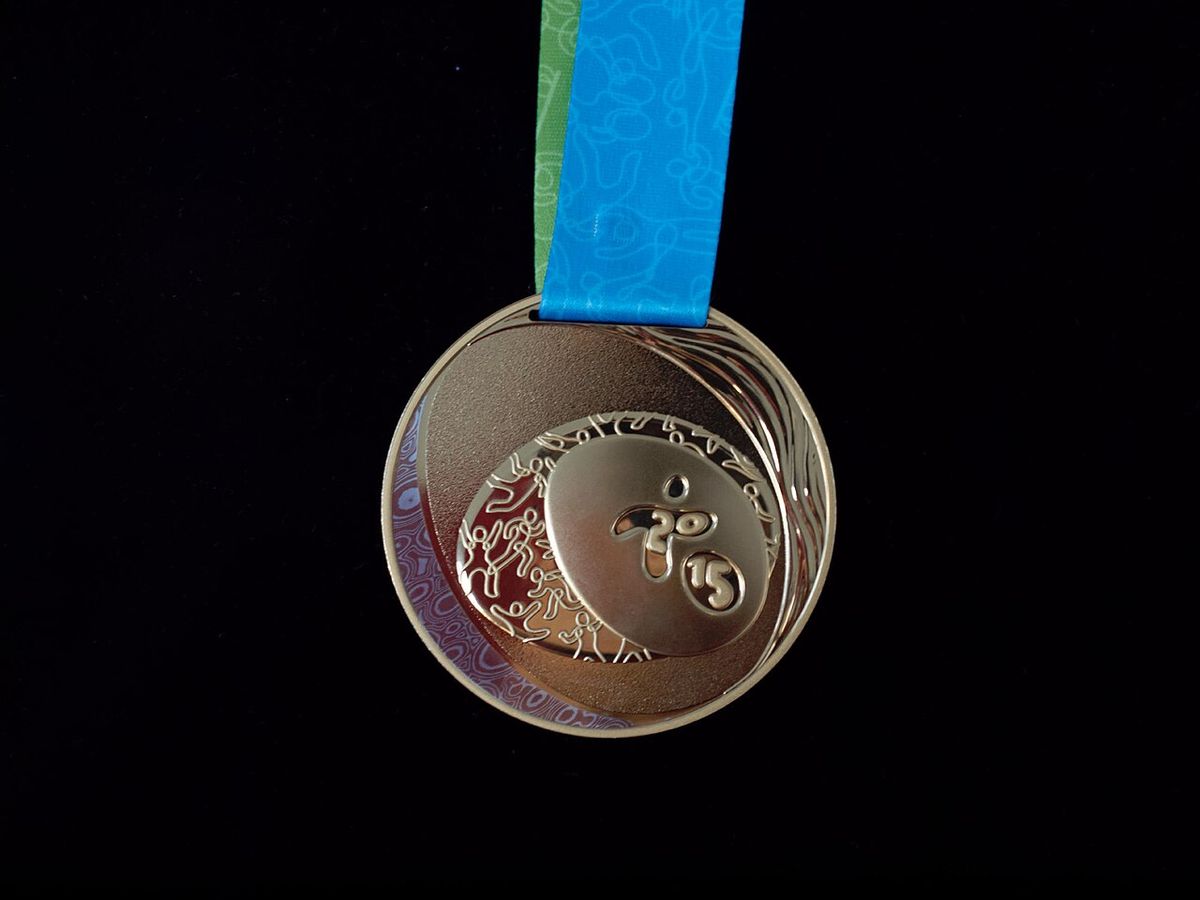
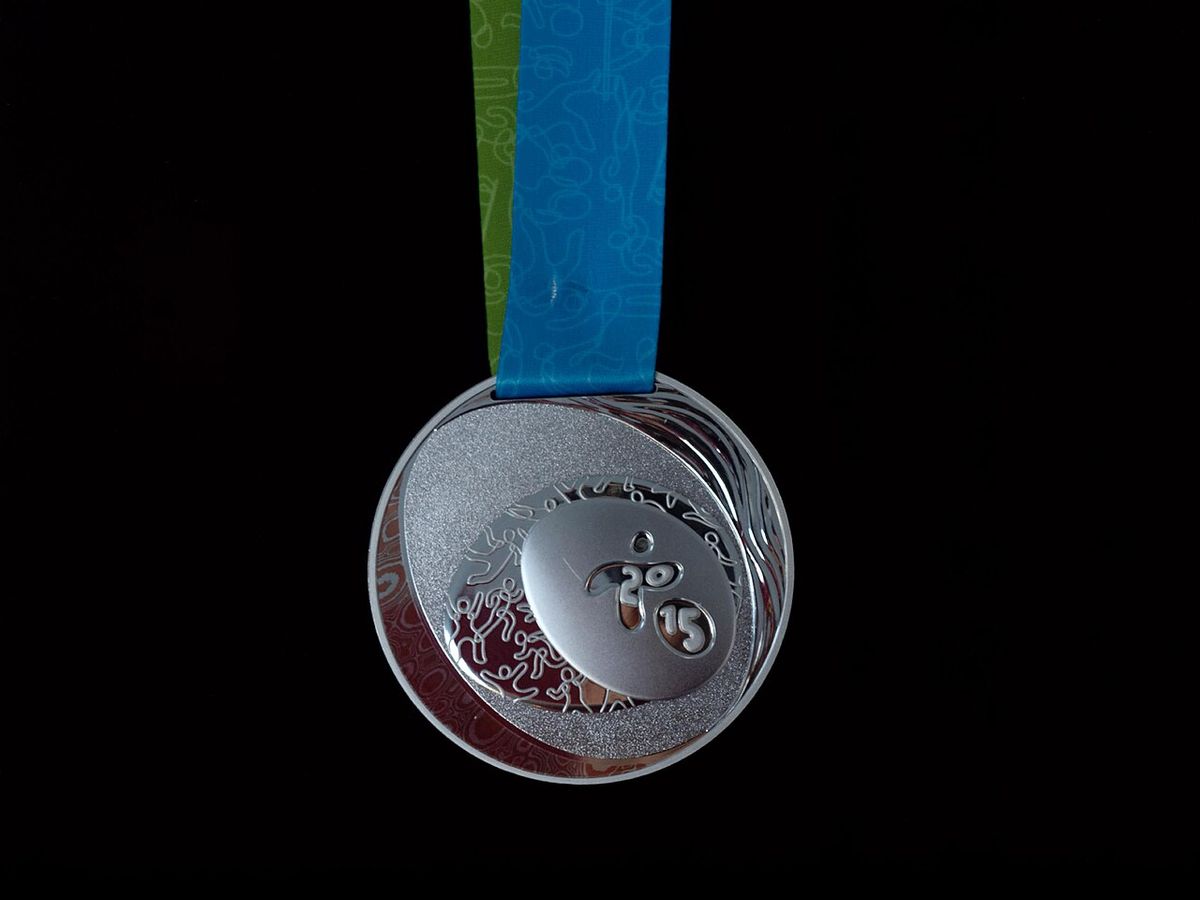
The torch relay was a 41-day journey across Canada beginning on May 30, 2015. The flame was lit at the Teotihuacan pyramids in Mexico and carried by roughly 3,000 torchbearers through 130 communities, travelling about 20,000 kilometres. The route included five communities outside Ontario: Richmond, Winnipeg, Calgary, Halifax, and Montreal. It visited five National Historic Sites, six Canadian Forces bases, and one provincial park, with 180 celebrations held along the way. The relay concluded at the opening ceremony in Toronto on July 10. The medals for the Games were produced by the Royal Canadian Mint using raw minerals supplied by Toronto-based Barrick Gold, sourced from mines within the Pan American region. Designed by Métis artist Christi Belcourt, the medals were notable for being the first at an international able-bodied multi-sport event to include Braille. They featured three shapes representing the Americas on the front and employed mokume-gane techniques to create a wood-grain appearance, with the copper, silver, and gold sourced from mines in Chile, the Dominican Republic, and Ontario respectively. The medals are roughly 86.7 millimetres in diameter and weigh about 350 grams.
Sports program and participation
The 2015 Games featured a expansive sports program of 364 events across 36 sports and 51 disciplines, setting a new standard for the event. A record 19 sports served as direct or indirect qualifiers for the 2016 Rio Olympics. The program welcomed several new events and disciplines, marking historic firsts for the Pan American Games. The debut of canoe slalom meant the entire Olympic sports program was contested for the first time. Women's C-1 events in canoeing were introduced, alongside the first appearances of women's baseball and women's rugby sevens. Golf made its Pan American debut ahead of its Olympic reintroduction. The only sport dropped from the previous Games was Basque pelota. The Games set a participation record with 6,123 athletes and 3,396 team officials from 41 National Olympic Committees, with women making up a record 46 percent of competitors.
Notable sports debuts and returns included several significant additions to the Pan American Games program. Canoe slalom made its Pan American Games debut, marking the first time all Olympic sports disciplines were contested at the Games. Golf also made its debut at the Pan American Games, ahead of its reintroduction at the 2016 Summer Olympics. Women's competitions in baseball, canoeing, and rugby sevens were held for the first time at the Pan American Games. A total of 36 sports, including the 28 from the 2016 Summer Olympics, were contested. A record 19 sports served as direct or indirect qualifiers for the Rio 2016 Olympics.
- Canoe slalom (first appearance)
- Golf (first appearance)
- Women's baseball (first appearance)
- Women's rugby sevens (first appearance)
- Men's softball (returned after last being contested in 2003)
Ceremonies and cultural events
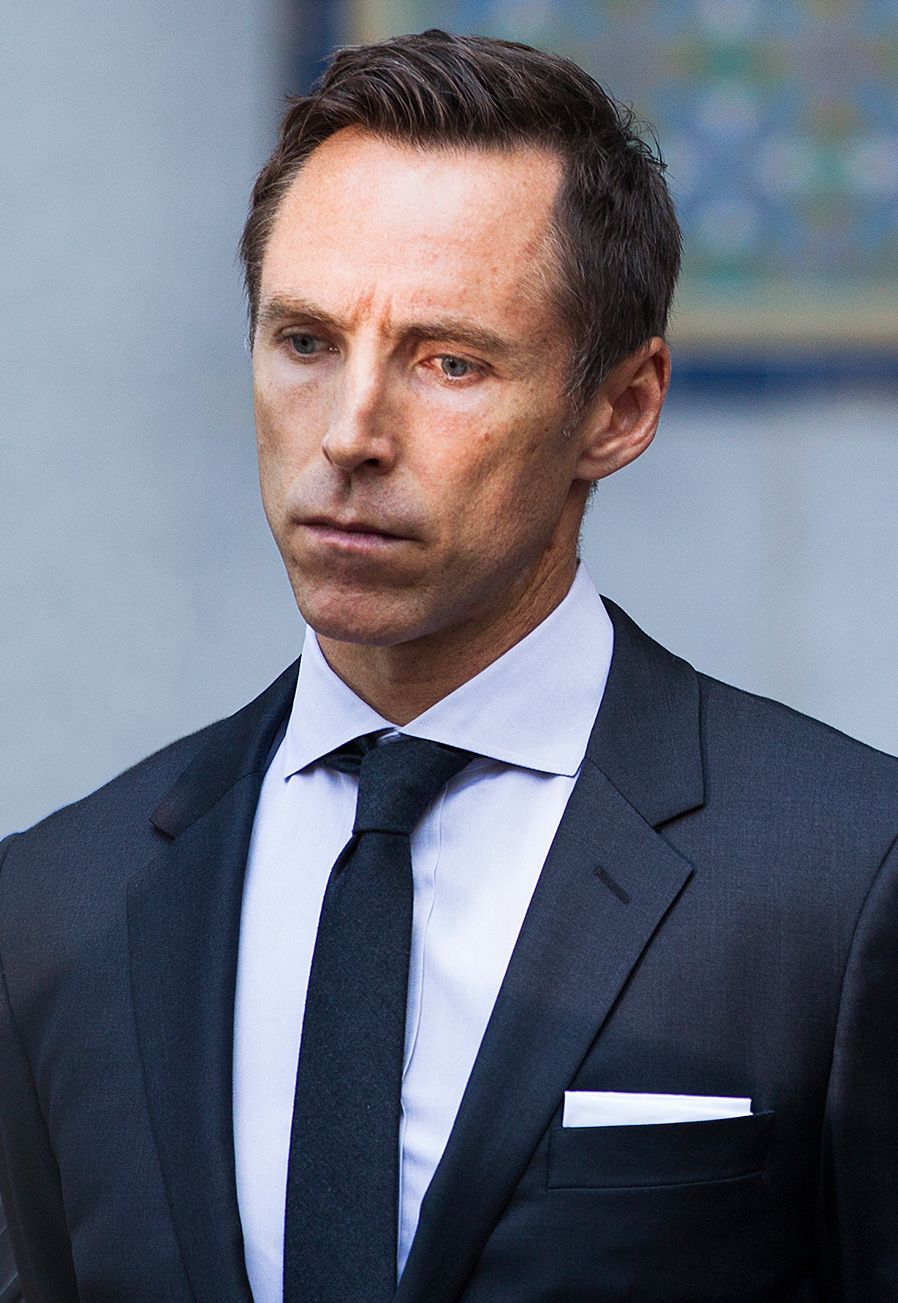
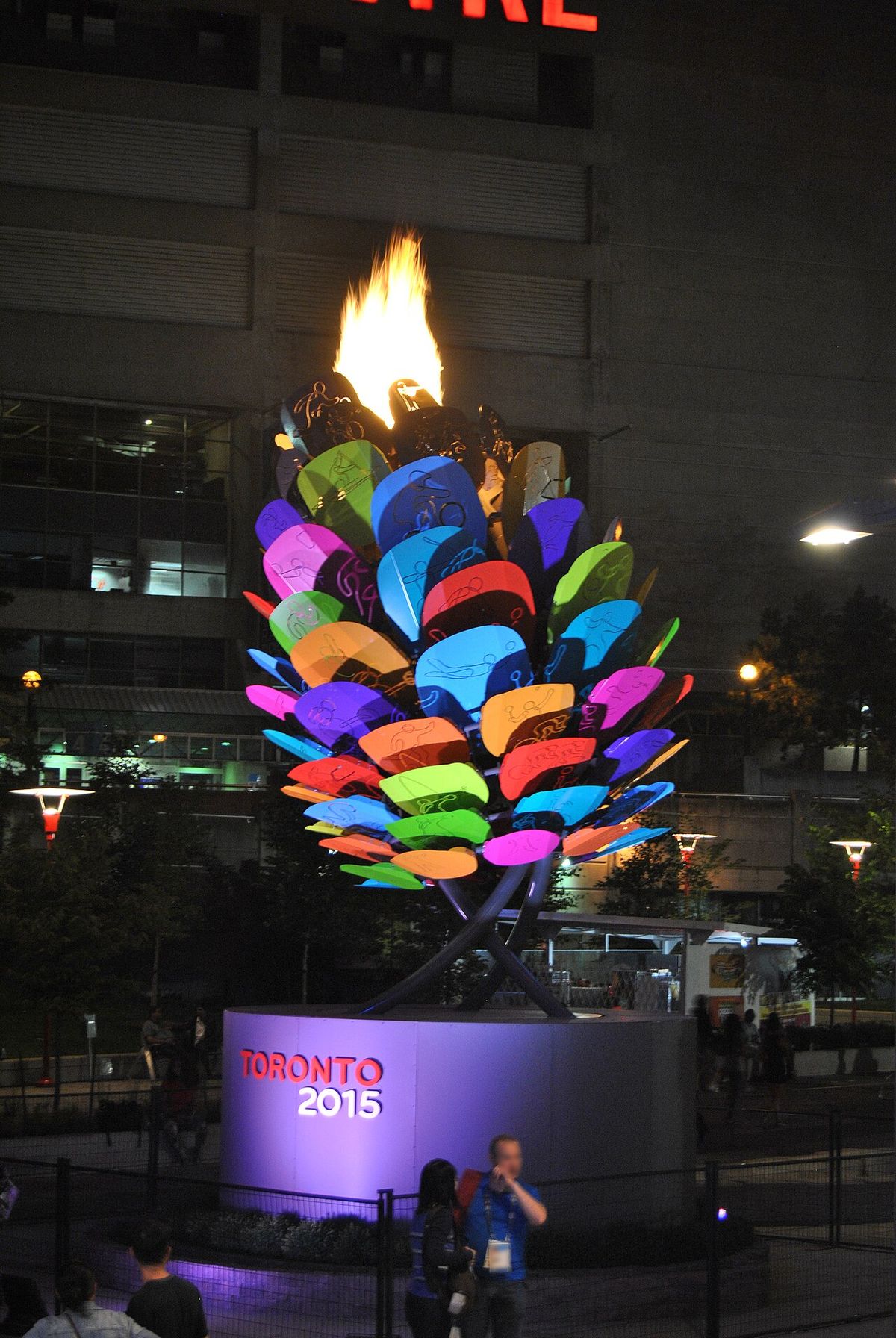
The opening ceremony on July 10, 2015, at Rogers Centre was produced and directed by Cirque du Soleil, representing the largest event the company had ever staged. Governor General David Johnston officially declared the Games open, and Canadian basketball icon Steve Nash lit the cauldron in a ceremony concluding with a fireworks display launched from the CN Tower. The closing ceremony on July 26 was jointly produced by B5C Productions, BaAM Productions, and FiveCurrents in association with Live Nation. It featured the formal handover to Lima, host of the 2019 Games, and a closing concert headlined by American rapper Kanye West, with performances by Pitbull and Canadian musician Serena Ryder. The choice of West as headliner drew criticism from some, including Mayor John Tory, who felt a Canadian artist should have had the top billing. The one-year countdown to the Games was marked on July 10, 2014, in Nathan Phillips Square with the unveiling of a countdown clock and a Cirque du Soleil performance.
Media coverage and results
The Canadian Broadcasting Corporation served as the host domestic broadcaster, providing extensive coverage in English on CBC Television and in French on Ici Radio-Canada Télé. CBC's website streamed 650 hours of online coverage. Pay television rights for specific events were sub-licensed to Sportsnet, and Spanish-language rights were held by Telelatino and Univision Canada, which collaborated with ESPN Deportes. Primetime television coverage averaged between 900,000 and 1 million viewers nightly, with the opening ceremony attracting 1.93 million viewers across CBC platforms. A total of 1,232 media personnel were accredited to cover the Games. In competition, the United States topped the medal table with 265 total medals. Host nation Canada had its best-ever Pan American performance, finishing second with 219 medals. The Games also saw historic achievements, including Saint Lucia winning its first-ever Pan American gold medal.
The final medal table for the top five nations was led by the United States, which won the most medals overall. Canada, as the host nation, finished second in the overall medal count. Brazil secured the third position on the final medal table. Cuba and Mexico rounded out the top five nations in the final medal standings. The Games featured 364 medal events across 36 sports, with athletes from 41 nations competing.
Ticketing and legacy
Ticket sales began with a lottery for high-demand events in September 2014, followed by general sales starting December 8, 2014. Of the 1.4 million tickets available for the Pan Am and Parapan Am Games combined, over 75 percent were priced under CA$45. The organizing committee ultimately sold over 1.1 million tickets, including over 1 million for the Pan Am Games, representing an 85 percent sell-through rate for that event. The financial and infrastructure legacy of the Games was significant. Beyond the CA$60 million legacy fund for facility maintenance, the event accelerated the completion of the Union Pearson Express and spurred trail connectivity projects. The Athletes' Village transformation created a new neighbourhood with housing, educational, and recreational spaces. The 2019 final report confirmed the Games were delivered CA$38 million under the revised budget, leaving a positive fiscal outcome for the province.
Questions about 2015 Pan American Games
Which new sports were introduced at the 2015 Pan American Games?
Several sports and disciplines made their Pan American Games debut in 2015. These included canoe slalom and golf. The Games also featured the first women's competitions in baseball, canoeing (specifically C-1 events), and rugby sevens. The introduction of canoe slalom meant the entire Olympic sports program was contested at the Pan Am Games for the first time.
Where were the 2015 Pan American Games held?
The 2015 Pan American Games were held from July 10 to 26, 2015, in Toronto, Ontario, Canada, with preliminary events starting on July 7. They were the first Pan American Games hosted in Ontario and the third in Canada overall. Competition venues were located in Toronto and 17 other communities across the Golden Horseshoe region. Key venues included Rogers Centre for the ceremonies, the Toronto Pan Am Sports Centre, and facilities in Hamilton, Mississauga, and St. Catharines.
How many athletes competed in the 2015 Pan American Games?
A total of 6,123 athletes competed in the 2015 Pan American Games, making it the largest multi-sport event ever hosted in Canada in terms of athlete participation. They represented 41 National Olympic Committees from the Americas, accompanied by 3,396 team officials. A notable record was set as 46 percent of the competitors were women, the highest proportion for any multi-sport event at that time. The Games featured 364 events across 36 sports.
What was the total cost of the Toronto 2015 Games?
The total projected cost for the Toronto 2015 Games was approximately CA$2.57 billion, which was the highest ever for a Pan American Games. This budget covered venue construction, upgrades, operations, the Athletes' Village, security, and transportation. However, in 2019, the organizing committee reported that the games were delivered CA$38 million under this budget. The committee also left a legacy fund of over $60 million to maintain the new structures for twenty years after the Games.
What happened to the Athletes' Village after the Games?
After the Games, the Athletes' Village in Toronto's West Don Lands was converted into a permanent mixed-use community. The conversion resulted in 746 market-priced condominiums, 41 market-priced town homes, 250 affordable rental apartments, and 257 student dormitory units for George Brown College. The site also includes office and retail units and a YMCA recreation centre. The development, which cost $735 million CAD and could house 7,200 people during the Games, was certified LEED Gold.
Who broadcast the 2015 Pan American Games in Canada?
The Canadian Broadcasting Corporation served as the host domestic broadcaster for the 2015 Pan American Games. Coverage was provided in English on CBC Television and in French on Ici Radio-Canada Télé, with CBC's website streaming 650 hours of online coverage. Pay television rights were sublicensed to Sportsnet for events like football and a men's basketball semi-final. Spanish language broadcasting rights in Canada were held by Telelatino and Univision Canada, which collaborated with ESPN Deportes.
Sources and further reading
- 2015 Pan American Games (Wikipedia)
- Pan Ams to Olympics: Toronto 2015 a boost to many Team ... (olympic.ca)
- 10 years since the Toronto 2015 Pan American Games (truenorthsports.substack.com)
- Toronto 2015: Pan Am & Parapan Am Games guide and ... (toronto2015.org)
- 2015 Pan Am Games (pentathloncanada.ca)
Checked by the Garbutt Disposal desk. Last updated 2026-10-21.