Steve Nash
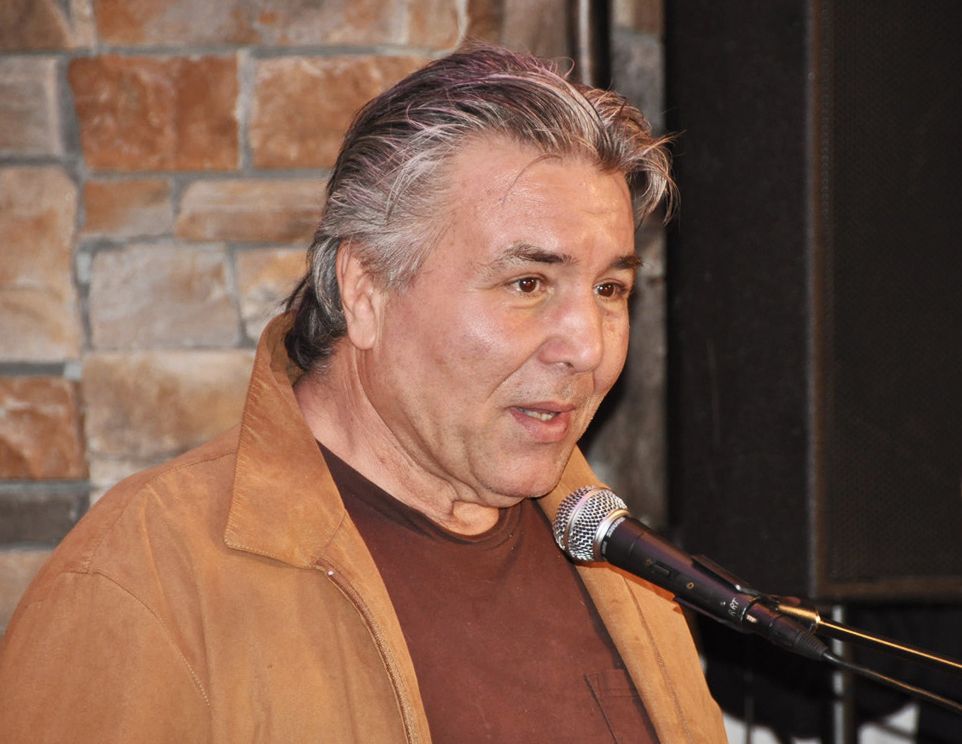
Stephen John Nash is a Canadian former professional basketball player and coach, widely regarded as one of the greatest point guards in the history of the National Basketball Association (NBA). Born in South Africa and raised in Victoria, British Columbia, Nash played 18 seasons in the NBA, earning eight All-Star selections and winning the league's Most Valuable Player award in consecutive years (2005 and 2006). His exceptional playmaking, shooting accuracy, and leadership transformed the Phoenix Suns into a championship contender and made him a national sporting icon in Canada. Nash was inducted into the Naismith Memorial Basketball Hall of Fame in 2018 and named to the NBA's 75th Anniversary Team in 2021, cementing his legacy as a pioneer for Canadian basketball.
Early life and education
Steve Nash was born in Johannesburg, South Africa, to Welsh mother Jean and English father John, a professional soccer player who played in various parts of the world. His family moved to Regina, Saskatchewan when he was 18 months old before settling permanently in Victoria, British Columbia, where he gained Canadian citizenship while also holding British citizenship. Nash grew up playing soccer and ice hockey with his younger brother Martin and did not begin playing basketball until he was 12 or 13 years old, also participating in rugby and lacrosse during his youth. He was a neighbour to future NHL stars Russ and Geoff Courtnall, who used to babysit him and played on soccer teams coached by his father. He originally attended Mount Douglas Secondary School in Saanich before transferring to the private St. Michaels University School in Victoria after his grades began to drop. In his senior season, he led his team to the British Columbia AAA provincial championship in 1992 while averaging 21.3 points, 11.2 assists, and 9.1 rebounds per game, earning the province's Player of the Year honour. In grade eight, he had told his mother he would one day play in the NBA and become a star, a prediction that would later come true.

College career at Santa Clara
Despite a standout high school career, Nash received little recruiting interest from American universities. His coach Ian Hyde-Lay sent letters and highlight reels to more than 30 schools with no offers. Santa Clara Broncos coach Dick Davey finally requested video footage and, after watching him play, said he was nervous hoping no other major programs would see him, though he also told Nash he was the worst defensive player he had ever seen. Nash accepted a scholarship for the 1992-93 season and led the Broncos to a West Coast Conference (WCC) tournament title and an NCAA tournament berth, ending a five-year drought for the program. In the first round of the 1993 tournament, he sank six consecutive free throws in the final 30 seconds to secure an upset victory over the second-seeded Arizona Wildcats before the team lost to Temple in the next round. The Broncos struggled the next season but rebounded in 1994-95, with Nash leading the conference in both scoring and assists to earn his first WCC Player of the Year award, though the team lost in the first round of the NCAA tournament to Mississippi State. After that season, Nash contemplated turning professional but decided against it when he learned he would likely not be a first-round pick in the 1995 NBA draft.
In his senior 1995-96 season, Nash began attracting national media and professional scouts after spending the previous summer honing his skills with the Canadian national team and working out with NBA players Jason Kidd and Gary Payton. Santa Clara again captured the WCC title, and Nash repeated as Conference Player of the Year, becoming the first Bronco to do so since Kurt Rambis. He scored 28 points in a first-round NCAA tournament upset over Maryland before the team was eliminated by Kansas. Nash earned an honourable mention All-America selection from The Associated Press and the USBWA and finished his career as Santa Clara's all-time leader in assists (510), free throw percentage (.862), and three-pointers made and attempted (263 to 656). He remains third on the school's all-time scoring list with 1,689 points and holds the single-season free throw percentage record (.894). His jersey number 11 was retired by the university in September 2006, making him the first Santa Clara student-athlete to receive that honour.
NBA career: Phoenix, Dallas, and return to Phoenix
Selected 15th overall by the Phoenix Suns in the 1996 NBA draft, Nash was met with boos from Suns fans who were unfamiliar with the player from a smaller conference. During his first two seasons, he played a limited supporting role behind star point guards Kevin Johnson, Sam Cassell, and later Jason Kidd, averaging only 10.5 minutes per game as a rookie. His playing time increased in his second season, and he ranked 13th in the league in three-point field-goal percentage before being traded to the Dallas Mavericks after the 1998 draft. The trade sent Nash to Dallas in exchange for Martin Müürsepp, Bubba Wells, the rights to Pat Garrity, and a first-round pick later used to select Shawn Marion, a move influenced by Mavericks assistant general manager Donnie Nelson who had known Nash since high school.
In Dallas, Nash signed a six-year, $33 million extension and established himself as a starting point guard, though an ankle injury caused him to miss 25 games in the 1999 to 2000 season. The arrival of owner Mark Cuban, the development of Dirk Nowitzki, and the All-Star calibre play of Michael Finley created a supportive environment where Nash thrived, averaging 15.6 points and 7.3 assists in the 2000-01 season to help the Mavericks earn their first playoff berth in over a decade. He earned his first All-Star and All-NBA Third Team selections in the 2001-02 season by posting career-highs of 17.9 points and 7.7 assists per game, forming the Mavericks' 'Big Three' with Nowitzki and Finley. In the 2002-03 season, Nash and Nowitzki led the team to the Western Conference Finals, where they lost to the eventual champion San Antonio Spurs four games to two. After the 2003-04 season, where he set a new career high with 8.8 assists per game, Nash became a free agent. Mavericks owner Mark Cuban offered a four-year deal worth about $9 million annually, but Nash signed a six-year, $63 million contract to return to the Phoenix Suns after Cuban declined to match the offer.
Nash's return to Phoenix in 2004 coincided with the hiring of head coach Mike D'Antoni and his up-tempo 'Seven Seconds or Less' offensive system. With emerging players like Shawn Marion, Joe Johnson, and Amar'e Stoudemire, Nash led the Suns from a 29-53 record the previous year to an NBA-best 62-20 record, averaging 11.5 assists per game while shooting 50.2% from the field and 43.1% from three-point range. He edged Shaquille O'Neal to win the 2004-05 NBA MVP award, becoming the first Canadian and third point guard ever to receive the honour after Magic Johnson and Bob Cousy. The Suns reached the Western Conference finals but lost to the San Antonio Spurs in five games. In the 2005-06 season, despite the loss of Stoudemire to injury, Nash led the league in assists (10.5 per game) and free throw percentage (.921) to win his second consecutive MVP, though the Suns again fell in the conference finals, this time to Dallas. He narrowly missed a third MVP in 2007, finishing second to Dirk Nowitzki after averaging a career-high 11.6 assists per game.
Later NBA seasons and retirement
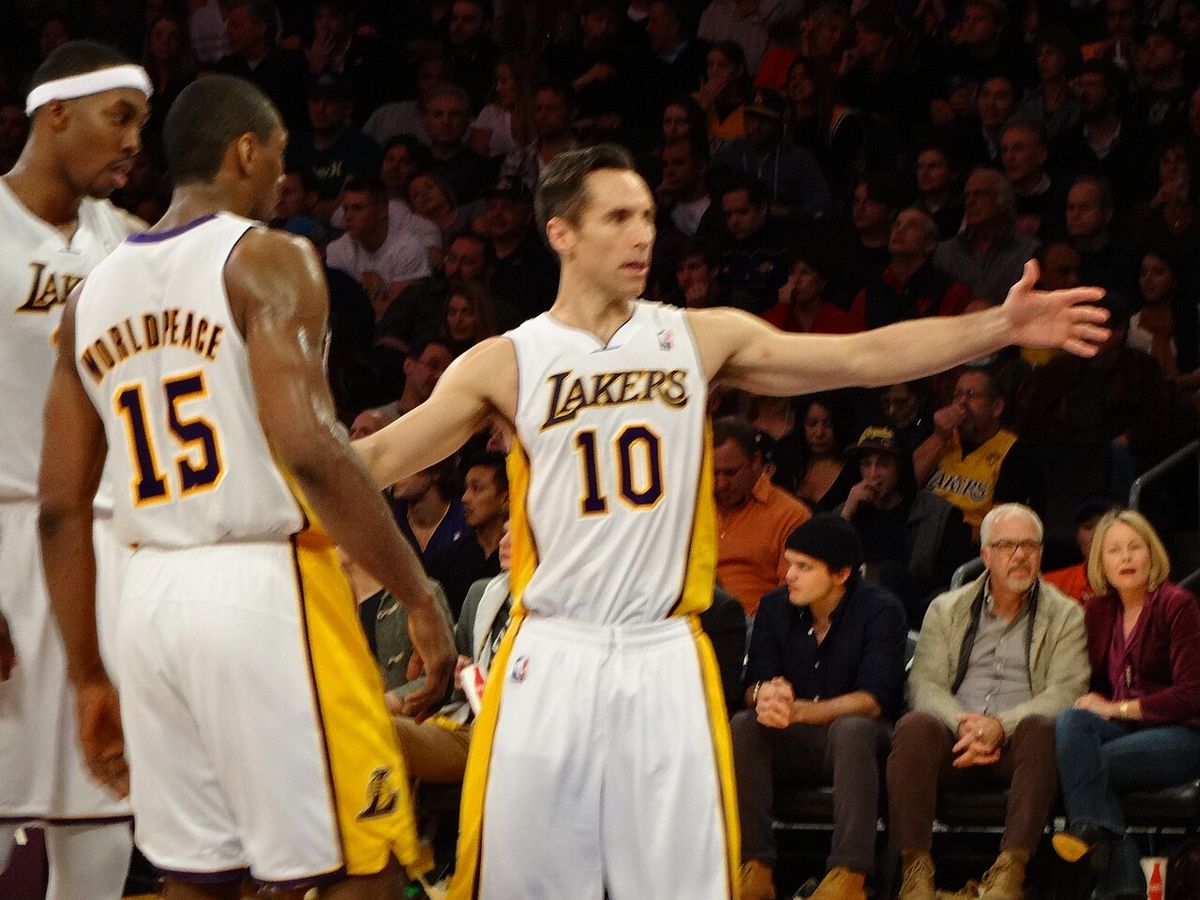
The Suns remained competitive in the late 2000s, with Nash earning three more All-Star selections in 2007, 2008, and 2010 while continuing to lead the league in assists. In the 2007-08 season, he played in 81 games and led Phoenix to 55 wins, achieving shooting percentages of 50% from the field, 40% from three-point range, and 90% from the free throw line, matching the efficiency of his MVP campaigns. A mid-season trade brought Shaquille O'Neal to the team, but the Suns lost in the first round of the 2008 playoffs to the San Antonio Spurs for the third time in four years, with Nash committing two turnovers in the final two minutes of the decisive Game 5. Coach Mike D'Antoni was replaced before the 2008-09 season by Terry Porter, whose defensive style led to struggles. After a 28-23 start, Alvin Gentry replaced Porter but the team missed the playoffs, ending Nash's postseason streak. Nash signed a two-year, $22 million extension before the 2009-10 season, leading the Suns to a franchise-best 8-1 start and another trip to the Western Conference Finals, where they lost to the Los Angeles Lakers. Nash's final All-Star selection came in 2012, his last season with the Suns before he was traded to the Los Angeles Lakers. He finished his career ranked among the NBA's all-time leaders in several key categories, a reflection of his unique skill set and longevity. His career statistical rankings and records include:
- One of only eight players to have won the NBA MVP award in consecutive seasons.
- A member of the exclusive 50-40-90 club for shooting efficiency four times, more than any other player in history.
- Five-time NBA assists leader (2005, 2006, 2007, 2010, 2011).
- Two-time NBA free throw percentage leader (2006, 2010).
- Phoenix Suns franchise leader in career assists.
Steve Nash's influence extended far beyond his impressive statistics. His style of play, particularly under coach Mike D'Antoni in Phoenix, popularized a faster, more perimeter-oriented brand of basketball that defined the NBA in the 2000s. This up-tempo style required athletic players capable of outrunning and outshooting their opponents. Nash's approach, which combined exceptional passing with elite shooting efficiency, influenced a generation of point guards. He demonstrated that a point guard could be the offensive catalyst by prioritizing both assists and accurate shooting from the field and three-point range.
International career with Canada
Steve Nash represented the Canadian men's national basketball team from 1991 to 2003, serving as its captain and most recognizable player. Nash was named the Most Valuable Player of the FIBA AmeriCup tournament in both 1999 and 2003, leading Canada to strong performances in regional competition against teams from North and South America. Following his playing career, he transitioned to a leadership role, serving as the general manager of the national team from 2012 to 2019. In this administrative capacity, he was responsible for overseeing player recruitment, coaching staff, and program development, although the team did not qualify for the Olympics during his seven-year tenure. His long association with the national program, first as a player and then as an executive, provided a stable foundation and increased visibility for basketball in Canada during a critical period of growth for the sport.
Post-playing career, ownership, and honours
After retiring as a player, Nash remained deeply involved in sports through ownership, coaching, and philanthropy. He became a co-owner of Major League Soccer's Vancouver Whitecaps FC in 2011, the year the club joined the league, maintaining a strong connection to his home province of British Columbia. Beyond sports, Nash has been recognized for his extensive charitable work, particularly through the Steve Nash Foundation, which he founded to support children's health, education, and empowerment. In 2006, Time magazine named him one of the 100 most influential people in the world for his athletic achievements and philanthropic impact, and his foundation's work has contributed to various causes in Canada and the United States.
His contributions to sport and community have been formally recognized with numerous national and institutional honours. He was appointed an Officer of the Order of Canada in 2007 and was formally invested into the order in a ceremony in 2016, receiving one of the country's highest civilian awards. He received an Honorary Doctor of Laws degree from the University of Victoria in 2008 for his contributions to society, and his legacy in basketball was further cemented with his 2018 Hall of Fame induction and 2021 selection to the NBA 75th Anniversary Team. The following table outlines the major teams and organizations with which Nash has been associated in his post-playing career, along with his roles and the duration of his involvement.
| Organization | Role | Years Active |
|---|---|---|
| Vancouver Whitecaps FC (MLS) | Co-owner | 2011 to present |
| Canadian Men's National Basketball Team | General Manager | 2012 to 2019 |
| Steve Nash Foundation | Founder | 2001 to present |
Steve Nash has maintained an active role in basketball and business since his playing career ended. He served as the general manager of the Canadian men's national basketball team from 2012 to 2019. Nash has also been a co-owner of the Vancouver Whitecaps FC of Major League Soccer since 2011. His philanthropic contributions have been recognized with honours like his appointment to the Order of Canada in 2007. These roles demonstrate his ongoing commitment to basketball development, sports business, and charitable causes, ensuring his legacy extends far beyond his years on the court.
Questions about Steve Nash
What college did Steve Nash attend?
Steve Nash attended Santa Clara University in California on a basketball scholarship. He played for the Santa Clara Broncos from 1992 to 1996, leading them to three NCAA tournament appearances including a famous first-round upset of Arizona in 1993. He was a two-time West Coast Conference Player of the Year and graduated as the school's all-time leader in assists. His jersey number 11 was retired by the university in 2006.
Is Steve Nash in the Basketball Hall of Fame?
Yes, Steve Nash was inducted into the Naismith Memorial Basketball Hall of Fame in 2018. This honour recognizes his exceptional 18 season NBA career, where he was an eight time All Star and a seven time All NBA selection. He is considered one of the top players in league history in categories like career assists and three point shooting. His Hall of Fame enshrinement came as part of a career that also included two NBA Most Valuable Player awards. He was named to the prestigious NBA 75th Anniversary Team in 2021.
How many MVP awards did Steve Nash win?
Steve Nash won the NBA Most Valuable Player award twice, in the 2004-05 and 2005-06 seasons. He earned his first MVP after leading the Phoenix Suns to a league best 62 20 record following his return to the team. Nash won his second consecutive MVP the following season despite key player injuries, leading the league in assists and free throw percentage. He narrowly missed a third MVP in 2006 07, finishing as runner up to Dirk Nowitzki. These awards made him the first Canadian ever to win the NBA MVP honour.
What is Steve Nash's connection to the Vancouver Whitecaps?
Steve Nash has been a co owner of the Vancouver Whitecaps FC of Major League Soccer since the team entered the league in 2011. This investment reflects his lifelong interest in soccer, a sport he played extensively in his youth. His father was a professional soccer player, and Nash often played soccer with his brother while growing up in British Columbia. His involvement with the Whitecaps represents a significant post playing career business venture and a commitment to professional sports in Canada.
Did Steve Nash play for the Canadian national team?
Yes, Steve Nash played for the Canadian men's national basketball team from 1991 to 2003. During his international career, he made one Olympic appearance and was twice named the FIBA AmeriCup MVP. His national team experience included playing during the summer before his final college season, which helped hone his skills. Later, from 2012 to 2019, he also served as the general manager for the Canadian men's national team, contributing to the program off the court.
What major honour did Canada bestow upon Steve Nash?
Steve Nash was appointed to the Order of Canada in 2007 and was invested to the order in 2016. This is one of the country's highest civilian honours, recognizing his outstanding achievement and service. It acknowledges his stellar basketball career and his contributions to various philanthropic causes. The University of Victoria awarded him an Honorary Doctor of Laws degree in 2008. These honours celebrate his impact both as an athlete and a community figure.
Sources and further reading
- Steve Nash (Wikipedia)
- Steve Nash Stats, Height, Weight, Position, Draft ... (basketball-reference.com)
- Steve Nash, Team Canada, Olympic.ca (olympic.ca)
- About Steve, SteveNash.org (stevenash.org)
- Steve Nash, MIT Sloan Sports Analytics Conference (sloansportsconference.com)
Checked by the Garbutt Disposal desk. Last updated 2026-10-19.