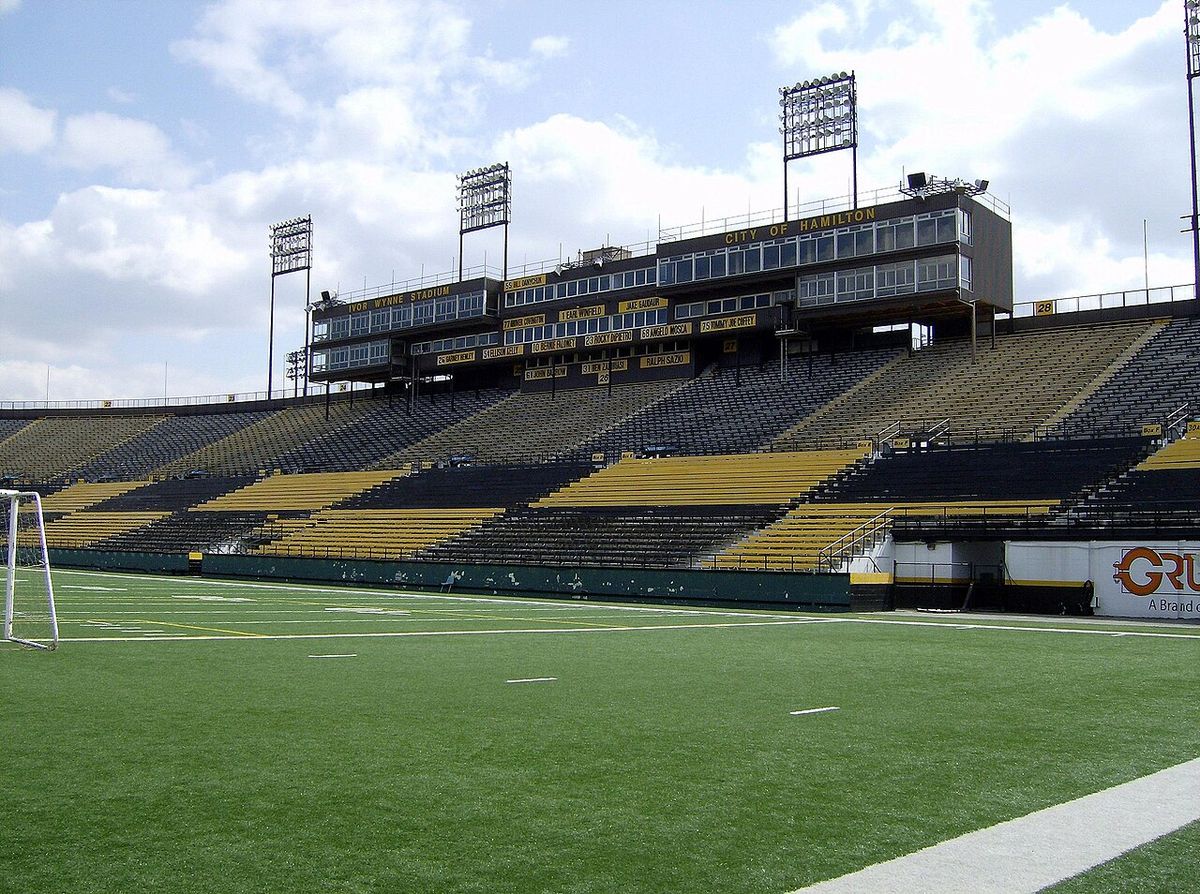
Hamilton Stadium
Hamilton Stadium is a multi-purpose sports and entertainment venue located in Hamilton, Ontario. Primarily used for Canadian football and soccer, it is the home stadium of the Canadian Football League's Hamilton Tiger-Cats and the Canadian Premier League's Forge FC. The stadium, which opened in 2014 with a capacity of 22,500, was built to replace the historic Ivor Wynne Stadium on the same site. It has hosted major events including the soccer tournament for the 2015 Pan American Games and multiple Vanier Cup national university football championships, solidifying its status as a key sports infrastructure project in Southern Ontario.
History and Development
The history of Hamilton Stadium is rooted in the legacy of its predecessor, Ivor Wynne Stadium, which had served the city since 1930 and was originally known as Civic Stadium. The decision to build a new facility was accelerated when Hamilton was selected to host soccer and track and field events for the 2015 Pan American Games, which were awarded to the Greater Toronto Area in 2009. Initial discussions considered building a brand new stadium at the city's West Harbour or renovating the existing Ivor Wynne structure, with disputes over the location involving Tiger-Cats owner Bob Young, the Pan Am organizers, and the City of Hamilton. This led to a 2011 Hamilton city council vote to demolish and rebuild only the south stand at a budget of $115 million while leaving the north stand unchanged. A subsequent shift in Pan Am planning in 2012, which prioritized multi-use venues and 'clusters', initially threatened the project's viability as organizers considered using Toronto's BMO Field for soccer and a new York Athletics Stadium for track and field. Ultimately, a decision was made to completely demolish Ivor Wynne Stadium and construct a new venue on the same site, which would host all 32 Pan Am soccer matches under the temporary name Hamilton Pan Am Soccer Stadium during the games in the summer of 2015.
In July 2013, a ten-year naming rights agreement was secured with the Tim Hortons coffee chain, which was founded only a few blocks away some fifty years earlier, leading to the stadium being known as Tim Hortons Field for the next decade. The final project cost was $145 million, funded by contributions from the City of Hamilton ($54 million), the Province of Ontario ($22 million), and the federal government ($69 million), representing a significant public investment in sports infrastructure. In 2014, the Hamilton Tiger-Cats signed a 20-year lease agreement to become a primary tenant, agreeing to pay $1.2 million annually, which provided a stable financial foundation for the stadium's operations. The stadium's design, led by CannonDesign and engineered by the Arup Group, featured a north-south field orientation, FIFA-standard pitch width, increased seating space, modern amenities, and infrastructure for future expansion to accommodate over 40,000 fans. Construction was completed in 2014, though it opened two months behind the original June 30 target date, and the city subsequently spent over $2.5 million on fixes for construction issues like leaky expansion joints, faulty floor drains, and replacing rain-damaged television screens and baby-changing tables.
Construction and Opening
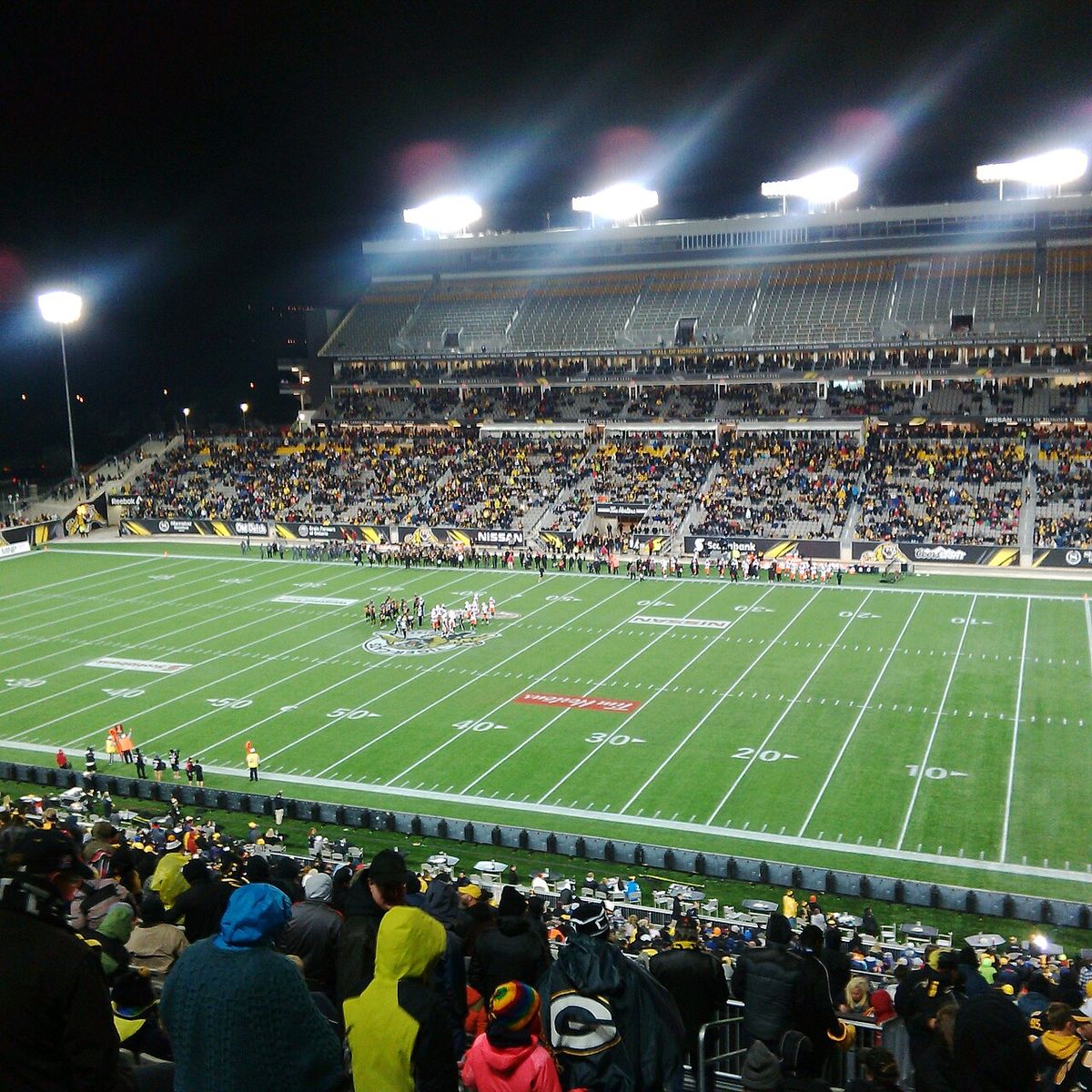
The stadium's construction involved several key design features to make it a modern, multi-purpose facility capable of hosting international events and providing a superior fan experience. The playing field was widened to meet FIFA international standards for soccer and reoriented from an east-west to a north-south alignment to better suit the site layout and improve spectator sightlines from the main grandstands. Seat width and legroom were significantly increased, making it one of the most spacious venues in Canada, and the venue was equipped with extensive wireless communications infrastructure, luxury boxes, and improved washroom facilities to meet modern expectations. The official capacity was set at 22,500 fixed seats, with the design allowing for temporary expansion to over 40,000 seats for major events like the Grey Cup through the addition of temporary stands, a feature planned from the outset. The field surface is an artificial turf approved for both FIFA and CFL play, and the design incorporated features for special events such as concerts and other sports like rugby union and dirt biking events, ensuring broad utility.
The stadium officially opened on September 1, 2014, with the Hamilton Tiger-Cats defeating the Toronto Argonauts 13-12 in their first game at the new venue, marking the beginning of a new era for football in the city. Approximately 6,000 seats were unavailable for that inaugural game due to ongoing construction work that continued past the planned completion date, but the event proceeded successfully nonetheless. The 2014 lease agreement included a specific provision to name the press box the Ivor Wynne Press Centre, preserving a tangible link to the old stadium's legacy for the team and media, a nod to the site's long history. The venue quickly began hosting a variety of events beyond its primary tenants, including two regular-season CFL home games for the Toronto Argonauts in 2015 due to scheduling conflicts with the Toronto Blue Jays' MLB playoff games at their shared venue, Rogers Centre.
- The Hamilton Hurricanes of the Canadian Junior Football League played a game at the stadium in 2015 and returned for two games in 2017, including its own Labour Day contest, showing local amateur talent.
- The McMaster Marauders university football team played its 2016 Labour Day game at the stadium in a doubleheader with the Tiger-Cats, creating a day-long football festival for local fans.
- U Sports awarded the stadium hosting rights for the 52nd and 53rd Vanier Cup national championships, held in November 2016 and November 2017, bringing the pinnacle of Canadian university football to Hamilton.
- The stadium hosted the Canadian Premier League's inaugural match in April 2019 for new tenant Forge FC and the league's first championship final in October 2019, cementing its role in Canadian soccer history.
Ownership and Management Structure
Hamilton Stadium and the land it occupies are owned by the City of Hamilton, which contributed $54 million to its construction and remains the public steward of the asset, responsible for major capital repairs and improvements. The master licence agreement for operating the stadium is held by Hamilton Sports Group (HSG), a private partnership that owns and operates the two primary tenant teams, the Hamilton Tiger-Cats of the CFL and Forge FC of the CPL, and manages all event bookings and day-to-day operations. This group is led by businessman Bob Young, who serves as the chairman and is HSG's largest single shareholder, providing continuity from the stadium development negotiations through to its daily operations and long-term strategic planning. Other partners in Hamilton Sports Group include the steel company Stelco, CEO Scott Mitchell, and Jim Lawson, combining local industrial presence with sports management expertise to create a stable ownership consortium for the city's professional sports franchises.
The Hamilton Tiger-Cats and Forge FC are tenants of the city-owned stadium, with the Tiger-Cats' 20-year lease committing them to pay $1.2 million annually in rent, a key part of the facility's financial model that ensures a return on the public investment. This structure separates the public ownership of the infrastructure from the private operation of the sports franchises and event booking, a common model for modern Canadian sports venues that balances civic investment with professional management. Hamilton Sports Group is responsible for coordinating the use of the stadium by its teams, booking additional events like concerts and other sports, and managing the premium seating and hospitality services, including the new Porter Hangar set to open in 2026. The arrangement ensures the stadium is actively programmed and maintained while providing the city with a stable tenant and a share of revenue from major events, creating a partnership that has proven successful in keeping the venue lively and financially sustainable since its opening.
Stadium Uses and Multi-Purpose Events
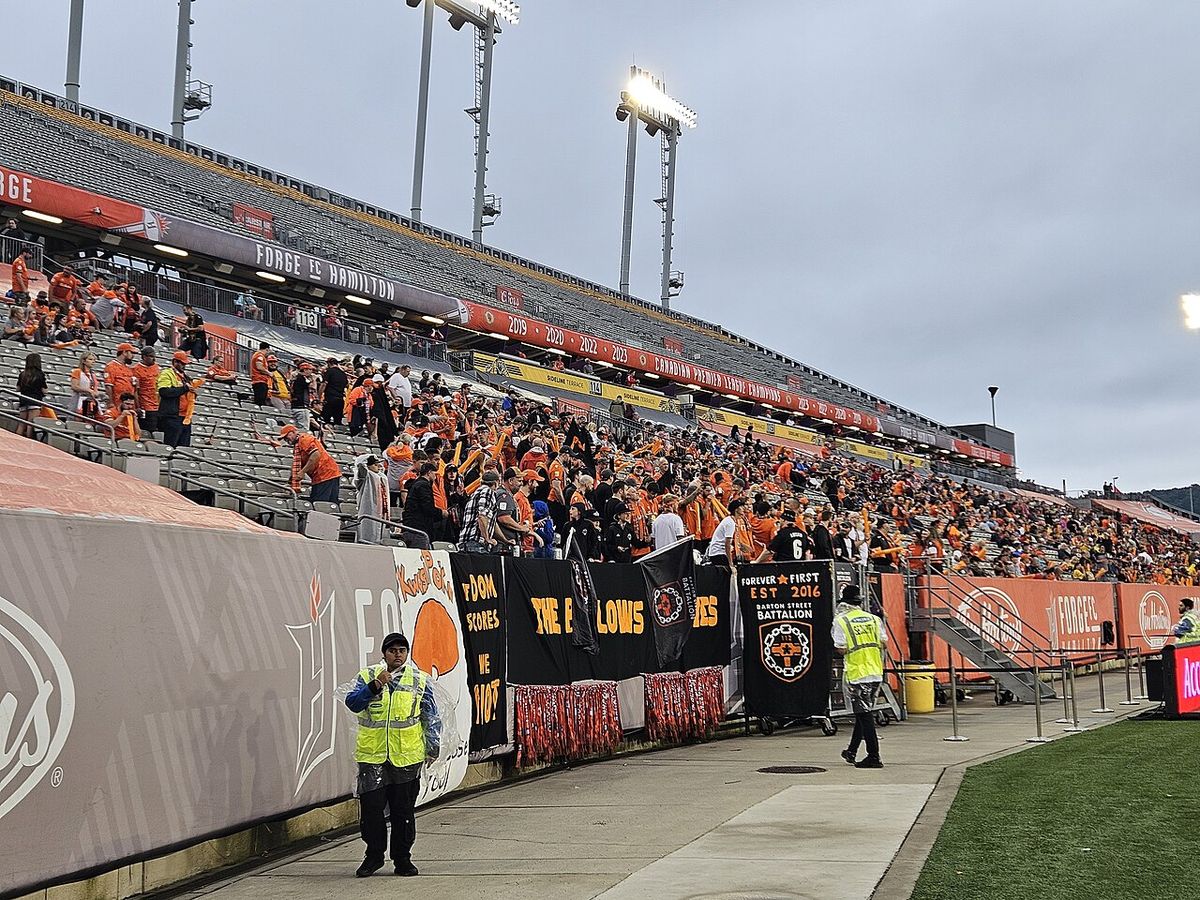
Hamilton Stadium is primarily the home venue for two professional sports franchises, anchoring its year-round schedule and providing consistent economic activity for the surrounding area. The Hamilton Tiger-Cats of the Canadian Football League have been a tenant since the stadium's opening in 2014, playing their entire home schedule there during the CFL season from June to November, including traditional events like the Labour Day Classic. Forge FC of the Canadian Premier League became a tenant in 2019, with the stadium hosting the league's historic inaugural match in April and its first championship final in October of that year, and the team has gone on to win four CPL championships as of 2026, becoming a dominant force in the league. Beyond its primary tenants, the stadium has hosted a diverse range of other sporting events, having been the sole soccer venue for the 2015 Pan American Games, hosting all 32 men's and women's matches during that international multi-sport event, which tested its operational capabilities at the highest level.
The stadium's design and artificial turf surface make it suitable for rugby union matches, and it has hosted commercial events like the Nitro Circus dirt biking tour, demonstrating its adaptability for non-traditional sports entertainment. Music concerts also utilize the venue's infrastructure and expandable capacity, contributing to its role as a regional entertainment hub that competes with other arenas in the Greater Toronto and Hamilton Area for major touring acts. Premium seating options, including club and suite levels, are available for all events and for private rentals, with lounges designed for both corporate and social functions, adding revenue streams beyond ticket sales. The stadium's nickname, 'the donut box,' references its former sponsor Tim Hortons and the rectangular shape of its grandstand layout, becoming part of the local vernacular for the venue and showing how the community has embraced the facility despite corporate naming changes.
Notable Events Hosted
Since its opening, Hamilton Stadium has been selected to host several prestigious national and international sporting championships, building a reputation for reliability, excellent facilities, and a capable local organizing committee. The venue's ability to meet high standards for both football and soccer, including FIFA regulations and CFL specifications, has made it a favoured location for major tournaments that require such dual certification and flexible field configurations. Hosting events like the Vanier Cup brings significant economic activity and national television exposure to the city, while the Pan Am Games provided an early test of its operational capabilities on an international stage, which it passed successfully. The stadium's expandable design is a key feature that allows it to be configured for large-scale events, with concrete plans in place to increase capacity to over 40,000 for future Grey Cup games, a long-stated goal for the Tiger-Cats organization and the city.
- 2015 Pan American Games Soccer Tournament: Hosted all 32 men's and women's matches as the dedicated soccer venue, a central part of the Games' sports program.
- 52nd Vanier Cup (U Sports national championship): Held in November 2016, marking the stadium's first national university football final and introducing the venue to a new audience.
- 53rd Vanier Cup (U Sports national championship): Held in November 2017, confirming the venue's suitability for back-to-back major events and its ability to host national championships reliably.
- Canadian Premier League Inaugural Match: April 2019, featuring the stadium's new tenant, Forge FC, and launching a new professional soccer league in Canada.
- First Canadian Premier League Finals Match: October 2019, establishing the stadium as a championship venue for the new league and hosting the first of Forge FC's four titles.
- Multiple CFL regular season and playoff games for the Hamilton Tiger-Cats, including the annual Labour Day Classic which is a highlight of the local sports calendar.
- Toronto Argonauts regular season games in 2015 (two home games relocated due to MLB conflicts at Rogers Centre).
- Canadian Junior Football League and university football games, including the McMaster Marauders in 2016, supporting local and regional amateur sport.
Its successful role in hosting the Vanier Cup for two consecutive years solidified its reputation as a top-tier venue for Canadian university football. It is capable of handling the logistics of a national championship including media, teams, and thousands of travelling fans. The 2026 season will see the debut of The Porter Hangar, a new premium fan experience area. The Porter Hangar is set to open for the Tiger-Cats' home opener on June 4, 2026. This continues the evolution of the stadium's amenities and its commitment to enhancing the spectator experience year after year.
Renaming and Recent Developments
On December 18, 2024, it was announced that the stadium's naming rights agreement with Tim Hortons had expired after the initial ten-year term and would not be renewed by the company, ending a decade-long association. The venue was subsequently given the temporary, generic name Hamilton Stadium while the City of Hamilton and Hamilton Sports Group seek a new corporate partner for a naming rights deal, a common process in stadium management that can take several months or years to complete. This change marks a new chapter for the venue, separating it from the direct corporate association with the coffee chain while it operates under its municipal identity, which emphasizes its role as a public asset for the community. The stadium continues to be colloquially known as 'the donut box,' a nickname that references its former sponsor and the rectangular shape of its grandstands, demonstrating how informal names can persist beyond formal sponsorship periods and become ingrained in local culture.
Recent developments for the 2026 season are focused on enhancing the fan experience and maintaining the stadium's status as a modern facility that can compete for events and attract spectators. The official opening of a new premium space called The Porter Hangar is scheduled for the Tiger-Cats' home opener on June 4, 2026, adding a new hospitality option for spectators and generating additional revenue for stadium operations. The stadium continues to be a central hub for sports in Hamilton, alongside other city venues like the renovated TD Coliseum, which will host the new American Hockey League team, the Hamilton Hammers, starting in the 2026-27 season, creating a broader sports district. Hamilton Stadium's ongoing role is confirmed by its full slate of Tiger-Cats and Forge FC games for the 2026 season, and it remains a potential host for future Grey Cup games due to its expandable capacity and proven track record with large events, keeping it at the forefront of Canadian stadium conversations.
Stadium Specifications and Financial Model
The technical specifications of Hamilton Stadium were designed with flexibility, fan comfort, and multi-sport functionality as primary goals, resulting in a venue that stands out among its peers in Canada. The FIFA- and CFL-approved artificial turf field measures to full international soccer standards, allowing it to host matches at the highest level of CONCACAF and Pan American competition without requiring temporary modifications or risking player safety. The seating bowl offers more legroom and corridor space than many comparable Canadian venues, a deliberate design choice to improve the spectator experience over older stadiums and to encourage longer stays and higher concession spending. Infrastructure includes extensive wireless connectivity for fans and media, modern concession stands with varied food options, and a high ratio of washroom facilities to spectators to reduce lines during events, all of which contribute to positive reviews and repeat attendance.
The stadium's expandable design is its most notable technical feature, allowing it to grow from its base 22,500 seats to a capacity exceeding 40,000 for major events through the addition of temporary stands, a capability that makes it a leading contender to host the CFL's Grey Cup championship in the future. The financial model for the stadium's construction and operation involved a partnership between three levels of government and a private sports enterprise, sharing both the upfront costs and the long-term operational responsibilities and benefits. The total construction cost was $145 million, funded through contributions from the federal government, the province, and the municipality, with the Tiger-Cats' long-term lease providing a steady revenue stream for ongoing operations and minor capital upgrades. The following table outlines the primary funding sources for the stadium's construction, demonstrating the shared public investment and the significant role each level of government played in making the project a reality.
| Funding Partner | Contribution (CA$) |
|---|---|
| Federal Government of Canada | $69 million |
| City of Hamilton | $54 million |
| Province of Ontario | $22 million |
The financial model includes the Tiger-Cats' 20-year lease, which contributes $1.2 million annually to stadium operations. Revenue also comes from other events like concerts, soccer matches, and premium seating rentals. This creates a diversified income stream for the stadium. The partnership between public funders and private tenants has been central to the stadium's development and ongoing maintenance. This partnership enables the stadium to host a wide variety of community and national events. It ensures the stadium's utility extends beyond the core professional sports schedules and benefits the broader public who helped fund it.
Questions about Hamilton Stadium
What teams play at Hamilton Stadium?
Hamilton Stadium is the home venue for two professional sports teams. The Hamilton Tiger-Cats of the Canadian Football League (CFL) have played there since it opened in 2014, continuing a football tradition in Hamilton that dates back to 1869 with the original Hamilton Football Club. Forge FC of the Canadian Premier League (CPL) began playing at the stadium in 2019, with the venue hosting the league's very first match and its first championship final that same year, and the team has since won four league championships. Both teams are operated by Hamilton Sports Group and are tenants of the city-owned stadium, sharing the facility throughout the spring, summer, and fall seasons, which requires careful scheduling and field management.
Why was the stadium renamed from Tim Hortons Field?
The stadium was renamed to Hamilton Stadium in December 2024 after the initial ten-year naming rights agreement with the Tim Hortons coffee chain expired. Tim Hortons, which was founded nearby and had its name on the venue since 2013, chose not to renew the sponsorship deal when the term concluded, a common business decision in corporate sponsorship. The name Hamilton Stadium is considered a temporary, generic identifier while the City of Hamilton and stadium operators seek a new corporate partner for a long-term naming rights agreement, a process that involves marketing the venue to potential sponsors. The venue was known as Tim Hortons Field from 2013 until the end of 2024, and prior to that, it was called the Hamilton Pan Am Soccer Stadium during the 2015 Games, showing its history of name changes tied to specific events and sponsorships.
What was on the site before Hamilton Stadium was built?
Hamilton Stadium was built on the exact same site as the previous Ivor Wynne Stadium, which had been a sports venue in Hamilton since 1930 and was a landmark in the city's east end. Ivor Wynne Stadium was originally called Civic Stadium when it opened and was the long-time home of the Hamilton Tiger-Cats since 1950, hosting countless memorable games and several Grey Cup championships over the decades. The old stadium was completely demolished to make way for the new, modern facility, which opened in 2014 after the city decided against a renovation-only plan and opted for a full rebuild to meet contemporary standards. A part of the legacy was preserved by naming the new press box the Ivor Wynne Press Centre as stipulated in the Tiger-Cats' 2014 lease agreement, ensuring the name remains associated with the site in an official capacity.
How many people can Hamilton Stadium hold?
Hamilton Stadium has a fixed seating capacity of 22,500 for regular season games of the Tiger-Cats and Forge FC, which provides an intimate atmosphere while still accommodating a large crowd. However, its design allows for significant temporary expansion to host larger events through the addition of temporary grandstands, particularly in the open end zones and along the sidelines. The stadium can be configured to hold more than 40,000 spectators for special occasions, such as a potential Grey Cup championship game, major concerts, or international soccer tournaments, making it one of the largest venues in the region when expanded. This expandable feature is a key part of the stadium's multi-purpose design and was a consideration from its initial planning stages to ensure future viability for blockbuster events that require larger capacities than typical league games.
What major events has Hamilton Stadium hosted?
The stadium has hosted several major sporting events since opening, establishing its credentials as a premier venue in Canada. It was the sole soccer venue for the 2015 Pan American Games, hosting all 32 men's and women's matches during the multi-sport event and providing a platform for emerging international talent. It has also hosted the U Sports national football championship, the Vanier Cup, in both 2016 and 2017, bringing the top university teams to Hamilton and showing the future stars of the CFL. The stadium hosted the historic inaugural match and first championship final for the Canadian Premier League in 2019, playing a foundational role in the launch of Canada's top-tier professional soccer league. It regularly hosts CFL games and has also staged rugby, amateur football, and music concerts, demonstrating its versatility as a premier multi-purpose venue in Southern Ontario that can adapt to many different types of events.
Who owns and operates Hamilton Stadium?
Hamilton Stadium and the land it sits on are owned by the City of Hamilton, which contributed $54 million to its $145 million construction cost and retains ultimate responsibility for the capital asset. The operational master licence agreement is held by Hamilton Sports Group (HSG), a private partnership that owns the Hamilton Tiger-Cats and Forge FC and manages all stadium events, bookings, and day-to-day functions. HSG is led by businessman Bob Young, who is the chairman and largest shareholder and was a key figure in the stadium development negotiations, providing leadership continuity throughout the project's lifecycle. The group includes other partners such as Stelco and executives Scott Mitchell and Jim Lawson, combining business and sports expertise. The Tiger-Cats and Forge FC pay rent to be tenants of the city-owned facility, with the Tiger-Cats' lease set at $1.2 million annually for 20 years, creating a public-private partnership model that funds operations.
Sources and further reading
- Hamilton Stadium (Wikipedia)
- Sports events in Hamilton 2026, dates & tickets (spectaculos.ca)
Checked by the Garbutt Disposal desk. Last updated 2026-10-26.