U Sports
U Sports is the national sport governing body for university athletics in Canada. It oversees more than twenty national championships across four regional conferences, representing over fifty universities and thousands of student-athletes. The organization sets eligibility standards, coordinates national competitions, and administers athletic scholarship programs. U Sports plays a central role in developing high-performance athletes and providing a major pathway to professional leagues, including the Canadian Football League and National Hockey League.
Historical development and governance
University sport in Canada emerged in the early 20th century through regional intercollegiate associations that organized competitions in sports like football, hockey, and basketball. These bodies operated independently without a single national authority for governance, eligibility standards, or national championships. The collapse of the CIAU Central in the mid-1950s accelerated calls for a unified national body. In 1961, Major W. J. (Danny) McLeod, the athletic director at the Royal Military College of Canada, directed the establishment of the Canadian Interuniversity Athletic Union. The CIAU aimed to unify university sport by providing standardized eligibility rules and coordinating national championships, creating a consistent administrative structure for the first time. From 1965 to 1967, former McMaster University athletic director Ivor Wynne served as CIAU president and chaired a committee studying athletic scholarships.
The CIAU decided in 1967 that scholarships should not be awarded solely on athletic merit, upholding a principle that financial support be based on academic achievement. The organization also felt that students who accepted National Collegiate Athletic Association scholarships in the United States would not have met Canadian academic standards. In 1968, Wynne helped propose a Prairie Bowl in Western Canada as part of a national playdown for the CIAU College Bowl. The organization expanded its championship offerings through the 1970s and 1980s and formally incorporated a growing number of women’s sports. In 2001, the CIAU rebranded as Canadian Interuniversity Sport to modernize its identity and improve its public visibility.
The CIS era emphasized more formalized governance practices, expanded commercial and media partnerships, and increased broadcasting of national events like the Vanier Cup. In October 2016, CIS underwent another major rebranding, becoming U Sports to appeal to a broader audience and simplify its branding. Since 2016, U Sports has prioritized digital media growth, unified championship branding, and enhanced support for athlete recruitment, academic standards, mental health, and gender equity initiatives. The organization today operates with a governance model balancing national consistency and regional autonomy through its four conferences.
Conference structure and membership
U Sports operates as the national governing body, setting policies and standards for all 58 member institutions. These universities are organized into four regional athletic conferences, which operate under the U Sports umbrella but also organize their own regional championships and regular-season schedules. The conferences are Atlantic University Sport, Canada West, Ontario University Athletics, and the Réseau du sport étudiant du Québec. Each conference has its own administrative office and is responsible for member compliance with U Sports regulations. Some institutions hold membership in both U Sports and the Canadian Collegiate Athletic Association for different sports.
The governance model ensures a balance between national consistency and regional autonomy. U Sports establishes national eligibility rules, sanctions national championships, and negotiates national broadcast and sponsorship agreements. The conferences manage day-to-day operations, including scheduling, officiating, and disciplinary matters for regular-season play. This structure allows for the unique characteristics and geographic challenges of each region to be addressed while maintaining a cohesive national framework for high-performance university sport. The conferences are sometimes referred to as leagues within their specific sports.
- Atlantic University Sport (AUS) represents universities in Canada's Atlantic provinces.
- Canada West (CW) comprises universities in the provinces of British Columbia, Alberta, Saskatchewan, and Manitoba.
- Ontario University Athletics (OUA) is the largest conference, representing universities in Ontario.
- Réseau du sport étudiant du Québec (RSEQ) governs university sport within the province of Quebec.
Athletic funding, scholarships and regulations
U Sports member institutions offer athletic scholarships known as Athletic Financial Awards, which are subject to minimum academic requirements for the student-athlete. These awards are capped and may not exceed the value of the student’s tuition and compulsory fees. Universities may also provide additional non-athletic awards, such as academic scholarships or needs-based grants, provided these additional funds do not include athletic criteria. In the 2008-09 academic year, one in two U Sports athletes received an athletic scholarship. Beginning with the 2024-25 season, U Sports changed its policy to allow students to receive athletic scholarships regardless of the grades they received in their final year of high school or CEGEP.
Institutions are now required to allocate at least 45 percent of their athletic scholarship units to athletes on men’s teams and at least 45 percent to athletes on women’s teams. Many schools also operate booster-support programs where alumni, parents, or corporations can donate to funds designed to offset a student-athlete’s tuition and living costs. The University of Windsor’s Adopt-A-Lancer program is one example. U Sports has no regulations limiting how much each school can provide to teams through such private support. The Université Laval's Rouge et Or football team, winner of seven of the last twelve Vanier Cups, is so successful with fundraising that the team trains in Florida during the spring.
Canadian Hockey League teams offer financial support for their graduates who attend school within two years of playing major junior and choose to play for a U Sports school. This support is based on a model where the league gives scholarships commensurate with the seasons the athlete played in the CHL. This partnership creates a significant financial pathway for major junior hockey players to pursue university education and sport. The combination of Athletic Financial Awards, private booster funds, and CHL scholarships creates a complex but vital financial ecosystem for U Sports athletes.
- Athletic Financial Awards (AFA) are capped at tuition and compulsory fees.
- Additional non-athletic awards are permitted beyond the AFA cap.
- Since 2024-25, high school grades no longer disqualify students from AFAs.
- At least 45% of athletic scholarship units must go to each gender.
- Booster programs like Adopt-A-Lancer provide supplementary private funding.
- Canadian Hockey League teams offer scholarships to graduates who play U Sports.
- The Université Laval football program uses private funds for spring training in Florida.
Sponsored sports, championships and pilot programs
U Sports currently awards 23 national championship titles across a wide range of team and individual sports. The organization sanctions competition in basketball, cross country, curling, fencing, field hockey, football, golf, ice hockey, rugby union, soccer, swimming, track and field, volleyball, and wrestling. In 2024, tennis became the first Pilot Sport in U Sports history, commencing play in partnership with Tennis Canada. A Pilot Sport is a trial program intended to assess viability for full championship status. It was announced that women’s flag football will be added as a Pilot Sport in the 2027-28 season, which will bring the total number of national championships awarded to 24.
The national championships are the pinnacle of the U Sports calendar, with events hosted at campus sites across the country. These tournaments determine the national champion in each sport and are often broadcast on national television or streaming platforms. The Vanier Cup for football is the most prominent and historically significant of these championships. The 2026-27 championship schedule includes events such as the Women’s Field Hockey championship from November 4 to 8 and the Men’s Soccer championship from November 12 to 15. U Sports coordinates these events to provide a consistent national competitive structure for thousands of student-athletes.
The organization's approach to sport development includes the strategic introduction of new sports through the pilot program. The success of the tennis pilot will inform its potential elevation to a full national championship sport. The planned addition of women’s flag football reflects a response to the sport's growing popularity and its inclusion in other major competitions. These expansions demonstrate U Sports's role in evolving the offering of university athletics in Canada, ensuring the sport menu remains relevant and inclusive for participants and fans.
Athlete development and professional pathways
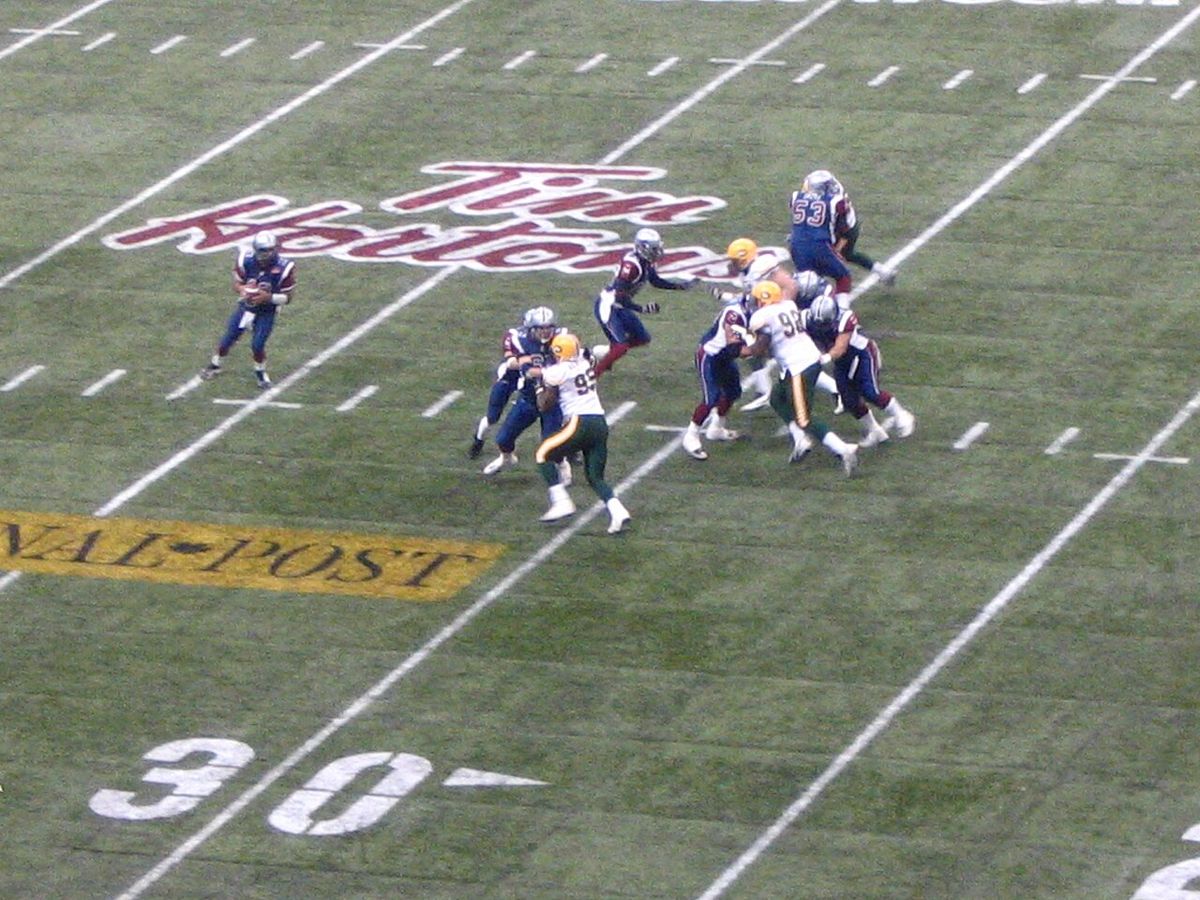
U Sports serves as a critical development pathway for athletes aspiring to professional careers in Canada and internationally. The organization’s football programs are a primary feeder system for the Canadian Football League, with the annual East-West Bowl serving as a key evaluation event. The 2026 East-West Bowl, held at the University of Waterloo on May 9, featured 107 of the top Canadian university football players eligible for the 2027 CFL Draft. The event included a week of practices, combines, and testing in front of CFL coaches and general managers. Team East was primarily made up of players from the AUS, the RSEQ, along with Carleton, Ottawa, Queen’s and Toronto from the OUA.
Team West consisted primarily of players from Canada West and the remaining OUA schools. The head coaching matchup was a rematch of the 2025 Mitchell Bowl, as Saskatchewan Huskies Head Coach Scott Flory led Team West against Steve Snyder of the Queen’s Gaels and Team East. The Guelph Gryphons led all schools with six players participating. Calgary, McMaster, Regina, Saint Mary’s, Saskatchewan, STFX, Waterloo, and Windsor each sent five players. The rosters featured 12 All-Canadians and 25 conference all-stars from the 2025 season, highlighting the high calibre of competition.
Hockey is another major pathway, with the Canadian Hockey League providing scholarship support for its graduates who choose to play U Sports within two years of their major junior careers. U Sports hockey programs have produced numerous professional players. The organization also partners with professional leagues like the Canadian Premier League for the CPL-U SPORTS Draft, which in 2026 consisted of two rounds with nine selections in round one and seven in round two for a total of sixteen picks. U Sports has a significant presence in international competition, with thirteen U Sports alumni and active players named to Canadian teams for the 2026 Winter Olympics, demonstrating the high performance level achieved within the university system.
Recent competitions and future direction
The 2026 season featured several high-profile national championships and evaluation events. The 2026 U SPORTS Men’s Final 8 basketball championship included games involving top-seeded teams like the University of Victoria and Carleton University, with specific scores including a 91-85 result for one contest. The East-West Bowl football event at the University of Waterloo highlighted the depth of talent across the four conferences. Rosters for the 2026 game saw last-minute changes, with players like Chris Joseph of Toronto and Jahmari Brown of Saint Mary's scratched from Team East and replaced by others including Jonathan Martel-Joseph of Sherbrooke.
For Team West, players like Joe Murphy of Alberta and Ethan Dolby of Western were scratched, while Brad Armstrong of Calgary was added to the squad. U Sports continues to expand its digital media presence and championship branding to increase the visibility of its athletes and competitions. The organization remains focused on initiatives supporting athlete mental health, academic success, and gender equity. Its role in hosting and developing athletes for major international events was confirmed by the selection of multiple U Sports athletes for the 2026 Winter Olympics.
Looking ahead, U Sports is set to grow its sport offerings with the addition of women’s flag football as a Pilot Sport in 2027. The organization will also continue to manage its relationship with professional drafts and events like the East-West Bowl. As the national governing body, U Sports is positioned to continue shaping the structure of high-performance amateur sport in Canadian universities. The scheduled 2026 UCI Road World Championships in Montréal represent another major sporting event with potential connections to the university athletics community, illustrating the broader sport ecosystem in which U Sports operates.
| Event | Date (2026-27) | Participant Details |
|---|---|---|
| Women's Field Hockey Championship | Nov. 4-8 | Sanctioned by Field Hockey Canada |
| Women's Rugby Championship | Nov. 4-8 | National championship tournament |
| Men's Soccer Championship | Nov. 12-15 | National championship tournament |
| East-West Bowl (Football) | May 9 | 107 players eligible for 2027 CFL Draft, at University of Waterloo |
| U SPORTS Men's Final 8 (Basketball) | 2026 season | Included #1 Victoria, #6 Carleton, #7 UBC, #5 Bishop's |
Questions about U Sports
What is the difference between U Sports and the CCAA?
U Sports is the national governing body for athletics at Canadian universities, which are degree-granting institutions. The Canadian Collegiate Athletic Association is the equivalent body for organized sports at colleges, which typically offer diplomas and certificates. Some institutions hold membership in both organizations for different sports, but the primary distinction is based on the type of post-secondary education provided. Both bodies organize national championships but for different categories of institutions.
How many universities are in U Sports and what are the conferences?
As of 2026, U Sports comprises 58 member universities across Canada. These institutions are organized into four regional conferences: Atlantic University Sport, Canada West, Ontario University Athletics, and the Réseau du sport étudiant du Québec. Each conference organizes its own regular-season schedules and regional championships before sending qualifiers to U Sports national championships. The conferences are responsible for day-to-day league operations and enforcement of conference-level rules.
Can U Sports athletes receive scholarships and what are the rules?
Yes, U Sports athletes can receive Athletic Financial Awards, which are athletic scholarships capped at the value of their tuition and compulsory fees. Since the 2024-25 season, students can receive these awards regardless of their final high school or CEGEP grades. Universities must also allocate at least 45 percent of their athletic scholarship units to athletes on men’s teams and at least 45 percent to athletes on women’s teams. Additional non-athletic awards like academic scholarships are also permitted.
What is the purpose of the U Sports East-West Bowl?
The East-West Bowl is an annual U Sports football all-star game that features top players who will become eligible for the following year’s Canadian Football League Draft. The 2026 event was held at the University of Waterloo on May 9 and featured 107 players from across the country. The week includes practices, combines, and testing observed by CFL coaches and general managers. A minimum of three players from each of the 27 U Sports football programs are selected to attend.
How many national championships does U Sports hold and are new sports added?
U Sports currently awards 23 national championship titles across various sports including football, basketball, hockey, and volleyball. The organization uses a Pilot Sport program to trial new sports for potential inclusion. Tennis became the first Pilot Sport in 2024, operating in partnership with Tennis Canada. Women’s flag football is scheduled to be added as a Pilot Sport in the 2027-28 season, which will increase the total number of national championships to 24.
What was U Sports called before 2016 and why did it change?
Before its 2016 rebranding, the organization was known as Canadian Interuniversity Sport from 2001 to 2016. Prior to that, it was founded in 1961 as the Canadian Interuniversity Athletic Union. The rebranding to U Sports in October 2016 was intended to modernize the organization’s identity, simplify its branding, and appeal to a broader audience including athletes, fans, and media partners. The change also aligned with a strategic shift towards digital media growth and unified championship branding.
Sources and further reading
- U Sports (Wikipedia)
- Rosters and coaching staffs announced for 2026 East-West ... (en.usports.ca)
- 2026 U SPORTS East-West Bowl rosters and coaching ... (oua.ca)
Checked by the Garbutt Disposal desk. Last updated 2026-10-26.