Scotiabank Arena
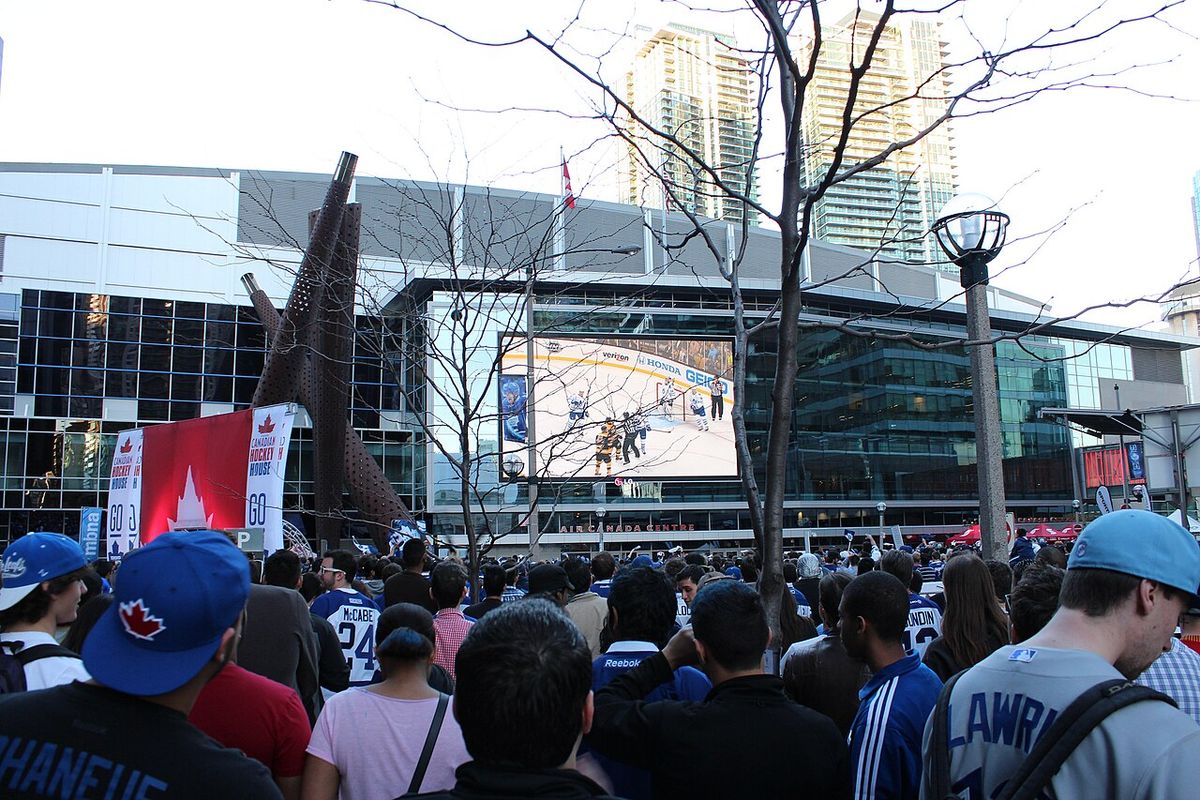
Scotiabank Arena is a major multi-purpose indoor arena located on Bay Street in downtown Toronto, Ontario. It serves as the primary home venue for the Toronto Raptors of the National Basketball Association and the Toronto Maple Leafs of the National Hockey League, two of Canada's most prominent professional sports franchises. The arena, owned and operated by Maple Leaf Sports & Entertainment, is a central hub for sports, concerts, and major events, contributing significantly to the city's economy. Opened in 1999, the facility integrates the historic Art Deco facade of the former Toronto Postal Delivery Building, is connected to Toronto's extensive PATH underground network, and was ranked the 13th busiest arena in the world in 2018.
Historical Site and Postal Building Origins
The land upon which Scotiabank Arena stands was created through infill of Toronto's inner harbour, a process that began in the 1850s and accelerated with the arrival of the railroad, resulting in the current-day shape of downtown. By 1858, the site was located between two wharves named Rees Wharf and Tinnings Wharf. As land was expanded southward, it remained under government control as a possible location for various Union Station expansions. The majority of the land was still part of Lake Ontario up until the early 1900s. By 1925, the northern parcel of the property was turned into Bayside Park, which had been part of an early proposal to transform lands south of the rail corridor into an extensive lakeside park following today's Esplanade. The remaining land was most likely under the control of Central Harbour Terminals before being selected for postal use.
In the 1930s, the property became the proposed home to Canada Post's Toronto Postal Delivery Building. A postal handling facility already existed in the east wing of the city's then-new Union Station, but it quickly reached capacity by the 1930s due to major population growth in Toronto and its surrounding region. In 1937, the Postmaster General appealed to the Minister of Public Works to approve a new replacement facility at the corner of Bay Street and Fleet Street, now Lake Shore Boulevard. Approval was granted by the federal Department of Public Works in part to stimulate the depression-impacted construction industry. Design and construction of the warehouse, built with steel and concrete, began in 1938 under architect Charles B. Dolphin, incorporating a combination of Art Deco and Art Moderne architectural style for an original cost of around $2 million, equivalent to $42.6 million in 2025 dollars.
Postal Operations and Wartime Use
The Toronto Postal Delivery Building was strategically located south of Union Station and was connected directly to the train platforms via an underground tunnel, allowing trains to directly unload mail and move it to the sorting centre. Upon completion in 1941, the building was temporarily handed over to the Department of National Defence for wartime storage purposes amid World War II. It was finally turned over to Canada Post in 1946 after required modifications were made to return it to its postal delivery purposes, reversing alterations done by the military. After refurbishment work was completed in 1948, the building now possessed the capability and equipment for proper mail sorting and other mailing processing functions. Though designed as a mail sorting warehouse, it was also the home of Postal Station 'A', which served mostly institutional and commercial clients.
The ground floor was where mail was dropped off by both railway carts and postal vans. Unsorted mail was moved by conveyor belts to the top floor and via gravity-fed mail chutes sorted by size and destination. Eventually, the sorted mail would end up back on the ground floor where it would be sent out for delivery. The building functioned as Toronto's main postal terminal until 1989. In the late 1980s, the building and its antiquated sorting equipment needed major renovations and expensive upgrades. As a cost-cutting move, part of larger overall service changes and cuts made to the Crown Corporation under the Brian Mulroney Progressive Conservatives, Canada Post decided to close the facility and move operations to an alternate, more modern circa 1970s letter processing plant on nearby Eastern Avenue, a structure with easy access to highways designed specifically for transport truck bulk delivery of mail.
Architectural Artwork and Preservation Challenges
The structure's most notable preserved features are the exterior 13-part series of limestone bas relief carvings by Louis Temporale Sr., created in 1938 and 1939. The carvings depict the history of transportation and communication in Canada through a sequential narrative. The bas relief begins with scenes showing human speech, a runner carrying a message, and Indigenous people communicating by smoke signal. It then progresses to a group of voyageurs, a schooner, and a Royal Mail steamship crossing the Atlantic Ocean from England. Later panels feature the CN train used during the 1939 Royal Tour, the mythical flying boat named 'Canopus', and northern travel by dog sled. The sculptor's son, Louis Temporale Jr., helped with restoration efforts in 1998 and in 2016 was still critical of the lack of protection of the artwork by stadium ownership for over 20 years.
A significant factor in the deterioration of the limestone carvings is their proximity to the Gardiner Expressway, which results in salt spray from winter road maintenance speeding up the erosion process. The original building is protected under the Ontario Heritage Act, which mandated the retention of the historic facade during the arena's construction through the process of facadism. This architectural approach preserved the Queenston limestone façade along the east wall facing Bay Street and the south wall facing Lake Shore Boulevard, while the rest of the building facing Union Station was demolished to make room for the new arena bowl. The integration of this historic element is a defining characteristic of the arena's exterior design.
Real Estate Transition and NBA Expansion
The 1980s real estate boom saw the Canada Post building site become surrounded by numerous skyscrapers, hotels, convention centres, the SkyDome stadium, and condominium towers. In the early 1990s, real estate developers Bramalea Limited and Trizec arranged to purchase the building from Canada Post with plans to redevelop the site into a 230,000-square-metre office, retail, and residential complex. Financial and development details imposed various conditions prior to development, including rezoning by the city and remediation of soil contamination by Canada Post. A deep prolonged recession in Ontario saw many downtown Toronto high-rise construction projects paused or cancelled outright, with limited market demand for new office space making bank loans difficult to secure. The resulting financing difficulties caused the building's ownership to revert to Canada Post in 1993, leaving the structure unused and abandoned.
By 1993, the NBA had decided to expand into Canada, entertaining three competing bids in July of that year. The NBA Expansion committee visited various proposed stadium sites in the Toronto area. Major selling points were a downtown location, easy underground access to the subway and PATH system, and proximity to the business core to make corporate boxes enticing to corporations. On September 30, 1993, the NBA awarded the team to Professional Basketball Franchise Inc., a company headed by Canadian businessman John Bitove, which became the Toronto Raptors. As terms of the winning bid, PBF was required to provide a suitable arena. The Canada Post building was ultimately chosen due to its downtown location, proposed design, features, and lot size. Other sites considered included government-owned lands at Exhibition Place, North York City Centre, and downtown at Bay Street and Wellesley Street, the site of the planned Canadian Opera Hall in the 1980s. PBF purchased the building and land for $60 million in December 1994.
Arena Wars and Ownership Consolidation
Maple Leaf Gardens Limited, the controlling owner of the Toronto Maple Leafs, was considering plans to build a new arena when the Raptors were awarded to Bitove's PBF Group. A race between the Raptors and Maple Leafs heated up centred around venues. The Raptors did not want to play in the antiquated Maple Leaf Gardens, other than when SkyDome was unavailable, and preferred the brand new multi-purpose SkyDome despite its vast size while their new arena was being built. The 1930s-era Maple Leaf Gardens was showing its age, and the Maple Leafs, in desperate desire for a new facility, began developing plans for an all-new stadium with the key criteria that it must be within close walking proximity to both the subway system and GO Transit.
During the early stages of construction, MLGL floated to the media plans to build a competing single-use stadium on adjacent property just north of the site atop the train sheds at Union Station, similar to how Madison Square Garden was constructed, as the new home for the Toronto Maple Leafs. The major problem was that the land was actually City of Toronto land leased to Canadian National Railway and Canadian Pacific Railway, who were in a major, long-standing dispute over rent payments dating back to 1969. MLGL offered the city $156 million in 1997 dollars in cash and assets to settle all outstanding claims and buy the air rights above the Union Station train platforms. During this period, the Raptors were twice fined one million dollars by the NBA for missing deadlines to begin construction, with fines donated to their charitable foundation. Disputes over the arena's future resulted in John Bitove selling his stake to Allan Slaight due to a shotgun clause. Slaight, realizing he could not share the building with the Maple Leafs, subsequently sold both the Raptors and their partially completed arena to MLGL in 1998.
- MLGL Union Station Proposal: Offered $156 million (1997 dollars) for air rights above train platforms to build a competing arena.
- NBA Penalties: Raptors fined $1 million twice for missing construction deadlines in 1997 to 1998.
- Ownership Transfer Chain: John Bitove to Allan Slaight in 1998, then Slaight to Maple Leaf Gardens Limited later in 1998.
- Budget Increase: MLGL increased the arena construction budget from the originally planned $217 million to $265 million after taking control.
Construction and Design Modifications
After the purchase of the Raptors and the arena project from PBF, the new owners revised the design-build contract with PCL Construction to expand the hockey capabilities of the new arena, with a commitment to finish the stadium in 24 months by March 1, 1999. The integration of the Maple Leafs into the new structure resulted in a 25-percent increase in construction costs, representing over $25 million in additional expenditure in 1999 dollars. Originally planned as a basketball-specific venue, major modifications were required to make the arena suitable for hockey, affecting seating configurations, ice plant infrastructure, and locker room facilities. The completed structure included a 15-storey tower that initially was Air Canada's main Toronto offices, four restaurants, and an underground parking lot.
The arena itself covered 65,000 square feet with a 165,000-square-foot office tower. A key feature was the east-west covered, climate-controlled galleria and walkway containing restaurants, the ticket office, and other commercial units. The Galleria connects Scotiabank Arena to popular locations in the downtown core such as Union Station, Bay Street, and York Street, and also connects the arena to the underground PATH network. The Galleria doubles as a historical museum by displaying numerous artifacts from the old Canada Post building. The arena's total size is 61,780.5 square metres, encompassing all these elements. Construction was completed on December 30, 1998, nine days ahead of schedule, allowing for the opening events in February 1999.
Opening Events and Early Operations
In 1998, a scheduling conflict forced the Toronto Raptors to play their final regular-season game at Copps Coliseum in Hamilton, as the Toronto Blue Jays of Major League Baseball had first right of refusal for all SkyDome dates. The Raptors had attempted to play the April 19 match at Maple Leaf Gardens but were unsuccessful. The arena's opening sequence began in February 1999 with three landmark events. The first hockey game took place on February 20, 1999, featuring the Toronto Maple Leafs versus the historic rival Montreal Canadiens. The first basketball game occurred the following night, February 21, 1999, with the Toronto Raptors facing the Vancouver Grizzlies. The opening concert was held on February 22, 1999, featuring Canadian rock band The Tragically Hip, cementing the venue's national cultural significance.
Air Canada purchased the initial naming rights to the arena for US$30 million for 20 years, leading to the Air Canada Centre name. Several nicknames emerged including 'The Hangar', but the acronym 'ACC' became the most commonly referenced shorthand for the venue and is still commonly used by local residents even after the 2018 rename, often out of habit and nostalgia rather than opposition to commercialism. In its first ten years of operation, the new arena had an estimated economic benefit of $2.4 billion to Toronto's economy. This boosted further construction in the downtown core, with many area projects completed ahead of schedule as a result of a desire to increase infrastructure and approximately $13 million in private funding invested to support economic growth.
| Opening Event | Date | Significance |
|---|---|---|
| First Hockey Game | February 20, 1999 | Inaugural NHL game in the new arena |
| First Basketball Game | February 21, 1999 | Inaugural NBA game in the new arena |
| Opening Concert | February 22, 1999 | First musical performance, featured well-known Canadian band |
| Construction Completion | December 30, 1998 | Project finished nine days ahead of schedule |
Tenants and Event Hosting
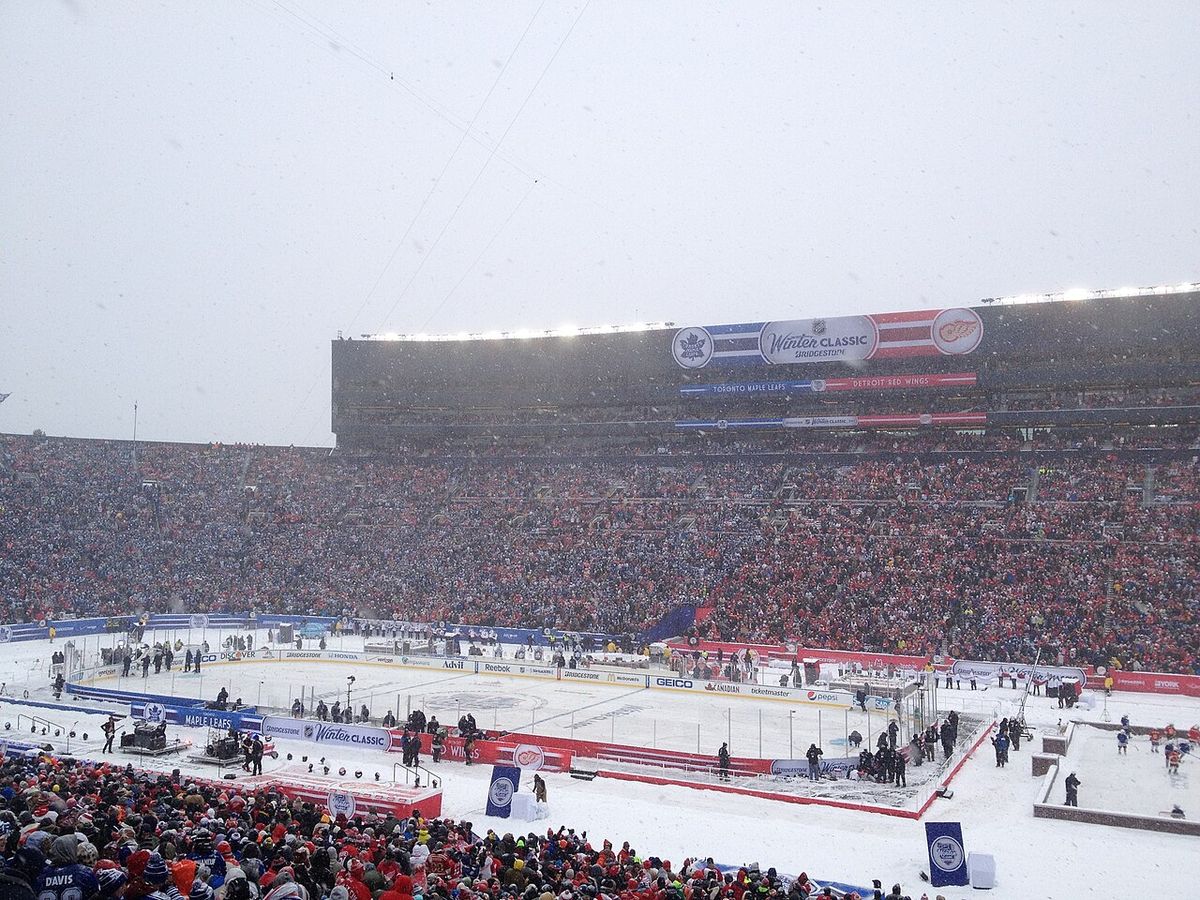
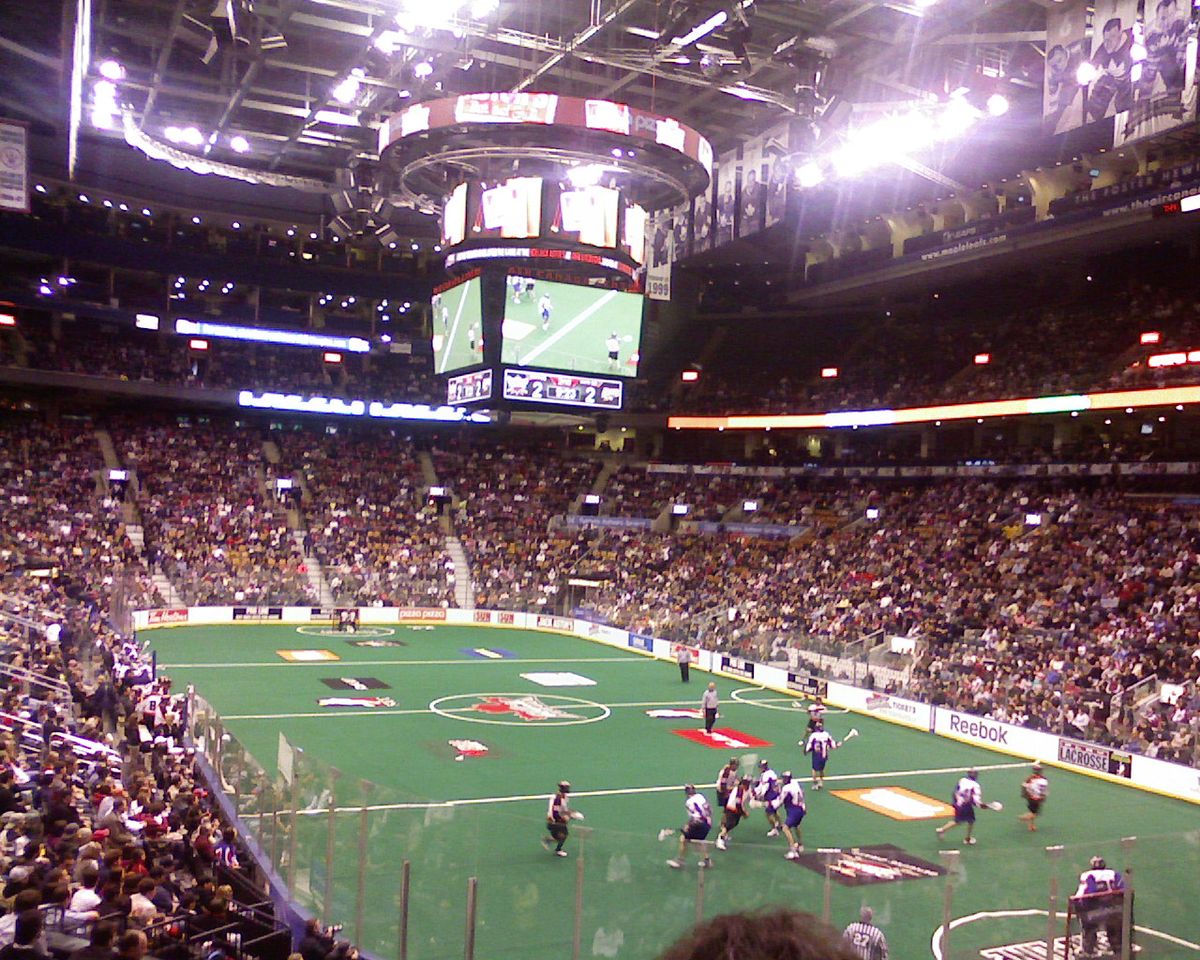
Scotiabank Arena is the full-time home of the Toronto Maple Leafs and Toronto Raptors. The Maple Leafs moved from the outdated Maple Leaf Gardens in 1999, while the Raptors transitioned from the multi-purpose SkyDome where they played their first two seasons. The arena also hosts occasional games for other teams under the Maple Leaf Sports & Entertainment umbrella, including the Toronto Marlies of the American Hockey League and Raptors 905 of the NBA G League. Former tenants include the Toronto Rock of the National Lacrosse League and the Toronto Phantoms of the Arena Football League. The arena's design maintains excellent sightlines for both hockey and basketball despite its origins as a basketball-specific venue later modified for hockey.
The venue's operational history includes managing an exceptionally high volume of events. In 2018, it was ranked the 13th busiest arena in the world and the busiest in Canada. Its location provides direct access to Union Station, connecting to GO Transit regional trains, TTC subway lines, UP Express airport rail, and regional bus services. The arena is fully integrated into Toronto's underground PATH network. The facility's versatility and central location have established it as Toronto's premier indoor event space, hosting events nearly every day of the year during peak seasons.
- Primary Tenants: Toronto Maple Leafs (NHL, 1999 to present), Toronto Raptors (NBA, 1999 to present).
- Occasional Tenants: Toronto Marlies (AHL), Raptors 905 (NBA G League), Toronto Sceptres (PWHL).
- Former Tenants: Toronto Rock (NLL), Toronto Phantoms (Arena Football League).
- Notable Non-Sporting Events: Concerts (The Tragically Hip, Rolling Stones), Disney on Ice, political conventions, esports tournaments.
- Transit Connections: Union Station (GO Transit, TTC Subway, UP Express), PATH network underground walkway.
Renovations, Penalties, and Naming Rights Change
The arena has undergone several significant renovations to maintain modern standards and fan experience. In 2003, Maple Leaf Sports & Entertainment completed a $5 million upgrade that included a new LED signage system throughout the concourses and bowl. During the summer of 2015, a more substantial $10 million renovation featured the installation of a new centre-hung scoreboard that was four times larger than the previous model, with the old scoreboard later installed at Ricoh Coliseum in Exhibition Place. In the winter of 2003 to 2004, the Alcohol and Gaming Commission of Ontario imposed a seven-day penalty on the arena for 'permitting drunken patrons to be in the licensed patrons' during a Toronto Maple Leafs game and a Rolling Stones concert in the fall of 2002. This resulted in no alcohol service from December 21 to 28, 2003, affecting multiple major events including a Raptors-Orlando Magic game on December 21, a Maple Leafs-Florida Panthers game on December 23, and the run of Disney on Ice: Toy Story 2 from December 25, 2003, to January 1, 2004.
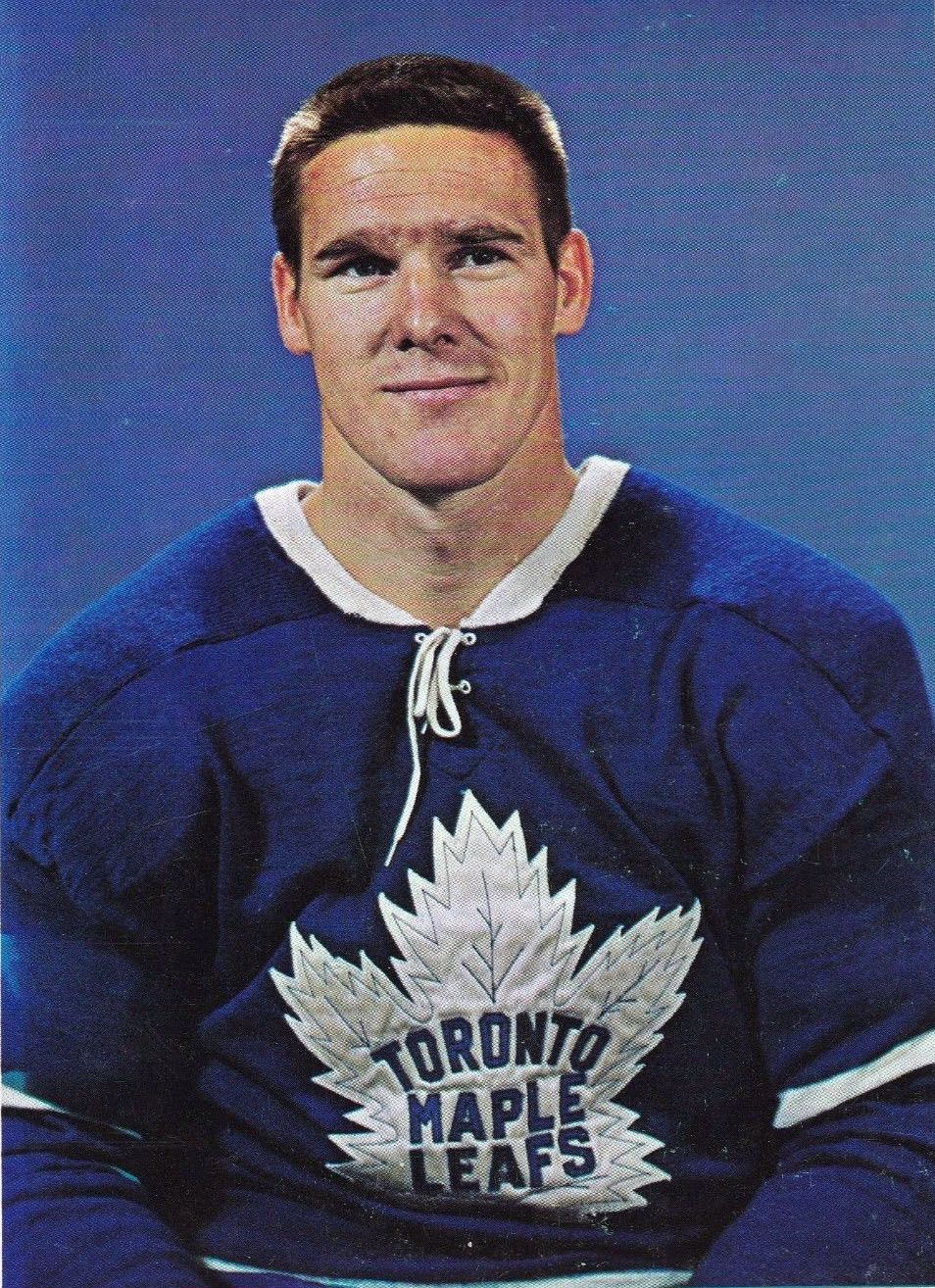
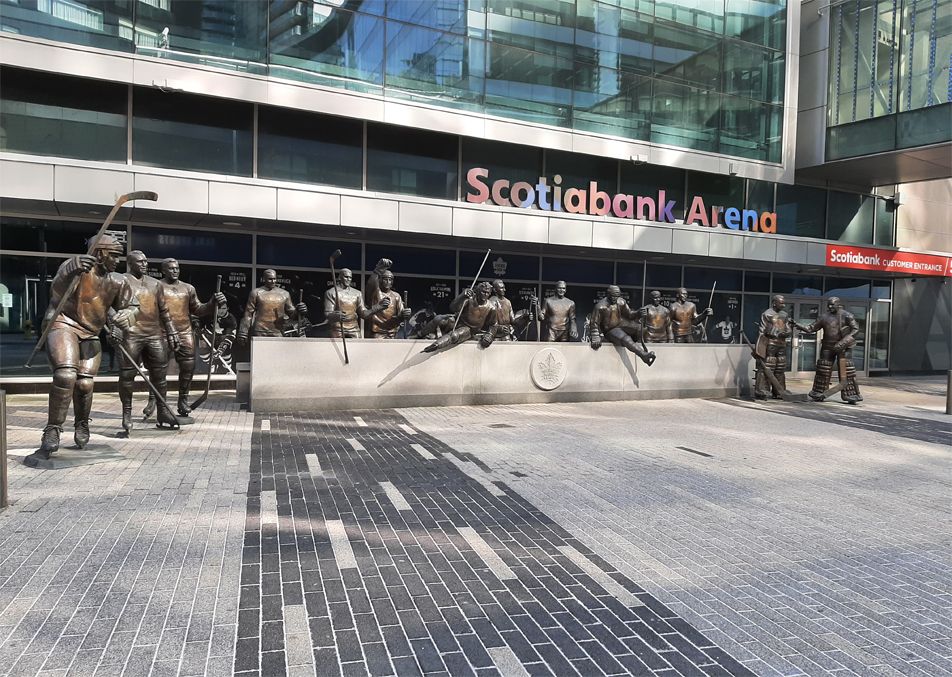
On September 6, 2014, the Legends Row statue series began unveiling outside the arena's southwest corner. Statues were added in multiple waves from 2014 to 2017, eventually featuring 14 life-sized bronze statues of former Maple Leaf players alongside a 9-metre-long granite players' bench. The honourees include Ted Kennedy, Johnny Bower, Darryl Sittler, Borje Salming, Syl Apps, George Armstrong, Mats Sundin, Dave Keon, Turk Broda, Tim Horton, Red Kelly, Frank Mahovlich, Charlie Conacher, and Wendel Clark. The Air Canada Centre was renamed Scotiabank Arena on July 1, 2018, following a landmark 20-year sponsorship agreement between MLSE and Scotiabank worth about C$800 million. This is believed to be the highest-priced annual building and team sponsorship in North American sports history, making it the third arena in Canada to bear Scotiabank naming rights after arenas in Calgary and Vancouver.
Economic Impact and Cultural Significance
Scotiabank Arena has generated substantial economic activity for downtown Toronto since its opening. In its first ten years of operation, the new arena had an estimated economic benefit of $2.4 billion. This boosted Toronto's economy and led to further construction in the downtown core, with many projects completed ahead of schedule as a result of both municipal desire to increase infrastructure and approximately $13 million in private funding invested to support economic growth. These projects included the Bay West Teamway, Union Plaza, the Galleria shopping centre, and Bremner Boulevard. The arena's development helped transform the surrounding South Core neighbourhood from underutilized industrial and railway lands into a dense mixed-use district of offices, hotels, and condominiums.
The arena's presence created thousands of direct and indirect jobs related to event operations, security, hospitality, and retail within the building and the connected Galleria. Its status as a major destination increased pedestrian traffic throughout the PATH network and supported businesses in the financial district. According to a BuzzFeed report, Scotiabank Arena is the most photographed location in Canada on Instagram, indicating its role as a civic landmark and tourist destination. The venue's combination of sports, entertainment, and corporate events ensures a consistent flow of visitors, supporting hotels, restaurants, and other services in the vicinity. The arena also functions as a community asset where charitable events and celebrations are held, solidifying its importance to Toronto's urban economy and social fabric.
Questions about Scotiabank Arena
Why was Scotiabank Arena built on the site of an old post office?
The site was chosen in 1994 by the ownership group of the newly awarded Toronto Raptors NBA franchise. The old Toronto Postal Delivery Building, vacant since 1989, offered a large, centrally located lot in the downtown core at Bay Street and Lake Shore Boulevard. Its proximity to Union Station for transit access and the city's business district for corporate suites were major selling points to the NBA expansion committee. The historic limestone facade was preserved and integrated into the new arena's design through facadism, creating a unique architectural blend. The purchase price for the building and land was $60 million, and the Raptors played at SkyDome while construction occurred.
How did the arena get its name and when did it change from the ACC?
The arena opened in 1999 as the Air Canada Centre after Air Canada purchased the naming rights for US$30 million over 20 years. Several nicknames emerged including 'The Hangar', but the acronym 'ACC' became the most commonly used shorthand. On July 1, 2018, the name changed to Scotiabank Arena following a new 20-year sponsorship agreement between Maple Leaf Sports & Entertainment and Scotiabank worth approximately $800 million Canadian. This deal is believed to be the highest-priced annual building and team sponsorship in North American sports history. Despite the official change, the ACC acronym remains commonly used by local residents out of habit and nostalgia, similar to how some still refer to the nearby Rogers Centre as SkyDome.
What is Legends Row at Scotiabank Arena?
Legends Row is an outdoor monument located at the southwest corner of Scotiabank Arena. It features a series of 14 life-sized bronze statues of legendary Toronto Maple Leafs players positioned along a 9-metre-long granite bench that resembles a hockey team bench. The statues were unveiled in multiple waves from 2014 to 2017, beginning on September 6, 2014. The honourees include Ted Kennedy, Johnny Bower, Darryl Sittler, Borje Salming, Syl Apps, George Armstrong, Mats Sundin, Dave Keon, Turk Broda, Tim Horton, Red Kelly, Frank Mahovlich, Charlie Conacher, and Wendel Clark. The installation serves as a popular photo opportunity and tribute to the team's history, funded by Maple Leaf Sports & Entertainment.
Is Scotiabank Arena connected to public transit?
Yes, Scotiabank Arena has excellent public transit connections. It is directly linked to Union Station via an indoor walkway, providing access to GO Transit regional trains, the Toronto Transit Commission subway, the UP Express train to Toronto Pearson Airport, and regional bus services. The arena is also integrated into Toronto's extensive underground PATH network, allowing pedestrian access to much of the downtown core without going outside. The original postal building was specifically located south of Union Station with a direct underground tunnel to train platforms for mail handling, a feature that influenced the arena site selection due to its unmatched transit accessibility for fans.
What other teams or events use Scotiabank Arena?
Beyond the Maple Leafs and Raptors, the arena hosts occasional games for other MLSE-owned teams like the Toronto Marlies of the AHL and Raptors 905 of the NBA G League. It serves as a venue for the Toronto Sceptres of the Professional Women's Hockey League. Former tenants include the Toronto Rock of the National Lacrosse League and the Toronto Phantoms of the Arena Football League. In 2018, it was ranked the 13th busiest arena in the world and the busiest in Canada, hosting events nearly year-round.
Sources and further reading
- Scotiabank Arena (Wikipedia)
- Scotiabank Arena partnership builds on 'hockey bank' brand (scotiabank.com)
- tours (scotiabankarena.com)
Checked by the Garbutt Disposal desk. Last updated 2026-10-22.