Tim Horton
Miles Gilbert "Tim" Horton (January 12, 1930 to February 21, 1974) was a Canadian professional ice hockey defenceman who played 24 seasons in the National Hockey League, primarily for the Toronto Maple Leafs. He was a four-time Stanley Cup champion, a seven-time All-Star, and was named one of the 100 Greatest NHL Players in 2017. Beyond his on-ice legacy, Horton co-founded the Tim Hortons restaurant chain, a cultural and commercial institution that became a ubiquitous part of Canadian life. His career was marked by exceptional durability and strength, and his life ended tragically in a single-vehicle crash at the age of 44.
Early Life and Amateur Career
Tim Horton was born in Cochrane, Ontario, at Lady Minto Hospital. His father, Aaron Oakley Horton, was a mechanic for the Canadian National Railway, and his mother was Ethel May Horton. He was christened Miles Gilbert after his two grandfathers but was known from childhood by the name Tim, which was his mother's preferred choice. The family included one brother, Jerry Horton. Economic circumstances led the family to move to Duparquet, Quebec, in 1935, before returning to Cochrane in 1938. A final move to Sudbury, Ontario, occurred in 1945, where Horton continued his schooling. He grew up playing hockey in Cochrane and later in the mining communities near Timmins, developing the physical style that would define his professional play. In 1947, he moved to Toronto to join the St. Michael's Majors junior hockey team. His performance with the Majors was distinguished, and in the 1948 to 1949 season he was named the best defenceman in the Ontario Hockey Association, catching the attention of the Toronto Maple Leafs organization.
Professional Playing Career with Toronto Maple Leafs
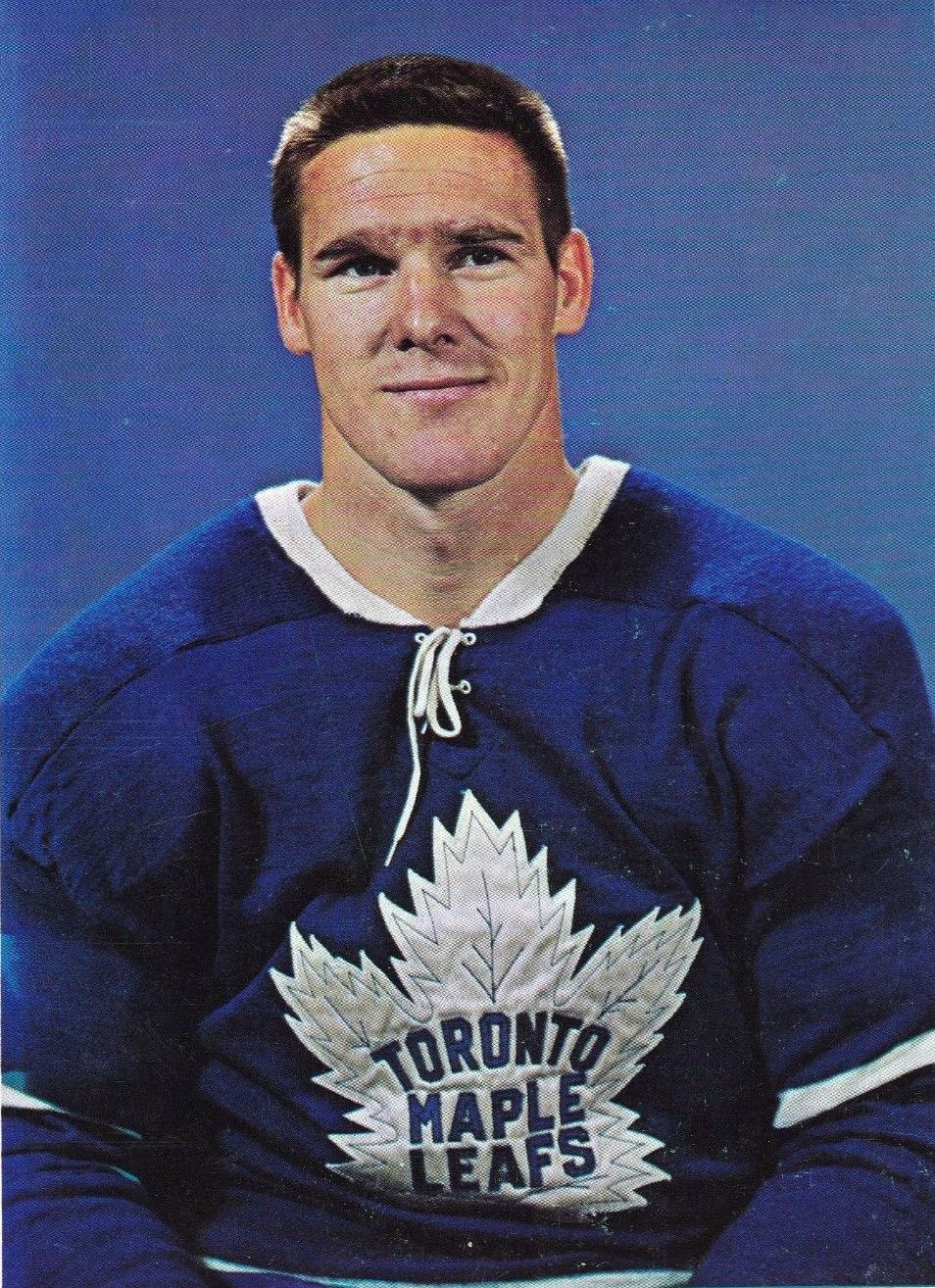
Tim Horton turned professional in 1949, assigned to the Toronto Maple Leafs' American Hockey League affiliate, the Pittsburgh Hornets. He made his NHL debut for the Maple Leafs on March 26, 1950, but spent the majority of his first three seasons developing in the AHL. With the Hornets, he won the 1952 AHL championship and was named an American League All-Star. He began his first full NHL season with Toronto in 1952, but his career was almost ended that same year when a bodycheck from Bill Gadsby of the Chicago Black Hawks broke his leg and fractured his jaw. Horton returned the following season and established himself as a mainstay on the Maple Leafs' blue line for the next 18 years. His playing style was defined by his exceptional physical strength and a calm, poised demeanour under pressure. Despite being one of the strongest players in the league, he accumulated relatively few penalty minutes for a defenceman known for his physical play, often choosing to envelop opponents in a bear hug rather than engage in more violent tactics.
Horton's value to the Maple Leafs was demonstrated through team success and individual recognition. He was a central figure on the Maple Leafs' Stanley Cup championship teams in 1962, 1963, 1964, and 1967. His 1962 playoff performance was particularly notable, as he set a league postseason record for defencemen with 16 points, a mark that stood until Bobby Orr broke it eight years later. Horton's versatility was shown during the 1964-65 season when he was deployed at right wing. He was selected to play in seven NHL All-Star Games. His consistent excellence was recognized with three selections to the NHL First All-Star Team in 1964, 1968, and 1969, and three selections to the NHL Second All-Star Team in 1954, 1963, and 1967. Perhaps his most remarkable feat of durability was a streak of 486 consecutive regular season games played for the Maple Leafs between February 11, 1961, and February 4, 1968, a club record that also stood as the NHL record for consecutive games by a defenceman for nearly four decades.
Respect from Peers and Playing StyleHorton's reputation among fellow players was one of immense respect. Chicago Black Hawks left wing Bobby Hull provided a famous assessment, contrasting Horton with more intimidating defenders. Hull stated that while some defencemen were feared for their vicious play, Horton was respected because he used his tremendous strength and talent to keep opponents in check without resorting to dangerous intimidation. This combination of skill, power, and sportsmanship cemented Horton's status as one of the most admired players of his generation. His ability to play through injury and age was legendary, with teammates and opponents alike acknowledging that he treated such setbacks as minor inconveniences.
Later NHL Career with New York, Pittsburgh, and Buffalo
At the beginning of the 1971-72 season, the Pittsburgh Penguins claimed the 41-year-old Horton in the intra-league draft. He signed a one-year contract estimated at $100,000, which was the largest contract in the five-year history of the Penguins franchise at that time. His season in Pittsburgh was hampered by injury, including a broken ankle and a separated shoulder, limiting him to 44 games and 11 points. Despite his age and these physical setbacks, his former Maple Leafs coach Punch Imlach, then the head coach and general manager of the Buffalo Sabres, acquired Horton in the 1972 intra-league draft.
Horton joined the Sabres at age 42, also dealing with considerable nearsightedness. His contribution was significant enough that he signed a contract extension in the following off-season. While playing for the Sabres, Horton wore the number 2, as teammate Rick Martin already wore his familiar number 7. The Maple Leafs initially honoured Horton's number 7 alongside King Clancy in a 1995 ceremony, and under a revised policy, formally retired the number for both players on October 15, 2016.
Business Ventures and the Founding of Tim Hortons
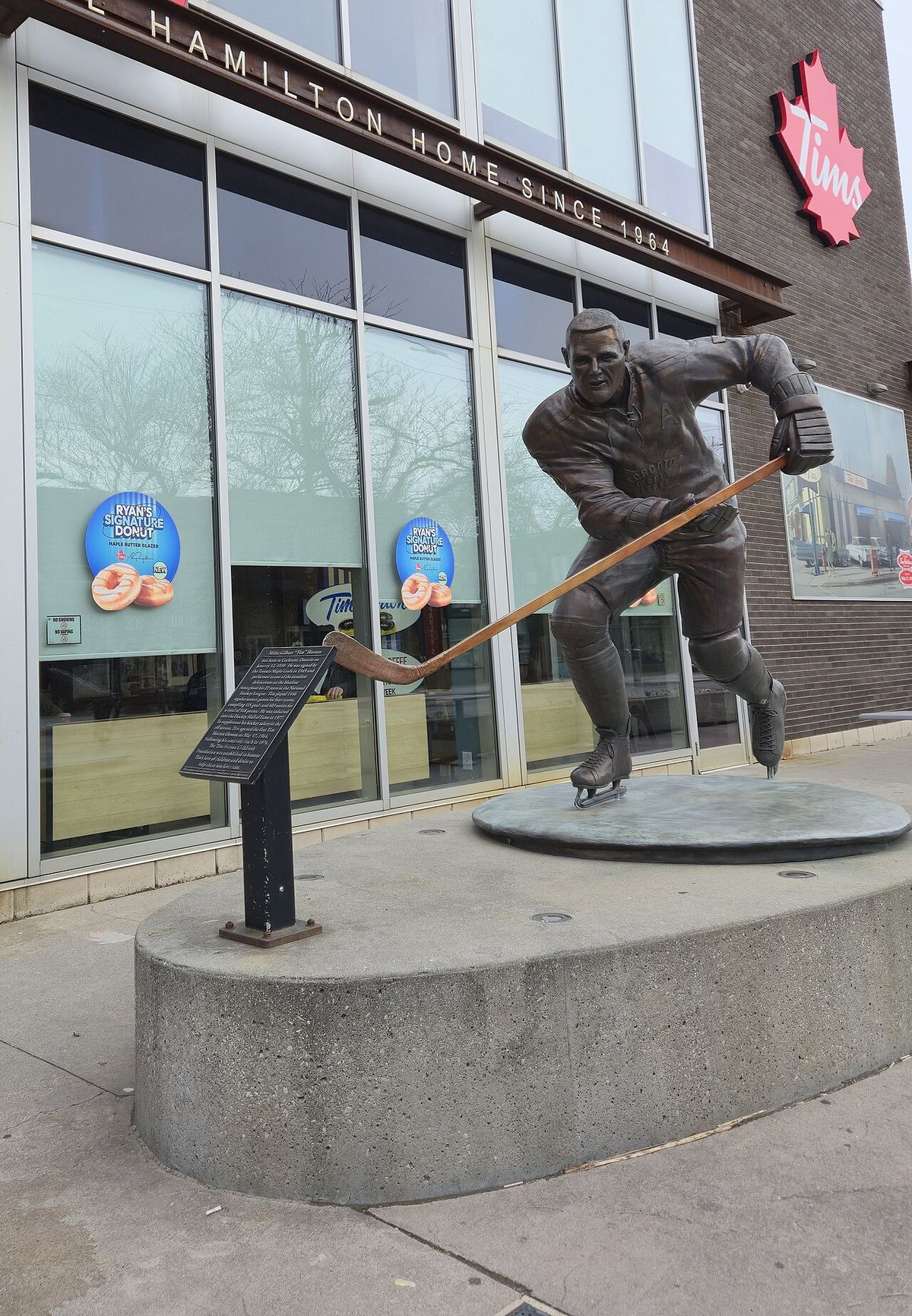
Alongside his hockey career, Tim Horton pursued several business interests. Before entering the food service industry, he operated a hamburger restaurant and a Studebaker automobile dealership in Toronto. The original menu featured coffee and donuts, including some of Horton's own recipes. The business model proved successful, and by 1968 it had expanded into a multi-million dollar franchise system. The chain's growth continued steadily, reaching 40 stores at the time of Horton's death in 1974. Following the crash, Horton's business partner Ron Joyce purchased the Horton family's shares in the company for one million dollars, becoming the sole owner. Under Joyce's leadership, the chain expanded exponentially across Canada and into international markets. By 2013, there were nearly 4,600 Tim Hortons stores in Canada alone. The company later became part of Restaurant Brands International, a multinational conglomerate that also owns Burger King, Popeyes Louisiana Kitchen, and Firehouse Subs. The personal connection between the Horton and Joyce families continued through the marriage of Horton's eldest daughter, Jeri-Lynn, to Ron Joyce's son, Ron Joyce Jr.. The couple owned and operated a Tim Hortons franchise in Cobourg, Ontario, until 2023.
Death, Investigation, and Legal Aftermath
Tim Horton died in the early morning hours of February 21, 1974, after losing control of his De Tomaso Pantera sports car on the Queen Elizabeth Way in St. Catharines, Ontario. He was driving alone back to Buffalo after playing for the Sabres against the Maple Leafs in Toronto, a game in which he was named one of the three stars despite sitting out the third period with jaw and ankle injuries. The Pantera had been given to him by Sabres general manager Punch Imlach as an incentive to return for another season. After the game, Horton stopped at his business office in Oakville, where he met Ron Joyce. While there, Horton phoned his brother Gerry, who recognized from his speech that Tim had been drinking and tried to persuade him not to drive. Joyce also offered Horton a place to stay for the night. Horton declined both offers and continued his journey.
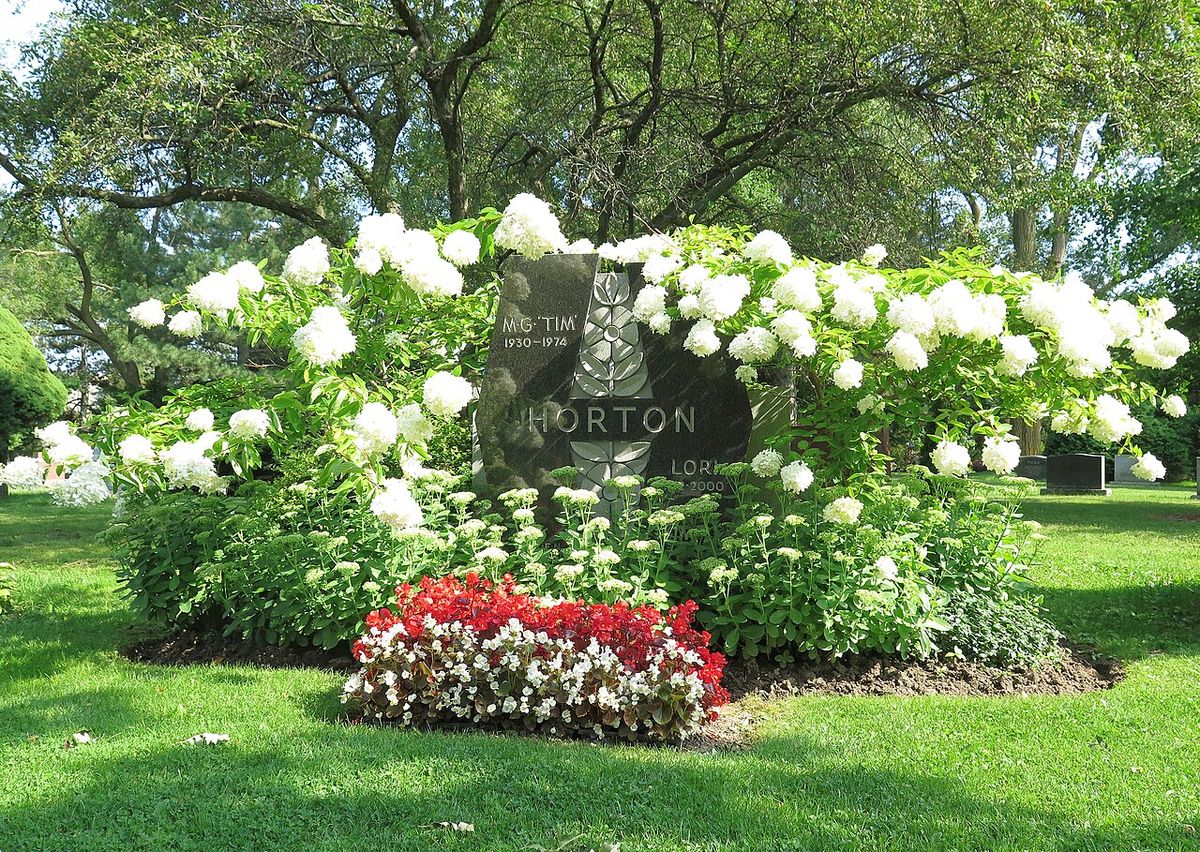
Shortly after 4:00 a.m., Ontario Provincial Police received a report of a car travelling at high speed on the QEW. About thirty minutes later, an officer observed Horton's vehicle speeding near Vineland, activated his siren, and attempted to pursue it but lost sight. Near the Lake Street exit in St. Catharines, Horton's car failed to negotiate a curve, entered the centre median, and its tire caught a recessed sewer. The vehicle flipped several times before coming to rest on its roof in the opposing lanes. Horton, who was not wearing a seatbelt, was ejected and found 123 feet from the car. He was pronounced dead at St. Catharines General Hospital. For decades, the full circumstances were not public, but in 2005 the autopsy report was released. It revealed Horton's blood alcohol level was twice the legal limit, a half-filled bottle of vodka was found in the wreckage, and he had traces of the drugs Dexedrine and Dexamyl in his system. The report found no mechanical issues with the car and no evidence of an active police pursuit at the moment of the crash. Horton was buried at York Cemetery in Toronto.
The business aftermath involved a legal dispute between Horton's widow, Lori, and Ron Joyce. After Horton's death, Joyce offered Lori one million dollars for her shares in the 40-store chain, which she accepted. Years later, she became dissatisfied with the deal and filed a lawsuit against Joyce. The court ruled in Joyce's favour in 1993, and an appeal was declined in 1995. Lori Horton died in 2000 at the age of 68.
Honours, Awards, and Posthumous Recognition
Tim Horton's hockey achievements have been recognized through numerous honours and awards, both during his career and after his death. His legacy is preserved in the halls of fame of the NHL, a specific team, and Canadian sport at large. His statistical records, particularly for durability, stood for many years. In 2017, the NHL included him in its list of the 100 Greatest NHL Players, confirming his lasting place in the history of the game. His cultural impact in Canada was further acknowledged in 2004 when he was ranked number 59 in the CBC's The Greatest Canadian list.
- NHL First All-Star Team: 1964, 1968, 1969
- NHL Second All-Star Team: 1954, 1963, 1967
- Stanley Cup Champion (Toronto Maple Leafs): 1962, 1963, 1964, 1967
- NHL All-Star Game Appearances: 7 times
- Hockey Hall of Fame Induction: 1977
- Buffalo Sabres Hall of Fame Induction: 1982
- Canada's Sports Hall of Fame Induction and Order of Sport: 2002
- Jersey Number 7 retired by Toronto Maple Leafs: October 15, 2016
- Ranked 43rd on The Hockey News list of 100 Greatest Hockey Players: 1998
- Named one of the 100 Greatest NHL Players: January 2017
- Recipient of the Bruce Prentice Legacy Award from the Ontario Sports Hall of Fame: 2015
Career Statistics and Records
Tim Horton's NHL career statistics reflect a durable and reliable defenceman over a very long period. His most famous record was his ironman streak with the Maple Leafs, playing 486 consecutive regular season games from 1961 to 1968. This remained the Maple Leafs' club record for consecutive games and was the NHL record for consecutive games by a defenceman until it was broken by Kārlis Skrastiņš of the Colorado Avalanche on February 8, 2007. His 16 points in the 1962 playoffs stood as a record for defencemen until 1970.
Personal Life
Tim Horton married Lori Michalek of Pittsburgh in 1952. The couple had four daughters. Horton was a member of the Freemasons, belonging to Kroy Lodge No. 676 in Thornhill, Ontario. His life outside of hockey centred on his family and his growing business enterprises. His sudden death at age 44 left a lasting impact on his family, his teammates, and the many fans who admired his hockey career and the national brand he helped create.
Questions about Tim Horton
How did Tim Horton die?
Tim Horton died in a single-vehicle crash on February 21, 1974. He lost control of his De Tomaso Pantera sports car on the Queen Elizabeth Way in St. Catharines, Ontario, while driving back to Buffalo after a game. He was not wearing a seatbelt and was ejected from the vehicle. The 2005 release of his autopsy report confirmed his blood alcohol level was twice the legal limit and that he had traces of prescription drugs in his system.
How many Stanley Cups did Tim Horton win?
Tim Horton won the Stanley Cup four times, all with the Toronto Maple Leafs. His championship victories came in the years 1962, 1963, 1964, and 1967. He was a key member of the Maple Leafs' defence corps during this dominant era for the franchise. Horton played 24 seasons in the NHL, spending the majority of his career in Toronto. His performance was instrumental in securing these four championships for the team.
When was the first Tim Hortons restaurant opened?
The first Tim Hortons restaurant opened in 1964 in Hamilton, Ontario. It was originally named the Tim Horton Donut Shop and was located on Ottawa Street. Horton co-founded the business and added some of his own culinary creations to the initial menu. This single donut shop marked the beginning of what would become a massive franchise system. By 1968, the chain had already grown into a multi-million dollar operation.
Is Tim Horton in the Hockey Hall of Fame?
Yes, Tim Horton was inducted into the Hockey Hall of Fame in 1977. This was a posthumous honour, as he died in a car accident in 1974. His induction recognized his exceptional 24-season career as a durable and strong defenceman. Horton was also named one of the 100 Greatest NHL Players in history by the league in 2017. His legacy includes four Stanley Cup wins and multiple All-Star Team selections.
Which NHL teams did Tim Horton play for?
Tim Horton played for four National Hockey League teams during his career. He spent the vast majority of his 24 seasons with the Toronto Maple Leafs, from 1949 until 1970. After being traded, he played for the New York Rangers for the remainder of the 1970 season and the next. He was then with the Pittsburgh Penguins for the 1971-72 season. Horton finished his career with the Buffalo Sabres, playing from 1972 until his death in 1974.
Why are Tim Horton's jersey numbers retired?
Tim Horton's jersey numbers are retired by two NHL teams to honour his contributions. The Toronto Maple Leafs retired his number 7 in 2016, a number he shared with earlier Leafs great King Clancy. The Buffalo Sabres retired his number 2 in 1996, which he wore during his time with that franchise. These retirements are tributes to his impact as a player and leader. With the Leafs, his number 7 became an honoured jersey number long before its official retirement.
Sources and further reading
- Tim Horton (Wikipedia)
- Tim Horton Stats, Height, Weight, Position, Title (hockey-reference.com)
- Tim Horton (thecanadianencyclopedia.ca)
- The High-Speed Life and Sudden Death of Tim Horton (joedaly.net)
Checked by the Garbutt Disposal desk. Last updated 2026-10-19.