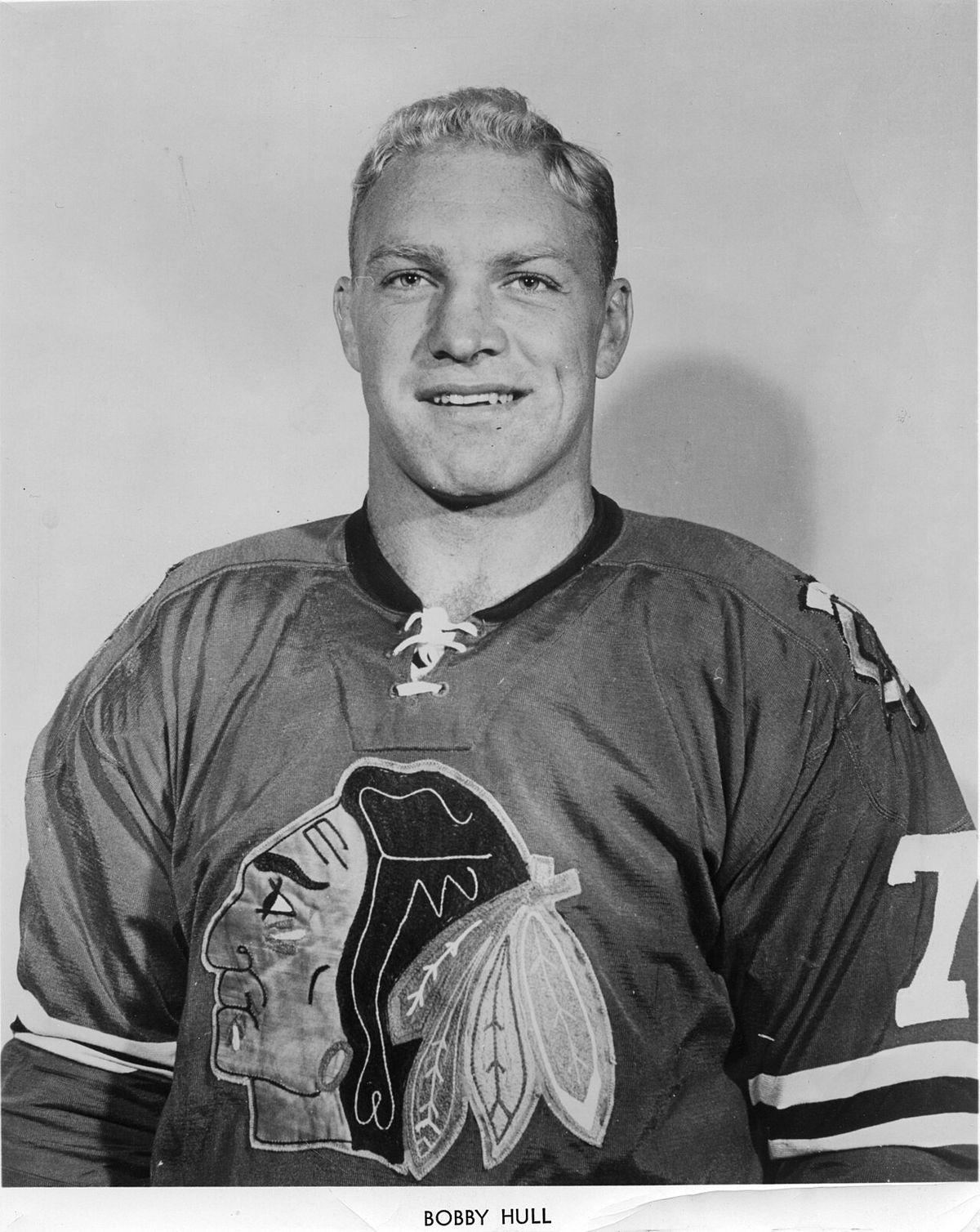
Bobby Hull
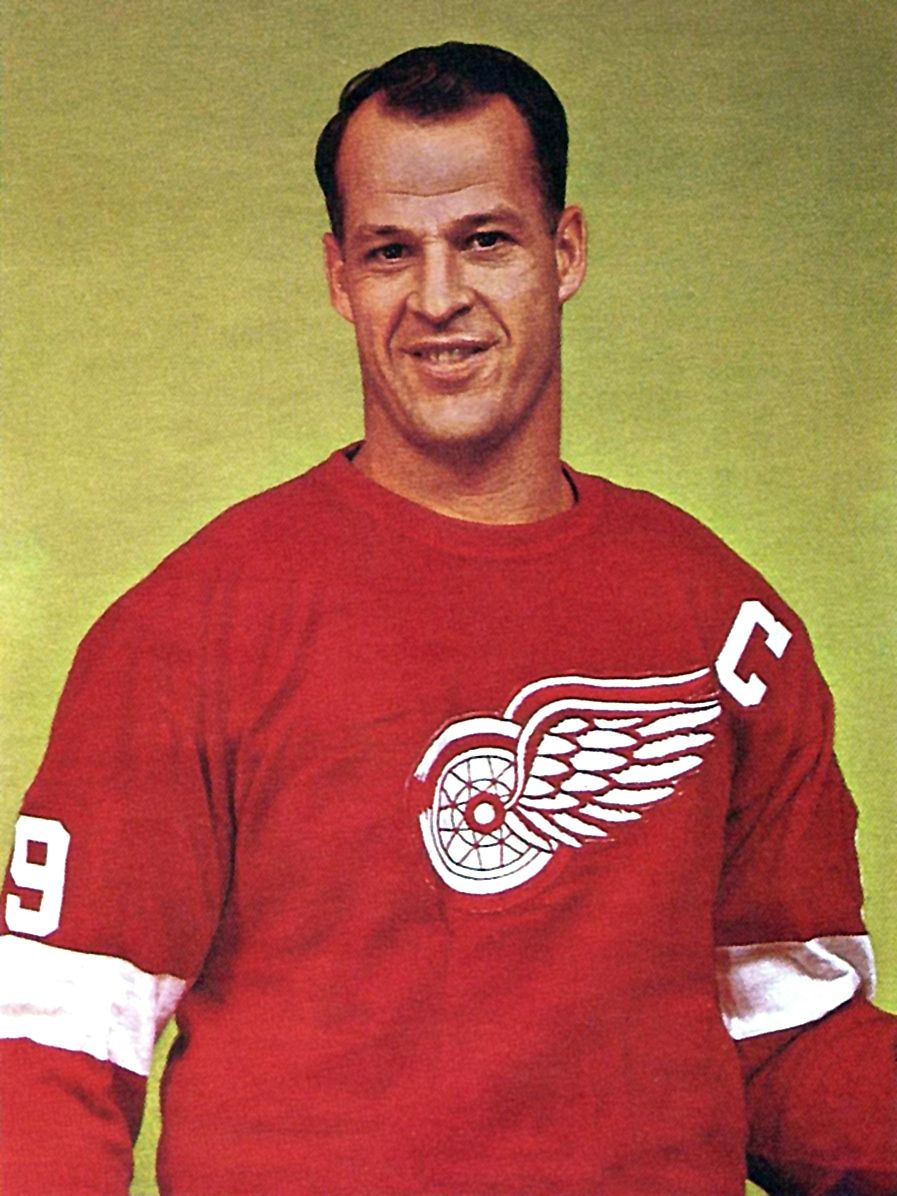
Bobby Hull, known as the "Golden Jet," was a Canadian professional ice hockey player widely regarded as one of the greatest of all time. His career, spanning from 1957 to 1980, was defined by his electrifying speed, a blistering slap shot, and his role as a marquee star in both the National Hockey League and the World Hockey Association. Hull's achievements include winning the Stanley Cup with the Chicago Black Hawks, leading the NHL in goals seven times, and becoming a foundational figure for the Winnipeg Jets. His legacy, marked by both on-ice brilliance and a complex personal history, remains a significant chapter in Canadian sport.
Early Life and Amateur Career
Robert Marvin Hull was born on January 3, 1939, in Point Anne, Ontario, the son of Lena Cook and Robert Edward Hull, a cement company foreman. His hockey journey began with minor hockey in nearby Belleville before he moved to Junior B hockey with the Woodstock Warriors in the fall of 1954. Hull led the Warriors to the 1955 Sutherland Cup as Ontario Junior B champions, an early indication of his scoring talent. He then progressed to higher levels of junior hockey, playing for the Galt Black Hawks and the St. Catharines Teepees in the Ontario Hockey Association. His prolific scoring in junior ranks caught the attention of the Chicago Black Hawks, who signed the 18-year-old winger in 1957, launching his professional career without being selected in a draft.
NHL Stardom with the Chicago Black Hawks
Hull made an immediate impact in the NHL, finishing second in Calder Memorial Trophy voting for rookie of the year in his debut 1957-58 season. He initially wore numbers 16 and 7 before switching to his famous number 9, a tribute to his childhood idol Gordie Howe. By his third season in 1959-60, Hull led the league in both goals and points, capturing his first Art Ross Trophy. He was instrumental in leading the Chicago Black Hawks to the Stanley Cup championship in 1961, ending a 23-year title drought for the franchise. Throughout the 1960s, Hull dominated as the league's premier goal scorer, leading the NHL in goals seven times, a feat second only to Phil Esposito in NHL history.
On March 12, 1966, Hull made history by becoming the first NHL player to score more than 50 goals in a single season, breaking the record of 50 shared by Maurice Richard and Bernie Geoffrion. His 51st goal was scored against goaltender Cesare Maniago of the New York Rangers and earned a seven-minute standing ovation at Chicago Stadium. He finished that 1965-66 campaign with 54 goals, the highest total of the Original Six era, and also set a new single-season points record with 97. His slapshot was once measured at 118.3 miles per hour, and his skating speed was recorded at 29.7 miles per hour. Hull's combination of power and speed made him a perennial All-Star, being named a First-Team All-Star left winger ten times in his first fifteen seasons.
The "Bobby Hull Rule" and Playing StyleHull and teammate Stan Mikita were pioneers in curving the blades of their hockey sticks, creating what were widely called "banana blades." This curvature made the puck's trajectory unpredictable and difficult for goaltenders to stop, a particular concern in an era when few goalies wore masks. The practice became so widespread that the NHL introduced a rule limiting blade curvature, which is often informally linked to Hull. The rule was initially set between 0.5 and 0.75 inches of curvature in 1968 and was later standardized to a maximum of 0.5 inches in 1970. Hull's physical build, at 5-foot-10 and 195 pounds developed from farm work, contributed to his powerful style. During his drive to break the 50-goal mark, observers noted that his wrist shot was said to be harder than his already formidable slapshot.
Landmark Move to the World Hockey Association
Despite his stardom, Hull was dissatisfied with his salary. In 1972, when approached by the upstart World Hockey Association's Winnipeg Jets, he jokingly said he would sign for one million dollars, a then-unheard-of sum. Jets owner Ben Hatskin, with financial support from other WHA owners who believed signing a major star would give the new league instant credibility, met Hull's demand. Hull signed as a player-coach for a contract worth $1.75 million over 10 years plus a $1 million signing bonus on June 27, 1972. After legal challenges from the NHL, Hull debuted for Winnipeg and became the WHA's greatest star, winning the Gordie Howe Trophy as league MVP in his first season despite playing with bone chips in his elbow, and again in the 1974-75 season.
In Winnipeg, Hull formed "The Hot Line" with Swedish forwards Anders Hedberg and Ulf Nilsson, one of the most potent forward units of the 1970s. His finest WHA season was 1974-75, when he set a professional hockey record by scoring 77 goals and adding 65 assists for 142 points, finishing five points behind the league leader. He led the Jets to AVCO Cup championships in 1976 and 1978. Hull was a consistent force in the WHA, being named a First-Team All-Star three times and a Second-Team All-Star twice. In October 1975, he sat out a game as a protest against hockey violence, specifically criticizing stick-swinging and intimidation tactics. His move to the WHA, however, made him ineligible to play for Team Canada in the historic 1972 Summit Series against the Soviet Union.
- Signed landmark contract with Winnipeg Jets (WHA): June 27, 1972.
- WHA MVP (Gordie Howe Trophy): 1973, 1975.
- Set professional record with 77 goals: 1974-75 season.
- AVCO Cup Championships: 1976, 1978.
- Scored 1,000th combined NHL/WHA goal: March 11, 1978, against Quebec Nordiques.
- WHA Playoff Goals Leader: 43 goals, the most in WHA postseason history.
International Play and Career Statistics
Although barred from the 1972 Summit Series, Hull represented Canada in subsequent international competitions. He played for the WHA All-Stars in the 1974 Summit Series against the USSR, scoring seven goals despite the team losing the series four games to one with three ties. Hull was a key member of the Canadian team that won the inaugural Canada Cup in 1976, contributing five goals and three assists in seven games. His career totals across both major leagues are substantial. In 1,063 NHL games, he recorded 610 goals and 560 assists for 1,170 points, along with 640 penalty minutes. In 411 WHA games, he added 303 goals and 335 assists for 638 points. His combined major league goal total of 1,018 (including playoffs) ranks third all-time behind Wayne Gretzky and Gordie Howe, though the NHL does not recognize WHA statistics in its official records.
Hull's NHL accolades are extensive. He won the Hart Memorial Trophy as most valuable player in 1965 and 1966, and finished second or third in the voting another six times. He captured the Art Ross Trophy as scoring champion in 1960, 1962, and 1966. He also won the Lady Byng Memorial Trophy in 1965 and the Lester Patrick Trophy in 1969. He was the NHL All-Star Game MVP in 1970 and 1971, the only player to win the award in consecutive years. In 1967, he became the third hockey player to appear on the cover of Time magazine. His 604 goals for Chicago remain the franchise record for the Blackhawks.
Later Career, Comebacks, and Final Retirement
Hull initially announced his retirement in the fall of 1978. He played only a few games in the WHA's final 1978-79 season before retiring on November 2, 1978. He played 18 games before being traded to the Hartford Whalers for future considerations on February 27, 1980. This move brought him together with the 51-year-old Gordie Howe, who quipped after Hull's first game, "The kid looks good in his first game. Hull played nine regular-season games for Hartford, recording two goals and five assists, and appeared in the 1980 playoffs, which ended with an overtime loss to Montreal on April 11, marking his final professional game. He retired soon after to care for his partner, Claudia Allen, who had been injured in a car accident.
In September 1981, at age 42, Hull attempted one final comeback with the New York Rangers at the suggestion of coach Herb Brooks, who wanted to reunite him with former Jets linemates Anders Hedberg and Ulf Nilsson. The comeback lasted five exhibition games, during which Hull had one goal and one assist, before both he and the Rangers decided to end the attempt. This was the second time Hull had played exhibition games with the Rangers. In 1959, after missing the NHL playoffs, he and Eddie Shack were added to the Rangers' roster for a 23-game exhibition tour of Europe, where they co-led the team in scoring with 14 goals each.
Family, Post-Playing Roles, and Controversies
Hull's family is deeply embedded in hockey history. His younger brother, Dennis Hull, was his teammate for eight seasons in Chicago, playing 904 NHL games and earning the nickname "the Silver Jet." Dennis played for Team Canada in the 1972 Summit Series after Bobby persuaded him not to boycott in solidarity. Hull's son, Brett Hull, became a superstar, scoring 741 NHL goals and forming the only father-son duo to each win the Hart Trophy and score over 600 NHL goals. His other sons also pursued sports: Bart Hull was a running back in the Canadian Football League, Bobby Jr. won the Memorial Cup in 1980 and later worked in the garment industry, and Blake played senior hockey and pursued golf. His daughter, Michelle, became a lawyer who works with battered women, influenced by witnessing her father's treatment of her mother.
After retiring, Hull remained connected to hockey. He was made an Officer of the Order of Canada in 1978. His jersey number 9 has been retired by the Chicago Blackhawks, the Winnipeg Jets, and the Arizona Coyotes franchise. He served as an ambassador for the Blackhawks until the 2021-22 season, when the organization announced they had jointly agreed he would retire from any official team role. In 2003, he was named the figurehead commissioner of a proposed new World Hockey Association, which never began play. Hull's personal life involved public controversy. His marriage to Joanne McKay ended in divorce in 1980 after reports of abusive incidents. In 1986, he was arrested and charged with assaulting his third wife, Deborah, though the charges were later dropped. In 1998, he was widely criticized for alleged comments about Adolf Hitler made to The Moscow Times, which he denied making, an incident later parodied on the Canadian show This Hour Has 22 Minutes.
- Brother: Dennis Hull (NHL left wing, 1964 to 1978).
- Son: Brett Hull (NHL right wing, 741 career goals).
- Son: Bart Hull (CFL running back).
- Jersey Retirements: Chicago Blackhawks, Winnipeg Jets/Arizona Coyotes.
- Order of Canada: Appointed Officer, 1978.
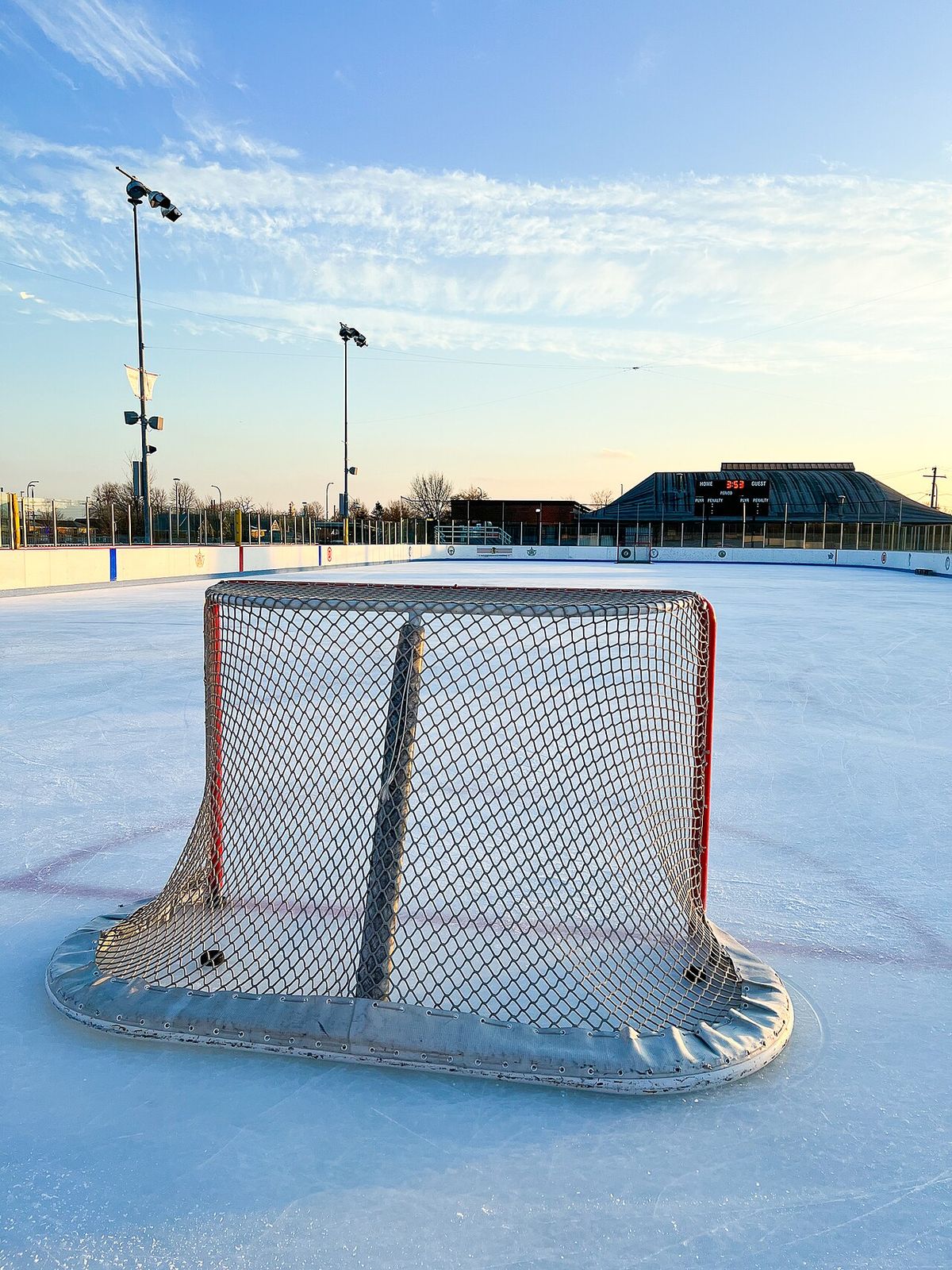
- Public Rink: The Bobby Hull Community Rink in Cicero, Illinois.
Death, Medical Findings, and Lasting Recognition
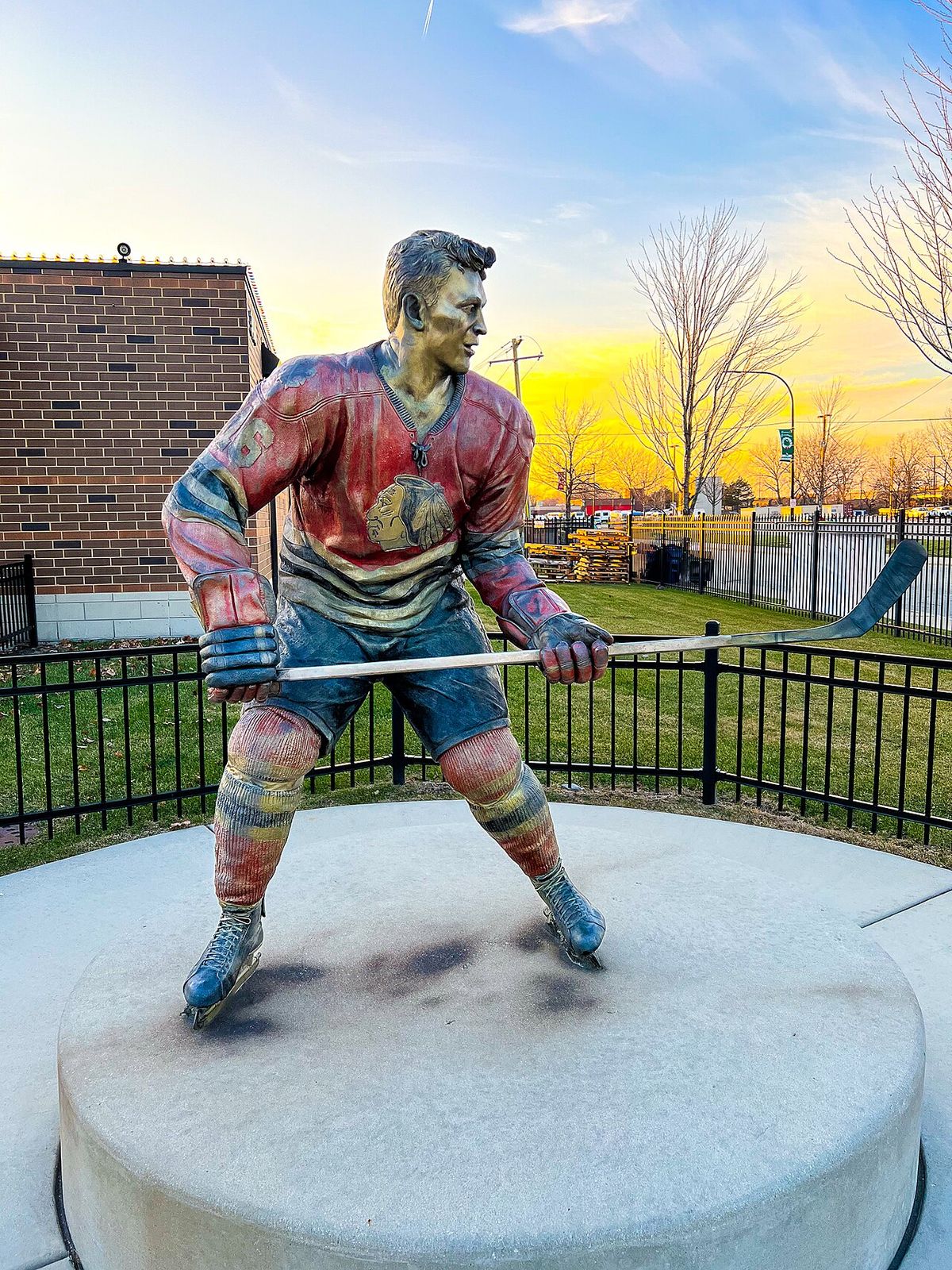
Bobby Hull died at his home in Wheaton, Illinois, on January 30, 2023, at the age of 84. His death was followed by statements from his son Brett and tributes from across the hockey world. In February 2025, his family announced that researchers had diagnosed him with stage 2 chronic traumatic encephalopathy (CTE) at the time of his death. Hull's hockey recognition is extensive. He was inducted into the Hockey Hall of Fame in 1983, the Ontario Sports Hall of Fame in 1997, and received the Wayne Gretzky International Award in 2003. He was named one of the '100 Greatest NHL Players' in history in 2017. In 2011, statues of Hull and Stan Mikita were installed outside the United Center in Chicago. In 1998, The Hockey News ranked him number 8 on its list of the 100 Greatest Hockey Players, the highest-ranking left winger. He is also an honoured member of the Manitoba Hockey Hall of Fame and an inaugural member of the World Hockey Association Hall of Fame. His career, marked by record-setting performances and a direct influence on the game's rules and business, remains a defining element of hockey's history in the latter half of the twentieth century.
Questions about Bobby Hull
How many goals did Bobby Hull score in his career?
Bobby Hull scored 610 goals in 1,063 National Hockey League regular season games. During his time in the World Hockey Association, he added 303 goals in 411 games. Including playoff goals from both leagues, he scored 1,018 total goals in his North American career, which ranks third all-time behind Wayne Gretzky's 1,072 and Gordie Howe's 1,071. The NHL does not officially recognize his WHA statistics in its career totals.
Are Bobby Hull and Brett Hull related?
Yes, Bobby Hull and Brett Hull are father and son. Brett Hull, nicknamed 'the Golden Brett,' also had a legendary NHL career, scoring 741 goals, which is the fifth-highest total in league history. They are the only father-son duo to each win the Hart Memorial Trophy as league MVP, to each lead the league in goal scoring, and to each score more than 600 NHL goals. Brett wore his father's retired number 9 for the final five games of his career with the Phoenix Coyotes after receiving special permission from his father and the team.
Why was Bobby Hull called the Golden Jet?
Bobby Hull was called the Golden Jet due to his blond hair, his exceptional skating speed, his dynamic end to end rushes, and his ability to shoot the puck at very high velocity. This nickname captured his flashy and dominant on ice persona. His talents were so significant that opposing teams often assigned a specific player just to shadow him during games. The moniker became well-known throughout his career in both the NHL and WHA.
Why did Bobby Hull not play in the 1972 Summit Series?
Bobby Hull did not play in the 1972 Summit Series because he had signed with the Winnipeg Jets of the rival World Hockey Association earlier that year. The series was organized for NHL players only, which excluded him. His brother Dennis Hull initially planned to boycott the series in support but was persuaded by Bobby to play for Team Canada. Hull later competed for Canada in the 1974 Summit Series with WHA stars and was a key member of the Canadian team that won the 1976 Canada Cup.
What is the 'Bobby Hull Rule' in hockey?
The 'Bobby Hull Rule' refers to the NHL regulation that limits the curvature of a hockey stick blade. Hull and teammate Stan Mikita were pioneers in using curved 'banana blades' which made the puck's trajectory unpredictable. Due to the potential danger to goalies, few of whom wore masks then, a rule was introduced to curb the practice. The rule originally limited curvature to between 0.5 and 0.75 inches, and in 1970 it was set at a maximum of 0.5 inches. NHL Rule 10.1 currently limits the curvature to 0.75 inches.
What teams did Bobby Hull play for?
Bobby Hull played for the Chicago Black Hawks in the NHL from 1957 to 1972. He then joined the Winnipeg Jets of the WHA from 1972 to 1979. He also attempted a brief exhibition comeback with the New York Rangers in 1981. His career spanned 23 years across both major professional leagues.
Sources and further reading
- Bobby Hull (Wikipedia)
- Bobby Hull Stats, Height, Weight, Position, Title (hockey-reference.com)
- Bobby Hull (ontariosportshalloffame.com)
Checked by the Garbutt Disposal desk. Last updated 2026-10-27.