Summit Series
The Summit Series, also known as the 1972 Summit Series or the Series of the Century, was an eight-game ice hockey competition held in September 1972 between the Soviet Union national team and a Canadian team composed of professional players from the National Hockey League, known as Team Canada. It was the first true best-against-best meeting between the two hockey superpowers, occurring during the Cold War and sparking immense nationalistic fervour in both countries. The series, which saw the first four games played in Canada and the final four in Moscow, was won by Canada with a record of four wins, three losses, and one tie, culminating in a dramatic last-minute victory in the final game. The Summit Series is a foundational event in hockey history, reshaping international competition and leaving a permanent mark on the sport in Canada.
Background and Origins
The path to the Summit Series was forged by decades of separate hockey development and international dispute. Canada, the sport's birthplace, traditionally sent its senior amateur club champion, usually the previous year's Allan Cup winner, to represent the nation at World Championships and Olympics, winning most titles from the 1920s until the 1950s. Its best players pursued careers in professional leagues like the NHL, rendering them ineligible for international amateur competitions under the rules of the time, and the last Canadian amateur club to win a world title was the Trail Smoke Eaters in 1961. The Soviet Union, pursuing post-war sporting supremacy, established a full-time hockey program in the 1940s where players were state-supported amateurs in name only, with players from elite sports societies like CSKA Moscow and Dynamo holding titular professions as army or KGB officers. Entering international play in 1954, the Soviet national team, coached by Anatoly Tarasov, began a period of dominance, winning nine consecutive world championships in the 1960s, while Canada's response was to form a national team of its own that struggled with mostly university-level talent.
This systemic conflict reached a crisis point in 1969 and 1970 when the International Ice Hockey Federation briefly allowed a trial inclusion of professionals, which saw Canada nearly win the 1969 Izvestia tournament with five pros. However, the IIHF rescinded the rule in an emergency meeting in January 1970, prompting Canada to withdraw from all IIHF events in protest, and the 1970 IIHF World Championships, scheduled to be held in Canada for the first time, were transferred to Sweden after Canada refused to host. This stalemate created the conditions for a direct showdown outside the IIHF framework, an idea actively championed by Soviet sports chairman Sergei Pavlov. Discussions were initiated through diplomatic channels in late 1971 after Canadian diplomat Gary Smith read an article in the Soviet Izvestia newspaper in December 1971 stating the Soviets were looking for a new challenge. Smith met with Izvestia sports editor Boris Fedosov initially, then followed up with a meeting with Soviet hockey boss Andrei Starovoytov and other officials in January 1972, where the Soviets divulged they were ready to play a series against Canadian professionals, with the matter passed to Hockey Canada to negotiate terms.
Organization and Negotiations
The final agreement for the series was signed on April 18, 1972, in Prague by representatives of the Canadian Amateur Hockey Association, the Soviet Ice Hockey Federation, and the IIHF, including CAHA president Joe Kryczka, Soviet general secretary Andrei Starovoytov, IIHF president Bunny Ahearne, and IIHF vice-president Fred Page. The pact stipulated an eight-game series, with the first four in Canada during early September and the final four in Moscow later that month, and Kryczka also announced that two games were to be held in Sweden before the Moscow segment as part of a celebration of the fiftieth anniversary of ice hockey in Sweden. Key negotiated terms included playing under international rules, using IIHF amateur referees in Canada and European referees in Moscow, and employing the two-referee system instead of the NHL's one-referee system, with the Canadian side agreeing under the belief they would win under any conditions. Player payments were set at $5,000 Canadian per game for Soviets in Canada and 5,000 rubles per game for Canadians in Moscow, and teams were limited to 19 players and 30 total personnel, with allowances for changes between the Canadian and Moscow segments.
NHL Players' Association executive director Alan Eagleson became a central organizational figure, leveraging his connections to manage arrangements and placate NHL owners by directing part of the proceeds to the players' pension fund, and he confided to a reporter that he "un-negotiated" much of what had been negotiated between the governments. Before the first game, Eagleson personally paid to settle a lawsuit won by a Montreal man whose car had been destroyed in the 1968 Warsaw Pact invasion of Czechoslovakia, as a court had ordered the Soviet team's hockey equipment seized to guarantee payment, threatening the start of the series. Former Boston Bruins coach Harry Sinden was hired to coach Team Canada after a single interview with Hockey Canada's steering committee in June, suggested by the media after he admitted his availability in an interview with sportswriter Ron Brown. Sinden selected former player John Ferguson as his assistant coach after initially trying to recruit him as a player, while the Soviets appointed Vsevolod Bobrov as coach, replacing Tarasov after the 1972 Olympics, with his first assignment being the 1972 World Championship where the Soviets' nine-year title streak ended.
Team Selection and Preparation
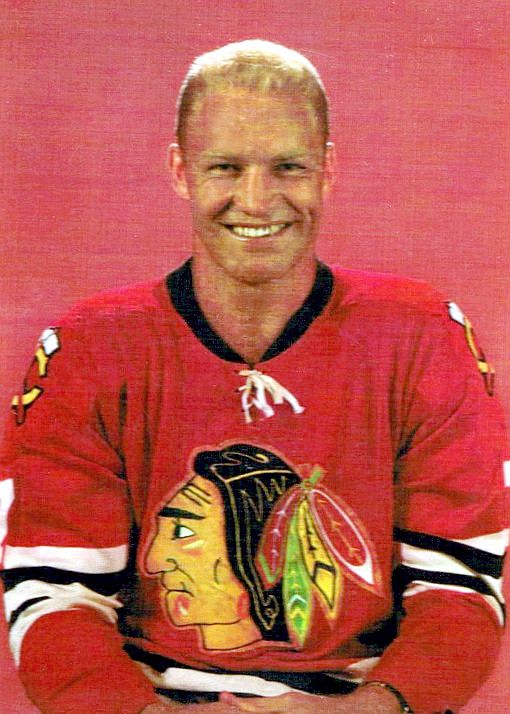
Team Canada's selection was fraught with controversy due to an NHL-imposed condition that players must have a signed NHL contract by August 13, 1972, a condition negotiated between the NHL and Hockey Canada that the NHL would not relent on. This excluded several stars who had jumped to the rival World Hockey Association, most notably Bobby Hull, the NHL's second-leading goal scorer the previous season who had led the league in goals seven times, and three other players Sinden named, Gerry Cheevers, Derek Sanderson and J. C. Tremblay, who had not yet signed with the WHA but would do so and become ineligible. Despite appeals, including a personal one from Prime Minister Pierre Trudeau and widespread criticism from figures like Toronto Maple Leafs owner Harold Ballard, Hockey Canada chairman Doug Fisher refused to reopen the agreement, leading to the resignation of Hockey Canada governor Phil Reimer. Superstar defenceman Bobby Orr, named to the team, was unable to play due to a knee injury but remained with the squad, and Harry Sinden announced a list of 35 players on July 12, with final adjustments seeing Guy Lapointe replace Jacques Laperrière, Eddie Johnston replace Cheevers, Stan Mikita replace Sanderson, and Rick Martin replace Bobby Hull.
The team assembled for a three-week training camp in Toronto starting August 13, and Sinden named Phil Esposito, Stan Mikita, Frank Mahovlich, and Jean Ratelle as alternate captains for the series. An unheralded forward line of Bobby Clarke, Ron Ellis, and Paul Henderson performed impressively in camp, enough to earn a place in the starting lineup for game one, which was not expected as none were yet stars. The Soviet Union named its 31-player roster on August 11, a veteran squad led by 20-year-old goaltender Vladislav Tretiak, an Olympic and two-time world champion, and defenceman Alexander Ragulin, a veteran of three Olympics and nine world championships, with most players coming from HC CSKA Moscow. Coach Bobrov prepared his players with boxing lessons to handle expected physical play, and the Soviets arrived in Montreal on August 30, already acclimatized to the time zone after training on Montreal time for two weeks, and began two-a-day workouts at the St. Laurent Arena, bringing 15 forwards, nine defencemen and three goaltenders.
Key players who were part of Team Canada's final roster included Phil Esposito, who led the series in scoring. The Canadian line of Bobby Clarke, Ron Ellis and Paul Henderson played a surprisingly large role in the Canadian victory. The team also included superstar defenceman Bobby Orr, but a knee injury forced him to sit out. Top Canadian player Bobby Hull was excluded because he had signed a contract to play in the new World Hockey Association.
- Phil Esposito (Boston Bruins), Alternate captain and series scoring leader.
- Bobby Clarke (Philadelphia Flyers), Centre on the effective checking line.
- Paul Henderson (Toronto Maple Leafs), Scored the series-winning goal.
- Ken Dryden (Montreal Canadiens), Starting goaltender for most games.
- Frank Mahovlich (Montreal Canadiens), Alternate captain and veteran winger.
- Yvan Cournoyer (Montreal Canadiens), Speedy winger known as the "Roadrunner."
- Brad Park (New York Rangers), Top defenceman in Bobby Orr's absence.
- Ron Ellis (Toronto Maple Leafs), Right wing on the Clarke-Henderson line.
The Soviet roster was dominated by players from CSKA Moscow. It did not include forward Anatoli Firsov, a star regarded as the "Bobby Hull" of the Soviets. His omission was explained by a reported knee injury. Veteran defenceman Vitali Davydov also did not accompany the team to Canada, with injury given as the reason.
The Series in Canada
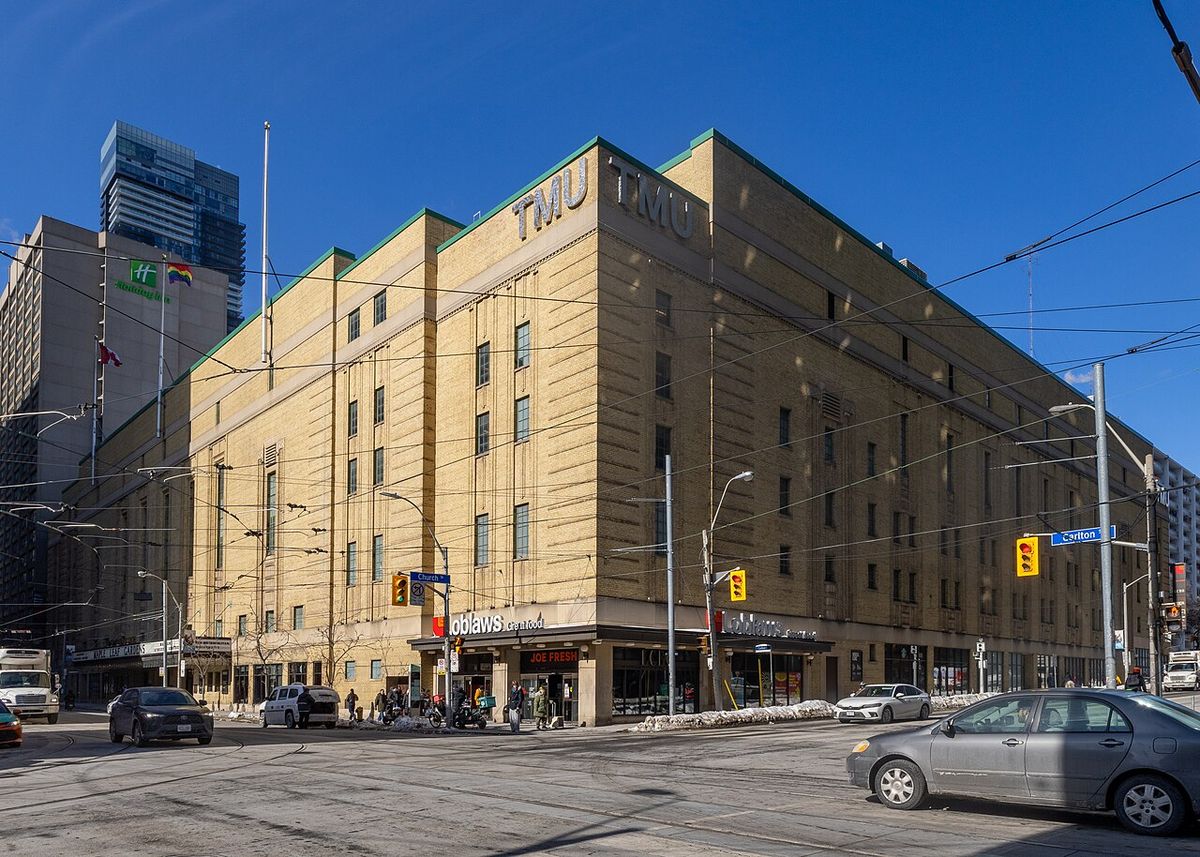
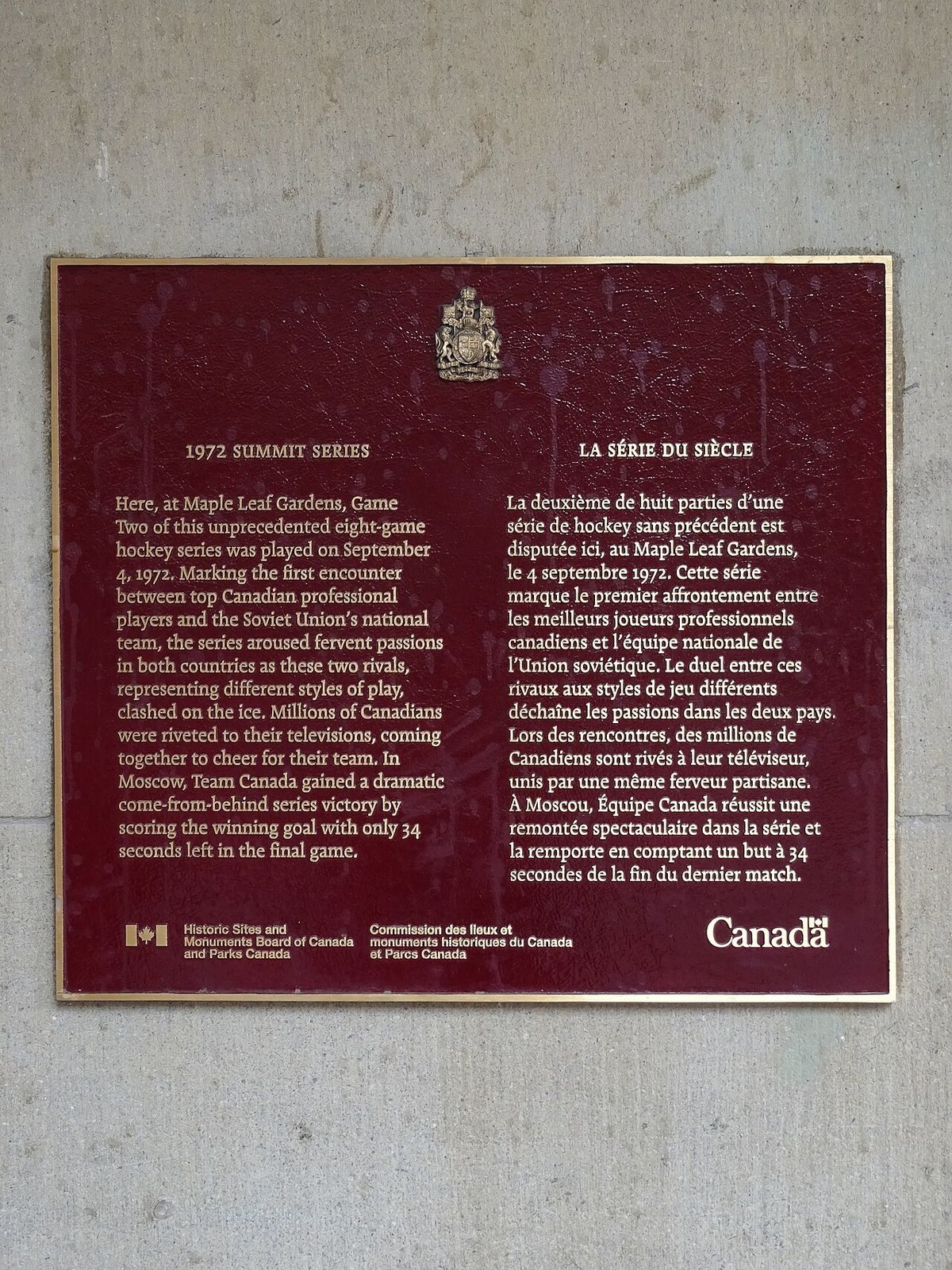
The series opened on September 2, 1972, at the Montreal Forum, with the Soviet Union delivering a stunning 7-3 victory that shocked the Canadian team and most of the Canadian hockey media who had predicted an overwhelming victory. The Soviets' speed, precision passing, and the goaltending of Vladislav Tretiak exposed Canadian overconfidence and introduced several talented Soviet players to North America. Canada responded in Game Two at Maple Leaf Gardens in Toronto on September 4, winning 4-1 behind a stronger defensive effort and physical play, and Game Three, held at the Winnipeg Arena on September 6, ended in a 4-4 tie, highlighting the continued competitiveness of the series. The Canadian leg concluded in controversy at Vancouver's Pacific Coliseum on September 8, where the Soviets won 5-3 and the Canadian team was booed off the ice by its home fans, a low point that galvanized the players, with Phil Esposito delivering an emotional post-game television interview defending the team's effort and commitment.
The first four games of the series were held in Canada. The Soviet Union surprised the Canadian team with an opening game victory. Canada won the next game and the third game was a tie. Canada lost the fourth game in Vancouver. The series stood at two wins for the Soviets, one for Canada, and one tie as the teams prepared to reconvene in Moscow after a two week break. During the break, Team Canada played two games in Sweden as part of a celebration of the fiftieth anniversary of ice hockey in Sweden.
Notable events from the Canadian segment of the series included the Soviet Union's opening game victory. Many Canadian sportswriters had predicted an overwhelming victory for Canada. The games introduced several talented Soviet players to North America. The series was filled with controversy, including disputes over officiating.
- September 2, Montreal: Soviet victory 7-3 in Game One, a major upset.
- September 4, Toronto: Canadian rebound win 4-1 in Game Two.
- September 6, Winnipeg: Series' first tie, 4-4, in Game Three.
- September 8, Vancouver: Soviet 5-3 win in Game Four and fan booing of Team Canada.
- Phil Esposito's impassioned post-Game Four interview broadcast nationally.
- The emergence of the Soviet's puck-possession style as a major challenge.
- Early controversy over officiating under international rules.
- The Canadian team's departure for Sweden and Moscow amid public doubt.
The Series in Moscow
Facing elimination, Team Canada mounted a historic comeback starting with Game Six on September 24, a 3-2 Canadian victory that was marred by controversy when Bobby Clarke delivered a deliberate slash to the ankle of Soviet star Valeri Kharlamov, an incident many viewed as a calculated attempt to injure a key opponent. The final goal was scored by Paul Henderson with 34 seconds left for a 6-5 victory, giving Canada the series four games to three with one tie after overcoming a two-goal Soviet lead after two periods in dramatic fashion. The Moscow games were played under intense political and nationalistic pressure, emblematic of the Cold War, and intense feelings of nationalism were aroused in fans in both Canada and the Soviet Union and players on the ice. The Canadian players faced a hostile environment in the arena but were supported by thousands of travelling Canadian fans, while the Soviet team, under the guidance of coach Vsevolod Bobrov, relied on its systematic play and the offensive talents of players like Alexander Yakushev and Valeri Kharlamov. The Canadian victory was secured through a combination of improved conditioning, tactical adjustments, and individual heroics, particularly from the line of Henderson, Clarke, and Ellis, which played a surprisingly large role in the Canadian victory with Henderson scoring the game-winning goal in each of the final three games. The series concluded with a result that resonated deeply in both nations and altered the course of international hockey, demonstrating that the Soviets had become the dominant team in international competitions but could be beaten by Canadian professionals in a direct showdown.
Key Figures and Lasting Impact
The Summit Series featured performances that cemented the legacies of numerous players from both sides, with Team Canada, the first NHL and professional all-star team formed for international play, led by Phil Esposito who led the series in scoring as well as contributing in other roles. The Canadian line of Bobby Clarke, Ron Ellis and Henderson, which was not expected to start for the team, played a large role in the Canadian victory, with Henderson scoring the game-winning goal in each of the final three games, and the games introduced several talented Soviet players to North America, such as Hockey Hall of Fame inductees Alexander Yakushev, Valeri Kharlamov and goaltender Vladislav Tretiak. The series was filled with controversy, including disputes over officiating, and dirty play on the part of both teams highlighted by the deliberate slash of Kharlamov by Clarke in game six, and there was also the exclusion of top Canadian player Bobby Hull and the injury that forced Bobby Orr to sit out. For the Soviet Union, the series presented a skill-based style that influenced North American hockey, and Tretiak, in particular, earned deep respect for his goaltending prowess against the NHL's best, changing perceptions of European goaltending.
The series was the first competition between the Soviet national team and a Canadian team represented by professional NHL players. It was organized with the intention to create a true best against best competition in hockey. The series was played during the Cold War, and intense feelings of nationalism were aroused. It is remembered as the Series of the Century.
Major outcomes of the Summit Series include Canada winning the series four games to three, with one tie. The final game was won in dramatic fashion, with the Canadians overcoming a two goal Soviet lead after two periods. Paul Henderson scored the final goal with 34 seconds left. The series was the first international ice hockey competition for Canada after they had withdrawn from such competitions.
- Proof of Soviet hockey's parity with NHL professionals, shattering myths of invincibility.
- Creation of the "Team Canada" moniker for future national all-star teams.
- Increased North American respect for Soviet players like Tretiak, Kharlamov, and Yakushev.
- Highlighted the need for better Canadian player conditioning for international play.
- Intensified the hockey rivalry that defined international tournaments for the next two decades.
- Paul Henderson's goal becoming a nationally remembered moment in Canadian sport.
- The series agreement served as a model for future professional-amateur competitions.
Series Results and Statistics
The series was an eight game ice hockey series between the Soviet Union and Canada. The first four games were held in Canada and the final four in Moscow. The Soviets won the fifth game to take a two game lead. The Canadians then won the final three games in Moscow to win the series.
| Game | Date | Location | Result | Series Standing |
|---|---|---|---|---|
| 1 | September 2 | Montreal Forum | Soviet Union 7-3 Canada | USSR leads 1-0-0 |
| 2 | September 4 | Maple Leaf Gardens, Toronto | Canada 4-1 Soviet Union | Tied 1-1-0 |
| 3 | September 6 | Winnipeg Arena | Canada 4-4 Soviet Union | Tied 1-1-1 |
| 4 | September 8 | Pacific Coliseum, Vancouver | Soviet Union 5-3 Canada | USSR leads 2-1-1 |
| 6 | September 24 | Luzhniki Ice Palace, Moscow | Canada 3-2 Soviet Union | USSR leads 3-2-1 |
The series was characterized by several notable statistical achievements and contentious incidents, with Phil Esposito leading all scorers with 7 goals and 13 points and Paul Henderson scoring the most famous goals including his series-clincher. The Soviet power play was highly effective, particularly in the early games, and officiating was a constant source of dispute under the unfamiliar two-referee system agreed to in the Letter of Agreement. The physical play escalated throughout, culminating in events like Clarke's slash on Kharlamov, and the goaltending duel between Ken Dryden and Vladislav Tretiak presented two different elite styles, with Tretiak's performance making him an international star. The agreement also allowed for two exhibition games in Sweden before the Moscow segment, celebrating fifty years of Swedish hockey, and Team Canada hoped to play a game or two in Czechoslovakia in return for previous visits by Czechoslovak teams to Canada.
Questions about Summit Series
Why was Bobby Hull not on Team Canada in 1972?
Bobby Hull was excluded from Team Canada because he had signed a contract with the rival World Hockey Association (WHA). The National Hockey League, which co-operated with Hockey Canada to form the team, imposed a condition that all players must have a signed NHL contract by August 13, 1972. Despite Hull being the NHL's second-leading goal scorer the previous season and a seven-time goal scoring leader, the NHL refused to relent on this rule, and Hockey Canada upheld the agreement. Prime Minister Pierre Trudeau made a personal appeal, but Hockey Canada chairman Doug Fisher refused to reopen the agreement.
What was Paul Henderson's role in the Summit Series?
Paul Henderson played a central role in securing victory for Canada. As part of a line with Bobby Clarke and Ron Ellis, Henderson was not considered a star prior to the series but earned a starting spot through strong training camp play. He scored the game-winning goal in each of the final three games in Moscow, including the series-clinching goal with 34 seconds left in Game Eight. His heroics, particularly the final goal, made him a national figure and the most famous scorer of the series, with his line exceeding all expectations.
Where were the Summit Series games played?
The eight-game series was split between Canada and the Soviet Union. The first four games were played in Canadian cities: Game 1 at the Montreal Forum, Game 2 at Maple Leaf Gardens in Toronto, Game 3 at the Winnipeg Arena, and Game 4 at the Pacific Coliseum in Vancouver. The final four games were all held at the Luzhniki Ice Palace in Moscow, Soviet Union. This split venue arrangement was a key part of the initial agreement signed in April 1972 in Prague, with the Canadian games in early September and the Moscow games later that month.
Who coached the teams in the 1972 Summit Series?
Team Canada was coached by Harry Sinden, the former coach of the Boston Bruins, who was hired by Hockey Canada in June 1972 after a suggestion from the media and a single interview. His assistant coach was former NHL player John Ferguson. The Soviet Union was coached by Vsevolod Bobrov, a former star player who had replaced the long-time coach Anatoly Tarasov after the 1972 Winter Olympics. Bobrov's assistant was Boris Kulagin, coach of the Krylia Sovietov club, and this series was Bobrov's second international assignment after the 1972 World Championship.
Who won the 1972 Summit Series?
Team Canada won the 1972 Summit Series. The final series record was four wins, three losses, and one tie for Canada. The Canadians won the final three games in Moscow to win the series four games to three, with one tie. The final game was won in dramatic fashion, with the Canadians overcoming a two goal Soviet lead after two periods. The Canadians scored three times in the third period, the final goal with 34 seconds left by Paul Henderson.
How did the Summit Series change international hockey?
The Summit Series was the first competition between the Soviet national team and a Canadian team represented by professional players of the National Hockey League. It was organized with the intention to create a true best against best competition in ice hockey. The series introduced several talented Soviet players to North America, such as Hockey Hall of Fame inductees Alexander Yakushev, Valeri Kharlamov and goaltender Vladislav Tretiak. Team Canada was the first NHL and professional all star team formed for international play. The series was played during the Cold War, and intense feelings of nationalism were aroused in fans in both Canada and the Soviet Union.
Sources and further reading
- Summit Series (Wikipedia)
- Summit Series (BOYS) (prohoc.com)
- 1972 Summit Series (hockey) | History | Research Starters (ebsco.com)
Checked by the Garbutt Disposal desk. Last updated 2026-10-19.