Winnipeg Arena
The Winnipeg Arena was an indoor sports and entertainment venue located in the Polo Park district of Winnipeg, Manitoba. Operating from 1955 to 2004, it served as the city's primary ice hockey facility and is most famously remembered as the long-time home of the original Winnipeg Jets franchise. The arena hosted major international hockey events, including games from the 1972 and 1974 Summit Series and the 1999 IIHF World Junior Hockey Championships, and was known for its raucous atmosphere during Jets playoff games. After the Jets' departure and the opening of a new downtown arena, the Winnipeg Arena was demolished in 2006, with a retail and commercial complex now occupying its former site.
Construction and Early Years (1955 to 1972)
Construction on the Winnipeg Arena began in October 1954 as a replacement for the city's outdated Shea's Amphitheatre. Situated adjacent to Winnipeg Stadium in the Polo Park area, the new facility opened for the 1955-56 hockey season with an initial seating capacity of approximately 9,500. The arena was considered one of the finest facilities in western North America throughout the 1950s and 1960s. Its grand opening coincided with the first hockey game played on October 18, 1955, a Western Hockey League contest between the Winnipeg Warriors and the Calgary Stampeders.
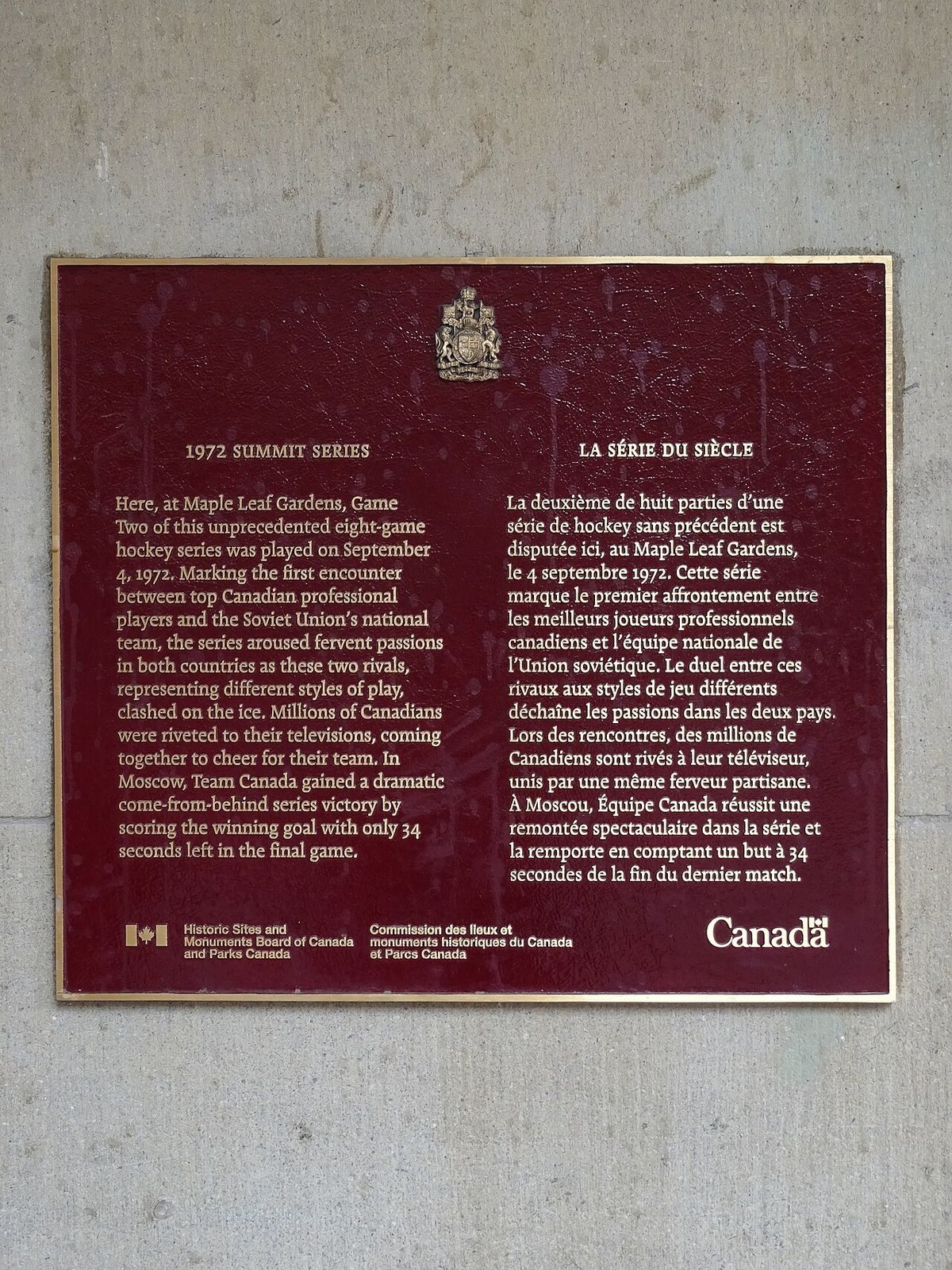
The ceremonial opening face-off was performed by Warriors Hockey Club president J. D. Perrin Sr. before a sell-out crowd of 9,671, which set a league attendance record at the time. The Warriors served as the arena's first major tenant until the club was sold and relocated in 1961. That junior club was later renamed the Monarchs and played at the arena until 1977. The facility gained significant international attention on September 6, 1972, when it hosted the third game of the historic Summit Series between Canada and the Soviet Union, which ended in a 4-4 tie before approximately 9,800 spectators. The arena also hosted game three of the 1974 Summit Series on September 21, where the Soviet Union defeated Canada by a score of 8 to 5.
The Winnipeg Jets Era (1972 to 1996)
A new era for the Winnipeg Arena began in the fall of 1972 with the arrival of the professional Winnipeg Jets of the World Hockey Association. The team's on-ice success in the 1970s, which included three WHA Avco World Trophy championships, made the Jets a source of immense civic pride and brought championship banners to the arena's rafters. Winnipeg Arena hosted more regular season WHA games than any other venue, with 279 contests, one more game than the Colisée de Québec in Quebec City. The final WHA game ever played was held there on May 20, 1979, when the Jets won 7-3 to claim their last WHA title. The arena was the site of the series-clinching game in the WHA finals in 1976, 1978, and 1979, with Winnipeg victorious each time.
When the Jets were admitted to the National Hockey League in 1979 following the WHA's merger, the arena required a major expansion to meet NHL capacity standards. Renovations increased seating to 15,565, primarily through the addition of upper decks on the east and west sides, though these created an overhang that obstructed views for many lower-deck spectators. In 1979, a massive 5 by 7 metre portrait of Queen Elizabeth II, commissioned by Lieutenant Governor Francis Lawrence Jobin, was hung from the rafters, and it was one of the largest paintings ever made of the monarch. During the 1980s, the arena became famous for the "White Out" tradition, where fans dressed entirely in white during playoff games, creating an intimidating and exceptionally loud environment that gave the venue a reputation as one of the noisiest in North America throughout the 1980s and 1990s.
Post-Jets Tenancy and Final Events (1996 to 2004)
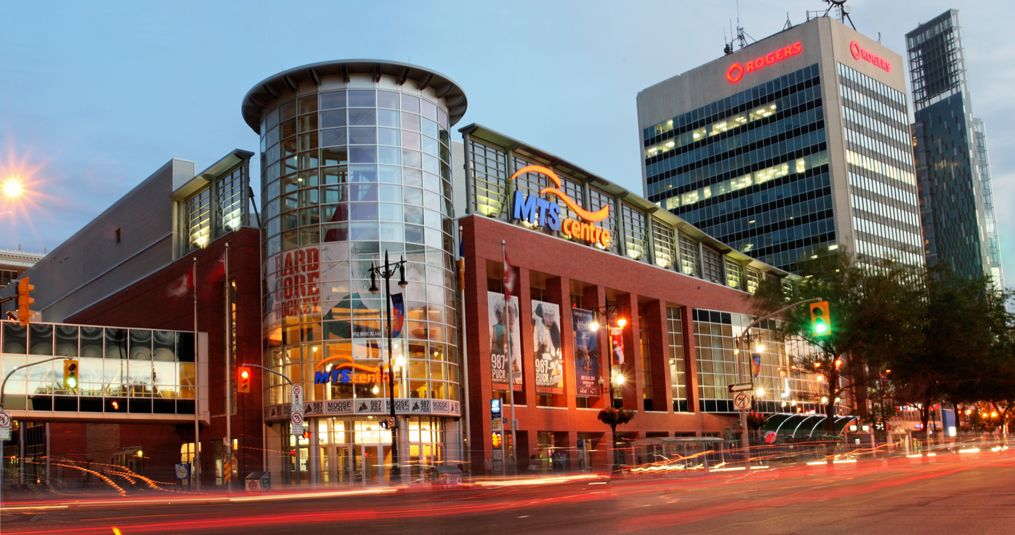
The departure of the NHL's Jets in 1996 due to financial troubles was a significant blow to the city, but the arena soon found a new primary tenant. Further renovations were undertaken during this period, including the addition of club seats and a new club lounge where north-end ice-level seats had been located. The Moose would ultimately be the arena's final major tenant, playing there until the building closed in 2004. The arena's final official event was an American Hockey League game between the Manitoba Moose and the Utah Grizzlies played before a capacity crowd on November 4, 2004. A special pre-game ceremony featured former Jets stars Bobby Hull and Teemu Selänne, during which the championship banners were lowered from the rafters for the last time. Prior to the building's demolition, most of the arena's memorabilia, including the seats, was auctioned off to the public. The opening of the privately owned MTS Centre, now known as Canada Life Centre, in November 2004 directly led to the Winnipeg Arena's closure, as the modern downtown facility rendered the older building obsolete.
Non-Hockey Events and Uses
Beyond hockey, the Winnipeg Arena hosted a wide variety of other sporting events, concerts, and entertainment. It was a venue for basketball, including games for the independent professional Winnipeg Thunder in the early 1990s and the inaugural Naismith Cup exhibition game between the NBA's Toronto Raptors and Vancouver Grizzlies on October 21, 1995. The arena also hosted basketball and volleyball tournaments for the 1999 Pan American Games. In preparation for these games, the large portrait of Queen Elizabeth II was removed from the rafters to make space for banners and was placed into storage, never to be rehung. The building was a frequent stop for touring professional wrestling promotions like the American Wrestling Association and WWE, and it served as a major concert venue for musical acts for decades.
The arena hosted numerous figure skating shows such as Stars On Ice, Ice Capades, and Disney on Ice, and it was the site of charity fundraising hockey games like Schmockey Night. Local community events like the annual Shrine Circus, organized by the Shiners Khartoum Temple, were also held there regularly. In film and television, the arena was used as a filming location for productions including the made-for-television documentary Inside the Osmonds and the ESPN film A Season on the Brink. The venue and its multiple hockey tenants, along with its central role in the city's sports culture, were a major plot point in acclaimed Winnipeg director Guy Maddin's 2007 film My Winnipeg.
- Basketball: Winnipeg Thunder (early 1990s), 1995 Naismith Cup, 1999 Pan Am Games tournaments.
- Figure Skating: Stars On Ice, Ice Capades, Disney on Ice.
- Wrestling: American Wrestling Association, WWE events.
- Community Events: Annual Shrine Circus, charity hockey games.
- Film & Television: Inside the Osmonds, A Season on the Brink, My Winnipeg.
Demolition and Site Redevelopment
The opening of the new, privately owned MTS Centre (now Canada Life Centre) in downtown Winnipeg in November 2004 sealed the fate of the aging Winnipeg Arena. After its final event, the arena sat vacant until 2006, at which time the City of Winnipeg assumed the $1.45 million cost of demolishing the structure. Following the gutting of the building's interior, the final demolition was scheduled for March 26, 2006. That morning, hundreds of nostalgic hockey fans gathered to watch, chanting "Go Jets, Go!" as explosives were set off in a planned implosion. However, the implosion failed to completely bring down the structure, requiring construction vehicles to later pull down the remaining sections.
The vacant site was subsequently purchased by the Ontario Teachers' Pension Plan for $3.6 million and was used as a parking lot for the nearby Canad Inns Stadium across the street. Redevelopment of the site began in 2011 with the construction of a new retail and office complex. This development, known as Polo Park North, opened in 2013, permanently transforming the former arena site into a commercial hub within the Polo Park district. The demolition and sale process marked the final chapter for a building that had been a central part of Winnipeg's community life for nearly five decades.
Arena Capacity and Configuration
When it opened in 1955, the arena had a seating capacity of approximately 9,500, which was considered ample for its time and included standing room that allowed for a record crowd of 9,671 at its opening game. This original configuration served the Winnipeg Warriors of the WHL and later the junior Jets and Monarchs. The most substantial change came in 1979 when the Winnipeg Jets joined the NHL, requiring the arena to meet the league's larger capacity standards, which led to a major expansion project. The 1979 expansion involved constructing upper decks on the east and west sides of the building, increasing the official seating capacity to 15,565. This renovation, while necessary, altered the sightlines for many spectators as the new upper decks created a pronounced overhang above the lower bowl, which obstructed views of the scoreboard and parts of the rink from many lower-level seats. This architectural feature was a frequent point of criticism among fans. Later renovations during the Manitoba Moose era focused on adding premium amenities like club seats and lounges in place of the north end ice level seats rather than further expanding overall capacity. The building's infrastructure also saw updates like the 1985 installation of a new centre-hung scoreboard with animation boards.
| Period | Primary Tenant | Approximate Seating Capacity | Key Configuration Notes |
|---|---|---|---|
| 1955 to 1979 | Warriors, Junior Jets/Monarchs, WHA Jets | 9,500 | Original bowl design, record opening crowd of 9,671. |
| 1979 to 1996 | NHL Jets | 15,565 | Upper decks added on east and west sides creating view obstructions. |
| 1996 to 2004 | Manitoba Moose | 15,565 | Club seats and lounges added. Capacity unchanged from NHL era. |
Ownership and Financial History
The Winnipeg Arena was originally owned by the Winnipeg Enterprises Corporation, a model of public ownership that was thought to be advantageous in the mid-20th century. In 1956, just a year after the arena opened, Winnipeg Warriors president J. D. Perrin Sr. offered to purchase both the Winnipeg Arena and the adjacent Winnipeg Stadium from the corporation. This offer was rejected in keeping with the prevailing sentiment of the time that favoured public ownership of such civic assets. The arena remained under the ownership of Winnipeg Enterprises Corporation for much of its operational life, functioning as a municipally controlled facility that hosted professional and amateur sports.
The financial challenges that led to the NHL Jets' departure in 1996 were a critical moment for the arena's viability. The team's exit was driven by an inability to generate sufficient revenue in the older, city-owned building compared to newer, privately funded arenas in other NHL markets. Following the Jets' departure, the City of Winnipeg ultimately became responsible for the arena's fate, taking on the $1.45 million expense of its demolition in 2006 after it had sat vacant. The sale of the vacant land to the Ontario Teachers' Pension Plan for $3.6 million provided some offset to the public cost of clearing the site, which was then redeveloped into the privately owned Polo Park North commercial complex.
Memorabilia and Cultural Artifacts
Several notable artifacts were associated with the Winnipeg Arena throughout its history, many of which were dispersed after its closure. The most prominent was the massive 5 by 7 metre portrait of Queen Elizabeth II painted by order of Lieutenant Governor Francis Lawrence Jobin in 1979, which hung from the rafters until its removal for the 1999 Pan American Games. After being placed in storage at that time, the painting was never returned to public display in the arena. The championship banners of the WHA and NHL Jets that hung from the rafters were ceremonially lowered during the final game on November 4, 2004, in a event attended by former players.
Prior to demolition, a public auction was held for most of the arena's memorabilia and physical components. This included the sale of thousands of the arena's seats to fans and collectors, allowing pieces of the building to be preserved in private hands. The centre-hung scoreboard, a key technological feature installed in 1985, was not part of this auction as it had been a permanent fixture. The dispersal of these items marked the physical end of the arena, though fragments of its history remain in the personal collections of Winnipeggers who attended events there over the decades.
- Queen's Portrait: 5x7 metre painting commissioned in 1979, removed in 1999, placed in storage.
- Championship Banners: WHA Avco World Trophy and NHL division titles, lowered in final ceremony.
- Seating: Thousands of arena seats auctioned to the public prior to demolition.
- Scoreboard: White Way sign centre-hung model with colour matrix animation boards installed in 1985.
Questions about Winnipeg Arena
When was the Winnipeg Arena built and when did it close?
Construction on the Winnipeg Arena began in October 1954. The arena opened its doors on October 18, 1955, with a minor professional hockey game. It closed after the Manitoba Moose's final American Hockey League game on November 4, 2004. The building was demolished in 2006, with the final demolition taking place on March 26 of that year.
What hockey teams played at the Winnipeg Arena?
The arena was home to several hockey teams over its history. Its first major tenant was the Winnipeg Warriors, a Western Hockey League minor professional team that played from 1955 to 1961. It is best known as the home of the professional Winnipeg Jets, who played in the World Hockey Association from 1972 to 1979 and in the National Hockey League from 1979 to 1996. After the Jets left, the Manitoba Moose of the International Hockey League and later the American Hockey League were the primary tenants from 1996 until the arena closed in 2004.
What was the 'White Out' at Winnipeg Arena?
The 'White Out' was a fan tradition that began during the Winnipeg Jets' NHL playoff runs in the 1980s. Spectators would all wear white clothing to games, creating a unified and visually striking sea of white in the stands. This practice, combined with the crowd's intense noise, was designed to create an intimidating atmosphere for visiting teams and contributed to the arena's reputation as one of the loudest venues in North America during that era. The tradition was so memorable that it was revived by fans when the NHL returned to Winnipeg in 2011.
Why was the Winnipeg Arena demolished?
The arena was demolished because it was replaced by a modern, downtown facility and had become obsolete. The privately funded MTS Centre (now Canada Life Centre) opened in November 2004, providing a new home for the Manitoba Moose and later the NHL's return. After its final event, the arena sat empty, and the City of Winnipeg paid $1.45 million for its demolition in 2006. The planned implosion on March 26, 2006, failed to fully collapse the structure, requiring machinery to complete the job.
What major international hockey events were held at the arena?
The Winnipeg Arena hosted two Summit Series games and the 1999 IIHF World Junior Hockey Championships. Specifically, it was the venue for Game 3 of the 1972 Summit Series between Canada and the Soviet Union, which ended in a 4-4 draw before approximately 9,800 spectators. It also hosted Game 3 of the 1974 Summit Series, where the Soviets beat Canada 8 to 5. Decades later, the arena hosted the 1999 World Junior Championships, a tournament that set a new attendance record with 170,000 fans. The host Canadian team advanced to the gold medal game during that event, ultimately losing to Russia in overtime. These games cemented the arena's role in significant international hockey history.
What is on the site of the old Winnipeg Arena today?
A retail and commercial complex called Polo Park North occupies the site of the old Winnipeg Arena today. After the arena closed in 2004 and was demolished in 2006, the vacant land was purchased by the Ontario Teachers' Pension Plan for $3.6 million. The site was initially used as a parking lot for the nearby Canad Inns Stadium. Construction on the new Polo Park North complex began in 2011, and the development opened to the public in 2013.
Sources and further reading
- Winnipeg Arena (Wikipedia)
- Facilities & Venues | Win in Winnipeg, Sport Tourism (wininwinnipeg.com)
Checked by the Garbutt Disposal desk. Last updated 2026-10-23.