1999 Pan American Games
The 1999 Pan American Games, officially the XIII Pan American Games, were held from July 23 to August 8, 1999, in Winnipeg, Manitoba. They marked the second time Canada and Winnipeg hosted this major international multi-sport event, following the 1967 edition. The Games featured approximately 5,000 athletes from 42 nations competing in 330 medal events across 34 sports. For Canada, the event was a significant national undertaking, highlighting domestic athletic talent and organizational capability while generating a notable financial surplus.
Bidding and Host Selection Process
The successful bid to host the 1999 Pan American Games was the result of a competitive international process and strategic lobbying that began years in advance. In 1988, a delegation from Winnipeg announced its intention to bid once it secured approval from the Canadian Olympic Association. On December 5, 1992, Winnipeg won the Canadian nomination by defeating Toronto by a single vote in a domestic contest that also included Halifax, Edmonton, and Sherbrooke. The international vote among Pan American Sports Organization (PASO) members occurred in 1994, with Winnipeg competing against Santo Domingo in the Dominican Republic and Bogotá in Colombia. According to the voting rules, any country that had previously held the Games, such as Argentina, Brazil, Mexico, the United States, and Venezuela, was allotted two votes, for a total of 50 votes, with a majority of 26 required to win. Canada and Colombia were not permitted to vote as they had bidding cities. After the first round eliminated Bogotá with only 10 votes, a second-round vote resulted in a 25-to-25 tie between Winnipeg and Santo Domingo. Canadian Bidding Committee Co-Chairman Don Mackenzie then persuaded delegates from three National Olympic Committees to change their votes before a tiebreaker. A key argument highlighted Winnipeg's existing facilities, specifically mentioning that Portage la Prairie had one of the best water-skiing facilities in Canada, which Santo Domingo lacked. Winnipeg ultimately won the hosting rights with a final vote of 28 to 22, making it the first city to host the Pan American Games twice. Santo Domingo later won the rights to host the next edition of the Games in 2003.
Venues, Infrastructure and Preparation
A total of 32 sporting venues across Winnipeg and surrounding towns and cities were utilized for the Games, blending legacy facilities from 1967 with new constructions and temporary installations. The main stadium was Winnipeg Stadium, which hosted the opening and closing ceremonies as well as the beach volleyball competitions. The Pan Am Pool, originally built for the 1967 Games, served all aquatic events after undergoing a $3.3 million renovation. New purpose-built venues included the $8.7 million Investors Group Athletic Centre for multiple sports and the $12 million CanWest Global Park, a downtown stadium built specifically for the baseball competition. The Athletes Village was created through the refurbishment of University of Manitoba residences, a project supported by a portion of the Pan American Games Society (PANAM'99) budget. Other existing venues, such as the Pan Am Stadium, also known as University Stadium, received upgrades. The Winnipeg Velodrome from 1967 had become obsolete and disused for cycling, so it was demolished prior to the 1999 Games. Its replacement was a temporary cycling velodrome constructed at Red River Exhibition Park. This mix of new, renovated, and temporary facilities reflected the organisers' strategy to balance legacy investments with the practical needs of the event while managing costs.
Opening Ceremony and Participating Nations
The opening ceremony commenced at 19:30 Central Daylight Time on July 23, 1999, at Winnipeg Stadium before a crowd of 30,000 spectators and lasted for two hours and forty-five minutes. The ceremony featured 3,400 performers, including the Winnipeg Symphony Orchestra and singer Jeremy Kushnier, with singer Chantal Kreviazuk performing the national anthem. A historically significant moment saw seven Indigenous Canadians, who had been denied entry into the 1967 Pan American Games in Winnipeg, enter the stadium with the torch aboard canoes. The final torchbearers were former Olympians Alwyn Morris and Silken Laumann, who jointly lit the cauldron to officially begin the Games. Governor General Roméo LeBlanc performed the official opening declaration, and dignitaries in attendance included Anne, Princess Royal. All 42 member nations of the Pan American Sports Organization (PASO) participated in the Games, sending full delegations to compete across the sporting programme. The ceremony set a celebratory and inclusive tone for the event, emphasizing both Canadian heritage and the unity of the Americas.
Sports Programme, Debuts and Competition Details
The 1999 Games featured a broad sports programme with 330 medal events contested across 34 sports and 42 disciplines, serving as a direct qualifier for the 2000 Summer Olympics in Sydney. This edition introduced two new sports to the Pan American Games programme: beach volleyball and inline hockey. It also marked the first time women's tournaments in football and water polo were held at the Games. The programme included all sports on the upcoming Olympic schedule, plus additional sports governed by international federations recognized by the International Olympic Committee. The expanded programme reflected the growing scale of the event, providing crucial competitive opportunities for athletes across the hemisphere in the year preceding the Summer Olympics. Numbers in parentheses indicated the number of medal events contested in each sport during the Games. The sports contested at the 1999 Pan American Games included:
- Aquatics (Diving, Swimming, Synchronized Swimming, Water Polo)
- Archery
- Athletics (Track and Field)
- Badminton
- Baseball
- Basketball
- Beach Volleyball (debut)
- Boxing
- Canoeing (competitions started July 22)
- Cycling
- Equestrian
- Fencing
- Football (Soccer)
- Gymnastics (Artistic, Rhythmic)
- Handball
- Inline Hockey (debut)
- Judo
- Karate
- Modern Pentathlon
- Rowing
- Sailing
- Shooting
- Softball
- Squash
- Table Tennis
- Taekwondo
- Tennis
- Triathlon
- Volleyball
- Weightlifting
- Wrestling
On July 24, 1999, the United States men's gymnastics team won the silver medal in the team competition. Also on July 24, the Canadian women's gymnastics team edged the United States to win the gold medal in their team competition. These were among the many events contested during the Games, which saw athletes from 42 nations competing. The United States ultimately amassed the most total medals, while Canada celebrated its second-best overall medal haul.
Canadian Team Performance and Local Highlights
Canadian athletes delivered a strong performance on home soil, finishing third in the overall medal count behind the United States and Cuba. The host nation won a total of 196 medals, comprising 64 gold, 52 silver, and 80 bronze, which was an increase of 19 medals from Canada's haul at the 1995 Games in Mar del Plata. Some observers considered Canada's results somewhat amplified, as the United States amassed the most medals with a team largely composed of second-string athletes, while Canada and Cuba had fielded their top national teams. Cyclist Tanya Dubnicoff, the 1993 world sprint champion who carried the Canadian flag in the opening ceremony, won gold medals in the women's 500-metre time trial and the sprint at the temporary velodrome, earning the local title 'Queen of the Games'. Swimmer Kelly Stefanyshyn won gold in the 100-metre backstroke and bronze in the 200-metre backstroke. Other notable Manitoban medalists included sailor Kelly Hand from Carman with gold in the women's laser radial on Lake Winnipeg, rower Emma Robinson from Winnipeg who won gold in the pairs with Theresa Luke, judoka Nikki Jenkins with silver in the 78-kilo event, and taekwondo athlete Dominique Bosshart with bronze. The Canadian baseball team, managed by former Toronto Blue Jays catcher Ernie Whitt, provided a surprise performance, winning its first five games including a 7-6, 11-inning upset over the United States, and ultimately securing the bronze medal after a loss to Cuba in the semifinals and a victory over Mexico. Prominent Canadian sprinter Donovan Bailey, who had been paid $200,000 to endorse the Games, did not run the 100 metres after failing to qualify at the trials, but he did run the first leg for the gold medal-winning 4x100 metre relay team on July 29.
Controversies, Doping Incidents and Notable Records
The Games were marred by several high-profile doping controversies that attracted significant international attention and impacted medal results. The most notable case involved Cuban high jump world record holder Javier Sotomayor, who tested positive for cocaine in what was described as perhaps the greatest drug scandal in track and field since Ben Johnson's disqualification at the 1988 Olympics. His subsequent suspension was contested at the highest levels, with Cuban leader Fidel Castro claiming it was an anti-Cuba conspiracy staged by the United States. Despite a second positive test for cocaine a few months later, Sotomayor eventually had his suspension reduced by a year, allowing him to win silver at the 2000 Summer Olympics before retiring after another positive test. In weightlifting, Cuba's Idalberto Aranda set a world record in the 77 kilogram clean and jerk by successfully lifting 202.5 kilograms. Canada itself was directly affected by doping, as the national inline hockey team was stripped of its gold medal after goaltender Steve Vézina tested positive for multiple banned substances. These incidents highlighted the persistent issue of doping enforcement in international sport during this period.
Media Coverage, Financial Outcome and Public Perception
Television broadcasts of the Games were produced by Paul Graham, with the Canadian Broadcasting Corporation providing extensive domestic coverage that was anchored by CBC Sports' Brian Williams and raised the national profile of Winnipeg Mayor Glen Murray. However, international media interest, particularly from the United States, was limited. No major U.S. television networks covered the Pan American Games, with the exception of the Spanish-language network Univisión, and American newspapers primarily sent second-string reporters whose stories rarely made front-page news. This lower profile was reflected in athlete participation, as many high-profile competitors from all nationalities, including U.S. champion sprinters and Brazilian football players, chose to compete in professional events in Europe instead. South American nations, with the exception of Uruguay, also did not send their under-23 male soccer teams after the organizing committee refused to pay appearance money to CONMEBOL. Financially, the Games were considered a success, with total costs of $129 million CDN and a final surplus of $8.9 million CDN, often cited as $8.8 million. This positive result was attributed to fiscal restraint and the contributions of nearly 20,000 volunteers who played a major role in operations. The mascots for the Games were two birds named Pato, a wood duck, and Lorita, a parrot.
Legacy, Historical Context and the Parapan American Games
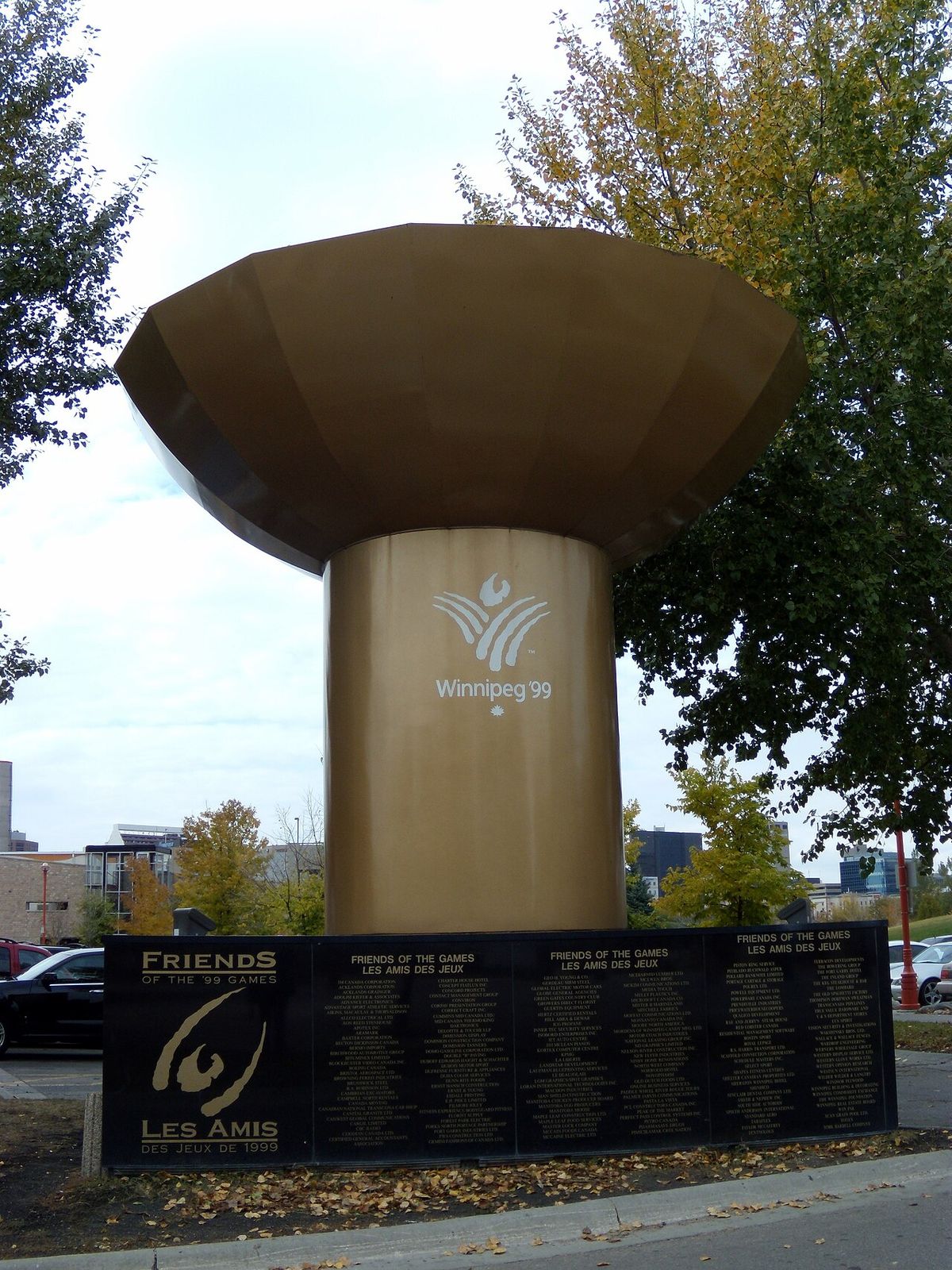
The 1999 Pan American Games solidified Winnipeg's unique status as the first city to host the event twice, following its initial hosting in Canada's Centennial year of 1967. The Games provided a platform for Canadian athletes to gain valuable international experience ahead of the 2000 Sydney Olympics, with sports acting as direct qualifiers. While the event was seen by many Winnipeggers as a chance to put their city in the international spotlight, its global prestige was considered lower than that of the Olympic or Commonwealth Games. The infrastructure legacy included upgraded facilities like the Pan Am Pool and new constructions such as CanWest Global Park, though the main cauldron at The Forks was eventually removed in 2022. The 1999 Parapan American Games were not held in conjunction with the event in Winnipeg, instead taking place separately as the inaugural Parapan American Games in Mexico City, which involved 1,000 athletes from 18 countries in four sports. The success of the 1999 Games, both in competition and financially, contributed to Canada's continued involvement with the Pan American movement, leading to its third hosting role for the 2015 Games in Toronto. The event remains a notable chapter in Canadian sport history, remembered for its volunteer spirit, Manitoba's athletic contributions, and its complex position within the international sporting landscape.
Questions about 1999 Pan American Games
Were there any notable doping scandals during the 1999 Games?
Yes, there were significant doping incidents. The most prominent involved Cuban high jump world record holder Javier Sotomayor, who tested positive for cocaine, leading to a suspension and international controversy involving Cuban officials. Canada's gold medal in inline hockey was revoked after goaltender Steve Vézina tested positive for multiple banned substances. A world record was also set in weightlifting by Cuba's Idalberto Aranda, who lifted 202.5 kg in the 77 kg clean and jerk.
When and where were the 1999 Pan American Games held?
The 1999 Pan American Games were held in Winnipeg, Manitoba, Canada, from July 23 to August 8, 1999. The opening ceremony took place on July 23 at Winnipeg Stadium. Some competitions, such as canoeing, started on July 22, the day before the official opening. These were the second Pan American Games hosted by Winnipeg, which also hosted the event in 1967. A total of 32 sporting venues were used throughout the city and surrounding areas.
How many countries and athletes participated in the 1999 Games?
Exactly 42 nations participated in the 1999 Pan American Games, representing all member countries of the Pan American Sports Organization (PASO). Approximately 5,000 athletes competed in the event. They vied for medals in a total of 330 events across 34 different sports and 42 disciplines. This scale made it a major international multi-sport event, though it is ranked as the world's third largest such games after the Olympic Summer Games and the Asian Games.
What was Canada's medal count at the 1999 Pan American Games?
Canada finished with the second highest total medal count, behind the United States. The United States amassed the most medals overall, though they fielded a team often considered their 'B' squad. Cuba won more gold medals than Canada despite having a smaller team roster. The games were seen as a success for Canadian athletes, who were largely fielding their top national team, contributing to the host nation's strong performance on the medal table.
What was the financial outcome of hosting the 1999 Games and who were the mascots?
The 1999 Pan American Games generated a financial surplus of $8.9 million CDN. The total cost of hosting the games was $129 million CDN. This surplus was achieved through a combination of fiscal restraint and the invaluable contributions of nearly 20,000 volunteers. The official mascots for the Winnipeg 1999 Games were two birds named Pato, which is a wood duck, and Lorita, which is a parrot.
Sources and further reading
- 1999 Pan American Games (Wikipedia)
- FAQ: What are the Pan American Games? - Team Canada (olympic.ca)
- Remembering the 1999 Pan Am Games, Our Communities (winnipegfreepress.com)
- Pan American Games (thecanadianencyclopedia.ca)
Checked by the Garbutt Disposal desk. Last updated 2026-10-24.