Ben Johnson
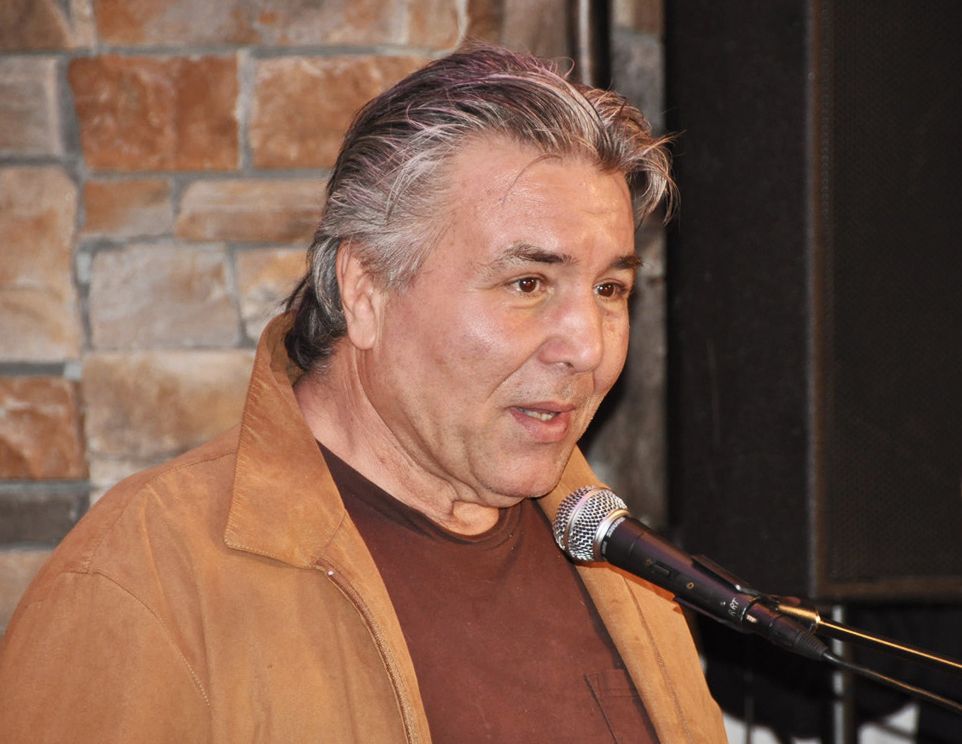
Benjamin Sinclair Johnson, CM OOnt, is a Jamaican-born Canadian former sprinter who became one of the most famous and controversial figures in the history of athletics. During the late 1980s, he was celebrated as the world's fastest man, setting world records in the 100 metres and 60 metres and winning the 100m title at the 1987 World Championships. His victory in the 100m final at the 1988 Summer Olympics in Seoul, where he set a staggering world record of 9.79 seconds, was followed three days later by his disqualification for a positive doping test, an event that shocked Canada and the sporting world. Johnson's career, marked by a fierce rivalry with American Carl Lewis, his subsequent admission of steroid use, and a lifetime ban from competition, remains a significant and cautionary chapter in Canadian sports history.
Early Life and Career Beginnings
Ben Johnson was born in Falmouth, Jamaica, and emigrated to Canada with his mother and three of his five siblings in 1976 when he was 14 years old, leaving his father who worked for the phone company. The family settled in the Lawrence Heights neighbourhood of Toronto, later moving to Scarborough, Ontario, where Johnson faced challenges as a Black immigrant in a predominantly white society, even asking his parents to return to Jamaica before deciding to stay. As a teenager, Johnson was inspired by watching the 1976 Summer Olympics in Montreal, and his athletic path was set when his brother introduced him to Charlie Francis, a former Canadian sprint champion in 1970, 1971, and 1973 and a 1972 Olympian, who became his lifelong coach. Johnson joined the Scarborough Optimists track club and began training at York University under Francis's guidance, with Francis later serving as Canada's national sprint coach for nine years. His first major international success came at the 1982 Commonwealth Games in Brisbane, Australia, where he won silver medals in the 100 metres, finishing behind Scotland's Allan Wells in 10.05 seconds, and as part of the Canadian 4x100 metre relay team which placed second to Nigeria. He did not replicate this success at the 1983 World Championships in Helsinki, where he was eliminated in the semi-finals finishing sixth, or at the 1983 Pan American Games in Caracas where he placed fifth in the 100 metre final.
Rise to Prominence and Rivalry with Carl Lewis
Johnson established himself as Canada's top sprinter at the 1984 Summer Olympics in Los Angeles, setting a new national record of 10.12 seconds in Zurich just after the Games. After a false start in the 100 metre final, he won a bronze medal with a time of 10.22 seconds, behind Americans Carl Lewis and Sam Graddy, and he also earned a bronze medal with the Canadian 4x100 metre relay team of Tony Sharpe, Desai Williams, and Sterling Hinds, who ran 38.70 seconds. This marked the continuation of his storied rivalry with Carl Lewis, whom he first met at the 1980 Pan American Junior Championships in Sudbury where Johnson finished sixth in the 100m and won a relay bronze. For years, Lewis dominated their matchups, but Johnson broke through in 1985, securing his first victory over the American after eight consecutive losses, and his dominance grew in 1986 when he won the 100 metre title at the Goodwill Games with a time of 9.95 seconds, beating Lewis who finished third in 10.06. That same year, he broke Houston McTear's seven-year-old world indoor record for the 60 metres with a time of 6.50 seconds and won double gold in the 100 metres and 4x100 metre relay plus a bronze in the 200 metres at the Commonwealth Games in Edinburgh, beating Britain's Linford Christie for the 100m title.
The apex of Johnson's career, and his rivalry with Lewis, came at the 1987 World Championships in Rome where he had won his four previous meetings with Lewis. Johnson delivered a stunning performance, winning the 100 metre final decisively and setting a new world record of 9.83 seconds, beating Calvin Smith's former mark by a full tenth of a second. This victory brought him instant global fame and lucrative endorsement deals, earning him approximately $480,000 a month at his peak according to his coach, and for his achievements in 1987, Johnson was awarded Canada's top athletic honours, the Lou Marsh Trophy and the Lionel Conacher Award, was named the Associated Press Athlete of the Year, and was invested as a Member of the Order of Canada in April 1987. Following the race, Lewis made comments alluding to drug use in the sport without naming Johnson directly, which Johnson countered by stating he never complained when Lewis was winning, further fuelling the rivalry leading into the 1988 Olympics where Lewis vowed never to lose to Johnson again after beating him in Zurich in August.
The 1988 Seoul Olympics and Doping Scandal
The long-building rivalry between Johnson and Lewis reached its climax at the 1988 Summer Olympics in Seoul, South Korea, on September 24. Johnson won the 100 metre final in spectacular fashion, lowering his own world record to 9.79 seconds and becoming the first Canadian to win the event since Percy Williams in 1928, later remarking he could have been faster if he had not raised his hand before the finish. The celebration was short-lived, as three days later the International Olympic Committee announced that Johnson's urine sample, analyzed by the Olympic Doping Control Center in Seoul, had tested positive for the anabolic steroid stanozolol. He was disqualified, stripped of his gold medal and world record, and sent home from the Games, with the IAAF later rescinding his 1987 world record after he admitted using steroids before that race. The Canadian reaction swung from national euphoria to disappointment, with Prime Minister Brian Mulroney having personally congratulated him in a televised call saying it was a marvellous evening for Canada, but headlines quickly turned to questions of betrayal with the Toronto Star using the word 'Benfastic' one day and the Toronto Sun asking 'Why, Ben?' the next, and the Canadian Press named Johnson its Newsmaker of the Year for 1988.
Johnson and his coach, Charlie Francis, initially claimed innocence, with Francis arguing in his book Speed Trap that Johnson preferred another steroid and that stanozolol made his body feel tight, while Johnson later speculated that a teammate of Carl Lewis may have tampered with his drink in the testing room. However, when testifying before the Canadian government's Dubin Inquiry in 1989, Johnson admitted he had lied and had been using performance-enhancing drugs, stating that steroid use began in 1981 and that he had used them before his 1987 world record, with Francis testifying Johnson's pre-steroid personal best was 10.25 seconds. The inquiry, which lasted 91 days and heard from 122 witnesses at a cost of $5 million to taxpayers, revealed widespread doping in Canadian sport with 46 athletes admitting steroid use. The 1988 final, later dubbed 'the dirtiest race in history,' saw five of its eight finalists eventually implicated in doping scandals during their careers, with only Calvin Smith and Robson da Silva remaining clean, and it was later revealed that Carl Lewis had tested positive for stimulants at the US Olympic trials but was cleared to compete.
Comeback Attempts and Lifetime Ban
After serving a two-year suspension, Johnson attempted a comeback in 1991, greeted by a record Canadian indoor track crowd of over 17,000 at the Hamilton Indoor Games where he finished second in the 50 metres. He failed to qualify for the 1991 World Championships but made the Canadian Olympic team again in 1992 by finishing second at the trials to Bruny Surin, though he finished last in his 100 metre semi-final at the Barcelona Games after stumbling out of the blocks and the relay team was disqualified in its semi-final. His final competitive chapter came in early 1993 when on January 7 he won a 50 metre race in Grenoble, France, in a time of 5.65 seconds, just 0.04 seconds off the world record, but he tested positive for excessive testosterone shortly after. The International Amateur Athletics Federation subsequently banned him from competition for life, with federal sport minister Pierre Cadieux calling him a national disgrace and suggesting he return to Jamaica, a comment Johnson called disgusting. In 1999, a Canadian adjudicator ruled procedural errors in the ban allowed for an appeal, but an attempt to race alone against the clock in Kitchener, Ontario, resulted in a time of 11.0 seconds with no competitors willing to race him, and later that same year a self-arranged drug test found Johnson positive for a banned diuretic, hydrochlorothiazide, ending any hope of reinstatement.
Following his ban, Johnson remained in the public eye through various ventures and international appearances, living for a time in Newmarket, Ontario, and spending leisure time reading and watching movies. His post-athletic activities included several notable engagements and business efforts, beginning with a stint as a trainer for Argentine football legend Diego Maradona in 1997 at York University in Toronto. In 1998, he participated in a novelty charity race in Charlottetown, Prince Edward Island, finishing third against a thoroughbred race horse, a harness horse, and a stock car. The following year, he was hired by Libyan leader Muammar Gaddafi to act as a personal trainer for his son Al-Saadi, who later failed a drug test while playing for Italian football club Perugia, and Johnson was robbed of his $7,300 pay from this job by a gang in Rome. In 2005, he launched the Ben Johnson Collection, a clothing and sports supplement line with the motto 'Catch Me' that did not achieve commercial success, and he has been involved in legal action, filing a $37 million lawsuit against his former lawyer's estate in 2008 which was dismissed in 2012.
Career Achievements and Statistics
Ben Johnson was the first man to officially break the 9.9 second and 9.8 second barriers in the 100 metres. He held the world record for the 60 metres indoors and the 100 metres. He won a gold medal in the 100 metres at the 1987 World Championships and again at the 1988 Summer Olympics, but these were later rescinded for doping. His only appearance at the Pan American Games in 1983 resulted in a fifth place finish in the 100 metres final.
| Competition | Event | Result | Notes |
|---|---|---|---|
| 1984 Olympics | 100m | Bronze | Time: 10.22s |
| 1984 Olympics | 4x100m Relay | Bronze | With Sharpe, Williams, Hinds. Time: 38.70s |
| 1986 Commonwealth Games | 100m | Gold | Time: 10.07s |
| 1986 Commonwealth Games | 4x100m Relay | Gold | |
| 1986 Commonwealth Games | 200m | Bronze | |
| 1987 World Championships | 100m | Gold (rescinded) | World Record 9.83s |
| 1988 Olympics | 100m | Gold (rescinded) | World Record 9.79s |
| World Indoor Championships | 60m | Gold (1985, 1987 rescinded) |
At the 1982 Commonwealth Games in Brisbane, Johnson won two silver medals in the 100 metres and the 4x100 metre relay. At the 1986 Commonwealth Games in Edinburgh, he won two gold medals in the 100 metres and the 4x100 metre relay, plus a bronze medal in the 200 metres. He also won the 100 metres title at the 1986 Goodwill Games with a time of 9.95 seconds. He received the Norton Crowe Award for Male Athlete of the Year in 1985.
Cultural Legacy and Recent Portrayal
Ben Johnson's story has transcended sports to become a cultural reference point for discussions on doping, celebrity, and national identity, with his fall from grace captured by Canadian swimmer Mark Tewksbury's banner reading 'Hero to Zero in 9.79' at the Olympic Village. For years, he was a symbol of fallen heroism in Canada, but this narrative is being revisited and reframed in the 2025 television mockumentary series Hate the Player: The Ben Johnson Story, produced for Paramount+ and directed by R.T. Thorne and Cory Bowles. Johnson participated in the production, which treats his life story as a comedy, a format he endorsed by stating the absurdity of his career's trajectory felt like a joke based on the history of other athletes doing the same thing. The six-episode series, starring Shamier Anderson as Johnson and Andrew Bachelor as Carl Lewis, explores the scandal and the swift shift in how he was portrayed by media and the public, particularly the change in descriptors from 'Canadian sprinter' to 'Jamaican-born' after his disqualification, which actor Anderson noted displayed how the country disowned him. The series premiered on March 26, 2026, on GameTV and March 27 on Paramount+, aiming to offer a new perspective, and Johnson is scheduled as a guest at the KLF 2026 event, maintaining his celebrity status internationally while his standing in Canada has diminished. Johnson has also authored his memoir, Seoul to Soul: Autobiography, and his coach and father figure Charlie Francis died in 2010 from non-Hodgkin lymphoma at age 61.
Questions about Ben Johnson
What was Ben Johnson's time in the 1988 Olympic 100m final?
Ben Johnson won the 100 metre final at the 1988 Seoul Olympics with a world record time of 9.79 seconds. This performance made him the first Canadian to win the event in 60 years, since Percy Williams in 1928. However, the time and the gold medal were rescinded three days later when he tested positive for the banned steroid stanozolol. The record was subsequently erased from the official books after his admission of doping.
Why was Ben Johnson stripped of his Olympic gold medal?
Ben Johnson was stripped of his 1988 Olympic gold medal after a mandatory drug test revealed the presence of stanozolol, a performance-enhancing anabolic steroid, in his urine sample analyzed by the Seoul lab. The positive test result led to his immediate disqualification from the Games and the rescinding of his world record. He later admitted to using steroids before his 1987 world record as well. The scandal triggered the Dubin Inquiry, a major investigation into drug use in Canadian sport.
What is Ben Johnson doing now?
Ben Johnson remains a public figure, primarily through media appearances and business ventures. He was actively involved in the 2025 mockumentary television series Hate the Player: The Ben Johnson Story, which comically reframes his life and career. He continues to live in the Toronto area, makes speaking engagements internationally, and was scheduled to appear at the KLF 2026 event. He has also launched clothing and supplement lines in the past and spends time with his daughter and grandchildren.
What was the Dubin Inquiry?
The Dubin Inquiry was a Canadian federal commission established after Johnson's doping scandal to investigate the use of drugs in sport. Officially called the Commission of Inquiry Into the Use of Drugs and Banned Practices Intended to Increase Athletic Performance, it was led by Chief Justice Charles Dubin. The inquiry ran for 91 days starting in January 1989, heard from 122 witnesses, cost approximately $5 million, and revealed widespread steroid use with 46 athletes admitting to it. Johnson was the last witness, admitting he had lied about his drug use.
Did Ben Johnson ever beat Carl Lewis?
Yes, Ben Johnson beat Carl Lewis on multiple occasions at the height of their rivalry. After losing his first eight races against Lewis, Johnson secured his first victory in 1985. His most famous wins include the 100 metre final at the 1987 World Championships, where he set a world record of 9.83 seconds, and his initial victory in the 1988 Olympic final before being disqualified. He also beat Lewis at the 1986 Goodwill Games, running 9.95 to Lewis's third-place 10.06.
How many Olympic medals does Ben Johnson have?
Ben Johnson has two official Olympic medals, both bronze, which he won at the 1984 Summer Olympics in Los Angeles. He earned bronze in the 100 metres with a time of 10.22 seconds and another bronze as part of the Canadian 4x100 metre relay team with Tony Sharpe, Desai Williams, and Sterling Hinds. The gold medal he won in the 100m at the 1988 Seoul Olympics was rescinded after his doping disqualification. He initially won that race and set a world record of 9.79 seconds, but was stripped of the gold three days later when his urine sample tested positive for stanozolol. Therefore, his official Olympic record only includes the two bronze medals from 1984.
Sources and further reading
- Ben Johnson (Wikipedia)
- Ben Johnson, Team Canada, Canadian Olympic Committee (olympic.ca)
- Canadian sprinter Ben Johnson is ready to laugh about it (cbc.ca)
Checked by the Garbutt Disposal desk. Last updated 2026-10-26.