Sacramento Gold Miners
The Sacramento Gold Miners were a professional Canadian football team based in Sacramento, California, that competed in the Canadian Football League from 1993 to 1994. The franchise was the first American team to join the CFL, marking the beginning of the league's short-lived expansion into the United States. The team was owned by Sacramento businessman Fred Anderson and was directly built from the roster and staff of the Sacramento Surge of the defunct World League of American Football. The Gold Miners played their home games at Hornet Stadium on the campus of Sacramento State University, but after two seasons of financial struggles and stadium inadequacy, the franchise relocated to San Antonio to become the Texans in 1995.
Origins and Formation
The Sacramento Gold Miners were born from the dissolution of the World League of American Football in September 1992. Sacramento Surge owner Fred Anderson, whose team had just won the 1992 World Bowl championship, sought a new league for his football operation and successfully applied for an expansion franchise in the Canadian Football League. The new CFL team, announced on February 26, 1993, inherited much of the Surge's infrastructure, creating a direct continuity between the two franchises. The team retained the aqua and gold colour scheme of the Surge and kept Kay Stephenson on as head coach. A significant portion of the Surge's roster also made the transition, including starting quarterback David Archer, wide receivers Rod Harris and Carl Parker, defensive tackle George Bethune, and running backs Mike Oliphant and Mike Pringle. The team's director of marketing, former NFL star Jack Youngblood, also moved from the Surge to the Gold Miners. The Gold Miners were not subject to the CFL's Canadian player ratio rules due to American labour laws, allowing them to field an all American roster from the outset.
On-Field History and Performance
The Gold Miners' inaugural 1993 season was a period of adaptation to the Canadian game, featuring a larger field, three downs, and different rules. The team made CFL history on July 7, 1993, by becoming the first American team to play a regular season game in the league, losing 32-23 to the Ottawa Rough Riders. Ten days later, they hosted the first CFL game on U.S. soil, a 38-36 loss to the Calgary Stampeders at Hornet Stadium before a crowd of 20,082. Their first victory came on July 24, 1993, a 37-26 win over the Saskatchewan Roughriders. The team finished the 1993 season with a 6-12 record, placing last in the West Division but setting a then record for most wins by an expansion team with six victories. Rod Harris was selected to the 1993 CFL All Star Team, and quarterback David Archer threw for 6,023 yards, second in the league behind Doug Flutie. Running back Mike Oliphant led the entire CFL in yards from scrimmage with 1,572.
The 1994 season saw the CFL add three more American teams: the Baltimore Stallions, Las Vegas Posse, and Shreveport Pirates. The Gold Miners played the first ever CFL game between two U.S. franchises on July 8, 1994, losing 32-26 to Las Vegas. Sacramento showed marked improvement, finishing with a 9-8-1 record. The team's defense ranked fourth in the league, and running back Troy Mills rushed for 1,230 yards. Their playoff hopes ended controversially in the final game of the season on November 5 in Edmonton, where a disputed officiating call on a potential game winning touchdown pass from Archer to Freeman Baysinger resulted in a loss. Replays showed Baysinger caught the ball cleanly, but officials ruled it incomplete. The Gold Miners finished one point behind the 10 8 Saskatchewan Roughriders for the final West Division playoff spot, concluding their tenure in Sacramento. Key players from the 1994 roster included quarterback Kerwin Bell, who shared snaps with Archer, and defenders Maurice Miller, Curtis Moore, Willie Fears, and James King.
Stadium and Operational Challenges
The Gold Miners were severely hampered by their home venue, Hornet Stadium, which was ill suited for professional football. The stadium consisted mostly of temporary bleacher seats, offered threadbare amenities, and forced fans to use portable toilets. It provided no protection from Sacramento's intense summer heat, a significant deterrent for spectators. While the stadium's track based design easily accommodated the wider and longer Canadian field, its overall condition was a major liability. Team owner Fred Anderson could not secure funding from Sacramento State or local governments to upgrade the facility to professional standards. He also explored other local stadiums like Charles C. Hughes Stadium and UC Davis's Toomey Field, but both were ruled out due to scheduling conflicts with high school football or insufficient capacity. The lack of a suitable stadium was a primary factor in the team's eventual relocation.
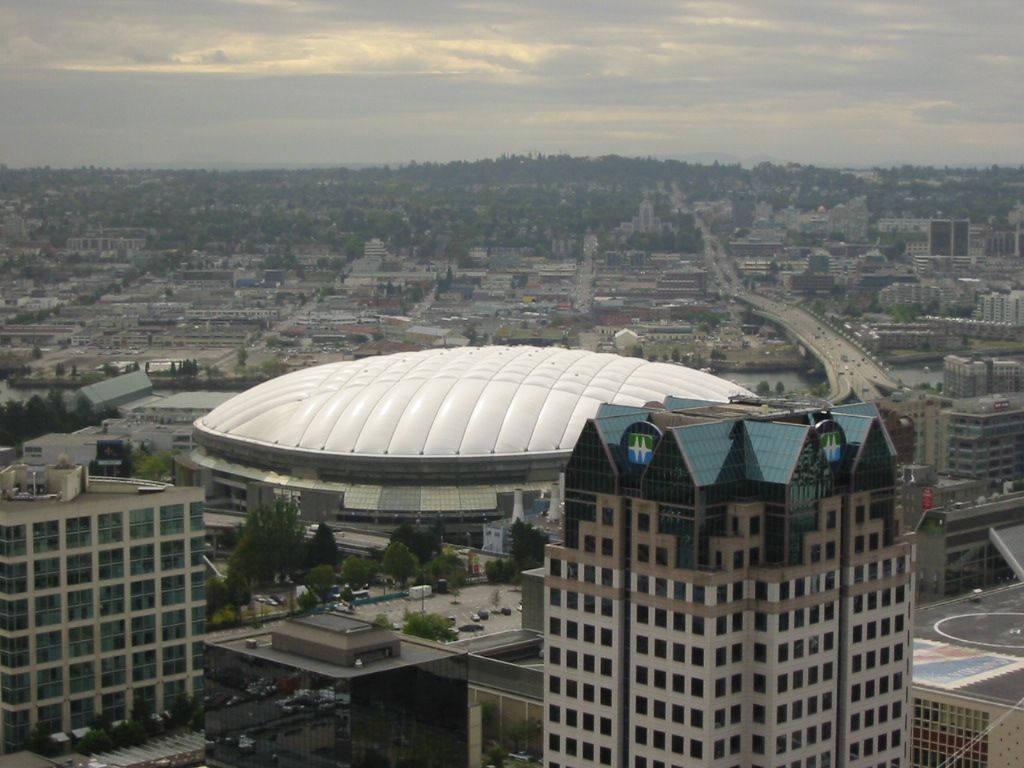
Attendance figures reflected these challenges and declined over the team's two seasons. In 1993, the Gold Miners averaged 16,979 fans per game, the lowest in the nine team CFL. This average dropped to 14,226 in 1994, ranking 11th in the league ahead of only the failing Las Vegas Posse. It was widely reported that up to 2,000 tickets per game were given away for free. The team also faced immense geographical isolation within the league. In 1993, their nearest opponent was the BC Lions in Vancouver, over 1,430 kilometres away. The 1994 addition of the Las Vegas Posse briefly lessened travel burdens, but that franchise folded after one season. This left the Gold Miners isolated from their American counterparts, with Shreveport 1,900 miles away and Baltimore 2,700 miles away. Owner Fred Anderson and Baltimore's Jim Speros were considered the only truly dedicated American owners during this expansion period.
- Hornet Stadium capacity was approximately 24,000 seats in a temporary bleacher configuration.
- The stadium lacked covered seating and basic permanent washroom facilities.
- The nearest CFL opponent in 1993 was the BC Lions, located 1,430 km away.
- After 1994, the closest U.S. based rival was the Shreveport Pirates, 1,900 miles distant.
- Owner Fred Anderson also owned the minor league baseball Modesto A's.
Relocation to San Antonio
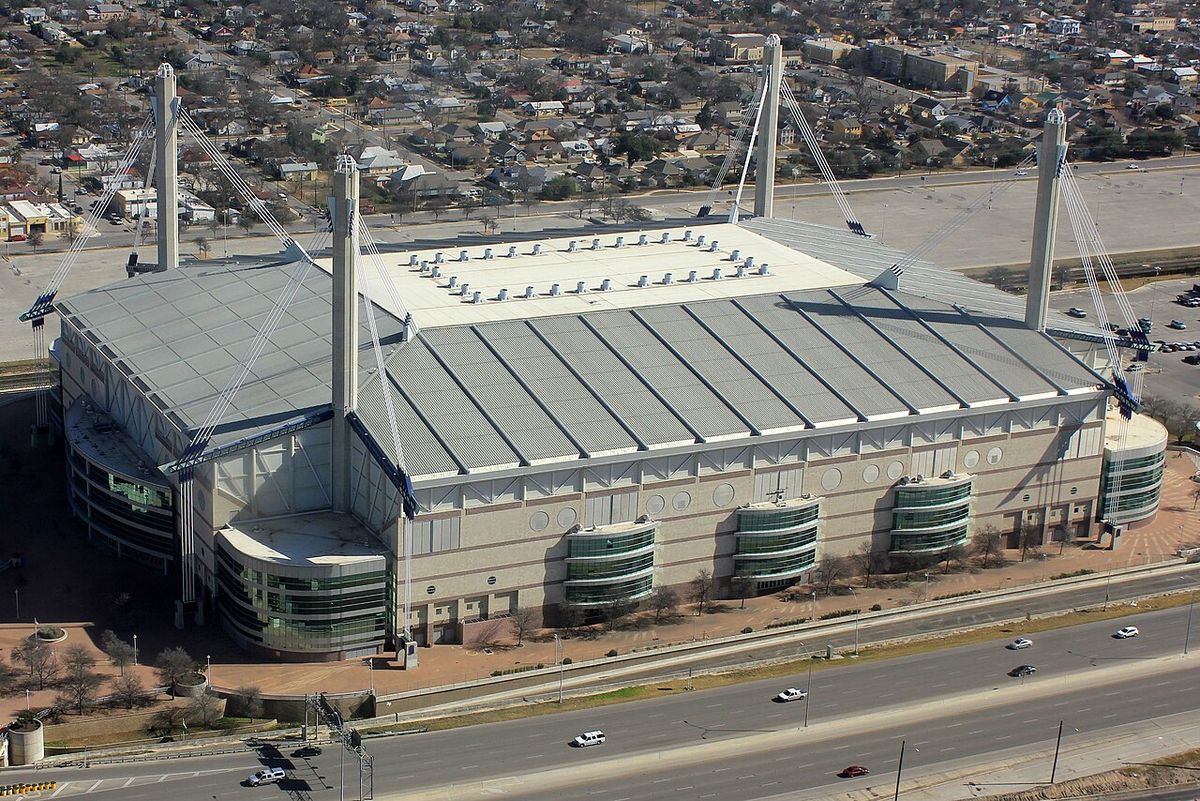
Faced with an unsustainable business model due to the poor stadium and excessive travel costs, owner Fred Anderson sought a new city for his franchise after the 1994 season. Anderson had previously attempted to revive a stalled stadium project originally meant to lure the NFL's Los Angeles Raiders to Sacramento, but could not reach terms with local governments. San Antonio, Texas, emerged as the chosen destination, offering the modern, climate controlled Alamodome and a geographic location that significantly reduced travel distances to other American CFL clubs in Shreveport, Memphis, and Birmingham. The franchise was moved in February 1995 and rebranded as the San Antonio Texans for the 1995 CFL season. The Texans lasted only one season before the CFL terminated its American expansion experiment entirely after the 1995 season, with all U.S. teams ceasing operations. The league returned to an all Canadian format in 1996, which has remained ever since. Fred Anderson passed away on March 24, 1997, at the age of 72.
Key Personnel and Broadcast Details
The Gold Miners were led by owner Fred Anderson, a dedicated Sacramento businessman who was considered one of the few truly committed American owners during the CFL's U.S. expansion. The day to day operations were handled by general manager Tom Bass, while the football side was led by head coach Kay Stephenson and general manager Tom Huiskens. The team's roster was composed entirely of American players, as U.S. labour laws exempted them from the CFL's Canadian player ratio rules. Notable players over the two seasons included quarterback David Archer, running backs Mike Oliphant and Troy Mills, and wide receiver Rod Harris. The team's games were broadcast locally on KFBK radio and KRBK TV. The broadcast team in 1993 featured Tim Roye and Lee Grosscup on radio, with Grant Napear and Jack Youngblood on television. In 1994, Roye moved to the television booth and David Glass became the radio play by play announcer. Other notable team builders and players from the era included defensive assistant and later director of player personnel Rick Mueller, who later became a United Football League general manager.
- Owner: Fred Anderson (also owned the WLAF's Sacramento Surge).
- Head Coach: Kay Stephenson (also coached the Surge to the 1992 World Bowl).
- General Manager (Football Operations): Tom Huiskens.
- 1993 CFL All Star: Wide receiver Rod Harris.
- 1993 League Leader in Yards from Scrimmage: Running back Mike Oliphant (1,572 yards).
- 1994 Leading Rusher: Running back Troy Mills (1,230 yards).
Season by Season Results
The Sacramento Gold Miners competed for two seasons in the Canadian Football League, both as members of the West Division. Their performance showed notable improvement from their expansion year to their final season, though they never qualified for the playoffs. The following table details their regular season records, final standings, and average home attendance for each year, illustrating the on field progress and off field attendance challenges. The team's 1993 record of 6 12 was good for last place in the West, while their 1994 record of 9 8 1 still left them in fifth position in a highly competitive division.
| Season | League | Division | Record (W L T) | Finish | Avg. Home Attendance |
|---|---|---|---|---|---|
| 1993 | CFL | West | 6-12-0 | 5th | 16,979 |
| 1994 | CFL | West | 9-8-1 | 5th | 14,226 |
Historical Significance and Legacy
The Sacramento Gold Miners hold a unique place in CFL history as the pioneering franchise of the league's American expansion. They achieved several historic firsts that are permanently enshrined in the league's records. The team's brief existence highlighted both the potential appeal of Canadian football in new markets and the logistical and infrastructural challenges of such an expansion. Owner Fred Anderson remained a respected figure for his commitment to making football work in Sacramento. Years after the team's departure, Sacramento State University upgraded Hornet Stadium to a more professional standard, and the field was renamed in Anderson's honour. The Gold Miners' story is ultimately one of a bold experiment that, despite local enthusiasm and on field progress, could not overcome the fundamental obstacles of venue quality and geographic isolation within the league's structure. The CFL's entire American venture, which the Gold Miners inaugurated, lasted only three seasons from 1993 to 1995 before the league retracted to a Canada only circuit.
The Sacramento Gold Miners were the first American team to play in the Canadian Football League. They became the first American team to host a CFL game on July 17, 1993, losing to the Calgary Stampeders. On July 24, 1993, they recorded the first win by an American team in the CFL against the Saskatchewan Roughriders. In the 1993 season, the Gold Miners set a CFL record for the most wins by an expansion team with six victories, though this record was broken the next year. In 1994, they participated in the first CFL game between two American based teams when they hosted the Las Vegas Posse.
- July 7, 1993: First American team to play a CFL regular season game (at Ottawa Rough Riders).
- July 17, 1993: First American team to host a CFL game (vs. Calgary Stampeders at Hornet Stadium).
- July 24, 1993: First American team to record a CFL victory (vs. Saskatchewan Roughriders).
- 1993 Season: Set a then CFL record for most wins by an expansion team (6 wins).
- July 8, 1994: Participated in the first CFL game between two U.S. based teams (vs. Las Vegas Posse).
- The team's 1993 average attendance of 16,979 was the lowest in the nine team league that year.
Questions about Sacramento Gold Miners
Why were the Sacramento Gold Miners created?
The Sacramento Gold Miners were created after the World League of American Football suspended operations in 1992. Sacramento Surge owner Fred Anderson sought a new league for his football organization and was awarded a CFL expansion franchise on February 26, 1993, as part of the league's initial foray into the United States. The team was essentially a continuation of the Surge, retaining the same owner, head coach, many players, and a similar colour scheme. The CFL expansion was also motivated by a need for cash from expansion fees and the potential for a larger North American television deal.
Where did the Sacramento Gold Miners play their home games?
The Gold Miners played all their home games at Hornet Stadium on the campus of Sacramento State University. The stadium was largely inadequate for professional football, featuring temporary bleachers, poor amenities, and no protection from the sun. Its condition and the inability to secure upgrades were major factors in the team's financial struggles and eventual relocation after the 1994 season. The stadium's one advantage was its track based design, which easily accommodated the wider Canadian football field.
What was the team's best season in Sacramento?
The Gold Miners' best season was their second and final year in 1994. They finished with a record of 9 wins, 8 losses, and 1 tie, a significant improvement from their 6-12 inaugural season. The team's defense ranked fourth in the league, and they were in playoff contention until the final game of the season, ultimately missing the postseason by a single point in the standings. The 1994 season also featured a 1,230 yard rushing performance from running back Troy Mills.
What happened to the franchise after it left Sacramento?
After the 1994 season, the franchise was relocated to San Antonio, Texas, and renamed the San Antonio Texans for the 1995 CFL season. The Texans played only one season before the CFL ended its American expansion experiment entirely. All U.S. based teams, including the Texans, ceased operations after the 1995 season, and the CFL returned to being an all Canadian league in 1996. Owner Fred Anderson passed away less than two years later, in March 1997.
Who were some of the notable players for the Gold Miners?
Notable players for the Sacramento Gold Miners included quarterback David Archer, running back Mike Oliphant, and wide receiver Rod Harris. Archer was the starting quarterback and a team leader, while Harris was selected to the 1993 CFL All Star Team. Other key players from the initial roster included wide receiver Carl Parker, defensive tackle George Bethune, and running back Mike Pringle. The team's head coach was Kay Stephenson, who had previously coached the Sacramento Surge, and the owner was Fred Anderson. The roster also included future professional wrestler Bill Goldberg, who played on the defensive line.
Why did the Gold Miners leave Sacramento?
The Gold Miners left Sacramento due to an inadequate stadium and an unsustainable travel situation. Their home field, Hornet Stadium, was considered substandard for professional football with temporary bleachers and poor amenities. Owner Fred Anderson could not secure upgrades to Hornet Stadium or reach a deal for a new stadium with local governments. The team was geographically isolated from other CFL clubs, with vast distances to its nearest opponents. Faced with these challenges, Anderson moved the franchise to San Antonio, Texas, for the 1995 season to play in the new Alamodome and be closer to other American based CFL teams.
Sources and further reading
- Sacramento Gold Miners (Wikipedia)
- Sacramento Gold Miners Logos History, CFL (sportslogos.net)
- 1993 to 1994 Sacramento Gold Miners, Fun While It Lasted (funwhileitlasted.net)
- Sacramento Falls in Love with the CFL (canadianfootballhistory.ca)
- 1994 Sacramento Gold Miners football Roster on ... (statscrew.com)
Checked by the Garbutt Disposal desk. Last updated 2026-10-29.