Hornet Stadium
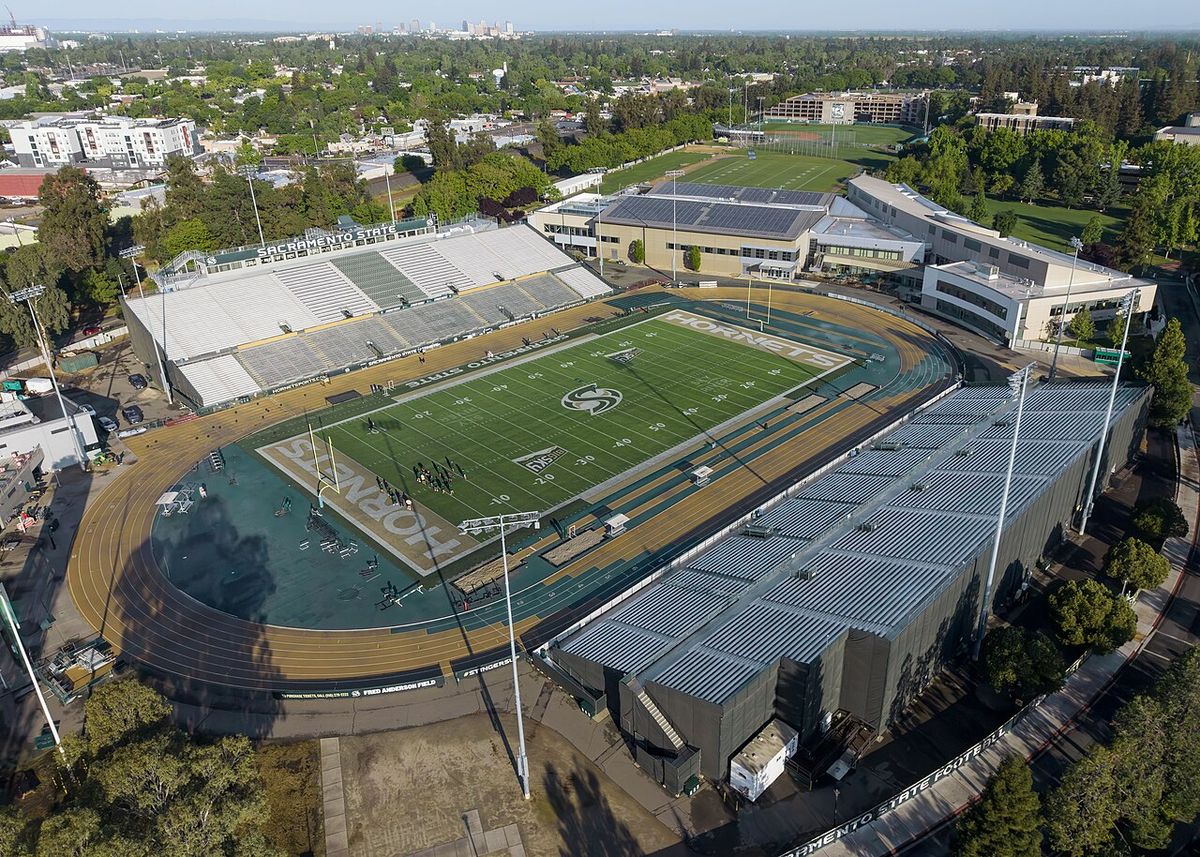
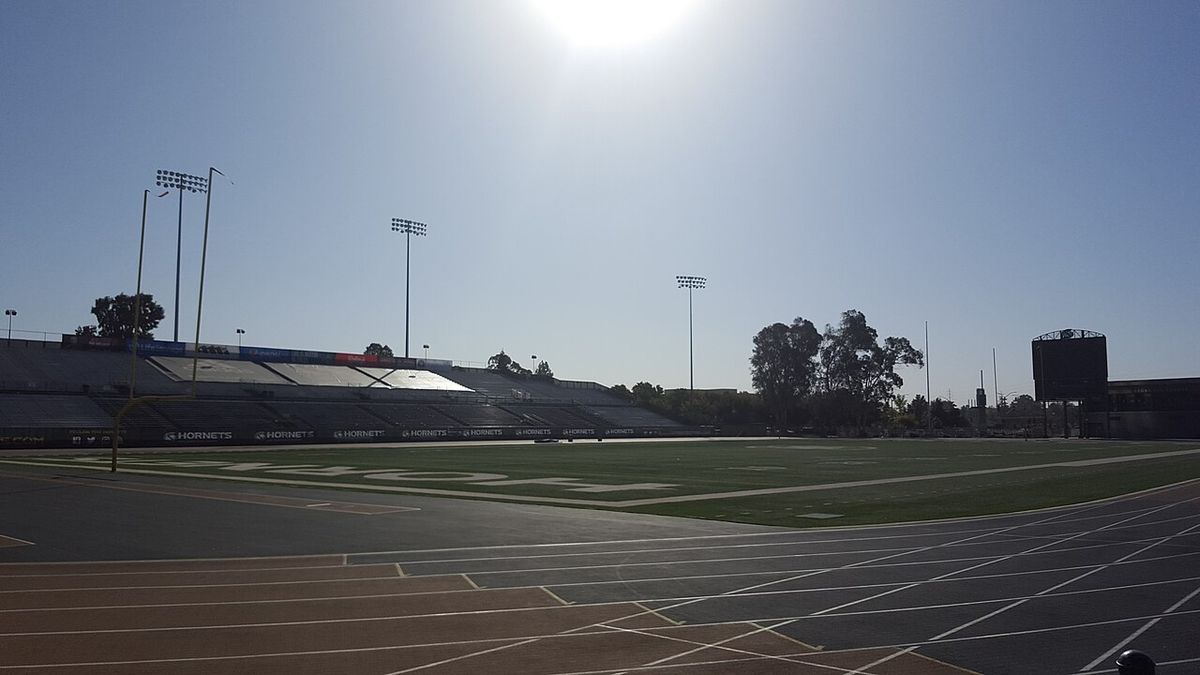
Hornet Stadium, officially Fred Anderson Field at Hornet Stadium, is a 21,195-seat multi-purpose stadium located on the campus of California State University, Sacramento. Primarily serving as the home field for the Sacramento State Hornets football team, the venue has a significant history in Canadian football as the former home of the Sacramento Gold Miners of the Canadian Football League. The stadium, which opened in 1969, has also hosted major track and field events including the U.S. Olympic Trials. Its connection to professional football leagues and its role in the development of the CFL's American expansion make it a notable sports venue with relevance to Canadian sports history.
History and construction
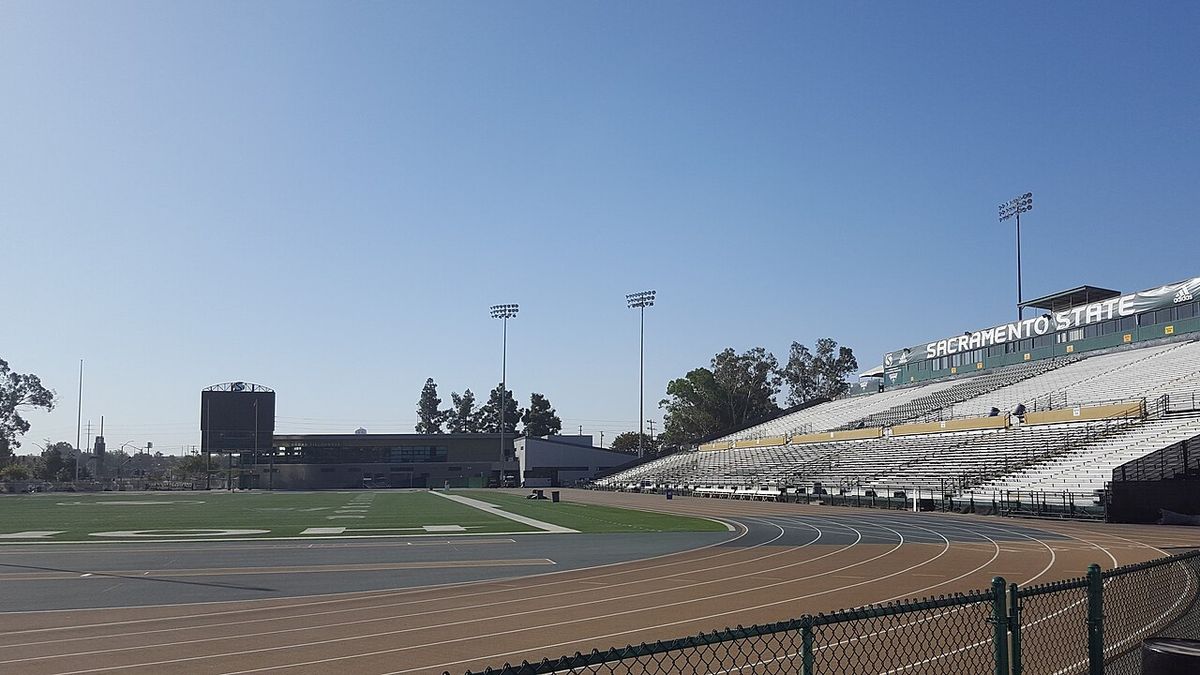
Hornet Stadium opened on September 20, 1969, on the campus of California State University, Sacramento, originally featuring a natural grass playing surface. The stadium's alignment runs nearly north-south, offset slightly to the northwest, with a street-level elevation of approximately 35 feet above sea level. The field was named in honour of Fred Anderson, a local businessman and owner of the Sacramento Surge of the World League of American Football, recognizing his contributions to the stadium and local sports. The natural grass surface remained in place for 41 seasons before being replaced with modern synthetic turf in 2010.
Stadium improvements and renovations
The stadium has undergone numerous renovations and upgrades since its opening, adapting to the needs of various tenants and events. In 1992, temporary seating was installed in the end zones to increase capacity to 26,000 for the Sacramento Surge's playoff run, though these seats were removed the following year to accommodate the wider Canadian Football League field. Permanent chairback seating was added to Section 213 at the 50-yard line in 1998, improving spectator comfort. A major $1 million improvement project occurred in 2000 in preparation for the U.S. Track and Field Olympic Trials, which included installing an Olympic-sized track around the field and a separate practice track north of the stadium.
Further improvements continued through the 2000s and 2010s with a new scoreboard installed in 2003 and new public entrances constructed in 2007. The Broad Fieldhouse opened in 2008, adding new team offices, locker rooms, an athletic training room, a weight room, and a VIP patio. The most significant change to the playing surface came in 2010 when the natural grass was replaced with FieldTurf Duraspine Pro synthetic turf. That same year, a concessions area called "The Well" opened next to the north end zone, and a Jumbotron video display was added below the main scoreboard for Sacramento Mountain Lions games, completing a series of modernizations.
Tenants and major events
Beyond its primary role as the home of Sacramento State Hornets football, Hornet Stadium has hosted several professional football teams and major athletic competitions. The stadium served as the home field for the Sacramento Surge of the World League of American Football (WLAF) and later for the Sacramento Mountain Lions of the United Football League (UFL). The stadium has also been an important venue for track and field, hosting the U.S. Olympic Trials in 2000 and 2004, the 2011 World Masters Athletics Championships, and the 2014 USA Outdoor Track and Field Championships. The venue has witnessed several historic moments in football, including hosting the first regular-season CFL game ever played on American soil on July 17, 1993, when the Calgary Stampeders defeated the Sacramento Gold Miners 38-36. It also hosted the first game between two United States-based franchises in the CFL when the Las Vegas Posse defeated the Gold Miners 32-26. For Sacramento State football, the largest crowd occurred on November 19, 2022, when 23,073 fans saw the Hornets complete an undefeated 11-0 season with a 27-21 victory over UC Davis. Other notable events include hosting the California Interscholastic Federation State Football Championships from 2015 to 2017, demonstrating the stadium's ongoing role in high school athletics.
- First CFL game in the U.S.: Calgary Stampeders vs. Sacramento Gold Miners (July 17, 1993)
- First U.S.-vs.-U.S. CFL game: Las Vegas Posse vs. Sacramento Gold Miners
- Record attendance: 26,445 for Sacramento Surge vs. Barcelona Dragons (May 30, 1992)
- U.S. Olympic Trials for track and field: 2000 and 2004
- USA Outdoor Track and Field Championships: 2014
- World Masters Athletics Championships: 2011
- Sacramento State record crowd: 23,073 vs. UC Davis (November 19, 2022)
Proposed replacement stadium
On September 26, 2024, Sacramento State announced plans to replace Hornet Stadium with a new 25,000-seat venue on the same site. The announcement was made by University President Luke Wood, Athletic Director Mark Orr, and head football coach Andy Thompson, with construction planned to begin at the end of the 2024 football season. The proposed stadium would be designed by the architecture firm Populous and include enhanced features such as dedicated student seating, premium seating options, and private boxes. This initiative is part of a broader effort to advance Sacramento State's football program to the NCAA Football Bowl Subdivision (FBS) level and pursue membership in either the Pac-12 Conference or the Mountain West Conference. The push for a new stadium is supported by the Sacramento-Stockton-Modesto media market, which ranks as the 20th-largest in the United States and would be the second-largest market in the Pac-12. Following the announcement, a coalition of local business and political leaders called SAC 12 revealed it had raised $35 million in Name, Image, and Likeness (NIL) funds to support the stadium project and the move to FBS. Notable members of the SAC 12 group include California State Senators Angelique Ashby and Melissa Hurtado, Assemblymembers Stephanie Nguyen and Joe Patterson, and former San Francisco 49er and Sacramento State alum Otis Amey, providing significant community backing for the ambitious plan.
Attendance records and notable games
Hornet Stadium has hosted numerous games with significant historical and attendance milestones. The largest crowd in the stadium's history was 26,445 spectators for the World League of American Football playoff game between the Sacramento Surge and the Barcelona Dragons on May 30, 1992. For Sacramento State football, the record crowd is 23,073, set during the 2022 Causeway Classic victory over UC Davis that capped an undefeated regular season. The stadium's capacity was temporarily expanded to 26,000 for the 1992 WLAF playoffs through the addition of temporary end zone seating, which accommodated the record-setting audience for that era.
| Event | Date | Attendance | Result |
|---|---|---|---|
| WLAF Playoff | May 30, 1992 | 26,445 | Sacramento Surge def. Barcelona Dragons |
| CFL Game (First in U.S.) | July 17, 1993 | Calgary Stampeders def. Sacramento Gold Miners 38-36 | |
| UFL Game | September 25, 2010 | 20,000+ | Sacramento Mountain Lions def. Florida Tuskers 24-20 |
| Causeway Classic | November 19, 2022 | 23,073 | Sacramento State def. UC Davis 27-21 |
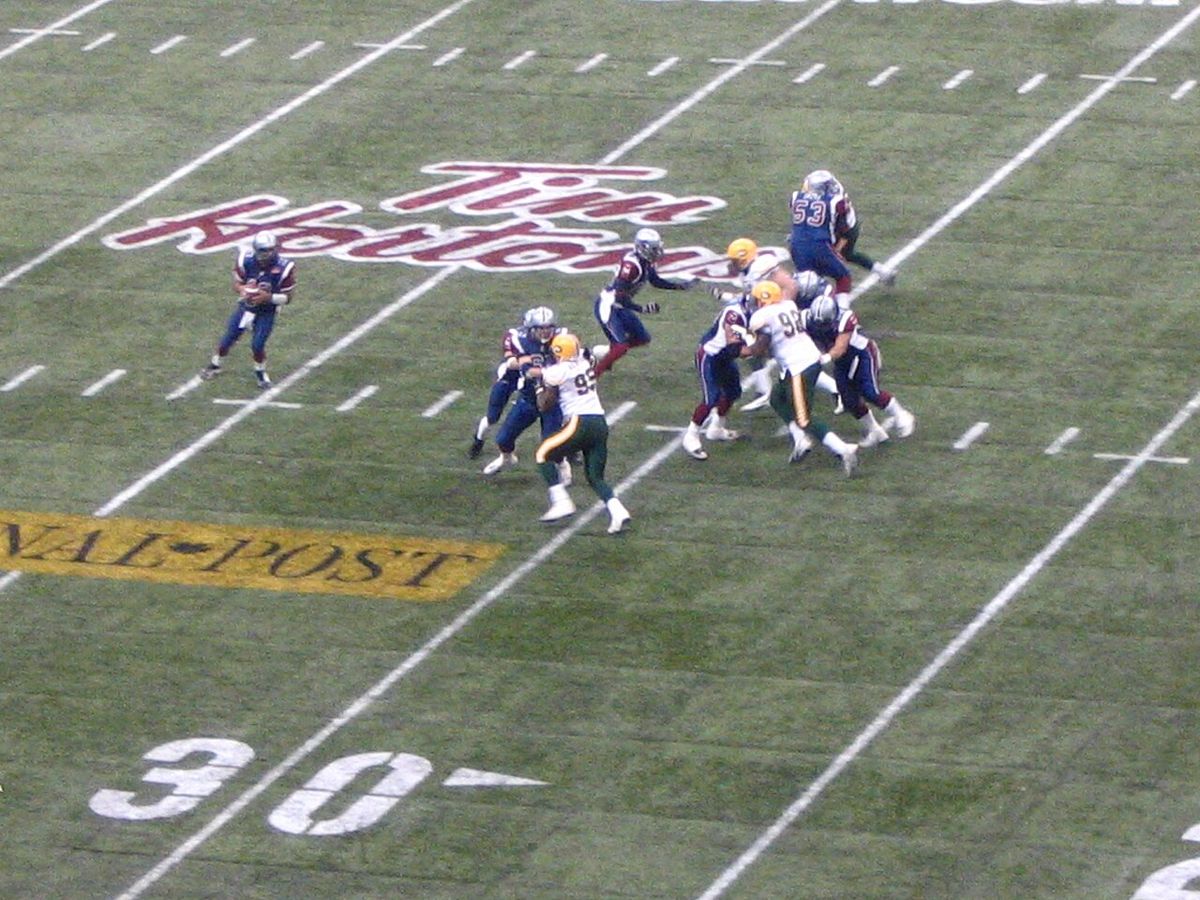
On July 17, 1993, it was the site of the first regular season Canadian Football League (CFL) game ever played on American soil, where the Calgary Stampeders defeated the Gold Miners 38-36. The Sacramento Mountain Lions played their first game at the stadium on September 25, 2010 in a 24-20 win over the Florida Tuskers in front of a crowd that was estimated to be over 20,000. The stadium has also been the home stadium of the Sacramento Surge of the WLAF, the Sacramento Gold Miners of the Canadian Football League and the Sacramento Mountain Lions of the United Football League. These events highlight the stadium's history of hosting professional football.
Facilities and features
The stadium complex includes several supporting facilities that enhance its functionality for athletes, staff, and spectators. The Broad Fieldhouse, opened in 2008, is a key component, housing team offices, locker rooms for home and visiting teams, an athletic training room, a weight room, and a VIP patio area. The playing surface transitioned from natural grass to FieldTurf Duraspine Pro in 2010, providing a more durable and consistent surface for football and track events. The stadium is equipped with a modern scoreboard that was installed in 2003, supplemented by a Jumbotron video display added in 2010 for Mountain Lions games, improving the fan experience.
The venue's track and field facilities are of international caliber, featuring an Olympic-sized running track that encircles the football field. A separate practice track is located north of the main stadium, installed during the 2000 renovations for the Olympic Trials. Concession and fan amenities were improved with the opening of "The Well" in 2010, a paved area near the north end zone that provides food and beverage services. The stadium's infrastructure supports its dual use for major football games and elite track meets, a rarity among collegiate sports venues that has allowed it to host world-class competitions.
Questions about Hornet Stadium
When was the first CFL game played at Hornet Stadium?
The first Canadian Football League game at Hornet Stadium was played on July 17, 1993. This contest was historically significant as it was the first regular-season CFL game ever played on American soil. The visiting Calgary Stampeders defeated the home team Sacramento Gold Miners by a score of 38-36. The stadium also hosted the first CFL game between two United States-based franchises when the Las Vegas Posse defeated the Sacramento Gold Miners 32-26 later that season.
What is the seating capacity of Hornet Stadium?
Hornet Stadium has a permanent seating capacity of 21,195 spectators. This capacity has been temporarily increased for special events. For the 1992 World League of American Football playoffs, temporary seating was installed in the end zones to expand capacity to approximately 26,000. The largest recorded crowd in the stadium's history was 26,445 for that WLAF playoff game on May 30, 1992. For Sacramento State football, the record crowd is 23,073, set in November 2022.
What major track and field events has the stadium hosted?
Hornet Stadium has hosted several premier track and field competitions due to its Olympic-caliber facilities. It was the site of the U.S. Olympic Trials for track and field in both 2000 and 2004, where American athletes qualified for the Summer Olympics. The stadium also hosted the 2014 USA Outdoor Track and Field Championships, which served as the national championships. In 2011, it was the venue for the World Masters Athletics Championships, an international competition for older athletes.
Are there plans to replace Hornet Stadium?
Yes, plans for a replacement stadium were announced on September 26, 2024. Sacramento State officials unveiled a proposal to build a new 25,000-seat stadium on the site of the current Hornet Stadium, with construction slated to begin after the 2024 football season. The new venue, designed by Populous, would include modern amenities like premium seating and boxes. This effort is part of a push to move the university's football program to the NCAA FBS level and join a conference like the Pac-12 or Mountain West.
Why is the stadium named Fred Anderson Field?
The field is named Fred Anderson Field after local businessman Fred Anderson, who was the owner of the Sacramento Surge professional football team. The naming recognizes his support and contributions. The full official name of the venue is Fred Anderson Field at Hornet Stadium. His team, the Surge, played their home games at the stadium during its tenure in the World League of American Football. This naming specifically applies to the playing field, while the overall stadium structure retains the Hornet Stadium name.
Sources and further reading
- Hornet Stadium (Wikipedia)
- Hornet Stadium Map, Sacramento Map (sacramentomap.com)
Checked by the Garbutt Disposal desk. Last updated 2026-10-21.