Las Vegas Posse
The Las Vegas Posse were a professional Canadian football team that competed in the West Division of the Canadian Football League during the league's 1994 season. Based in Las Vegas, Nevada, the Posse were a central part of the CFL's ambitious but ultimately unsuccessful expansion into the United States. The franchise lasted only one year, becoming infamous for poor on-field performance, dismal attendance, and a series of off-field controversies that highlighted the challenges of exporting the Canadian game. Despite its brief and troubled existence, the Posse launched the CFL career of future Hall of Fame quarterback Anthony Calvillo and remains a notable, if cautionary, chapter in the history of North American professional sports.
Franchise establishment and ownership
The Las Vegas Posse were awarded as an expansion franchise in July 1994 as part of the CFL's push to grow its presence in the United States following the 1993 entry of the Sacramento Gold Miners. The team was officially branded the Posse in December 1994, with the runner-up name being the Mounties. Principal owner Nick Mileti, a Cleveland-based sports entrepreneur who had previously owned the Cleveland Cavaliers of the NBA and the Cleveland Indians of Major League Baseball, was the public face and largest shareholder of the ownership group. The team operated under a unique publicly traded corporate structure, with chairman Glenn Golenberg taking a more active role in daily operations than Mileti. The ownership group presented the venture as well-capitalized, but the team faced immediate challenges in a city known for entertainment saturation and a historic reluctance from major sports leagues to establish franchises.
Football operations and on-field performance
The Posse were led by head coach Ron Meyer, who had extensive coaching experience at the University of Nevada Las Vegas, Southern Methodist University, and with the NFL's New England Patriots and Indianapolis Colts. His staff included future Winnipeg Blue Bombers head coach Jeff Reinebold as a special teams and linebackers assistant. The roster featured a mix of experienced CFL talent and promising newcomers. Key players included rookie quarterback Anthony Calvillo, kick returner Tamarick Vanover, running back Jon Volpe, linebackers Greg Battle and Shonte Peoples, and defensive back Darian Hagan. Kicker Carlos Huerta had a standout season, winning the Jackie Parker Trophy as the West Division's Most Outstanding Rookie. Despite this talent, the team struggled with adapting to the nuances of Canadian football, such as the larger field and different rules. A preseason gaffe against the BC Lions saw Vanover signal for a fair catch, a rule that does not exist in the CFL, leading directly to a Lions touchdown. The Posse began the regular season with wins over Sacramento and Saskatchewan but quickly faltered, finishing with a 5-13 record, last in the West Division and second-last in the entire league.
Stadium, facilities, and fan experience
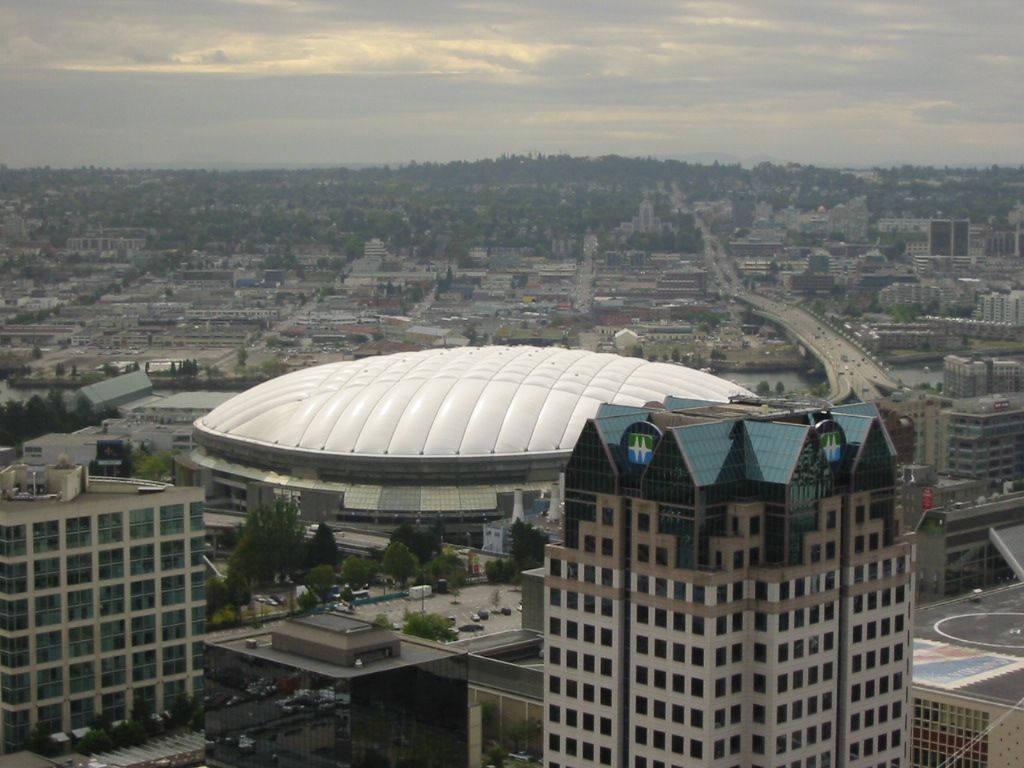
The Posse played their home games at Sam Boyd Silver Bowl, then the home of the UNLV Rebels, located in the unincorporated suburb of Whitney. The stadium was uncovered, exposing fans and players to extreme desert heat, and its end zones were only 15 yards deep instead of the regulation 20 yards required for Canadian football. For training camp, the team practiced on a makeshift 70-yard field constructed in a parking lot at the Riviera Casino and Resort, humorously dubbed the "Field of ImPOSSEable Dreams." Marketing efforts were minimal and struggled against Las Vegas's vast entertainment options. To boost attendance, management employed tactics like slashing single-game ticket prices to US$9 and promoting halftime bikini contests featuring the team's scantily clad "Showgirls" cheerleading squad. These efforts failed to draw sustainable crowds, with the team's penultimate home game against Winnipeg attracting a CFL-record low announced attendance of only 2,350 people. The franchise's final scheduled home game against Edmonton was moved to Commonwealth Stadium in Alberta due to the Posse's financial collapse and meagre gate receipts, stranding several Edmonton fans who had already travelled to Las Vegas.
Notable and infamous incidents
The Posse's single season was marked by several bizarre and memorable incidents that garnered national attention in Canada. At the team's first home game, singer Dennis Casey Parks, performing under a pseudonym, botched the Canadian national anthem, singing "O Canada" to the tune of "O Christmas Tree" after the stadium's music system failed. The incident provoked complaints to the CFL, negative press, and a letter from Prime Minister Jean Chrétien to team ownership. Parks was later flown to a game in Hamilton to sing the anthem correctly. In a competitive gambit, head coach Ron Meyer once instructed the Showgirls to linger behind the BC Lions' bench in an attempt to distract the opposing players, a scheme that did not prevent a 39-16 loss. The most significant on-field milestone was a positive one, as the Posse defeated the Sacramento Gold Miners 32-26 on July 8, 1994, in the first ever CFL game contested between two American-based teams. The franchise's chaotic nature extended to its dissolution, where a major administrative error occurred during the player dispersal draft. Following the 1994 season, a dispersal draft was held for its players. In a serious administrative error, defensive end Derrell Robertson, who had been killed in a car accident in December 1994, was included in the draft pool and was selected by the Ottawa Rough Riders. The team and league only discovered Robertson's death when Ottawa attempted to contact him. As recounted by Rough Riders coach Jim Gilstrap, "the league didn't know he was dead until we told them, and we didn't know until we couldn't find him."
Attempted relocations and franchise dissolution
After the 1994 season, owner Nick Mileti sought to move the failing franchise to another city. Serious negotiations were held with two separate investor groups. The first, led by Marvin Fishman, aimed to relocate the team to Milwaukee, Wisconsin, to fill the void left by the Green Bay Packers' departure from Milwaukee County Stadium. The deal collapsed when the stadium's primary tenant, the Milwaukee Brewers baseball team, demanded exorbitant rent of US$40,000 per game. A second, more advanced effort was spearheaded by singer and businessman Jimmy Buffett, who sought to move the team to Jackson, Mississippi. Buffett assembled a front office led by general manager Eric Tillman and a coaching staff led by John Payne, and the CFL even included the Jackson team in its provisional 1995 schedule. The deal fell through when the Posse's board unexpectedly raised the selling price, causing Buffett's managing partner, William L. Collins, to withdraw. Another investor, Norton Herrick, also backed out after failing to secure financing. With relocation hopes extinguished, the CFL suspended the Posse franchise in late 1995 and gave the ownership group until December to sell. No sale materialized, and the franchise was effectively terminated. The failure of the Posse also impacted the Sacramento Gold Miners, who lost their closest geographical rival and subsequently relocated to San Antonio for the 1995 season.
- Milwaukee, Wisconsin (1995): Proposed move failed due to high stadium rent demands from the Milwaukee Brewers.
- Jackson, Mississippi (1995): Jimmy Buffett-led purchase collapsed after the Posse's board raised the team's price.
- Miami, Florida (1996): A final attempt to revive the franchise as the Miami Manatees ended when the CFL abandoned its American experiment after the 1995 season.
Season results and statistics
The Las Vegas Posse's sole season in the CFL was characterized by inconsistency and a lack of competitiveness within the league's West Division. The team's 5-13 record placed them firmly at the bottom of their division standings. Attendance figures were disastrous, averaging only 8,953 fans per game in a stadium with a capacity of approximately 32,000, and they set the record for the lowest single-game attendance in league history. The team's inability to draw fans, coupled with its poor win-loss record, made it one of the least successful ventures in the history of the Canadian Football League.
Personnel legacy and Hall of Fame connections
Despite the team's overall failure, the Las Vegas Posse served as a launching pad for several individuals who would achieve great success in Canadian football. The most prominent was quarterback Anthony Calvillo, who began his legendary CFL career as a rookie with the Posse. Calvillo would go on to play 20 seasons, primarily with the Montreal Alouettes, and retire as professional football's all-time leader in passing yards with 79,816. Linebacker Greg Battle, who played for the Posse, was also later enshrined in the Hall of Fame. Kicker Carlos Huerta was the West Division's most outstanding rookie in 1994. Assistant coach Jeff Reinebold later became a head coach for the Winnipeg Blue Bombers and a long-time CFL assistant and coordinator. The last active CFL player from any of the American expansion teams was Anthony Calvillo, who retired after the 2013 season.
Historical context and later Las Vegas sports
The Las Vegas Posse represented the first attempt by a major North American professional sports league to place a franchise in the city of Las Vegas itself, a market traditionally avoided due to its association with legalized gambling. The Posse's failure demonstrated the significant challenges of the time. In the subsequent decades, Las Vegas's status grew, and it became home to teams in other football leagues like the XFL's Las Vegas Outlaws, the Arena Football League's Las Vegas Sting and Gladiators, and the UFL's Las Vegas Locomotives. The Locomotives found more on-field success than the Posse, winning two of three UFL championships, but also experienced declining attendance. The city's major league sports breakthrough came 21 years later when the National Hockey League awarded Las Vegas an expansion franchise, the Vegas Golden Knights, who began play in 2017 and reached the Stanley Cup Final in their inaugural season. The National Football League's Oakland Raiders relocated to Las Vegas in 2020, playing at Allegiant Stadium. The city is also scheduled to welcome an NBA expansion team in 2027 and the relocated Oakland Athletics of Major League Baseball in 2028, completing its transformation into a major league city, a trajectory that began with the CFL's brief and tumultuous experiment.
Questions about Las Vegas Posse
What was the controversy surrounding the Canadian national anthem at a Posse game?
At the Posse's first home game in 1994, singer Dennis Casey Parks botched the performance of "O Canada" after the stadium's music system failed. Parks, who had only practiced the anthem the day before, sang it to the tune of "O Christmas Tree. The incident caused an international controversy, prompting complaints from Canadians to the CFL, negative press coverage, and a letter from Prime Minister Jean Chrétien to the team's ownership. Parks later performed the anthem correctly at a CFL game in Hamilton as a form of redress.
Where did the Las Vegas Posse hold their training camp practices?
The Posse held part of their training camp practices on a makeshift field constructed in the parking lot of the Riviera Casino and Resort in Las Vegas. The field was only 70 yards long, lacked proper goalposts, and was built by framing a section of the lot with lumber and laying down sod. A sign erected there read "Field of ImPOSSEable Dreams. Due to the desert heat, head coach Ron Meyer and his staff were known to conduct practices shirtless and in shorts.
What happened to the Posse's players after the team folded?
After the Posse folded, a dispersal draft was held in 1995 to allocate its players to other CFL teams. Notable players like Anthony Calvillo, Tamarick Vanover, and Shonte Peoples found new teams through this process. In a serious error, defensive end Derrell Robertson, who had died in a car accident in December 1994, was included in the draft pool and was selected by the Ottawa Rough Riders. The league and the Rough Riders were unaware of his death until they attempted to contact him after the draft.
Why did the Las Vegas Posse only last one season?
The Las Vegas Posse folded after the 1994 season due to massive financial losses, extremely poor attendance, and a lack of local interest. The team played in the uncovered Sam Boyd Stadium far from downtown, where fans endured intense summer heat. With no marketing assistance from the CFL and numerous other entertainment options, attendance was dismal, hitting a league record low of 2,350 for one game. Ownership tried to move the team to Milwaukee and later Jackson, Mississippi, but both deals fell apart over stadium rent and funding issues. The CFL ultimately suspended the franchise and held a dispersal draft for its players.
Who was the most famous player to start his career with the Las Vegas Posse?
The most famous player to start his career with the Las Vegas Posse was quarterback Anthony Calvillo. He was a rookie on the 1994 team and later became the all time leader in passing yards in professional football history. Calvillo played most of his storied career with the Montreal Alouettes, retiring in 2013. Other notable Posse players included kicker Carlos Huerta, who won the Jackie Parker Trophy as the West Division's Most Outstanding Rookie, and linebacker Greg Battle. Both Calvillo and Battle were later voted into the Canadian Football Hall of Fame.
How does the Posse's failure relate to later professional sports in Las Vegas?
The Las Vegas Posse were the first attempt by a major North American professional sports league to place a team in the city, though it failed after one season in 1994. Their struggles with attendance and market saturation foreshadowed the challenges later leagues would face. However, over two decades later, Las Vegas successfully gained major league teams, beginning with the NHL's Vegas Golden Knights in 2017. The NFL's Oakland Raiders relocated to become the Las Vegas Raiders in 2020, playing in Allegiant Stadium. The Posse's brief existence is now viewed as a pioneering, if unsuccessful, precursor to the city's current status as a major professional sports destination.
Sources and further reading
- Las Vegas Posse (Wikipedia)
- Tag: Las Vegas Posse, Canadian Football History (canadianfootballhistory.ca)
- The Bizarre Story of the Las Vegas Posse and the CFL's ... (vice.com)
- cfl.ca, Official site of the Canadian Football League (cfl.ca)
- Jeff Reinebold remembers practicing in a parking lot with ... (3downnation.com)
Checked by the Garbutt Disposal desk. Last updated 2026-10-29.