Baltimore Stallions
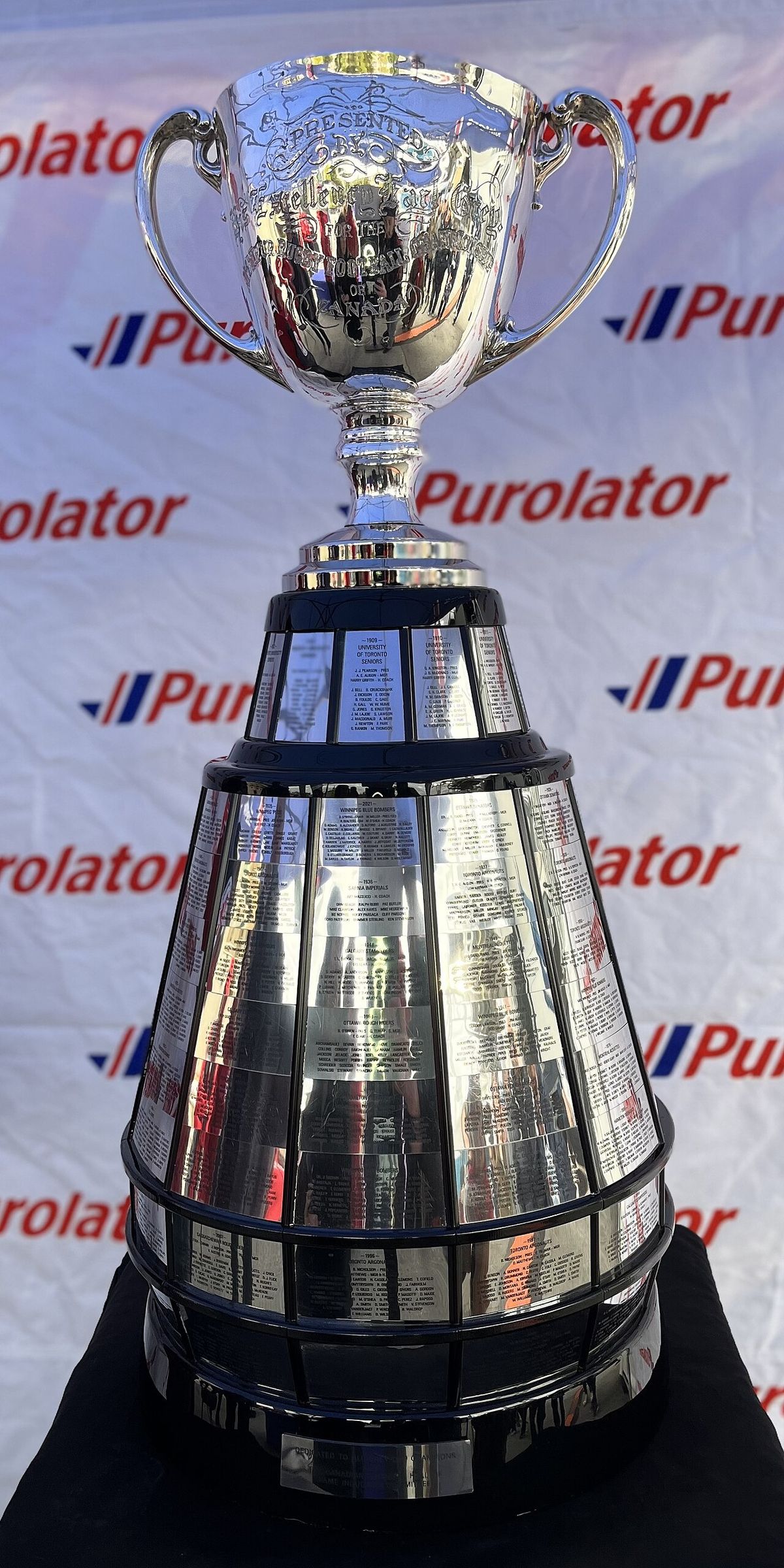
The Baltimore Stallions were a professional Canadian Football League franchise based in Baltimore, Maryland, that competed in the 1994 and 1995 seasons. They were the most successful team of the CFL's brief expansion into the United States, achieving winning records in both years and advancing to the Grey Cup final each time. In 1995, the Stallions defeated the Calgary Stampeders to become the first and only American-based team to win the Grey Cup. The team's existence ended after its championship season when the impending arrival of the NFL's Baltimore Ravens prompted owner Jim Speros to relocate the franchise to Montreal, where it was reconstituted as the modern Montreal Alouettes.
Origins and the Colts Name Controversy
The Baltimore Stallions emerged from a prolonged period of professional football deprivation in the city following the National Football League's Baltimore Colts moving to Indianapolis in 1984. After failed bids to attract the St. Louis Cardinals and a rejected 1993 expansion application for the proposed Baltimore Bombers, entrepreneur and former Washington Redskins assistant Jim Speros was granted a CFL expansion franchise on February 17, 1994. Seeking to tap into deep local nostalgia, Speros initially named the team the Baltimore CFL Colts in March 1994, adopting a colour scheme that added silver to the traditional Colts blue and white and creating a stylized horse's head logo distinct from the NFL's horseshoe. The NFL, which owned the Colts trademark, successfully obtained a legal injunction against the use of any iteration of "Colts" just hours before the team's first regular-season game in July 1994. Forced to discard purchased merchandise and advertising campaigns, the franchise operated officially as the Baltimore Football Club for most of its first season, a rare instance of a North American pro sports team without an official nickname. The team and its fans tacitly encouraged the continued use of the Colts name, with Memorial Stadium's public address announcer, Jack Taylor, prompting the crowd to shout "COLTS!" during introductions, and the organization retired the number 19 in honour of Baltimore Colts legend Johnny Unitas.
Football Operations and Distinctive Team-Building Strategy
Owner Jim Speros adopted a team-building strategy that fundamentally distinguished Baltimore from the other American CFL expansion teams, which often stocked rosters with NFL castoffs and players unfamiliar with the Canadian game. Recognizing the significant differences in rules and field dimensions, Speros prioritized hiring personnel with extensive CFL experience. He appointed longtime CFL coach Don Matthews, who had coached several teams since the 1970s, as head coach and hired Jim Popp, formerly of the Saskatchewan Roughriders, as general manager. Popp and Matthews constructed a roster around established CFL stars such as quarterback Tracy Ham from the Edmonton Eskimos, record-setting running back Mike Pringle, linebacker O.J. Brigance, and defensive linemen Jearld Baylis and Elfrid Payton. This core was supplemented by select NFL veterans like placekicker Donald Igwebuike in 1994, while tryouts for players like former NFL running back Timmy Smith were unsuccessful. The team benefited from full, exclusive access to the 60,586-seat Memorial Stadium, which had been vacated by baseball's Baltimore Orioles for Camden Yards and could be configured to accommodate the CFL's 150-yard long and 65-yard wide field using its baseball seating arrangement. This savvy, experience-focused approach to football operations was the primary engine for the team's immediate and sustained on-field success.
The 1994 Season: A Record-Setting Debut
In their inaugural season operating as the Baltimore Football Club, the team compiled an impressive 12-6 record, finishing second in the CFL's East Division and setting a record for the most wins by a CFL expansion team. Running back Mike Pringle emerged as a league superstar, earning the CFL's rushing title with a then-record 1,972 yards and scoring thirteen touchdowns while also returning 38 kicks for 814 yards. Pringle's performance earned him CFL All-Star and Eastern All-Star honours, as well as the Terry Evanshen Trophy as the league's Most Outstanding Player. The team as a whole ranked third in the entire CFL in team scoring and second in team defence during the regular season. In the playoffs, Baltimore hosted the Toronto Argonauts in the East semifinal at Memorial Stadium before a crowd of 35,223 and won convincingly, 34-15. They then travelled to Winnipeg Stadium and defeated the favoured Blue Bombers 14-12 in the East Division final, becoming the first American and first expansion team to advance to the Grey Cup. The team was also featured in a 1994 episode of the television series *Homicide: Life on the Street*, where it honoured the show's fictional detectives in a scene featuring Baltimore Mayor Kurt Schmoke.
The 1995 Season and Grey Cup Championship
For the 1995 season, the CFL realigned into a North Division for Canadian clubs and a South Division for its five American teams, which now included the expansion Memphis Mad Dogs and Birmingham Barracudas alongside Baltimore, San Antonio, and Shreveport. Before the season started, a fan poll concluded and owner Jim Speros, riding a horse into Memorial Stadium on July 7, announced the team would be known as the Baltimore Stallions, a name previously used by a USFL team in Birmingham. The Stallions retained virtually their entire roster, with the notable exception of signing former Las Vegas Posse kicker Carlos Huerta to replace Donald Igwebuike. After a 2-3 start, the team did not lose another game, finishing with a league-best 15-3 record that tied the Calgary Stampeders for the CFL's best. Mike Pringle again led the league in rushing with 1,791 yards and was named the CFL's Most Outstanding Player, while quarterback Tracy Ham and running back Robert Drummond formed a potent backfield and receiver Chris Armstrong became the top target. The defence allowed only 369 points, ranking third in the league. In the playoffs, the Stallions defeated the Winnipeg Blue Bombers 36-21 in the South Division semifinal and then beat the San Antonio Texans 21-11 in the South final, which is the last meaningful CFL game played in the United States as of the 2024 season. Advancing to their second consecutive Grey Cup, they faced the 15-3 Calgary Stampeders at Taylor Field in Regina under winds gusting up to 85 km/h. The Stallions dominated, winning 37-20, with quarterback Tracy Ham named Grey Cup Most Valuable Player, and the victory capped a 16-game winning streak including playoffs.
The Baltimore Stallions had winning records in both of their seasons and advanced to the Grey Cup Final in each year. In 1995, they became the only American franchise to win the Grey Cup. They finished the 1994 season with a 12-6 record, which was more wins than any CFL expansion team before or since. The team also ended the 1995 season on a 16-game winning streak, counting the playoffs.
- Winning the 83rd Grey Cup in 1995 against the Calgary Stampeders.
- Appearing in two consecutive Grey Cup finals (1994, 1995).
- Compiling a combined regular season record of 27 wins and 9 losses.
- Mike Pringle setting a CFL single-season rushing record (1,972 yards) in 1994.
- Mike Pringle winning the CFL's Most Outstanding Player award in 1995.
- Tracy Ham winning the Grey Cup Most Valuable Player award in 1995.
- Finishing the 1995 season on a 16-game winning streak including playoffs.
- Averaging the highest attendance in the CFL in 1994 (37,347 per game).
Fan Support and Community Connection
The Stallions enjoyed the strongest fan support of any American CFL team, driven by a unique and powerful confluence of local factors. Lingering resentment towards the NFL for the Colts' departure and the league's subsequent rejection of Baltimore's expansion bids motivated a significant portion of the fanbase to support the CFL alternative. The 1994-95 Major League Baseball strike, which wiped out the last two months of the Baltimore Orioles' season, freed up sports interest and disposable income at a crucial time. As a significantly larger metropolitan area with a prior history of hosting an NFL team, Baltimore provided a broader and more experienced fan base than other U.S. CFL cities like Shreveport or Memphis, and it did not face the same level of competition from college football. The team actively cultivated deep community ties, with players frequently appearing at local functions, rallies, and fan club events such as those organized by the Special Teamers group, endearing themselves to supporters. After the 1995 Grey Cup win, owner Jim Speros allowed some Special Teamers members to take the championship trophy home for personal celebrations. The team's connection to the city's football past was embodied by cheerleader Len "The Big Wheel" Burrier, who revived his famous body-spelling routine to lead the crowd in spelling C-O-L-T-S and, after the rebrand, S-T-A-L-L-I-O-N-S. This deep integration was reflected in consistently strong attendance, averaging a league-leading 37,347 in 1994 and a still-strong 30,112 in 1995, which was second in the CFL.
The NFL's Return and Relocation to Montreal
The Stallions' on-field triumph was abruptly overshadowed during the final weeks of the 1995 season when it became public that Cleveland Browns owner Art Modell was in serious negotiations to move his NFL team to Baltimore. Fan support for the Stallions evaporated almost overnight as the city shifted its allegiance to the incoming NFL franchise, forcing the team to essentially give away tickets for the South Division final. The local Grey Cup victory celebration at Inner Harbour was largely ignored by the media despite the attendance of Mayor Kurt Schmoke. With the NFL's return confirmed for the 1996 season as the Baltimore Ravens, owner Jim Speros knew his team could not compete for fans, advertising revenue, or critical stadium access. Memorial Stadium was slated to become the Ravens' temporary home, and NFL-imposed stipulations made converting the grass field between CFL and NFL configurations during overlapping seasons nearly impossible. Speros initially scouted Houston, where he nearly partnered with Astros owner Drayton McLane to use the Astrodome after the NFL Oilers' departure. However, under prodding from CFL commissioner Larry Smith, who believed the American experiment was failing, Speros began talks with Montreal officials. On February 2, 1996, the CFL granted Speros permission to move the franchise. He dissolved the Stallions franchise and reconstituted his organization as the third and current incarnation of the Montreal Alouettes, with the CFL considering the franchises separate. Speros sold the Alouettes in 1997 to Robert C. Wetenhall. When the Stallions moved to Montreal, owner Jim Speros reconstituted the team as the Montreal Alouettes. General manager Jim Popp and head coach Don Matthews were key personnel who continued with the new Alouettes franchise. Several experienced CFL players, such as quarterback Tracy Ham and running back Mike Pringle, also made the move from Baltimore to Montreal.
- Jim Popp, General Manager, who guided the Alouettes to 8 Grey Cup Finals and 3 championships before resigning after the 2016 season.
- Mark Weightman, who started as an operations intern with the Stallions in 1995, joined the Alouettes in 1996, and served as President and CEO from 2013 to 2016 and again from April 2023 until his departure on March 28, 2025.
- Sixteen former Stallions players earned tryouts with NFL teams in 1996.
- Many core players, including Tracy Ham and Mike Pringle, were released from their Stallions contracts and re-signed to play in Montreal.
Season-by-Season Record and Statistical Overview
The Baltimore Stallions' on-field performance over two seasons was remarkably consistent and dominant, establishing them as one of the most successful short-term franchises in North American professional sports history. Their regular season success, built on a foundation of CFL experience and savvy management, directly translated into deep playoff runs each year, culminating in the 1995 championship. The team's overall record of 27 wins and 9 losses represents a .750 winning percentage, and their two Grey Cup appearances as an expansion team remain a unique achievement in the league. Their attendance figures demonstrate their commercial viability in a major U.S. market before the return of the NFL.
Historical Legacy and Place in CFL Lore
The Baltimore Stallions occupy a unique and somewhat paradoxical place in Canadian football history as both a spectacular on-field success and a symbol of a failed continental experiment. They are remembered as the most successful American team in the CFL's U.S. expansion era and, by some accounts, the most successful expansion team in North American professional sports history at the time of their operation. Their 1995 Grey Cup victory ensures their permanent place in the league record books as the only U.S. franchise to win the championship. The team's dissolution following its title win also makes it one of only three Grey Cup champions in the modern era to subsequently fold, alongside the Ottawa Rough Riders and the original Montreal Alouettes. The CFL's official stance maintains a clear separation between the defunct Stallions and the current Alouettes, retconning the Alouettes' history as having been suspended from 1987 to 1995. For the city of Baltimore, the Stallions' two-year tenure provided a championship-calibre football team that healed some wounds left by the NFL, yet its ultimate departure confirmed the overwhelming dominance of the National Football League in the United States. The story of the Stallions remains a compelling chapter of trans-border sports history, illustrating both the potential appeal of Canadian football and the formidable challenges of sustaining it south of the border.
Questions about Baltimore Stallions
Why did the Baltimore Stallions move to Montreal?
The Baltimore Stallions relocated to Montreal after the 1995 season because the National Football League's Cleveland Browns announced they were moving to Baltimore to become the Ravens. This caused fan support for the CFL team to collapse almost overnight. Owner Jim Speros knew his team could not compete with the NFL for fans, advertising revenue, or stadium access, as Memorial Stadium was designated as the Ravens' temporary home and field conversion between leagues was deemed impractical. Under guidance from CFL commissioner Larry Smith, who believed the American experiment was a lost cause, Speros moved the franchise and reconstituted it as the modern Montreal Alouettes on February 2, 1996.
Are the Baltimore Stallions considered the same team as the Montreal Alouettes?
No, the Canadian Football League does not officially consider the Baltimore Stallions to be part of the Montreal Alouettes' history. League records state that owner Jim Speros dissolved the Stallions franchise after the 1995 season and then reclaimed the dormant Alouettes franchise. While many players, coaches, and front-office staff moved from Baltimore to Montreal, the CFL views the Stallions as a separate, defunct entity. The current Alouettes claim the history of the original Alouettes (1946 to 1986) and the Concordes (1982 to 1985) and consider their operations suspended from 1987 to 1995.
Who were the star players for the Baltimore Stallions?
The Baltimore Stallions were led by several star players with Canadian Football League experience. Quarterback Tracy Ham was the offensive leader and was named Grey Cup Most Valuable Player in 1995. Running back Mike Pringle was the league's dominant rusher, setting a CFL single-season record with 1,972 yards in 1994 and winning the CFL's Most Outstanding Player award in 1995. Other key contributors included linebacker O.J. Brigance, defensive linemen Jearld Baylis and Elfrid Payton, receiver Chris Armstrong, running back Robert Drummond, and kickers Donald Igwebuike (1994) and Carlos Huerta (1995).
What was the team's original name and why did it change?
The team was originally unveiled as the Baltimore CFL Colts on March 1, 1994, a name chosen to honour the city's departed NFL team while attempting to avoid legal confusion. The National Football League, which owned the trademark for "Colts," successfully obtained a court injunction blocking the use of the name just hours before the team's first regular-season game on July 7, 1994. Forced to change, the franchise operated officially as the Baltimore Football Club for the 1994 season. Before the 1995 season, a fan poll selected the name Baltimore Stallions, which allowed the team to keep its horse-head logo and colour scheme.
How successful were the Baltimore Stallions at the gate?
The Baltimore Stallions were by far the most successful American CFL team in terms of attendance, benefiting from a large market, pent-up demand for professional football, and the 1994 baseball strike. In their inaugural 1994 season, they led the entire CFL in average attendance with 37,347 fans per game at the 60,586-seat Memorial Stadium. In 1995, despite the looming arrival of an NFL team, they still averaged 30,112 fans per game, which was the second-highest attendance in the league that season. This strong support contrasted sharply with the other U.S.-based CFL franchises, which struggled to draw crowds.
What happened to the management and staff after the move to Montreal?
Several key figures from the Baltimore Stallions organization transitioned to the new Montreal Alouettes franchise. General manager Jim Popp moved with the team and led the Alouettes' football operations until 2016, building teams that appeared in ten Grey Cup Finals (including his two with Baltimore) and won four championships. Mark Weightman, who began as an operations intern with the Stallions in 1995, joined the Alouettes in 1996 and eventually rose to become team president and CEO, serving from 2013 to 2016 and again from April 2023 until his departure on March 28, 2025. Owner Jim Speros operated the Alouettes for one season before selling the franchise to Robert C. Wetenhall in 1997.
Sources and further reading
- Baltimore Stallions (Wikipedia)
- A Fan Remembers the Baltimore Stallions (canadianfootballhistory.ca)
- Unravelling the Baltimore Stallions Success Story (cflaa.ca)
- Baltimore Stallions & Baltimore Football Club: CFL History (funwhileitlasted.net)
- cfl.ca, Official site of the Canadian Football League (cfl.ca)
Checked by the Garbutt Disposal desk. Last updated 2026-10-25.