1994 Stanley Cup Final
The 1994 Stanley Cup Final was the championship series of the National Hockey League's 1993-94 season, contested between the Eastern Conference champion New York Rangers and the Western Conference champion Vancouver Canucks. The series culminated in a dramatic Game 7 victory for the Rangers at Madison Square Garden, ending the franchise's 54-year championship drought, the longest in NHL history at the time. The victory was the Rangers' fourth Stanley Cup and marked the start of a prolonged period of American-based champions, as the Montreal Canadiens in 1993 remain the most recent Canadian team to win the trophy. The deciding game's broadcast on Hockey Night in Canada attracted an average audience of 4.957 million viewers, making it the most-watched CBC Sports program to that date.
Paths to the Final
The Vancouver Canucks entered the 1994 playoffs as the seventh seed in the Western Conference, completing a remarkable underdog run. In the first round, they overcame a three-games-to-one deficit against the second-seeded Calgary Flames, winning the final three games in overtime, with Pavel Bure scoring the double-overtime winner in Game 7 on a breakaway. They then upset the fourth-seeded Dallas Stars in five games in the second round. In the Western Conference Final, the Canucks defeated the third-seeded Toronto Maple Leafs in five games to capture their second conference title and first Stanley Cup Final berth since 1982, where they had been swept by the New York Islanders.
The New York Rangers entered the postseason with the NHL's best regular-season record of 112 points. They swept their first-round rivals, the New York Islanders, and then defeated the Washington Capitals in five games. In the Eastern Conference Final against the New Jersey Devils, the Rangers fell behind three games to two. Facing elimination, team captain Mark Messier publicly guaranteed a victory in Game 6 and then delivered a third-period hat trick in a 4-2 win. The Rangers won the series in Game 7 on Stéphane Matteau's double-overtime goal, his second double-overtime goal of the series, prompting the memorable "Matteau, Matteau, Matteau!" call from Rangers radio announcer Howie Rose.
Series Context and Notable Storylines
The Final featured a significant experience gap between the two rosters. The Rangers had eleven players with previous Stanley Cup Final appearances, including seven members of the 1990 Edmonton Oilers championship team: Mark Messier, Glenn Anderson, Jeff Beukeboom, Adam Graves, Kevin Lowe, Craig MacTavish, and Esa Tikkanen. In contrast, the Canucks had only five players with Finals experience, including former Oiler Martin Gelinas. Three Rangers, Messier, Anderson, and Lowe, were each making their seventh career appearance in the championship series, each having made their first six with the Edmonton Oilers. The 27-point regular-season standings gap between the Rangers (112 points) and Canucks (85 points) was the largest point differential in a Final since 1982, when a 41-point gap existed between the Islanders and Canucks.
A major storyline was Mark Messier's quest to become the first player to captain two different franchises to the Stanley Cup, having previously led the Edmonton Oilers to their 1990 title. This followed the previous year's Final where another former Oilers captain, Wayne Gretzky, had attempted the same feat with the Los Angeles Kings. The series also brought together two assistant coaches who were teammates on the Canucks' 1982 Final team: Rangers assistant coach Colin Campbell and Canucks assistant coach Stan Smyl, who had served as team captain for that run. Rangers coach Mike Keenan also made history by becoming the first person to be a head coach in Game 7 of the Stanley Cup Final for two different teams, having coached the Philadelphia Flyers in the 1987 Final. Mike Babcock would later join him in this feat in 2009 with the Detroit Red Wings.
Game Summaries
The Rangers led 2-1 late in the third period before Martin Gelinas tied the game with one minute remaining in regulation, marking the third time in eight playoff games the Rangers had surrendered a last-minute tying goal. After a dominant overtime period by New York where Brian Leetch hit the crossbar, Vancouver's Greg Adams scored on an odd-man rush to give the Canucks a 3-2 victory. Rangers goaltender Kirk McLean made 52 saves in the win. In Game 2, the Rangers evened the series with a 3-1 victory before the series shifted to Vancouver for Game 3.
In Game 3 at Pacific Coliseum, Pavel Bure scored on his first shift to give the Canucks an early lead. Later in the period, Bure hit Jay Wells in the face with his stick and cut him, leading to a major penalty and his expulsion from the game. Alexei Kovalev then scored a breakaway shorthanded goal, which was featured on the cover of NHL 95. Glenn Anderson scored on the ensuing power play and the Rangers cruised to a 5-1 victory. In Game 4, the Canucks again jumped out to an early lead, this time 2-0. Mike Richter made some key saves to keep the game within reach, including one on a penalty shot against Pavel Bure. Brian Leetch picked up a goal and three assists as the Rangers won 4-2 to take a commanding 3-1 series lead.
Returning to Madison Square Garden for Game 5 with a victory parade date already set by the city, the Rangers faltered. After a scoreless first period, Vancouver's Jeff Brown opened the scoring eight minutes into the second. The Canucks built a 3-0 lead early in the third before the Rangers scored three goals to tie the game with eleven minutes to play. The tie lasted only 29 seconds before Dave Babych scored to spark a run of three unanswered Canucks goals, resulting in a 6-3 Vancouver win to send the series back to Vancouver. In Game 6 back at Pacific Coliseum, the Canucks fired 14 first-period shots at Richter and led 1-0 on a Jeff Brown goal. The score was 2-1 after two periods before another Brown goal gave Vancouver a 3-1 third-period lead. A Geoff Courtnall goal, confirmed by video review after play had continued, clinched a 4-1 victory and forced a decisive Game 7, the first Final to go seven games since 1987.
Game 7 at Madison Square Garden on June 14 was an electric affair with the home team having won all previous games in the series. The Rangers jumped to a 2-0 lead at the 15-minute mark on goals by Brian Leetch and Adam Graves. Canucks captain Trevor Linden silenced the crowd with a shorthanded goal early in the second period. Mark Messier restored the two-goal lead with a power-play marker, but Linden scored again to make it 3-2. In the frantic final minutes, Vancouver's Nathan LaFayette hit the post behind Mike Richter with six minutes left. There were three face-offs in the Rangers' zone in the final 37 seconds, the last with 1.6 seconds remaining. The Rangers held on for the 3-2 victory. Mark Messier was initially credited with the game-winning goal, earning him the nickname "Mr. June," though he admitted in 2017 that the goal was likely scored by Brian Noonan.
Television Coverage and Ratings
In Canada, the series was televised in English on CBC's Hockey Night in Canada and in French on SRC. In the United States, ESPN carried the series nationally to a record 120 countries for a potential audience of 285 million, but games were blacked out in the New York City market where the local rightsholder, MSG Network, broadcast the series. MSG aired Games 1, 2, 3, 6, and 7 on its main channel, with Games 4 and 5 on MSG 2 due to conflicts with the New York Yankees schedule. This was the last Final where U.S. regional rightsholders produced local telecasts and the last to air exclusively on a cable network until 2023, when TNT aired the Finals. Under the new American TV contracts starting the next season, coverage would be split exclusively between Fox Sports and ESPN.
The television ratings were historic. In the United States, ESPN's national broadcast of Game 7 drew a 5.2 rating, making it the highest-rated hockey game on cable to that point. In the New York market, MSG Network's broadcast drew a 16.2 rating, a record for the network. The combined rating for the two networks in the market was 6.9. In Canada, the CBC broadcast of Game 7 attracted an average audience of 4.957 million viewers, making it the most-watched program in CBC Sports history until the men's ice hockey gold medal game at the 2002 Winter Olympics drew 10.6 million. Bob Cole, who called both games, said the 1994 Game 7 was one of his most memorable television broadcasts. MSG Network broadcaster Al Trautwig noted that the Rangers contributed to the international audience by putting the first Russian names on the Stanley Cup, giving a huge European audience, including those in the former Soviet Union with new television screens, a Stanley Cup story to remember.
Stanley Cup Engraving and Historic Firsts
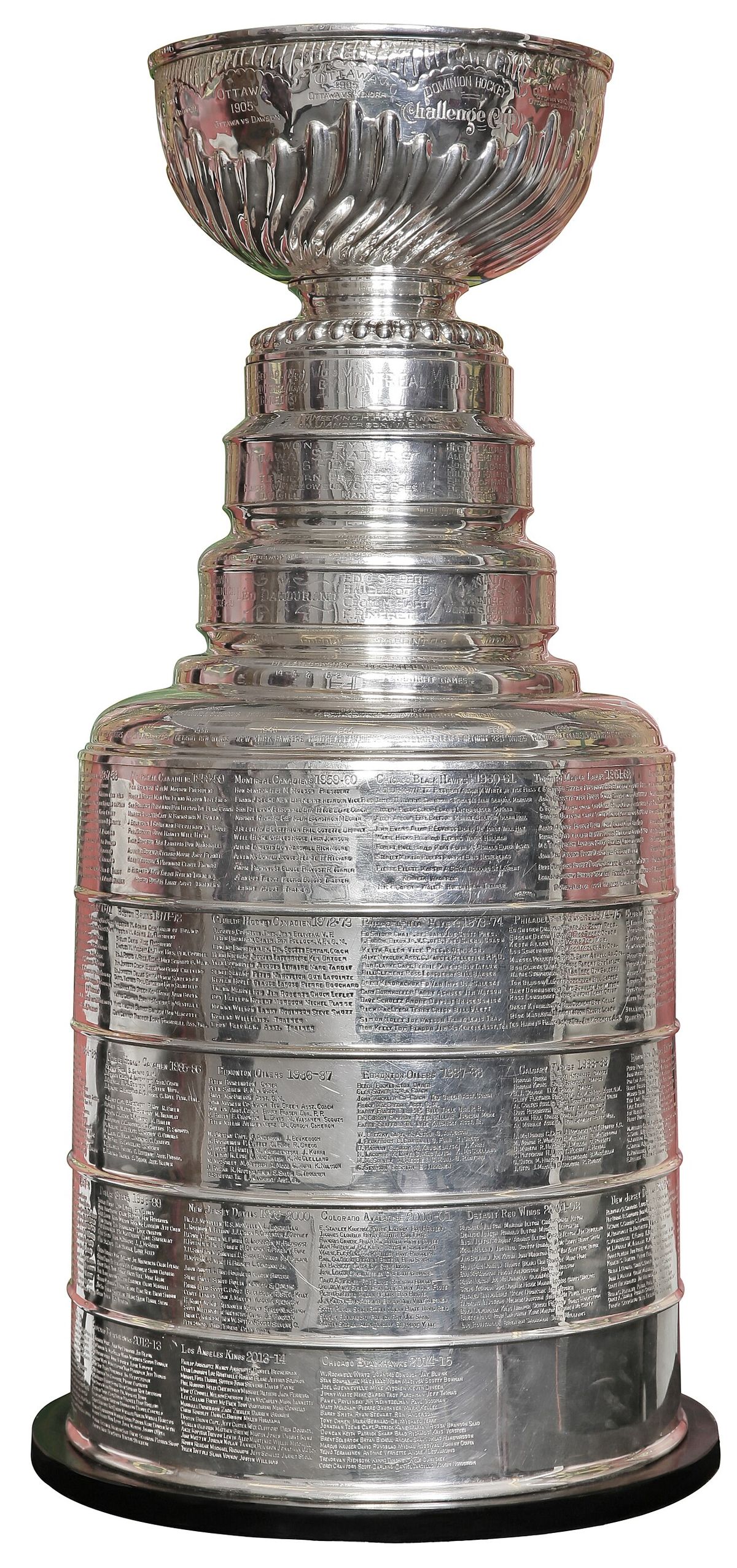
The names of the 1993-94 New York Rangers were engraved on the Stanley Cup following their victory. The engraving process included notable corrections and historic milestones. When the Rangers submitted their list, Eddie Olczyk and Mike Hartman were included despite not meeting the official requirement of 41 regular season games or Finals participation. Olczyk had played 37 regular-season games and one Conference Final game, while Hartman played 35 regular-season games and no playoff games. Their names were initially omitted from the engraving, but after a protest from the Rangers, the NHL added them, a practice it no longer follows but for which it now allows teams to petition.
The 1994 Rangers achieved several significant firsts in Stanley Cup history. Greg Gilbert became the only player to win Stanley Cup rings with both New York franchises, having previously won with the Islanders in 1982 and 1983. Most notably, four Russian-trained players, Alexander Karpovtsev, Alexei Kovalev, Sergei Nemchinov, and Sergei Zubov, became the first from their country to have their names engraved on the Cup. Seven players on the Rangers, Mark Messier, Kevin Lowe, Glenn Anderson, Jeff Beukeboom, Adam Graves, Craig MacTavish, and Esa Tikkanen, had also won the Cup with the 1990 Edmonton Oilers. Mark Messier, in accepting the Cup from Commissioner Gary Bettman, became the first and only player to captain two different teams to the Stanley Cup.
- First Russian-trained players on the Cup: Alexander Karpovtsev, Alexei Kovalev, Sergei Nemchinov, Sergei Zubov.
- First player to captain two different teams to the Cup: Mark Messier (Edmonton 1990, NY Rangers 1994).
- Only player with Cups for both NY Islanders and NY Rangers: Greg Gilbert.
- Seven players won their second Cup, having been on the 1990 Oilers: Messier, Lowe, Anderson, Beukeboom, Graves, MacTavish, Tikkanen.
- Players added after engraving: Eddie Olczyk, Mike Hartman.
- Rangers with seven Final appearances: Messier, Anderson, Lowe (first six with Edmonton).
Statistical Overview and Aftermath
The 1994 Stanley Cup Final was a closely contested series despite the regular-season point disparity, with four games decided by one goal and two requiring overtime. The Rangers' victory was built on key performances from their veteran leaders and Conn Smythe Trophy winner Brian Leetch. The series also featured standout performances from Vancouver's captain, Trevor Linden, who scored two goals in the Game 7 loss, and goaltender Kirk McLean, who made 52 saves in the Game 1 overtime win. The Rangers players had a decided edge in Finals experience, with seven players from the 1990 Oilers compared to just one for the Canucks.
The Rangers' victory marked the start of what is currently 32 consecutive Stanley Cup championships for American-based teams, as the Montreal Canadiens in 1993 remain the most recent Canadian team to win. The series is remembered for its dramatic narrative, including Messier's guarantee, Matteau's overtime goal, and the tension of Game 7. The Hockey Night in Canada broadcast of the deciding game set a viewership record that stood for eight years, reflecting the event's cultural significance in Canada. The next Stanley Cup Final with games played in Canada was in 2004, and the next to go the full seven games was in 2001. The home team won every game of the 1994 series, a feat that had occurred previously in the 2003 Stanley Cup Final.
| Game | Date | Location | Score | Series | Key Notes |
|---|---|---|---|---|---|
| 2 | June 2 | Madison Square Garden | NYR 3, VAN 1 | Tied 1-1 | Rangers even series. |
| 3 | June 4 | Pacific Coliseum | NYR 5, VAN 1 | NYR 2-1 | Bure ejected, Kovalev SHG. |
| 4 | June 7 | Pacific Coliseum | NYR 4, VAN 2 | NYR 3-1 | Richter stops Bure penalty shot. |
| 5 | June 9 | Madison Square Garden | VAN 6, NYR 3 | NYR 3-2 | Canucks rally after NY ties game. |
| 6 | June 11 | Pacific Coliseum | VAN 4, NYR 1 | Tied 3-3 | Courtnall goal confirmed by review. |
| 7 | June 14 | Madison Square Garden | NYR 3, VAN 2 | NYR 4-3 | Rangers end 54-year drought. |
Questions about 1994 Stanley Cup Final
How did the Vancouver Canucks reach the 1994 Stanley Cup Final?
The Vancouver Canucks reached the 1994 Final as a seventh seed in the Western Conference. They overcame a 3-1 series deficit to defeat the Calgary Flames in the first round, winning the final three games in overtime with Pavel Bure scoring a double-overtime winner in Game 7. They then upset the Dallas Stars in five games in the second round and defeated the Toronto Maple Leafs in five games in the Western Conference Final. This was the Canucks' second appearance in the Final, their first since 1982.
What was the famous call from the Rangers' 1994 playoff run?
The most famous call from the Rangers' 1994 playoff run came from radio announcer Howie Rose during the Eastern Conference Final against the New Jersey Devils. After Stéphane Matteau scored a double-overtime goal in Game 7 to send the Rangers to the Stanley Cup Final, Rose exclaimed, "Matteau, Matteau, Matteau! This call has become a memorable moment in NHL broadcasting history and is linked to the Rangers' championship season. Matteau had scored his second double-overtime goal of that series.
Which Russian players first had their names on the Stanley Cup in 1994?
In 1994, four Russian-trained players from the New York Rangers became the first from their country to have their names engraved on the Stanley Cup. They were defencemen Alexander Karpovtsev and Sergei Zubov, and forwards Alexei Kovalev and Sergei Nemchinov. This milestone was noted by broadcaster Al Trautwig as giving a huge European audience a Stanley Cup story to remember. It was a significant moment for the international growth of the NHL.
How many viewers watched Game 7 of the 1994 Final in Canada and what record did it set?
Game 7 of the 1994 Stanley Cup Final attracted an average Canadian audience of 4.957 million viewers on CBC's Hockey Night in Canada. This made it the most-watched program in the history of CBC Sports at the time. The record stood until the men's ice hockey gold medal game between Canada and the United States at the 2002 Winter Olympics, which drew 10.6 million viewers. Bob Cole, who called both games, said the 1994 Game 7 was one of his most memorable broadcasts.
Who won the 1994 Stanley Cup Final?
The New York Rangers won the 1994 Stanley Cup Final, defeating the Vancouver Canucks four games to three. They clinched the championship with a 3-2 victory in Game 7 at Madison Square Garden. Captain Mark Messier became the first and only player to captain two different teams to the Stanley Cup, having previously captained the Edmonton Oilers. The Rangers' triumph also initiated a streak of 32 consecutive Stanley Cup championships for American based teams.
Why was the 1994 Stanley Cup Final significant for the New York Rangers?
The 1994 Stanley Cup Final was deeply significant for the New York Rangers as it ended their then record 54-year championship drought. It was their tenth Finals appearance and their first since 1979. The victory, their fourth in franchise history, was secured in a dramatic Game 7 on home ice. Captain Mark Messier's leadership was well-known, as he had publicly guaranteed a victory in the Conference Finals and then lifted the Cup. The win marked the beginning of a long streak where the Stanley Cup was won only by American teams, a run that continues today.
Sources and further reading
- 1994 Stanley Cup Final (Wikipedia)
- 1994 NHL Stanley Cup Final: NYR vs. VAN (hockey-reference.com)
- 1994 Stanley Cup Champions | New York Rangers (nhl.com)
- 1994 Stanley Cup Final (prostockhockey.com)
Checked by the Garbutt Disposal desk. Last updated 2026-10-20.