Olympic Stadium
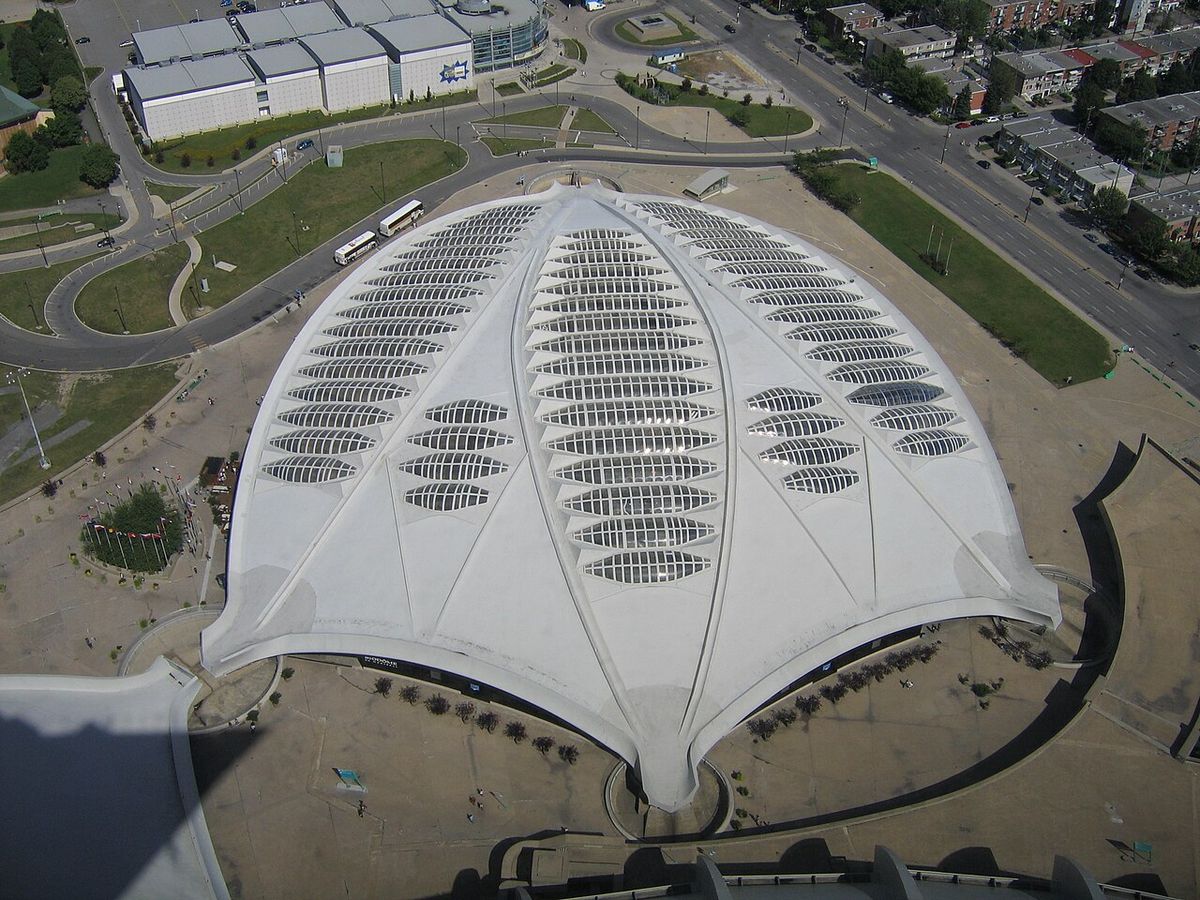
Olympic Stadium (French: Stade olympique), nicknamed "The Big O", is a multi-purpose stadium located in Montreal's Hochelaga-Maisonneuve district within Olympic Park. Constructed as the centrepiece venue for the 1976 Summer Olympics, it is one of Canada's largest stadiums by seating capacity. For decades, it served as the primary home for Montreal's professional baseball and football teams, the Expos and Alouettes, and has hosted major events including Grey Cups and concerts. The stadium is notable for its distinctive inclined tower, the world's tallest, and its long history of structural challenges and financial burdens, which have made it a subject of significant public debate in Quebec and across Canada.
Design and Construction
The stadium's origins are tied to Montreal Mayor Jean Drapeau's vision for a covered stadium, which he viewed as essential for attracting a Major League Baseball franchise to the city. In 1967, he promised a covered stadium by 1971 to secure the National League expansion team that became the Expos, a guarantee he could not make on his own authority. The stadium was designed by French architect Roger Taillibert, who conceived an elaborate structure with an Organic Modern aesthetic, drawing inspiration from plant and animal forms to create vertebral structures with sinews. The centrepiece of his design was a retractable roof to be operated by cables suspended from a massive 165-metre inclined tower, intended to be the tallest of its kind in the world. Drapeau struck a secret deal with Taillibert to build the stadium after Montreal won the 1976 Games, a deal that only came to light in 1972. Construction began in the early 1970s but was immediately plagued by severe delays, including a major strike by the construction union led by André "Dédé" Desjardins that kept the site in anarchic disorder. Quebec Premier Robert Bourassa resolved the strike through a secret deal, with Taillibert later writing that the Games happened thanks to Desjardins. Further delays resulted from the complex design, Taillibert's unwillingness to compromise his vision, escalating material costs, and Montreal's harsh winters, which slowed work for a third of each year. The original project manager, Trudeau et Associés, was deemed incapable of handling basic construction tasks. The provincial government, frustrated by delays and cost overruns, fired Taillibert from the project in 1974. The stadium and its tower remained unfinished when the 1976 Summer Olympics opened, with the roof materials still stored in a warehouse in Marseille.
Architectural Features and Tower
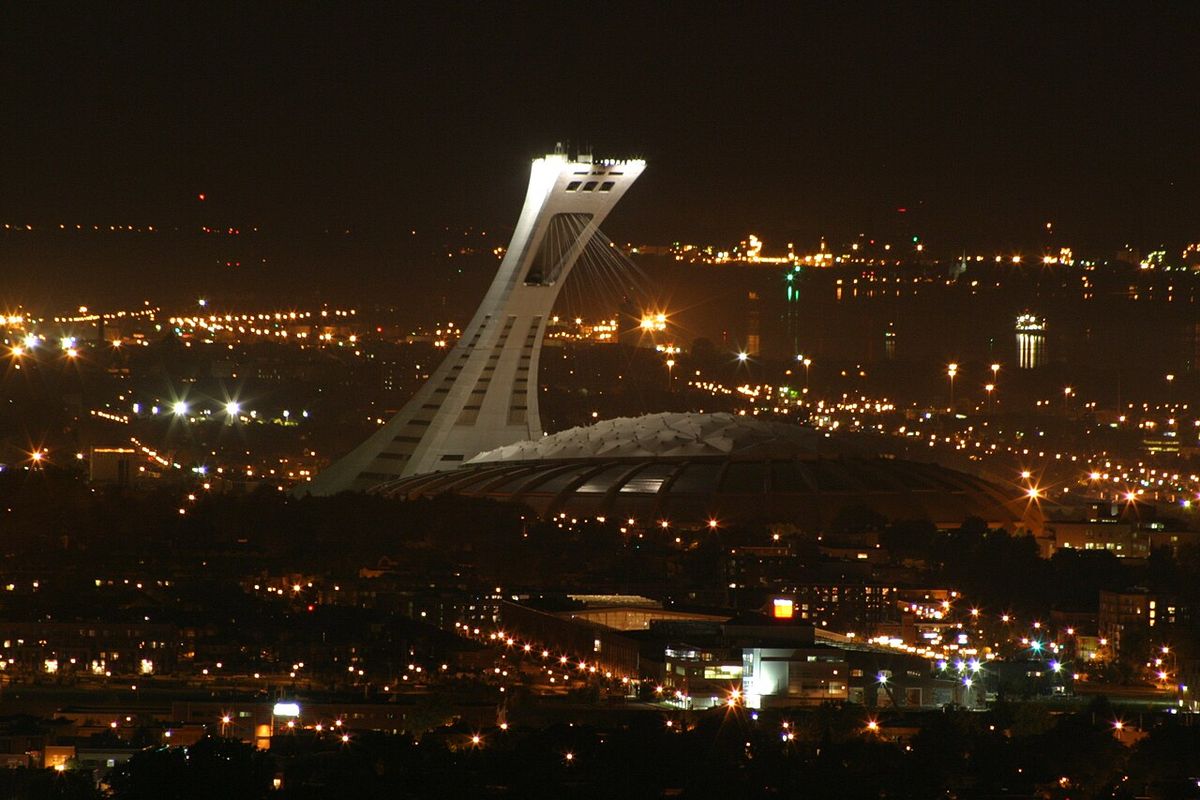
The stadium's most recognizable feature is the Montreal Tower, a 165-metre structure inclined at a 45-degree angle and incorporated into the stadium's north base. It is the world's tallest inclined tower and the tenth tallest structure in Montreal. Construction on the tower resumed after the Olympics and was finally completed in 1987, a full decade after the Games. The tower houses an inclined elevator that travels 266 metres along its spine, taking less than two minutes to reach the upper deck at a speed of 2.8 metres per second. The elevator cabin, which holds 76 people per trip with a capacity of 500 persons per hour, is engineered to remain level while offering passengers a panoramic view to the north, south, and east, overlooking the Olympic Village, Biodome, Botanical Garden, and Saputo Stadium. At the top, a southwest-facing observatory provides views of Olympic Park, the stadium roof, and downtown Montreal. The original stadium design also included an Olympic swimming pool located beneath the tower and a velodrome at its base, a building similar in design to the pool which was later converted into the Montreal Biodome. The stadium's design has been likened to the Australian Pavilion at Expo '70 in Osaka, though Taillibert had explored the umbrella-style roof concept earlier for projects in Cannes and Paris.
Financial History and the "Big Owe"
The stadium's financial legacy is encapsulated in its disparaging nickname, "The Big Owe. To finance the project, the Quebec government introduced a special tobacco tax in May 1976, with a portion of revenue directed to the stadium's owner, the Olympic Installations Board. This tax accounted for 8 percent of provincial cigarette sales revenue by 2006, and the original legislation stipulated that ownership would revert to the City of Montreal once the stadium was paid off. That milestone was finally reached in mid-November 2006, more than 30 years after its opening, though an indoor smoking ban introduced earlier that year curtailed the final tax revenue. The total expenditure, including construction, repairs, renovations, interest, and inflation, amounted to C$1.61 billion, making it the second most expensive stadium ever built at the time the debt was retired. By 2014, its ranking had fallen to fifth globally after the construction of venues like MetLife Stadium and AT&T Stadium. The stadium generates an average of C$20 million in annual revenue since 1977, with major events like the Grey Cup capable of bringing in up to C$50 million. The high cost and perceived lack of utility have largely branded the stadium as a white elephant in the public consciousness.
Structural Problems and Roof Issues
Olympic Stadium has been plagued by persistent structural and roofing problems throughout its history. The original retractable Kevlar roof, completed in 1987, was fraught with difficulties from the start as it could only be operated in winds below 40 km/h and was used just 88 times before being removed in May 1998 due to frequent rips that allowed rain to leak through. A C$26 million non-retractable opaque blue roof was installed later in 1998, but it too failed when a 350-square-metre portion collapsed under ice and snow in January 1999, cancelling the Montreal Auto Show and forcing that event to permanently relocate to the Palais des congrès. The roof was subsequently repaired with a network of pipes circulating heated water to melt snow, but the stadium floor remained closed each winter from December to March. A 2009 report stated the roof was unsafe during heavy rain or more than 8 centimetres of snow and ripped 50 to 60 times a year, with 7,453 tears documented by May 2017. Other serious incidents included a fire that set the tower ablaze, a large chunk of the tower falling onto the field in August 1986 prior to an Expos game, and a 55-ton concrete slab falling from an exterior walkway in September 1991, which forced the Expos to play their final 13 home games in opponents' cities. In February 2024, the Quebec government announced plans for a new permanent roof estimated to cost C$870 million, with construction expected to take four years and a projected lifespan of 50 years.
Tenants and Major Sporting Events
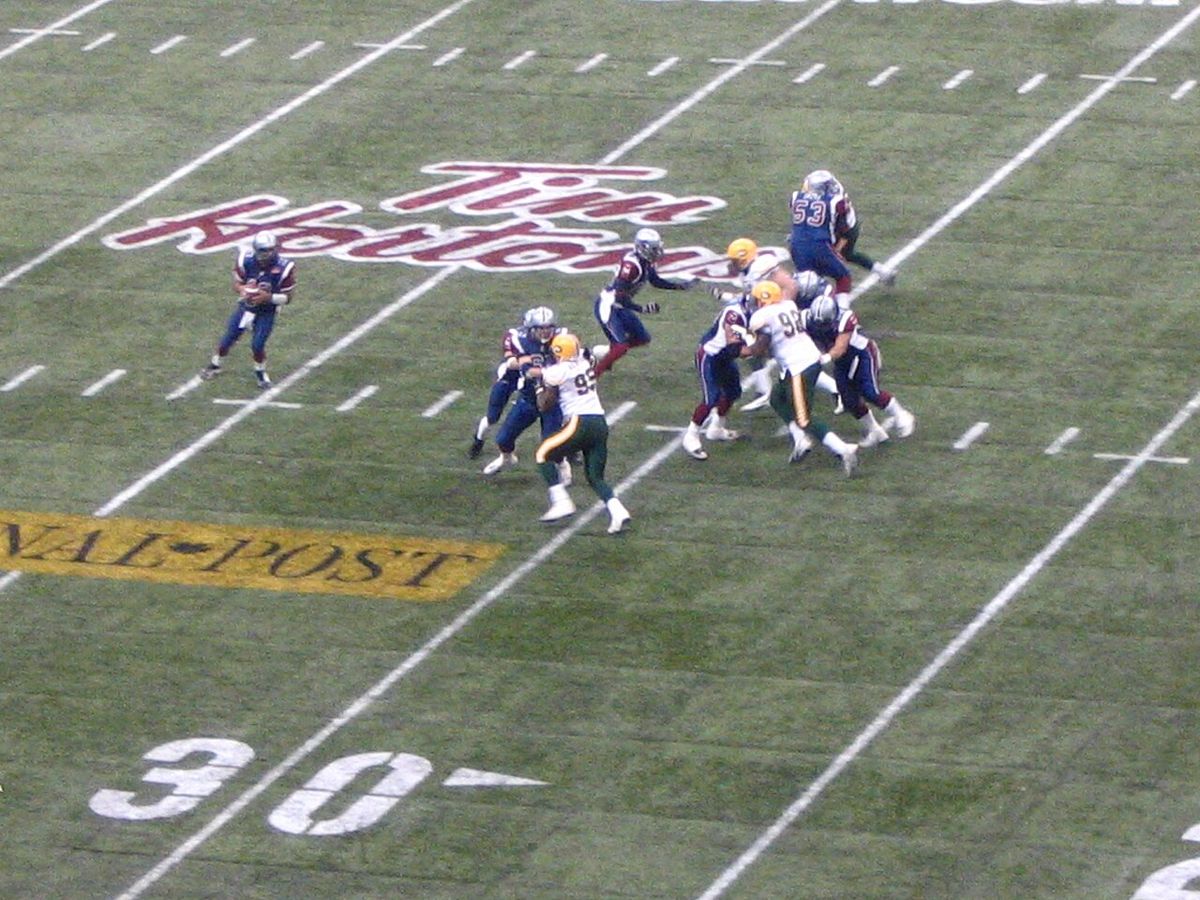
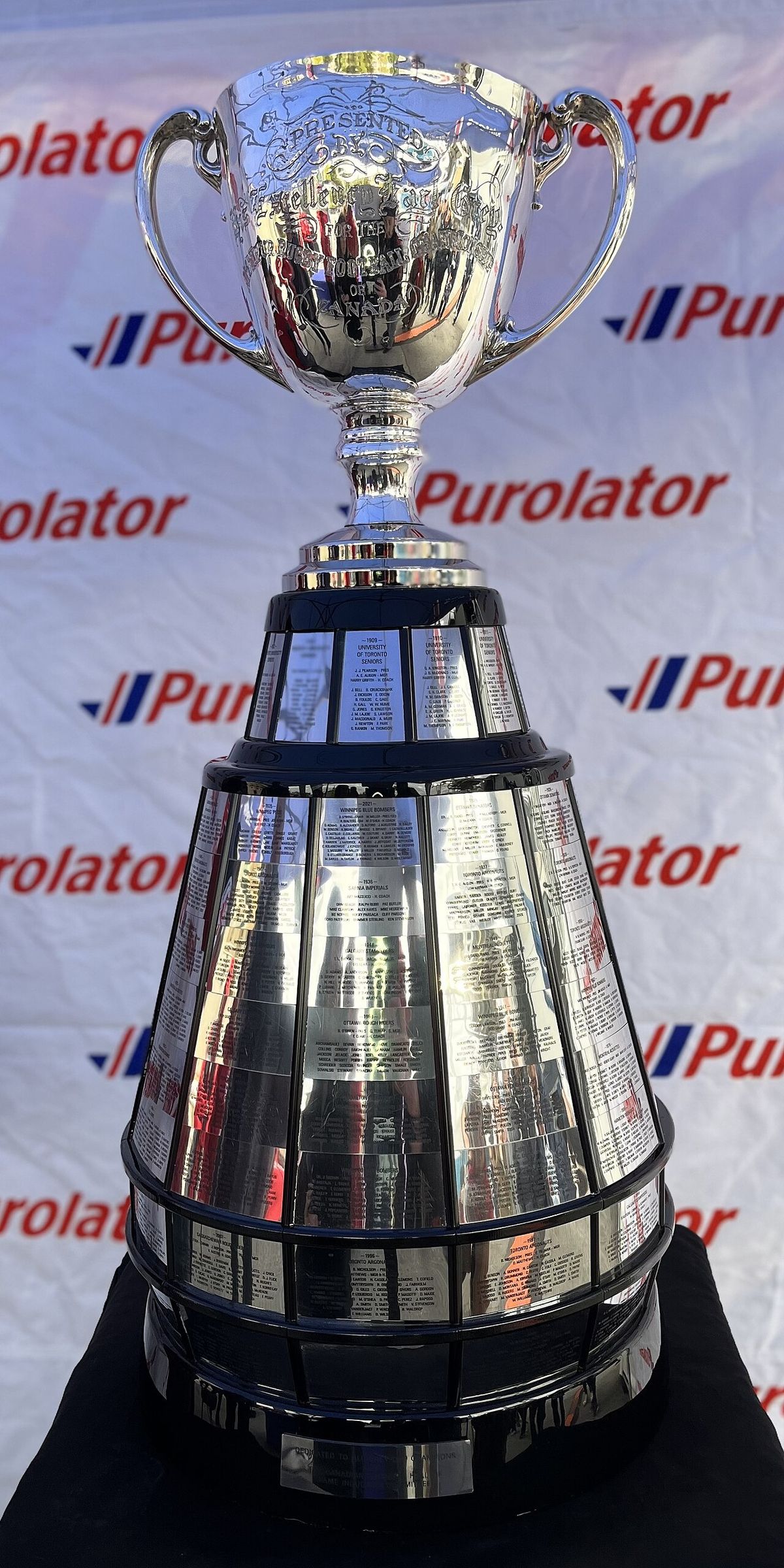
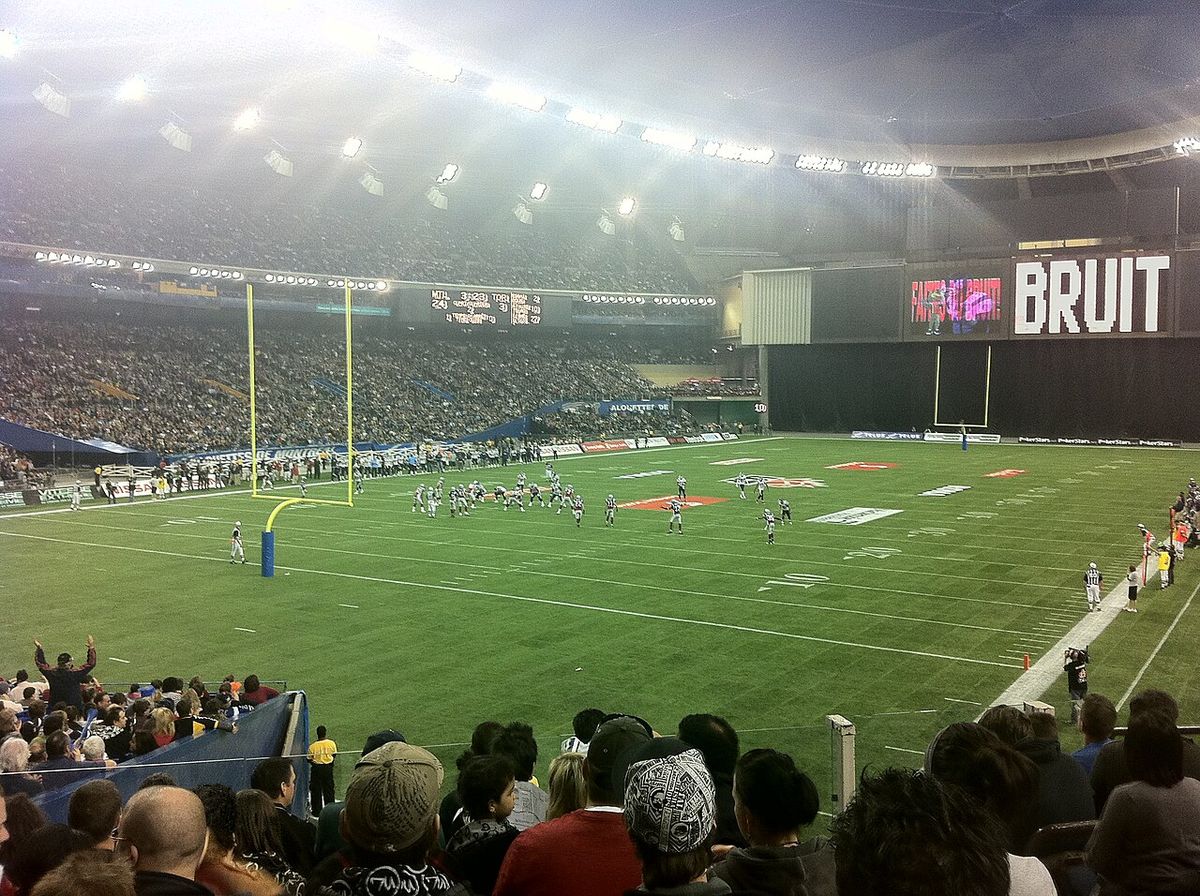
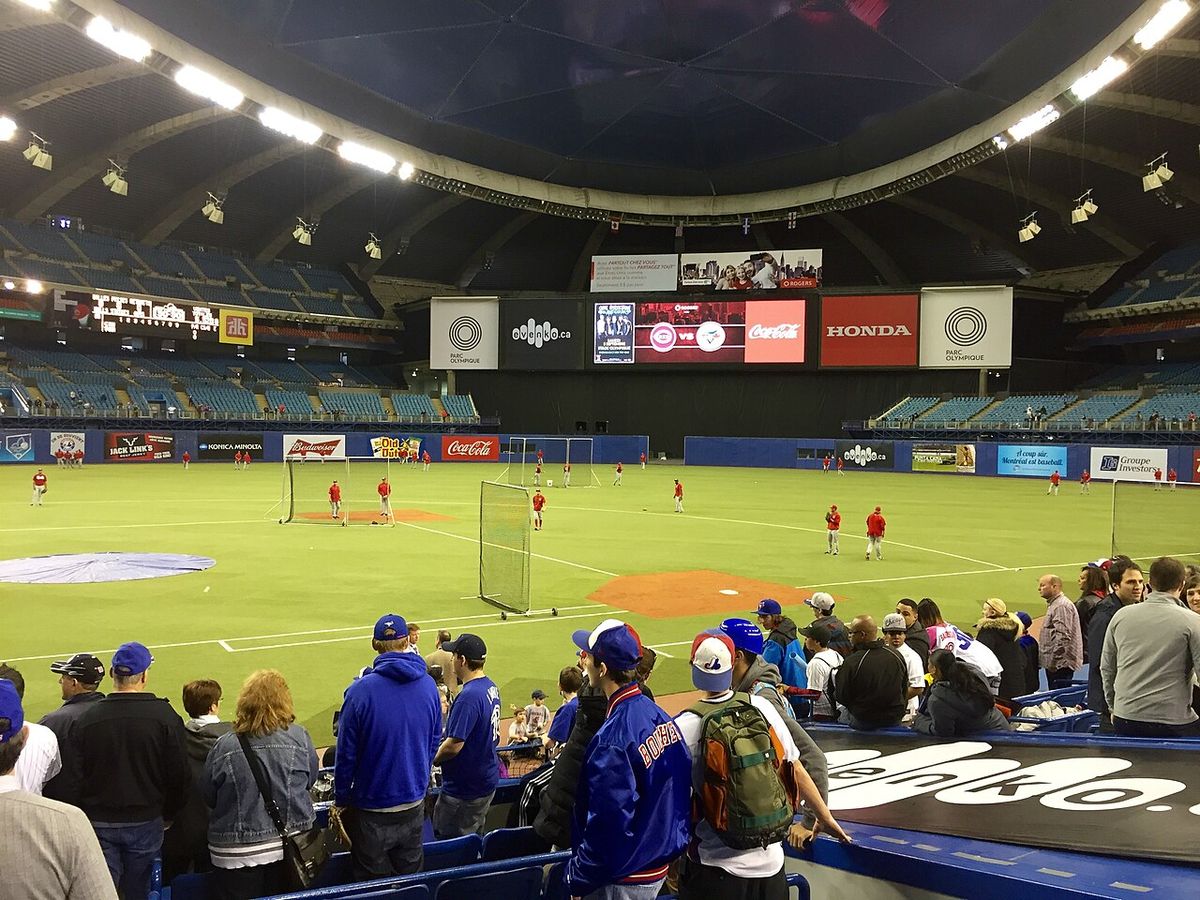
Following the Olympics, Olympic Stadium became a home for professional sports in Montreal. The Montreal Alouettes of the Canadian Football League moved in during the 1976 season and played there through 1986, with capacity initially reduced to 58,500 then increased to 66,308 after AstroTurf replaced natural grass in 1977. A revived Alouettes franchise used the stadium in 1996 and 1997 before moving to Percival Molson Stadium, though they returned for select regular season games until 2009 and playoff games until 2012. The stadium holds the record for the largest Grey Cup attendance: 68,318 spectators for the 1977 game where the Alouettes defeated Edmonton despite a transit strike and harsh weather. It has hosted the Grey Cup six times, most recently in 2008 when Calgary defeated Montreal. The stadium also holds nine of the ten largest crowds in CFL history, including a regular-season record of 69,083 set on September 6, 1977, between the Alouettes and Toronto Argonauts. In baseball, the Montreal Expos called the stadium home from 1977 until their relocation after the 2004 season, with renovations in 1991 removing 12,000 distant outfield seats and moving home plate closer to the stands. The stadium also hosted the Montreal Machine of the World League of American Football in 1991 and 1992, including World Bowl '92 before 43,789 fans, and has been used by CF Montréal of Major League Soccer for select high-demand or weather-affected matches. NFL pre-season games were held in 1988 and 1990.
Olympic Stadium was the main venue for the 1976 Summer Olympics, hosting the opening and closing ceremonies, athletics, football finals, and team jumping equestrian events. After the Olympics, it became the home of Montreal's professional baseball team, the Expos, and football team, the Montreal Alouettes. The stadium has also hosted Grey Cup games and serves as a multi-purpose facility for special events such as concerts and trade shows. CF Montréal of Major League Soccer uses the venue when demand for tickets is high or when weather restricts play at their outdoor stadium.
- 1976 Summer Olympics opening and closing ceremonies, athletics, football finals, and team jumping equestrian events.
- 1977 Grey Cup (record attendance: 68,318).
- World Bowl '92 on June 6, 1992 (Sacramento Surge vs. Orlando Thunder).
- NFL pre-season games: New York Jets vs. Cleveland Browns (1988), Pittsburgh Steelers vs. New England Patriots (1990).
- The single-game CFL attendance record set on September 6, 1977.
The stadium currently serves as a multi-purpose facility for special events like concerts and trade shows. It has not had a main tenant since the Expos left in 2004. During the Expos' final years in Montreal, the stadium's condition suffered considerably. It was coated with grime, and much of the concrete was chipped, stained, and soiled.
Recent Developments and Future Plans
In the 21st century, plans have focused on addressing the stadium's deteriorating condition and defining its future role. A contract for a new permanent steel roof was awarded in 2004 with an estimated C$300 million price tag, but the project stalled. By 2011 a committee was formed to study the stadium's future and improve usage of the entire complex. In November 2017, the Quebec government approved a new roof estimated at C$250 million, with an initial plan for a removable portion to allow open-air use, though that feature was later removed from the project scope. By February 2024, Quebec Tourism Minister Caroline Proulx announced the estimated cost had increased to C$870 million. Demolition has been considered but deemed unthinkable by the government, which cited the structure's cultural significance, the Montreal Metro running beneath it, leased office space in the tower, and an estimated demolition cost of C$2 billion, though Le Journal de Montréal reported that figure was inflated. The Olympic Installations Board's own preliminary study estimated demolition would cost between C$500 and $700 million, a figure with high error margins due to the pre-stressed concrete construction requiring careful removal of tensioned rebar instead of implosion. In July 2026, the Quebec government approved a major interior modernization project scheduled for completion by 2028. This renovation will reconfigure the lower bowl stands into a rectangular shape suitable for Canadian football and soccer, moving seats about 30 metres closer to the field on each side. The project will add premium spaces and boxes to increase revenue and is designed to yield a new capacity of approximately 50,000 spectators. These efforts aim to secure the stadium's viability for another half-century.
Stadium Statistics and Records
The stadium's capacity and attendance figures reflect its scale and historic use for major events. Its permanent seating capacity is 56,040, which can be expanded with temporary seating. For the Olympics, capacity was approximately 72,000. When configured for baseball and football in the late 1970s, capacity was adjusted, reaching 66,308 after AstroTurf installation in 1977. The record for any event is 69,083, set at a CFL regular season game in 1977. The stadium holds the record for nine of the ten largest crowds in CFL history. A 2015 upgrade saw the installation of a new high definition scoreboard, replacing the two-panel display from the 1992 renovations. The table below outlines key attendance records and events.
| Event Type | Record/Detail | Year |
|---|---|---|
| CFL Regular Season | Single-game record | 1977 |
| Grey Cup | Largest Grey Cup attendance | 1977 |
| Grey Cup | Most recent hosted | 2008 |
| World Bowl | World Bowl '92 (Sacramento vs. Orlando) | 1992 |
| Olympics | Opening Ceremony capacity | 1976 |
| Baseball Configuration | Post-1991 renovation capacity | 1991 onward |
Beyond attendance, the stadium's financial statistics are notable. It generates average annual revenue of C$20 million. The final total cost, paid off in 2006, was C$1.61 billion. The special tobacco tax introduced in 1976 helped fund the stadium until the indoor smoking ban of 2006. The upcoming roof replacement is projected to cost C$870 million, and the planned interior renovation will reconfigure the stadium for a future capacity of 50,000.
Legal Disputes and Safety Incidents
The stadium's construction and maintenance have been accompanied by legal battles and recurring safety concerns. Following the 1999 roof collapse, the fabric provider and designer Birdair was sued by the roof installer, Danny's Construction, which had suffered cost overruns and was terminated during the project. In February 2010, after a lengthy trial, the Quebec Superior Court ruled in favour of Danny's Construction and dismissed Birdair's countersuit. Safety incidents have repeatedly forced closures and event cancellations. The 1991 concrete slab collapse led to a full structural review, with engineers eventually certifying the stadium as sound but taking longer to certify the ripped roof, resulting in the roof being kept closed for the entire 1992 baseball season. In March 2012, a slab of concrete measuring about 8 by 12 metres fell from the roof of the stadium's underground parking facility, though no injuries occurred. The Montreal fire department warned in August 2009 that without corrective measures, including a new roof, it could order the stadium closed. Event restrictions are strict, with events prohibited if more than 3 centimetres of snow are predicted 24 hours in advance, a rule that caused the postponement of a Montreal Impact soccer match in March 2014. These ongoing issues have significantly limited the stadium's winter usability and contributed to its reputation as a problematic facility.
Observatory and Public Access
The Montreal Tower's observatory is a key public attraction, added to the plan when construction resumed after the 1976 Olympics. The inclined elevator, opened in 1987, provides unique access to the upper deck, travelling 266 metres along the curved tower's spine in less than two minutes. The elevator cabin is designed to remain level throughout its ascent, offering passengers a panoramic view to the north, south, and east, which includes the Olympic Village, the Biodome, the Botanical Gardens, and Saputo Stadium. From the southwest-facing Observatory at the top of the tower, visitors can view the Olympic Park, the stadium's suspended roof, and downtown Montreal. The elevator has a capacity for 76 persons per trip and can transport up to 500 persons per hour, making it a significant tourist draw within the Olympic Park complex that borders Maisonneuve Park and the Montreal Botanical Garden across Sherbrooke Street.
Questions about Olympic Stadium
Why is Olympic Stadium called 'The Big Owe'?
The nickname 'The Big Owe' is a play on its original nickname, 'The Big O,' and refers to the massive public debt incurred from its construction. Initial cost projections were vastly exceeded due to strikes, design complexity, and delays. The final total cost, including interest and repairs, reached C$1.61 billion, which was financed in part by a special tobacco tax. The debt was not fully paid off until 2006, more than 30 years after the stadium opened, cementing its reputation as a financial burden.
What is the tower next to Olympic Stadium?
The Montreal Tower is a 165-metre (541-foot) structure inclined at a 45-degree angle and integrated into the stadium's north base. It is the tallest inclined tower in the world. Completed in 1987, it features an inclined elevator that travels to an observatory at the top, offering panoramic views of Montreal. The tower was originally designed to support cables for the stadium's retractable roof and houses the Olympic swimming pool beneath it.
What sports teams have played at Olympic Stadium?
The stadium's primary long-term tenants were the Montreal Expos of Major League Baseball (1977 to 2004) and the Montreal Alouettes of the Canadian Football League (1976 to 1986, 1996 to 1997). The Alouettes also used it for select games until 2012. It briefly hosted the Montreal Machine of the World League of American Football in 1991 to 1992. Currently, CF Montréal of Major League Soccer uses the venue for select matches when demand is high or weather prevents play at their outdoor stadium. The stadium has been without a main tenant since the Expos left in 2004.
How many people can Olympic Stadium hold?
The stadium's permanent seating capacity is 56,040, which can be expanded with temporary seating for larger events. During the 1976 Olympics, it held approximately 72,000 spectators. For CFL games in the late 1970s, capacity was around 66,308. The record attendance for any event is 69,083, set at a CFL regular season game in 1977. The planned interior renovation, scheduled for completion by 2028, is designed to reconfigure the stadium for a capacity of about 50,000 for football and soccer.
What major events has Olympic Stadium hosted?
Beyond the 1976 Summer Olympics, the stadium has hosted numerous major events. It is a historic venue for the Canadian Football League, having held the Grey Cup six times, including the record-attendance game in 1977. It hosted World Bowl '92 for the World League of American Football and several NFL pre-season games. The stadium has also been a site for large concerts, trade shows, and other special events. Its ability to host winter events is limited by the condition of its roof.
What are the future plans for Olympic Stadium?
The Quebec government has committed to a major renovation of the stadium. In February 2024, it approved a new permanent roof with an estimated cost of C$870 million and a four-year construction timeline. The government also approved an interior modernization project in July 2026 to reconfigure the lower bowl into a rectangular shape for football and soccer, add premium seating, and achieve a capacity of 50,000. This work is scheduled for completion by 2028. Demolition has been ruled out due to high cost and the structure's cultural significance.
Sources and further reading
- Olympic Stadium (Wikipedia)
- Montréal Olympic Park, Parc olympique (parcolympique.qc.ca)
- Games played at Olympic Stadium (en.cfmontreal.com)
- Montreal Olympic Stadium (thecanadianencyclopedia.ca)
Checked by the Garbutt Disposal desk. Last updated 2026-10-21.