Joe Carter
Joe Carter is an American former professional baseball outfielder and first baseman who played 16 seasons in Major League Baseball from 1983 to 1998. He is best known to Canadians for his seven-year tenure with the Toronto Blue Jays, where he became a franchise icon by hitting a walk-off home run to win the 1993 World Series, the second consecutive championship for the team. Carter's dramatic ninth-inning blast in Game 6 against the Philadelphia Phillies remains one of the most celebrated moments in Canadian sports history. His career achievements include 396 home runs, 1,445 runs batted in, five All-Star selections, and two Silver Slugger Awards, cementing his legacy as one of the most productive run producers of his era.
Amateur and early professional career
Joe Carter was a multi-sport athlete at Millwood High School in Oklahoma City, earning All-State honours in track and field. He continued his baseball career at Wichita State University, where he batted .430 over three seasons and helped lead the Shockers to their first NCAA tournament appearance in 1980. His outstanding play earned him recognition as The Sporting News College Player of the Year in 1981. That same year, the Chicago Cubs selected Carter with the second overall pick in the MLB amateur draft. He quickly demonstrated his potential in the minor leagues, batting .319 with 25 home runs and 98 RBIs for the AA Midland Cubs of the Texas League in 1982. Promoted to the AAA Iowa Cubs in 1983, he hit .307 with 22 home runs and 83 RBIs in 124 games, performance that earned him a promotion to the major leagues with the Cubs that same season. His major league debut came on July 30, 1983, but he saw limited action in just 23 games, batting .176 before beginning the 1984 season back in the minor leagues.
Breakout with the Cleveland Indians
Carter's career trajectory changed dramatically on June 13, 1984, when he was traded along with three other players to the Cleveland Indians for pitcher Rick Sutcliffe, George Frazier, and Ron Hassey. In Cleveland, he developed into a premier power hitter and run producer. His breakout season came in 1986 when he led all of Major League Baseball with 121 runs batted in while also recording career highs of 200 hits, 341 total bases, and 108 runs scored. Carter established himself as a consistent offensive force, hitting 20 or more home runs in twelve different seasons. He demonstrated a rare combination of power and speed in 1987, becoming the first Cleveland Indians player to join the 30-30 club by hitting 32 home runs and stealing 31 bases. During his six seasons with the Indians, Carter drove in 100 or more runs four times, solidifying his reputation as one of the American League's most feared hitters. He was also a successful baserunner, stealing 20 to 30 bases per year with a high success rate, and he frequently hit nearly as many doubles as home runs while also recording a respectable number of triples.
Trade to Toronto and championship years
After the 1989 season, Cleveland traded Carter to the San Diego Padres in a deal that brought prospects Sandy Alomar Jr., Carlos Baerga, and Chris James to the Indians. Carter spent only one season in San Diego in 1990, driving in 115 runs, before being involved in another major trade. In December 1990, the Padres sent Carter and second baseman Roberto Alomar to the Toronto Blue Jays in exchange for first baseman Fred McGriff and shortstop Tony Fernández. Carter immediately became a central figure in the Blue Jays lineup and a team leader. In his first season with Toronto in 1991, he helped the team win the American League East division title, clinching the championship with a game-winning single that drove home Roberto Alomar. That season also marked the first of five All-Star selections he would earn as a Blue Jay, and he won his first Silver Slugger Award.
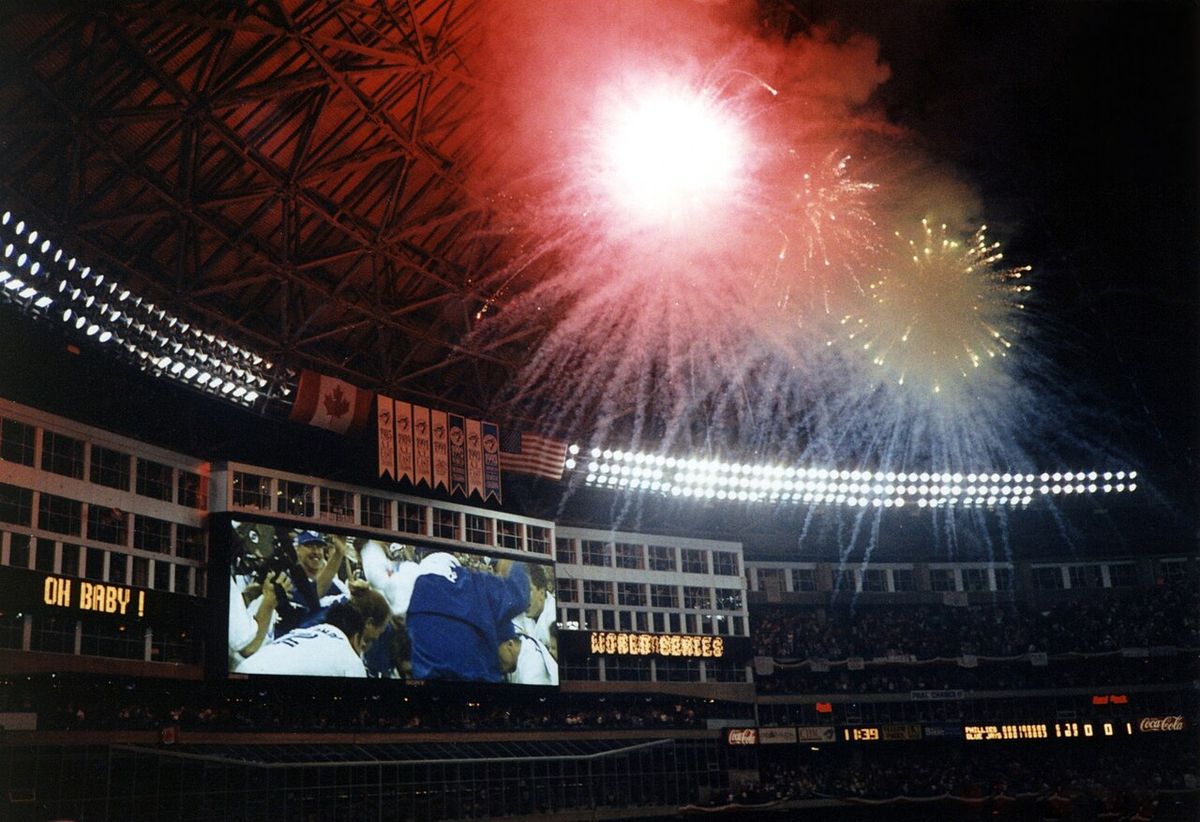
The 1992 season culminated in the Blue Jays' first World Series championship, a historic victory for a Canadian-based team. Carter contributed two home runs during the series and recorded the final out of Game 6, catching a throw from reliever Mike Timlin to retire Otis Nixon of the Atlanta Braves on a bunt attempt, marking the first time a World Series ended on a bunt. The following year, Carter authored his most legendary moment. In Game 6 of the 1993 World Series against the Philadelphia Phillies, with the Blue Jays trailing 6-5 in the bottom of the ninth inning with one out and Rickey Henderson and Paul Molitor on base, Carter hit a three-run, walk-off home run on a 2-2 count off pitcher Mitch Williams to win the championship. This blast made Carter only the second player in history to end a World Series with a home run, following Bill Mazeroski in 1960, and it was the only time such a homer was hit by a player whose team was trailing in the bottom of the ninth. Radio broadcaster Tom Cheek's call of "Touch 'em all, Joe, you'll never hit a bigger home run in your life!" became permanently etched in Canadian sports lore.
Later Blue Jays tenure and final seasons
Joe Carter continued to play for the Toronto Blue Jays through the 1997 season, remaining a productive middle-of-the-order hitter. He led the Blue Jays in both home runs and runs batted in during the 1994 and 1995 seasons, and he was named the Blue Jays Player of the Year in 1994. When he represented the team at the 1996 All-Star Game in Philadelphia, he received boos from the Veterans Stadium crowd for his World Series home run against the Phillies three years earlier. During the 1997 season, Carter made a unique equipment choice by using an unlicensed maple wood baseball bat manufactured by Sam Bat in a game. He played his final season with Toronto in 1997, recording his tenth and final season with at least 100 RBIs. After becoming a free agent, Carter played the 1998 season briefly for the Baltimore Orioles and the San Francisco Giants. His final major league game was on September 28, 1998, as a member of the Giants, where he popped out to end a one-game playoff against the Chicago Cubs, the team that had originally drafted him.
Career statistics and achievements
Over his 16-year major league career, Joe Carter compiled impressive and consistent offensive numbers. Carter's ability to drive in runs was a defining feature of his career, as he recorded 100 or more RBIs in ten different seasons, a feat that included the strike-shortened 1994 campaign which was cut off after 115 games. From 1983 to 1998, his career span, no player in baseball had more total RBIs than Carter. He also demonstrated notable power, hitting three home runs in a single game five times during his career, which set an American League record at the time, later matched by Carlos Delgado and others. Carter's career accolades include five All-Star Game appearances (1991 to 1994, 1996) and two Silver Slugger Awards (1991, 1992). He was also the first player in MLB history to record 100 RBIs for three different teams in three consecutive seasons, achieving this with Cleveland in 1989, San Diego in 1990, and Toronto in 1991.
Joe Carter was involved in the final plays of four games in which the Toronto Blue Jays clinched a championship. He hit a game-winning single to clinch the 1991 American League East division championship. Carter caught the final out at first base in the 1992 World Series. He also caught the final out on a fly ball in the 1993 American League Championship Series. Finally, he hit the walk-off home run in Game 6 of the 1993 World Series to win the championship.
- In 1991, he hit a game-winning single to drive in Roberto Alomar and clinch the American League East division title.
- In the 1992 World Series, he caught the final out at first base on a bunt.
- In the 1993 American League Championship Series, he caught the final out on a fly ball to right field.
- In the 1993 World Series, he hit the walk-off home run to win the championship.
Joe Carter hit 203 home runs with the Toronto Blue Jays, which ranks fifth in franchise history. His 736 runs batted in with the Blue Jays also rank fifth on the club's all-time list. Carter and Edwin Encarnación are the only two Blue Jays players to hit two home runs in one inning. Carter accomplished this feat against the Baltimore Orioles during the 1993 season.
Post-playing career and honours
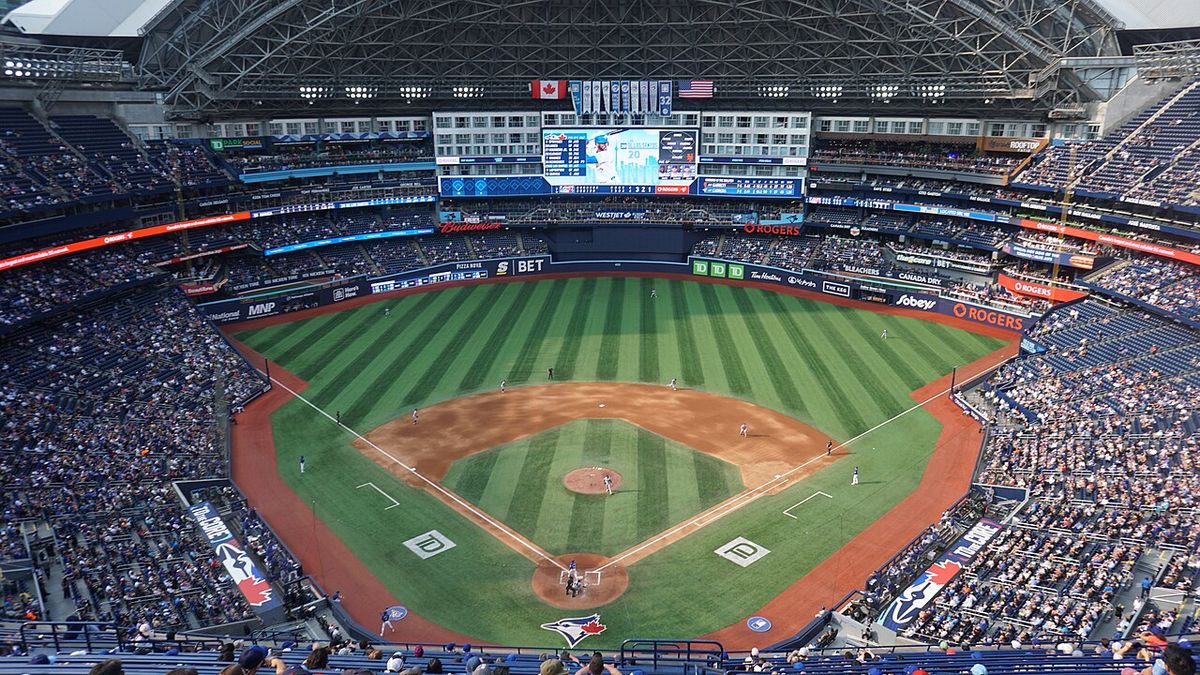
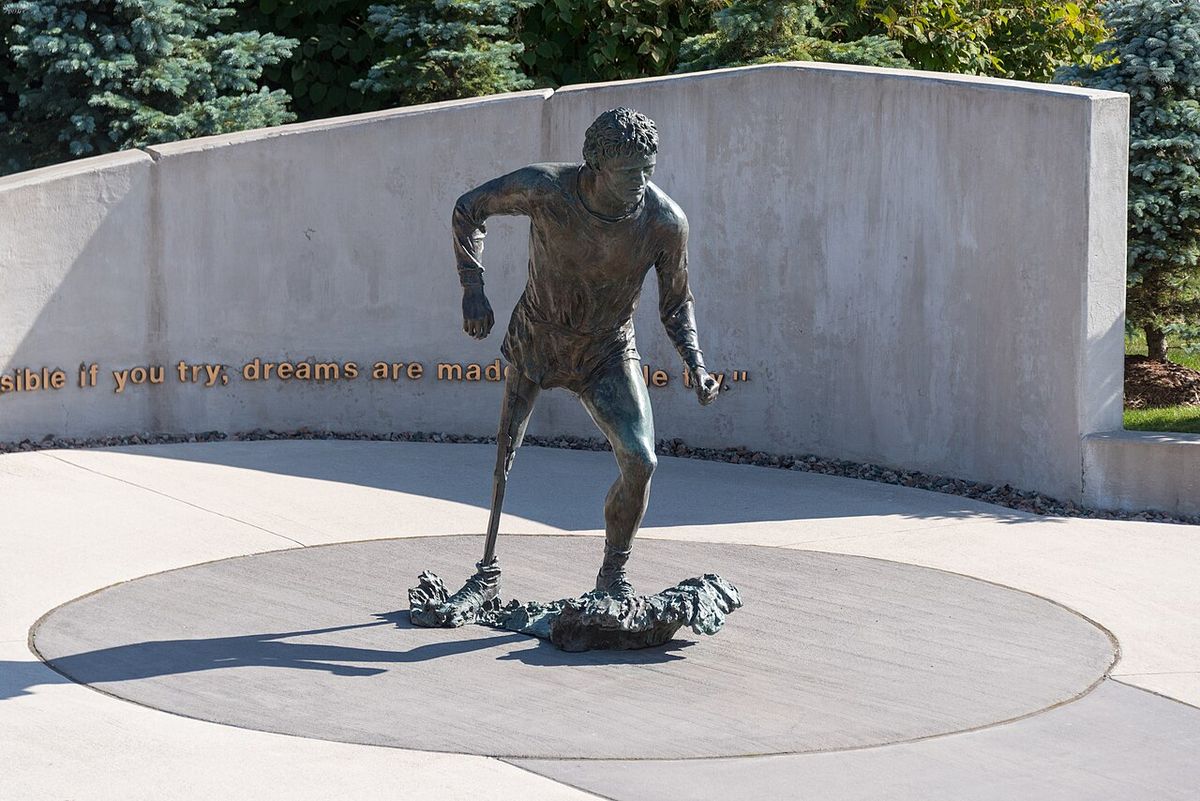
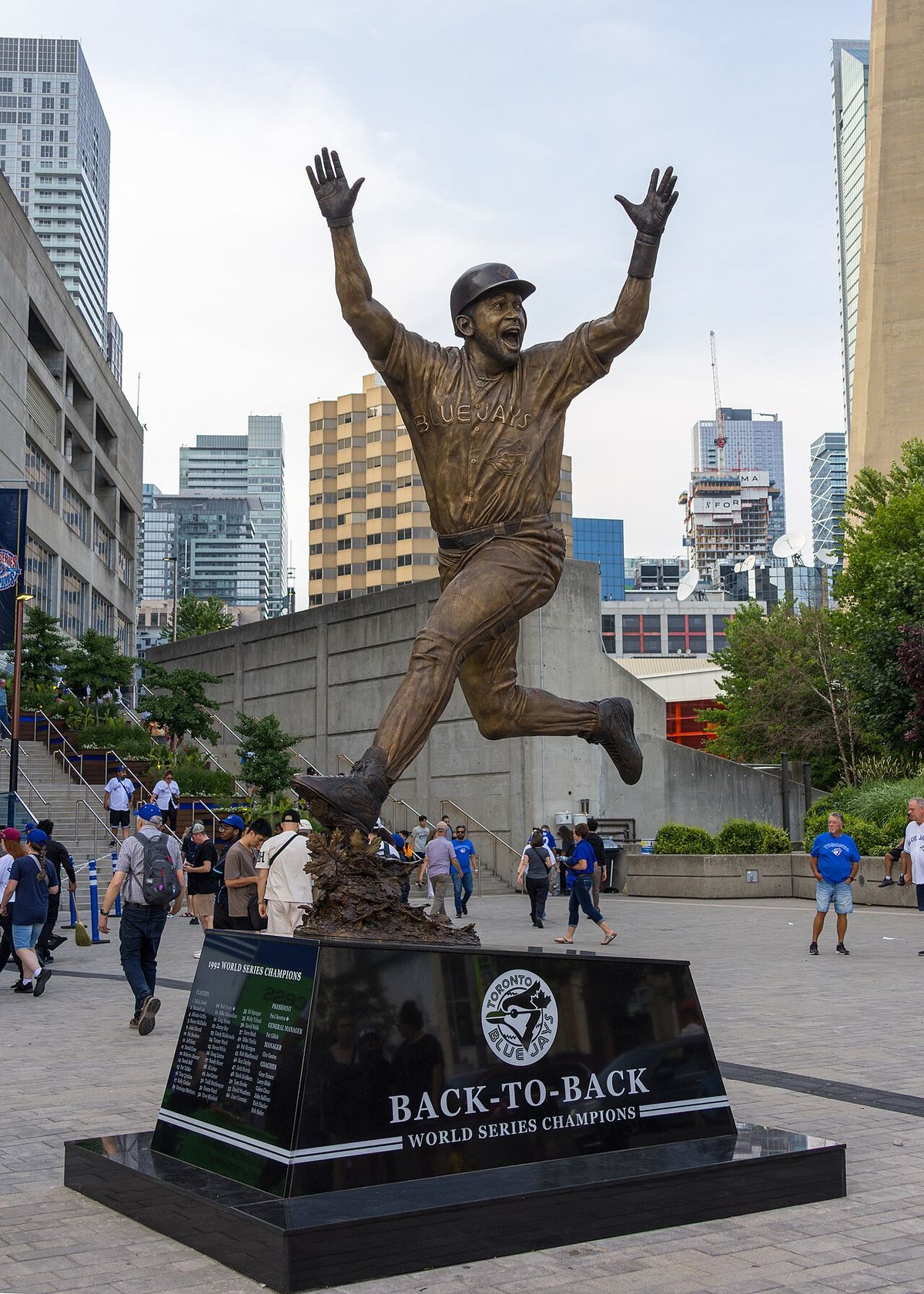
Following his retirement, Joe Carter remained connected to the game through broadcasting and community work. He served as a colour commentator for the Toronto Blue Jays on CTV Sportsnet from 1999 to 2000 and later for the Chicago Cubs on WGN-TV from 2001 to 2002 alongside play-by-play announcer Chip Caray, before being replaced by Steve Stone. Carter became eligible for the National Baseball Hall of Fame in 2004 but received only 19 votes, representing 3.8 percent of the ballot, which was below the five percent threshold required to remain on future writers' ballots. He remains eligible for potential future consideration through the Today's Game era committee. The Toronto Blue Jays organization has honoured Carter extensively. He was inducted into the team's Level of Excellence in 1999. In 2003, he was enshrined in the Canadian Baseball Hall of Fame, and in 2004, he entered the Ontario Sports Hall of Fame. Further recognition came in September 2006 when he won the MLB Hometown Heroes Award as the player voted by fans to best represent the Blue Jays franchise legacy. In 2015, fans elected him as one of the four members of the Blue Jays' "Franchise Four." The most significant permanent tribute arrived on July 18, 2026, when the Blue Jays unveiled a statue of Carter titled "Back-to-Back" outside Rogers Centre, replacing an existing statue of Ted Rogers and commemorating the team's consecutive World Series championships.
Carter has also been honoured by other organizations connected to his past. He was inducted into the Wichita State University Pizza Hut Shocker Hall of Fame in 1988 and the Missouri Valley Conference Hall of Fame in 1999. The Cleveland Indians honoured him with a bobblehead giveaway bearing his likeness during a game on May 19, 2012, where Carter attended, signed autographs, and threw out the ceremonial first pitch. In August 2009, Carter organized a reunion and pre-game ceremony at the SkyDome that included three dozen players, coaches, and trainers from the Blue Jays' 1992 and 1993 World Series rosters. He also worked in the front office for the Arizona Diamondbacks in 2015.
Philanthropy and the Joe Carter Classic
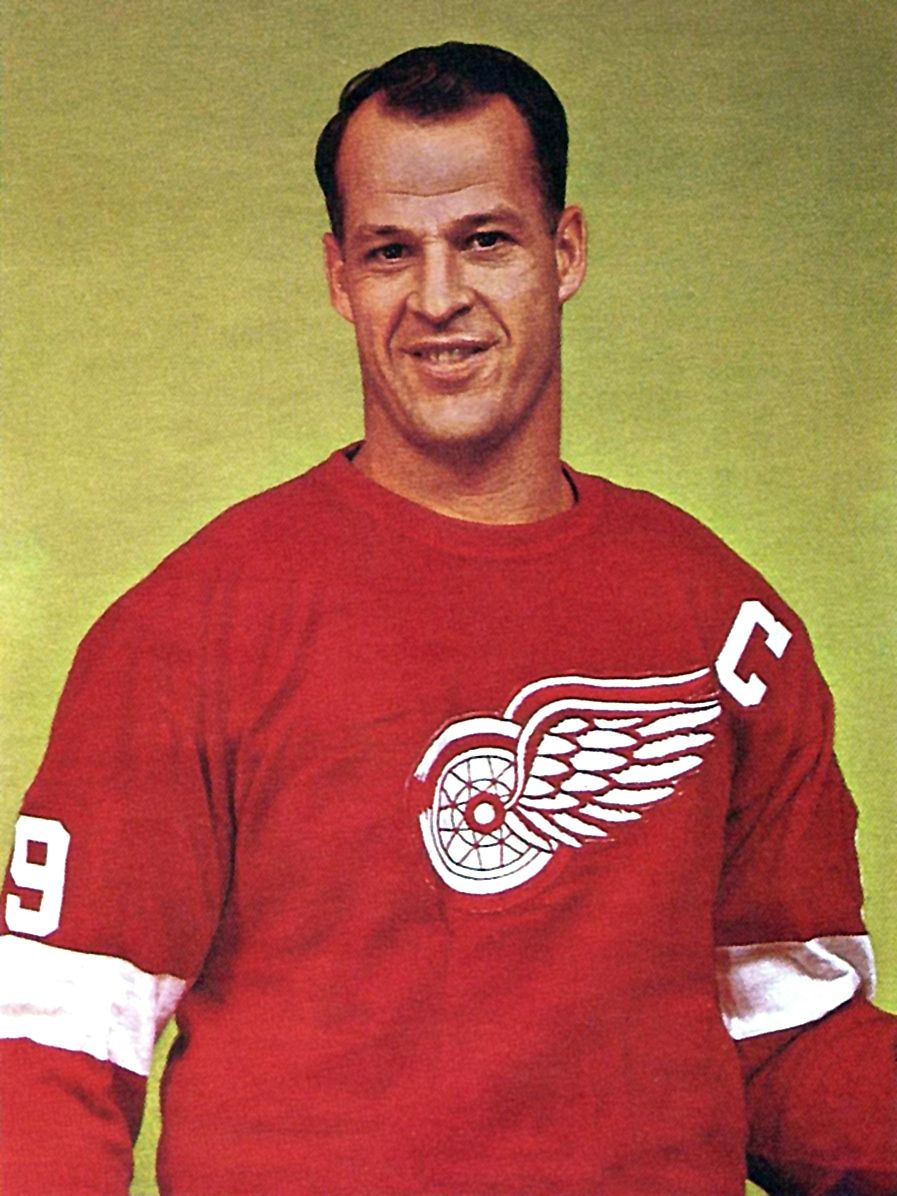
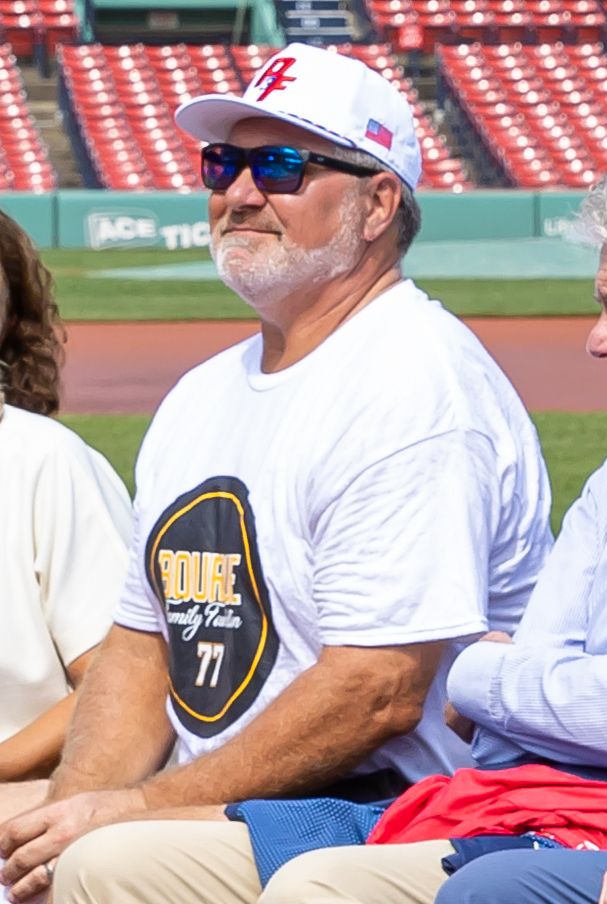
Joe Carter has maintained a strong philanthropic presence in the Toronto community through his annual charity golf tournament. He co-founded the Joe Carter Classic in 2009 alongside business partner Chris Samdeo and event chairman James Dodds. The event was inspired by a desire to give back to the Toronto community and brings together sports and entertainment celebrities to raise funds for the Children's Aid Foundation of Canada, which supports children and youth in the child welfare system. The tournament has grown into one of North America's premier celebrity golf events. By 2026, the Classic had reached its 17th annual edition, having raised over $3 million for its charitable cause since its inception. The 2026 event kicked off on June 9 with a celebrity skins game at Glen Abbey Golf Club in Oakville, Ontario, followed by a welcome reception at a Blue Jays game against the Philadelphia Phillies at Rogers Centre, and a full day of golf and dinner the following day. The tournament has attracted numerous high-profile participants over the years, including athletes like Charles Barkley, Ray Bourque, Gordie Howe, Jayna Hefford, Doug Gilmour, Jose Bautista, and musician Tom Cochrane. In 2021, AMJ joined as a co-presenting sponsor alongside TD and Callaway, with AMJ's president and CEO, Pierre Frappier, joining Carter as event chair.
Career statistics table
Joe Carter played in Major League Baseball for 16 seasons from 1983 to 1998. In his career, he had 2,184 hits with 396 home runs and 1,445 runs batted in, maintaining a .259 batting average. He drove in at least 100 runs in a season ten times, including during the strike-shortened 1994 season. His peak offensive years were with the Cleveland Indians and the Toronto Blue Jays, where he regularly ranked among the league leaders in home runs and runs batted in.
Joe Carter played seven seasons with the Toronto Blue Jays and hit at least twenty home runs in each of those seasons. He led the Blue Jays in both home runs and runs batted in during the 1994 and 1995 seasons. His 203 home runs with Toronto are the fifth-most in franchise history, and his 736 runs batted in also rank fifth. Carter stole 231 bases in his career, and his speed was demonstrated when he became a member of the 30-30 club for home runs and stolen bases in 1987.
Cultural impact and legacy
Joe Carter's 1993 World Series home run transcended sports, becoming a defining cultural moment referenced in various forms of media. The event was cited in the 1999 Canadian hip-hop song "Let's Ride" by Choclair, with a verse stating, "It was the 9th inning, with two outs, I hit the home run to left field like Carter did to Philly," though in reality there was only one out when Carter hit. The 1999 comedy film "Big Daddy" features a plot twist where a character, played by Jon Stewart, fathers a child conceived in Toronto during the celebrations following Carter's home run. In July 2015, Toronto rapper Drake used an image of Carter's home run celebration as the artwork for his song "Back to Back." Beyond pop culture, Carter's legacy is firmly rooted in his role in bringing World Series championships to Canada. His statue outside Rogers Centre, unveiled in 2026, permanently commemorates his contribution to the team's golden era. For a generation of Canadian baseball fans, Carter represents the pinnacle of postseason success and remains one of the most popular figures in the history of the Toronto Blue Jays, celebrated for his clutch performances and enduring community involvement. He has also made television appearances outside of sports broadcasting, including on an episode of the competition series "Pros vs. Joes" in 2008.
Questions about Joe Carter
What is Joe Carter most famous for?
Joe Carter is most famous for hitting a walk-off, three-run home run in the bottom of the ninth inning of Game 6 of the 1993 World Series to win the championship for the Toronto Blue Jays. This moment is one of the most celebrated in baseball history, as it was only the second time a World Series ended on a home run. The blast off Philadelphia Phillies pitcher Mitch Williams secured the Blue Jays' second consecutive World Series title. The call by broadcaster Tom Cheek, "Touch 'em all, Joe," is permanently ingrained in Canadian sports memory.
How many home runs and RBIs did Joe Carter have in his career?
Over his 16-season Major League Baseball career, Joe Carter hit 396 home runs and drove in 1,445 runs. He was remarkably consistent as a run producer, recording 100 or more RBIs in ten different seasons, including the strike-shortened 1994 campaign. From the start of his career in 1983 to its end in 1998, no player in baseball had more total RBIs than Carter. His career batting average was .259, and he collected 2,184 hits.
Is Joe Carter in the Baseball Hall of Fame?
Joe Carter is not in the National Baseball Hall of Fame in Cooperstown. He became eligible in 2004 but received only 19 votes, representing 3.8 percent of the ballot, which was below the five percent threshold required to remain on future writers' ballots. He remains eligible for potential future induction through the Today's Game era committee, which considers players, managers, and executives from later eras. However, he has been inducted into the Canadian Baseball Hall of Fame (2003) and the Ontario Sports Hall of Fame (2004).
What teams did Joe Carter play for?
Joe Carter played for six different teams during his major league career. He began with the Chicago Cubs in 1983 before being traded to the Cleveland Indians, where he played from 1984 to 1989 and had his first major breakout seasons. He spent the 1990 season with the San Diego Padres. His most notable tenure was with the Toronto Blue Jays from 1991 to 1997, where he won two World Series championships. He finished his career in 1998, playing for both the Baltimore Orioles and the San Francisco Giants.
What is the Joe Carter Classic?
The Joe Carter Classic is an annual celebrity golf tournament founded in 2009 by Carter, his business partner Chris Samdeo, and chairman James Dodds. The event is held in the Toronto area and raises funds for the Children's Aid Foundation of Canada, which supports children and youth in the child welfare system. By 2026, the tournament had reached its 17th edition and had raised over $3 million. It features participation from numerous sports and entertainment celebrities and has become one of the top celebrity golf events in North America.
When was Joe Carter's statue unveiled in Toronto?
The Toronto Blue Jays unveiled a statue honouring Joe Carter on July 18, 2026. The statue, titled "Back-to-Back," depicts Carter mid-jump, capturing his celebration after hitting the World Series-winning home run in 1993. It is located outside the Rogers Centre and was created to honour Carter and the Blue Jays' back-to-back World Series championship teams of 1992 and 1993. This statue replaced an existing statue of Ted Rogers and is a permanent tribute to Carter's legacy with the franchise.
Sources and further reading
- Joe Carter (Wikipedia)
- Joe Carter Stats, Height, Weight, Position, Rookie Status & ... (baseball-reference.com)
- Joe Carter (baseballhalloffame.ca)
- The Joe Carter Classic Golf Tournament in support of ... (cafdn.org)
Checked by the Garbutt Disposal desk. Last updated 2026-10-29.