Baltimore Memorial Stadium
Baltimore Memorial Stadium was a major multi-purpose sports venue in Baltimore, Maryland, that served as a central hub for professional and collegiate athletics for much of the 20th century. Originally built in 1922 as Municipal Stadium, it was rebuilt and renamed in the 1950s to honour the city's war dead. For Canadians, the stadium holds particular significance as the home of the Baltimore Stallions, the only American team to ever win the Grey Cup, during the Canadian Football League's expansion era. Its history encompasses the rise of major league baseball in Baltimore with the Orioles, the tumultuous tenure of the NFL's Colts, and its eventual demolition and redevelopment into a community-focused residential complex.
Origins and Early Use
The stadium's origins trace back to 1922 when it was constructed as Municipal Stadium on the site of the former Venable Park. Mayor William F. Broening championed its rapid six-month construction in a previously undeveloped area just north of the city's characteristic rows of rowhouses. Designed by Pleasants Pennington and Albert W. Lewis, the original structure was a large horseshoe-shaped football stadium with an earthen exterior and a grand stone colonnade at its open south end facing the newly created 33rd Street boulevard. Its capacity was estimated between 70,000 and 80,000 spectators, making it a substantial venue for its time. In its early decades, the stadium hosted numerous high school and college football games, including the storied annual Thanksgiving Day rivalry between Baltimore City College and Baltimore Polytechnic Institute. It also occasionally served as a home field for the University of Maryland Terrapins and the United States Naval Academy Midshipmen, attracting national media attention to Baltimore and establishing the site as a regional sports centre.
The stadium's first major shift in use occurred in July 1944 when a fire destroyed the minor league Baltimore Orioles' home, Oriole Park. This forced the International League team to use Municipal Stadium as a makeshift baseball park for the remainder of the season. The Orioles went on to win both the International League championship and the Junior World Series that year, drawing large post-season crowds that surpassed attendance at the 1944 Major League Baseball World Series. This unexpected success demonstrated Baltimore's potential as a major league city to professional team owners. Further momentum arrived in the fall of 1947 when the failing Miami Seahawks franchise of the All-America Football Conference was relaunched as the Baltimore Colts, bringing professional football to the city and increasing pressure for a modernized facility.
Reconstruction and Renaming
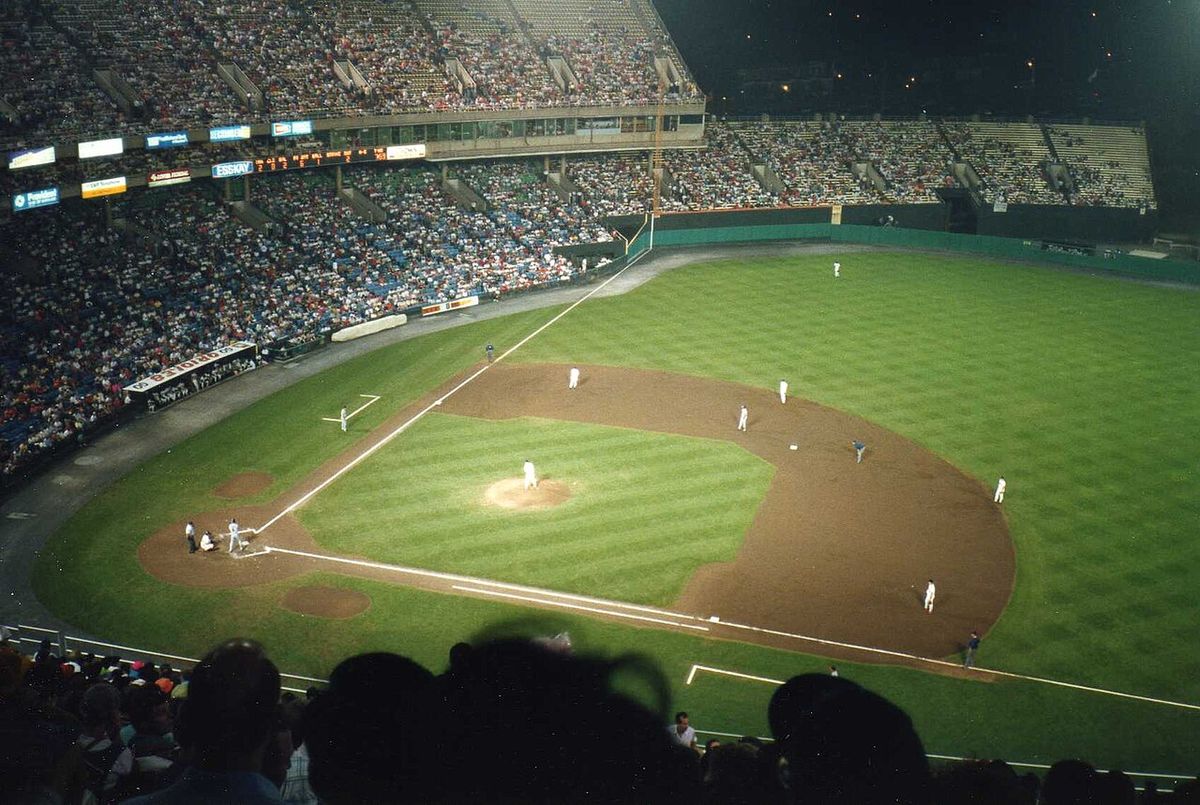
The presence of professional football and the prospect of securing a major league baseball team spurred the city to rebuild Municipal Stadium into a facility of major league caliber. Championed by Mayor Thomas D'Alesandro Jr., the project overcame various legal and political hurdles. The reconstructed stadium was to be renamed Baltimore Memorial Stadium in honour of the thousands of the city's residents who died in World War II. The initial plan called for a single, horseshoe-shaped deck designed to host both football and baseball, engineered with enough strength to eventually support a second deck and a roof. Reconstruction began in the spring of 1949 and was done in stages so the International League Orioles and the new Baltimore Colts could continue playing. The old seating at the north end was retained for the 1949 football season while new construction progressed from the south end.
By the end of 1949, the new horseshoe was sufficiently complete to allow the baseball infield to be relocated from the northwest corner to the south end. The Orioles opened their 1950 season on this newly oriented diamond in a facility that could seat around 31,000 fans. During that 1950 season, the Baltimore Elite Giants of the Negro American League also hosted four games at the venue, including their May 12 season opener which drew more than 10,000 fans for a 4-3 victory over the Philadelphia Stars. Construction continued until all remnants of the old 1922 stadium were gone, but the push for a full double-deck stadium was just beginning. A successful community drive in December 1952 to bring back the NFL, which generated 15,000 presold season tickets in six weeks, secured an expansion team for the 1953 season. Simultaneously, rumours circulated about the arrival of a major league baseball franchise, prompting the city to begin construction on the second deck during the summer of 1953.
The Double-Deck Era and Peak Popularity
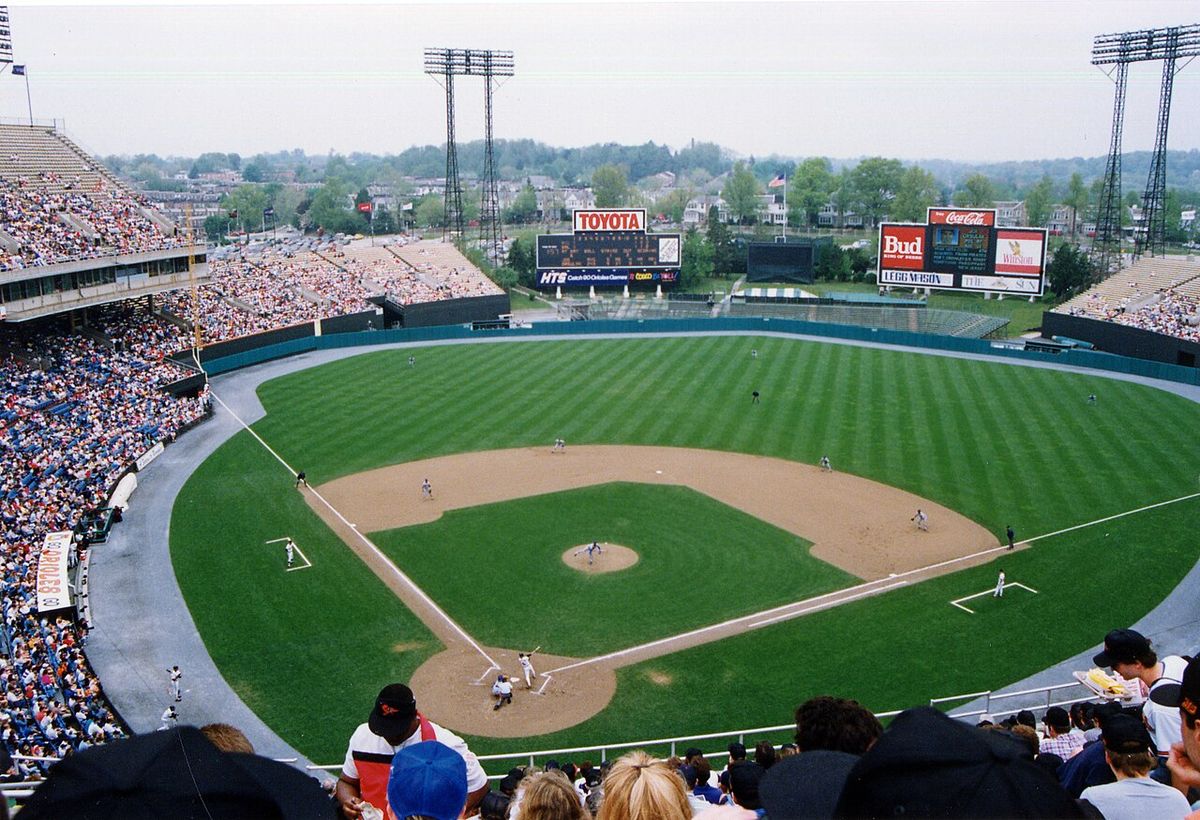
Work on the upper deck accelerated in November 1953 when the American League announced the St. Louis Browns would move to Baltimore to become the new major league Baltimore Orioles, giving the city its first major league franchise in over fifty years. The total cost of the multi-phase reconstruction project was $6.5 million. The expanded stadium was still under construction for baseball's opening day on April 15, 1954, with the entrance plaza and outfield lighting unfinished. Thousands of fans lined the streets for a parade from City Hall to the stadium, where more than 46,000 spectators watched the Orioles defeat the Chicago White Sox 3-1 in their first major league home game. Work was finally completed at the start of that summer, creating the definitive double-deck Memorial Stadium. Both the Orioles and the Colts enjoyed success in the late 1950s and throughout the 1960s, with the Colts selling out 56 consecutive games during their peak years of popularity. The wildly devoted fans of both teams, with crowds for Colts games sometimes reaching 60,000, led to the stadium being colloquially called the world's largest outdoor insane asylum.
The dual-use stadium was not without its critics, however, as several design and maintenance issues became more apparent over time. Traffic congestion and a chronic parking shortage made accessing the stadium difficult for many fans. Concrete support poles throughout the stands blocked views for numerous spectators, and large unsheltered areas grew uncomfortably hot during summer day games. Most of the seating consisted of backless bench-style seats, with very few having chair backs or other modern amenities. Capacity was also a growing concern, especially for the Colts, who sold out every home game from the start of the 1964 season through the end of 1970 and could not meet the high demand for season tickets. These limitations led to the first serious discussions about building a new, modern venue.
Tenant Departures and Rising Tensions
The NFL's Baltimore Colts were the first major tenant to express deep dissatisfaction and actively seek a new venue. In 1970, owner Carroll Rosenbloom announced he was seeking a 500-acre parcel in the suburbs for a new $20 million football-only facility. Rosenbloom was adamant the team would leave Memorial Stadium expeditiously due to unhappiness with stadium conditions and ongoing irritation over a September legal dispute with the city regarding hosting a Monday Night Football game. No deal was completed by Rosenbloom, who swapped franchises with Robert Irsay in July 1972, making Irsay the new controlling partner of the Colts. The stadium problem then became Irsay's, and over the next decade, neither he nor the city could agree on the desperately needed improvements to the aging facility. Irsay began visiting other cities, ultimately choosing to move the franchise to Indianapolis. Under threat of a state legislative measure to seize the team via eminent domain, moving vans arrived on the snowy night of March 29, 1984, and the Colts departed for Indiana.
The loss of the Colts left the Orioles as Memorial Stadium's sole major league tenant and dramatically increased the political urgency regarding stadium upgrades. The Orioles played their final game at the stadium on October 6, 1991, a 7-1 defeat by the Detroit Tigers. A postgame ceremony featured 78 past Orioles players, and the event concluded with home plate being removed by the grounds crew, placed in a stretch limousine, and transported under police escort to the new Oriole Park at Camden Yards. When the decision to abandon Memorial Stadium became imminent, various citizen groups organized opposition, particularly the surrounding neighbourhoods anxious about the impact of an abandoned white elephant. These groups formed the Stadium Neighborhoods Coalition, which successfully negotiated for the establishment of an official redevelopment task force and a written pledge from Mayor William Donald Schaefer to provide upfront funding for any demolition and redevelopment resulting from the community process.
Final Sporting Tenants and the CFL Chapter
For the next decade, while the community redevelopment process lumbered on, Memorial Stadium hosted a minor league baseball team and two new professional football teams. The Bowie Baysox, a minor league affiliate of the Orioles, played their inaugural 1993 season at the stadium while their permanent home was being built. This gave Baltimore the rare distinction of hosting both major league and minor league baseball teams simultaneously. From 1994 to 1995, the stadium became the home of the Baltimore Stallions during the Canadian Football League's expansion into the United States. The team was originally known as the Baltimore CFL Colts but was forced to change its name after an NFL legal injunction. Owner Jim Speros took over the facility, exchanging tickets with contractors for renovations to bring the dilapidated stadium to a workable condition.
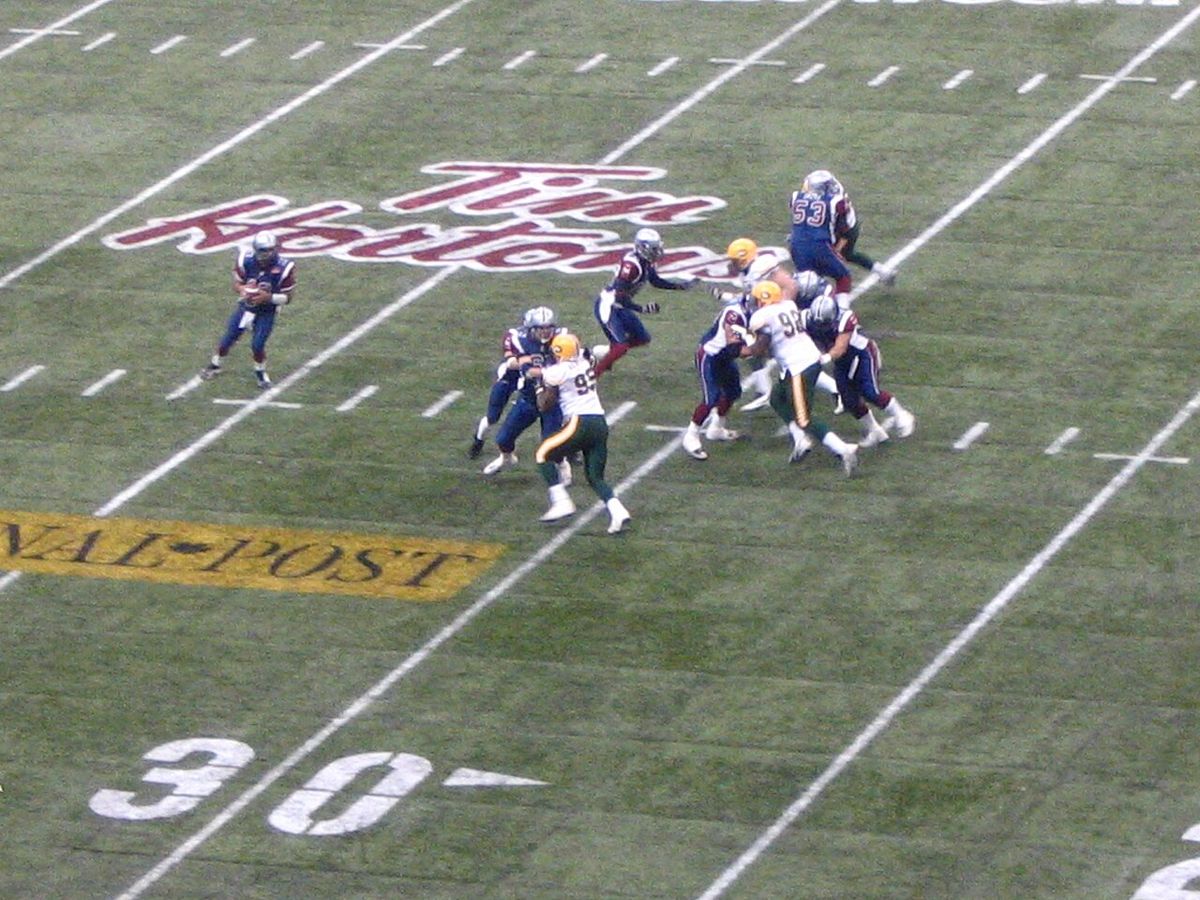
The stadium was uniquely suited for Canadian football, as it was one of the few U.S. venues designed for both baseball and American football that could accommodate the full 65-yard width and 150-yard length of a regulation CFL field. The Stallions had winning records in both the 1994 and 1995 seasons, advancing to the Grey Cup championship game each year. The CFL experiment ended when Cleveland Browns owner Art Modell announced he was moving his team to Baltimore. The stadium was bid farewell with ceremonies involving many former Colts and Orioles greats.
Throughout this period, the official Redevelopment Task Force continued deliberating on long-term use for the site. The community remained sensitized about inappropriate uses, as demonstrated when rumours surfaced about staging rock concerts. Neighbours organized the group People Against Concerts at Memorial Stadium, and a large public opposition developed. The city ultimately confirmed it would not lease the site for rock concerts. This success ignited a new spirit of proactive advocacy, though a tactical division emerged within neighbourhood groups about whether to use direct action or quiet lobbying. The group reconstituted as People Advocating a Community Agenda for Memorial Stadium, maintaining the PACAMS acronym. This advocacy culminated in a large public meeting where several redevelopment proposals were presented, leading to a community preference for a mixed-use development.
Demolition, Redevelopment and Lasting Impact
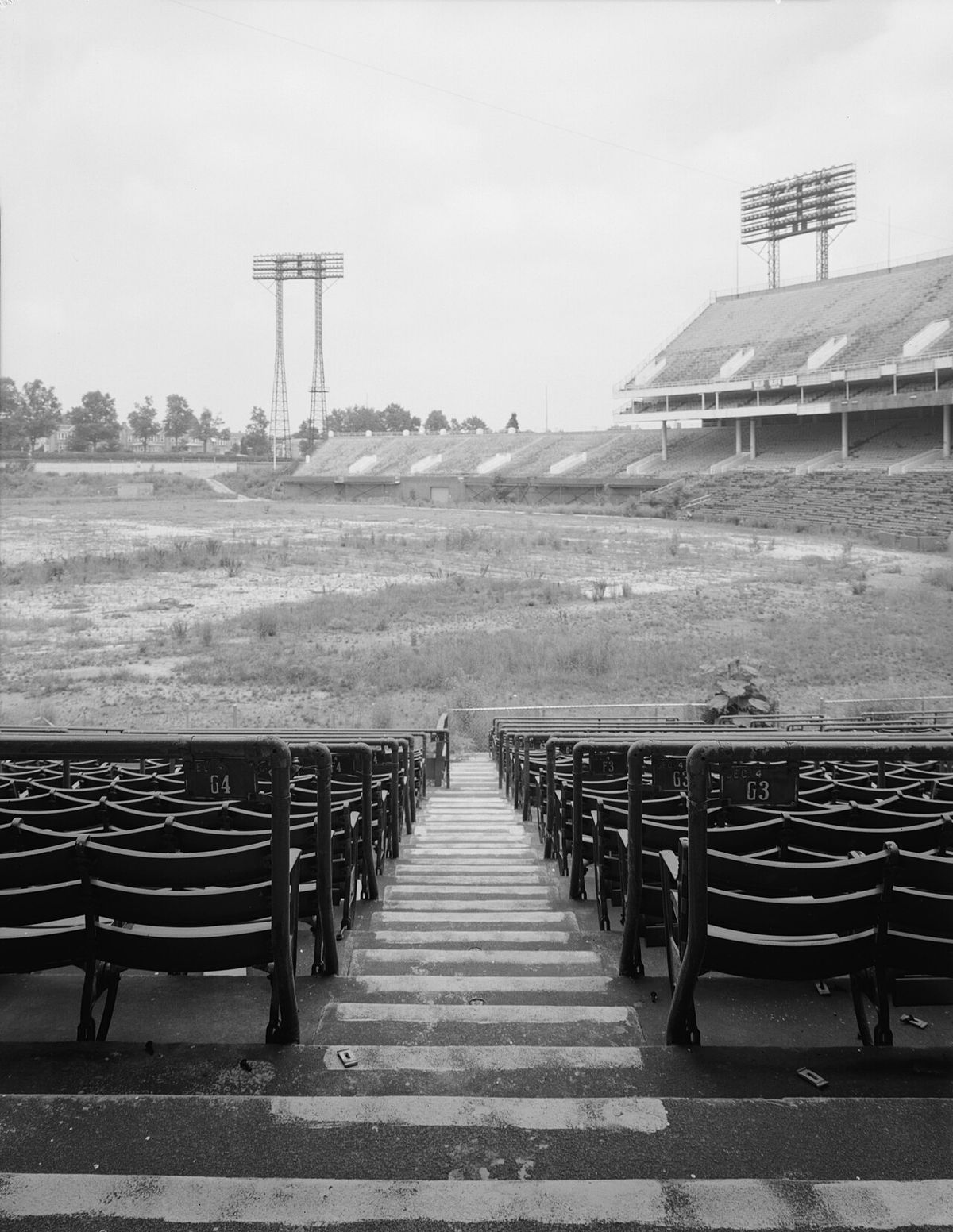
The City of Baltimore solicited proposals for development of the site, with most plans aiming to preserve some part of the stadium, including the memorial facade dedicated to World War II veterans. One proposal suggested a school occupying the former stadium offices with the field used as a recreational facility. However, Mayor Martin O'Malley favoured the proposal that called for the total razing of the stadium, an act protested by many including former mayor and governor William Donald Schaefer, who argued it was done for political reasons. Demolition began in April 2001 and took approximately ten months to complete. A lasting physical legacy of the stadium was created in 2002 when approximately 10,000 cubic yards of concrete rubble from the demolition was used to build an artificial reef over a six-acre site in the Chesapeake Bay, located three miles west of Tolchester Beach.
As of 2005, the former site housed Maryland's largest YMCA facility and the developing vision of Stadium Place, a mixed-income senior community featuring four apartment complexes. The political wrangling and the city's deep attachment to the doomed landmark were captured in the documentary film The Last Season. The stadium's story is one of civic ambition and community identity. Its eventual transformation left a physical legacy in the neighbourhood it once dominated.
Key Sporting Events and Milestones
Memorial Stadium was the stage for numerous significant events in Baltimore's sports history. In its early days as a college football venue, it hosted home games for the University of Maryland Terrapins and the United States Naval Academy Midshipmen. It later became a major league venue for baseball and American football. In its final years, it hosted a Canadian Football League team, the Baltimore Stallions.
- 1922: Municipal Stadium opens, hosting high school rivalries like the Poly-City Game and the Loyola-Calvert Hall Game.
- July 1944: The minor league Baltimore Orioles begin using the stadium after a fire, winning the International League and Junior World Series.
- Fall 1947: The Baltimore Colts of the All-America Football Conference begin play at the stadium.
- April 15, 1954: The major league Baltimore Orioles play their first home game, defeating the Chicago White Sox 3-1 before over 46,000 fans.
- Late 1950s-1960s: The Colts sell out 56 consecutive games during their peak popularity.
- 1993: The Bowie Baysox minor league baseball team plays its inaugural season at the stadium.
- 1994 to 1995: The Baltimore Stallions of the CFL play two seasons, averaging over 30,000 fans per game.
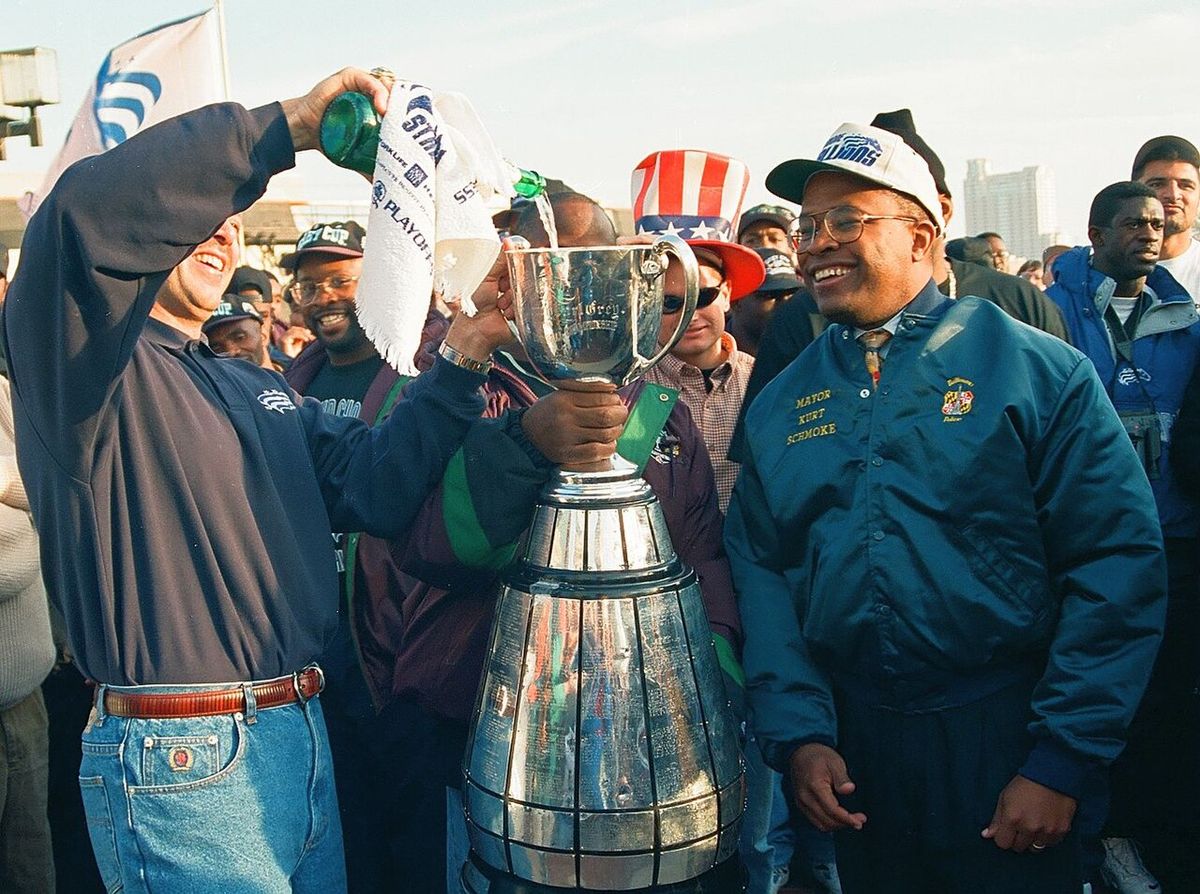
- 1995: The Baltimore Stallions defeat the Calgary Stampeders to win the Grey Cup.
Notable Tenants and Their Legacies
- Baltimore Elite Giants (Negro American League): Hosted four games in the 1950 season, including a May 12 opener drawing over 10,000 fans.
- Bowie Baysox (MiLB): An Orioles affiliate that played its inaugural 1993 season at the stadium while its permanent ballpark was under construction.
- Baltimore Stallions (CFL): Played the 1994 and 1995 seasons, becoming the only U.S. team to win the Grey Cup in 1995.
The succession of these teams illustrates the stadium's evolution. It began as a facility for minor league baseball and college football. It was rebuilt into a major league venue for the Orioles and Colts. After the Colts left, it became a transitional home for new franchises like the CFL Stallions and the NFL Ravens before its final closure.
Community Advocacy and Redevelopment Proposals
The final years of Memorial Stadium were defined by intense community activism focused on the site's future. When the decision to abandon the stadium became imminent, neighbourhood groups organized opposition. They formed the Stadium Neighborhoods Coalition to negotiate with the city. This coalition secured the establishment of an official redevelopment task force and a written pledge for upfront funding for demolition and redevelopment from the mayor.
- Formation of the Stadium Neighborhoods Coalition (SNC): Area community groups united to negotiate with the city over the stadium's fate.
- Establishment of a Memorial Redevelopment Stadium Task Force: Created as a result of SNC negotiations to hold public meetings and deliberate on long-term use.
- Written pledge from Mayor William Donald Schaefer: Committed the city to provide upfront funding for demolition and redevelopment resulting from the community process.
- People Against Concerts at Memorial Stadium (PACAMS): A neighbourhood group that successfully organized opposition to proposed rock concerts at the site.
- Reconstitution as People Advocating a Community Agenda for Memorial Stadium: The same PACAMS acronym was kept as the group shifted to broader advocacy.
- Large public meeting with redevelopment proposals: Several plans were presented, leading to a community preference for a mixed-use development.
- Proposal for a school and recreational facility: One plan suggested using the former offices and field for educational purposes.
- Mayor Martin O'Malley's favoured proposal: The plan that called for total demolition of the stadium, which was ultimately enacted.
Questions about Baltimore Memorial Stadium
Why is Baltimore Memorial Stadium significant to Canadian football fans?
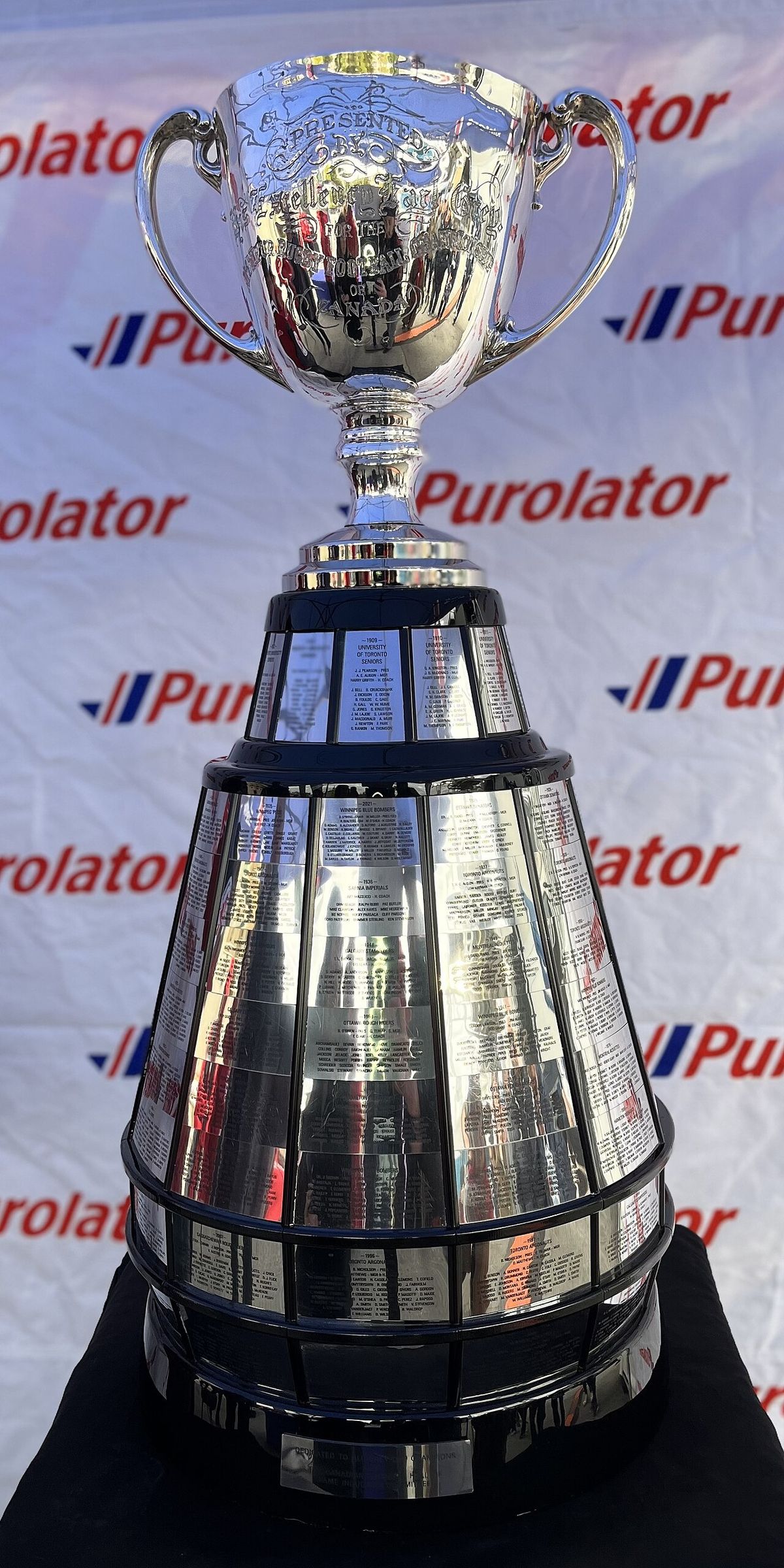
Memorial Stadium is historically significant to Canadian football as the home of the Baltimore Stallions of the Canadian Football League from 1994 to 1995. The stadium was one of the few in the United States that could accommodate the CFL's regulation field, which is 65 yards wide and 150 yards long. The Stallions averaged over 30,000 fans per game and, in 1995, defeated the Calgary Stampeders to win the Grey Cup. This made them the only American-based team ever to win the CFL's championship.
When was Memorial Stadium demolished and what replaced it?
Demolition of Memorial Stadium began in April 2001 and was completed over a ten-month period. The site was redeveloped into a community known as Stadium Place, which is primarily a mixed-income senior living community featuring several apartment complexes. The development also includes Maryland's largest YMCA facility. Concrete from the demolished stadium was recycled to create an artificial reef in the Chesapeake Bay.
What were some of the major criticisms of Memorial Stadium?
As it aged, Memorial Stadium faced significant criticism for its deteriorating conditions and design flaws. Major complaints included severe traffic congestion and a lack of parking, obstructed sightlines due to numerous concrete support poles, and a general lack of modern amenities. Most seating consisted of uncomfortable backless benches, and large sections of the stadium were unsheltered from the sun. These issues were primary factors in the Colts' desire to leave and contributed to the eventual push for new, purpose-built venues for both football and baseball in Baltimore.
What major league baseball team played at Memorial Stadium?
The major league baseball team that played at Memorial Stadium was the American League's Baltimore Orioles. The Orioles began playing there in April 1954 after the St. Louis Browns relocated from Missouri to become Baltimore's first major league franchise in over fifty years. Their final game was a 7-1 loss to the Detroit Tigers on October 6, 1991, after which the team moved to Oriole Park at Camden Yards. The stadium also briefly hosted the minor league Bowie Baysox, an Orioles affiliate, during their inaugural 1993 season.
What NFL teams called Memorial Stadium home?
Two NFL franchises called Memorial Stadium home. The first was the Baltimore Colts, who played there from the 1953 NFL season until their controversial relocation to Indianapolis in March 1984. Following a decade without an NFL team, the stadium then hosted the Baltimore Ravens for their first two seasons after moving from Cleveland. The stadium also previously hosted an earlier Baltimore Colts franchise from the All-America Football Conference, which played there from 1947 until that league merged with the NFL.
What was the stadium's original name and why was it changed?
The stadium's original name was Municipal Stadium, though it was also known as Baltimore Stadium or Venable Stadium. It was built in 1922 on the site of the former Venable Park. The name was changed to Baltimore Memorial Stadium following a major reconstruction project that began in 1949. The new name was chosen specifically to honour the memory of the thousands of Baltimore citizens who died during the recently concluded World War II. Mayor Thomas D'Alesandro Jr championed this rebuilt stadium project, which was designed to be of major league caliber to attract professional sports teams to the city.
Sources and further reading
- Baltimore Memorial Stadium (Wikipedia)
- Memorial Stadium (mdstad.com)
- Memorial Stadium (Baltimore) (sabr.org)
- M&T Bank Stadium | Baltimore Ravens, baltimoreravens. ... (baltimoreravens.com)
- The Ballparks: Baltimore Memorial Stadium ... (thisgreatgame.com)
Checked by the Garbutt Disposal desk. Last updated 2026-10-19.