TD Place Stadium
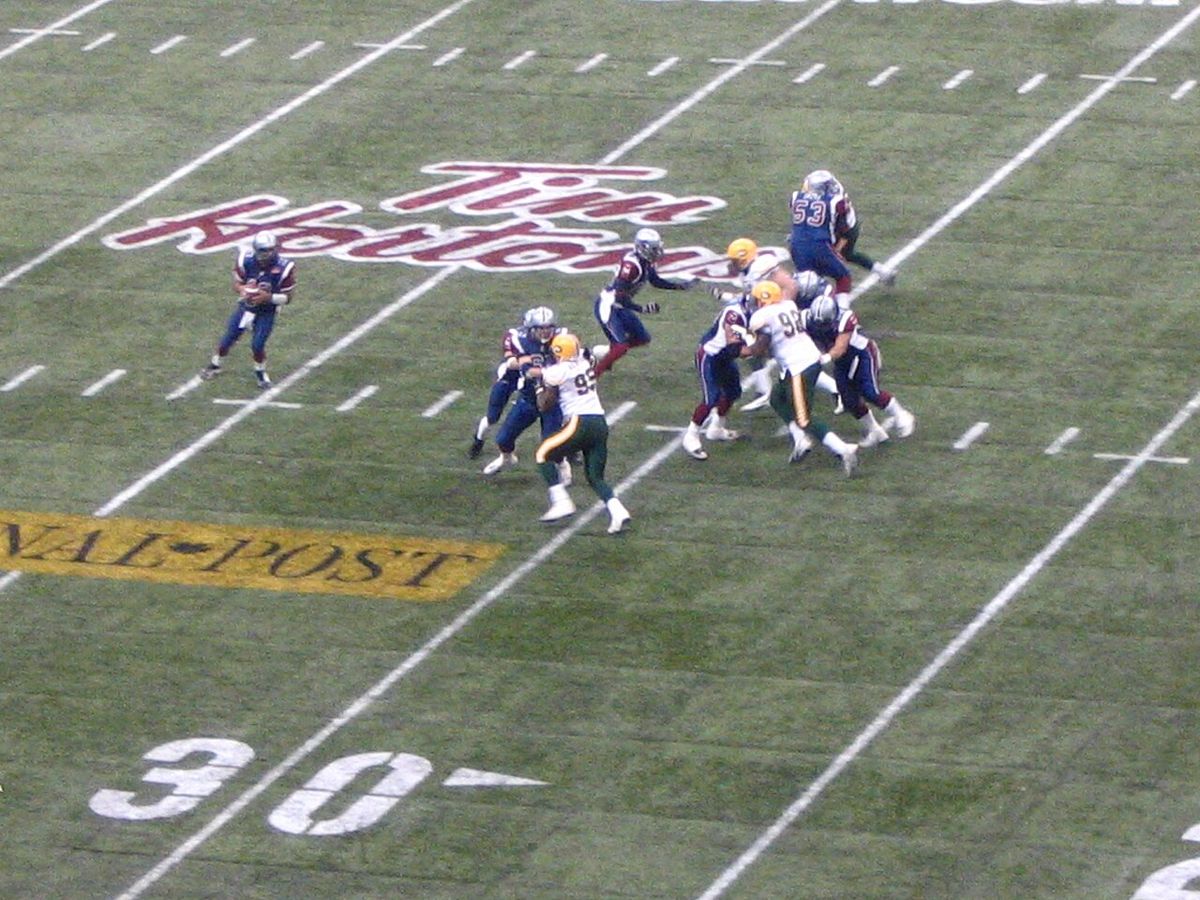
TD Place Stadium, originally known as Lansdowne Park and later Frank Clair Stadium, is a historic outdoor stadium located in the Lansdowne Park district of Ottawa, Ontario. Situated at the southern edge of The Glebe neighbourhood where Bank Street crosses the Rideau Canal, it serves as a central hub for professional and university sports in the national capital. The stadium is the home venue for the Ottawa Redblacks of the Canadian Football League, Atlético Ottawa of the Canadian Premier League, Ottawa Rapid FC of the Northern Super League, and the University of Ottawa Gee-Gees football team. With a history dating to a playing field cleared in the 1870s and permanent grandstands built in 1908, TD Place has hosted numerous major events, including seven Grey Cup games, FIFA tournaments, and an NHL outdoor game.
History and Development
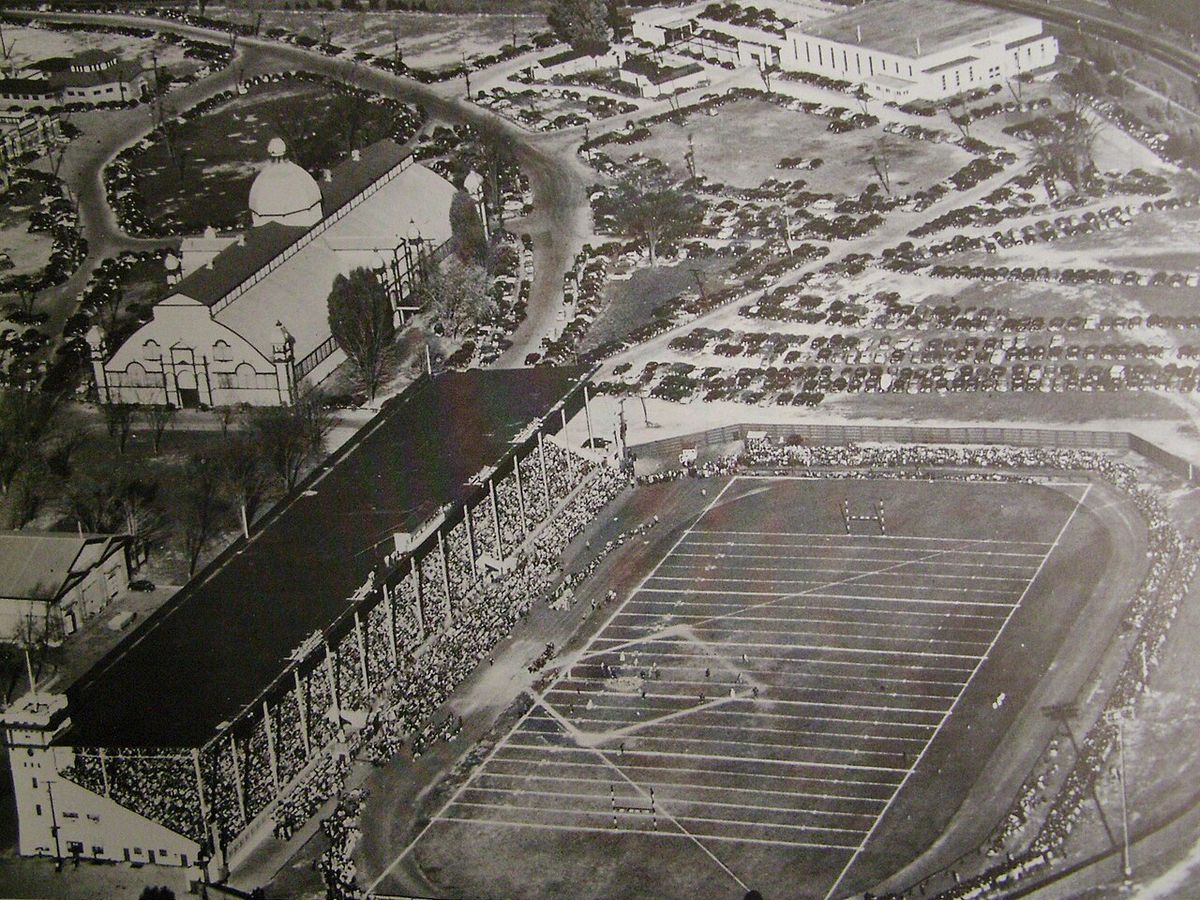
The site's history as a sports ground began in the 1870s when a field was cleared as part of the Ottawa Exposition Grounds, used for equestrian events, lacrosse, and rugby football. The first permanent grandstand, a mostly wooden structure, was built on the north side of the field in 1908. This north stand was demolished in 1967 to make way for a new steel-framed structure with the Ottawa Civic Centre arena integrated underneath. A small south-side grandstand built in the 1920s was replaced in 1960 by a single-deck concrete stand, which received a second deck and partial roof in the 1970s, increasing capacity to over 30,000. The natural grass field used from 1908 was replaced with Astroturf in 1984, which remained until the 2000 season. In 1993, the stadium was renamed to honour Frank Clair, the celebrated coach and general manager of the Ottawa Rough Riders during the 1960s and 1970s.
By the late 1990s, the stadium faced a serious threat of demolition as city councillor Jim Watson led a push for private redevelopment of Lansdowne Park, with proposals calling for residential construction on the stadium site. Public opposition and the desire to return CFL football to Ottawa halted these plans. In 2001, the stadium became the first in the CFL to install a next-generation FieldTurf artificial surface, a year before the Ottawa Renegades began play. The stadium's structural issues came to a head in September 2007 when the lower south side stands were closed due to cracks in the concrete. An engineering study condemned the south stands, leading to the controlled implosion of the lower section on July 20, 2008. This closure initiated a comprehensive review of the park's future and set the stage for its major redevelopment.
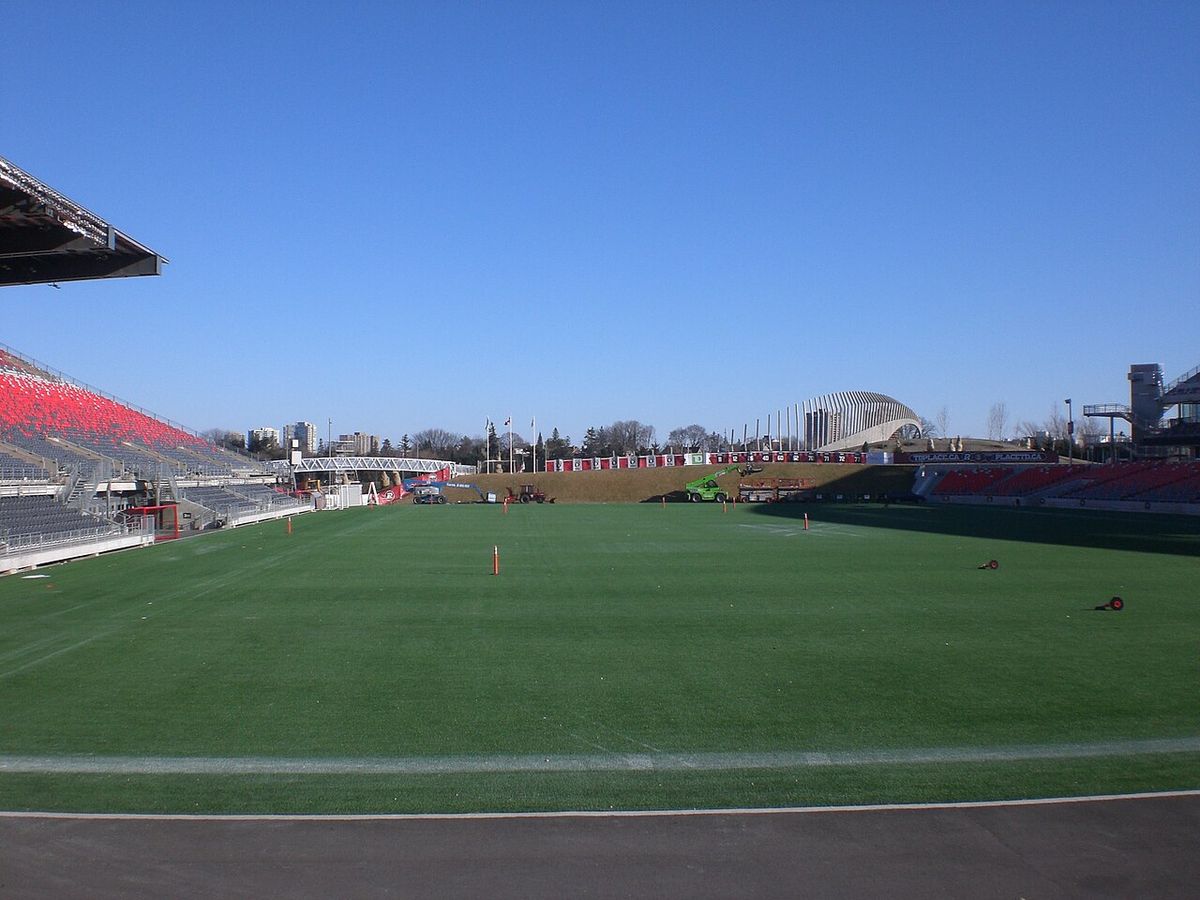
During the summer of 2008, a consortium of investors formed to pursue a new CFL franchise for Ottawa, which later became the Ottawa Sports and Entertainment Group (OSEG). They received a conditional franchise from the CFL, contingent on stadium upgrades, and reportedly pre-sold 5,000 season tickets before the team was officially launched. OSEG proposed the Lansdowne Live plan, a public-private partnership to redevelop the entire park. Ottawa City Council approved the plan in June 2010, which included renovating the stadium, building retail and residential space, and creating an urban park. Demolition of the remaining south stands began in November 2011 and was completed by January 2012, with materials recycled and seats reused at a new Ottawa City Hall rink. The stadium renovations were finished in time for the inaugural Ottawa Redblacks home game on July 18, 2014. On January 7, 2014, the stadium and arena complex were jointly renamed TD Place under a 10-year sponsorship agreement with the Toronto-Dominion Bank.
Stadium Revitalization and Design
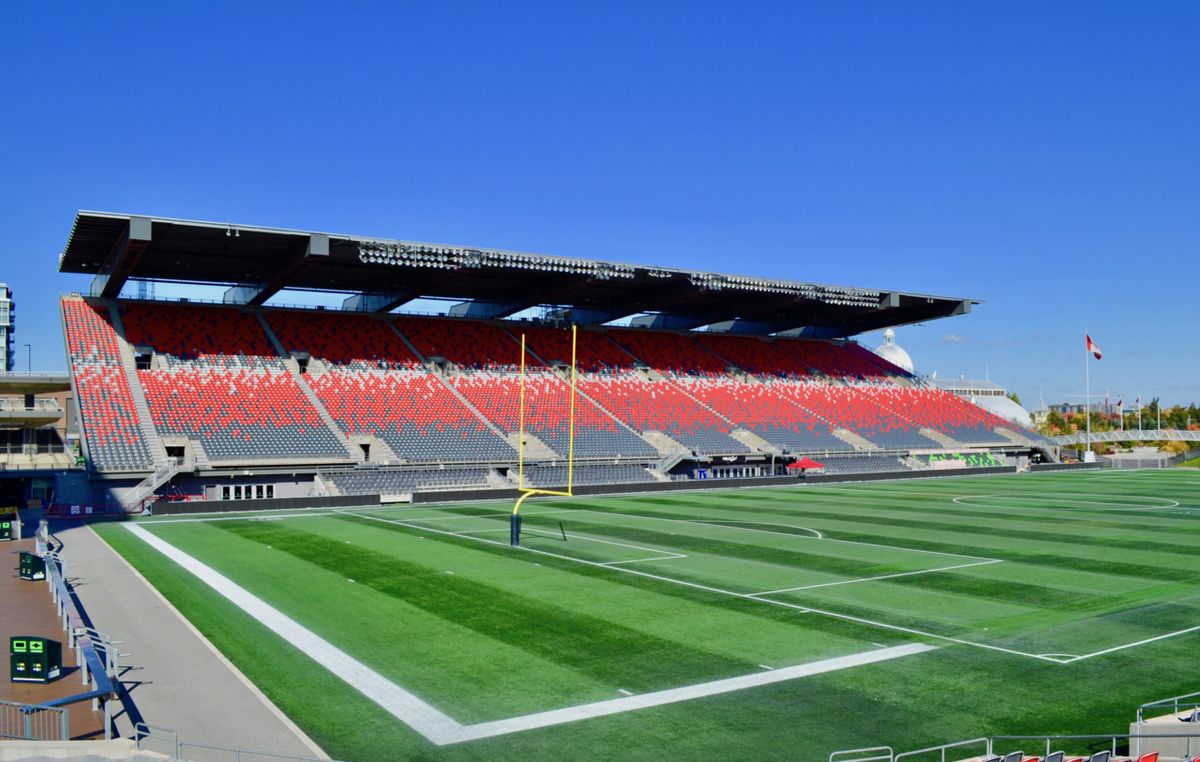
The 2012 to 2014 revitalization, managed by OSEG in partnership with the City of Ottawa, transformed the stadium and the broader 40-acre Lansdowne district. The project involved the complete demolition of the condemned south-side stands and their replacement with a new structure featuring private boxes and a distinctive wood-wrapped exterior. The existing north-side stands were renovated to modern standards, with their exterior expanded to include a retail component. The renovated stadium opened with a seating capacity of 24,000 spectators, designed to host national and international events. The mechanical and electrical engineering for the project included comprehensive system upgrades to plumbing, drainage, fire protection, and HVAC systems for the new south stands.
- New mechanical systems for the south stands included HVAC, plumbing, and fire protection, with central air handling units for team facilities and heat pumps for suites.
- Electrical systems were updated with new switchgear and provisions for temporary generators to ensure broadcast continuity during major events like the Grey Cup.
- A completely rebuilt communications network allowed for high-speed data transmission across a new fibre-optic infrastructure.
- An integrated security system featured card access, intrusion detection, and video surveillance.
- Event lighting was engineered to meet strict CFL and FIFA broadcast standards while highlighting the stadium's architectural wood veil.
The broader Lansdowne redevelopment, completed in 2015, added 360,000 square feet of retail and entertainment space, 280 residential units, an office tower, 1,300 underground parking spaces, and an 18-acre urban park. The district now welcomes over four million visitors annually. In November 2025, Ottawa City Council approved the Lansdowne 2.0 plan, which includes demolishing and rebuilding the stadium's aging north-side stands after the 2027 CFL season, alongside a new event centre and other site upgrades aimed at improving accessibility and sustainability. The new north stands will offer wider concourses, additional washrooms, and improved accessibility, though they will not have a roof.
Primary Sports Tenants
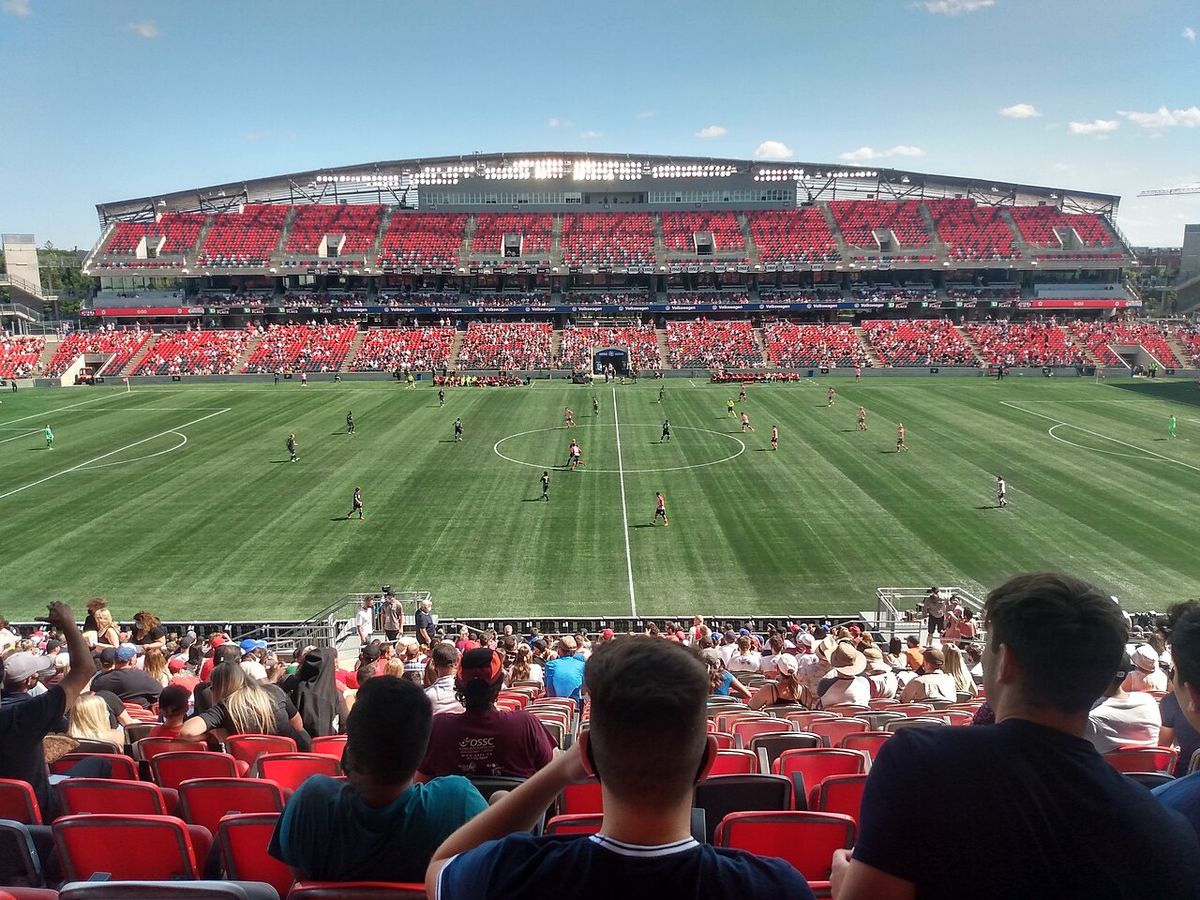
TD Place Stadium is a multi-tenant facility, hosting teams from professional leagues and university athletics. Its primary tenant is the Ottawa Redblacks of the Canadian Football League, who began play in 2014 as the city's third CFL franchise, following the Ottawa Rough Riders (1876 to 1996) and the Ottawa Renegades (2002 to 2005). The stadium also serves as the home ground for Atlético Ottawa of the Canadian Premier League, which joined the league in 2020 after the previous professional soccer tenant, Ottawa Fury FC, ceased operations in 2019. In 2025, Ottawa Rapid FC of the new Northern Super League made its debut at TD Place, winning its inaugural home match 2-1 in front of 6,980 spectators. The University of Ottawa Gee-Gees football team shifted all its home games to the stadium in 2021 as part of a partnership with OSEG.
The stadium is the venue for the Panda Game, the annual Canadian university football rivalry between the University of Ottawa Gee-Gees and the Carleton University Ravens. This game regularly sells out with crowds around 24,000, making it the most attended university football game in Canada. The rivalry has a long history at the site, though it was marred by an accident in 1987 when a railing collapse injured at least 25 students, leading to a forfeited result. Other past tenants have included the Ottawa Junior Riders of the Quebec Junior Football League and the semi-pro Ottawa Bootleggers. The field was even configured for minor league baseball in the early 1950s, serving as home to the Ottawa Giants in 1951 and the Ottawa Athletics from 1952 to 1954 after the Philadelphia Athletics purchased the franchise.
Major Hosted Events
TD Place has a storied history of hosting premier sporting events on the national and international stage. It has been the site of seven Grey Cup games, first in 1925 when Ottawa won its first title, and subsequently in 1939, 1967, 1988, 2004, and most recently the 105th Grey Cup in late 2017 as part of Canada's 150th-anniversary celebrations. The stadium was a venue for soccer during the 1976 Summer Olympics in Montreal, hosting five matches. It later served as a host venue for the 2007 FIFA U-20 World Cup and the 2015 FIFA Women's World Cup, where it hosted six group stage matches, two Round of 16 matches, and one quarter-final. Due to FIFA's policy on commercial stadium names, it was referred to as Lansdowne Stadium during the 2015 tournament, a policy also applied for the 2017 NHL outdoor game due to banking sponsorship conflicts.
In other sports, the stadium hosted an outdoor National Hockey League game on December 16, 2017, known as the NHL Centennial Classic between the Ottawa Senators and Montreal Canadiens, where it was also called Lansdowne Stadium for sponsorship reasons. In 2024, TD Place hosted two test matches for Rugby Canada, against Scotland and Romania. The match against Scotland on July 6, 2024, drew a crowd of 11,447, a record attendance for rugby at the stadium, though Scotland won decisively 73-12. Canada defeated Romania 35-22 six days later, marking its first test win over that nation since 1995. The stadium has also hosted major concerts, including an AC/DC show that attracted 30,000 fans, and it continues to be a key site for outdoor music festivals and community events throughout the year.
Ownership and Operations
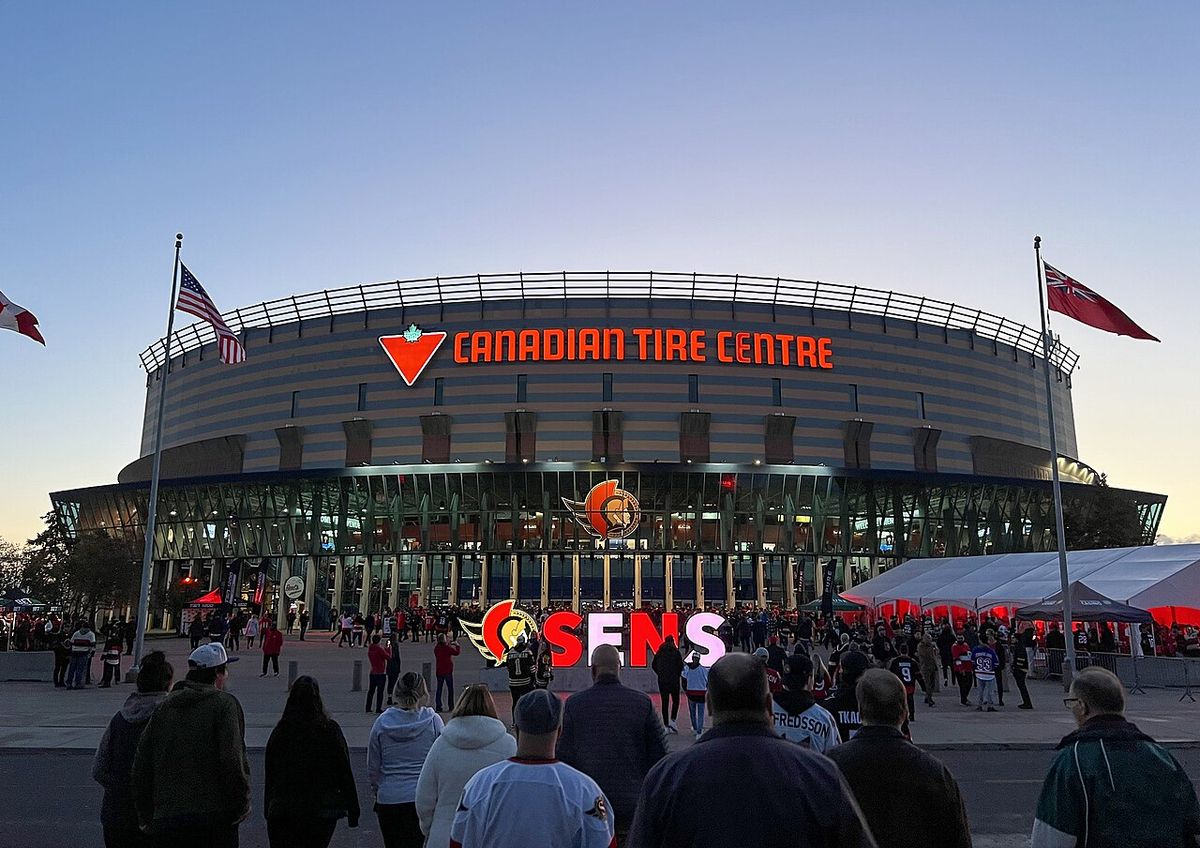
The stadium is owned by the City of Ottawa but is operated and programmed by the Ottawa Sports and Entertainment Group (OSEG) under a long-term partnership. OSEG was founded in 2008 specifically to re-establish CFL football in Ottawa and to lead the revitalization of Lansdowne Park. The group owns and operates the Ottawa Redblacks and the Ottawa 67's hockey club of the Ontario Hockey League, which plays in the attached TD Place Arena. OSEG also manages events across the stadium and arena complex and oversees facilities throughout the Lansdowne district. Key figures behind OSEG include Roger Greenberg, Executive Chairman of The Minto Group, and John Ruddy, founder of Trinity Development Group Inc., both Ottawa natives with deep ties to the community and local sports.
The partnership model for the initial redevelopment saw OSEG finance and oversee the construction of the stadium and commercial components, with the stadium provided rent-free to the developers for 30 years. Proceeds from the retail and commercial precinct are shared, and control of that precinct will revert to the City after the 30-year term. The Lansdowne 2.0 plan approved in 2025 continues this collaborative approach, aiming to modernize aging infrastructure like the north stands and the arena while adding new housing and public spaces. This initiative is funded through a combination of city investment and revenue from air rights sales and development, with the goal of maintaining public infrastructure and creating an improved space for residents and visitors.
Facilities and Future Redevelopment
The current stadium configuration features the renovated north stands and the completely new south stands, with a total capacity of 24,000 for football and soccer. The south stand includes team offices, change rooms, fitness facilities, and premium suites. The press box and media centre were named in honour of former Ottawa Rough Riders broadcaster Ernie Calcutt in October 2014. The stadium is part of the larger TD Place complex, which includes the adjacent TD Place Arena, home to the Ottawa 67's. The entire Lansdowne district encompasses residential towers, a retail and entertainment precinct, and significant green space, functioning as a live-work-play destination that welcomes millions of visitors each year.
The approved Lansdowne 2.0 plan outlines the next phase of development to address aging infrastructure and improve the site for future generations. The key components of this plan include the demolition and rebuilding of the stadium's north-side stands after the 2027 CFL season, offering upgraded seating, wider concourses, improved accessibility, and more washrooms. It also involves constructing a new event centre to replace the nearly 60-year-old TD Place Arena, designed with full accessibility and facilities for professional women's sports like the Ottawa Charge. The plan will add hundreds of new residential units to the site, with revenue from air rights sales helping to fund the project and affordable housing in Ottawa. The plan also calls for revitalizing public spaces, including the return of a Great Lawn and a berm for recreation, alongside a dedicated $2 million public art program. The construction plan is designed to allow major events like CFL, NSL, CPL, and OHL games to continue uninterrupted during the redevelopment.
Notable Incidents and Records
Throughout its long history, the stadium has witnessed both celebratory and challenging moments. A significant incident occurred during the 1987 Panda Game when a section of railing collapsed, injuring at least 25 students and leading to the game's result being forfeited. On July 18, 2018, during an Ottawa Fury FC Canadian Championship semifinal match, a portion of the FieldTurf and some field-level stands suffered minor fire damage. The cause was identified as lit flares and a firework brought in by members of a Toronto FC supporters' group, which ignited a banner. In terms of attendance records, the Panda Game consistently draws sellout crowds of around 24,000, the largest for any Canadian university football event. The 2024 rugby test match against Scotland set a new stadium record for rugby attendance with 11,447 spectators. The stadium's record for a concert is held by an AC/DC show that attracted approximately 30,000 fans, demonstrating its capacity for large-scale entertainment events.
Questions about TD Place Stadium
What teams play at TD Place Stadium?
TD Place Stadium is the home venue for four primary teams. The Ottawa Redblacks of the Canadian Football League have played there since their inception in 2014. Atlético Ottawa of the Canadian Premier League joined as the city's professional soccer tenant in 2020. Ottawa Rapid FC of the Northern Super League began play at the stadium in April 2025. The University of Ottawa Gee-Gees football team of Ontario University Athletics also plays all its home games at TD Place as part of a partnership established in 2021. The stadium has previously hosted the Ottawa Rough Riders, Ottawa Renegades, and Ottawa Fury FC.
How many Grey Cups has TD Place Stadium hosted?
TD Place Stadium has hosted a total of seven Grey Cup games throughout its history. The first was in 1925 when the Ottawa Senators won the championship. It later hosted the title game in 1939, 1967, 1988, 2004, and most recently the 105th Grey Cup in late 2017. The 1967 game was part of Canada's Centennial of Confederation celebrations, and the 2017 game was part of the 150th-anniversary celebrations. The stadium's long association with the Grey Cup highlights its historic role in Canadian football.
What is the seating capacity of TD Place Stadium?
Following the major renovations completed in 2014, TD Place Stadium has a seating capacity of 24,000 spectators for football and soccer events. This capacity was established with the construction of the new south stands and the renovation of the north stands. Prior to the 2008 demolition of the lower south stands, the stadium's capacity was listed at 30,927. The current configuration is designed to host national and international events while providing modern amenities and premium experiences for fans.
What is the Lansdowne 2.0 plan for the stadium?
Lansdowne 2.0 is a strategic redevelopment plan approved by Ottawa City Council in November 2025 to modernize the aging facilities at Lansdowne Park. For TD Place Stadium, the plan calls for the demolition and rebuilding of the north-side stands after the 2027 CFL season. The new north stands will offer upgraded seating, wider concourses, additional washrooms, and significantly improved accessibility. The plan also includes building a new event centre to replace the old TD Place Arena, adding new residential units, and revitalizing public spaces. The goal is to ensure the site remains a functional, year-round destination.
Has TD Place Stadium hosted any FIFA events?
Yes, TD Place Stadium has been a venue for multiple FIFA tournaments. It hosted five soccer matches during the 1976 Summer Olympics in Montreal. It was also one of six host venues for the 2007 FIFA U-20 World Cup. Most notably, it was selected as a venue for the 2015 FIFA Women's World Cup held in Canada, hosting six group stage matches, two Round of 16 matches, and one quarter-final match. Due to FIFA's policy prohibiting commercial stadium names, the venue was temporarily referred to as Lansdowne Stadium during the 2015 tournament.
What was the stadium called before it was TD Place?
The stadium has had two previous names. From its origins until 1993, it was known as Lansdowne Park, after the fairgrounds in which it is located. In 1993, it was renamed Frank Clair Stadium to honour Frank Clair, the legendary coach and general manager of the Ottawa Rough Riders during their successful eras in the 1960s and 1970s. The stadium and the adjacent arena were jointly renamed TD Place on January 7, 2014, under a 10-year sponsorship agreement with the Toronto-Dominion Bank, coinciding with the completion of major renovations.
Sources and further reading
- TD Place Stadium (Wikipedia)
- OSEG, TD Place | Lansdowne Live (tdplace.ca)
- TD Place (smithandandersen.com)
- Lansdowne 2.0 - Engage Ottawa (engage.ottawa.ca)
Checked by the Garbutt Disposal desk. Last updated 2026-10-26.