Native American mascot controversy
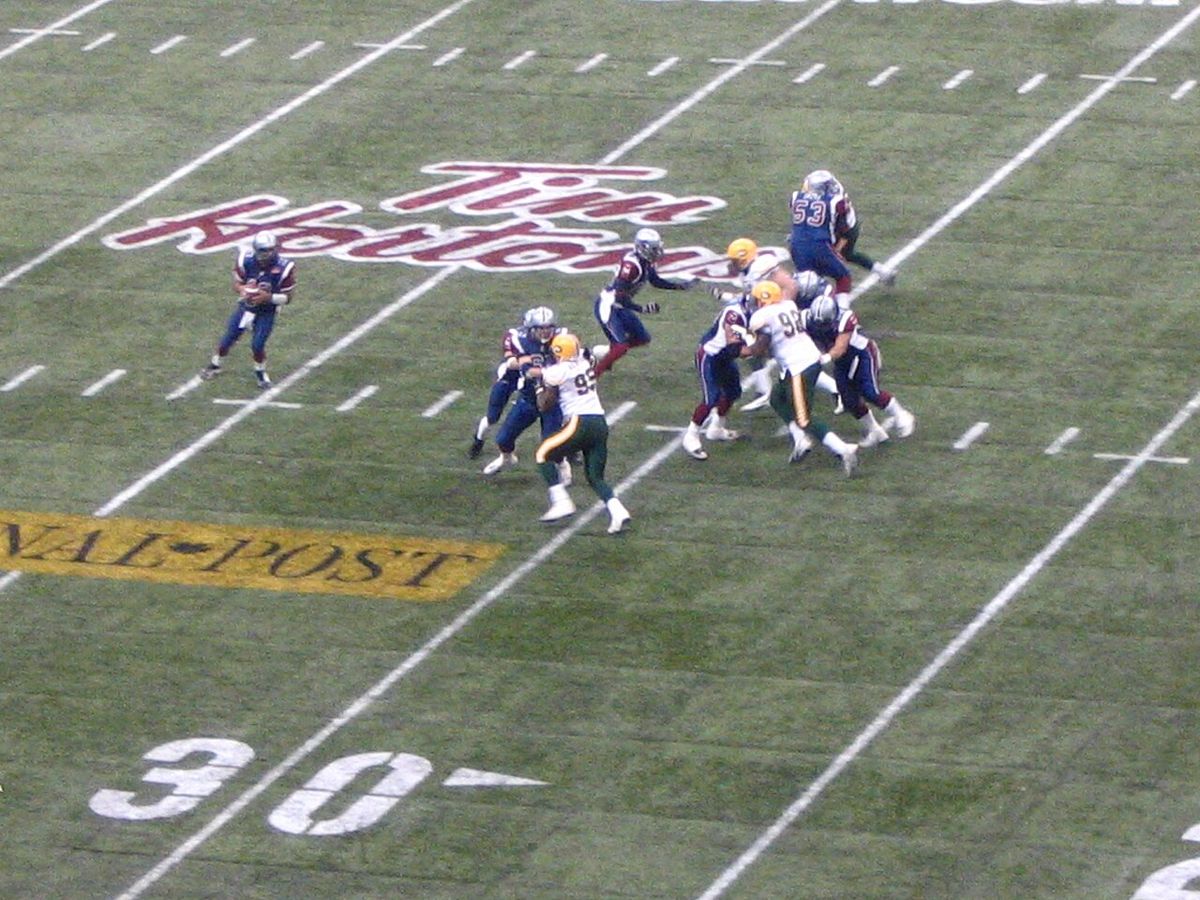
The Native American mascot controversy is a long-running public debate in North America concerning the use of Indigenous names, imagery, and symbols by sports teams, clubs, and leagues. This issue, which gained significant momentum during the Indigenous civil rights movements of the 1960s, centres on objections from Native American and First Nations communities who view such usage as derogatory stereotyping that harms their cultures and people. In Canada, the controversy has directly impacted professional sports, most notably leading to the Edmonton Eskimos becoming the Edmonton Elks in 2021. The movement for change has accelerated in recent years, supported by extensive social science research and advocacy from over 115 professional organizations, which argue these mascots perpetuate prejudice and negatively affect the mental health and academic performance of Indigenous youth.
Historical Origins and Context
The practice of non-Indigenous people adopting Native American imagery dates back to the colonial period in a tradition often termed 'playing Indian.' In the 19th century, fraternal organizations like the Tammany Societies and the Improved Order of Red Men used Indigenous words and material culture to construct an aboriginal identity, while ignoring the realities of dispossession and conquest. This appropriation extended to youth groups such as the Boy Scouts of America and numerous summer camps. By the late 19th and early 20th centuries, university students began adopting Indian names and symbols for their sports teams, drawing from European American imaginations of traditional Native life rather than authentic cultural understanding. The stereotyping embedded in these mascots must be understood within the broader historical context of conquest, forced relocation, and government-sponsored assimilation policies, including boarding schools that sought to eradicate Indigenous cultures.
Professional sports teams followed a similar pattern. The franchise now known as the Atlanta Braves originated as the Boston Red Stockings in 1871 and was renamed the Boston Braves in 1912 by owner James Gaffney, a member of New York's Tammany Hall political machine. The team that became the Washington Commanders was originally also called the Boston Braves when it shared Braves Field with the baseball team, changing its name to the Boston Redskins in 1933 after moving to Fenway Park. The Cleveland Indians' name was selected in 1915 after the departure of star player Nap Lajoie, with contemporary news reports making numerous insulting references to Native Americans and no documented mention of the often-cited story that it honoured Penobscot player Louis Sockalexis. These origins illustrate how mascots were often rooted in caricature and political symbolism rather than genuine tribute. The success of the Boston Braves in the 1914 World Series is also cited as a potential reason for other teams adopting Indian mascots during that era.
Indigenous Perspectives and Advocacy
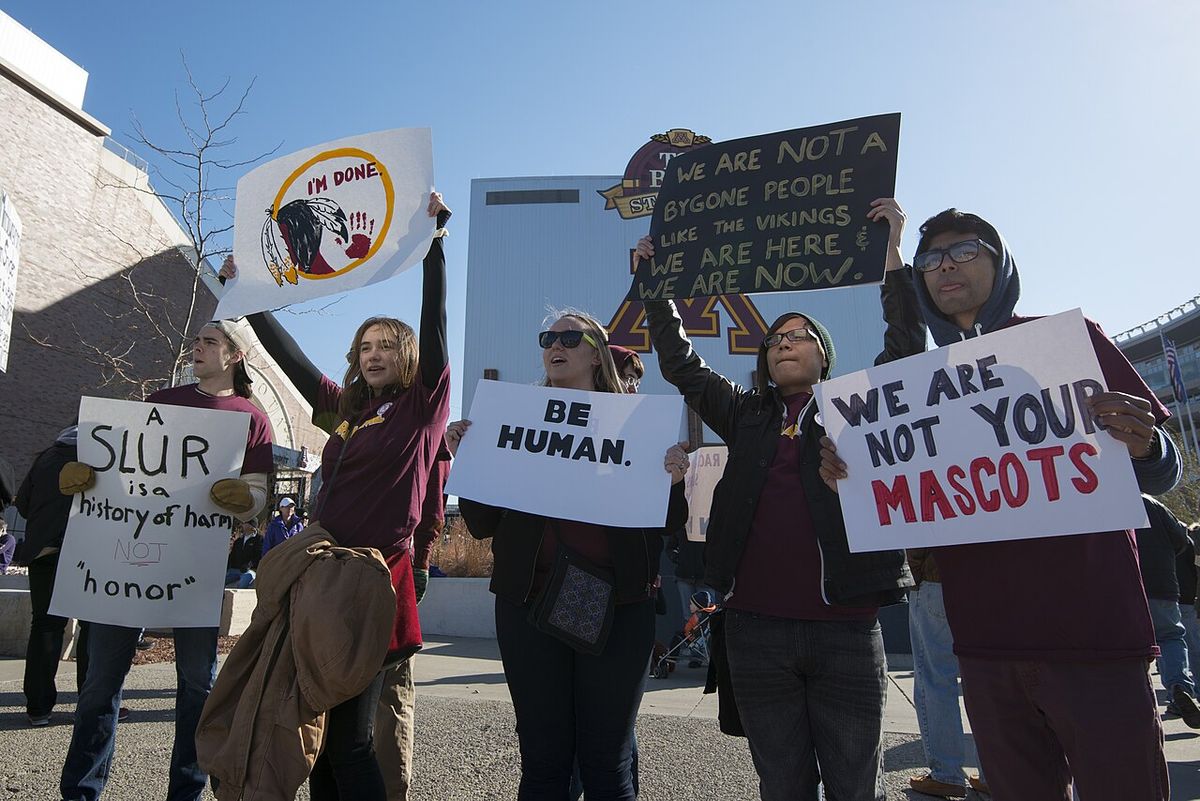
The NCAI maintains that mascots like the Braves and the former Redskins perpetuate harmful stereotypes and demean Indigenous traditions. The organization states that teams such as the NFL's Washington Commanders and Kansas City Chiefs, MLB's Cleveland Guardians and Atlanta Braves, and the NHL's Chicago Blackhawks continue to profit from harmful stereotypes that originated during a time when white superiority and segregation were commonplace. Founders of the American Indian Movement, including Clyde Bellecourt, Vernon Bellecourt, Dennis Banks, and Russell Means, were among the first to lead protests against team names and mascots such as the Washington Redskins and Chief Wahoo. Vernon Bellecourt later founded the National Coalition Against Racism in Sports and Media in 1989.
Scholars like Cornel Pewewardy describe Indigenous mascots as an example of dysconscious racism that reinforces the superiority of the dominant culture through cultural imperialism and neocolonialism. This advocacy is part of larger issues concerning cultural appropriation and the violation of Indigenous intellectual property rights, which encompasses the use of Indigenous music, art, and costumes in entertainment and commerce. The use of caricatures in sports is seen as contributing to the marginalization of Native people within the larger culture and is often compared to other exclusions, such as decisions on projects like the Dakota Access Pipeline made without tribal consultation. While not all Native Americans uniformly oppose mascots, figures like Professor Steven Denson of the Chickasaw Nation suggest that respectful, tribally-sanctioned partnerships can be acceptable if they foster understanding and have community support.
The NCAI recognizes the right of individual tribes to establish such relationships, as seen with the Spokane Indians minor league baseball team, which uses Salish language on jerseys and a trout mascot referencing tribal fishing traditions. However, opponents like Suzan Shown Harjo argue there is no such thing as a positive stereotype, and Stephanie Fryberg notes that even respectful team usage can be undermined by opposing fans' racist gestures. Numerous Indigenous nations have issued official statements opposing Native mascots. This widespread consensus reflects a unified voice against cultural appropriation in sports.
- Alabama-Coushatta Tribe of Texas
- Cherokee Nation
- Chickasaw Nation
- Muscogee Nation
- Navajo Nation
- Oneida Indian Nation
- Seminole Nation of Oklahoma
- Standing Rock Sioux Tribe of North & South Dakota
- Mi’kmaq Nation
- Mohegan Tribe
- Peoria Tribe of Oklahoma
- Saint Regis Mohawk Tribe
Social Science Research and Institutional Positions
A substantial body of social science research substantiates the objections to Native American mascots, demonstrating they are not trivial symbols. Studies consistently show that stereotypical and historically inaccurate images interfere with learning about Indigenous peoples, support oversimplified views, and contribute to the development of cultural biases and prejudices. The Society of Indian Psychologists stated in 1999 that such images create, support, and maintain oversimplified and inaccurate views, which contradict the educational mission of promoting inclusivity and diversity. The American Psychological Association issued a landmark resolution in 2005 recommending the immediate retirement of such mascots due to the harm they cause. The APA cited the creation of a hostile environment, negative effects on the self-esteem of American Indian children, and potential violations of civil rights. The resolution also noted that stereotypes reinforce mainstream misconceptions and prevent non-Natives from learning about authentic Native American culture.
This scientific consensus has been echoed by numerous other professional organizations. Similar resolutions have been adopted by the North American Society for the Sociology of Sport, the American Sociological Association, the American Counseling Association, and the American Anthropological Association. In 2005, the National Education Association included the elimination of Indian mascots and sports team names as a key recommendation in a report on the status of Native American students. In 2018, the Robert Wood Johnson Foundation announced it would no longer consider teams with racist mascots, such as the Kansas City Chiefs and Washington football teams, for its annual RWJF Sports Award. In 2021, the New York Association of School Psychologists reiterated the APA position in its own statement advocating for the inclusion of Indigenous persons in diversity education programs.
Research indicates that exposure to mascots has measurable negative effects. Stereotyping directly impacts the academic performance and self-esteem of Native American students, correlating with broader issues like suicide, unemployment, and poverty. Studies show that European Americans exposed to these mascots are more likely to believe stereotypes are true and to perceive Native Americans as having no identity beyond these caricatures. Specific studies examining the effect of exposure to an American Indian sports mascot found a tendency to endorse stereotypical views. The mascots have been cited as a form of microaggression, subjecting marginalized groups to everyday insults that degrade inter-group relations. A 2020 analysis of existing research indicated only negative psychological effects, which are detrimental to Native American students and promote negative stereotypes and prejudicial ideas among non-Native persons.
Defences of Mascots and Counterarguments
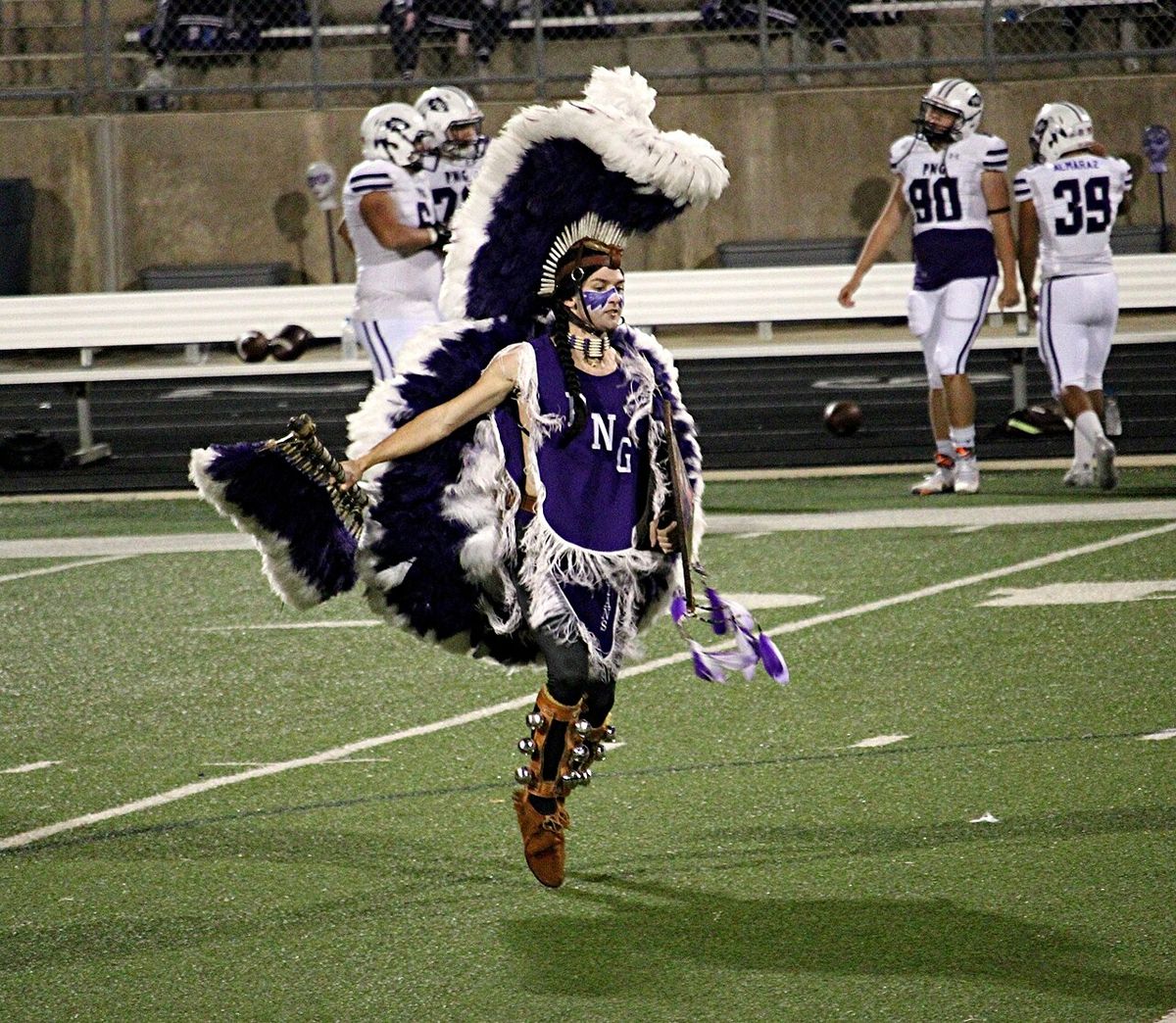
Defenders of Native American mascots often state an intention to honour Indigenous peoples by referencing traits they associate with them, such as fighting spirit, bravery, stoicism, dedication, and pride. They frequently characterize opposition to the mascots as excessive 'political correctness' and argue that sports are an unimportant venue for such debates. Some institutions maintain that their use of imagery is a longstanding tradition that pays respect. However, social scientists recognize that all ethnic stereotypes, whether framed as positive or negative, are harmful because they promote false or misleading associations between a group and an attribute, thereby fostering a disrespectful relationship. The injustice of such stereotyping is widely acknowledged for other racial groups, leading critics to argue mascots are morally questionable regardless of whether individuals claim to take offense.
Advocates for change counter that the honour argument is dubious and often relies on ignorance rather than logic. They point to the extensive evidence of harmful psychological and social effects documented by research. The claim of honour is further undermined by the historical origins of many team names, which were frequently chosen with little genuine consultation or understanding of Indigenous cultures and sometimes with openly insulting intent. For example, the story that the Washington Redskins name honoured coach William Henry Dietz, who claimed Native heritage, is contradicted by the fact the team used Native imagery in 1932 before Dietz was hired in 1933. The movement emphasizes that respect for a historically marginalized group necessitates ending practices that perpetuate stereotypes, misrepresentation, and cultural appropriation, allowing for Indigenous self-determination in how their identities are portrayed.
Recent Changes and Current Landscape
The movement to retire Native American mascots has achieved significant victories at the professional sports level, particularly since 2020. This period saw increased public awareness of institutional racism, prompting nationally covered changes. The Washington NFL team retired the Redskins name in July 2020, becoming the Washington Commanders. In November 2021, the Cleveland MLB team changed its name from the Indians to the Guardians. In Canada, the CFL's Edmonton Eskimos became the Edmonton Elks in 2021. Each professional-level change has spurred further action at the amateur level. For instance, 29 school teams changed their names between August and December 2020 alone. The appointment of Deb Haaland as the first Indigenous U.S. Secretary of the Interior in March 2021 added a prominent federal voice advocating for such changes.
The NCAI has systematically expanded its Ending 'Indian' Mascots initiative. After decades focused on professional sports, the organization formally expanded efforts to the K-12 level in 2020, creating a National School Mascot Tracking Database that records approximately 1,900 schools in 970 districts with Native 'themed' mascots. In 2021, the initiative expanded again to include state-level advocacy, developing a State Activity Tracker and engaging with legislatures pursuing mascot bans like the Prohibition on American Indian Mascots Act. Despite this progress, the use of such imagery remains common. Estimates suggest over 2,000 institutions across the United States, from professional teams to elementary schools, continue to use Native American mascots. Teams like the Kansas City Chiefs, Chicago Blackhawks, Atlanta Braves, and Florida State Seminoles still use Native American names and imagery, indicating that the controversy and the advocacy work are far from over.
| Team | Former Name | Year of Change |
|---|---|---|
| Washington Commanders (NFL) | Washington Redskins | 2020 |
| Cleveland Guardians (MLB) | Cleveland Indians | 2021 |
| Edmonton Elks (CFL) | Edmonton Eskimos | 2021 |
Public Opinion and Polling Data
Public opinion on Native American mascots is complex, with significant differences often observed between Indigenous and non-Indigenous populations. Polling and research indicate that opposition to such mascots is particularly strong among Native Americans who are deeply engaged with their cultural practices. For example, a study found that among Native Americans who frequently engage in tribal or cultural practices, 67 percent found the Washington Redskins team name offensive, and 70 percent found other Native mascots offensive. This data is used by advocacy groups to counter claims that mascots are broadly accepted or seen as an honour by the people they purport to represent.
The controversy also plays out in public perception and media representation. The mental image of sports fans with painted faces wielding toy tomahawks is criticized for evoking America's history of racial stereotyping, comparable to the now culturally taboo phenomenon of blackface and minstrel shows from the late 19th and early 20th centuries. This association demonstrates the deep-seated nature of the imagery and why many activists argue it represents cultural ignorance and insensitivity. The National Indian Youth Council spearheaded the early movement to remove mascots in the 1960s, and since then, the effort has grown to include a wide coalition. The victory in 2020 with the Washington team's name change signified an important cultural shift, yet opinion polls and the continued existence of thousands of mascots show that public understanding and acceptance of the issue remain a work in progress.
Questions about Native American mascot controversy
What is the Native American mascot controversy?
The Native American mascot controversy is a public debate over the use of Indigenous names, imagery, and symbols by sports teams and schools. Indigenous communities and their supporters argue that such mascots are derogatory stereotypes that harm cultural respect and the mental well-being of Native people, particularly youth. The controversy has led to protests, educational campaigns, and the retirement of many mascots at both professional and amateur levels across the United States and Canada. It is rooted in a long history of cultural appropriation and stereotyping that dates back to the colonial era.
Which professional sports teams have changed their Native American names or mascots?
Several major professional teams have retired Native American names and imagery in recent years. The Washington NFL team changed its name from the Redskins to the Commanders in July 2020. The Cleveland MLB team changed from the Indians to the Guardians in November 2021. In Canadian football, the Edmonton Eskimos became the Edmonton Elks in 2021. These high-profile changes have often accelerated similar actions at the school and university level, with dozens of schools changing their names in the months following each professional announcement.
What do Native American organizations say about sports mascots?
Leading Native American organizations like the National Congress of American Indians have a long-standing, clear position against Native-themed mascots. They state that these mascots are symbols of disrespect that degrade, mock, and harm Native people, undermining their civil rights and racial equity. The NCAI, along with over 1,500 national Native organizations and advocates, has called for a ban on all unsanctioned Native imagery and names in sports. Their campaign, launched in 1968, is based on numerous resolutions passed by consensus among their membership, which represents hundreds of Tribal Nations.
What does scientific research say about the impact of these mascots?
Social science research consistently shows that Native American mascots have negative effects. Studies indicate they create a hostile environment, lower the self-esteem and academic performance of Native American students, and reinforce harmful stereotypes among non-Native people. A 2020 analysis concluded the psychological effects are exclusively detrimental. Major organizations like the American Psychological Association have issued resolutions calling for the immediate retirement of such mascots due to the psychological and social harm they cause, which can contribute to broader issues like suicide and unemployment in Native communities.
Why do some people defend the use of Native American mascots?
Defenders often claim the mascots are intended to honour Native Americans by referencing traits like bravery and pride. They may also dismiss opposition as 'political correctness' and argue that sports mascots are a trivial matter. However, critics and social scientists counter that these arguments ignore the documented harmful effects of stereotypes and that the 'honour' narrative is frequently not supported by the historical origins of the team names, which often involved caricature and insult. They argue all ethnic stereotypes, even positive-seeming ones, promote false associations and disrespect.
How many schools still use Native American mascots?
According to the NCAI's tracking database, approximately 1,900 K-12 schools in 970 school districts across the United States still use Native 'themed' school mascots. Broader estimates from sources like Mascot DB suggest the total number of American institutions using such imagery may exceed 2,000. This highlights the ongoing scale of the issue despite increasing advocacy and policy changes at state and professional levels. The NCAI formally expanded its initiative to the K-12 level in 2020 to address this widespread usage.
Sources and further reading
- Native American mascot controversy (Wikipedia)
- Proud To Be (ncai.org)
- Native American Mascots | Overview & Controversies (study.com)
Checked by the Garbutt Disposal desk. Last updated 2026-10-24.