Gilles Villeneuve
Joseph Gilles Henri Villeneuve was a Canadian Formula One racing driver who competed from 1977 until his death in 1982, driving primarily for Scuderia Ferrari. A national hero in Canada, he remains the only driver to have won his home Canadian Grand Prix, a feat he achieved in 1978. Villeneuve finished as runner-up in the 1979 World Drivers' Championship and was renowned for his spectacular, fearless driving style, which earned him immense popularity within the sport. His legacy is cemented by the Circuit Gilles Villeneuve in Montreal and through his son, Jacques, who became Canada's first Formula One World Champion.
Early Life and Snowmobile Racing
Gilles Villeneuve was born on 18 January 1950 in Saint-Jean-sur-Richelieu, Quebec, to piano-tuner Seville Villeneuve and his wife Georgette, and he grew up in Berthierville. He married Joann Barthe in 1970, and the couple had two children, Jacques and Mélanie, often travelling together in a motorhome during his early racing seasons. Villeneuve initially concealed his true age, often claiming to be born in 1952 to appear younger as he entered Formula One in his late twenties, a strategy to avoid being considered too old for success. His younger brother, also named Jacques, had a successful career in Formula Atlantic, Can-Am, and CART, continuing the family's involvement in motorsport.
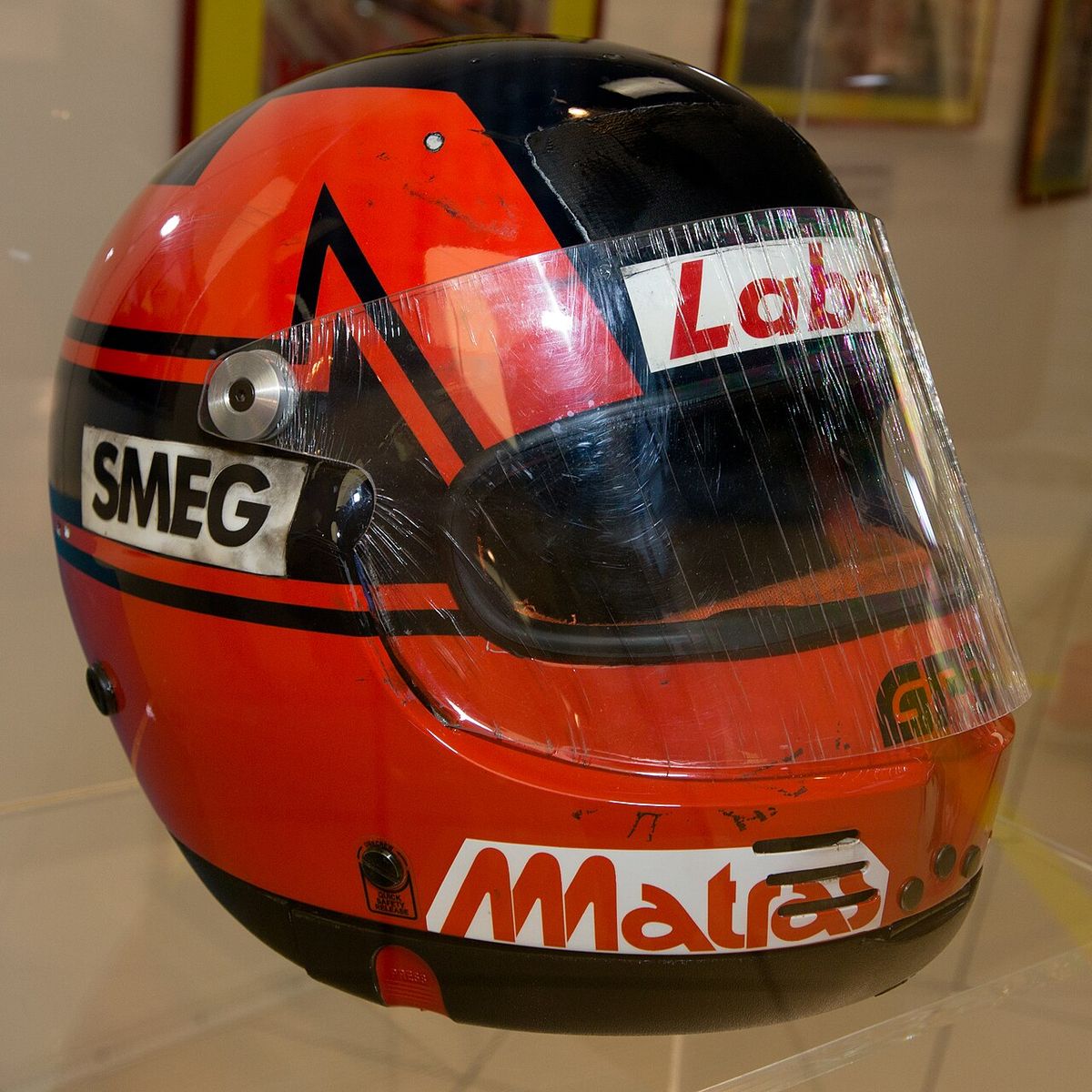
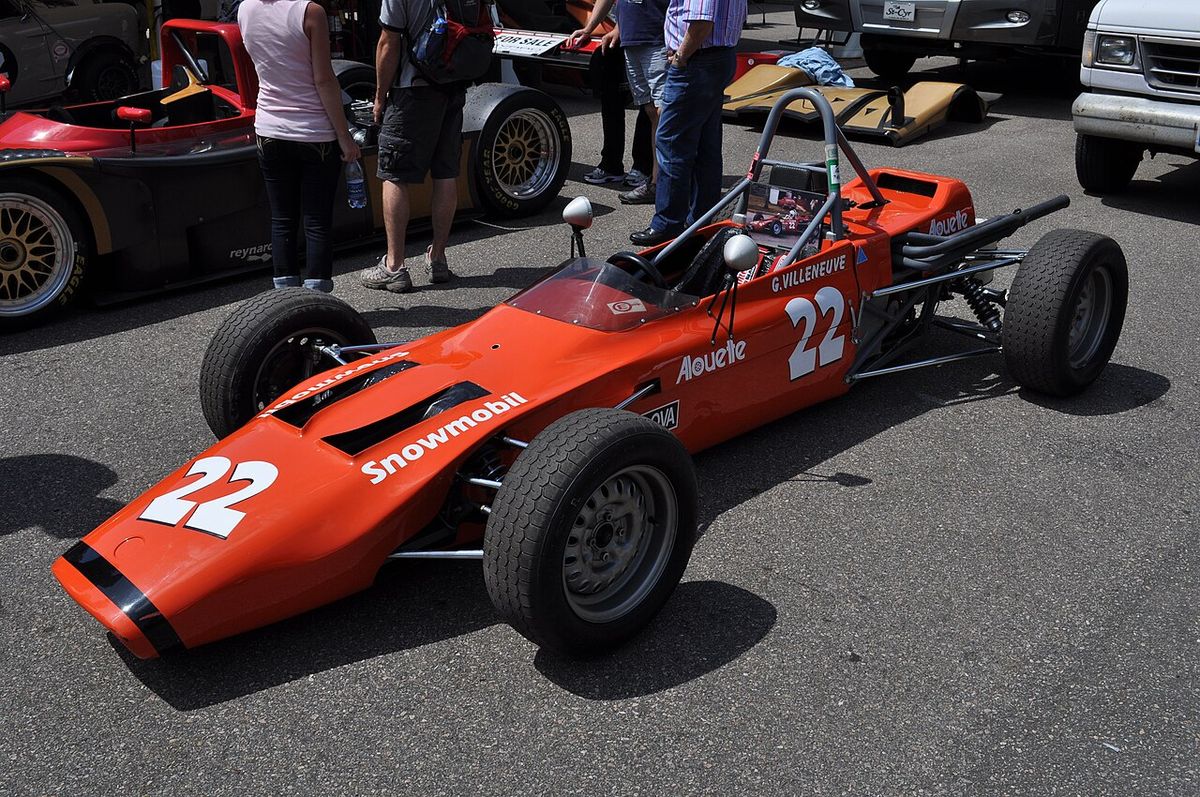
Villeneuve's first competitive driving involved local drag racing events in his modified 1967 Ford Mustang, but he soon became bored and enrolled at the Jim Russell Racing School at Circuit Mont-Tremblant to obtain a racing licence. A significant and professional foundation for his early career came from snowmobile racing, where he was extremely successful and could demand appearance money as well as prize money. He won the 1974 World Championship Snowmobile Derby, and his second season in Formula Atlantic was part-sponsored by his snowmobile manufacturer, Skiroule. Villeneuve credited snowmobiling with teaching him car control, stating that winter spills at high speed on ice and racing in poor visibility with blowing snow were good for his reactions and eliminated any fear of racing in the rain.
Rise Through Formula Atlantic
After obtaining his licence, Villeneuve had a very successful debut season in Quebec regional Formula Ford in 1973, running his own two-year-old car and winning seven of the ten races he entered. He progressed to the more powerful Formula Atlantic category for the 1974 season, where he would compete for four seasons, often running his own car with limited funding. His first Atlantic victory came in 1975 at Gimli Motorsport Park in Manitoba, a race held in heavy rain conditions that played to his unique skills developed in snowmobile racing. The 1976 season marked his North American breakthrough, as he teamed with Chris Harrison's Ecurie Canada and engineer Ray Wardell to dominate the series.
Driving a factory March, Villeneuve won all but one of the Formula Atlantic races that year, securing both the United States and Canadian championship titles in a single, dominant campaign. He successfully defended his Canadian Formula Atlantic championship again in 1977, further solidifying his reputation as the top rising driver on the continent. It was during this period, at a non-championship Formula Atlantic race at Trois-Rivières in 1976, that he beat reigning Formula One World Champion James Hunt and several other Grand Prix stars. This performance directly led to Hunt's McLaren team offering Villeneuve a Formula One deal for up to five races in a third car during the 1977 season, opening the door to the highest level of motorsport.
Formula One Debut and Move to Ferrari
Villeneuve made his Formula One debut with McLaren at the 1977 British Grand Prix. He qualified ninth in the team's older M23 car, placing between the regular drivers Hunt and Mass who were in newer M26 models. In the race, he set the fifth fastest lap but finished eleventh after being delayed by a faulty temperature gauge. The British press coverage was generally complimentary, including John Blunsden's comment in The Times. Despite this performance, McLaren team manager Teddy Mayer decided not to continue with Villeneuve for 1978, explaining Villeneuve seemed potentially expensive and that Patrick Tambay showed similar promise.
Left without a solid drive for 1978, Villeneuve's career was saved by Ferrari founder Enzo Ferrari, who flew the Canadian to Italy for a meeting in August 1977. Enzo Ferrari was immediately reminded of pre-war champion Tazio Nuvolari, calling Villeneuve a 'piccolo Canadese' and deciding to give him a try after a test at the Fiorano track, despite relatively slow times and mistakes. Villeneuve signed to drive the last two races of 1977 and the full 1978 season, later remarking that his three wishes would have been to get into racing, to be in Formula One, and to drive for Ferrari. His arrival was prompted by reigning champion Niki Lauda quitting Ferrari after clinching the 1977 title, vacating a seat for the Canadian Grand Prix at Mosport Park.
Villeneuve retired from his first Ferrari race at Mosport after sliding off on another car's oil. His second race ended in tragedy at the season-ending Japanese Grand Prix at Mount Fuji, where on lap five he tried to outbrake Ronnie Peterson's Tyrrell, causing a collision. Villeneuve's Ferrari became airborne and landed in a prohibited spectator area, killing one spectator and one race marshal and injuring seven others. An investigation apportioned no blame, and while Villeneuve was 'terribly sad' at the deaths, he did not feel responsible for them, a sentiment that allowed him to continue his career with Ferrari into the following season.
First Ferrari Victory and 1979 Championship Campaign
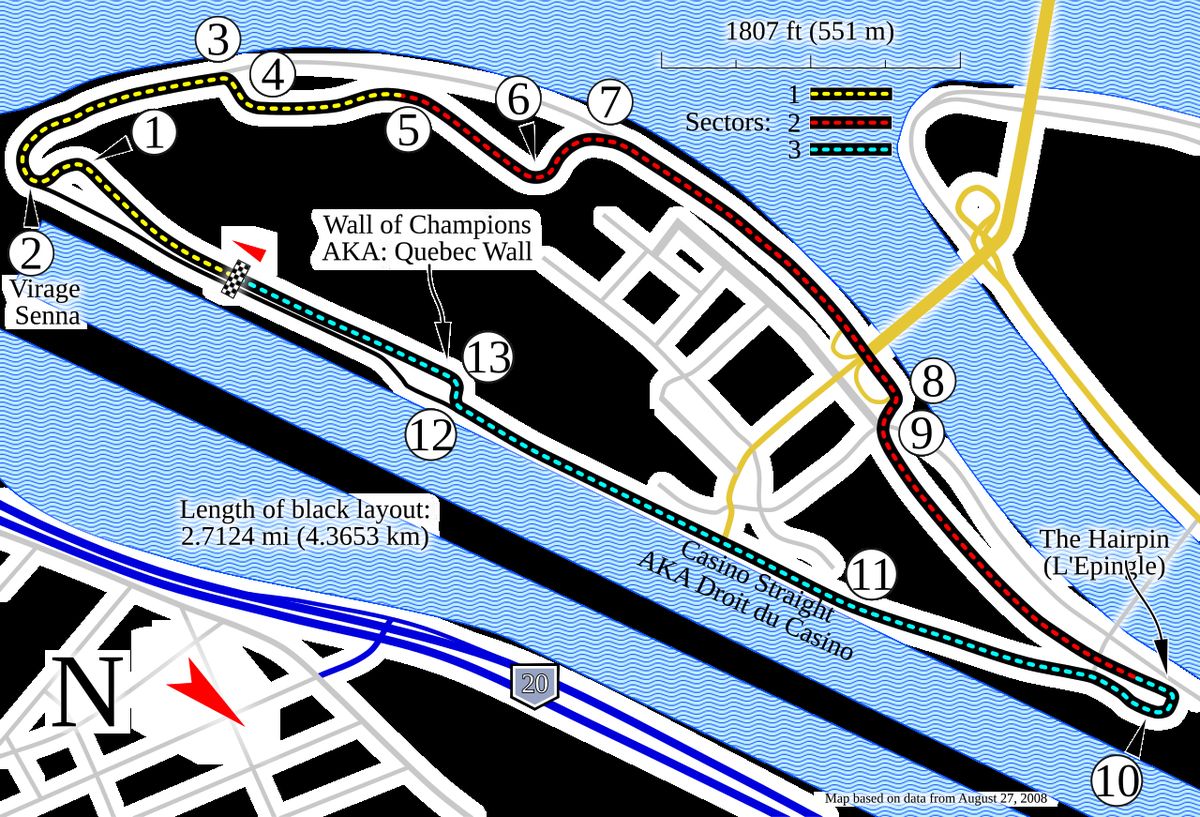
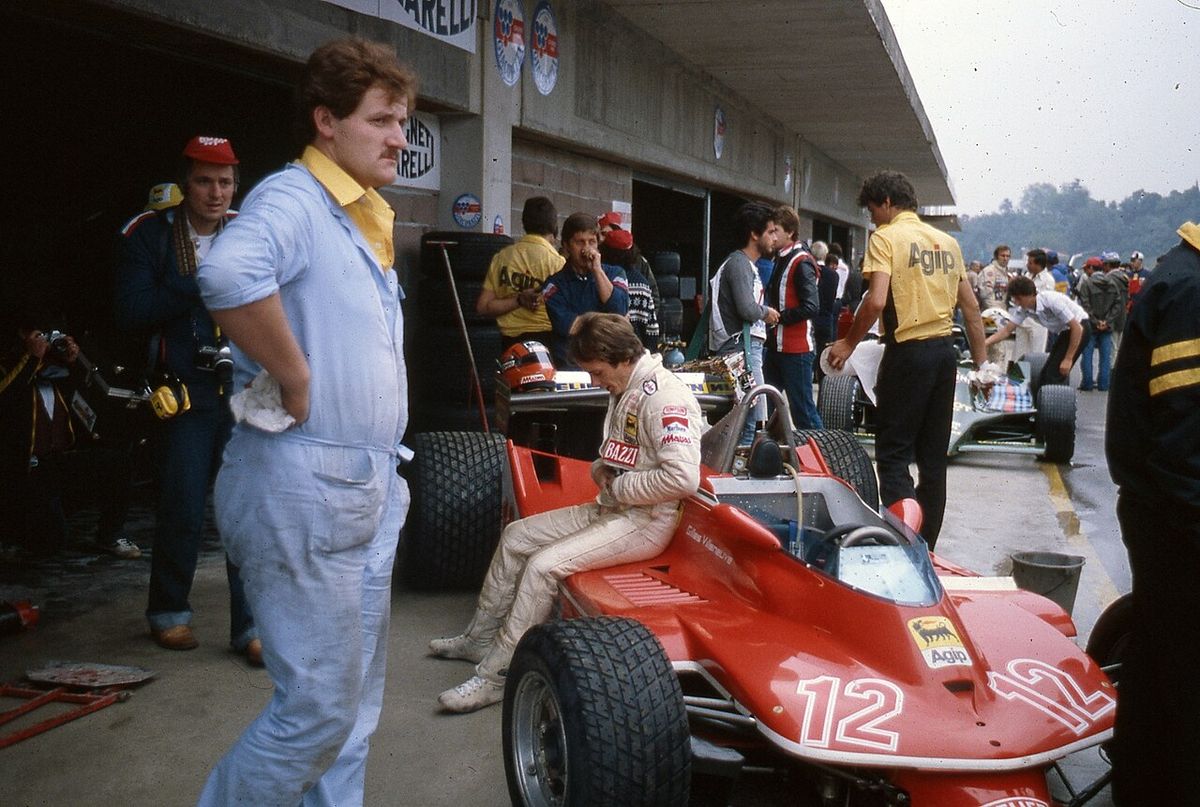
The 1978 season saw a succession of retirements for Villeneuve, often linked to problems adapting to the new Michelin radial tyres on the Ferrari 312T3. He started on the front row at the United States Grand Prix West in Long Beach but crashed out of the lead on lap 39, leading to calls in the Italian press for his replacement, which Ferrari resisted. His results improved late in the year. He finished second on the road at the Italian Grand Prix but was penalized a minute for jumping the start, and he ran second at the United States Grand Prix before an engine failure. His breakthrough came at the final race, the Canadian Grand Prix, now held at the new Circuit Île Notre-Dame in Montreal, where he took his first Grand Prix win after Jean-Pierre Jarier's Lotus retired with engine trouble.
Paired with Jody Scheckter in 1979, Villeneuve won three races during the year at Long Beach, Kyalami, and Watkins Glen, briefly leading the championship after the first two victories. The season is famously remembered for his intense duel with Renault's René Arnoux for second place in the final laps of the French Grand Prix at Dijon. Arnoux passed him with three laps to go, Villeneuve repassed on the next lap, and on the final lap they ran side by side, making contact several times before Villeneuve secured the position. Villeneuve commented afterwards, 'I tell you, that was really fun! I thought for sure we were going to get on our heads, you know, because when you start interlocking wheels it's very easy for one car to climb over another.'
Villeneuve's commitment was further demonstrated at the Dutch Grand Prix when a slow puncture collapsed his left rear tyre. He limped back to the pits on three wheels, losing the damaged wheel en route, and insisted the team replace it before being persuaded the car was beyond repair. He might have won the World Championship by ignoring team orders to beat Scheckter at the Italian Grand Prix but chose to finish behind him, ending his own challenge. The pair finished first and second in the championship, with Scheckter beating Villeneuve by just four points. During a wet practice for the United States Grand Prix, Villeneuve set a time reported to be nine or eleven seconds faster than any other driver, leaving Scheckter in awe of what he considered an impossible lap.
Technical Struggles and Final Victories
The 1980 season was a severe downturn for Ferrari with the uncompetitive 312T5 car, which had only partial ground effects. Villeneuve, who had been considered a favourite for the title by British bookmakers before the season, scored only six points in the entire campaign. His teammate Jody Scheckter managed only two points before retiring at the end of the year, marking a low point for the team. For 1981, Ferrari introduced its first turbocharged car, the 126C, which produced tremendous power but was let down by poor handling and massive throttle lag, according to later Ferrari designer Harvey Postlethwaite.
Villeneuve was partnered with Didier Pironi, who noted that Villeneuve 'had a little family [at Ferrari] but he made me welcome and made me feel at home overnight.' Despite the car's deficiencies, Villeneuve won two races that highlighted his extraordinary car control. He won the Monaco Grand Prix and then produced a legendary defensive drive at the Spanish Grand Prix at the tight Jarama circuit. He kept five quicker cars behind him for the entire race, using his car's superior straight-line speed, and won by just 0.22 seconds over Jacques Laffite after an hour and 46 minutes of racing. Postlethwaite later stated, 'In terms of sheer ability I think Gilles was on a different plane to the other drivers. To win those races... on tight circuits was quite out of this world. I know how bad that car was.'
At the 1981 Canadian Grand Prix, Villeneuve damaged his front wing and drove most of the rain-soaked race with it obscuring his view, risking disqualification until it detached, allowing him to finish third with the nose section missing. He rejected an offer from McLaren's Ron Dennis to rejoin the team for 1982, preferring to stay with Ferrari, which was optimistic about its new 126C2 car. The 1982 season began with Villeneuve leading in Brazil before spinning out and finishing third at Long Beach before being disqualified for a technical infringement related to the car's skid blocks. Villeneuve's key race results and statistics with Ferrari are detailed in the table below.
| Season | Car | Wins | Podiums | Pole Positions | Fastest Laps | Championship Points |
|---|---|---|---|---|---|---|
| 1980 | 312T5 | 0 | 0 | 0 | 0 | 6 |
| 1982 | 126C2 | 0 | 1 | 1 | 2 | 6 |
San Marino Controversy and Fatal Accident
The 1982 San Marino Grand Prix at Imola became a defining and tragic moment in Villeneuve's career. A boycott by FOCA teams over the FISA-FOCA war left Ferrari and Renault as the main contenders. After both Renaults retired, Ferrari issued team orders for Villeneuve and Didier Pironi to slow down and conserve fuel to ensure a finish. Villeneuve believed the order meant holding positions, but Pironi passed him on the final lap after earlier exchanges to take the victory. Villeneuve was irate, stating after the race, 'I think it is well known that if I want someone to stay behind me and I am faster, then he stays behind me.' He vowed never to speak to Pironi again, feeling deeply betrayed.
In 2007, former Ferrari sponsor executive John Hogan disputed the narrative, suggesting Villeneuve was stunned that Pironi had out-driven him and that neither driver would have agreed to throw a race. A comparison of lap times showed Villeneuve lapped far slower when in the lead, indicating he was likely saving fuel as instructed. This controversy set the stage for the next race in Belgium. On 8 May 1982, during the final qualifying session for the Belgian Grand Prix at Zolder, Villeneuve died after a collision. He was on track after Pironi had set a time one-tenth of a second faster for sixth place, and some reports suggest he was attempting to beat that time on his final set of qualifying tyres, though his engineer stated he was returning to the pits.
With eight minutes left in the session, Villeneuve crested a rise after the first chicane and caught the slower car of Jochen Mass through the Butte corner. Mass moved right to let him pass on the racing line at the same instant Villeneuve also moved right to pass. The Ferrari hit the back of Mass's car and was launched into the air at 200 to 225 km/h. The car travelled over 100 metres before nosediving into the ground and breaking apart as it somersaulted. Villeneuve, still strapped in his seat but without his helmet, was thrown a further 50 metres into the catch fencing on the outside of the Terlamenbocht corner. Drivers John Watson and Derek Warwick pulled him from the fence. He was not breathing but had a pulse. A doctor arrived within 35 seconds, intubated and ventilated him, and transferred him to the medical centre where he was pronounced dead from a fatal neck injury.
Legacy, Honours and Memorials
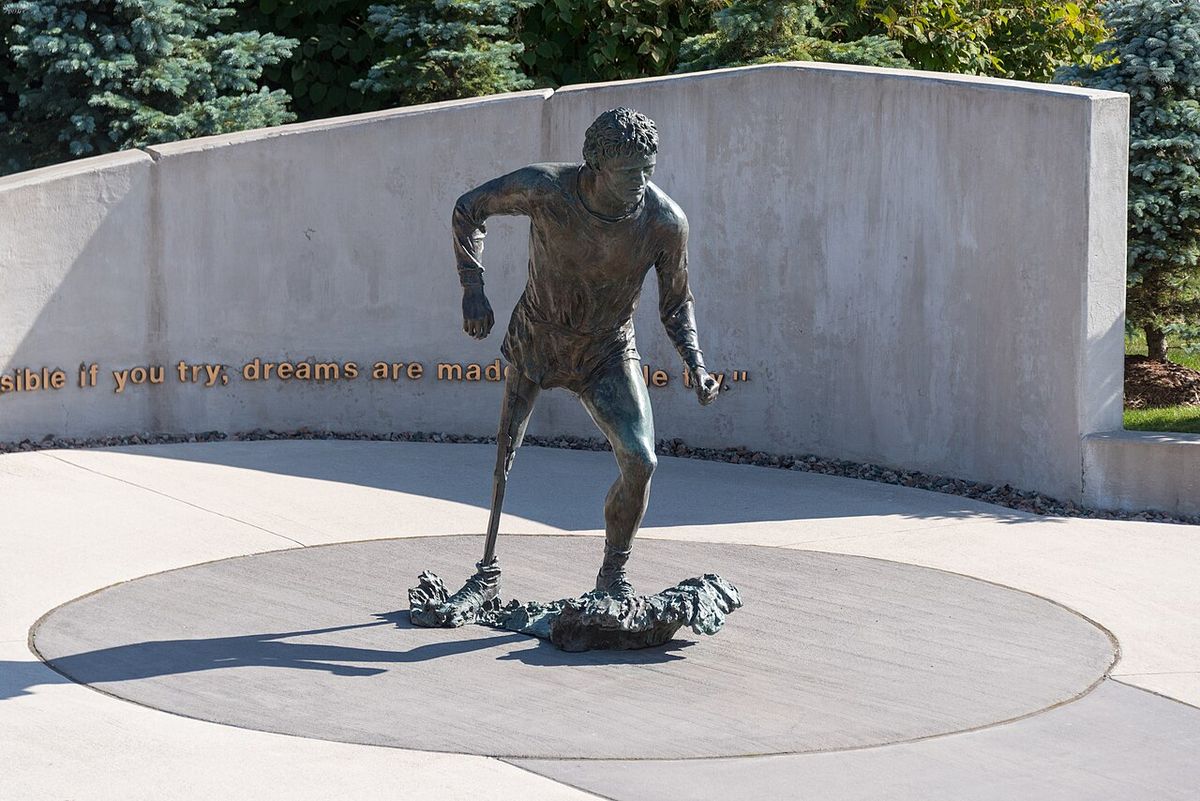
Gilles Villeneuve's death sent shockwaves through the global motorsport community and cemented his status as a legendary figure in Canada and beyond. His aggressive, spectacular driving style and total commitment made him a favourite among fans and fellow competitors. In immediate tribute, the Circuit Île Notre-Dame in Montreal, where he had won his first Grand Prix in 1978, was renamed the Circuit Gilles Villeneuve, a permanent memorial that continues to host the Canadian Grand Prix. His legacy continued directly through his son, Jacques Villeneuve, who won the Indianapolis 500 and CART championship in 1995 before becoming Formula One World Champion in 1997 with Williams, fulfilling a championship dream his father had pursued.
Villeneuve's career achievements and impact have been formally recognized through several major honours and awards in Canada. He was inducted into the Canadian Motorsport Hall of Fame and Canada's Sports Hall of Fame for his contributions to sport. In 1978, he was named Quebec Athlete of the Year and also received the Lou Marsh Trophy as Canada's top athlete overall, a rare distinction for a racing driver. Canada Post honoured him with a postage stamp in 1997, and he has been the subject of numerous biographies and documentary films that explore his life and career. His six Grand Prix victories, all with Ferrari, stand as a record of his skill, particularly given the technical challenges of the cars he drove in 1980 and 1981. The memory of his famous duel with Arnoux at Dijon and his masterful defence at Jarama continue to be celebrated as defining moments in Formula One history. Within the sport, he is remembered not just for his speed but for an approach that combined raw bravery with a palpable joy for racing. Villeneuve's honours and memorials include the following formal recognitions.
- Inducted into the Canadian Motorsport Hall of Fame.
- Inducted into Canada's Sports Hall of Fame.
- Named Quebec Athlete of the Year in 1978.
- Awarded the Lou Marsh Trophy as Canada's top athlete in 1978.
- Honoured with a postage stamp by Canada Post in 1997.
- The Circuit Gilles Villeneuve in Montreal named in his memory in 1982.
- Subject of major biographies by Gerald Donaldson and others.
Villeneuve is an inductee of the Canadian Motorsport Hall of Fame and Canada's Sports Hall of Fame. The Circuit Île Notre-Dame in Montreal was renamed the Circuit Gilles Villeneuve upon his death. His son, Jacques, became the first World Drivers' Champion from Canada in 1997. Villeneuve's story continues to inspire fans and drivers in his home province of Quebec and across Canada.
Questions about Gilles Villeneuve
How did Gilles Villeneuve die?
Villeneuve died on 8 May 1982 from injuries sustained in a crash during qualifying for the Belgian Grand Prix at the Zolder circuit. His Ferrari collided with the slower car of Jochen Mass, became airborne, and disintegrated upon impact. Villeneuve was thrown from the wreckage and suffered a fatal neck injury. He was pronounced dead at the circuit's medical centre.
What was the famous duel between Gilles Villeneuve and René Arnoux?
The famous duel occurred at the 1979 French Grand Prix at the Dijon-Prenois circuit. In the final laps, Villeneuve and Renault driver René Arnoux battled fiercely for second place, trading positions multiple times while making wheel-to-wheel contact. Arnoux passed Villeneuve with three laps to go, but Villeneuve repassed him. On the final lap, they ran side-by-side through several corners before Villeneuve ultimately secured second place. The battle is remembered as one of the greatest displays of hard but fair racing in Formula One history.
What team did Gilles Villeneuve drive for in Formula One?
Gilles Villeneuve drove for two teams in Formula One. He made his debut with McLaren at the 1977 British Grand Prix, competing in one race for them. He then drove exclusively for Scuderia Ferrari from the final two races of 1977 until his death in 1982. It was with Ferrari that he achieved all his successes, including his six wins and his runner-up finish in the 1979 World Championship.
How many Formula One races did Gilles Villeneuve win?
Gilles Villeneuve won six Grands Prix in his Formula One career. These victories occurred across six seasons, all while driving for the Ferrari team. His first win came at the 1978 Canadian Grand Prix on the circuit that would later bear his name. He secured three more wins during the 1979 season, finishing as runner up in the championship. His final two victories were back to back wins at Monaco and Spain in 1981, where his defensive driving at Jarama was particularly acclaimed.
Was Gilles Villeneuve related to Jacques Villeneuve?
Yes, Jacques Villeneuve is the son of Gilles Villeneuve. Gilles had two children, Jacques and Mélanie, with his wife Joann Barthe. Jacques emulated his father's success in motorsport, first winning the Indianapolis 500 and the CART championship in 1995. He then progressed to Formula One, where he became the World Drivers' Champion in 1997, securing the title as the first Canadian to do so. Both Gilles and Jacques are inductees of the Canadian Motorsport Hall of Fame.
Which circuit is named after Gilles Villeneuve?
The circuit named after Gilles Villeneuve is the Circuit Gilles Villeneuve in Montreal. Originally called Circuit Île Notre Dame, it was renamed following his death in 1982. This circuit has been the home of the Canadian Grand Prix since Villeneuve's historic victory there in 1978, a race where he became the first and only Canadian to win his home Grand Prix. The renaming serves as a permanent tribute to his legacy in the sport.
Sources and further reading
- Gilles Villeneuve (Wikipedia)
- Gilles Villeneuve, 'a symbol of Quebec passion' (montrealgazette.com)
- Circuit Gilles-Villeneuve (parcjeandrapeau.com)
- Villeneuve, Gilles, Répertoire du patrimoine culturel du Québec (patrimoine-culturel.gouv.qc.ca)
- Gilles Villeneuve Races, Wins and Teams | F1 Driver (formulaonehistory.com)
Checked by the Garbutt Disposal desk. Last updated 2026-10-22.