Jacques Villeneuve
Jacques Villeneuve is a Canadian former professional racing driver who won the Formula One World Drivers' Championship in 1997, becoming Canada's first and only driver to achieve that honour. His career is distinguished by success on both sides of the Atlantic, having also won the 1995 CART IndyCar World Series and the Indianapolis 500 that same year. Villeneuve competed at the highest level of motorsport for over a decade, earning 11 Formula One Grand Prix victories and establishing himself as one of Canada's most celebrated international athletes. His achievements have been recognized with inductions into multiple halls of fame and the awarding of the Lou Marsh Trophy as Canada's top athlete on two occasions.
Early Life and Family
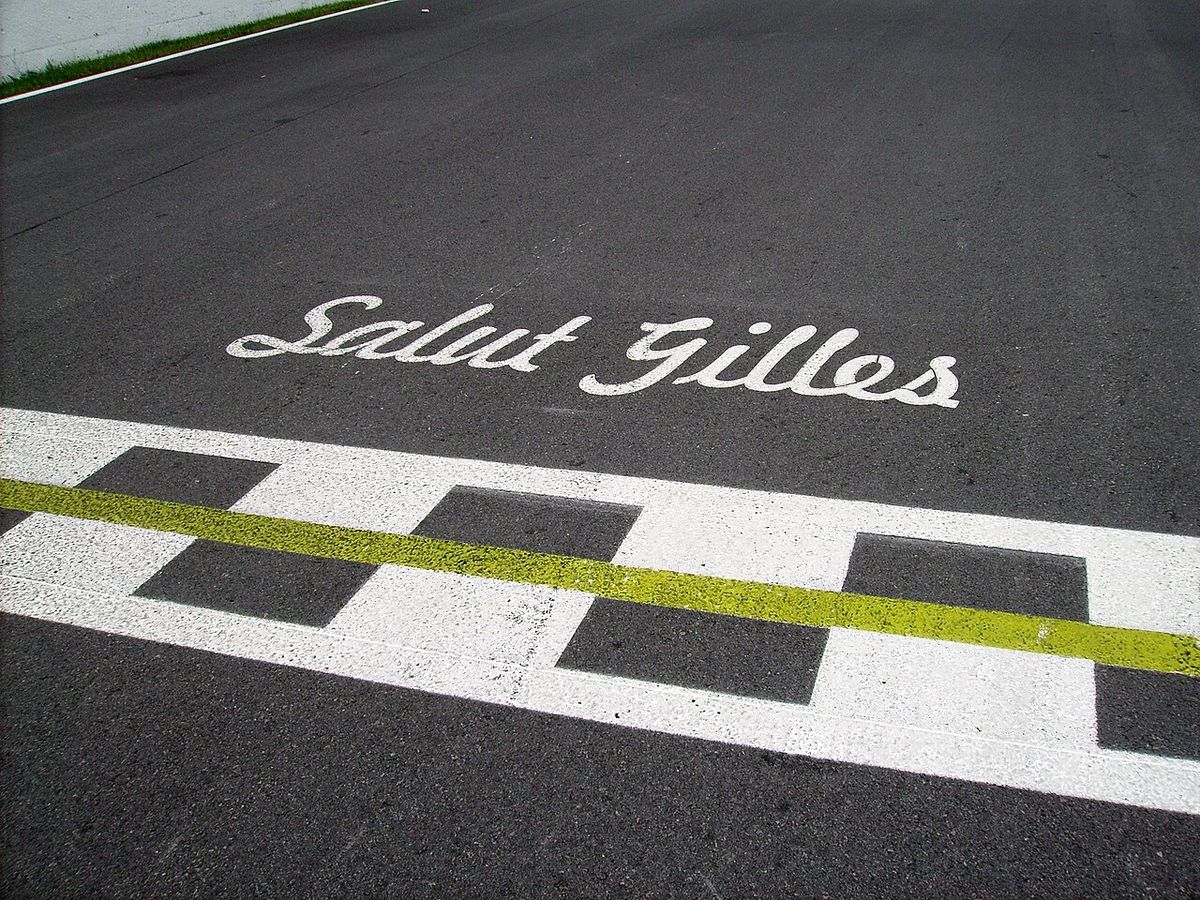
Jacques Villeneuve was born on 9 April 1971 in Saint-Jean-sur-Richelieu, Quebec, into a family deeply involved in motorsport. He is the son of the celebrated Ferrari Formula One driver Gilles Villeneuve and Joann Barthe. The family, which includes his sister Melanie and half-sister Jessica, was immersed in the racing world from his earliest days. His uncle, Jacques Sr., for whom he was named, was also a racing driver, further connecting the sport to his life. In 1978, when Jacques was seven years old, the family relocated from Berthierville, Quebec, to Monaco to be closer to the headquarters of the Ferrari team for which his father raced.
Villeneuve's childhood was affected by the death of his father in a crash during qualifying for the 1982 Belgian Grand Prix at Circuit Zolder with Jochen Mass. The tragedy initially made him less interested in motor racing, fearing the sport's dangers. On the advice of driver Patrick Tambay, his mother sent him to the French-speaking Swiss private boarding Collège Alpin International Beau Soleil, which he attended from ages twelve to seventeen. During his schooling, he demonstrated athletic skill in skiing and also tried activities like BASE jumping, ice hockey, motocross and water skiing. His formal education concluded by mutual agreement between his mother and the school owners when he was seventeen, as his focus turned more toward racing.
Early Racing Career and Development
Villeneuve's interest in driving was clear from a young age, and he began go-karting in Canada with his uncle several times. After his father's death, his mother agreed to support his racing ambitions on the condition he improved his academic performance, particularly in mathematics, one of his weakest subjects. His professional path began in early September 1985 when, at age 14, he was invited by a SAGIS employee to race a 100 cc go-kart at Italy's Imola Circuit. He impressed the track owners so much they let him test a 135 cc kart and then a Formula 4 car. In July 1986, his uncle enrolled him in the Jim Russell Racing Driver School in Mont Tremblant, where he passed a three-day course driving a Formula Ford 1600 car from Van Diemen.
In mid-1987, Villeneuve left his family to attend the Spenard-David Racing School in Shannonville, Ontario to hone his abilities under instructor Richard Spenard. He did not have the money to pay for the course and his mother would not fund it, so he worked in a mechanics' training programme allowing students to learn racing in return for garage painting. Aged seventeen, Villeneuve was invited to make his car racing debut in the Italian Touring Car Championship, driving a Salerno Course-entered Group N Alfa Romeo 33 car for three rounds of the 1988 season. The Canadian and Italian authorities would not grant him a licence since he was a year younger than their minimum age requirement, so he obtained an international racing licence in Andorra with Canadian Automobile Sport Clubs aid. He performed poorly in each of the three rounds.
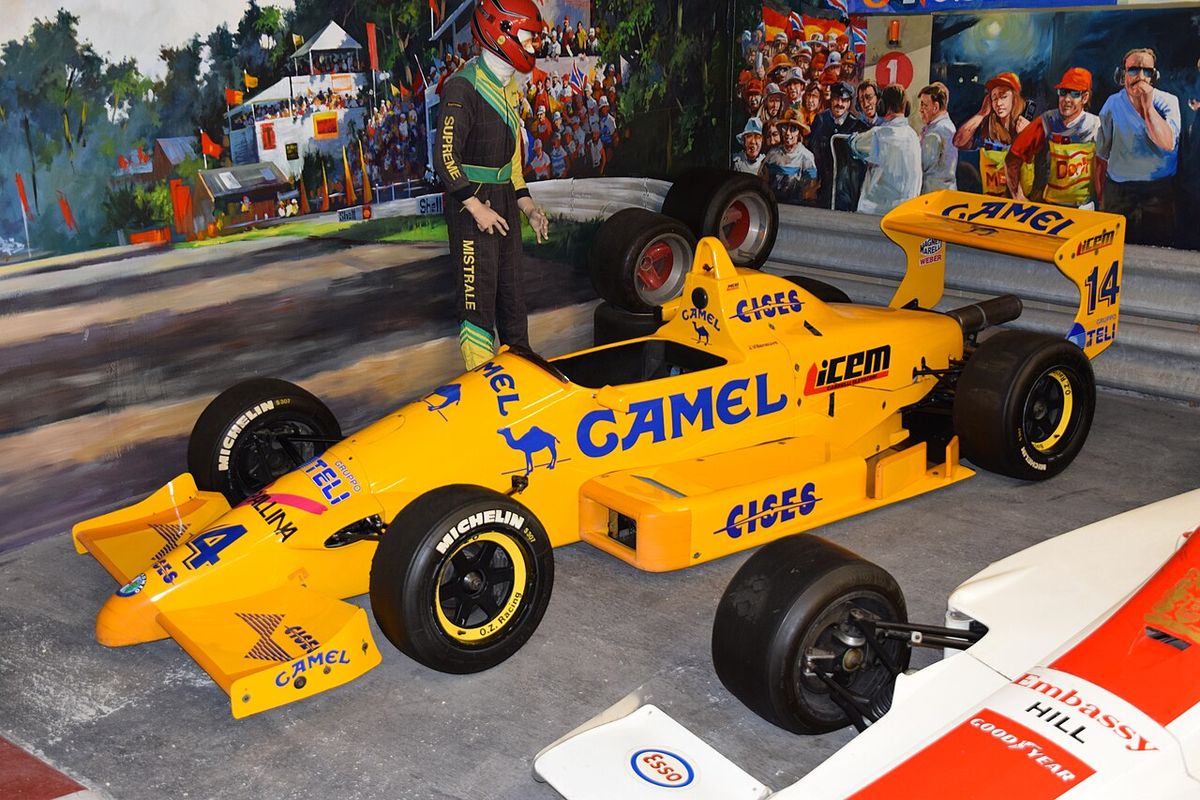
Villeneuve then signed a three-year contract to drive a Reynard-Alfa Romeo car for Prema in the Italian Formula Three Championship, a deal aided by the squad obtaining sponsorship from the Camel cigarette company. Initially struggling to drive a Formula 3 car, he enrolled at the Magione Driving School and under Henry Morrogh's direction, he gradually developed his character and driving technique. In the 1990 season, he qualified for each of the twelve rounds and scored ten points for 14th in the Drivers' Championship. Considered a title favourite for 1991, a late-season switch to the Ralt RT35 chassis failed to improve his performance, but he still finished sixth overall with twenty points and three podiums.
Transition to Japan and Atlantic Championship
Dissatisfied with his management in 1991, Villeneuve asked former Beausoleil sports administrator and motor racing promoter Craig Pollock to take over his management three times. For the 1992 season, he wanted to compete in Formula 3000 in Europe with Prema, but did not have the funding. Following advice from Patrick Tambay, Villeneuve accepted an offer to relocate to Japan and drive a Toyota 032F car for the TOM'S squad in the Japanese Formula 3 Championship. He felt the Japanese series was almost as good as the Italian one, and he was the only driver to receive works support from TOM'S, also receiving driver training. He won three races and finished no lower than sixth nine times, earning second in the Drivers' Championship with 45 points. People in the racing world observed that ten years after his father's death, Villeneuve was becoming a well-known racer.
In August 1992, Pollock negotiated a contract for Villeneuve to enter the Formula Atlantic street event at Trois-Rivières in the 1992 Atlantic Championship. He finished third in the No. 49 Swift DB4-Toyota car lent by the ComPred team. Four months later, he accepted an invite to share a TOM'S-entered Toyota TS010 car with Eddie Irvine and Tom Kristensen at the final round of the 1992 All Japan Sports Prototype Car Endurance Championship at Mine Circuit, finishing fourth. He also finished fourth at the Macau Grand Prix for TOM'S that year. In Trois-Rivières, Villeneuve met crew chief Barry Green who wanted a driver for his new Forsythe-Green Racing squad. In November 1992, he accepted a three-year contract from Green with personal sponsorship from sports marketing arm Player's.
He raced the 1993 Atlantic Championship which featured more powerful cars with more grip and downforce to become better acquainted with American open-wheel racing before progressing to CART in 1994. Villeneuve built a close working relationship with aerodynamicist Tony Cicale. Driving the No. 10 Ralt RT40-Toyota car, Villeneuve won five races and finished in the top three four times for third overall and 185 points after a season-long duel with David Empringham and teammate Claude Bourbonnais. He was named the series' Rookie of the Year, and ended 1993 retiring from the Macau Grand Prix driving a March Racing Ralt 93C-Fiat car.
CART IndyCar Success and Indianapolis 500 Victory
Jacques Villeneuve's graduation to the top tier of American open-wheel racing came with the Forsythe-Green Racing team in the 1994 CART season, driving the No. 12 Reynard 94I-Ford XB vehicle after Green obtained sponsorship. He debuted at the season-opening Australian FAI Indycar Grand Prix at Surfers Paradise Street Circuit, starting eighth and finishing 17th after colliding with Stefan Johansson. In the next round, the Slick 50 200 at Phoenix International Raceway, he was involved in a five-car accident which saw him sustain a side collision with Hiro Matsushita before being struck by Dominic Dobson. Qualifying fourth for his first Indianapolis 500, Villeneuve finished second, earning Indianapolis 500 Rookie of the Year honours as the highest-finishing rookie.
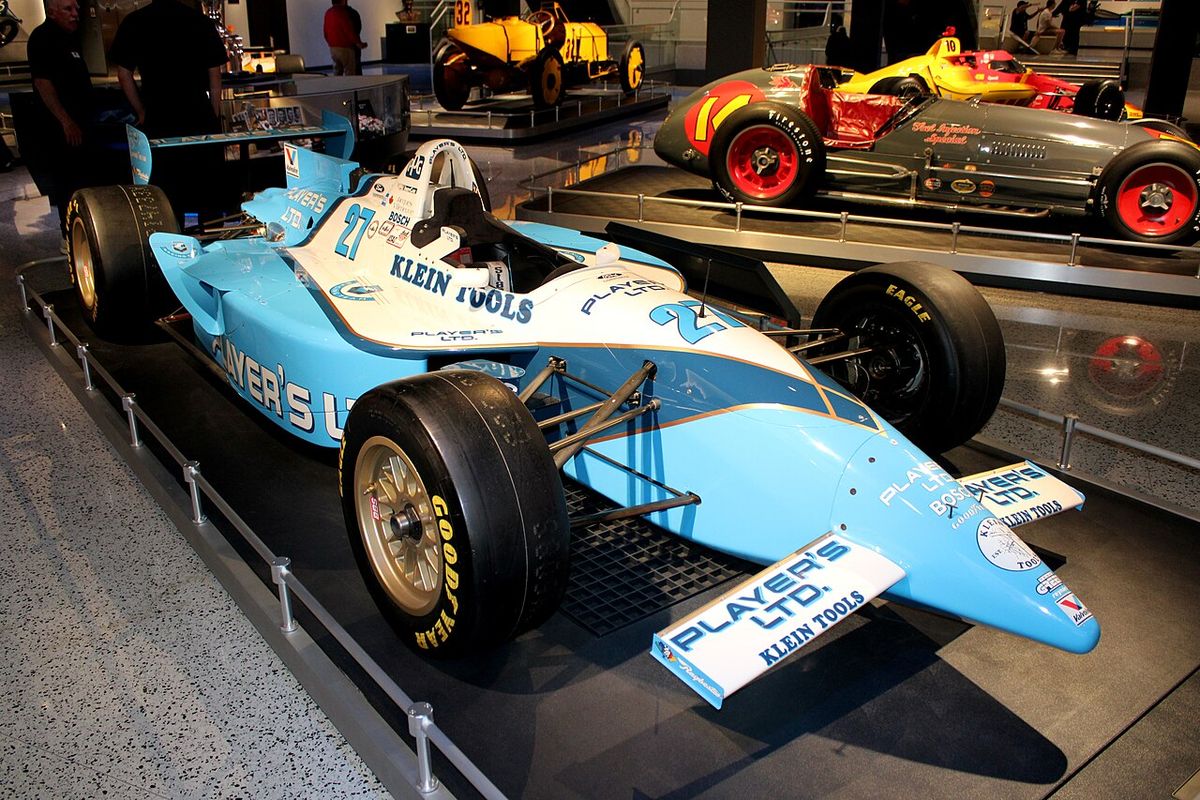
Villeneuve finished ninth or higher in six of the next nine rounds, before beating Al Unser Jr. and Emerson Fittipaldi in the close finish to the Texaco/Havoline 200 at Road America road course in his first CART victory. He placed seventh and third in the final two rounds ending the year with CART Rookie of the Year honours and was sixth in the Drivers' Championship with 94 points. Before the 1995 season, Villeneuve rejected offers from fellow CART teams and some Formula One squads and remained at the renamed Team Green driving the renumbered No. 27 Reynard 95I-Ford XB. He and his team were concerned, as their car had been unreliable and under-performed in pre-season testing.
He won the season-opening Marlboro Grand Prix of Miami after starting eighth, but he only finished two of the next four races. His season highlight was the Indianapolis 500. Though Villeneuve was penalised two laps for overtaking the pace car, he re-took the lead after fellow Canadian Scott Goodyear failed to serve a ten-second stop-and-go penalty for also passing the pace car. Winning just his second Indianapolis 500 start, Villeneuve took the Drivers' Championship lead. Villeneuve went on to win both the Texaco/Havoline 200 at Road America and the Grand Prix of Cleveland, also scoring points in all but one of the remaining rounds to clinch the title at the final race in Laguna Seca. He won the championship with 172 points, four victories and six pole positions.
| Season | Team | Wins | Poles | Championship Position | Points |
|---|---|---|---|---|---|
| 1994 | Forsythe-Green Racing | 1 | 0 | 6th | 94 |
| 1995 | Team Green | 4 | 6 | 1st | 172 |
Formula One World Championship with Williams
In early 1995, the Williams F1 team and engine supplier Renault became interested in Villeneuve replacing the outgoing David Coulthard. Bernie Ecclestone, F1's commercial rights holder, saw this as an opportunity to lure Villeneuve from CART even though Team Green wanted him to remain in America. Technical director Patrick Head and team principal Frank Williams gave Villeneuve a test in a FW17 car at Britain's Silverstone Circuit in August 1995, where he lapped two seconds slower than driver Damon Hill. Negotiations led to Villeneuve signing a contract for 1996 and 1997 with the option for the 1998 season. He was sent by Frank Williams to cover 6,000 miles in testing during the six-month pre-season period and also prepared by learning the circuits on a simulation computer game.
Villeneuve drove the docile FW18 car equipped with a powerful, reliable Renault engine and a better gearbox for the 1996 season. He built up a rapport with his race engineer Jock Clear and learnt from his teammate Hill. Although not considered a title favourite by the media, he contended for the World Drivers' Championship with Hill but never led the standings. Villeneuve's debut at the season-opening Australian Grand Prix saw him become the third driver ever to claim pole position on his first start, and despite an oil leak, he finished second. He beat Ferrari's Michael Schumacher in the European Grand Prix three races later for his maiden F1 victory. Villeneuve scored points in eight of the next eleven events and won the British Grand Prix, the Hungarian Grand Prix and the Portuguese Grand Prix.
Entering the season-ending Japanese Grand Prix, he had nine fewer points than Hill, requiring him to win the event and for Hill to score no points to claim the title. However, Villeneuve's right-rear tyre came off his car, forcing him to retire from the race. He finished runner-up to Hill in the drivers' standings with 78 points in his maiden season. Villeneuve was the first rookie to achieve four Grand Prix victories in his debut year and the first to finish runner-up overall, and he also won the Hawthorn Memorial Trophy for 1996. Before the 1997 season, Williams did not re-sign Hill who moved to the Arrows team, resulting in Villeneuve's promotion to lead driver paired with Heinz-Harald Frentzen.
He and Schumacher vied for that year's World Drivers' Championship and variously shared the title lead. Villeneuve trained extensively and drove an aerodynamically efficient and powerful FW19 car designed around him. He won seven Grands Prix and qualified on pole position eight times in the first fourteen races. At the season's penultimate race, the Japanese Grand Prix, he had a chance to win the championship but was banned for overtaking under yellow flag conditions twice during practice. He was allowed to race under appeal but was disqualified from fifth when the appeal was rejected. Before the season-ending European Grand Prix, Villeneuve had 77 points, one fewer than Schumacher.
During qualifying for the European Grand Prix, Villeneuve, Schumacher and Frentzen all set the exact same lap time, but Villeneuve started from pole position per F1 regulations because he was the first driver to set the time. Villeneuve and Schumacher were involved in a collision that saw Schumacher careen into a gravel trap, giving the title to Villeneuve. Villeneuve became the second driver after Mario Andretti to win the F1 World Championship, the CART title, and the Indianapolis 500. He was also Canada's first F1 World Champion. For the 1998 season, Villeneuve threatened to leave F1 and return to CART if F1 introduced grooved tyres and narrower cars. Though these changes were adopted, he remained at Williams with Frentzen.
Villeneuve's FW20 car had one-year old Mecachrome-branded engines after Renault's withdrawal from F1 after the 1997 season, which transpired to be noncompetitive. He scored points at nine Grands Prix with season-high third-place finishes at the German Grand Prix and the Hungarian Grand Prix. During practice for the Belgian Grand Prix, he lost control of his car in Eau Rouge corner and crashed backwards into the barrier at approximately 170 mph. Villeneuve was unhurt. With 21 points, he finished fifth in the Drivers' Championship.
British American Racing and Later Formula One Years
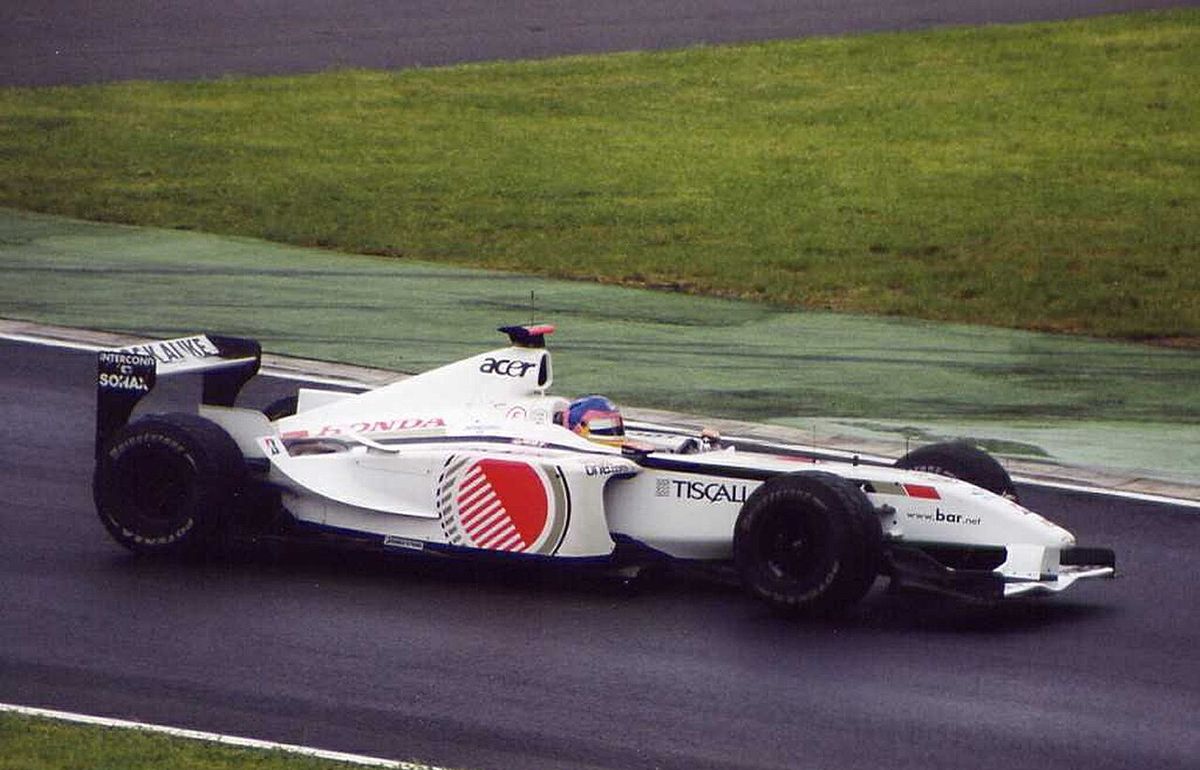
Villeneuve left Williams following the 1998 season. McLaren technical director Adrian Newey, who liked Villeneuve's performance and who Villeneuve respected, offered him employment for the 1999 season, but Villeneuve rejected it. He instead signed a contract to drive with the new British American Racing (BAR) team founded by Pollock and British American Tobacco following their late 1997 purchase of the financially struggling Tyrrell team. Villeneuve joined the team because he sought to emulate Schumacher's style of basing a team around him and employing highly skilled people to get from the bottom of the running order to the top.
Villeneuve was joined at BAR for most of the 1999 season by former McLaren test driver Ricardo Zonta and then by Mika Salo for three Grands Prix. His BAR 01 car was efficient and fast but chronically unreliable. He failed to finish each of the first eleven races due to either mechanical trouble or crashing. Villeneuve was only able to finish four Grands Prix with a best finish of eighth at the Italian Grand Prix. He qualified a season-high fifth at the San Marino Grand Prix and was briefly third in the Spanish Grand Prix two events later before retiring. During qualifying for the Belgian Grand Prix, he suffered a high-speed crash through Eau Rouge corner, which destroyed his car but left him uninjured. He tallied no points towards the Drivers' Championship.
For the 2000 season, Villeneuve's BAR 002 car had a more reliable and powerful works Honda engine, and Zonta was again his teammate. He finished a strong fourth at the season-opening Australian Grand Prix and scored points regularly throughout the year, ending the season seventh in the championship standings. Villeneuve remained with BAR through the 2003 season. His most productive years with the team were 2000 and 2001, where he finished seventh in the championship each year. He achieved two podium finishes in 2001, at the Spanish and German Grands Prix, consistently outperforming teammates Ricardo Zonta and Olivier Panis. He did not achieve any further podium finishes during this period. Villeneuve's final Formula One race was the 2006 German Grand Prix, after which he parted ways with BMW Sauber midway through the season.
- 1999 to 2003: Lead driver for the new British American Racing (BAR) team.
- 2000: Finished seventh in championship with BAR-Honda.
- 2001: Finished seventh again, with podium finishes in Spain (3rd) and Germany (3rd).
Post-Formula One Racing and Legacy
After leaving Formula One, Jacques Villeneuve remained active in motorsport, competing in a wide range of disciplines. He participated in sports car racing, notably winning the 2008 1000 km of Spa driving for the Peugeot factory team. While he did not find the same level of success as in his open-wheel career, his participation demonstrated his lasting passion for racing. Villeneuve also competed in the FIA World Rallycross Championship and made select appearances in other touring car and endurance series.
Villeneuve's legacy as one of Canada's greatest athletes is secured by his unique set of accomplishments. He is a member of the 'Triple Crown Club' of drivers who have won the Indianapolis 500, the CART championship, and the Formula One World Championship, a feat achieved only by himself and Mario Andretti. His contributions have been recognized with numerous national honours. He was voted the winner of the Lou Marsh Trophy as Canada's top athlete in both 1995 and 1997, and similarly won the Lionel Conacher Award for male athlete of the year in those same years. In 1998, he was appointed an Officer of the National Order of Quebec. Villeneuve has been inducted into the Canadian Motor Sports Hall of Fame, Canada's Sports Hall of Fame, and the FIA Hall of Fame, confirming his status as a national sporting figure.
Questions about Jacques Villeneuve
What did Jacques Villeneuve win in 1995?
In 1995, Jacques Villeneuve had a very successful season in American open-wheel racing. He won the CART IndyCar World Series championship driving for Team Green, securing the title with 172 points and four race victories. Most notably, he won the Indianapolis 500, overcoming a two-lap penalty for overtaking the pace car to take the victory after Scott Goodyear also incurred a penalty. This dual achievement made him a major star and earned him the Lou Marsh Trophy as Canada's top athlete for the first time.
How did Jacques Villeneuve win the 1997 Formula One championship?
Jacques Villeneuve won the 1997 Formula One World Drivers' Championship in a dramatic season finale at the European Grand Prix. He entered the race one point behind his rival, Michael Schumacher of Ferrari. During qualifying, Villeneuve, Schumacher and Heinz-Harald Frentzen all set the exact same lap time. During the race, Villeneuve attempted to pass Schumacher, who turned his car into Villeneuve's, resulting in a collision that sent Schumacher into the gravel and out of the race. Villeneuve was able to continue, finishing third and scoring enough points to clinch the title, becoming Canada's first Formula One World Champion.
Is Jacques Villeneuve in the Hall of Fame?
Yes, Jacques Villeneuve has been inducted into multiple halls of fame in recognition of his racing career. He is a member of the Canadian Motor Sports Hall of Fame, which honours achievements in Canadian motorsport. He is also inducted into Canada's Sports Hall of Fame, recognizing his status as a national sporting icon. Internationally, he is a member of the FIA Hall of Fame, which celebrates the greatest figures in global motorsport history.
What did Jacques Villeneuve do after Formula One?
After leaving Formula One in 2006, Jacques Villeneuve continued racing in various series. He found success in sports car racing, winning the 2008 1000 km of Spa for the Peugeot factory team. He participated in the FIA World Rallycross Championship and other touring car and endurance events, maintaining an active presence in global motorsport long after his F1 career ended. He had also tested a Group C Toyota and was mentored by Roland Ratzenberger early in his career.
What is Jacques Villeneuve's connection to Gilles Villeneuve?
Jacques Villeneuve is the son of the late Formula One driver Gilles Villeneuve. Gilles Villeneuve was a Ferrari racer who died in an accident during qualifying for the 1982 Belgian Grand Prix at Circuit Zolder when Jacques was 11 years old. Jacques, born in Saint Jean sur Richelieu, Quebec, followed his father into professional racing. He is also named after his uncle, Jacques Sr., who was also a racing driver. Jacques Villeneuve ultimately became the first Canadian Formula One World Champion, a title his father had pursued.
Sources and further reading
- Jacques Villeneuve (Wikipedia)
- Jacques Villeneuve (formula1.com)
- Jacques Villeneuve (canadaswalkoffame.com)
- Jacques Villeneuve, Keynote Speaker (londonspeakerbureau.com)
- Jacques Villeneuve Races, Wins and Teams | F1 Driver (formulaonehistory.com)
Checked by the Garbutt Disposal desk. Last updated 2026-10-20.