David Pelletier
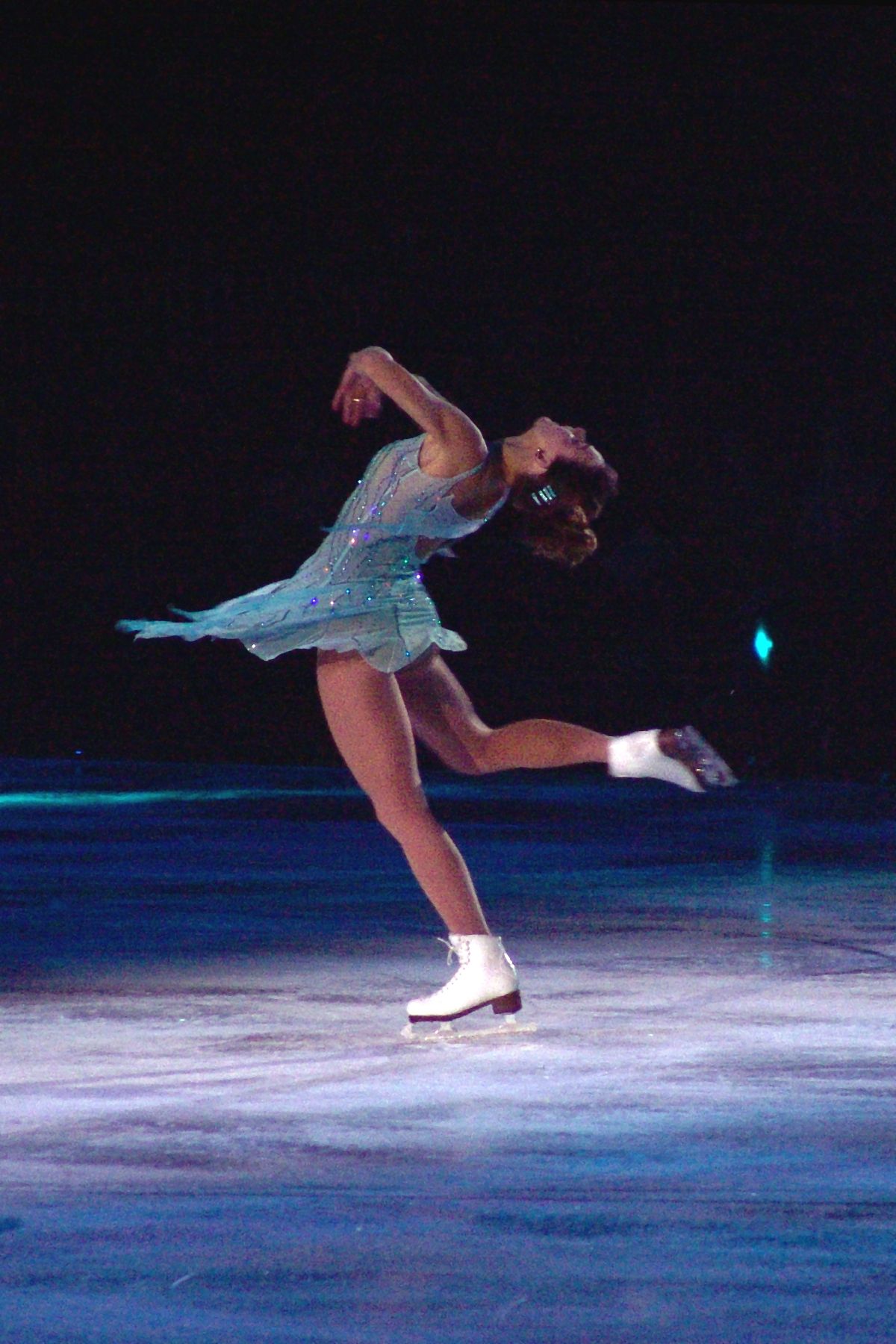
David Jacques Pelletier (born November 22, 1974) is a Canadian pairs figure skater and Olympic champion best known for his partnership with Jamie Salé. Together, they won the gold medal at the 2002 Winter Olympics in Salt Lake City, a victory that came after a major judging scandal and made them Canada's first Olympic figure skating gold medallists in 42 years. Their success, which also included a World Championship title in 2001 and three consecutive national titles, cemented their status as national sporting icons. Following his competitive career, Pelletier transitioned to coaching, first as a power skating specialist working with the Canadian women's hockey team and then with the Edmonton Oilers of the National Hockey League from 2014 to 2025. In July 2025, he was named an assistant coach for the Dallas Stars, applying his elite athletic experience to professional hockey.
Early Career and Formative Partnerships
David Pelletier was born in Sayabec, Quebec, and his introduction to skating came through his mother's condition that he take figure skating lessons if he wanted to play hockey, a sport he loved. His early promise in pairs skating was realized with his first partner, Julie Laporte, with whom he won both the novice and junior titles at the Canadian Figure Skating Championships. The pair also placed 7th at the 1992 World Junior Figure Skating Championships, demonstrating their skill on the international stage. Seeking a change, Pelletier then paired with Allison Gaylor in 1993, training in part with former world champions Isabelle Brasseur and Lloyd Eisler. The duo found their greatest success in 1995, capturing the Canadian silver medal and earning a spot to represent Canada at the World Championships in Birmingham, England, where they placed 15th. That same competitive season, Pelletier also tested his skills as a singles skater, placing a surprising second in the short program at the Canadian championships before struggling in the long program and finishing fourth overall. After two more seasons without a podium finish at nationals, Pelletier and Gaylor split, leading Pelletier to partner with young singles skater Caroline Roy. This partnership was tragically preceded by the death of his former partner, Julie Laporte, in a car accident just before the 1998 Canadian championships. Pelletier and Roy placed 6th at that event and parted ways soon after, leaving Pelletier's competitive future uncertain and prompting him to seek a new direction with the help of his coach.
Formation and Early Success with Jamie Salé
In early 1998, seeking a new direction, Pelletier asked coach Richard Gauthier for help in finding a partner, and Gauthier suggested Jamie Salé, a singles skater from Alberta. Pelletier traveled to Edmonton for a tryout in February 1998, and the connection was immediate, with Pelletier later recalling, "The first time we grabbed hands, it was just great." By the next month, Salé had moved to Montreal to begin training with him full time, committing to the new pairs venture. Their competitive debut came swiftly at the 1998 Skate Canada International, where they made a strong statement by placing second in the short program ahead of the reigning Canadian champions, Kristy Sargeant and Kris Wirtz, and finishing third overall to win the bronze medal. This success earned them an invitation to the NHK Trophy in Japan, where they secured another bronze medal, confirming their potential on the Grand Prix circuit. These results made them favourites for the 1999 Canadian title, but they struggled technically at the national championships and finished second. The silver medal qualified them for both the Four Continents Championships and the World Championships that season, offering a path to greater international experience. However, Pelletier's persistent back pain forced the pair to withdraw from both international events, leading to a necessary two-month break off the ice for recuperation and reflection on their training approach before the next season.
Artistic Development and Ascent to World Champions (1999 to 2001)
For the 1999 to 2000 season, coach Richard Gauthier enlisted renowned Canadian choreographer Lori Nichol to create new programs for Salé and Pelletier. Nichol developed a tango for their short program and, on a suggestion from coach Marijane Stong, set their long program to music from the film Love Story, a piece that would become their signature. The programs debuted with spectacular success at the 1999 Skate America, where they won both segments and defeated the reigning world champions, Russians Elena Berezhnaya and Anton Sikharulidze. They followed this with a second-place finish at the Nations Cup and a fifth-place finish at the Grand Prix Final after errors in both programs. At the 2000 Canadian Championships in Calgary, Salé's hometown, they skated a nearly flawless long program, earning five perfect 6.0 marks for presentation, the first awarded to a pair at the event. They followed this with a gold medal and another 6.0 at the Four Continents Championships in Osaka, Japan. At the 2000 World Championships in Nice, an error in a spin in the short program placed them third, and they ultimately finished fourth overall, leaving room for growth. The following 2000-01 season, Nichol choreographed a jazzy short program to "Come Rain or Come Shine" and a dramatic, mature long program to Wagner's Tristan und Isolde. They won both Skate America (over China's Shen and Zhao) and Skate Canada (over Berezhnaya and Sikharulidze) in the fall, with the Russian pair narrowly defeating them later at Trophée Lalique. At the 2001 World Championships in Vancouver, they entered as heavy favourites. After placing third in the short program due to jump troubles, they won the long program despite Salé singling a side-by-side double axel, securing the world title. This victory made them the first Canadian pair to win Worlds since Brasseur and Eisler in 1993 and the first to win on home soil since Underhill and Martini in 1984. That accomplishment earned them the Lou Marsh Trophy as Canada's athletes of the year for 2001, a recognition of their dominance that season.
The 2002 Olympic Games, Scandal, and Systemic Reform
Salé and Pelletier entered the 2002 Olympic season in Salt Lake City as reigning world champions, carrying the hope of ending a 40-year Russian dominance in Olympic pairs skating and winning Canada's first figure skating gold since 1960. They demonstrated strong early form by winning both Skate America and Skate Canada with a new long program to Rachmaninoff's Adagio Sostenuto, nicknamed "Orchid" for its floral theme, and showing improved technical consistency. They also won the Grand Prix Final in Kitchener, Ontario, an important pre-Olympic test where they defeated their primary rivals, Berezhnaya and Sikharulidze, by skating a flawless performance of their old Love Story program in the second long program. At the Olympics, after the short program, where Salé tripped and fell on their closing pose (an error not on an element and thus not deducted), they were in second place behind the Russian pair. In the long program, the Canadians delivered a clean performance with no obvious mistakes, while Sikharulidze had a minor step-out on a jump before quickly regaining unison. When the scores were announced, the judges split 5-4 in favour of the Russians, awarding them higher presentation scores while the Canadians received higher technical marks. The result sparked an immediate outcry and a media storm, particularly in North America, focusing on the Russian error. The controversy escalated when French judge Marie-Reine Le Gougne alleged she had been pressured by the head of her federation, Didier Gailhaguet, to favour the Russian pair as part of a vote-trading scheme for the ice dance event. An investigation by the International Skating Union and International Olympic Committee followed, leading to Le Gougne's suspension and her vote being discarded. Salé and Pelletier were subsequently awarded gold medals in a second ceremony on February 15, 2002, making them co-champions with Berezhnaya and Sikharulidze. The scandal directly led to a major overhaul of the figure skating judging system, including the introduction of anonymous judging to relieve external pressure and the eventual replacement of the 6.0 system with the ISU Judging System (Code of Points), which was fully adopted for the 2004-05 season and remains in use today.
Professional Skating, Television, and Hall of Fame Recognition
After the 2002 Olympics, having settled in Edmonton, Alberta, Salé and Pelletier turned professional and retired from eligible competition. They toured extensively with the Stars on Ice show across North America and competed in professional events, winning the Sears Canadian Open in 2002 and the World Team Challenge in 2003. In 2011, Pelletier returned to competitive television, partnering with Olympic gold medalist hockey player Tessa Bonhomme on the CBC program Battle of the Blades. The pair won the third season of the show on November 14, 2011, earning a $100,000 prize for their chosen charities, Ronald McDonald House Southern Alberta (Pelletier's choice) and the Canadian Breast Cancer Foundation. Their skating partnership continued in professional shows until they retired from performing together in 2012. Their contributions to Canadian sport have been recognized with multiple hall of fame inductions, celebrating both their competitive achievements and their role in a significant moment for their sport. These honours reflect their lasting impact on figure skating in Canada.
- 2008: Inducted into the Skate Canada Hall of Fame.
- 2009: Inducted into the Canadian Olympic Hall of Fame on March 26.
- 2012: Inducted into Canada's Sports Hall of Fame.
Their legacy was celebrated in a tribute video by Stars on Ice in October 2026. The video highlighted their enduring inspiration for a new generation of skaters. It featured skater Trennt Michaud, who took up pairs skating after watching their 2002 Olympic performance. Their gold medal performance at the 2002 Olympics continues to inspire athletes.
Philosophy and Transition to Professional Hockey Coaching
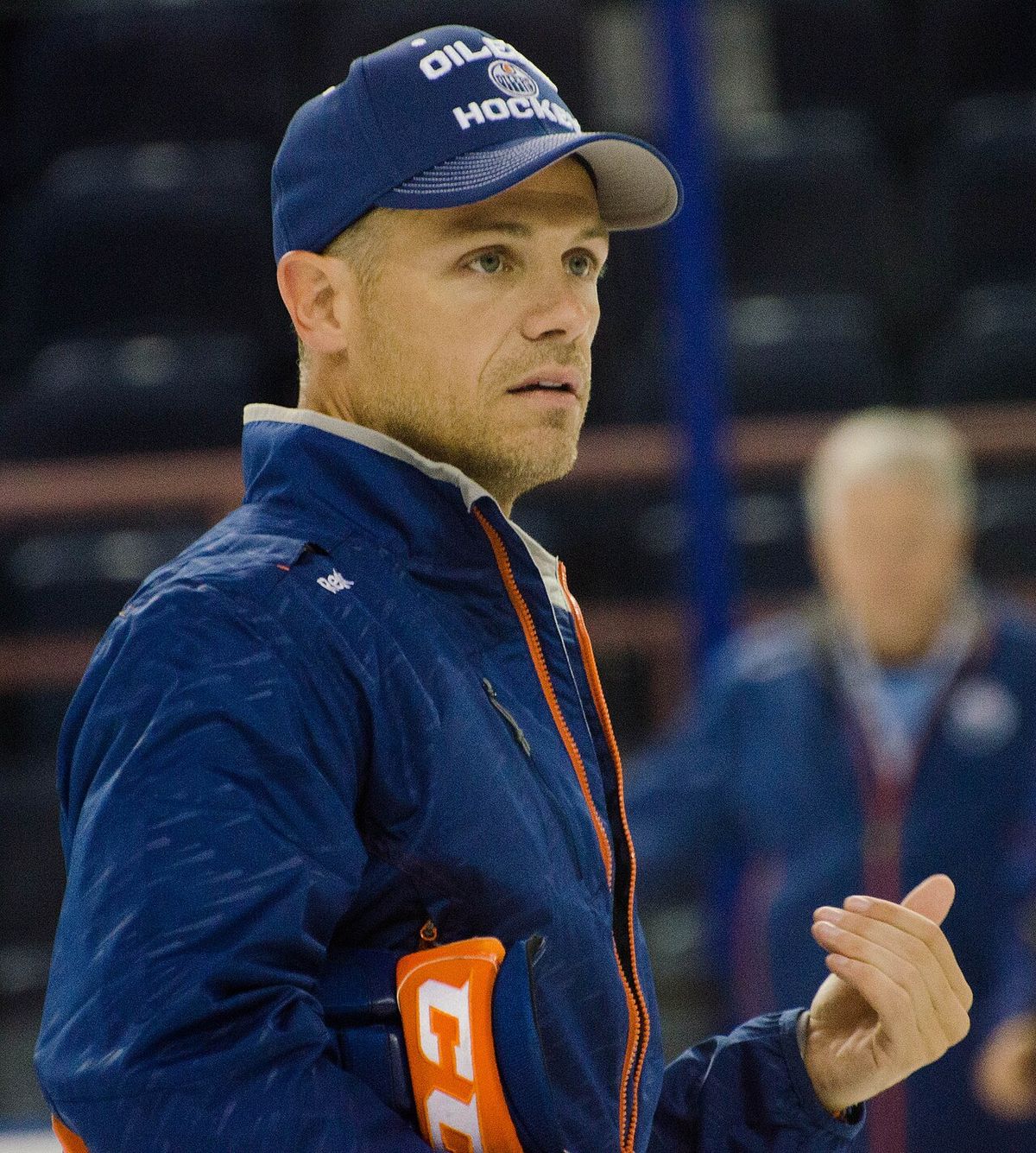
Following his figure skating career, David Pelletier pursued his lifelong passion for hockey by becoming a skating coach, though he prefers to avoid the term "power skating," noting it was a label for a skill set lacking a better name. He worked privately for years with numerous professional and high-level amateur players, including members of the Canadian women's national hockey team, focusing on edge control, balance, and body awareness. His philosophy centres on breaking down skills biomechanically, rebuilding proper movement patterns through repetition of good habits, a process he compares to perfecting a golf swing or baseball pitch. In September 2014, his expertise was formally recognized when he was hired by the Edmonton Oilers of the NHL as a skating coach, a team he had admired since childhood. In this role, he worked extensively with prospects in the American Hockey League, traveling to Oklahoma City and Bakersfield, and with NHL players, focusing on agility, edge work, and creating power from the first few strides. He believes his figure skating strengths in edge control and balance translate directly to hockey, where players must remain powerful and reactive in a contact environment. Pelletier remained with the Oilers organization for ten seasons, through the 2024-25 season, gradually expanding his role under then-head coach Dave Tippett, who valued his champion's mindset and relationship with players. On July 11, 2025, Pelletier was named an assistant coach for the Dallas Stars, reuniting with head coach Glen Gulutzan, whom he had worked with in Edmonton. In this expanded role, Pelletier contributes his unique perspective as a high-performance athlete to player development, game analysis, and daily coaching, operating with a philosophy of discipline and preparation learned from his Olympic journey where victory is earned through year-round commitment.
Personal Life and Family
David Pelletier was first married to ice dancer Marie-Josée Fortin for approximately one year before he began skating with Jamie Salé, which led to the end of that marriage. He proposed to Salé on Christmas Day 2004 in front of their parents, and they were married on December 30, 2005, at the Fairmont Banff Springs hotel in Alberta. In 2006, they served as commentators for the television program Olympic Ice on USA Network during the Winter Olympics in Torino, Italy. Their son was born on September 30, 2007, at the Sturgeon Community Hospital in St. Albert, Alberta. The couple announced their separation in June 2010 after 18 months apart and later divorced, agreeing to share custody of their son. They continued their professional skating partnership amicably until 2012. On July 25, 2020, Pelletier married Russian Olympic figure skating champion Ekaterina Gordeeva. The couple resides in Edmonton, Alberta, where Pelletier has been based since his coaching career began and where he continues to contribute to the sport of hockey at the professional level.
Major Competitive Achievements and Record
The competitive record of David Pelletier, primarily with Jamie Salé, is defined by major titles. Their eligible partnership spanned from 1998 to 2002. They captured three Canadian national titles. They won two Four Continents Championships gold medals. They also won a World Figure Skating Championship in 2001. They were co-gold medal winners at the 2002 Olympic Winter Games.
| Season | Canadian Championships | Four Continents Championships | World Championships | Grand Prix Final | Notable Grand Prix Wins |
|---|---|---|---|---|---|
| 1999 to 2000 | 2nd | 1st (Osaka) | 4th (Nice) | 5th | Gold: Skate America |
| 2000-01 | 1st (Winnipeg) | 1st (Salt Lake City) | 1st (Vancouver) | 1st | Gold: Skate America, Skate Canada |
| 2001-02 | 1st (Hamilton) | Did not compete | Did not compete (post-Oly) | 1st (Kitchener) | Gold: Skate America, Skate Canada |
Their Olympic result for the 2001-02 season was upgraded to a gold medal after a judging scandal. Their professional competitive record includes a win at the Sears Canadian Open in 2002. They also won the World Team Challenge in 2003. They finished in second place at Ice Wars. Earlier, with Julie Laporte, Pelletier won Canadian novice and junior titles. With Allison Gaylor, he won a Canadian senior silver medal in 1995.
Questions about David Pelletier
How did David Pelletier and Jamie Salé meet?
David Pelletier was seeking a new skating partner in early 1998 after previous partnerships ended. His coach, Richard Gauthier, suggested he try out with Jamie Salé, who was then a singles skater. Pelletier traveled to Edmonton in February 1998 for the tryout, and the connection was instant. Pelletier described the moment they first held hands as "just great. Convinced of their potential, Salé moved to Montreal to train with Pelletier just one month later, formally launching their historic partnership.
What was the 2002 Olympic figure skating scandal?
At the 2002 Salt Lake City Olympics, Salé and Pelletier skated a clean long program in the pairs event but were placed second by a narrow 5-4 judges' vote, losing the gold to Russians Elena Berezhnaya and Anton Sikharulidze. The result caused an uproar, particularly in North America. The scandal erupted when French judge Marie-Reine Le Gougne stated she had been pressured by her federation to vote for the Russian pair as part of an alleged vote-trading scheme for the ice dance event. An investigation led to her vote being discarded and her suspension, and the International Olympic Committee awarded a second set of gold medals to Salé and Pelletier, making them co-champions. This controversy directly triggered a complete reform of the figure skating judging system, including anonymous judging and a new Code of Points.
What is David Pelletier doing now in his NHL coaching career?
As of July 2025, David Pelletier is an assistant coach for the Dallas Stars of the National Hockey League. He transitioned to hockey coaching after his skating career, first working as a skating specialist. He was hired by the Edmonton Oilers in September 2014 as a skating coach, a role he held for ten seasons until the end of the 2024-25 campaign, working with NHL players and prospects in the minor leagues. His work focuses on player skill development, leveraging his deep understanding of edge work, balance, and athletic preparation from his career as an Olympic champion. He was hired by Dallas Stars head coach Glen Gulutzan, who valued Pelletier's championship mindset and trusted his contributions.
Did David Pelletier and Jamie Salé stay together after their Olympic win?
No, David Pelletier and Jamie Salé are no longer together. They married in December 2005 and had a son in 2007. After an 18-month separation, they announced plans to divorce in June 2010. Despite the end of their marriage, they maintained a professional relationship and continued to skate together in tours and shows until retiring from performance in 2012. They have shared custody of their son. Pelletier later married Russian figure skater Ekaterina Gordeeva in July 2020, and they live in Edmonton.
What major awards and hall of fame inductions have Salé and Pelletier received?
As a pair, Salé and Pelletier received several of Canada's highest sporting honours. Most notably, they were awarded the Lou Marsh Trophy in 2001 as Canada's athletes of the year following their World Championship victory in Vancouver. They have also been inducted into multiple halls of fame: the Skate Canada Hall of Fame in 2008, the Canadian Olympic Hall of Fame in 2009, and Canada's Sports Hall of Fame in 2012. These inductions recognize not only their competitive achievements, including Olympic and world gold, but also their impact on the sport during a period of significant controversy and change.
How does Pelletier apply his figure skating expertise to coaching hockey players?
Pelletier's coaching philosophy translates core figure skating principles like precise edge control, balance, and body awareness to hockey skating. He focuses on breaking down skating mechanics biomechanically, correcting habits, and rebuilding efficient movement patterns through careful repetition. His work aims to improve a player's agility in small spaces, power generation from the first two or three strides, and stability during contact. He believes the foundational skills of weight distribution and edge mastery are universal to high performance, whether in figure skating or a reactive, contact sport like hockey. He often works by slowing movements down, analyzing the components, and then rebuilding them correctly before increasing speed.
Sources and further reading
- David Pelletier (Wikipedia)
- David Pelletier, Team Canada, Canadian Olympic Committee (olympic.ca)
- David Pelletier excited to put personal experiences ... (nhl.com)
- DÉCOUVREZ LES ATHLÈTES D'ICI : David Pelletier (lafsfa.ca)
- Olympic Gold Medalist David Pelletier Joins Oilers as ... (phpa.com)
Checked by the Garbutt Disposal desk. Last updated 2026-10-27.