Bronko Nagurski
Bronislau "Bronko" Nagurski (November 3, 1908 to January 7, 1990) was a Canadian-born American professional football player and wrestler, widely regarded as one of the most formidable athletes of his generation. Born in Rainy River, Ontario, Nagurski became a two-way star for the University of Minnesota Golden Gophers before launching a celebrated career with the NFL's Chicago Bears, where he helped secure three championships. His legacy in Canada is cemented by his birthright and his son Bronko Jr.'s career in the Canadian Football League, while his name endures through the Bronko Nagurski Trophy, awarded annually to the top defensive player in U.S. college football. A charter member of both the College Football and Pro Football Halls of Fame, Nagurski's combination of size, strength, and versatility made him a defining figure in sports history.
Early Life and Canadian Roots
Bronislau Nagurski was born on November 3, 1908, in Rainy River, Ontario, a small border town. His parents, Mike and Michelina Nagurski, were immigrants from the Galicia region of eastern Europe, of Ukrainian and Polish descent. The family moved across the border to International Falls, Minnesota, when Bronko was five years old. Growing up, Nagurski worked extensively on the family farm and sawmill and delivered groceries for his father's store. His teenage years were spent labouring in nearby timber operations, where the physically demanding work helped develop the powerful, muscular frame that would later define his athletic career. This early life of hard labour on both sides of the Canada-U.S. border forged the exceptional strength and work ethic that propelled him to sporting fame.
Collegiate Stardom at Minnesota
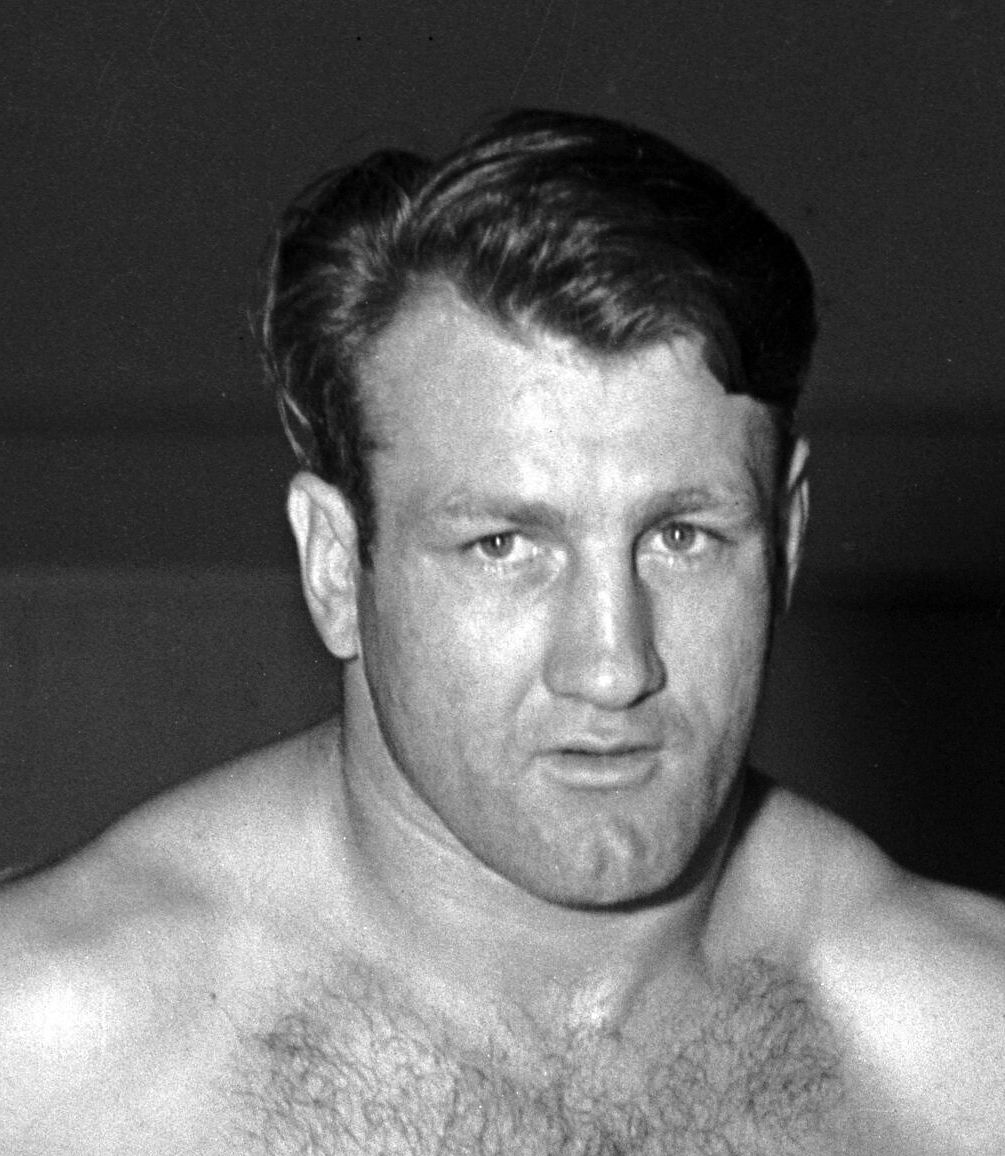
Bronko Nagurski's football journey began when University of Minnesota head coach Clarence Spears discovered him in International Falls. Nagurski enrolled at Minnesota and immediately made an impact, playing for the Golden Gophers from 1927 to 1929. He was a rare two-way player, starting at fullback on offense and tackle on defense. During his three varsity seasons, the Gophers compiled an impressive 18-4-2 record and won the Big Ten Conference championship in 1927. His most celebrated individual season was 1929, when he rushed for 737 yards and was selected as a consensus All-American at fullback. Remarkably, his prowess was so recognized that he was also named to some All-American teams as a tackle, making him the only player in college football history named a first-team consensus All-American at two different positions in the same season. Sportswriter Grantland Rice famously included him at both positions on his 1929 All-America team. Nagurski was inducted into the College Football Hall of Fame in its inaugural year of 1951, and the University of Minnesota retired his No. 72 in 1979.
One of his most legendary collegiate performances came in the 1928 season finale against Wisconsin. Playing with cracked vertebrae protected by a corset, Nagurski recovered a Wisconsin fumble deep in Badger territory. He then carried the ball six consecutive times to score the go-ahead touchdown. Later in the same game, he intercepted a pass to seal the Minnesota victory. This display of toughness and determination became emblematic of his playing style. While at the university, he was also a member of the Sigma Chi fraternity. In 1999, his legacy was further cemented when Sports Illustrated selected him for its NCAA Football All-Century Team as a starting defensive tackle.
Professional Football Career with the Chicago Bears
Nagurski turned professional in 1930, joining the Chicago Bears of the National Football League, where he played primarily as a fullback and defensive tackle until 1937. At 6 feet 2 inches and 235 pounds, he was an enormous and dominant force for his era, often dragging multiple tacklers for extra yards. His professional career statistics, accumulated over eight seasons, included 3,947 rushing yards on 856 attempts, 36 completed passes out of 80 attempts, and 236 total points scored. Nagurski was a key figure in the Bears' success, helping the team win several division titles and two early NFL championships in 1932 and 1933. He was selected as a First-team All-Pro four times (1932, 1933, 1934, 1936) and led the NFL in rushing touchdowns in 1932.
Nagurski's impact extended beyond statistics, as he was involved in significant moments in NFL history. The 1932 season ended with the Bears and Portsmouth Spartans tied for the best record, leading the league to hold its first-ever playoff game indoors at Chicago Stadium. The Bears won 9-0, with Nagurski throwing a controversial touchdown pass to Red Grange. This playoff's popularity directly led to the league's reorganization into two divisions and the establishment of a scheduled championship game for the 1933 season. After retiring in 1937, Nagurski returned to the Bears in 1943 during World War II to help the player-depleted team, initially playing tackle before moving back to fullback. In a crucial game against the Chicago Cardinals, he scored a touchdown to help secure a playoff berth. The Bears went on to win the 1943 NFL Championship, with Nagurski scoring on a three-yard run in the title game against the Washington Redskins. He retired for good after that season, and the Bears honoured him by retiring his No. 3 jersey.
Secondary Career in Professional Wrestling
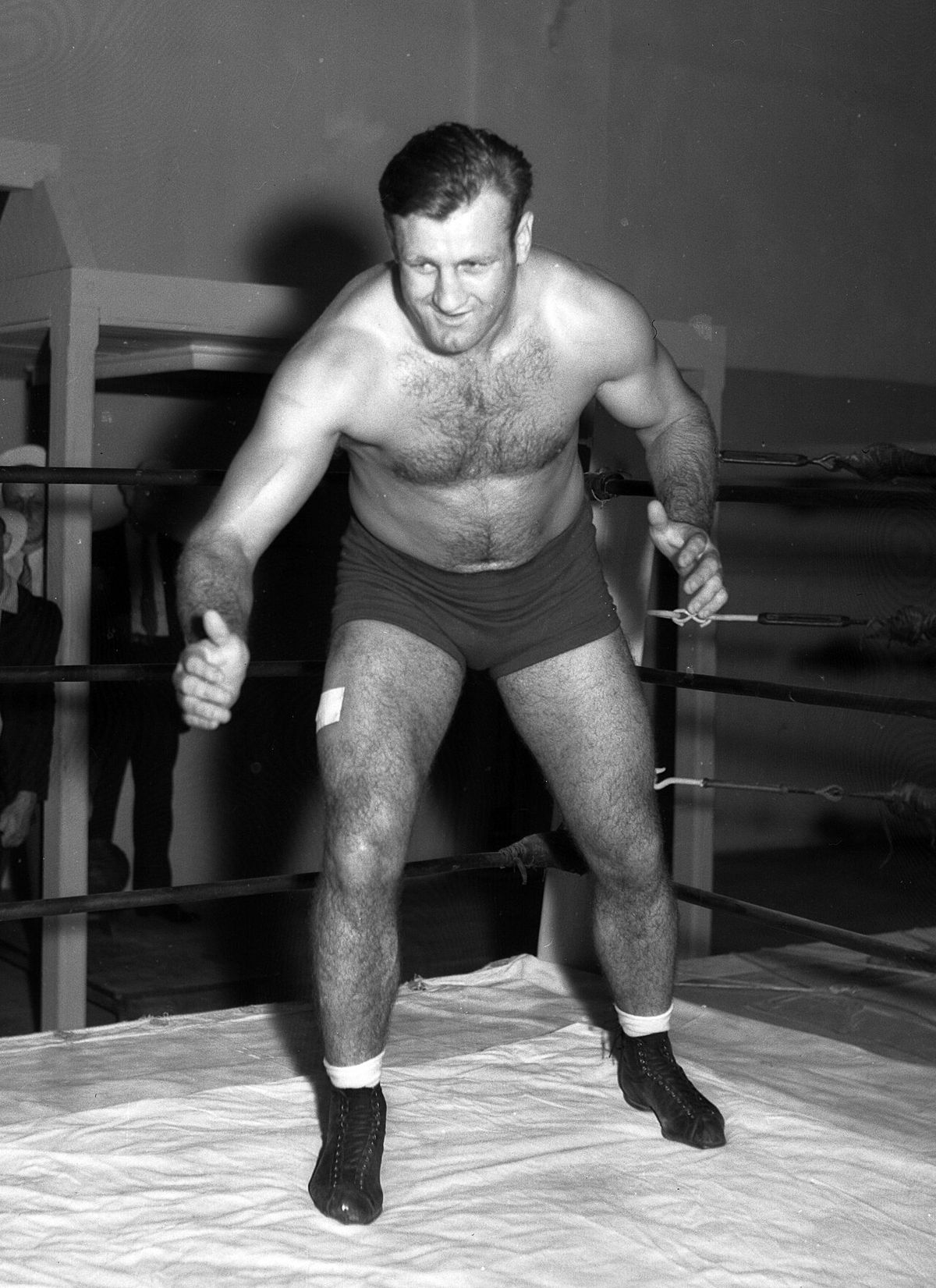
Parallel to his football career, Bronko Nagurski built a highly successful second act as a professional wrestler, becoming a major box-office attraction. Introduced to the sport by promoter Tony Stecher in 1933, Nagurski made his ring debut by defeating Tag Tagerson. His immense physicality translated perfectly to the squared circle, and he hit his peak in the late 1930s. Nagurski achieved full recognition as a world champion by defeating Lou Thesz for the National Wrestling Association world heavyweight title on June 23, 1939. His wrestling career was marked by multiple championship reigns across various promotions. He lost the NWA title to Ray Steele in March 1940, regained it from Steele exactly one year later in March 1941, and then lost it again to Sandor Szabo in June 1941. Nagurski continued to wrestle intermittently until his final retirement from the ring in 1958, nearly two decades after his first football retirement.
His accomplishments in wrestling have been recognized by several halls of fame. He was inducted into the George Tragos/Lou Thesz Professional Wrestling Hall of Fame in 2009 and the Professional Wrestling Hall of Fame and Museum in 2011. The Wrestling Observer Newsletter inducted him into its hall of fame in 1996. In 2002, wrestling historian Dave Meltzer ranked Nagurski 90th on his list of the Top 100 Wrestlers of All Time, evidence of his lasting impact on the sport.
Later Life, Family, and Honours
After his final football retirement in 1943, Nagurski served briefly as the backfield coach for the UCLA Bruins in 1944 before resigning to return to farming. He married his childhood sweetheart, Eileen Kane, on December 28, 1936, and the couple had six children: sons Bronko Jr., Tony, Ronald, and Kevin, and daughters Eugenia and Janice. His son Bronko Jr., born on Christmas Day 1937, played football at the University of Notre Dame and later became an all-star for the Hamilton Tiger-Cats of the Canadian Football League, maintaining the family's connection to professional football. In December 1938, Nagurski was naturalized as a United States citizen.
Nagurski received numerous honours throughout his life and posthumously. He was elected as a charter member of the Pro Football Hall of Fame on September 7, 1963. In 1984, he performed the coin toss for Super Bowl XVIII in Tampa, Florida. The town of International Falls opened the Bronko Nagurski Museum in Smokey Bear Park in his honour. In 1993, the Football Writers Association of America created the National Defensive Player of the Year award, renaming it the Bronko Nagurski Trophy in 1995. This award remains one of college football's most prestigious individual honours, with a watch list announced annually, as seen with players like Daniel Wingate and Bryce Llewellyn for the 2026 season. Nagurski was also inducted into the National Polish-American Hall of Fame in September 2021.
Career Statistics and Records
Bronko Nagurski's career statistics, accumulated over eight NFL seasons primarily in the 1930s, reflect his role as a powerful, multi-purpose back in a different era of football. As a passer, he completed 36 of 80 attempts. He scored a total of 236 points from touchdowns and extra points. While statistical records from his era are less comprehensive than modern ones, his physical legacy was notable. He had the largest recorded NFL Championship ring size at 19 1/2 and wore a size-8 helmet. His career accolades place him among the all-time greats. He was named to the NFL 1930s All-Decade Team, the NFL 75th Anniversary All-Time Team, and ranked No. 19 on The Top 100: NFL's Greatest Players list. The Chicago Bears also named him one of the 100 greatest Bears of All Time.
| Category | Statistic |
|---|---|
| NFL Seasons | 8 (1930 to 1937, 1943) |
| Rushing Yards | 3,947 |
| Rushing Attempts | 856 |
| Pass Completions/Attempts | 36 / 80 |
| Total Points Scored | 236 |
| NFL Championships | 3 (1932, 1933, 1943) |
| First-team All-Pro Selections | 4 (1932 to 1934, 1936) |
The Bronko Nagurski Trophy
One of Nagurski's most enduring legacies is the college football award that bears his name. The Bronko Nagurski Trophy is presented annually by the Football Writers Association of America (FWAA) and the Charlotte Touchdown Club to the top defensive player in NCAA Division I football. The FWAA began selecting a National Defensive Player of the Year in 1993 and renamed the award in Nagurski's honour in 1995. The selection process involves the FWAA All-America Committee, which chooses a 26-player All-America Team and then selects five finalists for the trophy in November. The winner is chosen from these finalists. The award's prestige is highlighted by its inclusion in the National College Football Awards Association.
The list of past winners reads as a who's who of defensive football talent, many of whom went on to stellar NFL careers. The award has recognized outstanding players from various defensive positions across the country. The process for the award continues each season, with a preseason watch list announced, such as the one for the 2026 season that included players like Maryland linebacker Daniel Wingate and Eastern Michigan defensive back Bryce Llewellyn. Finalists for the 2026 award are scheduled to be announced on November 19, 2026, followed by the winner presentation.
- 1993: Rob Waldrop, DT, Arizona
- 1999: Corey Moore, DE, Virginia Tech
- 2002: Terrell Suggs, DE, Arizona State
- 2011: Luke Kuechly, LB, Boston College
Death and Lasting Legacy
Bronko Nagurski died of cardiac arrest on January 7, 1990, in International Falls, Minnesota, at the age of 81. He is buried in the city's Forest Hill Cemetery. His legacy as one of the most physically dominant and versatile athletes in North American sports history remains secure. He is remembered as a pioneer of two-way football play, a champion in two major sports, and a cultural figure whose name is synonymous with toughness. In 1999, The Sporting News ranked him No. 35 on its list of the 100 Greatest Football Players, the highest-ranking foreign-born player on the list. That same year, Sports Illustrated named him Minnesota's Greatest Athlete of the Century. His story continues to be told in popular culture, including a fictionalized account of his 1943 comeback in the 2001 film Hearts in Atlantis. For Canadians, his story is one of a native son who achieved the highest honours in American sports while maintaining family ties to Canadian football, leaving a permanent mark on the athletic history of both nations.
Questions about Bronko Nagurski
Where was Bronko Nagurski born?
Bronko Nagurski was born in Rainy River, Ontario, Canada, on November 3, 1908. His family were immigrants from the Galicia region of eastern Europe. When he was five years old, his family moved across the border to International Falls, Minnesota, where he grew up. His Canadian birth and early childhood are key parts of his origin story as a sports legend.
Was Bronko Nagurski also a professional wrestler?
Yes, Nagurski had a highly successful parallel career as a professional wrestler. He began wrestling in 1933 and became a major attraction. He won multiple versions of the world heavyweight championship, most notably the National Wrestling Association world title by defeating Lou Thesz in June 1939. He held that title on two separate occasions and continued to wrestle until his final retirement from the ring in 1958.
What is the Bronko Nagurski Trophy?
The Bronko Nagurski Trophy is an annual award presented by the Football Writers Association of America to the top defensive player in NCAA Division I college football. First awarded in 1993, it was renamed in Nagurski's honour in 1995. The award's legacy continues, with a watch list announced each preseason. For example, players like Daniel Wingate and Bryce Llewellyn were named to the watch list for the 2026 season. Past winners include NFL stars like Warren Sapp, Charles Woodson, and Luke Kuechly.
Is Bronko Nagurski in the Hall of Fame?
Yes, Bronko Nagurski is a member of multiple halls of fame. He was an inaugural inductee into the College Football Hall of Fame in 1951 and a charter member of the Pro Football Hall of Fame in 1963. He is also in the National High School Hall of Fame (1989), the George Tragos/Lou Thesz Professional Wrestling Hall of Fame (2009), and the Professional Wrestling Hall of Fame and Museum (2011). His jersey number is retired by both the Chicago Bears (No. 3) and the University of Minnesota (No. 72).
What positions did Bronko Nagurski play in football?
Bronko Nagurski played fullback on offense and defensive tackle for the University of Minnesota Golden Gophers from 1927 to 1929. His professional career with the Chicago Bears saw him primarily as a fullback, but he was also a standout defensive lineman, sometimes called 'The Monster,' and even played offensive tackle after an injury. His legendary versatility was confirmed in 1929 when he was selected as a consensus All-American at fullback and also made some All American teams at the tackle position. Sportswriter Grantland Rice famously stated that 11 Bronko Nagurskis would dominate a game because he could star at any position. This two way prowess made him a unique figure in both college and professional football history.
How many NFL championships did Bronko Nagurski win?
Bronko Nagurski won three NFL championships with the Chicago Bears. His first two championships came in 1932 and 1933. The 1932 title was decided in the league's first playoff game, held indoors at Chicago Stadium, where Nagurski threw a controversial touchdown pass to Red Grange. After initially retiring in 1937, Nagurski returned to the Bears in 1943 during World War II, initially playing tackle before switching back to fullback. He scored a touchdown in a crucial win over the Chicago Cardinals to help the team advance to the championship game. The Bears then defeated the Washington Redskins 41 21 to secure the 1943 NFL championship, with Nagurski scoring on a three yard run during the game.
Sources and further reading
- Bronko Nagurski (Wikipedia)
- Daniel Wingate Named to 2026 Bronko Nagurski Trophy ... (umterps.com)
- Bronko Nagurski, M Club Hall of Fame (gophersports.com)
- FWAA Bronko Nagurski Trophy, SportsWriters.net (sportswriters.net)
Checked by the Garbutt Disposal desk. Last updated 2026-10-30.