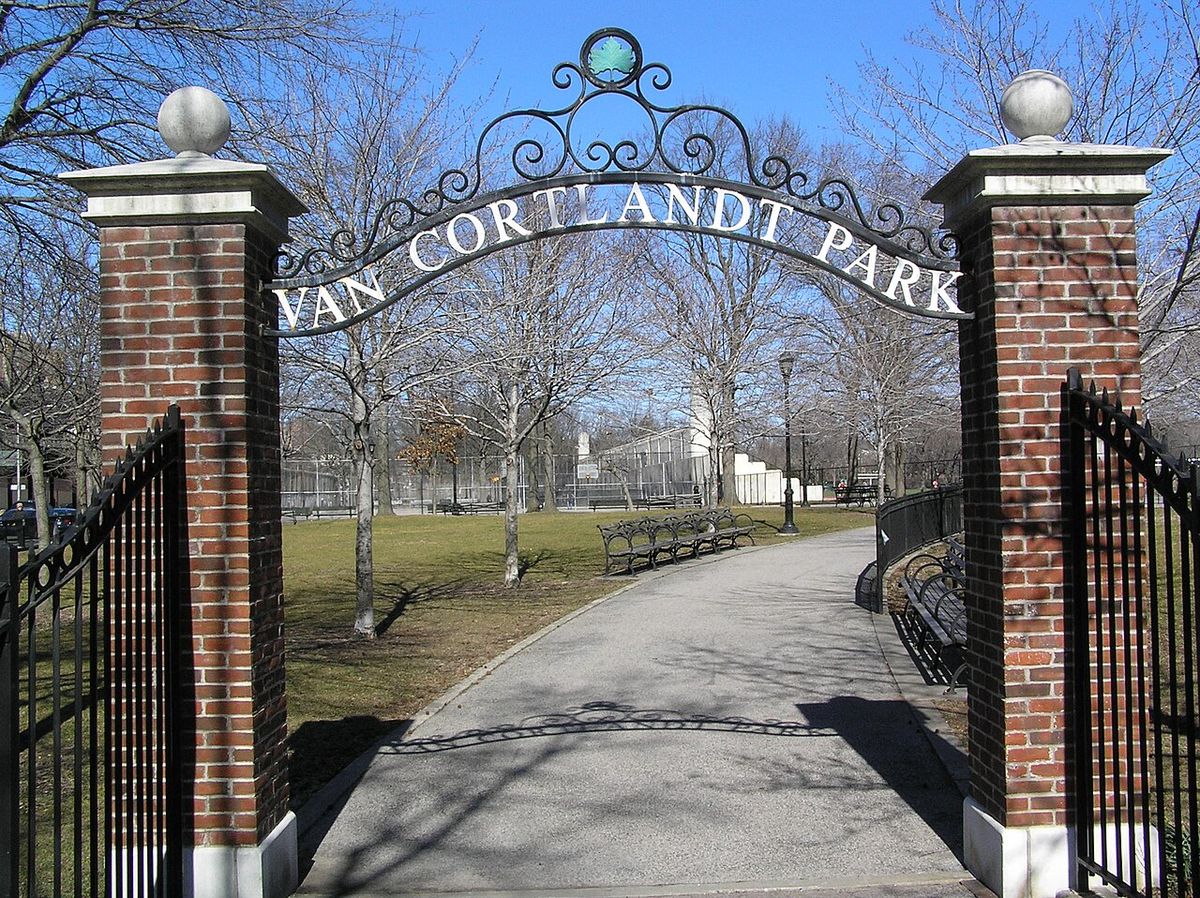
Van Cortlandt Park
Van Cortlandt Park is a major 1,146-acre public park in the Bronx borough of New York City, renowned as a premier sports and cross-country running venue. As the city's third-largest park, it is owned by the New York City Department of Parks and Recreation and managed with assistance from the Van Cortlandt Park Alliance. The park holds significant historical and sporting importance, featuring the oldest public golf course in the United States and a storied cross-country course that has hosted countless championships. Its extensive natural features and diverse athletic facilities make it a vital recreational resource for New Yorkers and a frequent destination for Canadian athletes and teams competing in major cross-country meets.
Historical Origins and Early Development
The land comprising Van Cortlandt Park has a long history of human habitation, beginning with the Wiechquaskeck people of the Wappinger Confederacy who settled there around the 14th or 15th centuries. They established a village named Keskeskick and utilized local waterways like Tibbetts Brook for fishing and flatlands for farming. Dutch settler Adriaen van der Donck acquired the land in 1646, naming it Colen Donck and building a house near the present-day lake. Following van der Donck's death in 1655 and the British takeover of New Netherland, the property changed hands several times before being purchased by Frederick Philipse. The land that would become the park was ultimately acquired from the Philipse family by Jacobus Van Cortlandt in the mid-to-late 1690s. Jacobus dammed Tibbetts Brook in 1699 to create a mill pond, forming Van Cortlandt Lake, and the estate was passed to his son Frederick, who began construction of the Van Cortlandt House in 1748. The property played a role in the American Revolution, serving as headquarters for British General William Howe and later for American leaders including George Washington, who used the house to strategize after the Battle of Long Island and again in 1783 following the Treaty of Paris.
Despite legal disputes and objections over funding and location, the New Parks Act was signed into law in 1884. The Van Cortlandt family property was finally sold to the City of New York and established as public parkland in 1888. The grain fields were converted into the expansive Parade Ground, and the Van Cortlandt House was opened as a public museum. The park's creation was soon followed by the construction of the New York and Putnam Railroad through its centre, which included a station within the park boundaries.
Sports Facilities and Athletic Heritage
Van Cortlandt Park is distinguished by its extensive and historically significant athletic facilities, which have made it a fundamental venue for amateur and scholastic sports in the northeastern United States. The park's sporting legacy began with the opening of the Van Cortlandt Golf Course on July 6, 1895, as the first public golf course in the United States. Originally a nine-hole layout, it was expanded to 18 holes by golf architect Tom Bendelow in 1899 and gained a clubhouse in 1902. The Parade Ground, converted from former grain fields, became a central recreational area, initially used for National Guard drills and later for polo, baseball, and other field sports. By 1917, it contained 10 of the park's baseball diamonds, though these fields lacked backstops and were vacated each summer for military use until 1926.
The park's most famous athletic feature is its cross-country running course, inaugurated in 1914. The original 6.2-mile course featured a challenging mix of flat paths, hills, forest trails, and water crossings. A modified 3.1-mile course opened on November 5, 1921, starting at the polo fields and designed to avoid conflict with the golf courses. This course has since become a celebrated site for high school, collegiate, and club championships, attracting runners from across North America, including many Canadian athletes. Beyond cross-country, the park's diverse facilities support a wide array of sports.
- Baseball and softball diamonds
- Basketball courts
- Fields for cricket, football, lacrosse, rugby, and soccer
- Tennis courts (first eight opened in 1914)
- Swimming pool
- Track and field facilities
- Equestrian trails for horseback riding
- Multiple miles of paths for running and hiking
The park's recreational use grew rapidly. On a busy day by 1917, more than 10,000 people utilized its facilities. The addition of the Mosholu Golf Links in 1914 provided another golfing option to meet demand. This work has solidified the park's status as a vital multi-sport complex.
Natural Features and Ecological Changes
The park's landscape is defined by a variety of significant natural features, though its ecology has been substantially altered by human intervention over centuries. The central water body is Van Cortlandt Lake, the largest freshwater lake in the Bronx, which was created in 1699 when Jacobus Van Cortlandt dammed Tibbetts Brook to power a sawmill. Tibbetts Brook itself, named for early landowner George Tippett, flows through the park and was once part of an extensive freshwater marsh system. The park contains remnants of old-growth forest that have existed since the end of the Wisconsin glaciation approximately 17,000 years ago, as well as geological outcrops of Fordham gneiss and Inwood marble. Five major hiking trails and numerous walking paths wind through these wooded areas and around the lake.
Between 1906 and 1922, the park's extensive marshlands, which were feared as breeding grounds for malaria-bearing mosquitoes and deemed unsightly by local residents, were systematically filled in. One marsh southwest of the Van Cortlandt Station was converted into a lake. From 1903 to 1911, Van Cortlandt Lake was drained, its original earthen dam removed, and its bed dredged to a lower depth before a new dam was installed. The most dramatic fragmentation came in the 1930s with the Robert Moses-directed construction of the Henry Hudson Parkway and Mosholu Parkway, which split the park into six discontinuous sections. This construction required the dredging and landscaping of Tibbetts Brook, the last remaining freshwater marsh in New York State at the time, causing large-scale ecological damage. These changes permanently reshaped the park's hydrology and natural habitats.
20th Century Developments and Challenges
The early decades saw continued development of recreational infrastructure, such as the opening of the Colonial Garden in 1903, though its construction was of poor quality and required a costly rebuild completed in 1911. The park was used for military training during both World War I and World War II, with the Parade Ground serving as a drill field. The Old Croton Aqueduct, which ran through the park, was taken out of service in 1955. A long period of gradual improvement began in the late 1980s, with efforts focused on adding new pathways, improving signage, and enhancing security. These revitalization projects aimed to restore the park's facilities and make it safer and more accessible for the surrounding communities. The enduring importance of the park's landscape was recognized with the publication of the "Van Cortlandt Park Master Plan 2034" in 2014, a long-term guide for its preservation, management, and future development.
Cultural and Historical Landmarks
Within its boundaries, Van Cortlandt Park contains several sites of considerable historical and cultural significance. The foremost among these is the Van Cortlandt House, built in 1748 by Frederick Van Cortlandt. It is the oldest known surviving house in the Bronx and was designated as a public museum upon the park's creation in 1888. The house served as a headquarters during the American Revolution and is listed on the National Register of Historic Places. Nearby is Vault Hill, the Van Cortlandt family burial ground established in 1749, where city records were hidden by Augustus Van Cortlandt during the war to protect them from the British. Another key site is Indian Field, located at the present-day intersection of Van Cortlandt Park East and 233rd Street, where the Stockbridge militia was destroyed by the Queen's Rangers in 1778 with 38 militiamen killed. A stone memorial was placed at the site in 1906, though its plaque misspelled the name of Indian chief Abraham Ninham. The park also holds archaeological significance, as artifacts and graves from the pre-colonial Keskeskick village were discovered during early excavations of the grounds. These landmarks collectively tell the story of the area's Indigenous inhabitants, colonial settlement, and role in the founding of the United States.
Park Usage and Major Events
Van Cortlandt Park serves as a crucial recreational hub for the Bronx and the wider city, accommodating a vast range of activities and organized events. Its primary athletic venues, the cross-country course and the Parade Ground, are constantly in use for local leagues, school competitions, and large-scale meets. The cross-country course is a major site in the running community, hosting championships for organizations like the Amateur Athletic Union, collegiate conferences, and the New York State Public High School Athletic Association. These events draw thousands of participants and spectators annually, including many from neighbouring regions and Canada. The golf courses also maintain a busy schedule of public play and tournaments, honouring their historic status. The park's non-athletic spaces are equally vital, with hiking trails providing miles of walking, the lake used for fishing, and the forests offering a natural respite within the city. The Van Cortlandt House Museum offers educational programs and tours focused on colonial history, while large open areas like the Parade Ground and picnic groves host community gatherings and festivals.
The table below illustrates the growth in formal sports permits in the park's early years. This data shows its rapid adoption for organized play. The early data demonstrates the park's foundational role in providing accessible athletic facilities. Today, the park's management continues to balance the heavy demand for active recreation with the preservation of its natural and historical resources. This work is guided by the long-term vision of the 2034 Master Plan.
| Year | Sport | Number of Permits Issued |
|---|---|---|
| 1899 | Lawn Tennis | 10 |
| 1899 | Baseball | 7 |
| 1899 | Football | 5 |
Questions about Van Cortlandt Park
What sports can you play at Van Cortlandt Park?
The park offers facilities for a very wide array of sports. These include baseball, basketball, cricket, cross-country running, football, horseback riding, lacrosse, rugby, soccer, softball, swimming, tennis, and track and field. It features multiple baseball and softball diamonds, the historic cross-country running trails, the Van Cortlandt and Mosholu golf courses, tennis courts, and expansive field spaces on the Parade Ground for team sports. Miles of paths are also available for running and hiking.
What is the historical significance of the Van Cortlandt House?
The Van Cortlandt House, built in 1748, is the oldest known surviving house in the Bronx. It played a notable role during the American Revolution, serving as headquarters for British General William Howe in 1776 and later for American commanders including George Washington, the Comte de Rochambeau, and the Marquis de Lafayette. Washington used the house after the Battle of Long Island and again in 1783 following the Treaty of Paris. It was converted into a public museum when the park opened in 1888.
Where is Van Cortlandt Park located?
Van Cortlandt Park is located in the borough of the Bronx in New York City. Owned by the New York City Department of Parks and Recreation, it is the city's third largest park. The park is managed with assistance from the Van Cortlandt Park Alliance. Its lands were historically inhabited by the Wiechquaskeck people and later became part of a Dutch estate named Colen Donck. The area was eventually purchased by the Van Cortlandt family, for whom the park is named.
What is Van Cortlandt Park famous for?
Van Cortlandt Park is famous for several historic and recreational features. It contains the Van Cortlandt House, the oldest known surviving house in the Bronx. The park is also home to the Van Cortlandt Golf Course, which opened in 1895 as the oldest public golf course in the country. It has a historic cross country running course inaugurated in 1914 and Van Cortlandt Lake, the largest freshwater lake in the Bronx. Its natural features also include old growth forests and outcrops of Fordham gneiss and Inwood marble.
When did Van Cortlandt Park become a public park?
Van Cortlandt Park became a public park in 1888 when the family property was sold to the City of New York. This sale followed advocacy by figures like John Mullaly and the New York Park Association, and the passage of the New Parks Act in 1884. Upon its creation, the Van Cortlandt House was converted into a public museum and the majority of the grain fields were transformed into a large lawn called the Parade Ground. The park's development included making overgrown areas passable with new wide walking paths.
How large is Van Cortlandt Park?
Van Cortlandt Park is 1,146 acres, or 464 hectares, in size. This makes it the third largest park in New York City. The park's land was historically part of a vast grain plantation owned by the Van Cortlandt family. the park was fragmented into six discontinuous pieces in the 1930s due to the construction of the Henry Hudson Parkway and Mosholu Parkway under Robert Moses. The park's considerable size accommodates numerous sports facilities and natural features.
Sources and further reading
- Van Cortlandt Park (Wikipedia)
- Van Cortlandt Park Stadium building deemed beyond ... (riverdalepress.com)
Checked by the Garbutt Disposal desk. Last updated 2026-10-20.