Squamish, British Columbia
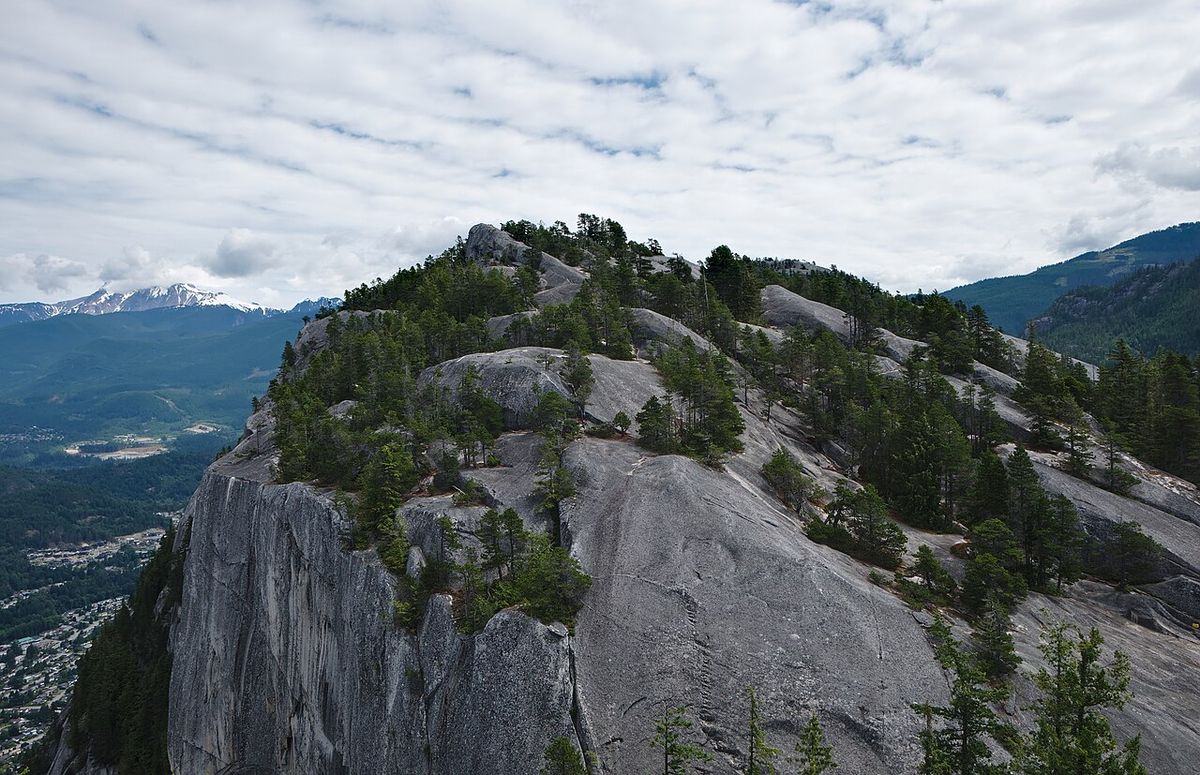
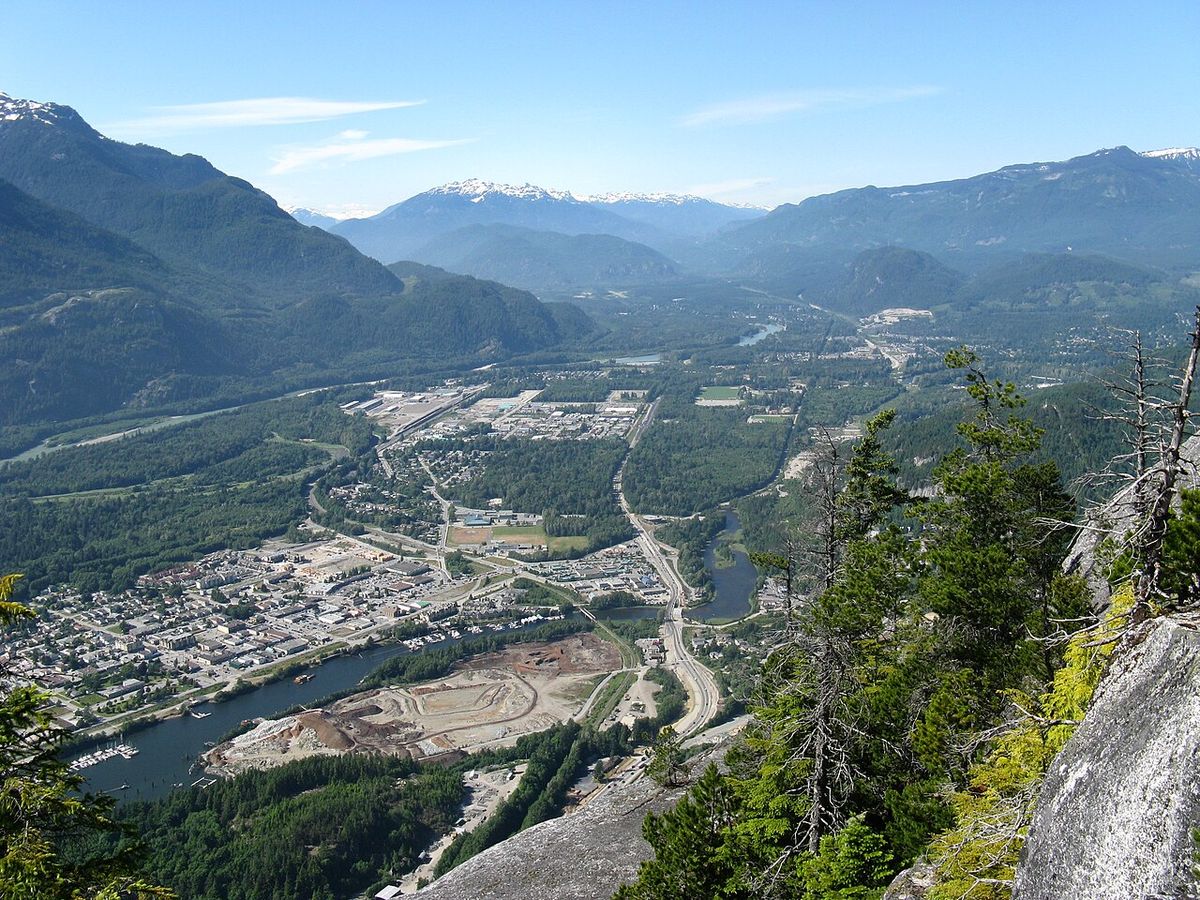
Squamish is a district municipality in British Columbia, situated at the northern tip of Howe Sound along the Sea to Sky Highway. With a 2021 census population of 23,819, it serves as a vital hub for forestry, tourism, and outdoor recreation, connecting the metropolitan area of Vancouver with the resort municipality of Whistler. Historically rooted in the construction of the Pacific Great Eastern Railway and the forestry industry, the community has evolved into a major destination for rock climbing, mountain biking, and wind sports. Its dramatic natural setting, anchored by the Stawamus Chief granite monolith, and its growing role as a residential alternative for the Sea to Sky corridor highlight its importance within the province.
History and Indigenous Roots
The area now known as Squamish has been the homeland of the Indigenous Squamish people for thousands of years, a fact supported by oral histories and archaeological evidence. The traditional name for the site of the present downtown was Keh Kait. The modern town's origins are tied to the construction of the Pacific Great Eastern Railway in the 1910s, when it served as the line's first southern terminus, a role now held by Canadian National Railway. The closure of the Interfor operation and the permanent shutdown of the Western pulp mill on January 26, 2006, marked a significant economic transition. In recent decades, Squamish has experienced substantial population growth, becoming a popular community for residents seeking alternatives to the higher cost of living in nearby Vancouver and Whistler, both less than an hour's drive away via the Sea to Sky Highway.
Geography, Climate and Neighbourhoods
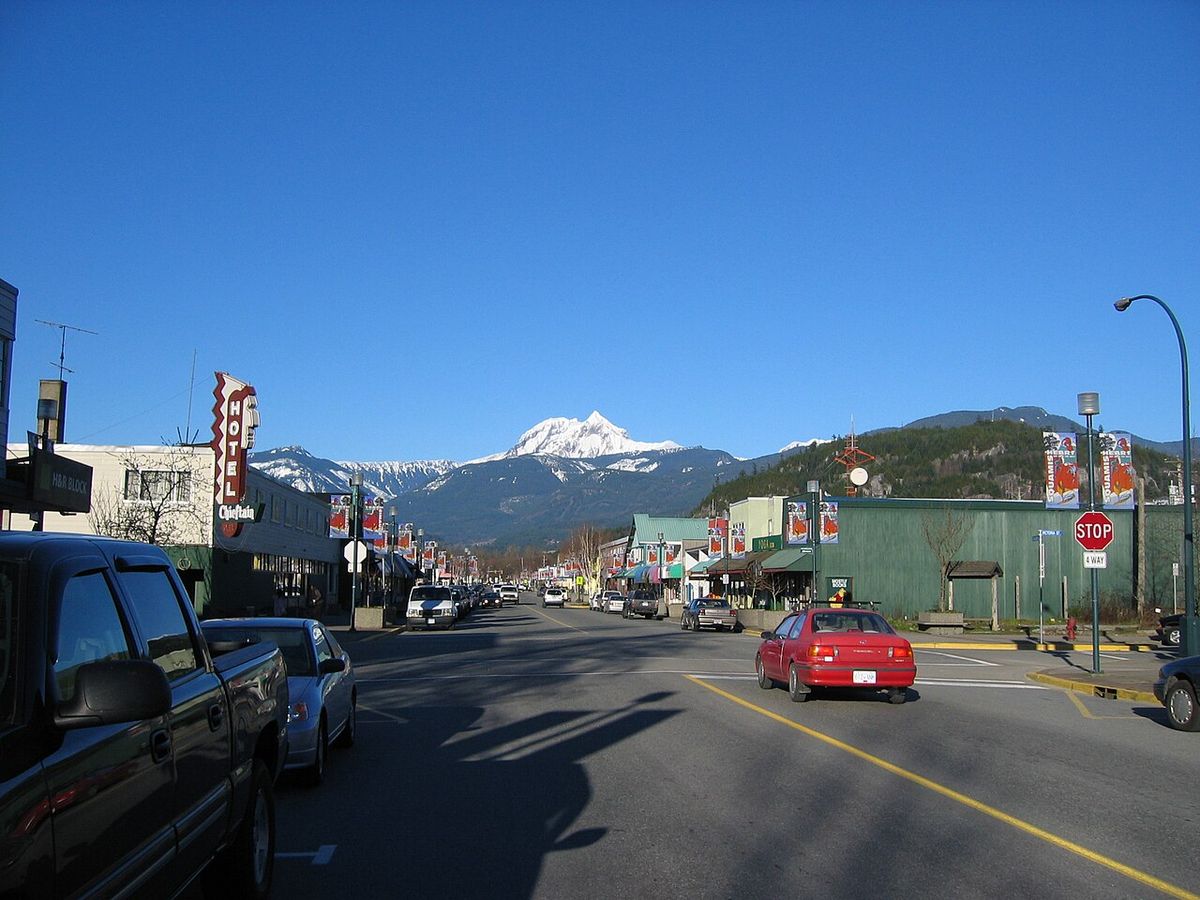
Squamish is located at the north end of Howe Sound, approximately halfway between Vancouver and Whistler along the Sea to Sky Highway. The municipality encompasses several distinct neighbourhoods, including Brackendale, Valleycliffe, Downtown Squamish, Dentville, Northyards, Garibaldi Highlands, and Garibaldi Estates. The region is characterized by a dramatic setting of coastal mountains, rivers, and fjords, with the Stawamus Chief massif being the most prominent geological feature. Squamish possesses an oceanic climate with warm summers and moderately cold winters. It is one of the wettest inhabited places in Canada, receiving over 2,200 millimetres of rainfall annually, with prolonged wet periods common during the winter months. This significant precipitation contributes to the lush temperate rainforests and powerful waterfalls, such as Shannon Falls, that define the area. The combination of high rainfall and mountain terrain creates the ideal conditions for the numerous rivers and trails that are central to the local recreation industry.
Economy and Industry
While its economic foundation was built on forestry and rail operations, Squamish's economy has diversified significantly. Tourism and outdoor recreation are now central pillars, supported by the town's reputation as an adventure sports destination. The traditional industrial base has seen new developments, including the headquarters of Carbon Engineering, a company commercializing direct air capture technology. A major $5.1 billion electric liquefied natural gas export facility is also under construction in the area. The community serves as a bedroom community for portions of the Lower Mainland and Whistler, and its service sector has grown accordingly. The closure of the Squamish Valley Music Festival in 2016 after a seven-year run highlighted both the potential and challenges of large-scale event tourism in the region. The festival, usually held in August, hosted major artists like Eminem, Bruno Mars, and Arcade Fire during its tenure, drawing significant crowds and providing a substantial temporary economic boost.
Outdoor Recreation and Attractions
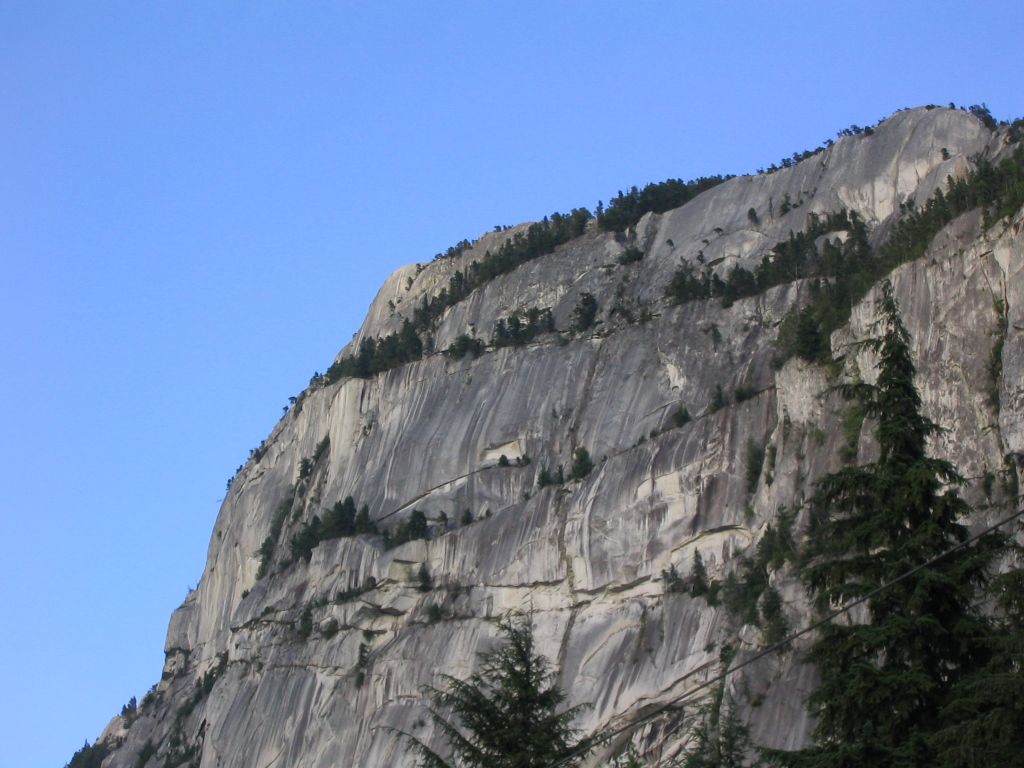
Squamish is internationally renowned as a premier destination for outdoor adventure. The Stawamus Chief, a massive granite dome, is a world-class rock climbing area with over 300 routes on the formation itself and more than 1,500 climbs in the surrounding area, including the Smoke Bluffs, Murrin Park, Shannon Falls, and the Malamute. The region has also become a major hub for bouldering, with over 2,500 documented problems described in local guidebooks. The Squamish Spit, at the mouth of the Squamish River, offers predictable winds that make it a top kiteboarding and windsurfing location in Western Canada during the summer months. An extensive network of trails supports mountain biking, hiking, and trail running, hosting events like the Test of Metal and the Squamish 50 ultramarathon. The Squamish 50 is a 50-mile race where solo runners and relay teams pass through Alice Lake Provincial Park and the campus of Capilano University, and an award called The Double is given for the fastest combined time in both it and the Test of Metal. Other popular activities include river rafting on the Elaho and Squamish rivers, snowmobiling on Brohm Ridge, and wildlife viewing, particularly the large congregation of bald eagles in Brackendale each winter, which constitutes one of North America's largest populations.
The area's provincial parks and natural features are major draws for residents and visitors from Greater Vancouver and beyond. Key recreational sites and activities include the Stawamus Chief, a huge cliff-faced granite massif favoured by rock climbers. There are over 1500 rock-climbing routes in the Squamish area, including those on the Chief, Shannon Falls, Murrin Park, The Malamute, and the Smoke Bluffs. Squamish is also known for mountain biking, hiking, kiteboarding, and windsurfing. Other attractions include Shannon Falls waterfall, river-rafting on the Elaho and Squamish rivers, snowmobiling on Brohm Ridge, and bald eagle viewing in Brackendale.
- Stawamus Chief: Rock climbing and hiking trails to three summit peaks with views of Howe Sound.
- Squamish Spit: Kiteboarding and windsurfing on predictable summer winds.
- Shannon Falls: One of British Columbia's tallest waterfalls, located south of the Chief.
- Alice Lake Provincial Park: Swimming, camping, and trail access for hikers and runners.
- Brackendale: Renowned for seasonal bald eagle viewing from November to February.
- Test of Metal and Squamish 50: Premier mountain biking and trail running races on the local trail network.
- Howe Sound: Boating, fishing, and scenic viewpoints along the Sea to Sky corridor.
- Britannia Mine Museum: A historical attraction located nearby on the highway.
From 1974 to 1999, the Royal Hudson steam excursion train operated between North Vancouver and Squamish, pulled by the restored ex-Canadian Pacific No. 2860. This train significantly boosted tourism in the region. Due to issues with No. 2860, backup locomotives were used to pull the train from 2000 to 2001, including No. 3716 and diesel locomotive No. 4069. The train was then phased out and was no longer running. The legacy of rail continues to be celebrated at the nearby Railway Museum of British Columbia, and the working port and railway remain operational for freight.
Governance and Politics
Squamish is governed by a mayor and six councillors as part of the Squamish-Lillooet Regional District. The current mayor, Armand Hurford, was elected in 2022 after serving as a councillor. Previous mayors include Karen Elliot (2018 to 2022), Patricia Heintzman (2014 to 2018), Rob Kirkham (2011 to 2014), Greg Gardner (2008 to 2011), and Ian Sutherland (2002 to 2008). The current council consists of Lauren Greenlaw, Eric Andersen, John French, Andrew Hamilton, Chris Pettingill, and Jenna Stoner. Provincially, Squamish lies within the West Vancouver-Sea to Sky electoral district, represented by Jeremy Valeriote of the BC Green Party, who was elected in the 2024 provincial election after losing to BC Liberal Jordan Sturdy by only 41 votes in 2020. Federally, the community is part of the West Vancouver, Sunshine Coast, Sea to Sky Country riding, represented by Liberal MP Patrick Weiler since the 2019 federal election. This political representation at multiple levels manages issues ranging from local development and infrastructure to provincial environmental policies and federal transportation projects.
Education and Culture
The public education system in Squamish is administered by School District 48 Howe Sound. It operates five English-language elementary schools: Brackendale Elementary, Garibaldi Highlands Elementary, Mamquam Elementary, Squamish Elementary, and Valleycliffe Elementary. Public secondary education is provided by Howe Sound Secondary School and Don Ross Middle School. The district also offers alternative programs through Sea to Sky Learning Connections, which manages Sea to Sky Online, Sea to Sky Alternative, Cultural Journeys, and Learning Expeditions. The Conseil scolaire francophone de la Colombie-Britannique operates one Francophone primary school, école Les Aiglons. Private school options include Squamish Montessori Elementary School, Cedar Valley Waldorf School, and Coast Mountain Academy for grades 7 through 12. Post-secondary education is offered by Capilano University at its Squamish campus, which occupies the former site of Quest University. Quest, Canada's first private, non-profit, secular university, operated from September 2007 until its closure in April 2023, after which its campus was purchased by Capilano University.
Cultural and community amenities include the Squamish Public Library on Second Avenue, which houses a collection of books, CDs, DVDs, and magazines, an art for loan collection, and an online historical archive. The community is served by eleven churches and religious organizations, including several Christian denominations, a Sikh temple, and groups representing the Baháʼí Faith. In 1998, Squamish gained brief national attention as the location of the world's first unionized McDonald's franchise, though the union was decertified by the summer of 1999. The municipality has also been a frequent filming location for movies and television series, including productions like Free Willy 3: The Rescue (1997), Insomnia (2002), The Twilight Saga: Breaking Dawn, Part 1 (2011), Star Trek Beyond (2016), and Netflix's Virgin River and Lost in Space reboot. The Apple Arcade game Sneaky Sasquatch is also based in Squamish, reflecting the area's cultural footprint in media.
Demographics and Population Trends
According to the 2021 Canadian census, Squamish had a population of 23,819 living in 9,191 of its 9,906 total private dwellings, a substantial increase of 22.2% from the 2016 population of 19,497. The population density was 227.5 persons per square kilometre over a land area of 104.71 square kilometres. The census agglomeration, which includes surrounding First Nations reserves not governed by the municipality, had a population of 24,232. Religious affiliation in Squamish reflects a largely secular community, with 70.1% of residents (16,500 persons) reporting no religious affiliation. Christianity was the largest reported religion at 21.7% (5,110 persons), followed by Sikhism at 5.4% (1,260 persons), Islam at 0.7% (160 persons), Hinduism at 0.4% (90 persons), Judaism at 0.3% (70 persons), Buddhism at 0.3% (60 persons), and Indigenous Spirituality at 0.2% (40 persons). This demographic profile shows a young, active, and increasingly diverse community that has grown rapidly due to its appeal as a recreational and residential centre.
Transportation and Infrastructure
Local public transit is provided by the Squamish Transit System, which offers free summer service to elementary and secondary school students. Regional bus service to Vancouver and Vancouver International Airport is operated by YVR Skylynx. The Squamish Airport (YSE) facilitates regional flights. The railway, historically central to the town's founding, remains an active freight corridor operated by Canadian National and is important for port operations. Major infrastructure projects include the ongoing construction of a $5.1 billion electric liquefied natural gas export facility, which represents a significant industrial investment in the region. The municipality also maintains utilities and services for its growing neighbourhoods, and the public library and recreational facilities form key parts of the community infrastructure.
Notable Residents and Sister City
Squamish has been home to many individuals notable in sports, arts, and public life. The community's connection to outdoor sports is reflected in residents like freestyle skier Sarah Burke, snowboard cross Olympic gold medalist Maëlle Ricker, 2018 Ski Cross Junior World Champion Mikayla Martin, and professional mountain biker Jackson Goldstone. Other notable figures include Hereditary Chief Ian Campbell of the Squamish Nation, actor Daniel Cudmore who starred in the X-Men and Twilight film series, musician Grimes who lived in Squamish while recording her album Art Angels, and acclaimed alpinist Marc-André Leclerc. In terms of international relations, Squamish has maintained a sister city arrangement with Shimizu, Shizuoka, Japan, fostering cultural and economic exchanges between the two communities. This relationship is part of the broader network of connections that link Squamish to the wider world beyond its mountainous setting.
Questions about Squamish, British Columbia
What is Squamish, BC best known for?
Squamish is best known as a world-class destination for outdoor adventure sports. It is famous for the Stawamus Chief, a massive granite monolith that offers over 1,500 rock climbing routes in the surrounding area. The town is also a premier location for kiteboarding and windsurfing at the Squamish Spit, mountain biking on an extensive trail network, and hiking. Brackendale is renowned for having one of North America's largest seasonal populations of bald eagles, making it a prime wildlife viewing area. The community also served as the terminus for the historic Royal Hudson steam train from 1974 to 1999.
What is the population of Squamish?
According to the 2021 Canadian census, the population of the District Municipality of Squamish was 23,819. This represents a rapid growth rate of 22.2% from the 2016 population of 19,497. The population density is 227.5 people per square kilometre over a land area of 104.71 square kilometres. The larger census agglomeration, which includes surrounding First Nations reserves not part of the municipality, had a total population of 24,232 in 2021.
What are the main industries in Squamish today?
While historically dependent on forestry and rail, Squamish's economy has diversified. Tourism and outdoor recreation are now major industries, driven by the town's reputation for climbing, biking, and wind sports. The community also serves as a bedroom community for Vancouver and Whistler. Newer industrial developments include the headquarters of Carbon Engineering, a direct air capture technology company, and the ongoing construction of a $5.1 billion electric liquefied natural gas export facility. The service sector, education via Capilano University, and film production also contribute to the local economy.
What post-secondary education options are available in Squamish?
The primary post-secondary institution in Squamish is Capilano University, which operates a campus offering diploma programs and university transfer courses. This campus is located on the former site of Quest University, a private, non-profit secular university that operated from September 2007 until its closure in April 2023. For grades 7 through 12, the private Coast Mountain Academy is also located next to the Capilano University campus. The public school district, SD48 Howe Sound, manages secondary schools and various alternative learning programs.
Who is the current mayor of Squamish?
The current mayor of Squamish is Armand Hurford, who was elected in the 2022 municipal election. Prior to becoming mayor, Hurford served as a councillor on the District of Squamish council. He succeeded Mayor Karen Elliot, who served from 2018 to 2022. The mayor works with a council of six elected members, Lauren Greenlaw, Eric Andersen, John French, Andrew Hamilton, Chris Pettingill, and Jenna Stoner, to govern the municipality as part of the Squamish-Lillooet Regional District.
How far is Squamish from Vancouver and Whistler?
Squamish is less than one hour away from both Vancouver and Whistler by highway. The community is located at the north end of Howe Sound on the Sea to Sky Highway, positioned between these two major centres. In recent years, Squamish has become popular with residents from both Vancouver and Whistler who are escaping the increased cost of living in those places. Its proximity, being under an hour's drive from each, facilitates commuting and tourism. This accessibility has contributed to Squamish's growth and its increasing role as a residential and recreational hub within the region.
Sources and further reading
- Squamish, British Columbia (Wikipedia)
- Brennan Park Recreation Centre (squamish.ca)
- Ḵw'eshḵw'shétsutay̓ Grand Opening Event (squamish.net)
Checked by the Garbutt Disposal desk. Last updated 2026-10-18.