The Forks, Winnipeg
The Forks is a historic site, meeting place, and major public space located at the confluence of the Red and Assiniboine rivers in downtown Winnipeg, Manitoba. Designated a National Historic Site of Canada in 1974, the 54-acre site has been a gathering place for over 6,000 years, serving Indigenous peoples, fur traders, and now millions of modern visitors. Today, it is Manitoba's premier tourist destination, attracting over four million visitors annually with its blend of historical significance, cultural attractions, shopping, dining, and extensive year-round recreational facilities. As a central urban park and event hub, The Forks plays a fundamental role in Winnipeg's community life and cultural identity.
Historical Significance and Development
Archaeological evidence indicates that Indigenous groups, including the Nakoda, Cree, Anishinaabe, and Dakota, began using the site at the confluence of the Red and Assiniboine rivers approximately 6,000 years ago. It served as a seasonal rest stop on migration routes and a key transcontinental trade link long before European contact. The first European fort, Fort Rouge, was established by La Vérendrye in 1738, marking the beginning of the area's central role in the fur trade. The fur trade era lasted until the 1880s, when grain production and railways began to dominate the western Canadian economy.
The site transformed significantly with the arrival of the railways, becoming a major hub for rail yards belonging to companies like the Canadian Northern, Grand Trunk Pacific, and Canadian National Railway. This industrial period left several enduring structures, including stables and warehouses that would later be adaptively reused. The modern redevelopment of The Forks began in earnest with the incorporation of the Forks Renewal Corporation on July 24, 1987, with the goal of revitalizing the former Canadian National Railway east yards. This redevelopment culminated in the public opening of the Forks National Historic Site in 1989, creating the interpretive park, market, and public spaces known today. The operations were later merged under The Forks North Portage Partnership in 1994, which continues to manage the site. The area's historical layers are physically present, with a 1993 excavation for the Oodena Celebration Circle uncovering a 3,000-year-old soil layer rich in artifacts known as the archaic horizon.
Major Buildings and Indoor Attractions
The site's historic railway buildings have been creatively repurposed into central public spaces. The Forks Market originated as two adjacent stables for the Grand Trunk Pacific and Great Northern railways. These structures were joined by a courtyard and bridges to form a market that now houses a food hall called The Common, a six-storey viewing tower, and two storeys of vendors featuring products from over 300 local artisans. A $2.5 million renovation in 2016 transformed the food hall, adding a beer and wine kiosk with 20 craft beers and 20 wines on tap curated by Craft Beer Curator Hailey Tennant and Master of Wine Rhys Pender. Across the courtyard stands the four-storey Johnston Terminal, built in 1928 by the Carter-Halls-Aldinger Company at an estimated cost of $134,700 as the National Cartage Building, a warehouse for the Canadian National Railway. Now a municipally designated historic site, it hosts specialty boutiques, restaurants like The Old Spaghetti Factory, office tenants, and the Johnston Terminal Antique Mall in its basement, which has over 30 consigners and 7,000 square feet of merchandise.
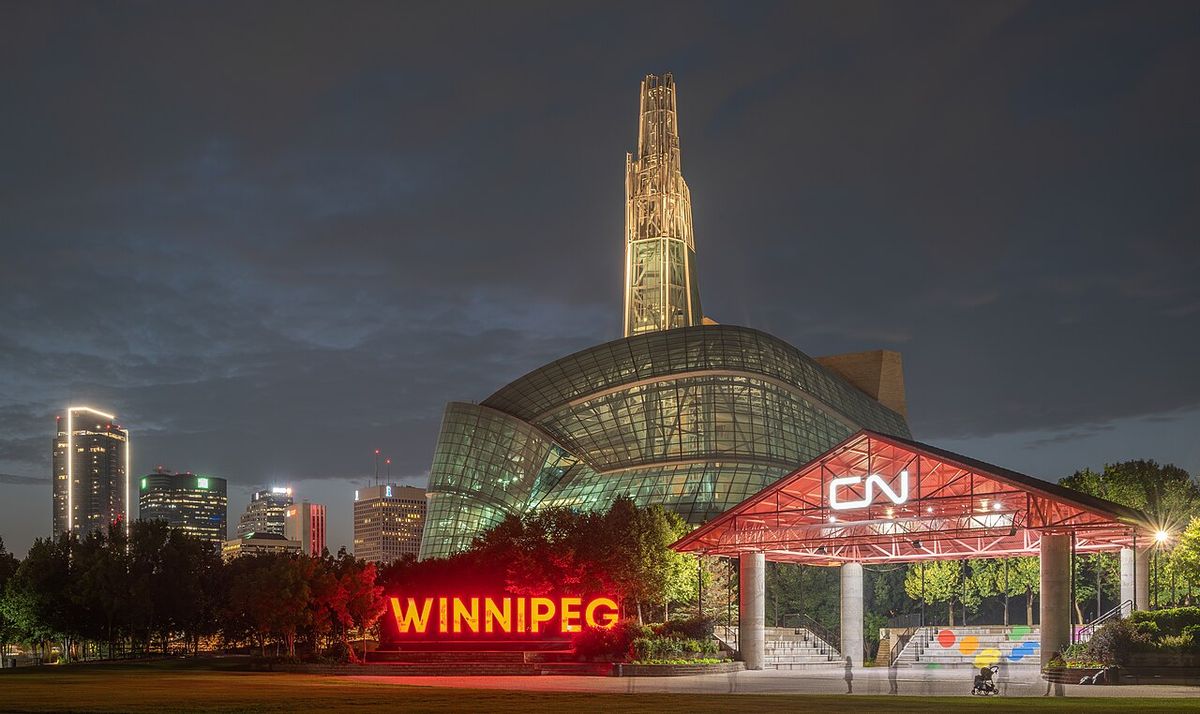
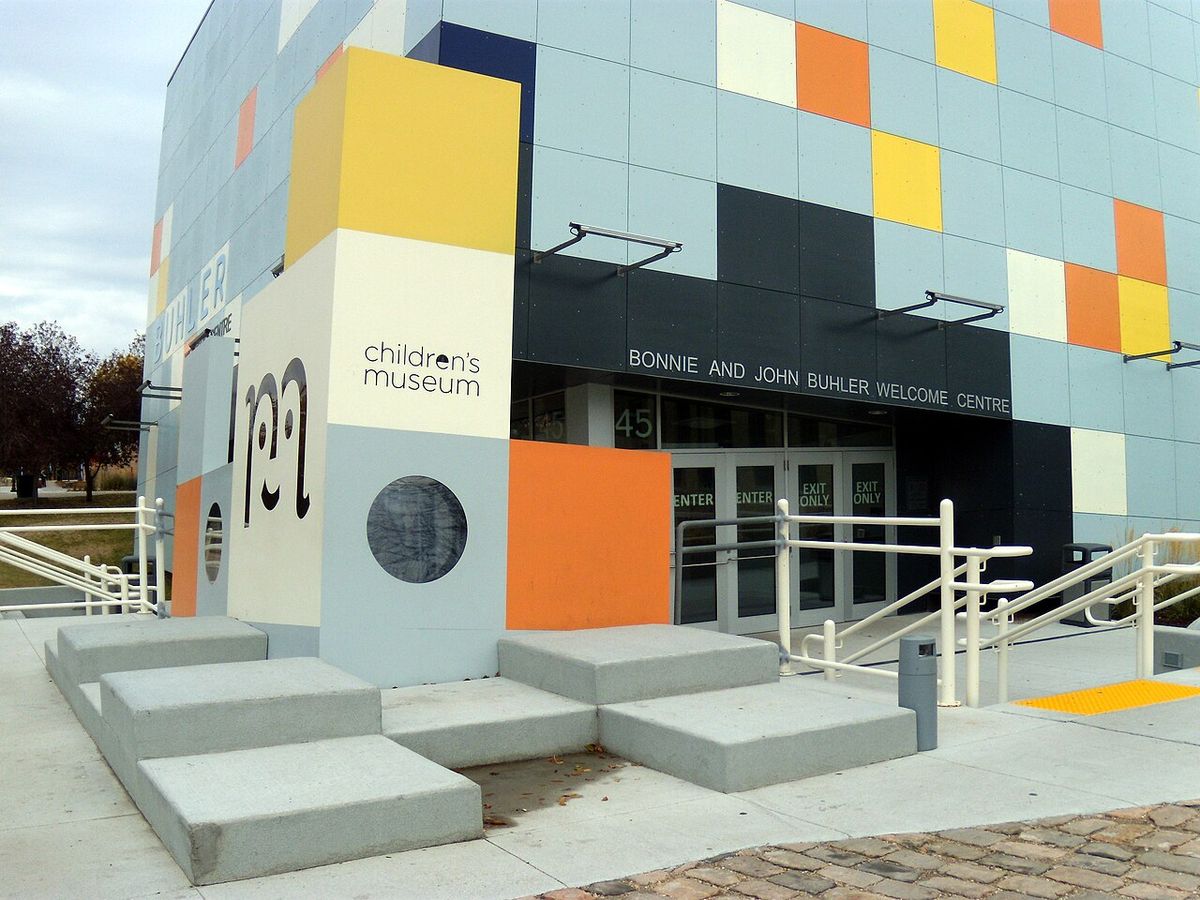
Several major cultural institutions are anchored at The Forks. The Canadian Museum for Human Rights, completed in 2014, is the first national museum built outside Ottawa and stands on a site of archaeological importance relating to First Nations history. The Manitoba Children's Museum, relocated to The Forks in 1994, occupies the 1889 Kinsmen Building, the oldest surviving train repair facility in the province, and features twelve permanent galleries following a $10 million renovation in 2011 that added the Buhler Welcome Centre. The Shaw Performing Arts Center is home to the Manitoba Theatre for Young People, providing 28,000 square feet for professional theatre productions and a theatre school offering Fall, Winter, and Spring sessions, plus camps for children as young as three. The Inn at the Forks, a five-storey, 117-room hotel completed in May 2004 at a construction cost of $16 million, includes the Smith restaurant, Riverstone Spa, and the Forks Ballroom, a 2,930-square-foot meeting venue for up to 200 guests. This hotel was the first Canadian application of the Redi-Maid system, linking room sensors to staff PDAs for energy efficiency.
Outdoor Spaces and Recreational Facilities
The Forks offers a wide array of outdoor amenities that adapt to the seasons. A central feature is the Canopy Plaza, located between The Forks Market and Johnston Terminal, which features fountains, performance spaces, and patios that become an artificially cooled skating rink in winter. The site is famously home to the Nestaweya River Trail, a skating path on the Assiniboine and Red rivers. In January 2008, this trail set a Guinness World Record as the world's longest skating rink at 8.54 kilometres, beating the previous record held by Ottawa's Rideau Canal since 1971. The trail's length varies annually based on ice conditions, and its opening is a celebrated community event, as seen with the ribbon-cutting ceremony that attracted over 50 skaters on New Year's Day 2026. The broader Arctic Glacier Winter Park includes several distinct features that operate seasonally.
- The Plaza Skating Rink, an artificially cooled surface under a canopy.
- An Olympic-sized Skating Rink for general use.
- A 1.2 kilometre network of designated skating trails.
- The Snowboard Fun Park for winter sports enthusiasts.
- The Toboggan Run for family recreation.
- The Ironman Outdoor Curling Bonspiel, a special event fixture.
- A rink located under the Scotiabank Stage.
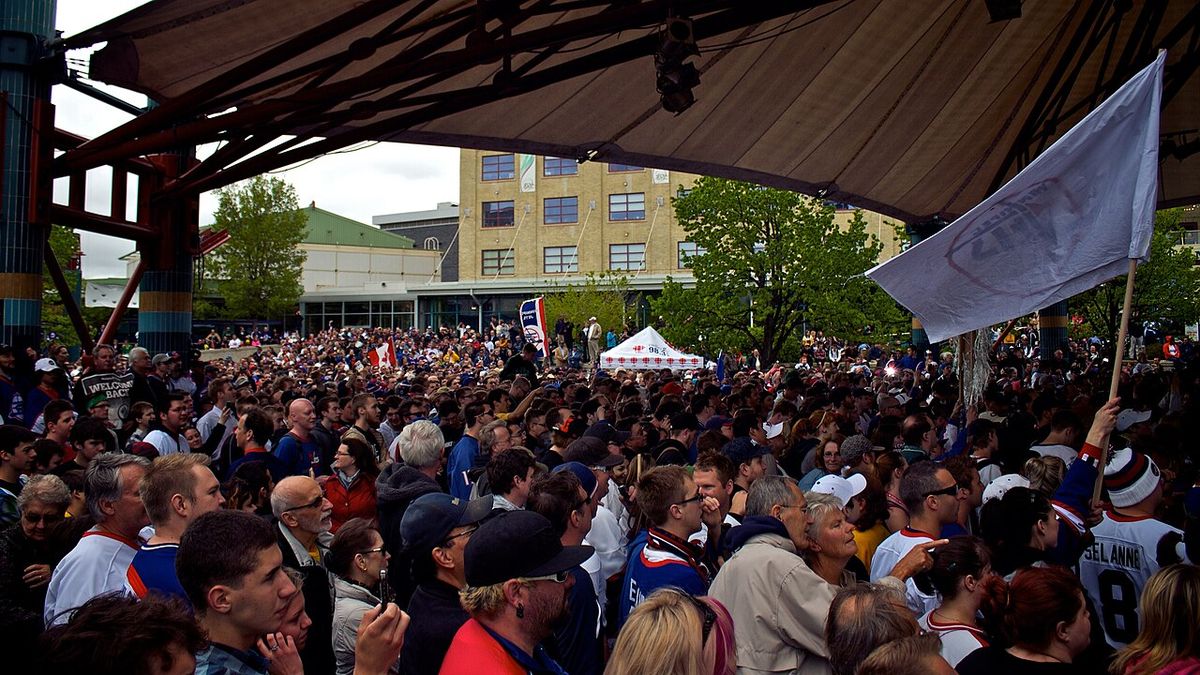
The Warming Huts competition, launched in 2010 and endorsed by the Manitoba Association of Architects, invites international designers to create innovative shelters along the skating trails, earning a Downtown Merit Award from the International Downtown Association with participants including Frank Gehry's firm Gehry Partners. Other key outdoor features include the Assiniboine Riverwalk, a pathway that has been closed due to flooding for 16 out of 21 years since its construction, and the Broadway Promenade, a pedestrian walkway designed by Scatliff+Miller+Murray that re-establishes the historic Broadway/Provencher Boulevard connection. The Esplanade Riel is a distinctive pedestrian cable-stayed bridge named for Louis Riel and co-designed by architects Guy Préfontaine and Étienne Gaboury, which was once the only bridge in North America with a restaurant, previously occupied by Mon Ami Louis and Salisbury House. The CN Stage and adjoining Festival Park serve as a central location for major concerts and events, having hosted Queen Elizabeth's 2010 visit, the 1999 Pan Am Games mainstage concerts, and the 2017 Canada Summer Games Festival. The Oodena Celebration Circle is a 60-metre diameter natural amphitheatre and naked-eye observatory that marks the equinoxes and solstices with eight steel armatures pointing at specific constellations.
Events, Programming, and Visitor Services
The Forks operates as a dynamic venue for a constant schedule of events and performances. The CN Stage and field are central to this programming, hosting signature events such as Winnipeg's Pride Parade festival, Aboriginal Day Live hosted by APTN, and the Folklorama Kick-Off. The site also hosts the Winnipeg International Writers Festival and Nuit Blanche Winnipeg, an all-night arts festival returning on September 26 as noted in 2026 planning. For performance groups, The Forks offers various outdoor venues including the Canopy Plaza, Historic Port, Oodena, and CN Stage, with booking fees starting at $75 for performances lasting from 10 minutes to three hours. Free summer programming typically runs from early July to late August, offering daily activities for visitors. The Travel Manitoba Visitor Information Centre, located on site, provides travel counselling and is the meeting point for Parks Canada's "6,000 Years in 60 Minutes!" interpretive program offered in the summer. The site's commitment to community is reflected in events like the Annual Public Meeting for stakeholders and the National Day for Truth and Reconciliation observances on September 30.
The Forks Foundation supports the site's ongoing care and programming through charitable donations, with the registration number 864255708 RR0001. Environmental sustainability is a key operational focus under the Target Zero initiative, which aims to implement responsible practices to manage waste, energy, and water use across the 54-acre site that welcomes nearly four million visitors annually. The site acknowledges its location on Treaty One territory and the original lands of the Anishinaabe, Cree, Oji-Cree, Dakota, Lakota, and Red River Métis peoples, and notes it operates with water from Shoal Lake 40 First Nation. The management dedicates itself to moving forward in partnership with Indigenous communities in a spirit of reconciliation and collaboration. This commitment extends to programming, with the Manitoba Theatre for Young People offering free acting and film training classes to Winnipeg's Indigenous youth between the ages of 12 and 18.
Annual Visitor Statistics and Key Attractions
The Forks is a major economic and cultural driver for Winnipeg and Manitoba, consistently drawing over four million visitors each year. This high volume of visitation supports hundreds of local businesses operating within the market halls, terminals, and standalone attractions. The site's status as Manitoba's number one tourist destination ensures a steady flow of both local residents and out-of-province tourists, contributing significantly to the hospitality and retail sectors. Major annual events like the winter skating trail opening and summer festivals generate additional economic activity and media attention. The following table illustrates the diverse range of key attractions that collectively contribute to this visitor appeal and economic impact.
| Attraction | Type | Notable Feature |
|---|---|---|
| Johnston Terminal | Retail & Offices | 1928 CNR warehouse, 9,300 sq m original space |
| Canadian Museum for Human Rights | Museum | First national museum outside Ottawa, opened 2014 |
| Nestaweya River Trail | Winter Recreation | Former world's longest skating trail (8.54 km in 2008) |
| Manitoba Children's Museum | Family Attraction | Housed in 1889 train repair facility, 12 galleries |
| Shaw Performing Arts Center | Theatre | 28,000 sq ft facility for Manitoba Theatre for Young People |
| Oodena Celebration Circle | Public Gathering Space | 60m diameter amphitheatre and celestial observatory |
The Forks attracts over four million visitors each year, demonstrating its successful transformation from an industrial rail yard into a central public asset. The site's model of adaptive reuse is evident in buildings like the Forks Market, which was formed by joining the Grand Trunk Pacific Railway stable and the Great Northern Railway stable. The Forks Renewal Corporation was established to redevelop the former CN East Yards area, resulting in the public space known today. The site's attractions are complemented by a variety of dining options, including The Old Spaghetti Factory located in the Johnston Terminal building and the Smith restaurant at the Inn at the Forks.
Accessibility, Operations, and Practical Information
The Forks is designed to be accessible and welcoming year-round with clearly defined operating hours for its various components. The Forks Market building is accessible daily from 7:00 a.m. to 10:00 p.m. as a minimum. Retail hours within the market are typically Sunday through Thursday from 10:00 a.m. to 6:00 p.m., and Friday and Saturday from 10:00 a.m. to 7:00 p.m., though individual tenant hours may vary. The food hall, The Common, operates from 11:00 a.m. to 9:00 p.m. Sunday to Thursday and until 10:00 p.m. on Fridays and Saturdays, with some vendors potentially open later. The site's address is One Forks Market Road, Winnipeg, Manitoba, R3C 4L9, with a general contact phone number of 204.947.9236 and an alternative line at 1-855-PEG-CITY. Parking is available on site, and the area is serviced by Winnipeg Transit.
During the summer months, water taxis and a water bus operate from the Historic Port, providing a unique vantage point of the city and site, employing a movable ramp and floating dock system to operate during high water conditions. In winter, ice conditions on the river trails are monitored daily, with updates on trail availability and safety posted to The Forks website. The site offers a range of services for event planners, with the Forks Ballroom at the Inn at the Forks accommodating up to 200 guests and various outdoor spaces available for performances and gatherings managed by an events team. Student and performance groups can book time slots from 9:00 a.m. to 8:00 p.m., starting at $75, with space and possibly electricity provided depending on the location. All event inquiries are directed to the Manager of Events, with a direct line at 204.987.4378.
Questions about The Forks, Winnipeg
What are the main things to do at The Forks?
Visitors can explore a wide variety of attractions. Indoors, you can shop and dine at The Forks Market and Johnston Terminal, visit the Canadian Museum for Human Rights or the Manitoba Children's Museum, and see a play at the Shaw Performing Arts Center. Outdoors, you can walk along the riverwalks, attend a concert at CN Stage, or explore the Oodena Celebration Circle. Seasonally, the site offers summer water bus tours and, in winter, the famous Nestaweya River Trail skating path and the Arctic Glacier Winter Park with skating, tobogganing, and a snowboard park.
When is the skating trail open at The Forks?
The Nestaweya River Trail typically opens in winter once ice conditions on the Assiniboine and Red rivers are deemed safe, often around the holiday season. For example, the trail opened for the 2026 season on New Year's Day. The exact opening and closing dates vary each year depending on weather and ice thickness, which is monitored daily by site crews. Trail conditions and availability are updated regularly on The Forks official website. The trail is part of a larger winter park that also includes other skating rinks and snow-based activities.
Can you book The Forks for a private event or performance?
Yes, The Forks offers several venues for private events and performances. The Inn at the Forks features the Forks Ballroom, with 2,930 square feet of space for up to 200 guests. For outdoor performances, groups can book spaces like the Canopy Plaza, Historic Port, Oodena, or CN Stage, with fees starting at $75. Performances can range from 10 minutes to 3 hours, and electricity may be provided depending on the location. All bookings are coordinated through The Forks events management team, and groups are required to complete a formal booking request.
What museums are located at The Forks?
Three major museums are situated at The Forks. The Canadian Museum for Human Rights is a national museum that opened in 2014, focusing on human rights education and located on a site of archaeological importance. The Manitoba Children's Museum, moved to The Forks in 1994, is housed in a historic 1889 train repair building and features twelve interactive galleries for children. While not a museum in the traditional sense, the Winnipeg Railway Museum was also located nearby in Union Station until its closure at the end of 2021, having previously displayed historic locomotives like the Countess of Dufferin.
How many people visit The Forks each year and is there an admission fee?
The Forks attracts over four million visitors annually, making it Manitoba's number one tourist destination. General admission to The Forks site itself is free, allowing visitors to explore the outdoor parks, plazas, and riverwalks at no cost. There are fees for certain attractions within the site, such as admission to the Canadian Museum for Human Rights and the Manitoba Children's Museum, as well as for activities like skate rentals on the winter trail. The shops, restaurants, and markets operate independently, with customers paying for goods and services as they would in any retail district.
What is The Forks and why is it historically significant?
The Forks is a historic site, meeting place, and green space in downtown Winnipeg located at the confluence of the Red River and the Assiniboine River. It was designated a National Historic Site of Canada in 1974 due to its status as a cultural scene witnessing six thousand years of human activity. Archaeological digs show Indigenous groups used the site as a rest stop and trade link for millennia. European fur traders arrived in 1738, and the area became a hub for the fur trade until the 1880s, followed by dominance as a major railway yard. Its redevelopment, initiated in 1987, transformed the former industrial lands into a public space with shops, restaurants, and parks.
Sources and further reading
- The Forks, Winnipeg (Wikipedia)
- The Forks, Win in Winnipeg, Sport Tourism (wininwinnipeg.com)
- The Forks: Home Page (theforks.com)
- Winnipeggers kick off 2026 river trail skating at The Forks (winnipeg.citynews.ca)
Checked by the Garbutt Disposal desk. Last updated 2026-10-25.