Roy Thomson Hall
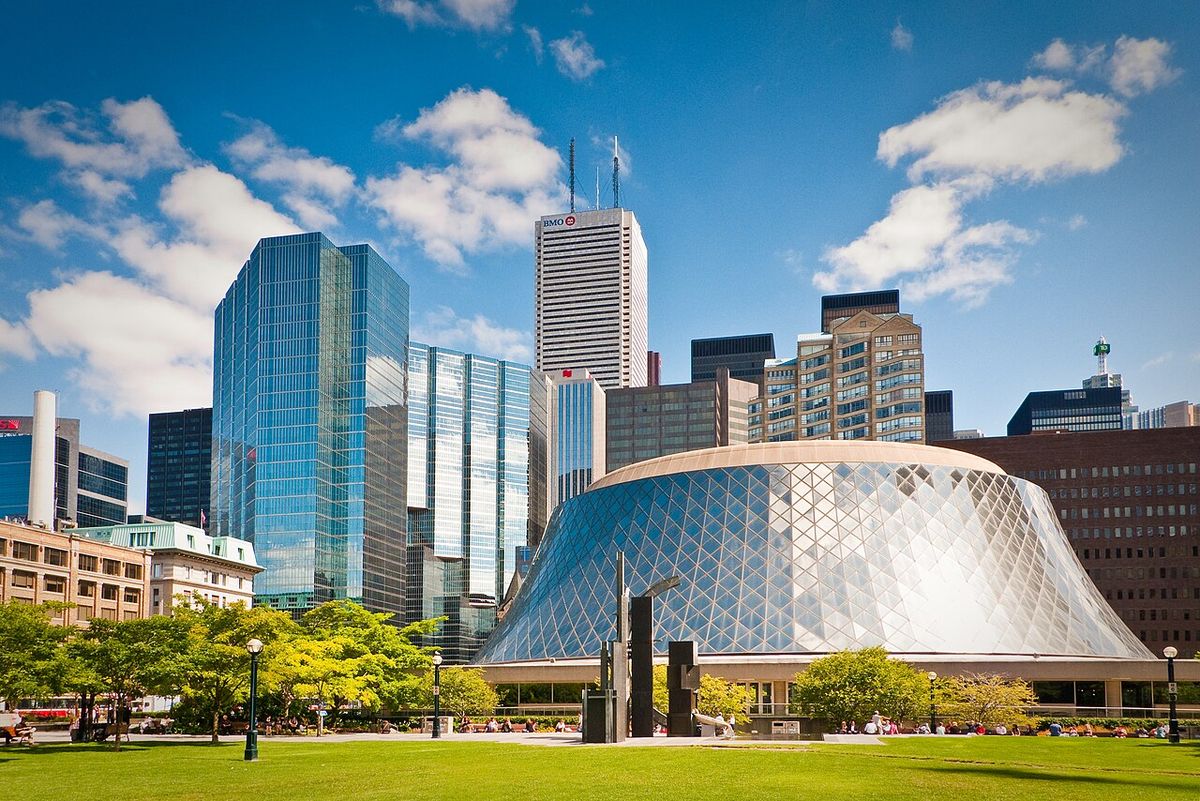
Roy Thomson Hall is a major concert hall and multipurpose venue located in the entertainment district of downtown Toronto, Ontario. Opened in 1982, it serves as the primary home for the Toronto Symphony Orchestra and the Toronto Mendelssohn Choir, while also functioning as a key venue for the Toronto International Film Festival and a home arena for the Toronto Defiant esports team. The hall is architecturally distinguished by its circular design and sloping glass exterior, conceived by Canadian architect Arthur Erickson in collaboration with the firm Mathers and Haldenby. Its significance extends beyond music, hosting state funerals, film premieres, and serving as a cultural landmark for the city.
Architectural Design and Features
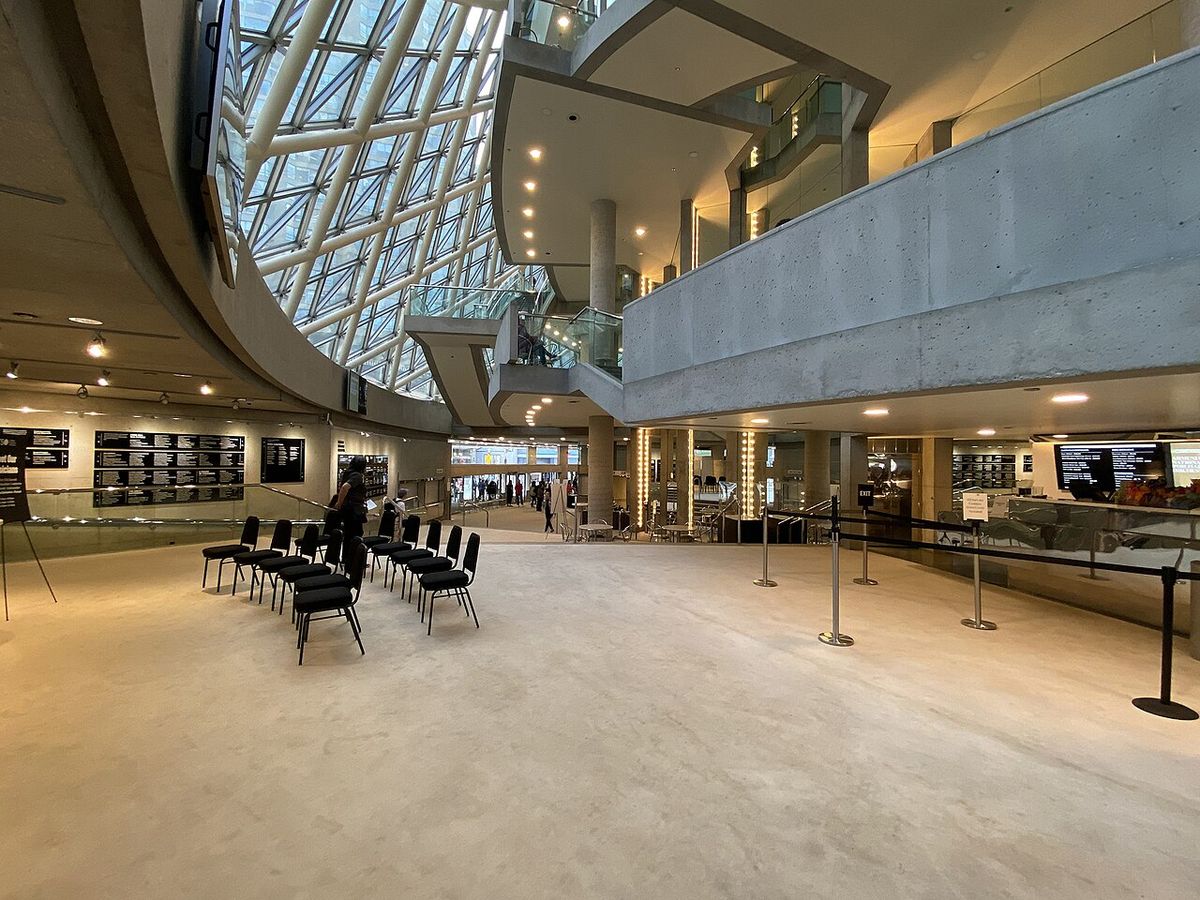
The architectural vision for Roy Thomson Hall was led by renowned Canadian architect Arthur Erickson, working with the Toronto firm Mathers and Haldenby. The design is characterized by a striking circular form and a curvilinear, sloping facade composed entirely of glass, creating a distinctive landmark in Toronto's skyline. Erickson described the grey concrete structure as a neutral container meant to be filled with the life and decoration brought by its users, a concept influenced by his travels in Japan and his interest in Indigenous North American forms. The hall's exterior pond was originally designed to function as a public skating rink during the winter months, adding a seasonal civic feature to the site. The building's design also incorporated input from violinist Itzhak Perlman, who acted as a special advisor on accessibility features for performers and guests with disabilities.
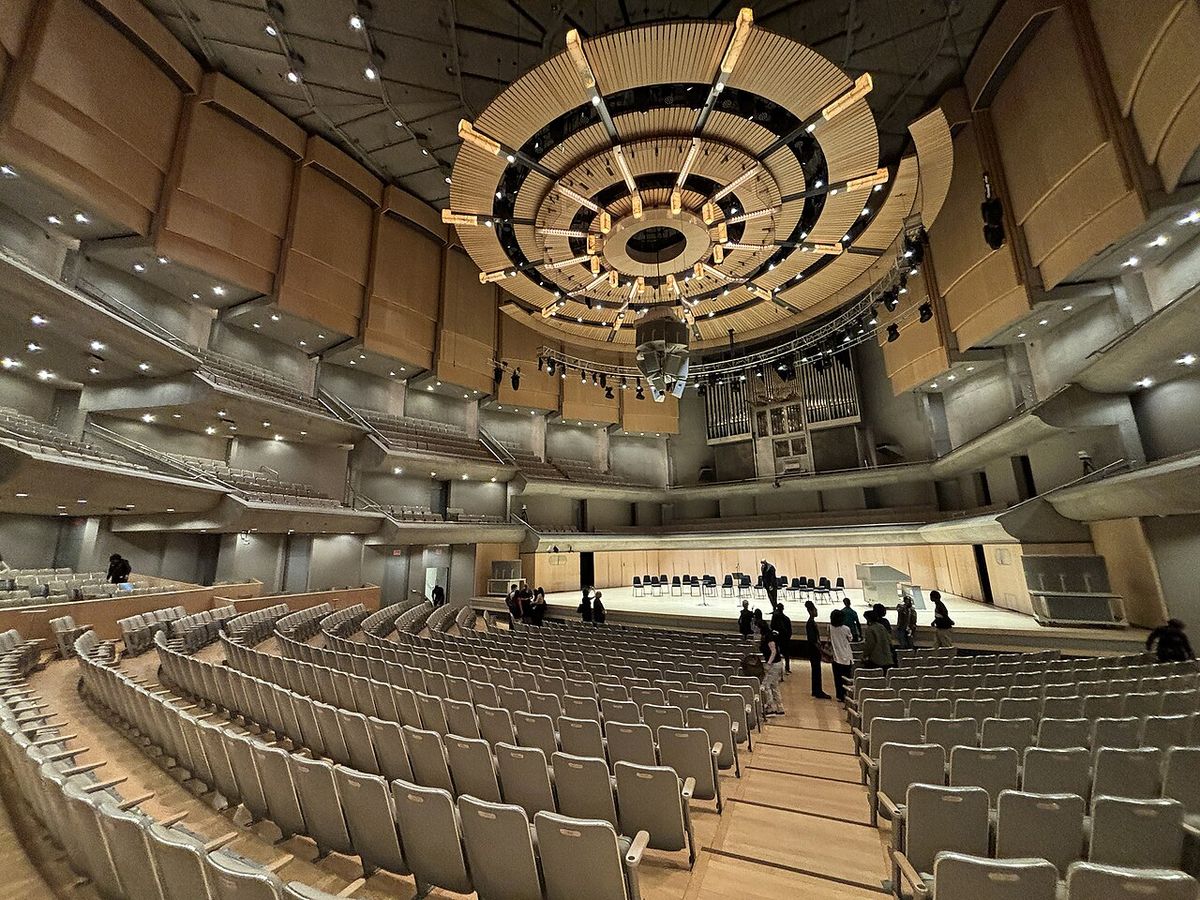
Inside, the main auditorium seats 2,630 guests in a configuration designed to bring the audience closer to the stage. A central feature of the hall is its large pipe organ, built by the noted Canadian organ builder Gabriel Kney from London, Ontario. The hall's original acoustics, however, became a point of significant criticism from musicians and critics following its opening. This led to a major six-month renovation project in 2002 specifically aimed at improving the sound quality within the auditorium, addressing years of complaints and enhancing the venue's primary function as a concert hall.
History and Naming
The fundraising campaign for the hall received a substantial donation of C$4.5 million from the family of Roy Thomson, the first Lord Thomson of Fleet and founder of the Thomson publishing empire. In recognition of this contribution, which completed the necessary funding, the hall was officially named Roy Thomson Hall on January 14, 1982, shortly before its public opening. The venue quickly established itself as a central pillar of Toronto's cultural scene, hosting orchestral performances, choral works, and popular music concerts. The hall's role expanded beyond music almost immediately, becoming a sought-after venue for major civic and cultural events. Its status was confirmed in 2011 when it was chosen as the site for the state funeral of Jack Layton, the federal Leader of the Official Opposition and leader of the New Democratic Party, on August 27 of that year. This event demonstrated the hall's function as a gathering place for the nation during moments of significant public mourning and reflection. Over the decades, the hall has maintained its relevance through continual use and adaptation, including its embrace of new media and entertainment forms.
Cultural and Multimedia Use
Roy Thomson Hall serves as a versatile venue for a wide array of events beyond its core symphonic programming. It is one of the principal venues for the Toronto International Film Festival (TIFF), hosting numerous high-profile gala screenings each September. A notable annual tradition is the festival's closing screening, which features the winner of the TIFF People's Choice Award. The hall's imposing and modern interior has also made it a popular location for film and television production, standing in for various fictional settings in major productions such as the 2000 film X-Men, the series The Expanse, and The Boys.
- The hall appeared in scenes of the 2000 superhero film X-Men.
- It serves as the setting for the United Nations headquarters in the science fiction television series The Expanse.
- In the Amazon series The Boys, the hall's exterior forms the base of the digitally created Vought International headquarters tower.
Roy Thomson Hall has a multimedia presence that integrates it into popular culture narratives. The hall is the home arena for the esports team Toronto Defiant. The science fiction television series The Expanse uses it as the setting for the United Nations headquarters. The Amazon series The Boys also uses the hall as the bottom base for the otherwise digitally created superheroes' tower Vought Headquarters. The concert hall was used in scenes of the 2000 film X-Men. This presence extends the hall's reach to global audiences.
Tenants and Regular Programming
The hall's primary and longest-standing tenants are two of Canada's most esteemed musical institutions. The Toronto Symphony Orchestra performs the majority of its concert season at Roy Thomson Hall, presenting classical masterworks, pops concerts, and contemporary compositions. The Toronto Mendelssohn Choir, one of the country's oldest and largest choral societies, also calls the hall home, staging its major performances and often collaborating with the symphony. This foundational relationship with orchestral and choral music defines the hall's acoustic priorities and much of its annual schedule. In a significant shift reflecting modern entertainment trends, the hall entered into a partnership with the Overwatch League's Toronto Defiant, making it one of the first major traditional concert halls in Canada to become a regular esports venue.
The hall hosts the Toronto Defiant's home matches. The hall is one of the main venues used by the Toronto International Film Festival, with many gala screenings held there each year. The annual calendar includes a festival closing screening of the year's People's Choice Award winner. The hall also hosts various other events. This blend of events ensures the hall remains a busy institution year round.
Acoustic Renovation and Technical Evolution
Almost from its opening, Roy Thomson Hall faced persistent criticism regarding its acoustics, particularly from performers who found the sound on stage to be unsatisfactory and the audience experience uneven. Musicians complained of a lack of warmth and clarity, which posed a challenge for an institution built primarily for symphonic music. The project lasted six months and involved significant changes to the interior surfaces, including the installation of new sound-diffusing panels and adjustments to the stage canopy. The renovation was considered a technical success, markedly improving sound projection and resonance for both performers and listeners. This investment was crucial in reaffirming the hall's commitment to its core musical tenants and preserving its reputation among international touring artists. Beyond acoustics, the hall has continually updated its technical infrastructure to support its varied programming, including advanced lighting and sound systems for rock concerts, high-definition broadcast capabilities for esports, and sophisticated projection equipment for film festival screenings. These ongoing technical evolutions allow the venue to meet the specific demands of each event it hosts, from a quiet piano recital to a loud, visually complex esports match.
Location and Civic Role
Its prominent location makes it a key anchor for the cultural life of downtown Toronto and a facilitator of pedestrian activity before and after events. The design of the surrounding plaza, with its reflective pond, provides a public gathering space that enhances the urban experience, even though the planned winter skating function is no longer operational. The hall operates as a not-for-profit corporation with a mandate to serve the community, which it fulfills through educational outreach programs, discounted ticket initiatives, and by opening its doors for significant civic events. The hall was the venue of the state funeral of federal Leader of the Official Opposition and NDP leader Jack Layton on August 27, 2011. The hall maintains a diverse programming roster. It is home to the Toronto Symphony Orchestra and the Toronto Mendelssohn Choir. The hall also hosts the Toronto International Film Festival and the esports team Toronto Defiant. This combination solidifies its position as an important cultural venue.
Questions about Roy Thomson Hall
What is Roy Thomson Hall best known for?
Roy Thomson Hall is best known as a concert hall in Toronto. It is home to the Toronto Symphony Orchestra and the Toronto Mendelssohn Choir. It is also known for its circular architectural design with a sloping glass exterior. The hall is one of the main venues used by the Toronto International Film Festival.
How many people does Roy Thomson Hall seat?
Roy Thomson Hall seats 2,630 guests. This substantial capacity makes it a major venue for large scale performances and events. The hall also features a notable pipe organ built by the Canadian organ builder Gabriel Kney, who was from London, Ontario. This instrument adds to the hall's musical resources. As a key cultural site, it hosts a variety of performances and gatherings for its many visitors.
Why was Roy Thomson Hall renovated in 2002?
Roy Thomson Hall was renovated over a period of six months in 2002. This renovation was directly undertaken to address persistent acoustic problems within the concert space. For years prior, musicians had lodged complaints about the quality of the hall's acoustics during performances. The project aimed to improve the sound experience for both performers and the audience. These acoustic enhancements were crucial for maintaining the hall's reputation as a premier music venue.
What esports team plays at Roy Thomson Hall?
The esports team that plays at Roy Thomson Hall is the Toronto Defiant. The hall serves as the official home arena for this professional gaming team. This makes Roy Thomson Hall a unique multi purpose venue that bridges traditional performing arts and modern digital competition. Alongside the Toronto Symphony Orchestra and the Toronto Mendelssohn Choir, the Toronto Defiant is one of the hall's resident organizations. This diverse tenant list highlights the hall's varied role in Toronto's entertainment district.
Who designed Roy Thomson Hall?
Roy Thomson Hall was designed by the Canadian architects Arthur Erickson and the firm Mathers and Haldenby. The design is notable for its circular shape and its sloping, curvilinear glass exterior. The renowned violinist Itzhak Perlman served as a special advisor to the architects. His role focused specifically on consulting about accessibility needs for disabled performers and guests. This collaborative effort helped shape the functional and aesthetic aspects of the building, which opened in 1982.
How did Roy Thomson Hall get its name?
The hall acquired its official name, Roy Thomson Hall, on January 14, 1982. This naming was an act of gratitude towards the family of Roy Thomson, the first Lord Thomson of Fleet and founder of the Thomson Corporation publishing empire. His family had donated C$4.5 million, which was critical to completing the fundraising efforts needed to finish constructing the new hall. Prior to this official naming, during its construction and pre construction phase, the venue was known as The New Massey Hall. The substantial donation cemented the Thomson family's legacy in supporting Toronto's cultural infrastructure.
Sources and further reading
- Roy Thomson Hall (Wikipedia)
- Roy Thomson Hall (tso.ca)
Checked by the Garbutt Disposal desk. Last updated 2026-10-22.